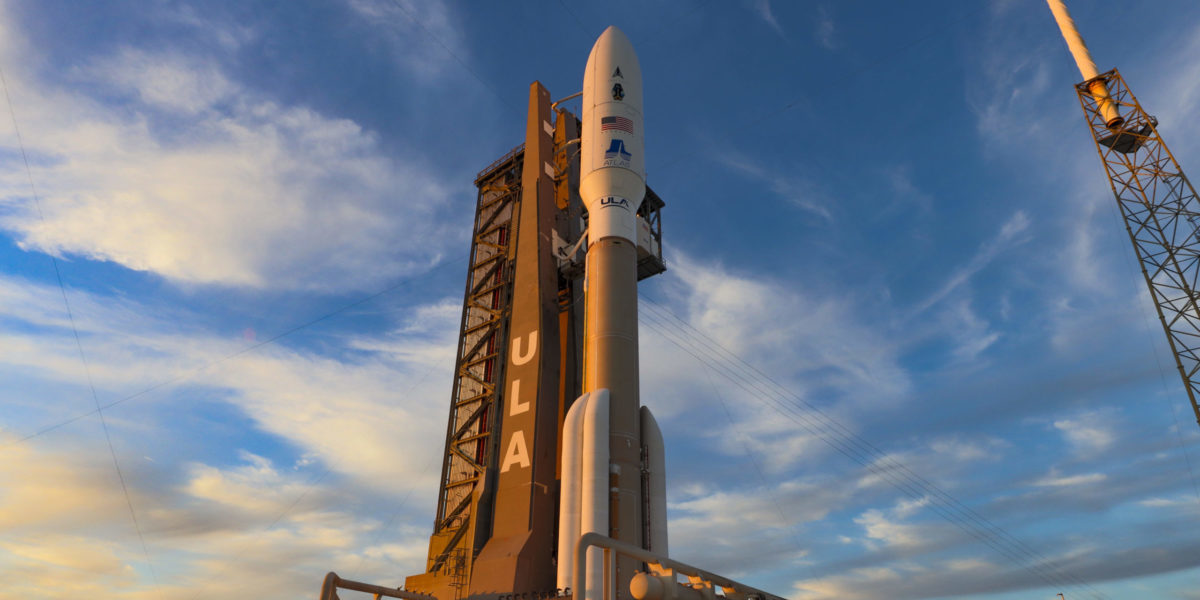
United Launch Alliance (ULA) on Tuesday successfully launched an Atlas V rocket at Cape Canaveral Space Force Station in support of U.S. national security objectives.
The rocket carried the U.S. Space Force’s Space Test Program (STP)-3 mission, which contained federally-developed technology experiments. The seven-hour-and-10-minute launch marked ULA’s longest duration mission to date.
ULA, a leading United States launch provider, has now successfully launched 147 times with a 100% success rate.
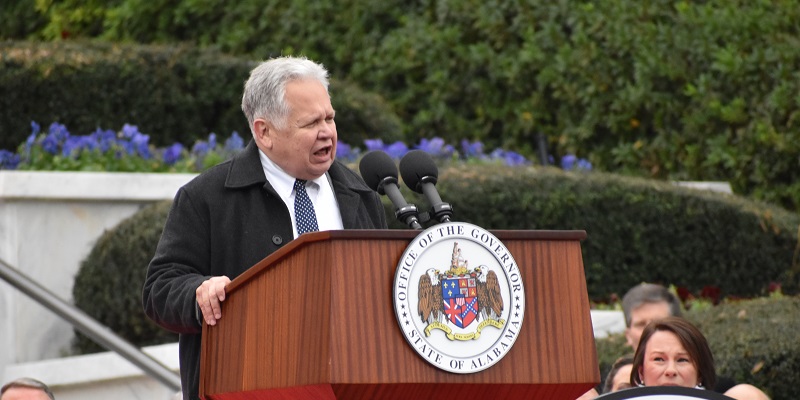
Gary Wentz, ULA vice president of Government and Commercial Programs, touched on the role the rocket manufacturer plays in supporting mission-critical space-related objectives.
“Today’s launch is a testament to why the ULA team continually serves as our nation’s most reliable and successful launch provider for our country’s most critical space assets,” declared Wentz. “Thank you to our U.S. Space Force, NASA and industry teammates for their tremendous partnership in successfully delivering STP-3 to orbit.”
MISSION SUCCESS! ULA's #AtlasV delivered two satellites into geosynchronous orbit for advanced technology research. Success #147 for ULA! Thank you to our customers @SpaceForceDoD and @USSF_SSC for the trust they place in us! https://t.co/LEV7vitjDL pic.twitter.com/xTI3UNrPdH
— ULA (@ulalaunch) December 7, 2021
The Atlas V 551 liftoff produced more than 2.5 million pounds of thrust, making it the most powerful of the Atlas V fleet.
According to ULA, the mission introduced multiple distinct capabilities. Among these were the first Out of Autoclave (OOA) payload fairing, In-Flight power system and GPS Enhanced Navigation.
ULA advised that OOA manufacturing enables increased efficiency in the production process at a lower cost while upholding the same reliability and quality standards.
The company stated in a release, “The In-Flight power system ensures the Space Test Program Satellite-6 (STPSat-6) and Long Duration Propulsive Evolved Expendable Launch Vehicle (EELV) Secondary Payload Adapter (ESPA)-1, (LDPE-1) spacecraft had fully charged batteries when deployed into geosynchronous orbit.”
Additionally, the GPS Enhanced Navigation Development Project made for increased spacecraft insertion accuracy.
ULA noted, “The booster rate gyro (BoRG) unit is a low-cost alternative rate gyroscope package. The design utilizes simplified processing and commercial inertial measurement units built into a triple-channel architecture to significantly reduce unit cost and weight.”
The Atlas V 551 configuration rocket, which the mission utilized for launching, included a 5.4-meter payload fairing. The Centaur upper stage engine was provided by Aerojet Rocketdyne and the mission’s five Graphite Epoxy Motors (GEM) 63 solid rocket boosters were developed by Northrop Grumman.
ULA has successfully launched its Atlas V rocket a total of 90 times. The company’s next launch is scheduled for late January, where it will continue its support of vital missions for the U.S. Space Force.
Dylan Smith is a staff writer for Yellowhammer News. You can follow him on Twitter @DylanSmithAL