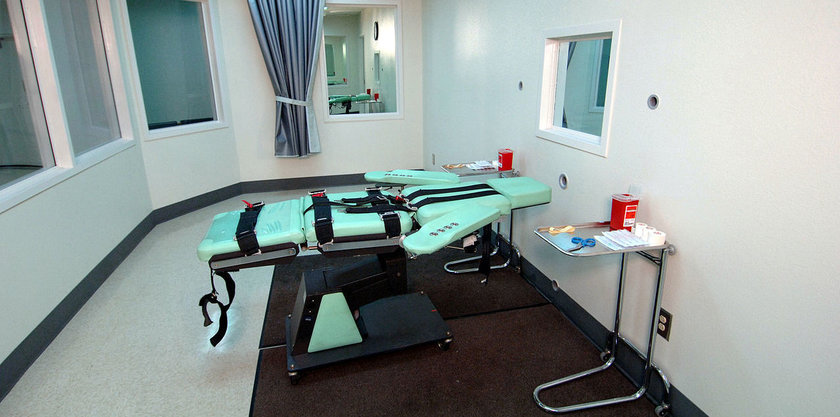
The U.S. Supreme Court has reversed the decision of a lower court that would have delayed the execution of Alabamian Robert Bryant Melson. Melson, who was convicted of the shooting deaths of three fast food employees in 1996, will be executed on Thursday at 6 p.m. in Atmore.
Justice Clarence Thomas wrote the order lifting the stay put in place by the U.S. Eleventh Circuit Court of Appeals. Although the original order would not have overturned Melson’s death sentence, it would have delayed the proceedings until another appeal could be heard.
The Eleventh Circuit was persuaded by Melson’s argument that the first drug used in the lethal injection sequence, known as midazolam, does not sufficiently prevent those being executed from feeling pain. Under the U.S. Constitution, the Eighth Amendment provides protections for the convicted against any forms of “cruel and unusual punishment.”
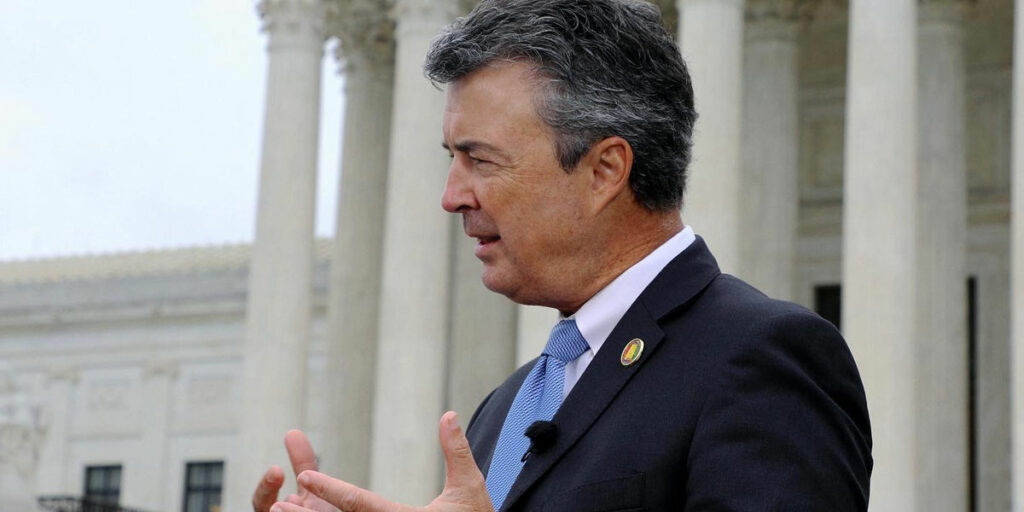
In a motion, Alabama Attorney General Steve Marshall (R) argued to the Supreme Court that it had already allowed such a combination of drugs in a similar case from Arkansas. Although Marshall’s argument convinced a majority of the Court, three Justices — Ruth Bader Ginsburg, Stephen Breyer, and Sonia Sotomayor — dissented.
Capital punishment has existed in the United States since the nation’s founding, and 31 states plus the Federal Government utilize the death penalty as of November of 2016. The death penalty was temporarily suspended nationwide from 1972 to 1976 as a result of the case of Furman v. Georgia. There, the implementation of the death penalty was ruled unconstitutional because of disproportionate racial application. It was banned until states could prove it was being applied fairly.
The Supreme Court has never ruled the death penalty itself unconstitutional, although the court has decided that it is cruel and unusual to apply it to those who were under the age of 18 when their crimes were committed.
Melson will be the second Alabamian convicted in the past month. Tommy Arthur, also known as the “Houdini” of Alabama’s death row, was executed on May 26.