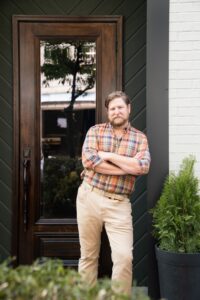
The newest dish at Helen, the lauded Southern grill in downtown Birmingham, embodies chef-owner Rob McDaniel’s dedication to serving the best seasonal ingredients he can find, sourced as locally as possible.
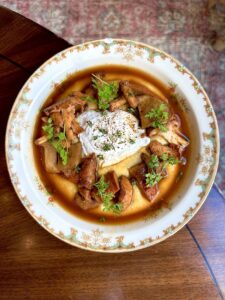
It utilizes grits and eggs from Wilsonville, foraged mushrooms from a Birmingham purveyor, artisanal country ham from Tennessee, and redeye gravy made with Non-Fiction coffee roasted in Pelham.
(Helen/Contributed)
In the no-meat take on Gulf-style shrimp and grits, wild lobster mushrooms and chanterelles are roasted and braised on a wood fire with thyme and bay leaf. They’re served on top of creamy McEwen & Sons grits and doused with an umami-rich gravy made from rich pork stock and coffee. An egg, soft-cooked in an immersion blender, provides a second sauce when diners pierce its runny yolk.
“It has this really nice, firm texture,” McDaniel, a veteran of Alabama restaurant kitchens, says of the lobster mushroom. “To me, it is very earthy. The chanterelle mushroom has more of a delicate texture, with an apricot aroma. This dish is delicious, especially as the weather gets a little crisp outside.”
Understatedly named McEwen & Sons Grits, it joins six other vegetables in the section labeled “Vegetables, Grains & Legumes” on Helen’s a la carte menu. Each side (most are $17) is designed to be served family-style, feeding up to four people, McDaniel says.
Most of those dishes are vegetarian or vegan; the rest can be made so. In the grits dish, for example, a broth produced by cooking the mushrooms can be substituted for pork stock in the redeye gravy, McDaniel says.
Each vegetable dish, which rotate regularly, is thoughtfully composed.
(Helen/Contributed)
“We’ve always said they were the heart of the menu,” McDaniel says. “Most every restaurant I’ve worked in, if a guest says I’m a vegan or a vegetarian they usually get a collection of things from other plates on the menu. We really put some thought into that so people who don’t want to eat meat can have the same dining experience as anyone else in their group.”
Each course on the dinner menu is built for sharing. The fire-cooked meats are steakhouse portions, including beef cuts weighing up to 40 ounces, whole fish, and smoked half chickens. Top-of-the-line steaks, some aged up to 45 days for extra flavor, range from $80 for a 22-ounce strip to $150 for the 2.5-pound prime porterhouse. Other a la carte meats start at $25.
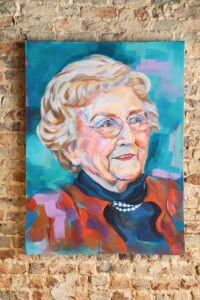
The restaurant pays tribute to McDaniel’s grandmother, Helen Frutiger, a talented cook whose home kitchen in Oneonta was outfitted with a grill. Meals there also showcased fresh-picked Southern-style vegetables.
“We’d come to her house and she’s over there flipping steaks on the grill,” says McDaniel, who grew up in Haleyville. “Her house would smell absolutely amazing. It’s a food memory that I have carried with me my whole life.”
The restaurant is open Tuesday through Friday for lunch, with a different lineup than at dinner. Helen’s popular Warm Angel Biscuits are common to both menus. The yeasty rolls are served with butter that has been whipped with cane syrup, and flaked sea salt.
(Helen/Contributed)
Desserts are seasonally-oriented and imaginative, currently including muscadine and scuppernong sorbet, and Spiced Caramel Pumpkin Tart with a butter cookie crust and brown butter pecans.
One of the state’s elite chefs, McDaniel has been a six-time semifinalist for a coveted James Beard regional best-chef award – both at SpringHouse restaurant at Lake Martin where he was executive chef from 2008-2020, and at Helen, which he and his wife, Emily, opened in August 2020. Along the way, Helen has garnered accolades from regional and national food media.
Chef McDaniel’s resume also includes Hot and Hot Fish Club in Birmingham, and Jim ‘N Nick’s, which has been a training ground for several local restaurant chef-owners.
With colder weather coming, expect more braises on the menu, McDaniel says. Helen’s kitchen uses a smoker for the simmering portion of the braise, which adds a different dimension to the flavors.
It’s all part of the creative process in Helen’s open kitchen. “We’ve got good, thoughtful chefs,” McDaniel says. “We bounce ideas off each other [and] try to make fun and interesting things.”
The McDaniels’ talents and drive have seen their business through tough times. SpringHouse opened just as the housing market tanked in 2008. Helen launched during the pandemic.
“We opened at one of the worst possible times,” the chef says. “We’ve been very blessed and fortunate to have the business we’ve had and continue to have.”
Helen is at 2013 Second Avenue North. It is open for lunch 11 a.m.-1 p.m. Tuesday-Friday, and for dinner 5 p.m.-9 p.m. Tuesday-Saturday. The bar opens at 4 p.m.
Wil Drake knows hamburgers top to bottom. Not only are burgers the most popular savory on the menu of his multistate business, Hero Doughnuts and Buns, the Homewood resident also is a former butcher.
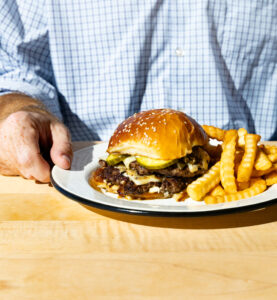
If there’s anyone you want to turn to for advice on throwing a burger bash on Memorial Day weekend (or any other occasion, for that matter), it’s Drake. Recently, he shared tips on making uber-trendy smash burgers.
(Angie Mosier/Contributed)
Smash burgers are more practical when grilling for a crowd, he says. They finish faster than conventional thicker patties and cook thoroughly, which is essential for any diner who doesn’t like even a trace of red in the middle of their meat. Traditional patties require more attention to keep them from finishing tough and dry.
In general, simplicity is key when making burgers. Let the beef sing, says Drake, who also has been a drummer in a touring band. Everything else is backing vocals.
Especially with smash burgers, try grilling in a cast-iron skillet to avoid patty parts falling through the grate every time you touch the meat. Better still, pre-smash the patties before taking them outside. Drake uses a tortilla press, available at specialty markets that specialize in Mexican food.
“I’ll have a pile of those ready to go,” he says. “I use two pieces of patty paper and a four-ounce portion of meat. I just smash it between the paper on a tortilla press—get it fairly thin.”
From buying beef to preferred condiments, here are Wil’s tips:
CHOOSING THE BEEF
The standard ratio of meat to fat for hamburgers is 80/20 (80 percent lean and 20 percent fat). But even more fat helps reduce shrinkage while cooking, so Drake prefers a 75/25 or even 70/30 blend. Figure six ounces each for traditional burgers. Smash patties need four ounces per patty, but Drake likes to stack two patties in each bun. The better the quality of the meat, the better the resulting burger.
MAKING THE PATTIES
No need to season before forming patties. The goal is to taste the meat, not mask it. Mess with the meat as little as possible when forming patties. They should be slightly larger than the bun to account for shrinkage while cooking.
If you are making thicker burgers, gently form the patty to ½ to ¾ inches thick. Press an indentation into the center on one side, which helps the meat better maintain its shape and texture when cooking.
GRILLING TIPS
Using a flat-top griddle or a cast-iron skillet on the grill works well for traditional burgers as well as smash versions. Those surfaces help the meat sear evenly.
Just before grilling, generously season both sides of the patty with salt and pepper. While thicker burgers should be cooked evenly on both sides, smash burgers will come out overcooked that way. Cook smash burgers on one side until crisp, then flip the patty and immediately add the cheese. As soon as the cheese melts, remove the burger from the grill.
CHEESE
Drake prefers good old Kraft American cheese on burgers. Cheddar cheese gets greasier while American cheese melts quickly “and doesn’t add a ton of grease and heaviness,” he says.
BUNS
Drake uses his bakery’s homemade brioche buns at Hero. But if he buys buns at the grocery, he gets Martin’s Famous potato buns. Toast both halves on the grill.
ONIONS
Many people are put off by the taste of raw onion. For a double-stack smash burger, put thin-sliced onions (Hero makes them ultra-thin with a mandoline) between the two patties after they come off the grill. The onions steam and “all the nuances of raw onion that people don’t like just go away,” Drake says.
CONDIMENTS
Burgers need acid to cut through the fat from the meat and cheese. Pickles serve that purpose, as does mustard. Mayonnaise adds fat, but the lemon in it contributes acidity.
Or make a spread with mayonnaise, mustard, salt, pepper, and personal touches like Worcestershire sauce or vinegar. (The Cracked Sauce at Hero contains both Worcestershire and cider vinegar and the mayo is Duke’s; some other ingredients are a closely guarded secret.)
Ketchup adds more sweetness than Drake prefers on his burgers. But that is a matter of personal taste. After all, Hero’s most popular sandwich is the Dad Burger, which is dressed with sweet-salty bacon jam.
Courtesy of SoulGrown Alabama.
Springtime is prime time for festivals celebrating Alabama food and drink. Whether it’s Middle Eastern food, Southern barbecue, or good old gumbo, you won’t leave hungry.
There are gatherings to enjoy chocolate, grits, wings, tacos, and even poke salat. Quench your thirst with margaritas, beer, wine, and mimosas. You’ll find something to tickle your tastebuds in this roundup of events in April and May.
4th Annual Deep South Rodeo and Crawfish Festival
April 5-6 in Jemison
Steer wrestling, barrel racing, and bull riding competitions are supplemented by arts and crafts vendors and food trucks.
Tickets: $15, free for 3 and under. Gates open at 5 p.m. Friday and 11 a.m. Saturday.
April 6 in Foley
Set for Heritage Park, music and local beer share the bill.
Tickets are $5 plus fee; 12 and under free. Open 10 a.m.-6 p.m.
Ozark Crawdad and Music Festival
April 6 in Ozark
Set for the square downtown, the festival is open 9 a.m.-6 p.m.
Admission is free.
St. Elias Food & Cultural Festival
April 12-13 in Birmingham
Held at St. Elias Maronite Church in Forest Park, the event includes music and dancing, a 5k race, and church tours. But the Middle Eastern food is the star, and both walk-up and takeout orders are available.
Admission is free. Open 10 a.m.-9 p.m.
April 13 in Birmingham
Hosted by Cahaba Brewing Company, it benefits the Breast Cancer Research Foundation of Alabama.
Tickets are $15 each, and $50 for VIP access. Open noon-4 p.m.
April 13 in Calera
Held at Corbin Farms Winery, it is the rare festival that features grape-stomping, along with the more typical vendors, music, and food. Hours are 11 a.m.-6 p.m.
Tickets are $27 for ages 21 and over, $8 for under 21.
April 13 in Mobile
The benefit for Penelope House is now in its 14th year.
Tickets are $10 for above 12, $5 for ages 4-12; under 4 free. Open 10 a.m.-3 p.m.
April 13 in Birmingham
The benefit for Episcopal Place is set at Ghost Train Brewing.
Tickets are $20 in advance and $25 at the door. Hours are noon-4 p.m.
April 14 in Birmingham
Another celebration showcasing the Magic City’s long-established congregations, the Jewish Food and Cultural Fest bills itself as one of Birmingham’s favorite outdoor fests. Braised brisket, giant corned beef sandwiches rugelach, and matzo ball soup are just the start of the food available for purchase.
Admission is free. Open 11 a.m.-3 p.m.
Bob Sykes BBQ and Blues Festival
April 20 in Bessemer
Hear some of the best blues music this side of the late lamented Bessemer joint Gip’s Place. Now in its 13th year, it is barbecue scion Van Sykes thank you to the city where Bob Sykes Bar-B-Q opened in 1957.
Tickets are $25. The festival is at DeBardaleben Park, from noon to 8 p.m.
April 20 in Birmingham
The homage to the ultimate brunch libation is set for Sloss Furnaces National Historic Landmark from noon to 4 p.m.
Tickets are $55, plus fee. 21 and over only ID required.
West Alabama Food and Wine Festival
April 21 in Northport
This year’s festival in downtown Northport supports West Alabama Food Bank and Turning Point nonprofits.
Tickets are $75 plus a fee in advance, and $100 plus a fee for VIP. Open from 4-7 p.m. (People with VIP tickets are admitted at 3:30).
Smoke on the Water Festival & BBQ Contest
April 27 in Florence
Benefitting Shoals Scholar Dollars, it will be held at McFarland Park.
Admission is $5 per person; $20 maximum for families. Vote for your favorite barbecue for $5. Open from 9 a.m.-4 p.m.
April 27 in Albertville
Set downtown at the farmers market parking lot, look for music, beer — and team dodgeball.
General admission tickets, available online, are $35 plus fee. Open from 4-8 p.m.
April 27 in Childersburg
Shrimp and grits are the thing at the annual homage to ground hominy corn at the Kymulga Grist Mill and Park.
Admission is free. Open from 9 a.m.-2 p.m.
April 27 in Vestavia Hills
The charity fundraiser sponsored by Leadership Vestavia Hills will be held on the Vestavia city hall lawn.
Tickets are $12 advance plus a fee via Eventbrite, and $15 at the gate ($10 with non-perishable food donation). Children 10 and under are free. Open from 4-7 p.m.
April 27-28 in Birmingham
One of the premiere events of spring, the opportunity to sample local restaurants and breweries, and sip wine at Sloss Furnaces National Historic Landmark.
Ticket information TBA. Open from noon-3 p.m.
May 9 in Trussville
Taste of Trussville is the launch for Trussville Restaurant Week, May 10-26, and will take place at Trussville Civic Center.
Tickets are available via the Trussville Chamber of Commerce office. Open from 5:30-8:30 p.m.
May 11 in Birmingham
A portion of the ticket price supports Railroad Park.
General admission tickets are $55, VIP tickets are $85, and they offer a $20 Designated Driver ticket. Open from 6-9 p.m.
May 18 in Huntsville
Look for the fun at the National Speleological Society conference center on Pulaski Pike.
Tickets start at $25 plus a fee. Open from 10 a.m.-8 p.m.
May 18 in Arab
The festival is named for the Southern dish made from the leaves of pokeweed, which is foraged and must be properly prepared to stave its toxicity.
Admission is free. Times TBA. The event starts with a morning 5k race.
May 19 in Birmingham
The 7-year-old celebration of Birmingham’s rich taco offerings will take place at Sloss Furnaces National Historic Landmark.
Advance tickets are $10 plus a fee and $15 at the gate. 12 and under are free. Open from 1-7 p.m.
Do you have a beer nut on your shopping list? Are you down to the wire getting presents?
Craft breweries across Alabama have you covered.
More than four dozen microbreweries and brew pubs dot the state, allowing plenty of opportunities to both support a local business and give an unusual but personal gift. Some beer-makers, like Cahaba Brewing in Birmingham and Straight to Ale in Huntsville, also distill their own spirits.
Not sure where to look? The U. S. Brewery Guide maintains a thorough list of Alabama breweries and brew pubs.
Here are a few ideas, some for specific beers or beer-related events, and others that will work for any nearby brewery. You can shop for most of it online. But shipping beer and spirits is illegal in Alabama.
BREWS
Giving something seasonal or rare is always a good choice for the ale aficionado. The Birmingham area has great options for beer hounds.
Good People Brewing Company celebrates the annual December release of its souped-up imperial stout ale, El Gordo, pouring past and present vintages in its taproom on what the brewery calls El Gordo Day (this year on December 16). At 13.9 percent alcohol, it is the strongest beer you can buy in Alabama (state law sets a 14 percent limit). Good People also sells El Gordo in 22-ounce bottles (along with other bottled GP beers) in its taproom across from Regions Field in Birmingham’s Parkside District. Good People has released batches of El Gordo annually since 2010, the year the Free the Hops advocacy group convinced state legislators to allow stronger beers in Alabama.
Another option for going straight to the source for a special release is Brock’s Gap Brewery in Hoover. Its canned Christmas Ale is a full-bodied dark winter brew (6 percent alcohol) with a hint of peppermint. Bittering hops are relatively mild (impress your beer lover by telling them it’s 27 IBU, which in beer geek for relatively mild bitterness). Hoover’s first brewery is on Mineral Trace Road and is open daily.
For a broader selection, hop on down to Hop City Beer and Wine in Birmingham’s Pepper Place District. You’ll find canned and bottled holiday brews from around the world, including Samuel Smith’s Winter Welcome from England, Delerium Noel from Belgium, and domestically brewed Fat Orange Cat Santa Claws. Here is a full list.
If the beer fiend on your gift list lives in the Huntsville-Madison area, sign them up for the Anti Temperance Society at Straight to Ale Brewing. For $19.99 per month, they are welcomed with a swag box and receive food and merchandise discounts, early access to beer releases, a monthly members-only growler fill, and more.
SWAG
Alcohol can’t be shipped, but swag can. Every Alabama brewery sells branded t-shirts and hoodies, glassware, and other paraphernalia. Check a favored brewery’s store either online or at its taproom.
GIFT CARDS
Pay for a few brews or let the recipient choose their own swag. Order at the brewery’s website or in-house store.
NIGHTS OUT
Set up a pub crawl so your craft beer fan can check out several places and enjoy the differences among the brews they make. Mobile has three breweries and a beer bar within a 10-square-block area downtown. Organize a walking tour that starts at Iron Hand Brewing on State Street and zig-zags to Braided River Brewing, Loda Bier Garten, and finally Oyster City Brewing on Government Street.
Downtown Huntsville has put together a craft beer trail with more than a half-dozen stops Visit North Alabama’s craft beer trail is perfect for weekend mountain get-aways. Both have passport promotions; visit each stop and receive a prize.
Freddy is the Federal Affairs Manager at Alabama Power Company. His primary responsibilities are the company’s federal governmental relations efforts in Washington., and throughout the state. Freddy has worked for Alabama Power for over 12 years. He began his career in Western Division, headquartered in Tuscaloosa, where he was responsible for relationships with elected officials, civic organizations, and local media while supporting business office managers in communities throughout West Alabama.

While with the company’s Public Relations department, he supported a variety of departments including Economic Development, Generation, Marketing, Customer Service, Corporate Real Estate, Power Delivery, and Environmental Affairs. He also was a company spokesperson on the media relations team. He has served in areas of increasing responsibility in Governmental & Corporate Affairs.
A native of Demopolis and avid outdoorsman, Freddy attended The University of West Alabama and The University of Alabama, where he received a B.A. in Public Relations. Freddy serves on the Board of Directors for Alabama Black Belt Adventures and is an active member of The Alabama Wildlife Federation. In addition, he serves on the board of directors of The ZeroZero Foundation and The Alabama Business Coalition in Washington, D.C. He is a past United Way Loaned Executive and chaired Alabama Power’s company-wide campaign for the United Way of Central Alabama.
SOUL OF THE SOUTH Q&A
1) What was your “aha” moment/When did you decide that this was the industry for you?
In my role at Alabama Power, I work every day toward our mission of making our state the best it can be. The people make our company, and I realized very early on that I wanted to be part of it. We cover a lot of ground, but our commitment to conservation and stewardship helps support our beautiful natural resources and promote eco-tourism.
2) How did your upbringing/time spent in Alabama shape your career?
If you don’t know me, you know where I am from within 5 minutes of talking with me. That is not by design, it’s just who I am. I am very thankful for where my career has taken me. It has only helped my passion to support my home and the Black Belt region. I look up to my parents and had a front-row seat to two of the hardest-working people I know. You would never know if my dad is having a bad day. He treats everyone the same, no matter who you are. I try to live up to his example in everything I do.
3) What keeps you moving forward in the industry? Do you have a quote or motto that you find resonates?
I want future generations to enjoy the outdoors, have access to a quality education and healthcare, and work/raise their families here. It seems simple, but we must evolve and be open to new ideas to leave our state even better than we found it.
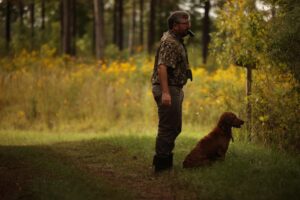
(Freddy Padilla/Contributed)
4) How has your nominator made a positive impact on your idea of/relationship to the industry?
Mr. Tim Gothard is a good friend, role model, and mentor. His attention to detail and ability to bring people together from all walks of life is special. His organization’s impact is felt throughout our state each day.
5) What would you consider your greatest professional accomplishment?
As far as my career, I try to be the best I can be where I am. In my current role as Federal Affairs Manager, I get to work with our Congressional Delegation and colleagues to move our state forward. I am proud to represent our state and Alabama Power in Washington, D.C. and at home. I enjoy the collaboration my job allows me to foster through partnerships. The successful projects where everyone sits at the table, from the business community to government agencies to non-profits, are the most rewarding.
6) What would you like to see more of in Alabama as it pertains to your industry?
I have already mentioned this, but collaboration. Our world is changing, and we need diverse voices at the table. We must meet potential partners where they are and listen to what they have to say.
It doesn’t matter the magnitude or the focus of a project. This will allow us to lean into innovation and move our state forward.
Alabamians know a good burger when they taste one. From state-based chains like Milo’s and Jack’s to its diners and dives — even its temples of gastronomy — the magical combination of beef patty, bun, cheese and condiments is a Yellowhammer delight.
The best burgers are hand-patted and cooked to order. Many are ground in-house, with flavor boosters like high-fat Wagyu beef, bacon, or tallow. Some offer double patties. A few are topped with a fried egg, which provides its own sauce.
We searched throughout the state for local legends and online darlings, collating several “best-of” lists to choose representatives that we consider to be the best burgers in Alabama.
- AVENUE PUB AND GRILL– Tuscaloosa
Available at lunch, dinner, and weekend brunch, The Bacon Burger boasts provolone cheese, bacon, red onion, house-made pickles, mixed greens, and mayonnaise. It’s drawn accolades from online publications like BuzzFeed, Best Things Alabama, Delish, and Big 7 Travel. Look for casual dining and both traditional and funky cocktails at the downtown Tuscaloosa establishment. - BUTCH CASSIDY’S CAFÉ – Mobile
With eight options, Butch Cassidy’s hamburgers are a perennial favorite in the Port City, winning several “best burger” contests. Cassidy’s dubs its namesake Butch Burger as “Soon to be NOW famous,” but the bacon cheeseburger (topped with all the usual suspects) has long had a loyal following. The frontier theme continues with the Wild West Burger and the Prairie Bacon Burger. - CHEZ FONFON – Birmingham
No burger in Alabama has received more press than the Hamburger Fonfon at Chez Fonfon, Frank and Pardis Stitt’s bistro next to their much-lauded restaurant, Highlands Bar and Grill. The heritage-beef grind is topped by nutty French Comte cheese, and served with a griddled Brioche bun, pickles, and dijonnaise—all house-made—and grilled red onion. - CHUBBFATHER’S – Alabaster, Chelsea
Its namesake is the Chubba Burger (bacon, American and Swiss cheeses, lettuce, tomato, grilled onion, mayo, and pickle) but the attention-grabber for many fans is the Zydeco, with bacon, house-made Cajun horseradish sauce, and a mound of fried onion straws. Twenty sauce options range from ranch and barbecue to the self-explanatory “Quite a Bit Hotter.” - FARM BURGER – Huntsville
It prepares patties with a pedigree, grass-fed dry-aged beef raised nearby and ground in-house with a bit of beef tallow for extra flavor. The Farm Burger includes aged Vermont white cheddar, caramelized onions, and house “FB” sauce. The menu includes Weekly Local specialty burgers, build-your-own choices, and the Double Bacon Cheeseburger (patties are made from a beef-bacon blend). Other options: house-made vegan and chorizo pork patties, Beyond Burger, and chicken. - NIFFER’S PLACE – Auburn, Lake Martin
Known collectively as “Niff’s Specialties,” choices include The Wickled Drummy (house-made pimento cheese, bacon and Wickles pickles) and The Niff Jr. (four cheeses, bacon and fried egg). Patty choices include a half-pound beef burger, vegetarian garden patty, black bean patty, grilled or fried chicken breast, turkey burger, and vegan Beyond Burger. Any burger can be “Nifferized,” with double protein for an additional charge. - J&J GROCERY AND DELI – Bessemer
This family-run restaurant in a small store outside Bessemer has been flipping burgers, a couple hundred a day, for decades (the store’s even older). A great sandwich (making several best-of lists) at a great price, the thick, juicy patties are hand-formed and grilled. Variations on the standard hamburger-cheeseburger theme include bacon, chili, barbecue, Hawaiian, or mushroom. - VICKI’S LUNCH VAN – Montgomery
Originally a parked food truck, it moved to a brick-and-mortar building in 2013. Choose burgers by patty size —four-, six-, or eight-ounce. The Gunter Pile is a no-bun mashup—a base of fries topped with a six-ounce burger patty, and covered in cheese, gravy, grilled onions, and fried onions.
Bunkers, Auburn’s first-of-its-kind cocktail bar, restaurant, and indoor golf simulator, has just opened.
The concept was developed by Plainsmen Consulting, the team behind many of Alabama’s well-known establishments including Collins Bar, Cayo Coco, and Local Roots. The beverage menu, created by award-winning beverage director Josh Schaff, showcases unique spins on familiar cocktails like the Frozen Azalea, Bunkers Julep, and The Nitro Charged Espresso Martini.
“I am so proud to be able to have worked with such a great team bringing Bunkers to Auburn,” said Josh Schaff, beverage director of Plainsmen Consulting. “Bunkers is an innovative blend of exceptional craft cocktails, high-end golf experience and restaurant. We are so proud to bring this concept to downtown Auburn.”
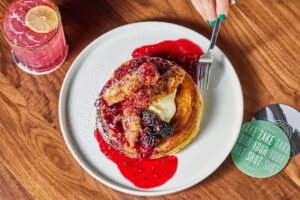
(Stacy K Allen/Contributed)
The food menu focuses on classic gastropub dishes with an elevated twist such as Tachos, the Bunkers Burger, Shrimp Tacos, Thai Chili Wings, and more. Conveniently located near Auburn University and just a block from the famous Toomer’s Corner, the restaurant and bar will be open every day for lunch and dinner with brunch on Sundays.
Bunkers has eight semi-private simulator suites with comfortable seating that can be reserved for up to ten guests. The suites can be booked daily to experience the state-of-the-art immersive sports game simulators featuring golf, football, and more. They can also be reserved for game-day Saturdays, the Super Bowl, and other sporting events or pay-per-view watch parties.

(Stacy K Allen/Contributed)
“Our goal was to bring a completely new and exciting concept to Downtown Auburn,” said Dustin Spruill of Plainsmen Consulting. “We wanted to transform our guests into a space that was completely new without being unfamiliar. We are extremely proud of what we have delivered and could not have done this without our incredible team.”
The hours of operation are Sunday to Thursday from 11 a.m. to 10 p.m.; and Fridays and Saturdays, 11 a.m. to 1 a.m.
For more information on Bunkers, visit here.
Courtesy of SoulGrown Alabama.
Our 2023 Cutest Street in Alabama is Downtown Wetumpka’s Company Street. There are many factors that contribute to our distinction of “Cutest Street in Alabama.” This year, our decision was made based on community involvement and revitalization efforts as well as overall charm.
Downtown Wetumpka has seen an impressive shift over the last years and the revitalization efforts were accelerated by an appearance on HGTV’s “Home Town Takeover.” This feature boosted Wetumpka’s tourism rates and increased name recognition for the city.
While the city was already on track to see improvements, this exposure was a driving force in moving them forward quickly and effectively. Many areas of the city saw aesthetic improvements over the course of the show, Company Street being one of them.
Company Street was home to Wetumpka’s arts festival Nov. 11. The Wetumpka Wildlife Arts Festival is a cumulation and celebration of wildlife and field sports through the arts. The celebration took place on the banks of the Coosa River and offered a variety of exciting experiences.
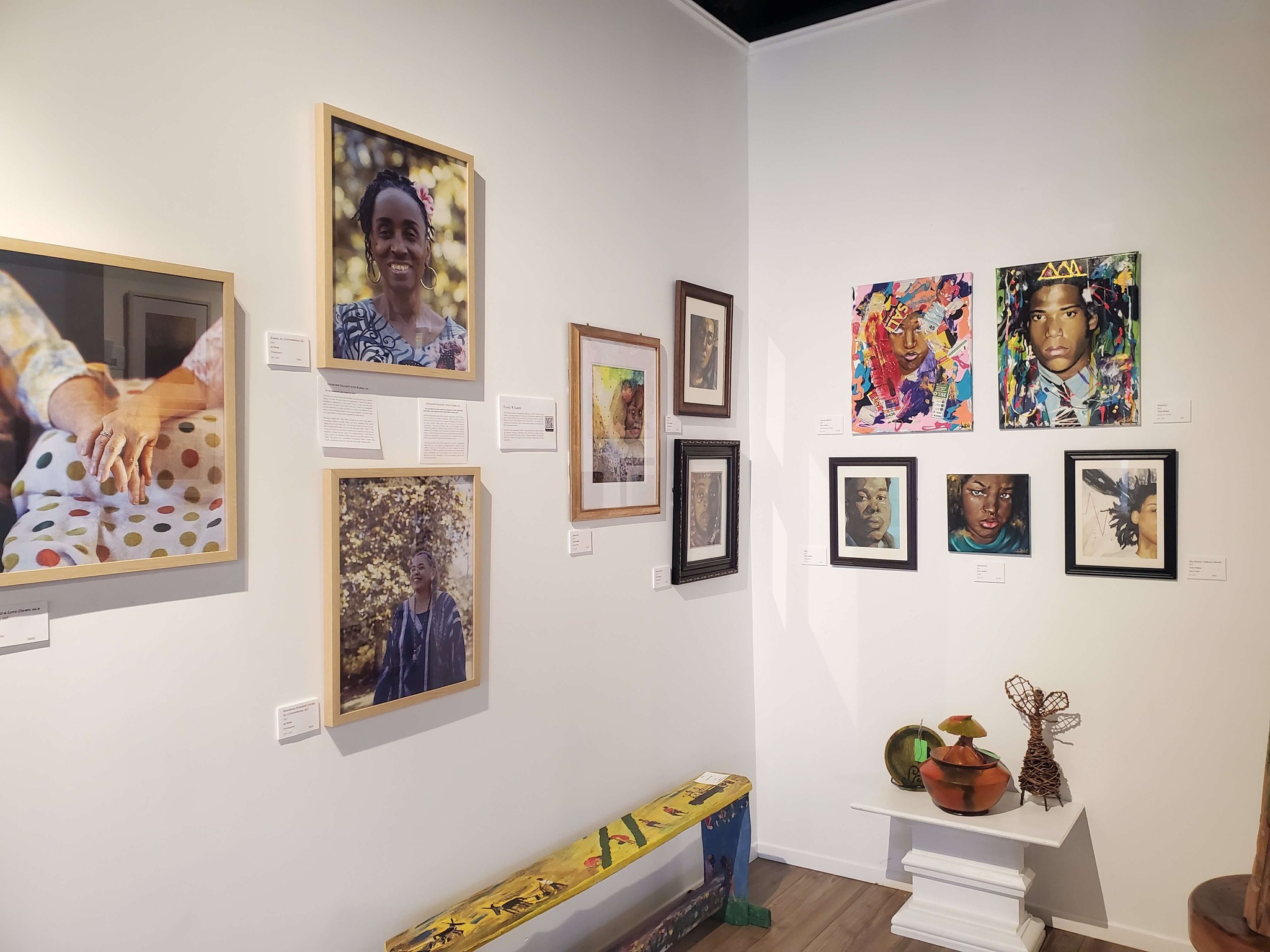
(The Kelly Fitzpatrick Center for the Arts/Facebook)
THE KELLY
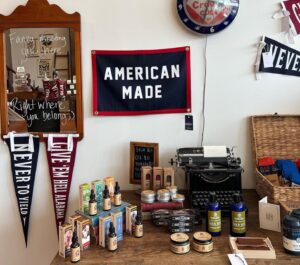
(Company St. Mercantile/Facebook)
COMPANY STREET MERCANTILE
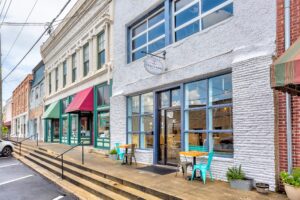
(The Coosa Cleaver/Facebook)
THE COOSA CLEAVER
A stroll through picturesque Mooresville might make you forget what century this is. The beautifully preserved, tree-shaded village was incorporated in 1818, a year before statehood. Its residents included future United States president Andrew Johnson, and another president-to-be, James Garfield, preached there. There are sheep and a tavern and a tiny post office that opened around 1840 and remains in operation.
Few motorists visit this idyllic spot, however. Most zip past Mooresville on I-565, less than a mile away, headed to big, booming Huntsville. That’s the sort of missed connection the Singing River Trail can fix, says John Kvach, Ph.D., its executive director. The trail is a recreational greenway project with an epic reach — a pedestrian and bicycling path winding more than 200 miles across the top of Alabama that will showcase the historical and natural heritage of Mooresville and 26 other towns and cities along the route.
This “green ribbon,” as Kvach calls the Singing River Trail, will tie north Alabama together, forging physical and personal links among communities that will boost business growth, health and wellness, quality of life — and our understanding of one another. “It will ensure that we do not forget about each other,” he says.
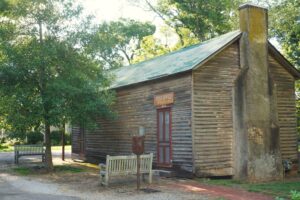
Mooresville Post Office (Sakara Smeby/Contributed)
Memory lane
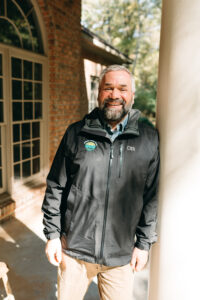
John Kvach (Alabama Humanities Alliance/Contributed)
A surefire way to connect with the soul of a place is to learn about its past. And the Singing River Trail will lead visitors on a journey through time, beginning with the region’s first residents. The trail’s name, in fact, comes from the local Yuchi Indian tribe’s description of the “river that sings” — the Tennessee River. The Singing River Trail was identified as a Native American heritage trail early on because the route roughly parallels a portion of the Trail of Tears, the tragic 1830s-1840s expulsion of Southeastern tribes from their ancestral homelands to Oklahoma.
But Kvach emphasizes that the Singing River Trail won’t focus only on the Trail of Tears because that’s just one facet of the Native story. Instead, the trail will highlight the richness of Native American culture and history in the region. There’s also a broader “story of the human condition” to share that touches on all eras of the state’s past, says Kvach, who was previously a history professor at the University of Alabama in Huntsville and serves on the Alabama Humanities Alliance board of directors.
“By highlighting our unique histories and our combined history,” Kvach notes, “we can help people see culture through different lenses.”
That will make the Singing River Trail a prime example of “public history” — the presentation of history outside the classroom, which is how most people receive their historical education, explains Brian Dempsey, Ph.D., director of the University of North Alabama Public History Center. Public history encompasses everything from museums and living history centers to documentary films and podcasts. But projects like the Singing River Trail are especially effective because they place people within the landscapes where important events happened.
“If you’re physically standing in the location, then you can identify with the story better,” Dempsey says. “What was it like for, say, a Cherokee family to have to march across this land in the winter? You gain a more personal perspective. There’s an opportunity for empathy.”
Roots of prosperity
Interpreting the past in the present can also spark future growth.
“There’s a distinct return on investment from leveraging heritage,” Dempsey says, with public history projects attracting tourism dollars to local economies. (Once completed, the Singing River Trail will have an estimated economic impact of $26 million annually, creating 100 permanent jobs and producing $866,000 in transportation benefits and $1.4 million in health benefits, according to an analysis conducted for the trail.) Many cities have discovered that marketing their history appeals to visitors, businesses, and potential residents. For proof, look to Muscle Shoals, synonymous with its music legacy, and Huntsville, the Rocket City.
The Singing River Trail will create opportunities for sustainable economic development along its route, with small towns potentially feeling the biggest impact, says Carolyn Barske Crawford, Ph.D., director of the Muscle Shoals National Heritage Area (MSNHA). Funded by the National Park Service and headquartered at the University of North Alabama, the MSNHA supports cultural heritage initiatives in six northwest Alabama counties, including planning the Singing River Trail’s path from Decatur to the Shoals. She explains that rural towns will serve as trailheads and key stopping points on the Singing River Trail’s longest stretches, which will entice restaurants, accommodations, bike repair shops, and other businesses to open their doors. And that interaction with travelers will give those communities a chance to share their own stories.
Dempsey notes that when “people in small towns tell you what they value beyond the beautiful homes and famous names, you see a rich tapestry of history” that reflects a diversity of people and experiences. Both he and Crawford are eager to see how the towns will present their pasts beyond the traditional interpretive sign — through public art, perhaps, or programming such as walking tours.
“And they shouldn’t shy away from the stuff that makes our history complicated,” Crawford says. “People appreciate authentic storytelling.”
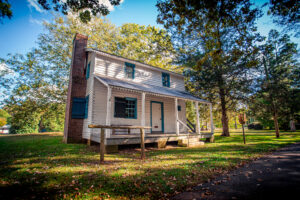
Mooresville Stagecoach Inn(Red Sage/Contributed)
The path ahead
Kvach compares the process of building a state-spanning greenway to assembling a giant, complicated jigsaw puzzle. Working with local governments, he must determine where newly built sections will join existing trails and identify the public easements, city parks, and state and federal land — such as Wheeler National Wildlife Refuge — that can host potential paths. Small towns have been eager partners, with some jumping in to construct portions of the route or revamp their trailside main streets.
Ultimately, the Singing River Trail’s completion will depend upon voluntary participation from private landowners who can close crucial gaps. “On average, the value of a property with a long trail goes up about 7 to 10 percent,” Kvach says. “Once they hear that, usually they ask how soon we can get the trail on their land.”
By the end of 2023, 15 total miles of the Singing River Trail should be open to the public, and Kvach estimates that more than half of the trail will be accessible or under construction within 10 to 15 years. He celebrates every new addition, looking forward to the time when visitors will hop off their bikes to explore Mooresville’s lovely lanes, play hopscotch in Courtland’s classic town square, savor soul food in Leighton, and get to know other communities along the route. He believes that kindling those genuine, personal connections will help the trail’s towns remain relevant — and preserve a unique sense of place — amid north Alabama’s rapid economic and population growth.
“It’s important for communities to hold on to what makes them different — and to the stories that got them where they are today,” Crawford adds. “Those are the places people want to visit.”
The pieces have been coming together for Auburn’s food scene over the last dozen years, as visionary chefs put down deep roots and the talent pool widens from the university’s brand-new culinary and hospitality education and training center.
Chef-driven restaurants Acre (2013), The Depot (2015), and Lucy’s (2018) have earned national and regional attention for Auburn in food and travel circles. The whiskey list at The Hound (2012) rivals any big-city counterpart.
The new Tony and Libba Rane Culinary Science Center is training future dining professionals in both back-of-house and front-of-house jobs by blending classroom, laboratory, and hands-on experience at an in-house restaurant and sommelier program, café, hotel, and other businesses serving the public.
Chefs and the farmers that supply them turn to university researchers to improve their respective crafts. David Bancroft, chef-owner of Acre, works with AU’s meat lab and local ranchers on best practices for responsible and sustainable production.
AU’s Shellfish Laboratory has played a critical role in the development of Alabama oyster farms, which find markets for their premium products at seafood-centric restaurants like The Depot.
Whether visiting for a home game or generally to enjoy the charms of the Loveliest Village on the Plains, here is a glance at restaurants setting new standards, and the one at the center of Auburn’s most famous football tradition.
(Lucy’s/Facebook)
Lucy’s
2300 Moore’s Mill Road
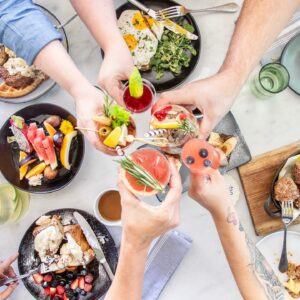
The menu at Lucy’s reflects its commitment to farm-to-table dining, listing nearly a dozen growers and producers in Alabama and Georgia that supply the hip modern American restaurant. Under Brian Paolina, the executive chef, and his sous chef, Sara Lemmon, the kitchen dishes shareable tapas-like plates, and entrees from sustainably-caught Gulf seafood, to beef, and duck cooked sous-vide. A pasta dish stars locally-grown veggies. Lucy’s brunch starts with Lemon Lavender Donuts, and mimosa options – regular or “Swanky.” Open for dinner Tuesday through Sunday, brunch on weekends. Closed Monday.
Acre
210 East Glenn Avenue
Chef-owner David Bancroft is celebrating a decade of serving modern Southern cuisine in the historic train depot downtown. Some of the produce and herbs is grown in gardens at the restaurant. The kitchen cures meats, pickles vegetables, and preserves fruit. What’s growing nearby and swimming in the Gulf of Mexico on that day dictates the menu at Acre that night. Bycatch, fish with little market value caught along with snapper and grouper, is used in ceviche and crudo. Open for lunch Wednesday through Sunday, dinner Monday through Saturday.
(The Depot/Facebook)
The Depot
124 Mitcham Avenue
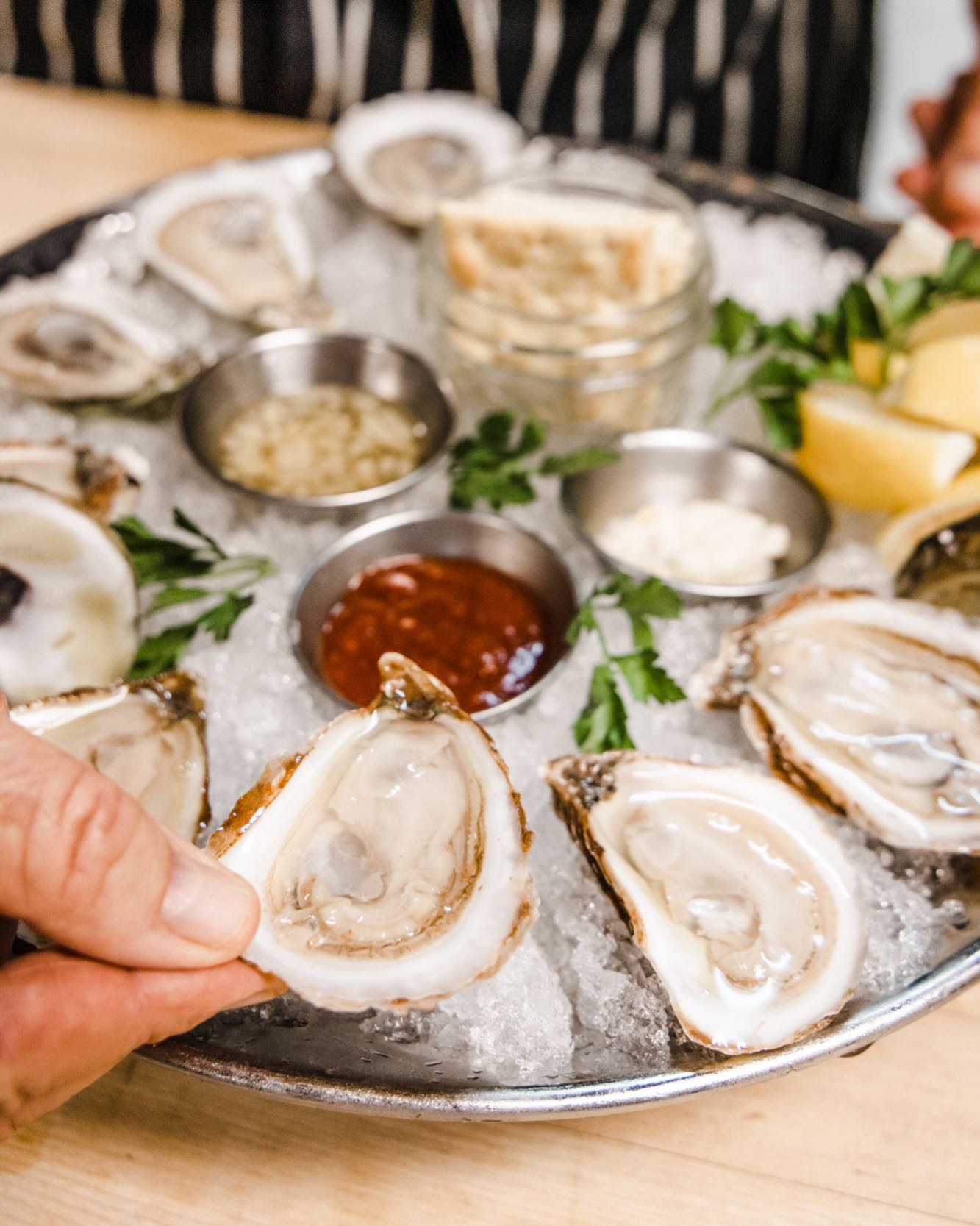
Under co-owner/executive chef Scott Simpon, The Depot boasts serving Alabama’s “freshest and finest seafood,” but it’s also expanding horizons such as exposing customers to the pleasures of premium tinned fish. Located in Auburn’s historic Train Depot, the restaurant is committed to serving sustainably harvested seafood and farmed oysters. Entrees include seafood, beef, and chicken; more than a half-dozen vegetable sides are served family-style. Daily specials and raw oyster selections are posted online by 5 p.m. Look for tapas on Tuesdays, sushi specials on Wednesdays, and oyster night on Thursdays – all with wine discounts. Open dinner only Tuesday through Saturday.
The Hound
124 Tichenor Avenue
It’s the home of the killer b’s, bacon and bourbon. The Bacon Flight appetizer features both artisan- and house-cured bellies, and the smoked pork flavors purloo, fried rice, collards, and other lucky victuals. The list of bourbons, ryes, Tennessee whiskeys, single-malt scotches, and blended whiskeys tops 200 bottles. Owned by Matthew and Jana Poirier, the restaurant and bar has the atmosphere of a hunting lodge. Lunch includes small plates, sandwiches, and a few entrees. The weekend brunch menu is eclectic and kid-friendly. Vegetarians get some love on a dinner menu teeming with beef, bison, fish, and fowl. Open for lunch and dinner Tuesday through Friday, and brunch and dinner during the weekend, The Hound is closed Mondays.
(The Hotel at Auburn University & Dixon Conference Center/Facebook)
Ariccia Cucina
241 South College Street
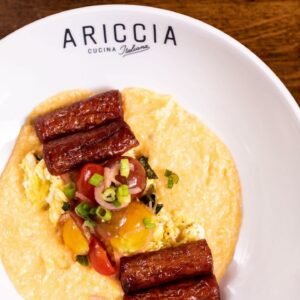
Auburn University and its sister campus in Ariccia, Italy, partner in this upscale classic Italian restaurant in The Hotel at Auburn University. The restaurant is open for brunch and dinner, and the related lounge, Piccolo 241 Jazz and Cocktails, serves food starting at 3 p.m. Stocking more than 1,500 bottles, the restaurant has won top honors from Wine Spectator. The pasta is made in-house; other signature dishes include porchetta, house-made focaccia, and wood-fired pizzas.
Toomer’s Drugs
100 North College Street
Sheldon “Shel” Toomer was a halfback for Auburn University’s inaugural football team, a state legislator, and an entrepreneur who opened his namesake drug store and soda fountain in 1896. It serves old-fashioned counter food like grilled cheese, sandwiches, pies, ice cream, shakes, and “World Famous” fresh-squeezed lemonade. Its souvenirs are popular; the website even offers free shipping for orders $75 and up. Toomer’s employees started Auburn’s famous tree-papering tradition by tossing ticker tape after away wins; students switched to toilet paper when they caught on to the celebration. Toomer’s Drugs is open daily.
Politics and art don’t typically go hand in hand, but for Birmingham-based artist Kyle Rogers, the two will forever be intertwined.
The Charleston, S.C., native discovered a passion for art during a decades-long career as a lobbyist where he traveled up to 300 days a year. During long and lonely business trips, he created constantly. Using an iPad app, he interpreted everything he saw, from people dining at coffee shops to folks waiting at airport terminals.
He quickly found faces to be his forte and spent hours painting blues and jazz musicians, cowboys, and Native Americans. Though he certainly has his favorite subjects, Rogers will paint just about anything that comes to his mind — and on any surface that he can get.
During the pandemic, he painted an entire series of magazine covers on brown paper Trader Joe’s bags.
“I just have to create,” he says. “If I’m out jogging, and I hear a song, I’m painting the song in my head.”
Though Rogers still works as the vice president of external affairs for Spire, he paints any chance he gets and is excited to get more of his work out in the world.
Tell us about your path to becoming an artist.
I’ve been compelled to create art in some form ever since I can remember. I moved to Washington, D.C., right out of college in 1989 to work for a congressman and enjoyed entertaining friends with political and satirical cartoons. Work eventually got in the way, and I found myself creating less. A few years after moving to D.C., I became a lobbyist and started traveling. Gradually, a few trips a year turned into 300 days a year. About 15 years ago, while in the midst of this rigorous travel pace, I started drawing to pass the time on planes. I found myself drawn to art and visited art galleries all over the country whenever I would find a few spare hours on the road. One day in 2014, I was visiting a gallery in New Orleans. I asked the gentlemen working at the gallery if I could draw one of the paintings, not realizing I was asking the artist. He kindly permitted me to draw his work, after which we talked at length, and he encouraged me to take up painting.
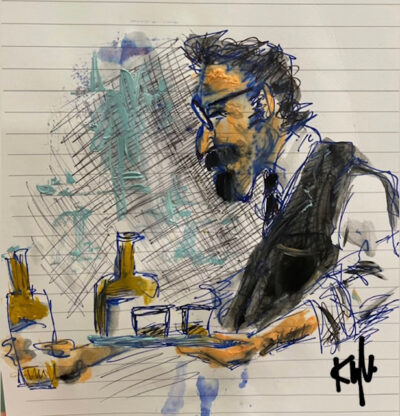 I returned to D.C. and began my very first painting. I completed about three or four over the next few months. A few months later, I returned to New Orleans for another work trip. Only this time, my life was forever changed. I suffered a grade three electrical block in my heart only hours after my arrival. After my health scare, I knew I had to make some changes. I dove into art (primarily drawing and painting) as a way to relax. Soon, I was actually painting on planes to de-stress during travel. I found myself making many friends on the road as I entertained passengers and crew with my art creations, often leaving my art with them as a parting gift. Before long, it became a passion.
Five years ago, I finally gave up the D.C. lobbyist job and all the stress that went with it to move to Birmingham. But I didn’t give up my love of creating art. I just kept on painting, refining my technique, and connecting with people as I let my soul speak through my creations.
How did you develop your style?
For years, I would sit through executive meetings, and to better comprehend, I would take my iPad and doodle or draw, so that’s really how I got into art. I found this thing called Sketchbook and you could take your finger and draw. I literally drew constantly. On a plane, I would sit down and just start drawing and people would be looking. I’d do a thousand drawings on a flight.
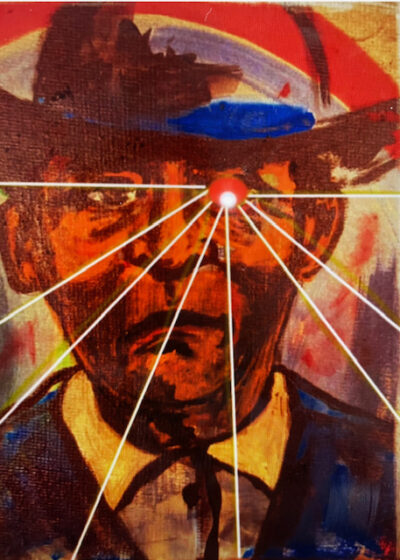 Shortly after my health scare, I went home for Christmas to Charleston and it snowed. We were blocked in for four days. My grandma had lived with my parents, and she painted. So over those four days, I used her paint to try painting a couple of paintings, and was whipping them out pretty fast. My dad said you should try to pursue this. The more I played around with it, the more I found that it was just calming. It became my thing. If I get mad, I could go doodle or paint.
Because I got so used to painting on an iPad, I see (my paintings) like that. When I paint, I hit a mark, hit a mark, hit a mark, and then paint around and in between the marks that I made. I can then weirdly see it like that.
What inspires your work?
I see art in the marble tile of a hotel shower, in the reflections of the sun on the pavement, in roots popping up from the dirt … literally everywhere. It is as if I am still a kid staring up at the clouds trying to find things. My favorite things to paint are people in scenery, still faces, and horses. But I’ll paint whatever comes to me. When I put the first mark of paint on a canvas, I just see something and off I go. Life is my inspiration. My memories are imprinted with the many people, faces and sceneries I have seen through my many years of travel. These memories and the experiences I collected along the way inspire the images I reflect in my art.
What do you love most about what you do?
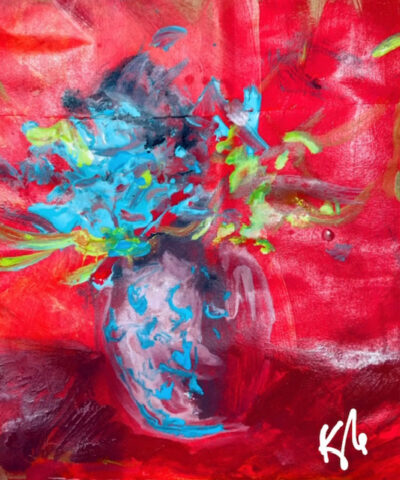 It’s just calming. I can do it for eight hours and never really get tired. I just really get into it. Hopefully, one day I’ll retire and have a building in the backyard and just paint every day for eight hours. I don’t really know what I would end up painting. I’m always painting in my garage or in my driveway, trying to get it done really fast. One day, I’d love to have a gallery or studio that I could just go to and paint.
Do you have any goals for your future artistic endeavors?
If I can accomplish anything, it would be to be that guy that paints outside-the-box figures and faces and to have people have it as statement art in their house. I want someone to stop and say wow what’s the story behind that guy’s eyes?
Where can people see and buy your work?
I’m presently in the art gallery at Tricia’s Treasures antique store in Homewood and am featured as a live-speed painting artist during all of their parties and events. I have just recently gotten contacted by a gallery in Round Top, Texas, and hope to be showing there soon. People can see examples of my work on my Instagram @obnoxiouslilshit.
ALABAMA, USA — SoulGrown Alabama today announced the launch of soul-grown.com.
Until now, the popular lifestyle brand had been driven by its social media presence, especially on Instagram. Across the brand’s flagship and regional accounts, SoulGrown currently has more than 44,000 followers.
SoulGrown’s new website is expected to accelerate the already rapidly-growing, go-to source for Alabama-centric food and drink, travel, culture, living, and outdoors content.
With the mission of showcasing the very best of Alabama, SoulGrown’s website launches with an experienced team of content creators led by editor Julia Sayers Gokhale, the former editor-in-chief of Birmingham Magazine. (more…)