The Associated Builders and Contractors (ABC) of Alabama announced Thursday its endorsement of Secretary of State Wes Allen for lieutenant governor.
“Secretary Allen has a proven track record of standing with Alabama’s small business community,” said ABC of Alabama Chairman Tim Harrison. “He has been committed to cutting red tape, supporting voter integrity, and investing in workforce development efforts in the construction industry. That’s why we are endorsing him for Lieutenant Governor today.”
Secretary Allen responded to the endorsement, saying, “The Associated Builders and Contractors of Alabama represent the hardworking Alabamians who quite literally build this state, and to have their endorsement is an honor.”
Allen has served as Alabama’s secretary of state since 2023. Before that, he spent nearly ten years as Pike County probate judge and later represented District 89 in the Alabama House of Representatives.
During his time in office, Allen has worked with local officials across the state to ensure Alabama’s elections remain among the most secure in the nation.
“At ABC, we like proven leaders, and Wes Allen has proven that he can deliver results and collaborate with job creators to move Alabama forward,” Harrison added.
ABC of Alabama represents the state’s construction industry, which supports 200,000 jobs and accounts for 5% of the state’s economic output. The organization advocates for the industry and its workers across the state.
Sherri Blevins is a staff writer for Yellowhammer News. You may contact her at sherri@yellowhammernews.com.
U.S. Reps. Barry Moore (R-Enterprise) and Terri Sewell (D-Birmingham) introduced legislation to protect veteran-owned small businesses across the country in October 2024. The bill, which didn’t receive a vote at the time, would have amended the Small Business Act to allow for the children of recently deceased service-disabled Veterans to temporarily take over their small business for up to three years in the event of the owner’s death.
On Monday, in a continued effort to advocate for America’s veterans, Moore and Britt reintroduced the legislation with renewed hope regarding its passage.
“As a Veteran and former small business owner, I know that businesses are the lifeblood of families and communities,” said Congressman Moore. “This vital legislation allows family businesses to gracefully transition without losing their service-disabled Veteran-owned small business designation and encourages them to hire another service-disabled Veteran in the future.”
Sewell thanked Moore for his teamwork and consistent push to better the lives of veterans and their families.
“We must do all that we can to support our Veterans, especially those who experience disabilities related to their service,” Sewell said. “This legislation makes an important update to federal law to support small businesses owned by service-disabled Veterans and their families. I’m grateful for the partnership of Congressman Moore on this issue.”
The bill has drawn large amounts of support from Alabama’s veteran-owned small businesses
Dr. Alfred Seawright, CEO of Medical Place in Montgomery, Alabama, is thrilled with the work of the two elected officials.
“Small businesses like ours are the backbone of every American community,” said Seawright. “We are delighted that Representatives Moore, Sewell, and Ellzey are advocating on behalf of the Veteran-owned small business community. Two generations of our family have worked for decades alongside our employees – many of whom are Veterans themselves – to build a business that has helped VA fulfill its mission to America’s Veterans for over 40 years.”
Seawright called the amendment to the current law “critically needed.”
“By including surviving children alongside surviving spouses in existing law, small businesses like ours can stabilize and continue business operations, for the benefit of our employees and the veterans we serve, within the spirit of existing law. This is timely, and we urge all members of the House to support this important bill.”
According to data from the U.S. Census Bureau, in 2023, veterans owned more than 1.9 million businesses and employed almost 5.5 million Americans.
Austen Shipley is the News Director for Yellowhammer News. You can follow him on X @ShipleyAusten
U.S. Senator Katie Britt stopped by one of her favorite local restaurants in Tuscaloosa over the weekend to celebrate the regional chain’s 50th year in operation. The Alabama alum posted about her visit on social media.
“I’m in Tuscaloosa, and I cannot stop in Tuscaloosa without coming by Taco Casa,” said Britt. “I just wanted to wish everyone here a Happy 50th. Obviously, this is the epitome of small business and the American Dream. We’re so proud of what this family has achieved and their willingness to give back to the community in so many ways. Happy 50th Anniversary to Taco Casa.”
“I don’t know what your favorite place is to stop when you’re in Tuscaloosa but this is certainly one of mine.”
It was also a particularly special visit for Britt, who brought her young daughter to the establishment for the first time.
https://x.com/KatieBrittforAL/status/1825257302007648597
Taco Casa was thrilled with Britt’s endorsement and thanked her for her continued business.
https://x.com/TacoCasaTtown/status/1825227433550963105
A fan-favorite social media account, 3 Year Letterman, agreed, saying “Taco Casa knows the grind of an SEC schedule”.
https://x.com/3YearLetterman/status/1825228084695765447
Taco Casa is a family-owned chain of Tex-Mex fast food restaurants that begin in 1974 in Tuscaloosa, Alabama. The first location opened on 10th Avenue and was founded by Rod Wilkin, a former University of Alabama football player coached by Paul “Bear” Bryant.
Austen Shipley is a staff writer for Yellowhammer News. You can follow him on X @ShipleyAusten
Innovate Alabama plays a crucial role in fostering small business growth across the Yellowhammer State. To continue those invaluable efforts, the organization is set to receive nearly $98 million in additional funding.
The dual-component program, LendAL and InvestAL, will finance loan and venture capital initiatives intended to enhance lender and investor confidence in Alabama and infuse capital directly into the businesses of the state’s startup founders and small business owners.
The investment is the largest small business funding program in Alabama history, made available by the U.S. Department of the Treasury State Small Business Credit Initiative (SSBCI).
“The SSBCI program will be a catalyst for our state’s entrepreneurial ecosystem, establishing an evergreen fund to improve access to capital for Alabama small businesses and entrepreneurs,” Cynthia Crutchfield, CEO of Innovate Alabama said. “With the advent of this program, we’re welcoming a new era for entrepreneurs in Alabama.”
“I’m eager to witness the lasting benefits of the investment in the state, including the stimulation of a self-sustaining, durable investment landscape.”
RELATED: Innovate Alabama awards nearly $4 million in funding to Alabama small businesses
Alabama’s eligibility to receive the funds was made possible by a component of the Working for Alabama package of legislation passed by state lawmakers and signed into law by Governor Kay Ivey earlier this year.
“As Alabama continues to signal that it’s open for business, it is crucial that we continue to contribute to the growth of the state’s economy through our small businesses. This is a sector that has played a pivotal role in defining Alabama’s history,” said Ivey. “With the SSBCI program, we will demonstrate to both investors and business owners that Alabama represents a sound investment opportunity.”
President Pro Tem of the Alabama Senate Greg Reed (R-Jasper), Vice Chair of the Innovate Alabama Board of Directors, said the new funding will be put to good use across the state.
“The SSBCI program will support small businesses across the entire State of Alabama,” said Reed. “This initiative will provide yet another tool for Innovate Alabama to both support existing small businesses in Alabama and attract those who are looking to relocate to Alabama, start a business and enjoy our unique quality of life.”
Visit innovatealabama.org/programs/ssbci to learn more about the program.
Austen Shipley is a staff writer for Yellowhammer News. You can follow him on X @ShipleyAusten
2024 is already another big year for Birmingham-based Big Communications.
On Wednesday, it was announced Big was selected to support two initiatives of Innovate Alabama — the state’s flagship public-private innovation partnership.
The organization even rolled out a new website to show for it.
Big says the site is structured to support all organizational pillars — Talent Development, Lifestyle & Recreation and Access to Resources and the company is extending its focus on the Lifestyle & Recreation pillar by establishing and marketing a brand specific to Alabama’s outdoor resources.
“Innovate Alabama serving as the go-to resource for innovators, entrepreneurs and researchers looking to build and grow their business here requires a digital destination with the right mix of content and capabilities to inspire and enable the talent pool of tomorrow to explore opportunities across our state,” said Innovate Alabama CEO Cynthia Crutchfield.
“This new iteration of our site will enable us to do just that by feeding the imagination of tech talent in our state and across the country with a digital hub that encourages them to dream of living and working in Alabama — and help make it a reality with functionality that connects dots and facilitates community.”
RELATED: QuantHub, Innovate Alabama launch cutting-edge tech internship program
According to the company, Big has also been tapped to lead digital, creative and paid media efforts for Innovate Alabama’s Lifestyle & Recreation pillar — specifically the focus of the Council on Outdoor Recreation, chaired by Commissioner of the Alabama Department of Conservation and Natural Resources, Chris Blankenship — and leveraging the state’s natural assets as economic development tools.
“Our natural resources are a true advantage that can help us continue to recruit and retain top talent, and they serve to differentiate us from other innovation-forward states,” said Crutchfield. “We are excited to see how Big brings this differentiator to life creatively, digitally and through a robust marketing campaign.”
“Ensuring Alabama is on the right track for the world of tomorrow is something we are immensely passionate about, and we look forward to how our work will enhance Innovate Alabama’s vital mission for our state,” said Big CEO and Founder John Montgomery.
Grayson Everett is the state and political editor for Yellowhammer News. You can follow him on Twitter @Grayson270
Year by year, Mobile is increasingly recognized for its dominance as a business and manufacturing hub supporting not only Alabama — but the global economy as a whole.
Gener8tor, a global venture firm and startup accelerator, announced a partnership with Innovation Portal, supported by the Innovate Alabama tax credit, to create the gBETA Gulf Coast to help small businesses and their founders take their companies to the next level.
According to gener8tor, gBETA is a free, seven-week, zero-equity accelerator that provides founders of early stage tech enabled startups with personal coaching and access to gener8tor’s network of mentors, customers and investors across the United States.
RELATED: Alabama solving manufacturing’s real estate problem
“Mobile, Ala. is the home to epic celebrations like Mardi Gras and the Senior Bowl, and is home for major industrial companies like Airbus, Austal, Outokumpu, AMNS, Mitsubishi Polysilicon, BASF, One Subsea, and many more,” said Todd Greer, Executive Director of Innovation Portal.
“Now with the launch of the gBETA Gulf Coast at Innovation Portal, we will be tying the entrepreneurial community of the Gulf Coast closer into the growing engine of Industry 4.0 which is shaping the future of work, globally.”
Applications for gBETA Gulf Coast are open now, and the program will kick off Feb. 29, 2024. Startup companies and founders interested in learning more about gBETA’s programming and resources are encouraged to apply and reach out to gener8tor.
RELATED: Innovate Alabama awards $9.3 million to first class of designees
Innovation Portal, a business accelerator serving the Coastal Alabama region, has supported the efforts of more than 400 companies since its founding in 2016.
Henry O’Connor, Innovation Portal Board Chair, was excited about the new program and partnership.
“Thanks to the Innovate Alabama Tax Credit program and our sponsors, Regions Bank, ALFA, and Alabama Power, we are able to bring this incredible program to the Gulf Coast region,” he said.
“We have been incredibly impressed by the work of gener8tor throughout the state of Alabama and the country at large, and delighted to partner with them and bring their proven track record to supporting ventures in this exciting program.”
Austen Shipley is a staff writer for Yellowhammer News.
The 2023 legislative session proved to be another successful and productive one for the Alabama Senate Republicans. We effectively utilized all 30 legislative working days with 340 bills filed in the Senate. We welcomed four newly elected Republican senators at the start of the year and passed key legislation that will continue to make Alabama the best state in the country to live and do business.
On behalf of the Alabama Senate Republican Caucus, we are proud to report the following legislative efforts that will continue to protect our conservative values and support the hardworking people of Alabama:
Repaying debt to Alabama Trust Fund
The Alabama Senate approved roughly $59.9 million in a final payment to the Alabama Trust Fund to satisfy money taken from the fund during the previous decade. This payment to the Alabama Trust Fund makes us ‘debt-free’ and fulfills our obligation to the citizens we represent as effective and honest stewards of state funds.
Sparking economic growth
The Alabama Legislature passed a four-bill package led by Gov. Kay Ivey and coined “The Game Plan” to secure Alabama’s economic future. Gov. Ivey’s Game Plan is strategic, innovative, and clearly outlined to help Alabama continue building on our success and providing more, higher-paying jobs to the citizens of our state. The Game Plan extends and enhances economic incentives for recruiting businesses to Alabama, increases funding for site development, supports innovative industries in our state, and ensures transparency surrounding the incentive process. This is a win for jobs, businesses, and every Alabamian.
Fighting ESG
The Alabama Senate passed SB261, a bill that would prohibit state contracts with businesses that boycott certain sectors of the economy based on environmental, social and governance. This bill is among the strongest anti-ESG legislation in the nation to protect investors and funds in Alabama and fight against the woke liberal influence across America.
Protecting small businesses
Alabama Senate Republicans championed new initiatives to support and protect small businesses in our state. Key legislation included a dram shop bill to protect providers of alcohol if the recipient injures a third party, retail theft legislation to create harsher punishments for people convicted of stealing from retailers, and a road builder liability bill to provide relief and protection to that industry.
Cracking down on drug dealers
Top of mind for the Alabama Senate Republicans each session is protecting our families and children. This session, we buckled down on the fentanyl crisis to crack down on drug dealers and establish mandatory minimum prison sentences for convicted fentanyl dealers. Additionally, legislation was passed to prevent gang violence, combat illegal narcotics and activities, and keep violent felons behind bars where they belong.
Standing with our troops
A key mission of the Alabama Senate Republicans is to provide ample support for our state’s extended defense, aerospace, and intelligence communities. The Legislature passed and Governor Ivey signed a series of bills to ensure Alabama remains the nation’s most attractive and friendliest state for active-duty military, their families, and veterans. Specific bills include extending tuition benefits for the National Guard, expanding education benefits to spouses whose partners were killed on active duty, defining “dignified and humane” disposal of unclaimed veteran remains, and allowing out-of-state military personnel to purchase insurance in the state where they are stationed for their Alabama vehicles.
Cutting taxes
The Senate passed several pieces of legislation to keep money in the pockets of hardworking taxpayers and small businesses. The Grocery Tax Cut reduces the state’s sales tax on grocery items from 4% to 3% on Sept. 1 with the potential to decline to 2% in 2024 based on the state’s revenue growth. Other tax reducing measures passed by the legislature include a one-time tax rebate, eliminating the payroll tax on overtime pay, and a provision that reduces the administrative burden and costs for small business owners by increasing the sales tax reporting threshold.
Expanding school choice
Creating and expanding educational opportunities for our state’s children has been and will continue to be a top priority for the Alabama Senate Republicans. The expansion of the Alabama Accountability Act through SB263 opens the doors for more students to participate in this already successful tax credit program. Together, we’re supporting the future generations of Alabamians!
Supporting agriculture
Agriculture is one of Alabama’s top producing industries, accounting for more than 20 percent of jobs in the state. The Alabama Senate Republicans continue to support farmers and agriculture across Alabama through legislative efforts. Two specific accomplishments include cutting “red tape” for farmers in reporting referendums on an asset and establishing the Logging Efficiency Grant Fund to support rural economic development.
Greg Reed is the Alabama Senate Pro Tem and Clay Scofield is the Alabama Senate Majority Leader
Alabama is a great place to start a business.
And, it’s easy to register that business in the Yellowhammer State.
In recognition of National Small Business Week, Secretary of State Wes Allen launched a campaign to demonstrate how simple it is to officially register a company in the state.
Allen is promoting an instructional video that provides a step-by-step guide through the on-line registration portal. The video is available on theSecretary of State’s YouTube channel.
https://www.youtube.com/watch?v=eHb9Xg2FDEs
Properly completing new business registration forms is one of the first steps an entrepreneur takes in launching a new entity. While it’s not the only step in starting a company — it’s an important one. Allen says that’s an intentional focus of his office.
“We want to make the process of registering your business as easy as it can possibly be. During National Small Business Week, the Alabama Secretary of State’s office wants to remind you that we are here to assist you as needed,” Allen said.
Allen also wanted to ensure that those seeking additional assistance know that they can reach the business services division of the Office of the Secretary of State by calling (334) 242-5324.
Grayson Everett is a staff writer for Yellowhammer News. You can follow him on Twitter @Grayson270 for coverage of the 2023 legislative session.
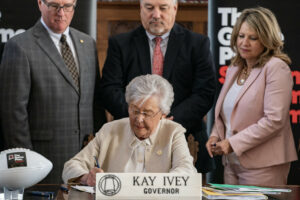
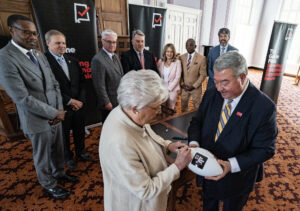
All four components of the landmark renewal and expansion of Alabama’s economic incentives program passed the Alabama Senate today. The package’s counterpart bills passed the House unanimously last week. Gov. Kay Ivey signed off on all this afternoon.
Today’s passage marks a key victory for what Ivey coined in her State of the State Address as the “Game Plan” — a playbook for economic success.
“I am proud the Alabama Legislature has officially passed all four bills in The Game Plan package,” Ivey said. “I commend both the Senate and House for their incredible work on this timely legislation that will, no doubt, be transformative for our state and more importantly, for our families.
“We are creating stability for our economy and are going to keep Alabama winning for many years to come.”
In a 29-6 vote, the Senate passed the core renewal and expansion of the initial 2015 Alabama Jobs Act and Growing Alabama credit: the Enhancing Alabama’s Economic Progress Act.
The Jobs Act was designed to sunset this year, but today’s package renewed the incentives until 2028. Senate President Pro Tem Greg Reed (R-Jasper) celebrated the collaborations that made today’s passage possible.
“I am immensely proud of my colleagues in the Senate for our successful passage of this winning plan to secure Alabama’s economic future,” Reed said. “We’re building on our recent success and paving the way for the future of Alabama’s economy. Thanks to these incentives, we look forward to seeing more companies and businesses come to our state.”
The core renewal bill will also strengthen Alabama’s focus on site development by transferring tech accelerators and support for underrepresented businesses to Innovate Alabama and encouraging development of new shovel-ready sites.
The other components of the four-bill package, which are poised to be a titanic advantage for Alabama’s ability to recruit companies and create jobs, were also signed by the governor today.
Including the Site Evaluation and Economic Development Strategy (Seeds) Act, which will rapidly spur the development of industry-ready sites across Alabama by empowering the State Industrial Development Authority (SIDA) with grant-issuing abilities.
Upon passage by the Senate last week, the bill’s sponsor, Sen. Arthur Orr (R-Decatur) said, “States across the country and region have been investing in their site development programs to attract potential employers, and now, Alabama is stepping up to enter the competition.”
A highlight of the multi-chamber, bipartisan effort of the process is shown in the Innovation and Small Business Act, brought by Minority Leaders Bobby Singleton (D-Greensboro) in the Senate and Anthony Daniels (D-Huntsville) in the House.
“I truly believe in these bills, and I thank Gov. Ivey for bringing them. We must do the things that make us competitive globally and this is a great start,” Singleton said upon passage today. “For the first time we are going to be focusing on small and rural businesses and how we build and develop this economic growth area.”
This component of the package promises to develop Alabama’s innovation and technology community by establishing the Alabama Small Business Credit.
Daniels said the law “allows us to expand entrepreneurship by creating enhanced funding opportunities and incentives for tech accelerators to help bring new businesses to Alabama and new products to the marketplace.”
The final piece that received a stamp of approval deals with communicating the efficacy of incentives programs and making those statistics publicly available.
The Transparency in Incentives Act, sponsored by Sen. Garlan Gudger (R-Cullman) amends the Jobs Act to require the Alabama Department of Commerce to publish certain incentivized project information on its website. Additionally, the Commerce Department will disclose the value of any cash incentive extended for the project and the projected 10- and 20-year return on incentives to the state.
Leaders involved in steering the state’s economic development efforts say when Alabama shows its cards, the numbers will impress.
“We are so confident in the data that we see from the tools that we’re using, we know they are positive revenue performers,” Alabama Commerce Secretary Greg Canfield said. “We know that the Alabama Jobs Act is built upon the premise that every offer we make has to be revenue positive for our state.
“Companies have to invest here. They have to create new economic activity here. They have to hire Alabamians and put them on the payroll.”
Reed said the numbers speak for themselves.
“$22 billion in new capital investment, 40,000 new jobs, 50 projects,” he said. “Looking at the benefit of the Jobs Act related to a return on investment for the people of Alabama, $9 billion over a 20-year return is going to be a 190% return for the people of our state.”
Grayson Everett is a staff writer for Yellowhammer News. You can follow him on Twitter @Grayson270 for coverage of the 2023 legislative session.
This month, the Business Council of Alabama announced Helena Duncan as president and CEO. As the state’s largest business advocacy organization, BCA’s stated purpose is to aggressively represent Alabama’s business community.
For more about Alabama’s newest CEO, her leadership philosophy and expectations for the future, here are “Four Questions with Helena Duncan.”
During your 30-plus-year career in the banking industry, you served in a variety of roles before becoming a top executive at a $22 billion asset bank. How has this experience influenced your approach to business advocacy?
From my early years as a bank teller all the way to my position as Regional President at Liberty Bank & Trust, I was able to see the struggles of main street businesses firsthand. Individuals would have a business opportunity and come to me for lending. Many of those main street businesses I worked with closely are impacted by the pro-jobs and pro-growth legislation that we advocate for here at BCA. Now, I am in a position to remove some of those obstacles I’ve seen throughout my career and help create more opportunity for businesses.
Part of the mission of BCA is to battle against well-funded, anti-business groups and fight expensive mandates and regulations. What is your leadership philosophy as you take the lead pursuing this mission?
Our newly developed strategic plan has been focused on fresh and innovative ways to advocate for the business community in Alabama, but our mission remains the same: work hard for pro-jobs and pro-growth legislation. When hired, I was tasked with building relationships, not only with our members, but with those within the branches of our state government. I will continue to grow existing relationships and cultivate new relationships as I lead BCA. I will do everything I can to continue building upon the firm foundation set, while protecting Alabama businesses from unnecessary mandates and costly regulations.
In your previous role in the organization, you led Investor Relations. What have you learned from your members that will shape BCA’s priorities moving into the 2023 legislative cycle?
Many businesses I spoke with in my Investor Relations role were trying to stretch a dollar a long way and get the most they could out of their BCA investment. We are going to prioritize legislation that grows our economy and prioritizes businesses. Our legislative agenda is first and foremost set by those same BCA members. We have a very extensive legislative process with our BCA policy committees that ensures we are listening to the needs of our members and effectively advocating on their behalf. BCA is strong and effective because of our members – and we will continue to make their needs our top priority.
How do you envision the future of BCA as far as the role it plays in Alabama’s political and economic climate?
BCA continues to serve as the voice for Alabama business. We have a talented, creative, and energetic staff and we continue to search for new and innovative ways to serve the business community daily. BCA has been fortunate to have dedicated leadership who work tirelessly to build a strong organization, and we are stronger than ever because of that commitment. BCA remains steadfast in our mission to give a voice to Alabama’s job creators in Montgomery and in Washington, D.C.
Watch “10 Questions with Helena” to learn more about BCA’s new leader and how she plans to continue the organization’s mission serving as the voice for Alabama businesses.
The Alabama Department of Commerce’s Office of Small Business Advocacy and the Alabama Small Business Development Center Network (ASBDC) announced the publication of “Alabama’s Answers: Starting Your Business in Alabama,” a comprehensive primer.
The department describes the 16th edition of the partnership publication as an invaluable resource for entrepreneurs, with a focus on the prerequisite elements and compliance aspects for successfully starting and maintaining a business venture in Alabama.
This new edition of “Alabama’s Answers” – which has been revised and updated – will guide potential small business owners through all the key elements of starting a business.
The 20 chapters address a range of issues, including financial feasibility, creating a business plan, choosing a legal structure, taxes and financing and other essential topics. “Alabama’s Answers” references and directs the reader to most of the necessary city, state and federal forms.
“Alabama’s small businesses and entrepreneurs need the correct information and resources to start and grow their businesses,” said Eddie Postell, program manager of the Alabama Department of Commerce’s Office of Small Business Advocacy.
“’Alabama’s Answers’ helps the would-be entrepreneur transition their business ideas into a successful business.”

Helping entrepreneurs
The Office of Small Business Advocacy fosters growth of businesses by providing assistance in a variety of ways.
First and foremost, the office enlists the cooperation and assistance of public and private agencies, businesses and organizations by disseminating information about programs and services, identifying educational outreach and providing counseling to startup and existing small businesses.
The Office of Small Business Advocacy works closely with the Alabama SBDC Network and its Small Business Development Centers at member university partners across the state.
In addition, the office coordinates its efforts with an array of expert resource partners, including the Alabama Department of Transportation, the Department of Revenue’s Office of Taxpayer Advocacy, the Alabama SBA District Office, Women’s Business Centers, chambers of commerce, business incubators and economic developers.
The Alabama SBDC Network for more than 40 years has provided no-cost assistance to Alabamians looking to start or grow their businesses.
Annually, the ASBDC delivers its programs and services to all 67 counties in Alabama. Through its network of 10 service centers and its host institution – the University of Alabama – the Alabama SBDC helps the small business community through its no-cost one-on-one advising and educational programming.
Over the past five years, the SBDC has guided entrepreneurs to start 1,115 new businesses, helped small businesses owners create 4,519 new jobs and facilitated more than $520 million in growth capital, all while maintaining a 96% “would recommend” rating from its clients, Postell said.
Surveys show that Alabama SBDC clients have higher revenue growth and stronger job creation than the average small business – and they’re more likely to survive economic downturns.
A partnership between two prominent Alabama law firms has been formed to support black-owned small businesses and nonprofits in the Birmingham community.
The Black Small Business and Nonprofit Community Clinic, a joint project of Bradley Arant Boult Cummings LLP and Legal Services Alabama (LSA), will provide pro bono business-oriented legal services to local black small businesses and nonprofits throughout Birmingham.
According to a release, the Birmingham clinic is modeled after Bradley’s Black-Owned Small Business and Nonprofit Clinic in Nashville that launched in January 2021.
Bradley Birmingham office managing partner Dawn Helms Sharff, a 2021 Yellowhammer News Woman of Impact, spoke to the firm’s commitment to advancing racial equity.
“We recognize the historic and systemic racial inequities that have made it challenging for the Black business community to thrive in Birmingham,” said Sharff. “Our partnership with LSA is an opportunity for Bradley to join the cause for racial equity and to make a lasting impact in the local community.”
Tiffany Graves, pro bono counsel at Bradley, advised that the firm was dedicated to supporting black entrepreneurs in their efforts to grow and expand their businesses.
“Our attorneys are committed to breaking down some of the barriers that prevent Black business owners from receiving the support they need to legally maintain their businesses,” said Graves. “Bradley is working to bridge the gap between the legal needs of those who cannot afford or access legal services and the resources available to meet those needs.”
The Birmingham Black Small Business and Nonprofit Community Clinic opens virtually on Friday, April 29 from noon to 1:00 p.m. and is by appointment only, according to the announcement.
Succeeding clinics will be offered on the fourth Thursday of each month through December 22. Appointments are initially virtual, with plans to transition to in-person operations in the coming months.
LSA executive director Guy Lescault expressed excitement over the firm’s partnership with Bradley on the pro bono initiative.
“We recognize that we all share a responsibility to effect change in our fight for racial justice,” said Lescault. “We are excited to collaborate with Bradley to help fulfill our mission and work to rectify historical inequities in Birmingham’s Black business and nonprofit communities.”
Frederick Spight, LSA court debt project staff attorney, touched on the initiative’s goal of combating poverty within the black community.
“The clinic partnership between LSA and Bradley is a great next step in the evolution of addressing poverty in historically disenfranchised communities,” stated Spight. “The goal is to help local entrepreneurs build their capacity for organic growth and development, thereby providing jobs and helping build wealth in these communities for generations to come.”
Nell Brimmer, LSA managing attorney of client access, said that Bradley’s record of client service would be beneficial to the initiative.
“LSA is committed to expanding our pro bono partnerships and supporting the initiatives of our John Lewis Fellows,” proclaimed Brimmer. “The Black Small Business and Nonprofit Community Clinic with Bradley allows LSA to continue the community development work started under Frederick’s John Lewis Fellowship project in 2020, with Bradley’s expertise and success in creating clinic collaborations.”
LSA will conduct the initial screening of prospective clients. Eligible businesses should consist of at least 50% black ownership with 10 or fewer employees and limited means.
Dylan Smith is a staff writer for Yellowhammer News. You can follow him on Twitter @DylanSmithAL
Small business is the foundation of Alabama’s economy. They account for 99.4% of all businesses in the state, and they employ 47% of the state’s private-sector workforce.
That’s why we’re so grateful to Governor Ivey for signing House Bill 82, the Small Business Relief and Revitalization Act of 2022. The measure, introduced by Rep. Danny Garrett (R-Trussville), provides immediate tax relief for Alabama’s job creators.
H.B. 82 does several things:
- Provides relief by reducing the estimated sales tax payment burden on more than 2,400 small businesses through increasing the threshold calculation from $2,500 to $5,000 and allowing sales tax licensees the option of payment of certified funds in lieu of securing a surety bond.
- Exempts up to $40,000 of market value from the state business personal property tax, which effectively exempts 75% of Alabama businesses from payment of the state portion of this tax.
- Helps farm families by ensuring that the loan forgiveness provided under the American Rescue Plan is not treated as income on their state taxes and doesn’t factor into determining their federal income tax deduction.
- Gives a one-month filing extension on tax returns for the Alabama financial institution excise tax and corporate income tax.
This relief is critical to Alabama’s small businesses because they’ve been put through the wringer the past two years. Coping with the COVID-19 pandemic was a challenge, but just as it appeared things were getting better, they had to contend with the Omicron variant, the labor shortage, breaks in the supply chain, and rising inflation.
Kevin Kuhlman, NFIB’s executive vice president for federal government relations, says, “Small businesses across the country are feeling the impact of the highest inflation rate in 40 years. For most small business owners, this is a new and challenging environment that they have to navigate along with the ongoing labor shortage and supply chain disruptions.”
HB82 will without a doubt relieve some of the financial pressure and regulatory burden bearing down on Alabama’s small businesses. On behalf of our members, I want to thank Lt. Gov. Will Ainsworth, Representative Garrett, and Sen. Garlan Gudger of Cullman, who guided the bill through the legislature. This is a big victory for small business owners, their families, and their employees, and it will enable small businesses not just to survive but thrive.
Rosemary Elebash is the National Federation of Independent Business’ state director for Alabama.
The backbone of America’s economy has long been small businesses. Yet, during the pandemic, we got left behind. I watched as stores throughout Alabama struggled to stay open or closed down altogether.
The hard working men and women of Alabama aren’t one to complain. We understand that hard times may come, but we can always get through it on our own. Even so, politicians in Washington aren’t making the recovery process easy. Instead, they’re proposing bills that make small businesses that hold government contracts an easy financial target for greedy trial lawyers.
A group of Senators headed by Chuck Grassley (R-IA) and Patrick Leahy (D-VT) has proposed legislation that would make major changes to the Federal Claims Act (FCA). The FCA became law during the Civil War and has since been used by the government to combat fraud. In 2016, the Supreme Court improved this law by clarifying when the FCA should be used. The Court unanimously agreed that the FCA was not meant to target “garden-variety” contract breaches. Rather, the FCA should be used to rein in cases of real, material fraud that harms taxpayers.
The Grassley-Leahy amendments would look to undermine a unanimous Supreme Court decision. Their legislation subjects small businesses to baseless lawsuits under the FCA over minor breaches of contract. Trial lawyers would endlessly target businesses in efforts to enrich themselves, leaving small businesses to pay precious dollars to defend themselves in these cases.
These changes would alter a system that already works and doesn’t need fixing. In the last three years alone, the Department of Justice has brought in $11 billion dollars from FCA settlements, displaying how the government is continuing to effectively target and rein in fraud.
Above all, Senator Grassley’s proposed changes to the FCA would hurt the industries and businesses that have helped our country fight the pandemic. The government has provided hospitals, clinics, research centers and care facilities with billions of dollars to fight the pandemic. Through his legislation, Grassley would be placing a major target on these various health care facilities. Trial lawyers and other bad actors would use the new system to enrich themselves by filing lawsuits against any organization that makes a minor breach of contract, something the FCA was never designed to do.
Our country is still recuperating from the impact of COVID-19. Government leaders should help the recovery process. Senator Grassley and Leahy’s amendments would instead stymie it. We need Alabama Senators to recognize the damage of this legislation and reject it immediately.
John Skipper serves as Senior Vice-Chairman of the Alabama Republican Party
Small businesses have been the heartbeat of our hometowns for generations, and over the past year and a half, they’ve held us up more than ever. It hasn’t been easy, but they’ve fought mightily to keep their doors open and support our communities.
Here at the Business Council of Alabama, we want to say a heartfelt “Thank you.” We couldn’t have gotten through this without you. You’re not just a business. You’re our neighbors and our friends. You were there for us, and we at the Business Council are here for you.
Small businesses have been the heartbeat of our hometowns for generations, and over the past year and a half, they’ve held us up more than ever. It hasn’t been easy, but they’ve fought mightily to keep their doors open and support our communities.
Here at the Business Council of Alabama, we want to say a heartfelt “Thank you.” We couldn’t have gotten through this without you. You’re not just a business. You’re our neighbors and our friends. You were there for us, and we at the Business Council are here for you.
A record number of small business owners are reporting unfilled job openings, a fact that is preventing growth in the sector, according to a recent National Federation of Independent Business (NFIB) survey.
The NFIB Small Business Optimism Index fell in May after steadily increasing each month this year, noted the organization in a release on Tuesday.
In response to the survey, 48% of business owners reported an inability to fill current job openings.
In Alabama, NFIB state director Rosemary Elebash welcomed Gov. Kay Ivey’s strategy to discontinue the federal unemployment supplement in an effort to bolster the workforce. Elebash explained that the labor shortage has hindered small businesses from meeting the needs of their customers.
“Our members say job openings outnumber qualified job applicants, but we believe Governor Ivey’s decision to end the federal unemployment supplement early on June 19 will encourage more people to reenter the workforce,” Elebash remarked.
(more…)
When Krystn Keller’s three-month-old son Elliott developed a rash on his face, she was told that it was just standard baby eczema and should go away if she switched laundry detergent. However, over the next nine months, Elliott’s condition worsened. The Kellers saw 14 doctors, tried prescription creams, bought soap for sensitive skin, and had Elliott tested for food allergies. When nothing seemed to show results, Krystn knew she would need to take matters into her own hands.
“The prescription creams caused many unwanted side effects like facial hair growth, skin thinning, and one even had a cancer warning,” Krystn says. “I wasn’t comfortable putting these things on my baby, so I wanted to try making an all-natural option myself at home.”
She began doing research and eventually ended up on YouTube, where she found a vast amount of soap-making tutorials. After several months of trial and error, she finally had a recipe for an all-natural soap specifically designed for those with eczema. When Elliott’s skin began to clear up, friends began asking Krystn if they could purchase her soap. She realized there was a need in the market for a product like this, and thus, Keller Works was born. (more…)
Alabama’s Republican U.S. Senator and GOP members of the U.S. House of Representatives have each been named a 2020 “Guardian of Small Business” by the National Federation of Independent Business (NFIB).
NFIB is the nation’s largest small business association, advocating for job creators nationwide.
“NFIB’s prestigious Guardian of Small Business Award is reserved for legislators who vote consistently with small business on the key issues identified by small business owners,” a release from the organization explained.
The 2020 awards were earned by legislators for votes in the 116th Congress, which began in 2019 and is currently in session. (more…)
Grow with Google’s Digital Coaches program, which provides digital skills training and coaching to help Black and Latinx small businesses prosper, is launching in Birmingham this month.
According to a release, the Grow with Google initiative aims to help create economic opportunity in communities across the nation by providing digital skills training, tools and expertise — all free of charge.
“Birmingham has a vibrant and growing Black and LatinX small business community,” stated Lucy Pinto, Google’s Digital Coaches program manager.
“The Digital Coaches program will provide business owners in these communities with ongoing workshops and hands-on coaching sessions focused on the techniques and digital tools to reach new customers, thrive online and grow,” added Pinto. (more…)
Huntsville’s Marshall Space Flight Center this week was awarded the annual Small Business Administrator’s Cup by NASA.
This yearly agency honor recognizes the NASA center that manages the most effective small business program. This marks the sixth time since the award was established in 2008 that Marshall has earned the prize – the most wins of any center at the agency.
The award specifically recognizes best-in-class innovative practices that promote small business participation in a variety of NASA initiatives, highlighting significant contributions to the agency’s small business programs.
“Marshall and their small business team continue to be a model for successful relationships with our business community,” stated Glenn Delgado, associate administrator of NASA’s Office of Small Business Programs. “Whether supporting our Artemis program returning humans to the Moon or improving lives here on Earth, we are stronger when we work together, and Marshall has developed a diverse and solid community of collaboration.” (more…)
Affordable health care has long been a cause of concern for small business across our country with the cost of coverage has consistently ranked at the top of small business owners’ concerns. And now, amid a global health crisis, health coverage is more important than ever. As someone with years of experience working in the healthcare industry and alongside businesses, I have seen firsthand how the small business community faces unique challenges when it comes to employer-sponsored benefits.
There is no doubt that each employer wants to give employees the best benefits possible. Not only is it the right thing to do, but it makes small businesses competitive, attracting a more skilled workforce and helping to keep employees healthy. However, the large majority of small business owners run on extremely small margins, and as health care costs continue to rise, it is even more difficult to provide employees with quality health care coverage. (more…)
Alabama businesses of all sizes will have the opportunity to connect and learn from industry experts on a wide array of topics from economic development to marketing your business in a post-COVID world. The Business Council of Alabama is excited to present Engage Alabama: A Virtual Business Summit on August 26-27, 2020.
The two-day virtual summit is open to all Alabamians and will provide tangible takeaways and practical advice on doing business in the current climate.
Speakers include Governor Kay Ivey and the state’s leading subject matter experts on topics such as diversity in the workplace, employee resources, small business development and optimizing Alabama’s transportation and broadband infrastructure.
Register Now for Engage Alabama as we continue to make Alabama a sweet home for business.
Before Congress heads out for August recess, members of Congress must pass the next round of coronavirus relief. As American families are struggling to make ends meet, there are a host of issues that need to be addressed. For Alabama businesses, reasonable liability protections from coronavirus-related lawsuits will be key to help protect small businesses and aid in our economic recovery.
Small business owners across the state have faced unprecedented challenges during this crisis. From the uncertainty regarding shutdown orders and trying to protect the jobs of their employees, to spending time and resources to ensure that they put safety precautions in place to protect customers. (more…)