In the early 1990s and prior, Alabama’s top industry was textiles, which was evidenced by the low-wage sock mills that peppered the state along with larger facilities making blue jeans, athletic wear, and other apparel items.
But in 1993, Mercedes shocked the world and launched a transformation that continues to benefit our state today when it announced intentions to construct a $350 million plant in Vance, Alabama, to manufacture its new M-Class SUV automobile.
Suppliers needed to make the vehicle’s components soon located here, and once the wisdom of Mercedes’ decision became apparent, companies like Mazda Toyota, Honda, and Hyundai built facilities in Alabama.
Those developments came at the perfect time because Alabama’s textile industry largely evaporated soon after when free trade agreements negotiated during that era sent thousands of our jobs to Mexico, China, and other low-wage nations.
Like layer upon layer of building blocks, the firm foundation that our success in the automotive arena provided later allowed Alabama to build a world-class aerospace sector by attracting Boeing, Airbus, Lockheed Martin, Sikorsky, and the many high-tech firms in the Tennessee Valley.
Industrial partners like Austal USA are also bringing jobs and opportunity to the Gulf Coast region by building the next generation of naval warships in the Yellowhammer State.
But you may ask what prompted Mercedes to make that first bold decision to locate here more than 30 years ago.
Aside from the industrial incentives that all competing states offered, I believe that three factors unique to Alabama drew the automotive giant’s attention — an eager and trainable workforce with a work ethic unparalleled anywhere in the nation, our low cost and business-friendly economic climate, and the lack of labor union activity and participation.
This combination continues to offer a perfect three-legged stool for economic development, but if any of those legs are lost, the stool cannot continue to stand, and, unfortunately, one of those legs is being threatened.
Just last month, the United Auto Workers, commonly known as the UAW, announced a renewed effort to expand its footprint by organizing laborers in states like ours that have been historically and traditionally resistant to union activity.
If they are successful, Alabama, and states like ours, could soon see their automotive industry quickly recede like a falling tide.
The UAW and other labor unions are typically most active in areas where the cost of living is expensive, taxes are high, and well-paying, long-lasting jobs are scarce, but in Alabama, our cost of living and taxes are among the lowest in the nation, and we currently have an abundance of lucrative 21st Century employment opportunities for anyone who seeks them.
Alabama’s automotive companies already offer generous salary and benefits packages across the board, and they score highly on employee satisfaction surveys.
Giving the UAW a toehold within the state is the same as dumping a large and toxic dose of castor oil into a delightfully delicious economic development recipe.
Since that first stunning announcement, Mercedes has continued to expand its presence in Alabama, added new models, including electric vehicles, to its portfolio manufactured in Vance, and invested more than $7 billion in the Yellowhammer State.
Hyundai recently announced a $300 million expansion at its Montgomery facility and is adding 200 new jobs while one of its major suppliers, Hyundai Mobis, is building a $400 million, 400 job plant that will provide batteries for electric vehicles and become operational by 2025.
RELATED: Helena Duncan: The Alabama we know is making strides for business
Mazda Toyota Manufacturing is currently working to hire 300 additional workers in order to reach a 4,000-employee goal at its $2.3 billion automobile assembly plant in Huntsville.
And the $3 billion Honda plant in Talladega County has made a large investment in upgrades to ease and hasten production of its Pilot SUV, Ridgeline pickup truck, and other vehicles.
With so much expansion, investment, and, most importantly, job creation taking place within Alabama’s automotive sector, it makes no sense to risk the UAW upending this delicate balance and reversing such positive trends.
It recalls one of our best known and often used Southern expressions, “if it ain’t broke, don’t fix it.”
In order to combat the UAW’s efforts, which could export our jobs to other regions and kill our ability to recruit new and expanding industries, the Business Council of Alabama and our allies are beginning an informational campaign titled “Alabama Strong.”
Using a website, online advertisements, and other forms of digital and social media, our campaign will provide Alabamians with a full and thorough picture of the economic dangers that unionization presents. “Alabama Strong” will also suggest ways all of us can take a stand and discourage the UAW from making our state its main battlefield.
Newspaper headlines are often filled with stories about the “decline of Detroit” as portions of the city famous for automotive manufacturing now look like Wall Street on Black Tuesday in 1929. Jobs are scarce, opportunities are few, and valid hopes for a return to its glory days as an economic center are rare.
Much of the decay that exists in the “Motor City” today results from untenable demands that the UAW placed on its automobile manufacturers, an unwise move that sent untold numbers of jobs to right-to-work states like ours and crippled a once great metropolis.
Join our “Alabama Strong” campaign and resolve that we will not let the UAW do to Alabama what it did to Detroit.
Helena Duncan is president and CEO of the Business Council of Alabama.
Amazon last month announced plans to greatly expand its footprint in the Yellowhammer State with the addition of three new operations facilities and a new fulfillment center, creating more than 900 jobs.
The internet retail giant plans to create more than 500 full-time positions in Alabama prior to the year’s end, while also preparing for another 1,800 seasonal jobs.
Many view Alabama’s status as a right to work state as being a driving force behind the state’s recent surge of economic growth and job creation.
In a Wednesday morning press call with reporters, U.S. Sen. Tommy Tuberville (R-AL) reacted to the recent decision by the National Labor Relations Board (NLRB) to force workers at Amazon’s Bessemer facility to hold a revote on unionization.
Alabama’s junior senator asserted that the Retail, Wholesale and Department Store Union (RWDSU) declined to come to terms with the fact that over 70% of election participants handed it a resounding defeat in its attempt to unionize their workplace.
“Well, we’re a right to work state. And if you noticed right after the vote where it was voted down, the people that are involved in Amazon there in Bessemer said ‘we do not want a union.’ The union started throwing arrows at whatever happened,” Tuberville told Yellowhammer News. “They did not want to accept the decision, and they’ve been looking at ways to get back to another vote. I’m sure that people there at Amazon feel great about the situation.”
He continued, “If you go back and look too, immediately after the vote, Amazon decided to add on to that facility, to add more jobs, more people in the workplace – and that’s what right to work states do. Thank goodness we’re right to work because we have all of our car manufacturing, we have Amazon, we have other places that have moved manufacturing to the state. I think that makes Alabama a very desirable state for new manufacturing.”
Tuberville suggested that a majority of Amazon’s Bessemer workforce preferred to keep earned wages to support their families as opposed to sending their money to “union bosses,” who typically involve their organizations with left-leaning political activities.
“The unions aren’t going to quit – they’re going to keep firing. They want to be able to collect money from all the employees where they can get involved in politics. The workers there, the non-union workers there at Amazon, understand that. They’re educated and they understand that they would rather take money and use for their families other than giving it to the union bosses and to the political entities that they support,” the senator concluded.
During the original election, a band of progressive politicians, celebrities, as well as Black Lives Matter lent their support to the New York-headquartered union over the effort. Bessemer could be poised to become the center of attention once again as a second election is forthcoming.
Dylan Smith is a staff writer for Yellowhammer News. You can follow him on Twitter @DylanSmithAL
Alabama is the best place to live, work and raise a family. This is why I am proud to be born and raised in Alabama, and it’s why I chose to raise my family here. Unfortunately, out of state liberals, including AOC, Bernie Sanders and Elizabeth Warren have recently been hard at work trying to fundamentally change Alabama to be more like California and New York.
Most recently, AOC, Bernie Sanders and Elizabeth Warren have been at the forefront of the effort to change Alabama’s right-to-work laws. Since 1943, Alabama has been a right-to-work state, which employees and employers have benefitted greatly from. Alabama’s right-to-work laws provide employees with much flexibility, and they are a major reason why so many companies (and workers) are leaving states like California and New York to come to states like Alabama.
Democratic socialist U.S. Sen. Bernie Sanders (I-VT) is scheduled to visit Alabama this Friday, a spokesperson told media outlets on Wednesday morning.
Sanders will travel to meet with Amazon employees in Bessemer, reports advised.
When Sanders traveled to Birmingham during the 2020 presidential campaign cycle, he vowed to end Alabama’s right-to-work status, which has been codified in state law since 1953.
However, even though he was not elected president, Sanders is still on the attack. And he has apparently found an ally in President Joe Biden, who previously weighed in on the ongoing unionization vote in Bessemer. (more…)
U.S. Senator Tommy Tuberville (R-AL) on Tuesday took to the floor of the United States Senate to speak out against the so-called Protecting the Right to Organize (PRO) Act.
Tuberville made it clear that he feels this bill passed by House Democrats would override states’ right to work laws — such as Alabama’s — and force millions of workers to join a union.
“The PRO Act represents a massive power grab by the Democrats here in Washington, D.C. to override the will of the voters and state legislatures in a majority of the states in this country,” said Alabama’s junior senator. “Democrats want to force their ideas on states that refuse to adopt their progressive, failed policies. Federal power grabs like these are unconstitutional and go against our entire system of government. The PRO Act would overrule the Right to Work laws across the country and force tens of millions of employees to join a union.” (more…)
Congressman Gary Palmer (AL-06) on Thursday voted against the Protecting the Right to Organize (PRO) Act, H.R. 2474.
The bill passed the House 224-194 and now moves to the Senate. None of Alabama’s House delegation voted in favor of the legislation.
U.S. Reps. Mike Rogers (AL-03), Robert Aderholt (AL-04) and Mo Brooks (AL-05) joined Palmer in voting “no.” Reps. Bradley Byrne (AL-01), Martha Roby (AL-02) and Terri Sewell (AL-07) were recorded as not having voted.
In a release from his office following the vote, Palmer expressed that he views the act as harmful legislation that would make sweeping reforms to labor relations laws, weakening workers’ positions and bowing to the political demands of labor union leaders. (more…)
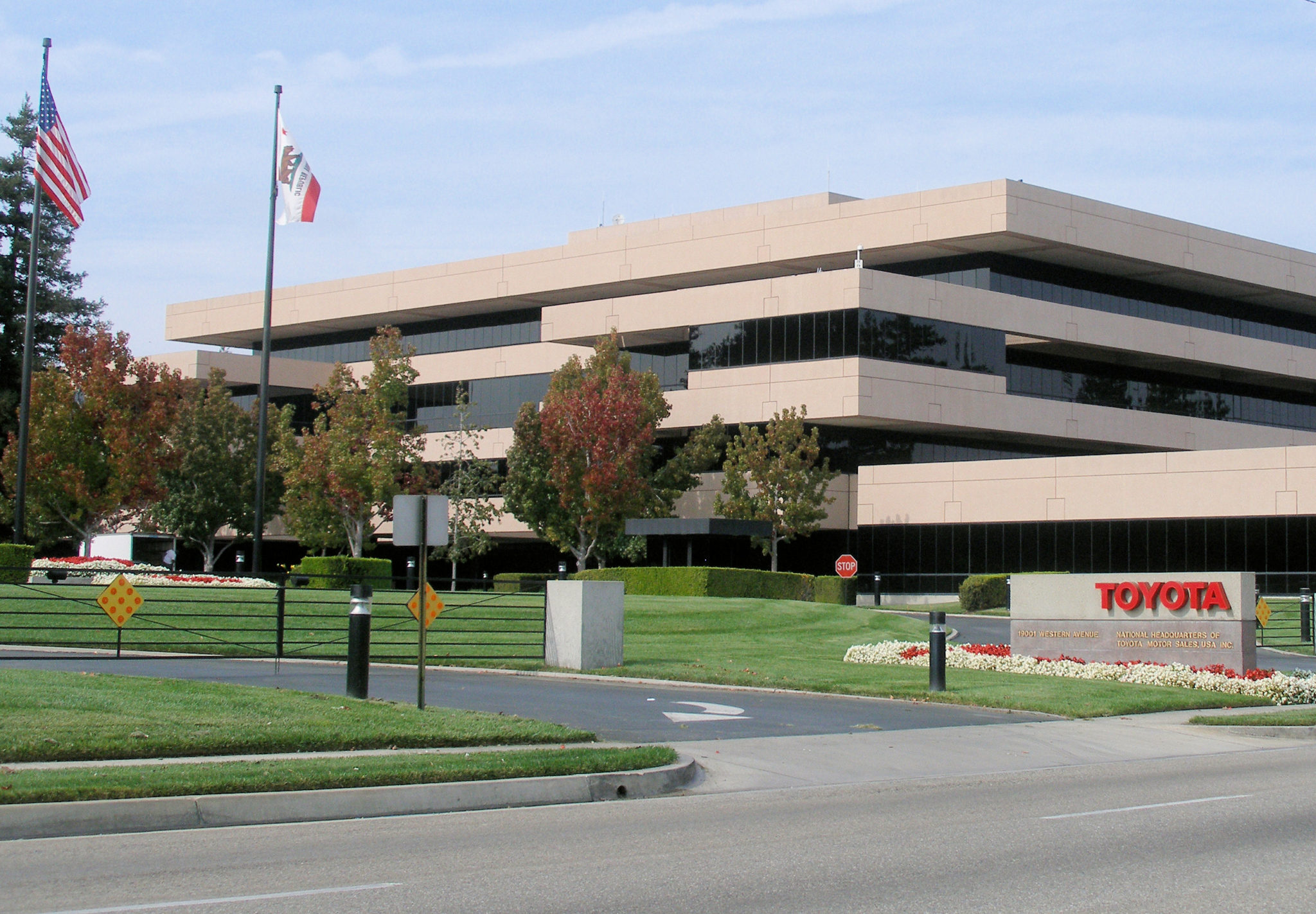
Japanese automotive giants Toyota Motor Co. and Mazda Motor Corps. plan to partner to build a $1.6 billion auto plant in the U.S. The plant would employ nearly 4,000 workers to produce both cars and crossover vehicles. The companies are even exploring the production of electric vehicles at the facility, including developing crucial technology needed for such vehicles.
According to USA Today, Toyota also announced that it will move production of the Toyota Corolla to the U.S. plant, instead of Mexico as previously intended. This announcement comes after President Trump relentlessly criticized Toyota for manufacturing cars primarily sold in the U.S. in other countries. In January, Trump tweeted, “NO WAY! Build plant in U.S. or pay big border tax.”
For Mazda, the plant will be their first U.S. production since moving out of Ford ownership. Currently, all Mazda vehicles sold in the U.S. are manufactured in other countries.
The plant is a big victory for President Trump, as he continues to push his agenda of bringing more manufacturing jobs to American workers. He has also pushed to maintain the production of American-sold cars inside American borders.
RELATED: Racing to the Top: Alabama’s Auto Industry Continues to Grow After 20 Years
RELATED: Mississippi Labor Union Unwilling To Honor Vote of Employees – Will Do Same in Alabama
According to the Birmingham Business Journal, Alabama is among the eleven states being considered for the project. With an already thriving automotive industry, our state is a great fit for a new plant. As a right-to-work state, manufacturers have flocked to Alabama to avoid attempts at forceful unionization that have plagued other manufacturing industries across the nation. However, with the process just gearing up, Alabama will have to compete in the selection process along with the other ten states vying for the new Toyota plant. In a statement to Yellowhammer, a representative for Toyota noted that the company is using Jones Lang LaSalle to gather information on candidate sites. JLL, a commercial real estate firm, has locations in Montgomery and Mobile. The new plant will bring a significant economic impact to the area in which it is located. There is bound to be a bidding war between states eager to land those 4,000 jobs.

Just before the Business Council of Alabama prepares to honor the “Manufacturer of the Year” during a high-profile gala, one of the state’s most powerful business leaders is fighting back against a report that he says falsely characterizes Alabama’s workers.
William Canary, who heads the Business Council of Alabama (BCA), called attempts to disparage the state’s manufacturing workforce “fake news.” He was specifically responding to a Bloomberg News article titled, “Inside Alabama’s Auto Jobs Boom: Cheap Wages, Little Training, Crushed Limbs.”
“It reads more like a tacky advertisement for a plaintiff trial lawyers’ firm than the objective, unbiased report it claims to be,” Canary said.
The report is something of a veiled attack against the South’s right-to-work environment, which has been especially championed in Alabama. Canary said the piece fails to mention how, in many cases, the state’s manufacturing sites have better or comparable safety records and job conditions than plants in unionized states.
As a result, Alabama is often credited as one of the best states to do business, thanks to its right-to-work status. The work standard has attracted high-profile job creators like Remington Outdoor and Polaris Industries. The policy is so popular among voters that the policy was ratified in the state constitution by a 70 to 30 percent margin in November.
“Bloomberg News should be ashamed for the false caricature, unsupported accusations, and ‘fake news’ that it allowed to be printed within its pages,” Canary said. “As the BCA presents its Manufacturer of the Year awards this week, we will choose to focus, instead, on highlighting the reality of Alabama’s burgeoning industrial landscape and the hope and promise it offers to those seeking better jobs and new opportunities.”
The full response can be read below.
By William J. Canary
President and CEO, Business Council of AlabamaBusiness owners, employees, and public officials from across the state will gather in Montgomery this week as the Business Council of Alabama presents its annual “Manufacturer of the Year” awards during a gala luncheon event.
The awards seek to honor manufacturers – from the largest industrial employers to the smallest mom-and-pop businesses – for displaying efficiency, safety, and excellence in their products and the process for making them.
But that reality is in direct contrast to the distressing portrait offered in a recent Bloomberg News article that promotes union membership by comparing Alabama to third-world countries like Bangladesh and claiming our manufacturing facilities are plagued with dangerous, unsafe, and even deadly workplace conditions.
While every workplace accident resulting in injury, no matter the location, is unfortunate and regrettable, the picture of Alabama painted by Bloomberg News is as surrealistic and distorted as a Salvador Dali painting. Rather than reflect our status as a national leader in manufacturing and industrial recruitment whose successes and achievements regularly appear in the pages of Fortune Magazine, Bloomberg portrays us as a state of ignorant and uneducated hillbillies who would be more at home in the pages of a Lil’ Abner comic strip.
Penned by a San Francisco-based reporter and titled, “Inside Alabama’s Auto Jobs Boom: Cheap Wages, Little Training, Crushed Limbs,” the report focused on a handful of tragic and unfortunate workplace-related accidents that have occurred within the tens of thousands of automotive industry jobs across the state. It reads more like a tacky advertisement for a plaintiff trial lawyers’ firm than the objective, unbiased report it claims to be.
Even more misleading, several of the incidents cited in the article occurred in manufacturing facilities located in neighboring Georgia, not Alabama.
To support its broad-based claim that Alabama manufacturing companies mistreat their workers, the Bloomberg reporter cherry-picked certain statistics while ignoring others that dispute his flawed thesis. The reporter offered consistently inaccurate summaries of unrelated incidents at unrelated companies to concoct a false news pattern to generalize about all Alabama manufacturers.
The reporter claims that Ohio and Michigan, both heavily unionized states, are workplace utopias when compared with Alabama, but a closer look at the facts dispute his contention. Consider for a moment that the injury rate in Alabama’s vehicle parts’ manufacturing industry rests at 4.4 injuries per 100 full-time workers, while Ohio recorded 4.6 injuries, and Michigan logged 4.9 incidents. The reporter would not face the fact that job-hemorrhaging union enclaves he praises as safety havens cannot match the growing Alabama automotive industry’s superior safety record. While everyone strives for an injury rate of zero, it is just wrong to ignore the facts.
We can only speculate who or what group motivates these misrepresentations, but two states with higher injury rates simply cannot be judged as safer places to work.
The article also indicates that Alabama’s lack of labor union participation somehow plays a role in workplace conditions (perhaps revealing the true motivation), but it ignores the fact that employees in several manufacturing plants in Alabama have repeatedly voted against unionizing efforts. One company’s workers even voted five times to oust the United Auto Workers union after it had gained a toehold in the facility.
In addition, the reporter failed to cite the fact that Alabama voters ratified a right-to-work constitutional amendment by a 70 percent to 30 percent margin last November. The amendment specifically states that union membership may not be considered an employment requirement at any workplace within Alabama. Many predict it will drive union participation to all-time lows in the state.
Luckily, not all of the media are viewing Alabama and its sister Southeastern states through the same psychedelic prism that Bloomberg used.
A recent report by Reuters showed that the nine southern states of North Carolina, South Carolina, Georgia, Tennessee, Kentucky, Alabama, Mississippi, Louisiana, and Texas currently comprise a larger share of the U.S. economy than nine northern Rust Belt states that traditionally led industrial manufacturing in the last century.
It noted that manufacturing companies like Remington Outdoor, which moved from New York State to Alabama, and Polaris Industries, which located its outdoor vehicle assembly plant in Huntsville, made the decision based on low taxes, available land, and the worker training services offered by the state.
Indeed, the state’s AIDT agency, the workforce training division of the Alabama Department of Commerce, is currently ranked as the third-best department of its kind in the nation.
Given the strong economic climate in Alabama, it should come as no surprise that Site Selection Magazine, perhaps the most respected publication among economic developers, has consistently ranked Alabama as one of the nation’s 10 best states in which to conduct business.
Neither the reporter nor those behind the article can force jobs back into the union shops from which they continue to flee in droves. By publishing this piece, Bloomberg News must want to spread the misery by trying to see Alabama’s manufacturing jobs move out of the country.
Bloomberg News should be ashamed for the false caricature, unsupported accusations, and “fake news” that it allowed to be printed within its pages. As the BCA presents its Manufacturer of the Year awards this week, we will choose to focus, instead, on highlighting the reality of Alabama’s burgeoning industrial landscape and the hope and promise it offers to those seeking better jobs and new opportunities.

In South Carolina, Boeing workers dealt a stunning defeat to labor unions. While the event took place a couple of states away, it has already sent a huge message against similar unionizing efforts that would attempt to gain power in Southern states like Alabama.
Charleston’s Post and Courier reported Wednesday that the International Association of Machinists lost a bid to organize after 74.2 percent of workers rejected the plan. Considered a long-shot from the start, the vote took place ahead of a scheduled visit from President Trump.
The defeat is significant for Alabama, as a victory in the Boeing plant would have emboldened efforts to unionize in other states.
Not that such a move would be welcome in Alabama; voters continue to favor pro-business leaders and policies. In November, an amendment to the state constitution was approved that solidified the state’s “right-to-work” status. Additionally, Alabama’s business-friendly labor laws have continued to attract new business to the state.
In October, GKN Aerospace announced that it would relocate 300 jobs from its unionized facility in St. Louis, Missouri and bring them to Tallahassee, Alabama. The union blamed the Yellowhammer State’s right-to-work status for the company’s decision.
While the union remains bitter about the decision, it’s not the first time that Alabama has gained new economic development opportunities thanks to the state’s labor policy. Airbus is a prominent example; since relocating to Mobile, the company has created thousands of jobs. Likewise, gun manufacturer Remington has pointed to Alabama’s protective laws as a reason for bringing 2,000 jobs to the Huntsville area.

MONTGOMERY, Ala. — The Alabama Legislature on Thursday gave final passage to a bill to add “right-to-work” language to the state’s constitution, if voters approve the measure at the ballot box in November.
Right-to-work laws prohibit forcing employees to join a union and pay dues as a condition of employment. They do not, however, ban unions, as is sometimes alleged.
“The provisions of the amendment are simple,” explained William Canary, CEO of the Business Council of Alabama, which supports the amendment. “It further establishes Alabama as a right-to-work state with constitutional protections that prevent labor organizations from forcing employees to join. At the same time, the amendment prevents employers from denying union membership to workers who wish to join.”
The United Auto Workers union has long targeted Alabama’s booming auto industry for unionization. A vote to unionize the Mercedes plant in Vance was narrowly defeated in 2014.
If unionization of the Mercedes plant had been successful all workers would, by requirement of contract, be represented by the UAW, not just those who are union members. Right-to-work advocates say this caveat strips the rights of workers who wish not to be a member of a union, and silences their voices.
Unions were once widely viewed as a positive voice for workers who did not have the ability to stand up for themselves. But as workplaces became safer and wages more fair, unions started shifting from workplace representation to heavy political involvement to accomplish their goals. At only 7% of the private workforce, unions are now a shadow of their former selves, although they remain a powerful bloc in the Democratic Party.
Between the Mercedes, Honda, and Hyundai plants, Alabama has become a strong player in automotive manufacturing and the state’s right-to-work laws are often credited with having played a major part in that. As president and founder of Union Conservatives, Terry Bowman, stressed during a visit to Birmingham last year that UAW representation for Alabama’s auto manufacturers would not only be a blow to current jobs, but also to the state’s ability to attract new companies.
Several companies have cited Alabama’s status as a right-to-work state as a key reason they relocated to the state, particularly Airbus and Remington.
“Although Alabama and many other southeastern states are firm right-to-work states, labor unions have stepped up their efforts to organize industrial facilities across the region after experiencing recent successes that include Volkswagen in Tennessee and Golden Dragon in Wilcox County,” the Alabama House GOP Caucus said in a release. “Alabama passed one of the nation’s first right-to-work laws roughly 60 years ago, but House Republicans believe it is time to enshrine that employment protection in our state constitution.”
RELATED:
1. Right-to-Work amendment would protect Alabama jobs from union coercion (Opinion)
2. Alabama plant unionizes in spite of Bentley’s warnings that it could kill jobs
MONTGOMERY, Ala. — Alabama House Republicans on Thursday rolled out their list of 2016 legislative priorities, which they have titled the “Right for Alabama” agenda.
“Our ‘Right for Alabama’ agenda focuses on important issues like job creation, protecting public school students from harm, demanding the dignity that unborn life deserves, and other vital initiatives,” said House Speaker Mike Hubbard (R-Auburn). “It also continues Alabama’s on-going fight against wrong-headed federal policies that would erode our constitutionally protected gun rights and force the state to accept thousands of potentially dangerous and unchecked Syrian refugees.”
“All of these agenda bills have been unanimously endorsed and supported by our House Republican Caucus members, and they will be given our full attention early in the session,” added House Majority Leader Micky Hammon (R-Decatur). “Our agenda is rooted firmly in conservative policies and philosophy, and while these bills may be wrong for the liberals who will oppose them, Republicans believe deeply that they are ‘Right for Alabama.”
The list of bills included in the agenda can be found below. The accompanying descriptions were provided by the House Republican caucus:
Zero-Based Budgeting Reform – In order to bring a new level of scrutiny, transparency, and accountability to the appropriations process, the Alabama House Republican Caucus will begin to implement a new “zero-based” budgeting system. This revolutionary new process will require state agencies to fully account for each dollar they receive, help identify ineffective programs that are in need of elimination, and potentially save or re-direct substantial amounts of taxpayer dollars.
Pension Reform – The Alabama House Republican Caucus will continue its efforts to ensure the long-term solvency and fiscal health of the Retirement Systems of Alabama while protecting and preserving the current level of benefits earned by existing retirees and employees.
Alabama Taxpayer Advocate Act – Under current law, the role of Taxpayer Advocate must be filled by an employee within the Department of Revenue who is selected by the commissioner and reports directly to her. In order to ensure fair and equitable treatment of Alabama taxpayers, House Republicans will offer legislation requiring the Taxpayer Advocate to be appointed by the governor from a pool of candidates recommended by a committee of government officials and business professionals. The advocate’s role and duties in protecting taxpayers’ interests would be expanded significantly under this measure.
Small Business Job Creation Tax Credit – During the past five years, Alabama has transformed into one of the most business-friendly states in the nation, and the Legislature has worked to provide incentives necessary to lure thousands of new, high-paying jobs to our state. Small businesses, however, have created more than 65% of all new jobs over the past 20 years nationally. To encourage further job expansion within the state, Alabama House Republicans will propose a $1,500 income tax credit for every new, qualified employee hired by small businesses operating within the state.
Alabama’s Right To Work Constitutional Amendment – Although Alabama and many other southeastern states are firm right-to-work states, labor unions have stepped up their efforts to organize industrial facilities across the region after experiencing recent successes that include Volkswagen in Tennessee and Golden Dragon in Wilcox County. Alabama passed one of the nation’s first right-to-work laws roughly 60 years ago, but House Republicans believe it is time to enshrine that employment protection in our state constitution and will offer an amendment to be included on the November 2016 election ballot.
Protecting Public Safety from Syrian Refugee Threats – Recognizing the inherent risks that exist and lacking confidence in federal claims of thorough background checks, the Alabama House Republican Caucus will oppose any Obama administration effort to relocate masses of Syrian or other Middle Eastern refugees to our state. The possibility of even one “refugee” with a questionable background slipping through the system poses a danger to our public safety that Alabamians should not be forced to endure.
Preserving Second Amendment Constitutional Rights – The Alabama House Republican Caucus pledges to assist members of our federal delegation in overturning Barack Obama’s unconstitutional executive orders attacking our Second Amendment right to own firearms.
School Security and Student Safety Task Force – Alabama schools have been extremely fortunate to avoid a violent situation like those that have occurred in other states, but we must continue looking for ways to improve school safety and ensure we are as prepared as possible to prevent or mitigate any situation that might arise. The Alabama House Republican Caucus will create a task force comprised of key education, law enforcement, and emergency management leaders from across the state and tasked with completing a comprehensive review and assessment of state laws, regulations, and protocols relating to security and student safety in our public K-12 schools, colleges, and universities. The Legislature will consider the task force’s resulting recommendations for improvement.
Teacher Pay Raise – Recognizing their importance in preparing students for success in the 21st Century workplace, House Republicans will work to provide Alabama’s K-12 and post-secondary education personnel with a pay raise.
Wireless Infrastructure Renovation for Education (WIRED) Act – An extensive knowledge of operating computers will be required of everyone in the 21st century workforce, so today’s students must be proficient in the latest technologies. Three out of five schools in the United States currently lack the infrastructure needed to take advantage of wireless technology, and that number is believed to be even higher in Alabama. The WIRED Act proposed by House Republicans will create a framework for putting wireless broadband in all K-12 public schools by providing grants to local systems for the purchase, installation or upgrade of wireless infrastructure. Schools already possessing the necessary infrastructure may use the grants to purchase wireless devices and technology.Unborn Infants’ Dignity of Life Act – Recent reports about outrageous acts by Planned Parenthood and its representatives have prompted public outcry regarding the organization and the cavalier practices it utilizes regarding unborn life. In order to ensure that these atrocities do not occur in Alabama, the House Republican Caucus will offer legislation banning the sale of the bodily remains of unborn infants.
The United Auto Workers union won a small but important victory in Chattanooga, Tennessee, last week, as skilled-trades workers at Volkswagen’s only U.S. factory voted 108-44 to grant the UAW the right to collectively bargain on their behalf.
VW contends the vote should not have been allowed because the plant’s full staff of 1,400 should not be impacted by the vote of just 162 of their colleagues. The German automaker plans to appeal to the National Labor Relations Board (NLRB).
“We believe that a union of only maintenance employees fractures our workforce and does not take into account the overwhelming community of interest shared between our maintenance and production employees,” Volkswagen said in a statement.
In February of 2014, the UAW’s attempts to unionize the full Chattanooga plant came up short by a vote of 712-626. The hotly contested vote was seen as a message that the South would not bend to the will of big labor bosses, who are often cited as the reason auto manufacturers abandoned Detroit and moved South in the first place.
The UAW has tried for years to unionize Alabama’s car manufacturing facilities, most notably the Mercedes-Benz plan in Vance. But with few notable exceptions, Alabama workers have rejected the unions’ overtures.
Alabama is a right to work state, meaning companies cannot require union membership as a condition of employment. However, if unionization of a particular manufacturer is successful, all workers would, by requirement of contract, be represented by the union. Conservatives are often quick to point out that this caveat strips the rights of workers who wish not to be a member of a union, and silences their voices.
Alabama’s status as a right to work state has been credited with being the most important variable in several large manufacturers deciding to bring jobs into the state, including Airbus, Austal USA and Remington.
“Over the last two decades, many businesses that were located in heavily unionized states have moved their operations to Alabama, choosing to locate their facilities in the right-to-work Alabama due to the ability to compete in the global marketplace,” said Business Council of Alabama President and CEO William J. Canary. “A union presence in Alabama would only serve to stifle job creation and economic opportunity. I continue to believe that free enterprise can best meet the needs of its employees by maintaining an open and direct relationship with them, without the interference of a third party.”
Earlier this year, Alabama Gov. Robert Bentley’s efforts to thwart the unionization of the Golden Dragon Copper Tubing plant in Wilcox County failed by one vote.
Bentley said that the unionization of manufacturing plants in Alabama hurts the state’s ability to recruit companies and threatens to damage Alabama’s budding relationship with Asian manufacturers looking to locate in the U.S.
“(I)f I’m going to recruit companies — especially from the far east — if I’m going to recruit a new Hyundai plant, or any kind (of auto manufacturer)… if they know that if they come here they’re non-unionized and then ten years later their plant unionizes, they don’t like that, especially Asian companies do not like that,” he said. “They will not come to a non-right-to-work state. It does upset them… It does hurt in the recruitment of companies to come to Alabama and it does hurt me in creating jobs when a plant is non-unionized and suddenly it becomes a unionized plant.”
The Wilcox County plant employs approximately 150 people with salaries up to the low $40,000s in an area where the median household income is just over $24,000 per year. The plant is expected to grow to as many as 500 employees at full capacity, but it is unclear how the potential unionization of the plant could impact the growth trajectory going forward.
With the UAW and other unions now viewing Alabama as their next primary target in the South, economic developers are battening down the hatches for a fight over the future of the Yellowhammer State’s economy.

MOBILE, Ala. — Austal, a global defense contractor, designer, and manufacturer of defense and commercial ships, delivered their third Littoral Combat Ship (LCS) built at their Mobile shipyard to the U.S. Navy on Wednesday.
This milestone marks the first LCS ship built by Austal as the prime contractor as part of a 10-ship, $3.5 billion block-buy contract.
Austal USA President Craig Perciavalle was part of a ceremony held aboard the future USS Jackson to celebrate the event. “To deliver our first LCS as prime contractor is a major milestone for our company,” said Perciavalle. “I can’t express enough how proud I am to be part of this team of amazing men and women who made this accomplishment possible through their hard work and dedication. This truly is an extraordinary ship built by extraordinary people.”
After the delivery of the Jackson, six Independence-variant LCS remain under construction at Austal’s Alabama shipyard. The Montgomery is being prepared for trials later this year. The Gabrielle Giffords was recently christened, while the Omaha is being prepared for launch in the fall, and assembly is underway on the Manchester.
“The program continues to mature very well here, and each ship continues to improve as lessons-learned are incorporated real time,” said Perciavalle of the Mobile manufacturing center. “The momentum gained on this program is great to see and will position us well in the future.”
Previously, Perciavalle has raved about the advantages of doing business in the state of Alabama. Austal employs approximately 4,000 Alabamians in the Mobile area. He said the state will likely continue to attract international companies who are looking for a low-tax, business-friendly place to do business in America.
But there were two specific things Austal’s president mentioned that make Alabama an especially attractive place to locate. One of them is Alabama’s status as a right-to-work state.
“That’s probably the second leading attractive part of being in the state of Alabama — a right-to-work state,” Perciavalle said. “At the end of the day, we focus on treating our employees right and creating a very good work environment for them.”
In addition to the LCS program, Austal is also under contract to build 10 joint high speed vessels (JHSVs) for the U.S. Navy. Five JHSVs have been delivered while an additional three are in various stages of construction.
The last several months and years have seen thousands of manufacturing and tech jobs move to Alabama from other states, and Business Council of Alabama President and CEO William J. Canary says he knows why: Alabama’s status as a right-to-work state.
The right to join or not join a union and be free of coercive attempts to force unionization is often cited as a hallmark of Alabama’s attraction to every segment of our economy especially manufacturers and suppliers.
“Over the last two decades, many businesses that were located in heavily unionized states have moved their operations to Alabama, choosing to locate their facilities in the right-to-work Alabama due to the ability to compete in the global marketplace,” Canary said.
Alabama’s right-to-work status played a major role in the decisions of such companies as Airbus and Austal USA to manufacture in the Yellowhammer State, and auto workers make more here than in any other state.
Canary underscored the fact that heavy unionization does not attract new manufacturers, expand existing business, or lead to prosperity. “The BCA strongly supports Alabama’s right-to-work status for its benefits to economic growth, industrial recruitment, and job creation,” he added.
Laws prohibiting forced unionization in order to get a job are on the books of 25 states. In Alabama, right-to-work has been the law since 1953. Seeing the dramatic shift, three northern states have enacted right-to-work statutes in the last three years alone.
Canary said the law, and now the secret ballot reaffirmation secured in the Alabama Constitution in 2013, inspires confidence that Alabama will remain a business-friendly state.
“A union presence in Alabama would only serve to stifle job creation and economic opportunity,” Canary said. “I continue to believe that free enterprise can best meet the needs of its employees by maintaining an open and direct relationship with them, without the interference of a third party.”
South Carolina, a state that has many manufacturing similarities to Alabama, is led by Governor Nikki Haley—a steadfast supporter of the right-to-work. The Palmetto State is home to many manufacturers which reportedly made decisions to locate there due to the low level of unionization and the state’s right-to-work laws.
In January, Haley said that South Carolina has an international reputation for not wanting heavy union involvement, “because we don’t need unions.” She said right-to-work strengthens the direct relationship that employers have with their employees without interference of an intermediate party.
Costs are also higher in union operations due to transactional costs having to do with collective bargaining and other union activities.
Canary said the BCA pledges in its annual State Legislative Agendas to protect Alabama’s right-to-work status in order to keep the state competitive, “ours is a committed campaign.”
“Existing industries looking to expand and companies looking to locate here must be confident that Alabama will remain a business-friendly state,” Canary said in a recent interview. “I continue to believe that free enterprise can best meet the needs of its employees by maintaining an open and direct relationship with them.”
Like this article? Hate it? Follow me and let me know how you feel on Twitter!
— Elizabeth BeShears (@LizEBeesh) January 21, 2015

WASHINGTON, D.C. — Last Friday, the U.S Supreme Court agreed to hear a case from California that could eviscerate the power of public sector unions nationwide.
The case, Friedrichs v. California Teachers Association, challenges the collection of fees that unions use to fund collective bargaining efforts from members who disagree with the group’s political aims. The petitioners, 10 California teachers, along with the Christian Educators Association International, believe that mandatory union payments constitute compelled political speech in violation of the First Amendment.
Although Alabama law prohibits employees of the state from being represented by a union, next year’s decision could have a massive impact on the Yellowhammer state. Large numbers of Alabamians are employed by the Federal Government whose employees are not bound by the same restrictions regarding union representation as their state-level counterparts. In fact, 19.7 percent of Alabamians are employed by some type of government agency.
Back in 1976, the Supreme Court heard a very similar case, Abood v. Detroit Board of Education, where union fees were challenged on the basis that they went to unsupported political efforts. The court affirmed that the union shop, which is legal in the private sector, is legal in the public sector. Union shops are arrangements requiring workers to join a particular union and pay dues within a specified period of time after beginning employment; usually 30 to 90 days. Such deals guarantee that workers will pay for the benefits of union representation and avoids the common “free-rider” problem.
The court also found that non-members may be assessed dues for “collective bargaining, contract administration, and grievance adjustment purposes” while insisting that objectors to union membership or policy may not have their dues used for other ideological or political purposes.
But the petitioners in Friedrichs argue that it is the collective bargaining itself that is inherently political. Issues such as teacher tenure and salary have become increasingly politicized and now, they argue, fall within the realm of political speech. The Fair Share agreements are now being challenged, and without them, public sector unions could very well fall apart.
Much has changed in the constitutional interpretation of speech since 1976. The 2011 case Knox v. Service Employees International Union held that by failing to provide a new notice and a new chance to opt out of payment of a special union assessment intended solely for political and ideological expenditures, the union did not abide by the established procedure for handling nonmember payment. In order to respect the First Amendment rights of nonmembers, the special assessment should have come with a notice that allowed nonmembers to opt in.
Furthermore, the 2013 decision in Harris v. Quinn determined that the fair share provision in the collective bargaining agreement between the state of Illinois and the union representative violated the First Amendment rights to freedom of speech and freedom of association of personal assistants who were not members of the union.
The most well-known “union” in Alabama, however, wouldn’t be affected if public-sector unions fall on the wrong side of the high court’s ruling.
The Alabama Education Association, although it walks like a union, talks like a union, and spends like a union, technically does not have the power to collectively bargain and would remain untouched by the court’s constitutional findings. By exploiting loopholes in state law, the AEA does not fall under the umbrella of public-sector unions while still remaining one of the most politically active teachers’ lobbies in the country.
The US Supreme Court will hear Friedrichs v. California Teachers Association in its next term.

BIRMINGHAM, Ala. — Last week, business website Market Watch ranked the country’s 100 largest cities in order of their business friendliness, and Birmingham didn’t fare so well.
Coming in at No. 75, The Magic City received a score of 986 out of 2,350 possible points.
Based off of Market Watch’s scoring criteria, here are a few ways Birmingham could improve its score in future years:
1. Allow school choice to flourish
Having a proportionally high number of undereducated, low-skill workers appears to be one reason Birmingham ranked so far down the list.
To calculate its “Business Climate” index, Market Watch measured each city’s population growth; its total population’s proportion of work-eligible people; and the concentration of bachelor’s and graduate degrees, among other criteria. This constituted nearly one-third of the overall score, and it’s the area in which Birmingham tallied its lowest score, coming in at No. 98 out of 100.
How could the city remedy this? Creating an education system that better prepares students for college and beyond is a great place to start. Allowing charter schools to flourish in the city could be one way to create a refreshed culture around education, and entice Birmingham natives to return home to raise their families once their formal educations are complete.
2. Get rid of the business taxes
While Birmingham boasts several large companies such as Regions, Alabama Power, and BBVA Compass, the city scored poorly in the portion of the rankings that measured the number of publicly-traded companies that call it home.
The highest-ranked city on the list, Dallas, Texas, is located in a state with no corporate income tax. Alabama levies a corporate income tax as well as a business privilege tax, but that is up to the Legislature to fix, not Birmingham. However, the city collects additional business taxes on top of the ones levied by the state. Reducing or eliminating those extra taxes — and joining the push for the state to do the same — could motivate more companies to move their headquarters to the Magic City.
3. Encourage entrepreneurship
The third area Market Watch evaluated was the economic outcome of each city by measuring unemployment, growth in personal income, and labor-force growth.
Right now, Jefferson County’s unemployment rate sits at a relatively healthy 5.1 percent, which is within what economists call the “natural rate” of unemployment. But what unemployment numbers do not divulge is the number of people who have ceased looking for a job, or are underemployed.
A Birmingham resident with a college degree who is working two part-time jobs to make ends meet until she can find a job in her field is technically employed, but will probably not make the same personal income gains as someone who has already found a job in their profession. Improving the first two areas mentioned above will help put Birmingham residents to work, but it could also spur the kind of entrepreneurialism that creates new jobs and career fields that never even existed before.
Innovation Depot, a Birmingham-based non-profit business incubation program, is a great example of the kind of initiatives the city’s public and private stakeholders should continue to support. Eliminating the hurdles entrepreneurs often have to jump over to bring their products to market, then providing them with mentorships and greater access to private capital could go a long way toward propelling Birmingham higher up future lists of business friendly cities.
Nicknamed the Magic City for its quick growth more than a century ago, Birmingham appears to be right on the cusp of once again becoming a major economic center in the Southeast. Will the city’s leaders choose to take the steps to push her over the edge, or keep her in the past?
Like my recipes? Let me know on Twitter! #BirminghamBloggers #FoodBlogger
— Elizabeth BeShears (@LizEBeesh) May 5, 2015
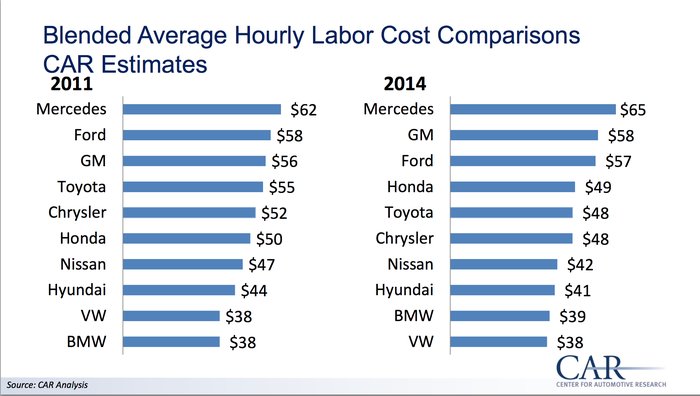
VANCE, Ala. — An estimate by the Center for Automotive Research found that the non-unionized Daimler Automotive Group employees at Alabama’s Mercedes plant in Vance, near Tuscaloosa, make more per hour than any other auto workers in the country.
The Center for Automotive Research compiled estimates of the hourly labor costs, including wages, benefits, and legacy costs at each of the major U.S. automakers. So, while the numbers below may not be the exact amount on a worker’s paycheck at the end of every pay period, it is a reflection of the many types of compensation a worker would receive at that employer.
Labor costs per employee at Daimler AG in Alabama average $65 per hour, including benefits, compared to the $58 per hour at GM, $57 per hour at Ford, and $48 per hour at Fiat Chrysler, all of which are highly-unionized.
In last place are BMW compensating only $39 per hour, and Volkswagon AG at $38 per hour.
Alabama’s other major automotive manufacturers, Honda and Hyundai came in at $48 and $41, respectively.
The United Auto Workers union has long targeted Mercedes as its next conquest. A vote to unionize the Vance plant was narrowly defeated in 2014.
Alabama is a right to work state, meaning that employers can’t require union membership as a condition of employment. However, if unionization of the Mercedes plant had been successful all workers would, by requirement of contract, be represented by the UAW, not just those who are union members. Right-to-work advocates say this caveat strips the rights of workers who wish not to be a member of a union, and silences their voices.
Unions were once widely viewed as a positive voice for workers who did not have the ability to stand up for themselves. But as workplaces became safer and wages more fair, unions started shifting from workplace representation to heavy political involvement to accomplish their goals. At only 7% of the private workforce, unions are now a shadow of their former selves, although they remain a powerful bloc in the Democratic Party.
Between the Mercedes, Honda, and Hyundai plants, Alabama has become a strong player in automotive manufacturing and the state’s right-to-work laws are often credited with having played a major part in that. As president and founder of Union Conservatives, Terry Bowman, stressed during a visit to Birmingham last year that UAW representation for Alabama’s auto manufacturers would not only be a blow to current jobs, but also to the state’s ability to attract new companies.
Several companies have cited Alabama’s status as a right-to-work state as a key reason they relocated to the state, particularly Airbus and Remington.
Like this article? Hate it? Follow me and let me know how you feel on Twitter!
— Elizabeth BeShears (@LizEBeesh) January 21, 2015
Alabama’s automakers made almost 1 million cars in 2014, setting a new state record.
Between Mercedes in Vance, Hyundai in Montgomery, and Honda in Talladega county, Alabama is currently home to one of the country’s elite auto manufacturing workforces.
Hyundai, which started production in Alabama in 2004, built the most vehicles over the past twelve months with 398,851 Elantra and Sonata sedans.
Honda built 363,419 Odyssey minivans, Pilot SUVs and Acura MDXs.
Mercedes made over 235,000 M-Class and GL sport-utility vehicles, and R-Class and C-Class sedans.
Together, Alabama’s three automakers built 997,270 vehicles, beating the previous record set in 2013 by 80,000.
Records will likely continue to be set in coming years as automobile manufactures re-up their investment in the state. In the fall of 2014, Mercedes announced it was bringing 200 additional jobs to their Alabama plant in 2015, boosting production up to 300,000.
Government officials give lots of credit for the growth in Alabama’s manufacturing sector to the state’s right-to-work status. Foreign companies, particularly Japanese-owned businesses like Honda, weigh right-to-work laws heavily when deciding where to locate operations in the United States.
“Over 70 Japanese companies have chosen to invest capital to operate in Alabama and to employ over 12,000 Alabama workers,” Alabama Commerce Secretary Greg Canfield told Yellowhammer in September. “The Japanese business culture places great emphasis on teamwork, quality, dedication and innovation. These Alabama-Japanese companies have found our state to be ideal as a right-to-work state; a state with a supportive governance and regulatory environment; a state whose workforce provides the dedication to quality, teamwork and innovation necessary to meet and exceed customer expectations; which all translates to market growth and success in the North American markets by choosing to locate in Alabama.”
(h/t WSFA)
Like this article? Hate it? Follow me and let me know how you feel on Twitter!
— Elizabeth BeShears (@LizEBeesh) January 21, 2015

PINE HILL, Ala. – Alabama Gov. Robert Bentley’s efforts to thwart the unionization of the Golden Dragon Copper Tubing plant in Wilcox County failed by one vote, according to a report by the Montgomery Advertiser on Monday.
Earlier this year, Bentley participated in the grand opening of the plant, which was the culmination of an initiative that economic developers had dubbed “Project Hope.”
“We called it ‘Project Hope’ and it has given the people in Wilcox County hope and showed them that if you stick with something you can make it happen,” explained George Alford, manager of the Wilcox County Industrial Development Authority. Wilcox County has long been one of the state’s most economically depressed areas, so landing the $100 million manufacturing facility was a major coup.
But it took some significant coaxing to convince the Chinese company to locate in west Alabama.
According to the Alabama Dept. of Commerce, “The Alabama Department of Economic and Community Affairs (ADECA) provided Pine Hill with an $866,000 grant for improvements to its water and sewer system, augmented by $1.8 million in funding from Economic Development Administration. Plus, the Alabama Department of Transportation constructed an industrial road and bridge to serve the project.”
On top of that, the state put together a capital income tax credits package worth as much as $160 million over the next two decades.
But perhaps more than anything, Alabama’s status as a right-to-work state was extremely attractive to the Asian manufacturer, who hoped to avoid dealing with American labor unions.
The United Auto Workers (AUW) has frequently tried and failed to unionize auto manufacturing facilities in Alabama, most notably the Mercedes plant in Vance.
During an appearance on the Matt Murphy Show in October, Bentley said that the attempted unionization of non-union manufacturing plants in Alabama hurts his ability to recruit companies to locate in the state and threatens to damage Alabama’s budding relationship with Asian companies looking to locate in the U.S.
“We’re a right-to-work state and everyone has the right, if it’s an open election, to decide if they want to unionize, they do,” Bentley said. “That’s what a right-to-work state is. We do it in a legal, open, non-coercive way.
“However, if I’m going to recruit companies — especially from the far east — if I’m going to recruit a new Hyundai plant, or any kind (of auto manufacturer)… if they know that if they come here they’re non-unionized and then ten years later their plant unionizes, they don’t like that, especially Asian companies do not like that. They will not come to a non-right-to-work state. It does upset them… It does hurt in the recruitment of companies to come to Alabama and it does hurt me in creating jobs when a plant is non-unionized and suddenly it becomes a unionized plant.”
But it looks like that is exactly what is happening now at Golden Dragon.
According to the Montgomery Advertiser report, Golden Dragon employees voted 75-74 to join the United Steelworkers union over the vocal objections of Gov. Bentley.
Bentley warned in a letter to employees that joining the union “could have a possible negative impact on your community by discouraging other companies from locating there.”
Bentley’s letter was circulated throughout the company prior to the vote, but employees chose to ignore it by the slimmest of margins.
An objection to the vote was filed with the National Labor Relations Board, which supervises union elections, late last week. That could result in a hearing on the elections, although the Advertiser noted that it is unknown at this time what objections were expressed.
The Wilcox County plant currently employs approximately 150 people with salaries up to the low $40,000s in an area where the median household income is just over $24,000 per year. The plant is expected to grow to as many as 500 employees at full capacity, but it is unclear how the potential unionization of the plant could impact the growth trajectory going forward.
Follow Cliff on Twitter @Cliff_Sims
During an appearance on the Matt Murphy Show Monday morning, Alabama governor Robert Bentley said that the attempted unionization of non-union manufacturing plants in Alabama hurts his ability to recruit companies to locate in the state and threatens to damage Alabama’s budding relationship with Asian companies looking to locate in the U.S.
The United Auto Workers (UAW) has targeted Mercedes-Benz’s Tuscaloosa plant for unionization, but has so far failed to gain much traction. However, they recently launched a local UAW chapter and asked Mercedes’ parent company to recognize it as workers’ bargaining agent. The workers will likely vote soon to decide if they want UAW to represent them.
Dennis Williams, who was elected UAW president earlier this year, told the Wall Street Journal that what happens in Tuscaloosa “is important to the future of the labor movement.”
Murphy asked Bentley if the potential unionization of non-union plants in Alabama would be a good thing “for the expansion of manufacturing jobs, specifically auto-manufacturing jobs in the state.”
“No, it’s not good,” Bentley replied. “We’re a right-to-work state and everyone has the right, if it’s an open election, to decide if they want to unionize, they do. That’s what a right-to-work state is. We do it in a legal, open, non-coercive way.
“However, if I’m going to recruit companies — especially from the far east — if I’m going to recruit a new Hyundai plant, or any kind (of auto manufacturer)… if they know that if they come here they’re non-unionized and then ten years later they’re plant unionizes, they don’t like that, especially Asian companies do not like that. They will not come to a non-right-to-work state. It does upset them… It does hurt in the recruitment of companies to come to Alabama and it does hurt me in creating jobs when a plant is non-unionized and suddenly it becomes a unionized plant.”
Bentley’s response is particular concerning because Japanese companies have been pouring resources into Alabama at a stunning rate in recent years, accelerating their growth and branching into new sectors of the economy.
According to Alabama Secretary of Commerce Greg Canfield, “over 70 Japanese companies have chosen to invest capital to operate in Alabama and to employ over 12,000 Alabama workers,” as a direct result of the state’s right-to-work laws and low tax, low regulation business climate.
Alabama has also become one of the nation’s top auto manufacturing centers, with Mercedes, Honda and Hyundai now all operating in the state.
“When I was in Europe I talked to a new automobile company that is not in the United States about coming to Alabama,” Bentley told Murphy.
The governor was not specific about what company it was, but they will no doubt be watching what happens with the attempted unionization of the Tuscaloosa plant when making the decision on where they will locate.
Follow Cliff on Twitter @Cliff_Sims
(Above: Yellowhammer News CEO Cliff Sims interviews Austal USA President Craig Perciavalle)
Craig Perciavalle kicked off 2013 by becoming President of Austal USA, America’s largest aluminum shipbuilding company, with roughly 4,000 employees in Mobile, Ala. A little over a year later, he’s leading the company through a period of unprecedented growth and cranking out the most advanced ships the U.S. Navy has ever had in its fleet. Austal is currently building Joint High-Speed Vessels (JHSV) and Littoral Combat Ships (LCS), both of which are so fast that their top speed is classified.
Mr. Perciavalle sat down with Yellowhammer CEO Cliff Sims this week for The Exchange, a regular feature in which Yellowhammer discusses current events and other topics with a state or national business leader or political figure, or notable Alabamian.
RELATED: The Exchange ft. Special Guest Steve Forbes
Is there someone you would like to see featured in The Exchange? Send us an email HERE with “Exchange Guest” in the title.
Did you know Sen. John McCain, R-Ariz., tried to kill the Littoral Combat Ship, but Sen. Richard Shelby, R-Ala., saved it? Did you know the most advanced ships in the Navy are being run on Microsoft Windows? Find out about that and so much more — including what’s making Alabama so attractive to companies around the world — by watching the video above.
Here are some of the top quotes from this week’s sit-down with Austal USA President Craig Perciavalle.
On what it’s like to operate the Navy’s most advanced ships:
The command infrastructure on the ship is Windows based. It basically looks like you’re looking at your desktop in your office. It’s got all the permissions and all the security features that are necessary to be in a military environment. But at the end of the day, it enables us to upgrade the systems on the ship, or ‘plug-and-play’ other weapons or other mission packages on the ship much more easily than a traditional Navy ship has been able to do in the past.
On working with Alabama’s Congressional delegation:
It’s phenomenal… I’ve been in this position for a little over a year now and the appreciation that I have for what they do has just gone beyond my imagination… They provide a tremendous amount of support for us — both with state support with supporting the operations, as well as support on the Hill.
On an Alabama-built ship making it into a Disney movie that made a half-billion dollars at the box office:
It’s the LCS Independence. It’s Tony Trihull in the Cars 2 Movie. We didn’t know it was going to happen. We had some employees that were sitting in the movie theater and they were like, ‘Holy cow, that’s our ship!’

On what’s making Alabama so attractive to companies right now:
First and foremost is the support the state gives industry here. They realize they need to provide support for companies to have them move to the area and grow the economics of the state. That’s been tremendous for us with AIDT training. We get a lot of support with that. We’ve had some support in the facility growth that we’ve had — both from the county, the City of Mobile and the State of Alabama. That partnership between the State of Alabama and industry is really second to none from what I’ve seen… That’s the main reason why people are attracted to come into the state… That’s just going to make the state of Alabama grow into an incredible economic powerhouse going forward.
On Austal employees rejecting unionization 3 times and Alabama’s status as a right-to-work state:
That’s probably the second leading attractive part of being in the State of Alabama — a right to work state… We focus on treating our employees right and creating a very good work environment for them.
Want to make sure more episodes of The Exchange are possible? SHARE this one with your Facebook, Twitter & Email friends using the buttons below.
(Above: Austal USA President Craig Perciavalle visits “The Exchange”)
Yellowhammer CEO Cliff Sims sat down with Austal USA President Craig Perciavalle yesterday to discuss a wide range of issues — from how Sen. Richard Shelby, R- Ala., saved the Littoral Combat Ship (LCS) to the fact the LCS inspired a character in Disney’s Cars 2, which brought in over a half-billion dollars at the box office.
Perciavalle raved about the advantages of doing business in the state of Alabama. Austal employees approx. 4,000 Alabamians in the Mobile area. He said the state will likely continue to attract international companies like Austal and Airbus who are looking for a low-tax, business-friendly place to do business in America.
But there were two specific things Austal’s president mentioned that make Alabama an especially attractive place to locate. One of them is Alabama’s status as a right-to-work state.
“That’s probably the second leading attractive part of being in the state of Alabama — a right-to-work state,” Perciavalle said. “At the end of the day, we focus on treating our employees right and creating a very good work environment for them.”
Austal employees have voted to reject three attempts by the Sheet Metal Workers’ Union to unionize the plant — in 2002, 2008 and most recently in 2011.
Want to find out what Perciavalle believes is the most attractive part of doing business in Alabama? Come back to Yellowhammer Sunday morning to see Perciavalle’s complete interview in “The Exchange.”
RELATED: The Exchange ft. Special Guest Steve Forbes
Follow Cliff on Twitter @Cliff_Sims
 By Cameron Smith & Terry Bowman
Since 1993, Alabama has become a powerhouse of automotive manufacturing. With a strong market in the U.S., Mercedes-Benz, Hyundai, and Honda continue to show signs of increased production. That is great news for Alabama’s workforce and state economy. The good news does not stop there.
Because of Alabama’s legislative successes to create a welcoming environment for manufacturing business, new facilities and suppliers are positioned to spring up all around the state. Others are taking notice.
In July of 2013, Business Facilities moved Alabama up to the number two position on its Automotive Manufacturing Strength Ranking. Just behind Tennessee, Alabama so impressed the editor of the magazine that he said: “Mercedes-Benz’s long-term commitment to Alabama was followed by a parade of auto giants who have vaulted the state into the top tier in U.S. automotive production, with 880,000 vehicles produced in 2012. The state has laid out the welcome mat for foreign investment and is working proactively to make sure a skilled workforce is readily available by offering on-site training.”
He added, “We expect Alabama to be a leading player in the U.S. automotive industry for years to come.”
Notably, both Tennessee and Alabama are right-to-work states that prevent employers from requiring union membership as a condition of employment. The growth of automotive manufacturing in right-to-work states has been so compelling that even Michigan, a historic union stronghold, passed a right-to-work law in 2012.
Yet the United Auto Workers (UAW) remains intent on unionizing the South. The UAW has targeted the Chattanooga Volkswagen plant for a major organizing push. UAW president Bob King, has acknowledged just how important it is to unionize the plants in the South. “If we don’t organize the transnationals, I don’t think there is a long-term future for the UAW,” he said.
If the UAW is successful in its attempt to unionize Volkswagen in Chattanooga, the UAW will bargain to be the ‘Exclusive Representation Agent’ for everyone in the bargaining unit – guaranteeing for them that every hourly employee in the facility will have to accept the contract restrictions that they negotiate with the manufacturer.
In other words, every hourly auto-worker will then be associated with the UAW whether they want to be or not. Conservative union members and manufacturing employees will quickly find that the UAW’s one-size-fits-all representation spends millions of dollars every year to advance an extremely liberal political agenda and influence elections from the presidential level all the way down to local school boards.
While Chattanooga may be the immediate bulls-eye of the UAW’s organizing attempt, its broader target encompasses Alabama’s manufacturing heart. For all Southern workers, especially those with conservative perspectives, the threat to their freedom and opportunity is real.
When all is said and done, the UAW is a hyper-political organization with perspectives and policies that failed in Detroit and do not fit with Alabama’s mission to create automotive jobs and economic opportunity. Even though some of Alabama’s auto workers have expressed their opposition to the UAW, the battle will continue.
Workers should absolutely have the opportunity to freely associate with each other and explore with their employers to improve their workplace and product quality. At the same time, Alabama’s workers building an impressive industry must not allow an old-Detroit political machine to come between them and their employers. If workers strive to maintain the current manufacturing climate, the new automotive era will continue to grow right here in Alabama.
Terry Bowman is a 17-year UAW member in Michigan, and the President and founder of Union Conservatives, Inc., a 501(c)4 non-profit organization with members in 35 states. Cameron Smith is Vice President and General Counsel of the Alabama Policy Institute, a non-partisan conservative think tank located in Birmingham, AL.

Boeing CEO James McNerney, Jr. and University of Alabama head football coach Nick Saban don’t make a combined $20 million a year because they’re dummies.
University of Alabama Chancellor Robert Witt called Saban “the best financial investment [Alabama] has ever made.” Forbes estimates the University of Alabama has garnered a $100 million return on the product Saban has produced on the field. “In fact, Saban has brought a 112% revenue increase to Alabama’s athletics department since he became head coach at the school,” Darren Heitner of Forbes wrote yesterday.
McNerney oversees the world’s largest aerospace company, worth over $60 billion. If every Boeing employee lived in the same city, it would be the fifth largest city in Alabama, with over 160,000 residents.
So outside of being über successful, what do these two men have in common?
They’re both playing Alabama right now — Saban, the University of Alabama; and McNerney, the state of Alabama.
Saban has been at the center of a torrent of rumors in recent weeks about the head coaching job at the Univ. of Texas. I’d argue that Alabama is the greatest football program in the history of college athletics, but even the Tide can’t compete with the ocean of money the Longhorns are floating on.
Now, Saban hasn’t stoked the Texas rumors, but he hasn’t definitively squashed them either. Saban’s agent Jimmy Sexton is the master of playing schools against each other. A school starts feeling like their beloved coach might leave and, next thing you know, the school opens their wallet at an unprecedented level to keep it from happening.
Well played, Coach!
Up in Seattle, Washington, McNerney is playing a similar game with the machinists union.
The union rejected a long-term labor deal proposed by Boeing several weeks ago, compelling McNerney to open up a nationwide competition among states trying to become home to a new Boeing plant that will bring 8,500 jobs with it.
This is a bit unusual. Big development projects are typically kept under wraps and out of the public eye until they’re signed and ready to go. Individuals who knew about Alabama’s Airbus deal were sworn to secrecy for months.
So why would Boeing get people so ginned up?
Because in reality, they’d probably like to stay in Washington. They just need to create the impression they’re leaving to get the union to agree to a deal that makes it possible.
And it looks like it’s working. The union already submitted a new proposal to Boeing yesterday.
Well played, Boeing!
Nick Saban might take the Texas job tomorrow (oh, sweet Lord, don’t let it happen!). But in reality, he’s probably going to get himself a well-deserved raise and finish his career at Alabama.
Similarly, Boeing might end up building their new plant in Huntsville (oh, sweet Lord, bring ’em on down!). But in reality, they’re probably going to get themselves a deal with the union that they can stomach and stay in Washington.
Alabama may be on different ends of these two scenarios, but in both cases we’re probably getting played.
Follow Cliff on Twitter @Cliff_Sims