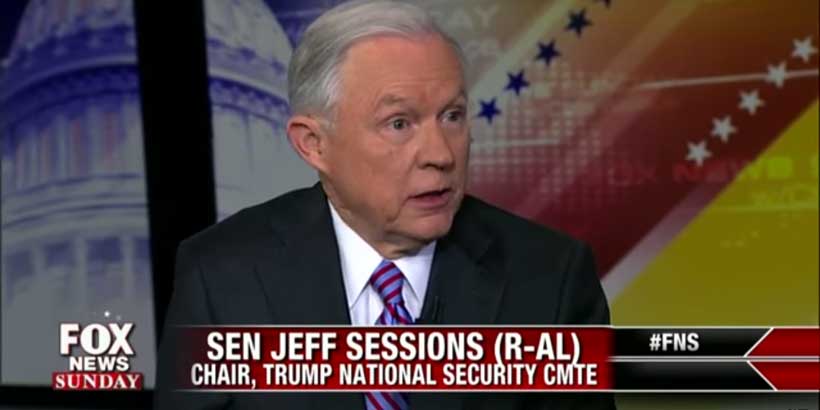
WASHINGTON, D.C. — Senator Jeff Sessions (R-AL) had a strong message of party unity on this week’s edition of Fox News Sunday, where he stated that party leaders need to listen to the American people.
Donald J. Trump and his surrogates have been none-too-pleased with the hesitant and sometimes inflammatory tone of Republican Party leaders towards their presumptive nominee. After hesitantly endorsing Trump, House Speaker Paul Ryan (R-WI) has had a testy relationship with the New York billionaire, openly challenging his policy positions and public actions.
“But let me give advice to my Republican colleagues,” Sessions said. “They need to look at the election returns. They need to understand that the American people are not happy with the gridlock in America.”
Host Chris Wallace prompted Sessions, asking if he meant that everyone in the GOP needs to get on the “Trump Train.” Sessions said that politicians “need to be participating in assisting some of these things. We haven’t been effective in fixing illegal immigration, the trade deal, we’ve got a lot of votes and support in the Congress, on the Democrats and Republicans. So, I think there’s a lot of things we need to learn from the American people.”
The popular Alabama senator also noted that the American people are sick of the “status quo” in D.C. Sessions explained to Wallace why he thinks the party and the country need to unify around the interest of the common people.
They’re not happy their wages have fallen since 2000 instead steadily. They’re not happy that we have a high unemployment. They’re not happy that we have an open border and lawlessness at our border. They believe we should have a lawful system of immigration…
They don’t believe these trade deals have worked with them… So, I think our leaders on both sides need to be considering what the American people are saying in this election and they need to be a part of the unity, too.
Sessions Sunday talk show interview comes on the heels of increased speculation that he could be selected as Trump’s VP. In an informal survey, “GOP members of The POLITICO Caucus – a panel of activists, strategists and operatives in 10 key battleground states,” gave high marks to both former Secretary of State Condoleezza Rice and current U.S. Sen. Jeff Sessions (R-Ala.).
RELATED: Top Republicans in battleground states want Trump to consider Condi and Sessions for VP
Sessions, who currently heads Trump’s national security advisory committee, fits many of the general qualities that Trump says he is looking for in a running mate. Chiefly, Sessions would be able to use his expertise on the Hill to help a Trump Administration pass legislation through Congress.
But Alabama’s junior senator has been dismissive of the vice presidential speculation in the past.
“I think that would not happen,” Sessions told The Hill. “I have not talked with him about it.”
Trump has yet to announce when to expect his VP pick, and he has at times stated he will wait until the convention on July 18.
Sessions’ entire interview on Fox News Sunday can be viewed below.
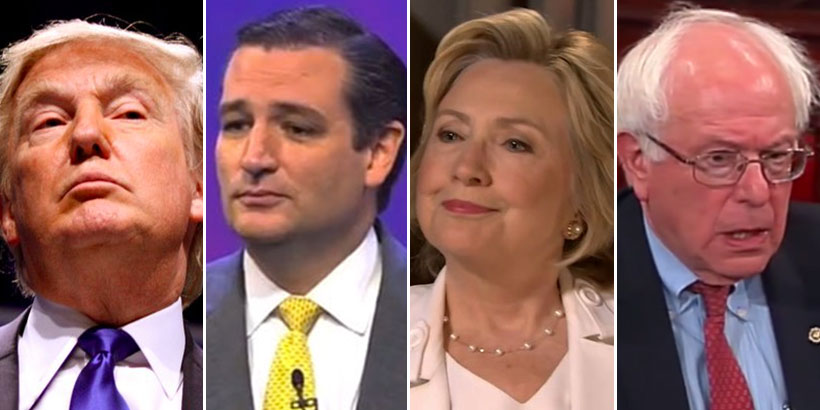
A recent Gallup poll showed that, for once, Republicans and Democrats agree: the economy is the number one issue of the 2016 Presidential Election. Perhaps the most important part of any candidate’s economic platform is his or her tax plan.
The International Business Times ran an analysis of each of the top four candidates’ proposals to find the likely impact on the weekly paychecks of Americans across various income levels. Personal finance editor Lauren Lyons Cole explains how the tax plans of leading presidential candidates could have a “lasting impact on the American economy as well as your future paycheck,” based on research from the nonpartisan Tax Policy Center.
Social-welfare programs facilitated by the federal government, as well as national defense, are all funded by various forms of taxation. Individual income taxes account for the greatest source of revenue for the U.S. government, bringing in nearly $1.4 trillion in 2014. Payroll taxes, which cover Social Security and Medicare, added $1 trillion more to the budget in 2014.
The results reveal some stark differences.
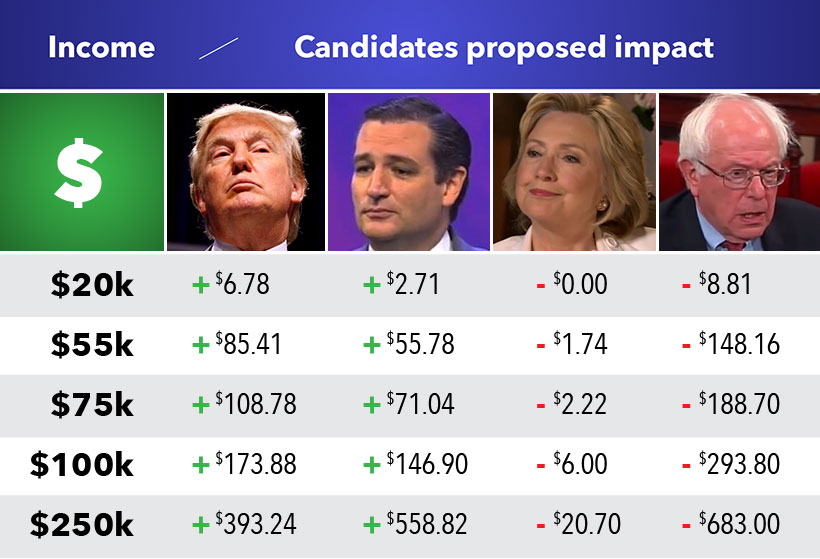
Alabama’s median income is $43,511 as of 2014. For a family in the Yellowhammer State, the median income is $53,764. Under the Obama administration, real median family income has declined and then stagnated over the past seven years.
However, both Trump and Cruz’s plans show a rise in the two brackets that would affect Alabamians the most: the $25,000 and $55,000 group. Clinton and Sanders’ plans both show varying degrees of stagnation or decline.
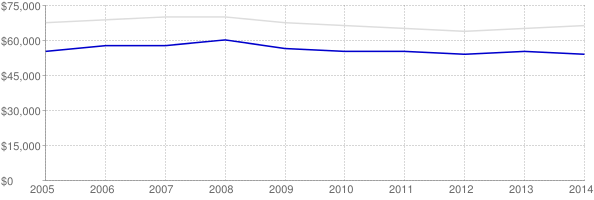
Trump’s policies would increase take-home pay for all Americans by significantly cutting taxes. This is true for all Americans regardless of income level, and would – as all tax cuts do- have a greater impact on the higher than lower brackets.
He proposes a 0 percent rate up to $50,000 for couples, 10 percent up to $100,000, and then only 20 percent up to $300,000.
Because his cuts are not offset by spending decreases, an analysis of Trump’s tax plan by the Tax Policy Center found his tax cuts would result in a federal deficit of $9.5 trillion over the next decade. That’s a significant increase from the projected 2016 federal deficit of $544 billion. This analysis does not, however, take into account the increased economic activity that is likely to result from lower taxes, as has previously been experienced during the Kennedy administration and then later in the Reagan administration, to name a couple. For example, Ronald Reagan cut the top marginal tax rate in half, but government revenues doubled.
In his platform, Trump does not propose reforming entitlements – which make up 66 percent of the budget – and repeatedly says that we “must preserve social security.”
Ted Cruz’s plan is perhaps the most unique in the bunch because it is the only one that proposes a flat income tax. A flat tax is different than our current federal and state progressive models because it sets a standard “flat” rate that everyone across all income groups pays.
Under a Cruz administration, the Texas Senator would slash the 750,000-page tax code for a flat tax rate of 10 percent across all incomes. Like Trump’s plan, Cruz’s shows a significant rise in the top brackets but solid increases across all levels.
The Democratic proposals do not look as promising for taxpayers. Bernie Sanders would raise the federal deficit even more than Trump would and lower real income with his tax plan. The senator’s tax hikes hit everyone, regardless of earnings, and the highest earners will pay over 40 percent. Sanders believes that this is a fair trade off for funding “free” government programs, including college and health care.
Clinton’s plan is the most similar to the status quo under the Obama Administration. The former first lady keeps rates the same for most Americans, but has significant hikes for those in upper-income levels. Clinton’s proposal includes the so-called Buffett tax, which requires taxpayers who earn more than a $1 million each year to pay a minimum of 30 percent in taxes.
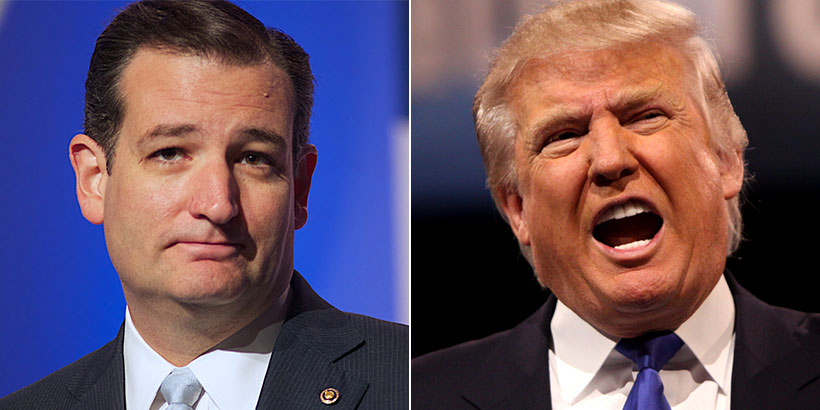
This year’s election cycle has left many voters asking “what if?” What if lower-tier candidates had dropped out sooner? What if the primary had been a one-on-one between Trump and some other candidate? Now, thanks to the brilliant analytics at FiveThirtyEight, Republicans can see a simulation of what their primary would have been like had it been a duel between Donald Trump and Texas Senator Ted Cruz.
At this point, FiveThirtyEight founder Nate Silver acknowledges that Cruz is the only candidate mathematically catching the New York billionaire in the delegate count. After emerging victorious in Idaho on Tuesday and finishing second to Trump in Michigan, Mississippi and Hawaii, Cruz is within striking distance of the GOP front runner.
So far, 29 percent of Republican primary voters have voted for Cruz as compared with 35 percent for Trump. Meanwhile, Cruz trails Trump by 100 delegates: not a trivial gap, although only one more than the 99 at stake in winner-take-all Florida next Tuesday.
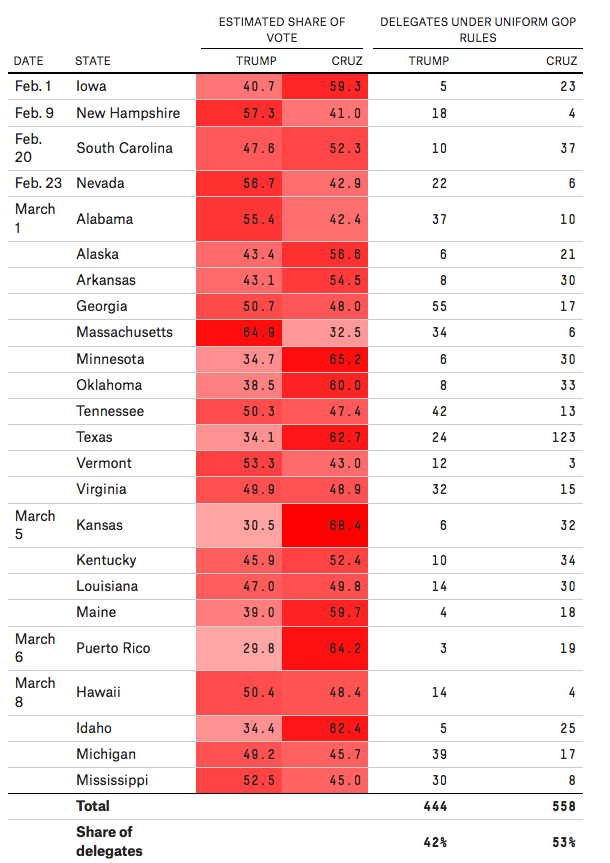
The big question is: What would the delegate count look like in a potential two-way race between Trump and Cruz? To find the answer, Silver “retrodicted” how the race might have gone had it been a two-man contest between Cruz and Trump the whole time. He redistributed support from Rubio, Kasich and other candidates to Cruz and Trump based on the exit poll answers provided by voters on hypothetical one-on-one match ups.
Silver’s figures estimate that Cruz would have won South Carolina, Arkansas, Kentucky and Louisiana in addition to the states where he already beat Trump. He also would have won Minnesota and Puerto Rico, which originally went to Rubio. Several other states, such as Michigan, Georgia and Virginia, would have been close between Trump and Cruz. Trump would be fairly dominant in the Northeast, however, and would still have won Nevada easily.
Interestingly, while Cruz would have made many gains in the deep south in this hypothetical, Silver still calculates that Alabama would have been a Trump victory. The vote would have been 55.4 percent to 42.4 percent in favor of Trump, while the delegate split would have been 37 to 10.
In reality, Trump won Alabama by a significant margin and Ted Cruz picked up some delegates. The primary yielded Trump 36 delegates and Ted Cruz with 13.
The second place finish for Cruz was shocking for those following the race long-term. He was predicted for a long period of time to be the favorite in the Yellowhammer State. But Cruz’s southern strategy proved ineffective as front-runner Trump picked up the majority of the delegates available below the Mason-Dixon.
Regardless, the FiveThirtyEight report provides some interesting food for thought. The entirety of Silver’s analysis can be seen below:
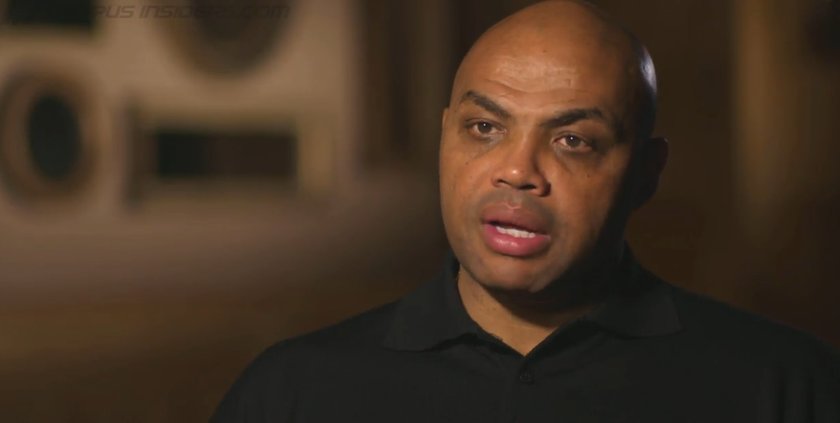
Former Auburn University and NBA star Charles Barkley on Wednesday told ESPN’s “Mike and Mike” that while he likes the Democrat Party’s “open-mindedness,” there is not a single Democrat currently running for president that he is interested in supporting.
“Ninety-nine percent of the time I vote Democrat, but there’s not a Democrat in the race that I like,” Barkley said. “I would like to see Elizabeth Warren or the mayor of San Antonio [Julian Castro], those are the only two Democrats that I would vote for.”
Then Barkley went a step further, surprising the hosts with his current choice of candidate.
“I’ve never voted Republican, but right now, I like John Kasich, the governor [of] Ohio,” he explained. “He’s the only person that I’m really paying attention to right now, to be honest with you… I want to vote Democratic because they’re more … open-minded. But right now, if I had to vote today, I would probably vote for John Kasich, but I haven’t made a decision.”
As for current frontrunner Donald Trump, Barkley said the real estate mogul and reality TV star has always been “nice and cordial to” him, but Barkley said he was concerned Trump is giving hispanics a “bad rap.”
“The Hispanics that I know are amazing people, they do work whites and blacks don’t want to do when there’s 120 degrees in Arizona,” he said. “But to paint with a broad brush Hispanics, I think it’s disingenuous.”
Barkley becomes the second high-profile Alabamian this week to express support for Governor Kasich. Alabama Gov. Robert Bentley endorsed the Ohio governor on Monday during a press conference at the Alabama Sports Hall of Fame.
Mike and Mike’s full interview with Barkley can be heard here.
(h/t TheBlaze)
Like this article? Hate it? Follow me on Twitter and let me know what you think.
— Cliff Sims (@Cliff_Sims) June 9, 2015
Daily Presidential Update

30 Day Poll Averages:
Swing State Polls over the last 2 days:
Tuesday, Oct. 16:
New Hampshire (Suffolk/7 News) – Romney 47, Obama 47
Monday, Oct. 15:
Pennsylvania (Morning Call) – Obama 49, Romney 45
Iowa (ARG) – Romney 48, Obama 48
Virginia (ARG) – Romney 48, Obama 47
Colorado (Gravis) – Obama 48, Romney 46
Florida (Gravis) Romney 49, Obama 48
North Carolina (PPP) – Romney 49, Obama 47
Alabama Politics
AL.COM: Citing Obamacare, Infirmary Health System announces it will close Infirmary West Hospital
Citing Obamacare, the Infirmary Health System this afternoon announced it would close its Infirmary West Hospital on Girby Road by the end of the month.
Mark Nix, the president and CEO of the Infirmary Health, said in a prepared statement that officials decided to close the 124-bed hospital after a yearlong evaluation.
“We made this decision after evaluating the utilization of the facility, the healthcare needs of the community served by Infirmary West and determining how we could better utilize our resources to improve and expand health services in this area of our community,” Nix said in the statement. “The passage of the ‘Affordable Care Act’ (Healthcare Reform), challenges hospitals and health systems to re-evaluate how to best allocate their resources to serve the needs of our community,”
Democrat nominee for Chief Justice Bob Vance is out with another ad, “The Position.” The campaign is still up with over 1,000 gross rating points statewide. Thoughts on the ad?
GADSDEN TIMES: Bentley outlines retirement incentive proposal

Alabama Gov. Robert Bentley plans to ask legislators to pass a bill offering eligible state employees an incentive if they voluntarily retire.
The governor announced details of the plan at a news conference Monday in Huntsville. He said it would either pay 100 percent of monthly premiums for health insurance for five years or offer $15,000 in cash payments in two $7,500 installments. The first installment would be paid when the employee retires and the second would be paid in January of 2014.
He said the program would help retiring workers while also saving taxpayers between $18 million and $26 million a year.
“This program will save taxpayer dollars in both the short term and the long term. The result will be a less costly, more efficient state government,” Bentley said.
Republican Rep. Mac McCutcheon of Capshaw said he would introduce the legislation in the session that begins Feb. 5.
If approved, Bentley said the retirement incentives would be available to merit and non-merit employees of executive, judicial and legislative branches. It would not be available to education employees, but the governor’s office said a separate voluntary retirement incentive for teachers could be introduced later.
The above video first appeared on Yellowhammer last week… AL.com is out with a piece on it today.
AL.COM: Video attacks Southern Environmental Law Center for objections to Northern Beltline
Last week, a professionally produced video attack on the Southern Environmental Law Center turned up on the internet.
The video, entitled “We Know Best” casts the environmental watchdog group as a bunch of meddling, out of state snobs determined to “lower job creation in Alabama.”
The maker of the video goes out of his or her way to disguise their identity, and all materials associated with it are from the “Southern Environmental Laws Center. Note the addition of the letter “S” on the word law.
An email sent to al.com with the link to the video muddies the water further by including a phone number for an SELC office in North Carolina as the contact number for more information. Officials there said they knew nothing about the video, though it had generated a number of calls.
National & International Politics
TUSCALOOSA NEWS: College students less excited about election
On Tuesday, about 20 members of the College Republicans packed a side room of Wilhagan’s in downtown Tuscaloosa to plan their contribution to the Mitt Romney-Paul Ryan presidential ticket.
Like other activists in the state, the group has been working the phones to contact voters in swing states like Florida and Virginia.
“Last week, we had 30 people coming out willing to make phone calls,” said Regan Williams, a junior from Vestavia Hills and chairman of the UA College Republicans. “I feel like we could have gotten a lot more had we not had some technical difficulties.”
The group has about 150 active members, Williams said.
But while the enthusiasm was clear in this politically active pocket, other areas of campus have not seen the same fervor that engulfed colleges when Barack Obama faced off with John McCain in 2008.
Half as many 18- to 29-year-olds are following campaign news closely this year compared with 2008, according to a recent study from the Pew Research Center. During the 2008 election, 72 percent of young voters said they definitely planned to vote, compared with 63 percent this year.
“There was a different dynamic in 2008 — the first African-American president, two polar opposite candidates,” said Whit Kelly, a second-year law student at the University of Alabama. Kelly was an undergraduate at the Capstone in 2008. “Four years ago, Obama was fresh. He was a new face to the political scene.”
Kelly, however, said he believes many in his generation expected big changes in Washington culture but did not see them.
New Tea Party Victory Fund ad features “Obama Phone” lady
THE BLAZE: HILLARY CLINTON: I TAKE ‘FULL RESPONSIBILITY’ FOR SECURITY BEFORE BENGHAZI ATTACK
U.S. Secretary of State Hillary Clinton told CNN on Monday she takes “full responsibility” for the security failures at the U.S. consulate in Libya where a terrorist attack by radical Islamists last month killed U.S. Ambassador Chris Stevens and three other Americans. However, she is blaming the inconsistent stories that came out of the Obama administration on the “fog of war,” Fox News reports.
Pushing back against Republican criticism of the Obama administration for its handling of the situation, Clinton said Monday in Lima, Peru, that security at all of America’s diplomatic missions abroad is her job, not that of the White House. The remarks seem to back up Vice President Joe Biden’s claims that he and President Obama didn’t know the Consulate requested additional security.
In television interviews, Clinton said she is responsible for State Department security and “for the more than 60,000 people around the world.” She told Fox News that “the decisions about security are made by security professionals.” She also made similar comments to CNN about taking responsibility.
“I can’t speak to who knew what…We knew there were security breaches and problems throughout Libya. That’s something that came about as the aftermath of the revolution to topple Qaddafi, with so many militias formed, so many weapons loose,” she told Fox News. “It was taken into account by security professionals as they made their assessments.”
Watch CNN’s report:
POLITICO: Romney Fundraising Plan Comes with Risks
Mitt Romney’s most potent fundraising committee is paying to outsource a big part of its final campaign push to an unusual coalition of party committees.
Romney Victory, the joint fundraising committee that has raised the lion’s share of the cash credited to Romney, revealed Monday evening that it had transferred $44 million to the GOP’s national congressional committees and the state parties in Idaho, Massachusetts, Oklahoma and Vermont.
So, while the Romney campaign trumpets big fundraising numbers — committees supporting Romney raised a total of $170 million in September — not all of the cash is under the GOP nominee’s control, and that some of it could be used for Republican candidates or operations down-ticket.
The party committees – none of them in swing states – have wide latitude in how and where they choose to spend the Romney Victory cash. They are all controlled by Romney allies, and the funds will most likely be used for get-out-the-vote operations, but the recipient state party committees could technically spend it on TV ads or any other expense related to any federal election, and the congressional committees can’t directly coordinate their spending with Romney.
In all, Romney Victory raised $236 million between the beginning of July and the end of September, it told the Federal Election Commission on Monday. That means that, in that same span, the Romney campaign and the Republican National Committee, which are components of the Victory Fund, raised only $148 million directly into their coffers, based on calculations using figures voluntarily provided by the campaign on Monday.
The Victory Fund’s ability to accept checks much larger than the $5,000 limit for the Romney campaign – Romney Victory has a $75,800 maximum – comes at the cost of a slight loss of control of the cash. The Victory Fund is required to transfer sums to other component committees based on a pre-determined formula: The first $5,000 goes to Romney’s presidential campaign committee, the next $30,800 goes to the Republican National Committee and the remaining amount is split evenly among the component state parties.
The resulting division in the third quarter went thusly:
Romney for President: $85 million.
Republican National Committee: $72 million.
Idaho Republican Party: $7.9 million.
Massachusetts Republican Party: $7.9 million.
Oklahoma Leadership Council: $7.9 million.
Vermont Republican Federal Elections Committee: $7.9 million.
National Republican Congressional Committee: $6 million.
National Republican Senatorial Committee: $6 million.
