Dylan Smith is a staff writer for Yellowhammer News. You can follow him on Twitter @DylanSmithAL
U.S. Sen. Tommy Tuberville (R-Auburn) is coming out strongly against the proposed bill that would prevent a government shutdown before the end of the year.
Congressional leadership unveiled the roughly 1,500 page bill Tuesday night that would continue to fund the government until March 2025. The legislation also includes some additions like a one-year farm bill extension, roughly $100 billion in disaster relief, and about $10 billion in economic assistance for farmers.
“We’ve got to get this done because, here’s the key, by doing this, we are clearing the decks and we are setting up for Trump to come in, roaring back, with the America First agenda,” House Speaker Mike Johnson said about the spending package. “That’s what we’re going to run with gusto beginning January 3, when we start the new Congress, when Republicans again wrench control and all of our fiscal conservative friends, I’m one of them, will be able to finally do the things that we have been wanting to do for the last couple of years.”
Tuberville pushed back against the bill Wednesday, calling it a “liberal Christmas wish.”
“As a steadfast champion for America’s farmers, I have, for months, been advocating that farmers need dedicated economic assistance to deal with issues created by the Biden Administration,” Tuberville said on X. “Though the 1500-page omnibus contains $10 billion in economic assistance for farmers – it is, unfortunately, packed with reckless spending on a liberal Christmas list of priorities that will make inflation worse for ALL Americans.”
The senator also called for a farm bill to be passed separately.
“The farm economy, and support for Alabama farmers, should not be held hostage to Democrats’ priorities that have nothing to do with keeping the government running,” he argued. “House and Senate leadership should immediately schedule a separate vote on economic farm assistance.”
As a steadfast champion for America’s farmers, I have, for months, been advocating that farmers need dedicated economic assistance to deal with issues created by the Biden Administration.
Though the 1500-page omnibus contains $10 billion in economic assistance for farmers – it…
— Coach Tommy Tuberville (@SenTuberville) December 18, 2024
Tuberville discussed the continuing resolution (CR) further during a recent appearance on “Mornings with Maria.”
“It’s absolutely ridiculous what we’re doing here,” Tuberville said. “We should get a clean CR. Mike Johnson promised that. The two things we really need though is we need help for American farmers because the farm bill has been kicked down the road for two years…And then of course the disaster aid for North Carolina. The Biden administration has absolutely dropped the ball on this.”
Yaffee is a contributing writer to Yellowhammer News and hosts “The Yaffee Program” weekdays 9-11 a.m. on WVNN. You can follow him on X @Yaffee
Thursday evening, the U.S. Senate passed a $1.5 trillion spending package for fiscal year 2022 by a vote of 68-31.
U.S. Sens. Richard Shelby (R-Ala.) and Tommy Tuberville (R-Ala.) both voted in favor of the measure, which includes an array of defense and domestic projects funded in the state of Alabama.
Shelby, vice chairman of the Senate Appropriations Committee and its subcommittee on defense, highlighted the national security-related funding Alabama received as part of the package.
“I am very pleased that this package contains a significant increase of $42 billion to our defense budget to help develop, maintain, and equip our military forces and intelligence community,” stated Shelby. “Throughout this appropriations process, I have insisted upon dollar-for-dollar parity for defense and non-defense increases. We have achieved that goal.”
“Our men and women in uniform must maintain an advantage over our adversaries, and Alabama plays a significant role in that effort,” added Alabama’s senior senator. “I have no doubt that this legislation will result in long-term benefits for our country. Alabama has for many decades played an important role in national defense, and I look forward to what lies ahead for our great state. The security of the nation must always be our number one priority.”
The following is a breakdown of defense spending affecting Alabama, according to Shelby’s Senate office:
Impacting the Wiregrass:
- $1.3 billion for flight training at Fort Rucker.
- $395 million for Future Vertical Lift research, which will accelerate the development of helicopters flown at Fort Rucker, and an additional $77 million to accelerate the Future Long Range Assault Aircraft.
- $200 million for United States Coast Guard MH-60T sustainment.
- $95 million to upgrade the MH-60 series helicopters.
- $380 million for Terminal High Altitude Area Defense (THAAD) interceptors.
- $193 million for Joint Air-to-Ground Missiles (JAGMs).
- $710 million for Joint Air-Surface Standoff Missile (JASSMs) and $161 million for Long Range Anti-Ship Missiles (LRASMs).
- $226 million for Hellfire missiles, which are made in Troy.
- $130 million for Javelin missiles for the Navy, Air Force, and Army.
Impacting North Alabama:
- Army Research – $14.5 billion for continued investment in transformational technologies to address modern and future Army warfighting needs.
- Missile Defense – $10.3 billion, an increase of $1.42 billion, for the Missile Defense Agency (MDA) which is located in Huntsville, to ensure support for urgent MDA priorities such as space sensors, ballistic missile defense, and cybersecurity efforts.
- Hypersonic weapons – fully funds Army hypersonic research, as well as an additional $50 million to develop a common hypersonic glide body and $77 million towards high energy laser development.
- $55 million military construction project building a Propulsion Systems Lab at Redstone Arsenal.
- $2.6 billion for Space Launch System, of which $600 million is for concurrent Block 1B development, which is managed by Marshall Space Flight Center in Huntsville.
- $110 million for nuclear thermal propulsion, which benefits Marshall Space Flight Center.
- $570 million for FBI construction at Redstone Arsenal, which supports ongoing and growing efforts in Huntsville.
Impacting the Birmingham Area:
- $43 million for the Secret Service’s National Computer Forensics Institute, located in Hoover, to expand training opportunities for state and local law enforcement and legal and judicial professionals in computer forensics and cyber investigations.
Impacting Anniston:
- $117 million for Hydra rockets, which are built in Anniston and fired from Army and Marine Corps helicopters.
- Funding for Army vehicles overhauled and maintained at Anniston Army Depot (ANAD), including:
– $1.15 billion to continue upgrading and modernizing the M1 Abrams tanks.
– $1.1 billion for Stryker vehicle upgrades.
– $663 million for Paladin Integrated Management artillery vehicles.
– $132 million for a Demilitarization Facility at Anniston Army Depot.
– $67.5 million for Federal Emergency Management Agency’s (FEMA) Center for Domestic Preparedness.
Impacting Auburn:
- $15 million for the Department of Homeland Security’s Explosive Detection Canine Program, which was developed in collaboration with Auburn University.
Impacting the Mobile Area:
- $260 million for one additional Expeditionary Fast Transport (EPF) and an additional $330 million one additional Expeditionary Medical Ship (EMS). The EMS or “hospital ship,” includes an intensive care unit and other healthcare accommodations, while maintaining most of the original mission requirements.
- $67 million for the Coast Guard’s Waterways Commerce Cutter program.
- $6 million for Cyber Compliance Upgrades to Critical Training Center Simulators and Trainers, including the Coast Guard Aviation Training Center in Mobile, Alabama.
Shelby asserted that the domestic funding provided to Alabama would serve to bolster economic development efforts throughout the Yellowhammer State.
“This bill importantly invests in a host of domestic priorities, including medical research, agriculture, local infrastructure, and rural communities,” advised Shelby. “These resources will bolster needed advancements, promote economic development, and encourage job creation. I am pleased that we have succeeded in securing this funding for Alabama, and I look forward to the impact it will have on our state and the nation. Alabama has always played a major role on the national stage. This funding will only accelerate the pace of that success.”
The following is a breakdown of domestic spending affecting Alabama, according to Shelby’s Senate office:
Impacting North Alabama:
- $25 million for the Fish and Wildlife Service to combat Asian Carp and enhance efforts in sub-basins of the Mississippi River, which includes key areas of Alabama in the Tennessee and Cumberland basins.
- $500,000 for the Invasive Species Mitigation Plan to begin the planning, design, initial engineering and project management for construction of carp barriers in the Mississippi River Basin and the Tennessee-Tombigbee Waterway.
- $1.15 million to assist the National Park Service in acquiring land for the Little River Canyon National Preserve near Lookout Mountain, Alabama.
Impacting Tuscaloosa:
- $50 million for the University of Alabama for a permanent endowment fund to support the recruitment and retention of exceptional faculty in science and engineering.
- $37 million to support staffing and operations at the National Water Center, which is located in Tuscaloosa, Alabama.
- $20 million for the National Oceanic and Atmospheric Administration (NOAA) Cooperative Institute that will assist NOAA and the NWC in addressing the nation’s growing water-related challenges.
- $12 million for the Coastal Inlet Research Program, which supports collaboration with the Army Corps of Engineers and the National Water Center in Tuscaloosa to address coastal resilience needs, measure coastal forces, and improve terrestrial and coastal modeling.
- Provides funding to the U.S. Geological Survey to support the new USGS Hydrological Instrumentation facility, which will be located at the University of Alabama:
– $13.5 million to support integrated water prediction operations.
– $4 million to assist in future hydrological research and operational efforts.
– $4.5 million for university partnerships for innovative water resource technologies.
Impacting the Birmingham area:
- $76 million for the University of Alabama at Birmingham (UAB) School of Medicine to build a new biomedical research building.
- $44.9 billion for the National Institutes of Health (NIH), an increase of $2.25 billion above fiscal year 2021 funding level.
- $6.86 billion for the National Cancer Institute (NCI), an increase of $353.7 million from fiscal year 2021.
- $45 million to the National Institute on Minority Health and Health Disparities (NIMHD) for chronic disease centers, which supports research at UAB.
- $882 million for the National Center for Advancing Translational Sciences (NCATS).
- $606.65 million for Clinical and Translational Science Awards (CTSAs), which continues funding for a $50 million CTSA award at UAB.
- $18 million in grant funding for Regional Pediatric Pandemic Network for Children’s Hospitals, which benefits UAB and Children’s of Alabama.
- $52 million in targeted funds for Regional Biocontainment Laboratories to test FDA-approved drugs at research institutions across the country, including UAB.
- $25.8 million in Poison Control Centers, which supports Alabama’s Poison Control Center located in Birmingham and is affiliated with Children’s of Alabama.
- $30 million in funding for Alabama’s Northern Beltline of the Appalachian Development Highway System.
- Funding to support the Department of Energy’s National Carbon Capture Center in Wilsonville, Alabama.
Impacting Auburn:
- Provides funding to the Agricultural Research Service (ARS), which supports current research initiatives at Auburn University:
– $3 million, $1.5 million above the FY21 enacted level, for the Animal Health and Agro Bio Defense Center of Excellence.
– $6 million, $1 million above the FY21 enacted level, to address cotton blue disease.
– $3 million for sustainable and advanced technologies for poultry processing.
– $2 million to reduce mixed infections in warm water aquaculture.
– $2 million for biomass conversion technologies at the National Soil Dynamics Laboratory located at Auburn University.
– $4 million for aquaponics system development.
– $3 million for advanced poultry production technology development.
– $1.5 million for alternative technologies for poultry waste utilization.
– $1.2 million to study harmful algal bloom impact on aquaculture.
– $1 million for dietary manipulation to improve gut health in broiler production.
– Maintains funding for foodborne pathogens and shrimp production research.
- $5 million for research on forest carbon sequestration and pine needle blight, which supports work conducted at Auburn University.
- $5 million to support disease diagnostics efforts at Fish and Wildlife Service’s Warm Springs Fish Health Center, which collaborates with Auburn University’s Southeast Cooperative Fish Parasite & Disease Laboratory.
Impacting the Mobile area:
- $100 million for improvements to the Mobile Downtown Airport, including funding to purchase land, conduct surveys, and renovate and relocate on-site facilities.
- $132 million for improvements to the Port of Mobile, including for the design and construction of docks, wharves, and piers, as well as for land acquisition and site development.
- $67 million for freight and intermodal rail infrastructure improvements at the Port of Mobile and the Montgomery inland intermodal transfer facility.
- $60 million for the construction of a medical science building at the University of South Alabama College of Medicine.
- $5 million to ensure successful implementation of NOAA’s “Reef Fish Amendment 50,” which delegates the federal management of red snapper to the Gulf Coast states, including language delaying state specific recalibration until 2023.
- $3 million to support implementation of electronic logbooks for federally permitted Gulf Coast charter-fishermen.
- $65 million to support dredging of the Port of Mobile and multiple inland and intercostal waterways throughout the State of Alabama.
- $50 million for the operations and maintenance of Donor and Energy Transfer Ports, which benefits the Port of Mobile.
Statewide funding:
- $198 million for Watershed and Flood Prevention Operations; including language to exempt watershed projects that impact areas greater than 250,000 acres, which helps expand irrigation agriculture projects in Alabama.
- $3 million to continue the Animal and Plant Health Inspection Service (APHIS) pilot program to assist statewide departments of agriculture and forestry commissions, including the Alabama Forestry Commission, in controlling the spread of cogongrass.
- $775 million for the RAISE grant program, which provides federal investment to support road, rail, and transit projects.
- $1 billion for the INFRA grant program, which provides federal funding for highway and freight projects of national and regional significance.
- $18 billion for the Federal Aviation Administration (FAA), which provides assistance for Alabama airports, including: grants-in-aid for airports, contract towers, research for advanced materials and structural safety, research on airfield pavement, and aviation workforce grants.
- $600,000 for the Army Corps of Engineers to continue a feasibility study on riverine fish passages at Claiborne and Millers Ferry Locks and Dams on the lower Alabama River.
- $25 million for the EPSCoR program, which provides federal support for sustainable and competitive energy research in eligible states and territories.
- $30 million for the Delta Regional Authority, including $15 million for flood control, basic public infrastructure development, and transportation improvements.
- $45 million in continued funding for Department of Labor Workforce Opportunities in the Delta Regional Authority and Appalachian Regional Commission regions, which funds workforce development initiatives throughout the state.
- $4.2 million for renovations to the federal courthouse in Selma.
- $1.75 billion in funding for Community Health Centers, which will help fund 126 community health centers in rural areas across Alabama.
- $375 million in grant funding for Children’s Hospitals Graduate Medical Education, which will increase Pediatric residencies at Children’s & Women’s Hospital in Mobile and Children’s of Alabama in Birmingham.
- $4.4 million for State Aquatic Nuisance Species Management Plans, which will support the Alabama Department of Conservation and Natural Resources’ efforts to prevent and control the spread of aquatic nuisance species throughout the state of Alabama.
- $180 million for the Appalachian Regional Commission, including $50 million for the POWER initiative that provides federal funding to help communities and regions affected by job losses in coal mining and coal power plant operations.
- $440 million for charter schools.
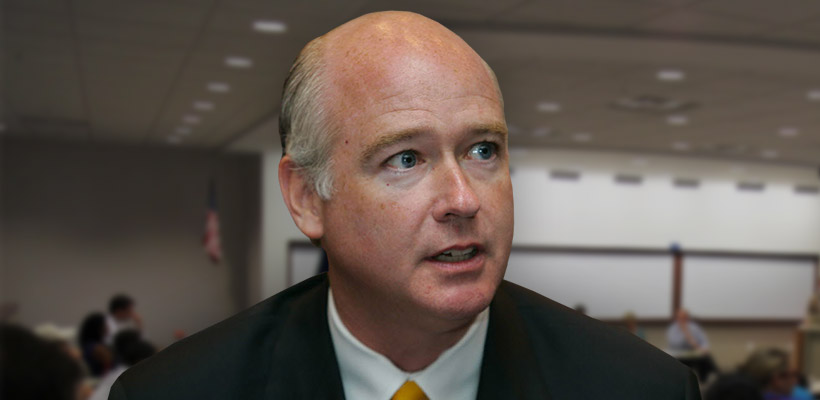
WASHINGTON — A $1.1 trillion bill to fund the government through next September flew through the House (316-113) and Senate (65-33) on Friday, but only garnered support from two individuals in Alabama’s nine-member federal delegation. Alabama’s lone Democratic representative Terri Sewell (D-AL7) was joined in supporting the bill by Republican Robert Aderholt (R-AL4), while the other seven Alabama Republicans voted no.
“This bill is more known for what it is not than for what it is,” Aderholt told Yellowhammer in a statement. “While I was able to get some important language included for the pro-life movement, the bill does not contain other riders I had hoped for such as tying the President’s hands in the Syrian refugees and peeling back the EPA water regulation. That is a big disappointment.”
The pro-life language Aderholt had inserted into the 2,009-page bill blocks the genetic manipulation of human embryos. Aderholt said he was opposed to other portions of the bill, which included funding for Planned Parenthood, and according to Sen. Jeff Sessions (R-Ala.), President Obama’s “entire immigration agenda,” including the Syrian refugee resettlement program and expansion of foreign worker visas.
“There is a reason that GOP voters are in open rebellion,” Sessions said in a statement announcing his opposition to the bill. “They have come to believe that their party’s elites are not only uninterested in defending their interests but – as with this legislation, and fast-tracking the President’s international trade pact – openly hostile to them.”
Sessions was joined in the senate by his Alabama colleague Richard Shelby (R-Ala.), who also voted against the measure while calling its final passage a “victory” for President Obama.
“Today I once again said ‘no’ to handing over a blank check to President Obama with this 2,000 page, trillion-dollar spending bill filled with liberal victories,” said Shelby. “Not only does this fiscally irresponsible bill allow the President to continue his dangerous Syrian refugee resettlement plan, it does nothing to stop funding for lawless sanctuary cities that protect criminal illegal immigrants. It also does nothing to end taxpayer funding for Planned Parenthood. Simply put, this bill represents a victory for President Obama and his liberal allies – not for the American people.”
In the House, Rep. Terri Sewell (D-AL7) said she voted for the bill “after a thoughtful and thorough review,” citing its funding for “Historically Black Colleges and Universities (HBCUs), and other minority serving institutions.”
“This is not a perfect bill,” she said, “but I am proud that both sides of the aisle were able to work out a compromise that benefits our nation, and helps us continue to grow.”
Conservative criticisms of the bill included familiar frustrations with the process used to craft it, in addition to the policy provisions. In spite of the bill being over 2,000 pages long, members were only given a couple of days to review it.
“The good news is that this bill is the last vestiges of Speaker Boehner’s style of leadership,” Aderholt said. “And in two weeks we will start putting together a bill with conservative principles that will pass with conservative votes.”
Aderholt is a senior member of the House Appropriations Committee and could play a significant role in crafting the next funding legislation.

WASHINGTON — U.S. Senator Jeff Sessions (R-Ala.) on Tuesday warned that Congress is preparing to fund “(President) Obama’s entire immigration agenda” in its yearly “omnibus” spending bill, including the controversial Syrian refugee program.
The current funding proposal before Congress would not only authorize the President’s plan to bring in 85,000 refugees on top of the current, historical annual immigration flow, but would also allow for an unlimited amount of money to be spent on lifetime welfare and benefits for refugees.
100 refugees are currently slated to be housed in Alabama by Catholic Social Services. The date of their arrival is uncertain.
“This year’s appropriations bills – which will be combined into a catch-all ‘omnibus’ by December 11th – amount to a blank check for the President to carry out his refugee resettlement plans,” said Sessions. The senator also said the bill will “fund the continued placement of illegal aliens from Central America into U.S. communities; continue federal funding for ‘sanctuary cities’; allow for the continued operation of the President’s 2012 executive amnesty program; and (could also) include a huge expansion of the H-2B foreign worker visa program.”
In light of those findings, Sessions urged his colleagues to use Congress’s power of the purse to deny funding to the president’s appropriations requests.
“The President’s annual funding requests are just that: requests,” he said. “It is the exclusive and sole constitutional prerogative of Congress whether or not to accept his requests, reject them, or impose whatever conditions Congress deems proper on behalf of taxpaying Americans.”
While the Republican-controlled House recently passed a bill some argue would halt the influx of Syrian refugees and intensify the security screenings of refugees going forward, Sessions and Sen. Richard Shelby (R-Ala.) have both said Congress’s focus should be on the funding side, where they have more power.
“As Chairmen of Subcommittees on both the Appropriations and Judiciary Committees, we believe it is essential that any government funding bill cancel the President’s blank check for refugee resettlement,” they said in a joint statement last month. “Long before the barbaric attacks in Paris, government officials and investigators have stated that we do not have the capacity to effectively screen Syrian refugees. The bloody assaults on the streets of France add new urgency to an already dangerous situation. Right now, our refugee program – like all of our visa programs – runs on autopilot. Each year, millions of visas go out the door without any input or action from Congress. We would not accept this policy for the federal budget, and we should not accept it for immigration. We therefore urge the inclusion of a provision in any omnibus spending bill that makes it absolutely clear that no refugee resettlement will take place without a separate, affirmative Congressional vote to authorize any resettlement and offset its huge costs.”
Sessions added to that statement on Tuesday, demanding members of Congress decide whether they will push back against the White House prior to voting on the impending omnibus bill.
“Now is the hour of choosing for Congress,” he said. “Will we surrender – funding Obama’s entire immigration agenda – or will we assert Congress’s power on behalf of the interests of the American people?”

Negotiators on Capitol Hill unveiled a giant 1,582 page, $1.1 trillion government funding bill this week, which would fund the government for the remainder of the current fiscal year and put an end to all the government shutdown talk. The House of Representatives passed the bill today by a vote of 359-67.
Both Republicans and Democrats praised the bill, which typically means that the American people will see little — if any — progress in reining in government spending. When cuts happen, one side or the other make noise because one of their favored areas got hit.
However, it is no doubt a positive that Congress is returning to so-called “regular order” and actually passing spending bills. And it’s noteworthy that the package is $164 billion less than President George W. Bush’s last discretionary budget.
So what does it all mean for our state?
As Vice Chairman of the Senate Appropriations Committee, our very own Senator Richard Shelby served as the top Republican negotiator on the Senate side.
Here are 7 things in the Omnibus Spending Bill that might actually impact your life right here in Alabama:
COLAs are back and military folks got a pay raise
The bill repeals the recently enacted cut to cost of living adjustments, or COLAs for disabled military retirees and survivors. This is good news for Alabama’s huge population of military retirees and survivors. U.S. military personnel and civilian federal workers also got a 1 percent pay raise.
Sen. Jeff Sessions said he was glad to see retired vets being better taken care of in this deal, but insisted there’s still more that could be done.
“I was pleased that the House-Senate package includes a provision restoring the pensions for disabled veterans, after we called attention to the fact that wounded warriors would be impacted by the budget deal,” Sessions said. “However, the deal fails to restore pension payments for millions of active duty and retired military personnel and leaves more than 90 percent of the original reductions in place. For a currently-serving officer nearing retirement, this cut could exceed $120,000 in pension payments, reducing the cost-of-living adjustments by more than 60 percent.”
Sessions said he believes there are better ways to save money and suggested closing a tax credit loophole that illegal immigrants take advantage of.
“Unfortunately, Leader Reid and his conference blocked my effort to implement this fix during the budget debate in December,” Sessions said. “I hope the majority will allow us to make this fix and stop shielding these illicit tax payments. In order to end annual deficits all of us will have to tighten our belts, but our military personnel must not disproportionately bear the burden.”
North Alabama folks get bump in NASA funding
NASA has an almost $3 billion impact on Alabama’s economy, but it has been a big target for cuts by the Obama Administration. Both Sen. Richard Shelby and Rep. Mo Brooks, have been big advocates for NASA’s Space Launch System (SLS), which is built in Huntsville.
Included in this week’s omnibus legislation is $1.9 billion for the Space Launch System. This figure is approximately $200 million above the President’s request in the budget he submitted to Congress. Of the $1.9 billion for SLS, $1.6 billion is for development of rocket systems at Marshall Space Flight Center in North Alabama.
“I am pleased that this legislation includes the funding necessary to continue the great work underway in Huntsville on the Space Launch System,” Sen. Shelby said. “If we are to maintain our leadership role in human space flight, we must continue to make SLS a top priority in NASA’s budget. I will continue to do everything in my power to ensure that it is.”
Mobile’s getting a new federal courthouse
The bill provides $69.5 million to construct a new federal courthouse in Mobile and to renovate the existing courthouse, which was built from 1932-1934. Combined with the $49 million that is remaining from previously appropriated courthouse funding for Mobile, the total project cost will be $118.5 million. The total design and construction work is expected to take 5 1/2 years.

“These funds will provide Mobile with a new courthouse that meets modern security standards and facilitates efficient processing of cases,” said Sen. Shelby. “The construction and operation of this facility will also generate huge economic activity in the heart of Mobile. I am pleased that this was included in the legislation.”
Another step toward widening the Port of Mobile
The report accompanying the omnibus bill directs the Corps of Engineers to study the widening and deepening of Mobile harbor. This is a necessary, preliminary step under the Corps’ regulations before the work can be undertaken.
Sen. Shelby has in the past discussed his 10-12 year plan of making Mobile a world center of trade and commerce by making its port wide enough and deep enough to handle the world’s largest ships.
“Mobile can be one of the top five ports in the country,” Shelby said today. “Its economic potential is limitless. I am pleased that this legislation provides for the next critical step in that direction.”
Littoral Combat Ship (LCS) gets funding
The president requested and received $1.7 billion for the procurement of 4 Littoral Combat Ships, which are built in Mobile.
Alabama Tea Party groups get a small victory
The omnibus specifically instructs the IRS not to use any funds to “target citizens of the United States for exercising any right guaranteed under the First Amendment.”
It’s remarkable that those words even need to be included in a bill, and it’s a far cry from justice being served in the targeting cases that have already taken place. However, it’s a small victory for Alabama groups like the Wetumpka Tea Party who were targeted by the IRS for their political beliefs.
Environmental groups escape unscathed
Attempts by Republicans to drastically cut funding to the Environmental Protection Agency were unsuccessful. The federal agency that implements heavy-handed mandates and regulations on businesses all over the country has long been reviled by conservatives. And recent efforts by Alabama-based environmental groups to speed up the process of shutting down coal plants have really put the EPA front and center in the state. Alabama Governor Robert Bentley and Attorney General Luther Strange back in December challenged the EPA’s power to halt economic development. The fights will continue on the state level, but the EPA’s federal funding remains intact for now.
Follow Cliff on Twitter @Cliff_Sims