The future USS Savannah (LCS 28) was christened this past weekend at Austal USA’s state-of-the-art manufacturing facility in Mobile, Alabama.
Savannah is the 14th of 19 Independence-variant littoral combat ship that Austal has under contract with the United States Navy.
“Austal is honored to christen today what will be the sixth Navy ship named after the great city of Savannah,” stated Austal USA president Craig Perciavalle.
“Savannah and Mobile have much in common both being major U.S. shipping ports but we also share the distinction of being cities where the infamous World War II Liberty ships were built. These were the last Navy ships built in Mobile prior to the littoral combat ships we are building here now,” he continued. (more…)
The future USS Kansas City (LCS 22) has now successfully completed acceptance trials in the Gulf of Mexico, according to a Monday announcement by Austal USA.
LCS 22 is the 11th Independence-variant littoral combat ship (LCS) built by Austal in Mobile to reach this important milestone.
“I take great pride in how our LCS team has elevated this program to be an example of manufacturing excellence,” Austal USA president Craig Perciavalle said in a statement.
Acceptance trials involve the execution of intense comprehensive tests by the Austal-led industry team, which demonstrate to the U.S. Navy the successful operation of the ship’s major systems and equipment. (more…)
Wednesday on the floor of the U.S. Senate, Sen. Doug Jones (D-Mountain Brook) called on his colleagues to support funding for additional production of a U.S. Navy’s Littoral Combat Ship (LCS) in this year’s defense bill, which would be built at Austal USA’s facility in Mobile.
Such a move by the U.S. Senate would protect 4,000 Alabama jobs. Given the current legislation includes funding for one new LCS, Jones has sponsored an amendment to add an additional LCS to the bill.
If the additional LCS isn’t added to this defense bill, the current workforce supporting LCS production in South Alabama could remain idle until 2021.
Serving on the House Appropriations Committee gives me a valuable and unique opportunity to participate in the conversations surrounding funding for the various functions of our federal government.
It’s hard to believe it, but the debates on funding for the Fiscal Year 2019 have already begun. I’ve been glad to be part of these important discussions and advocate for programs that are critically important to the State of Alabama and our country as a whole.
Recently the Defense Appropriations Subcommittee, on which I’m grateful to serve, held hearings to review the Fiscal Year 2019 budget requests from various services. So far during this budget request season, our subcommittee has heard from the Navy and the Marine Corps, the Air Force, and the Army. (more…)

Austal USA, which maintains a substantial manufacturing facility in Mobile, has been awarded a new six-year contract by the U.S. Navy.
For the past several years Austal has been constructing littoral combat ships on the behalf of the U.S. military. Based on a trimaran seaframe, these ships operate in the shallow waters close to shore. Former Secretary of the Navy Gordon R. England said the concept behind the ship is to “create a small, fast, maneuverable and relatively inexpensive family of ships.”
Now, after being awarded their contract in 2010, Austal has constructed numerous naval ships and employed thousands of Alabama workers.
The new extension will commission funds for the construction of Austal’s 15th Alabama built ship. This is in addition to the five ships that are already under construction.
“When Alabama’s businesses succeed, Alabamians succeed,” said Gov. Ivey. “Austal USA is a 21st Century, technology-driven, employer which provides good wages and good opportunities for its employees. Austal is critical to our state’s high-tech military and aerospace manufacturing sector. By adding to its ship order, the U.S. Navy is signaling its confidence in Austal’s products and the employees who build it. Alabama has a skilled workforce that is known for producing high-quality goods. I look forward to more announcements like this one from Austral, as well as other companies that do business in Alabama, because of our trained workforce and our positive business environment.”
The name of the new ship has yet to be announced. However, those currently under construction are the USS Omaha, USS Manchester, USS Tulsa, USS Charleston, USS Cincinnati, USS Kansas City, USS Oakland, and USS Mobile.
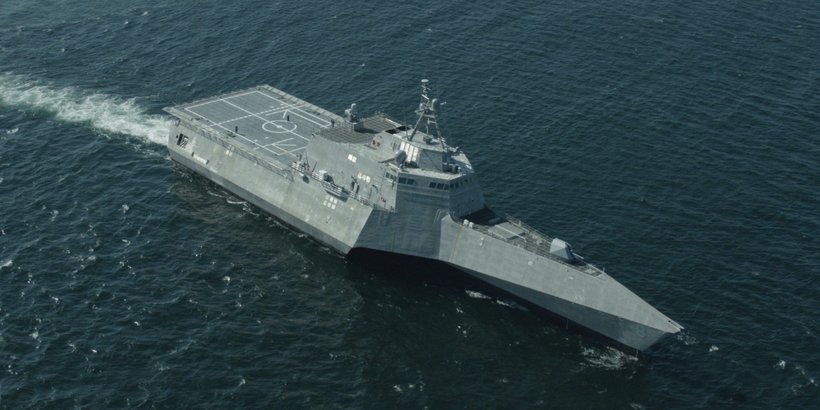
The Senate Armed Service Committee recently released the National Defense Authorization Act to the full Senate. In the act, the Senate proposed decreased funding to Navy ships built by Austal USA, in Mobile, Al.
For the last several years Mobile has been the manufacturing location of the littoral combat ship (LCS). LCS is a small class of war-fighting ships intended to operate in the shallow waters close to shore. Its small size allows it to be agile and stealthy when dispatching enemy combatants. These ships are built in a modular design, which allows the Navy to easily adapt the ships features for the precise purpose needed. Some of those roles include anti-submarine warfare, mine countermeasures, anti-surface warfare, intelligence, homeland defense, and special operations.
Until now, Austal USA has been commissioned to build three ships annually. However, the recent budget proposed by the Senate only calls for one.
Rep. Bradley Byrne, who represents the district 1 where the ships are built, says three ships per year is just the right number.
In response to the possible budget cut, Rep. Byrne—Vice Chairman of the House Seapower Subcommittee and a member of the House Armed Services Committee—said:
As currently written, the Senate NDAA would result in layoffs at the Austal shipyard and would severely compromise our efforts to build a 355 ship Navy. . . As the bill moves to the Senate floor, I call on Senator Strange and members of the Senate Armed Services Committee to fully support the LCS program, the U.S. Navy, and the over 4,000 men and women who work at the Austal shipyard.
Senator Strange concurred, stating:
Funding three Littoral Combat Ships would reflect both the needs of the Navy and the priorities of thousands of Alabamians involved in shipbuilding in Mobile. My outreach to both President Trump and Secretary Mattis resulted in an increase in the administration’s budget request, but the fight to fund three ships and secure the future of the LCS program is far from over, and I will continue to work alongside Senator Shelby to deliver an outcome that keeps Alabamians at work and our fleet on the cutting edge.
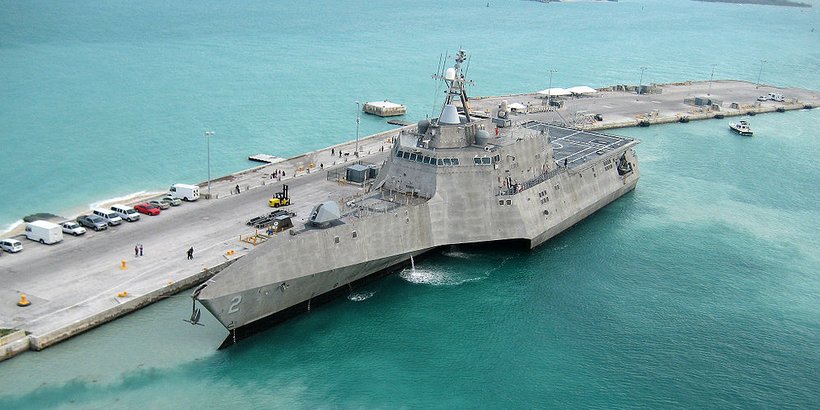
WASHINGTON — Congressman Bradley Byrne (R-AL1) on Thursday announced that a future Littoral Combat Ship (LCS) will be named after the City of Mobile.
“It is such an honor for a future Littoral Combat Ship to be named after the City of Mobile,” Byrne said in a statement. “Our area takes such pride in building these fine ships, just the latest vessel in Mobile’s long history of shipbuilding. I know the spirit and patriotism of Mobile will be encapsulated in this ship.”
Roughly 4,000 Alabamians in Austal USA’s Mobile facility are involved in building the LCS, a class of vessels used in operations close to shore (the littoral zone). They have been compared to corvettes, built to swiftly move in fights with other vessels, as well as to hunt and destroy enemy submarines and mines.
“The LCS is the perfect vessel to fulfill multiple missions including surface warfare, mine counter-measure warfare, and anti-submarine warfare,” explained Rep. Byrne.
The congressman expressed appreciation for Secretary of the Navy Ray Mabus, who has testified that the his branch of the armed services requires 52 littoral combat ships, a number determined by an assessment performed in 2014.
“I appreciate Secretary of the Navy Ray Mabus for working with us to make this possible, and I look forward to one day standing in the Mobile waterfront to christen and commission this fine ship,” he said.
The announcement of the USS Mobile came from the Secretary of the Navy today during a ceremony in Washington, D.C. Another LCS will be named after the City of Marinette, Wisconsin, where the Freedom-variant of the LCS is built.
The LCS program has been the subject of intense debate inside the Pentagon, where its detractors include the Obama administration’s Secretary of Defense Ash Carter.
The internal sparring has spilled over into the public in an unusual way and resulted in what defense budget expert Mackenzie Eaglen describes as “a semi-open war” between Secretary of Defense Carter and Secretary of the Navy Mabus.
Politico explains:
Mabus and other Navy leaders used an annual military symposium [in January] to offer a forceful defense of the littoral combat ship, the same warship that Carter wants to pare back to allow more spending on destroyers, munitions, submarine upgrades, and the F-35 and F-18 fighter jets.
Mabus was also unabashed about his emphasis on building up the overall number of ships — in sharp contrast to Carter, who has admonished the Navy secretary for making “quantity” a higher priority than “lethality.”
The Navy’s director of surface warfare, Rear Adm. Peter Fanta, even employed a mocking tone toward the littoral combat ship’s critics, while pleading for an audience full of industry executives to help him defend the program.
“Yes, there are still naysayers,” Fanta said at the symposium. “You know what a lot of those naysayers’ problems are? ‘You didn’t write the stack of reports that was required to build this ship.’ Aww.”
Alabama’s U.S. senators have frequently defended the ship-building program from attempts by Senate Armed Services Committee Chairman John McCain to scale it back.
Senator McCain has decried the LCS program as “shameful” on the Senate floor and has constantly fought for the Pentagon to cut it, in spite of Navy leadership insisting they need it.
McCain was pleased late last year when the Obama administration’s efforts to shrink the military hit the LCS program. Secretary Carter directed the Navy to slash its previous order of ships by twelve and reduce its annual orders by tho-thirds.
The Navy’s stated goal for years has been to build up its capacity to 308 ships. There are currently 273 ships in the fleet, and Navy advocates on Capitol Hill and in the Pentagon argue that cutting the LCS procurement will make the Navy’s capacity goal impossible to achieve.
Alabama senators have repeatedly fought off McCain’s attempts to cut the LCS before, and they’re vowing to continue going forward.
Those fights will take place on another day, however, Thursday was all about the future USS Mobile.
The Alabama-built USS Montgomery took to the seas for the first time on active duty this week, just days after being commissioned in a ceremony steeped in glorious Navy tradition. Roughly 3,000 people gathered at the Port of Mobile to take it all in.
The National Anthem was played. The commissioning directive was read. The ensign was hoisted, the commissioning pennant broken. The ship’s new commander assumed command. Rep. Bradley Byrne (R-AL1) delivered remarks. And a 19-gun salute was fired in honor of Sen. Jeff Sessions, whose wife, Mary, is the ship’s “sponsor.”
“Man our ship!” She declared, prompting the crew to run on board and man the rails.
The Montgomery is a Littoral Combat Ship (LCS) that was built in Mobile by the roughly 4,000 Alabamians employed at Austal USA. LCS ships are used in operations close to shore (the littoral zone). They have been compared to corvettes, built to swiftly move in fights with other vessels, as well as to hunt and destroy enemy submarines and mines.
“The LCS is the perfect vessel to fulfill multiple missions including surface warfare, mine counter-measure warfare, and anti-submarine warfare,” explained Rep. Byrne (R-AL1).
RELATED: Trump’s military buildup plan includes big news for Alabama’s Navy shipbuilding operation
While the second to be named for the Alabama capital, a total of four Navy ships have previously borne the name Montgomery, according to the Department of Defense. The first USS Montgomery was a sloop, or schooner, that was in service on Lake Champlain from 1813 to 1815. The second USS Montgomery was a wooden screw steamer in the Union Navy during the U.S. Civil War. USS Montgomery (C 9), the third of her name and the lead ship of her class, was an unprotected cruiser that served during the Spanish–American War and in World War I. USS Montgomery (DD 121) was a Wickes-class destroyer commissioned in 1918 and later converted to a minelayer that saw service during World War II, where she earned four battle stars for meritorious participation in battle.
“The commissioning of USS Montgomery is not only a celebration of the partnership we share with the people of a great southern capital, but also of our nation’s highly skilled shipbuilders who, in building ships like Montgomery—the U.S. Navy’s eighth littoral combat ship—will help us continue to grow the fleet to more than 300 ships by the end of this decade,” said Ray Mabus, Secretary of the Navy. “This great ship, and the sailors who serve aboard her, will represent the city of Montgomery, Alabama, and our nation around the world for years to come.”
The task of driving the new USS Montgomery has been given to Lt. Anamarie Gonzalez, whose first challenge will be squeezing the 104-foot-wide sheep through the 105-foot-wide Panama Canal en route to the ship’s homeport in San Diego, California.
“It’s definitely intimidating,” Lt. Gonzalez told the Montgomery Advertiser. “All the other LCS have been able to make it through the Panama Canal. We’ve seen some lessons learned so we’re ready for the challenge.”
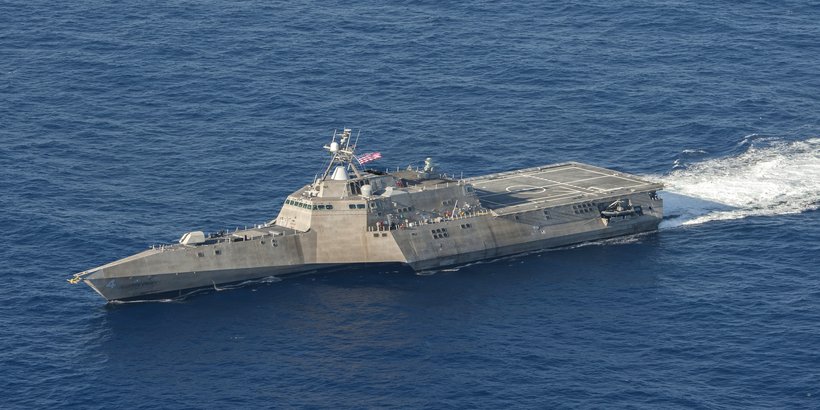
MOBILE, Ala. — The Alabama-built Littoral Combat Ship USS Coronado departed its port in San Diego on Wednesday to set sail for its maiden deployment in the Western Pacific. Coronado’s journey will make it the first such ship to make an operational cruise.
The Littoral Combat Ship (LCS) is a class of vessels used in operations close to shore (the littoral zone). They have been compared to corvettes, built to swiftly move in fights with other vessels, as well as to hunt and destroy enemy submarines and mines. Ships, such as the Coronado, are constructed at a specialized production facility located in Mobile, Ala.
Coronado’s crew will participate in the Rim of the Pacific International naval exercises (RIMPAC) involving ships, aircraft and personnel from 27 nations.
“We’re excited to have USS Coronado taking part in the world’s largest international maritime exercise,” Vice Adm. Nora Tyson, commander of U.S. 3rd Fleet, wrote in a press release. “This ship will play a critical role in the fleet and in our nation’s defense. RIMPAC provides a good opportunity for our partner navies to work with the ship and see how it can contribute to collective regional security.
Over the past few years, the construction of Alabama-made LCSs has been a subject of intense political debate. The Obama Administration has disputed the required number demanded by the U.S. Navy and members of Alabama’s congressional delegation.
RELATED: Despite Obama’s cutbacks, Navy says it still needs Alabama-built combat ships
Navy acquisition chief Sean Stackley testified before congress that “our requirement for 52 small surface combatants is unchanged,” but President Obama and his Secretary of Defense Ash Carter have pushed for cuts.
Alabama’s U.S. senators have frequently pushed back, defended the ship-building program from attempts by the administration and Senate Armed Services Committee Chairman John McCain to scale it back.
“[It’s] one of the most dramatic changes in shipbuilding I’ve seen in a number of years here in the Congress,” Sessions said of the attempted cuts.
The LCS’s saving grace may be that Obama — and by default, Secretary Carter — is term limited and will be leaving office early next year.
In the mean time, Rep. Bradley Byrne (R-AL1), whose district is home to Austal USA’s LCS production facility, took to Twitter to wish the Coronado “fair winds and following seas.”
RELATED: Byrne: Alabama-built LCS, strong Navy integral to maintaining peace through strength
WASHINGTON — A brawl has broken out inside the Pentagon between Secretary of Defense Ash Carter and the heads of the Army and Navy over the Obama administration’s military spending priorities, and the Alabama-built Littoral Combat Ship is at the center of it all.
The Obama administration is pushing for a significant reduction in ship and troop levels for the two branches and, according to a Politico report, pushing for the military to invest instead in “next-generation fighters and submarines, and high-demand skills such as cyber warfare.”
The internal sparring has spilled over into the public in an unusual way and resulted in what defense budget expert Mackenzie Eaglen describes as “a semi-open war” between SecDef Carter and Secretary of the Navy Ray Mabus.
Politico explains:
Mabus and other Navy leaders used an annual military symposium this month to offer a forceful defense of the littoral combat ship, the same warship that Carter wants to pare back to allow more spending on destroyers, munitions, submarine upgrades, and the F-35 and F-18 fighter jets.
Mabus was also unabashed about his emphasis on building up the overall number of ships — in sharp contrast to Carter, who has admonished the Navy secretary for making “quantity” a higher priority than “lethality.”
The Navy’s director of surface warfare, Rear Adm. Peter Fanta, even employed a mocking tone toward the littoral combat ship’s critics, while pleading for an audience full of industry executives to help him defend the program.
“Yes, there are still naysayers,” Fanta said at the symposium. “You know what a lot of those naysayers’ problems are? ‘You didn’t write the stack of reports that was required to build this ship.’ Aww.”
The Littoral Combat Ship (LCS) is a class of vessels used in operations close to shore (the littoral zone). They have been compared to corvettes, built to swiftly move in fights with other vessels, as well as to hunt and destroy enemy submarines and mines.
Many of them are being built by 4,000 Alabamians at Austal USA in Mobile.
Alabama’s U.S. senators have frequently defended the ship-building program from attempts by Senate Armed Services Committee Chairman John McCain to scale it back.
RELATED: John McCain really hates Alabama, but his attempts to screw the state keep failing
Senator McCain has decried the LCS program as “shameful” on the Senate floor and has constantly fought for the Pentagon to cut it, in spite of Navy leadership insisting they need it.
McCain was pleased late last year when the Obama administration’s efforts to shrink the military hit the LCS program. Secretary Carter directed the Navy to slash its previous order of ships by twelve and reduce its annual orders by tho-thirds.
The Navy’s stated goal for years has been to build up its capacity to 308 ships. There are currently 272 ships in the fleet, and Navy advocates on Capitol Hill and in the Pentagon argue that cutting the LCS procurement will make the Navy’s capacity goal impossible to achieve.
Alabama senators have repeatedly fought off McCain’s attempts to cut the LCS before, and they’re vowing to do it again this year.
They have an ally in the Secretary of the Navy, but a foe in the Pentagon’s top job. The LCS’s saving grace may be that Obama — and by default, Secretary Carter — is term limited and will be leaving office early next year.
“It will be very easy for the [military] services and Congress to just push these things off for a year and wait for a new team to be in place,” Todd Harrison from the Center for Strategic and International Studies told Politico.

John McCain really, really hates the state of Alabama — despises the Yellowhammer State with every fiber of his being.
It’s hard to say where this deep-seeded loathing, this burning desire to inflict carnage on an entire state some 1,600 miles from his Arizona home came from, or when it started.
One might think it began when Alabama voters chose Mike Huckabee over him in the 2008 Republican presidential primary. But that just couldn’t be the case. After all, in 2001 McCain went ballistic over that year’s Interior Appropriations Bill setting aside funds to give Birmingham’s famed Vulcan Statue a facelift.
“My amendment is simple, yet vividly highlights an appropriations process gone mad,” he said at the time. “It would prohibit the use of funds for any purpose relating to the Vulcan Monument in Alabama.”
But McCain’s anti-spending rhetoric is often at odds with his own votes. This is a senator who, for instance, voted in favor of the $850 billion bank bailout in 2008 and co-sponsored the Gang of Eight’s comprehensive immigration reform package, which by some estimates would have cost trillions of dollars to implement. Just over a month ago he also voted in favor of the massive spending deal former House Speaker John Boehner pushed through on his way out the door.
But in recent years McCain’s attacks on the state of Alabama seem to have become increasingly personal and intense.
McCain is currently engaged in an all-out assault on no fewer than three Alabama-based defense initiatives that, if McCain were to get his way, would not only kill upwards of 5,000 Alabama jobs, but would also endanger U.S. national security.
1. Faux outrage over Russian rockets
America has long relied on Russian-made RD-180 rocket engines to launch its satellites into space. Everyone from NASA to private companies to the U.S. military has utilized the rocket engines to get satellites and other payloads into the Earth’s orbit. Last year, however, McCain championed a move to ban the military’s use of Russian rocket engines as punishment for President Vladimir Putin’s incursion into Ukraine.
Seems reasonable, right? But there is a lot more to the story.
While there is near unanimity on the prudence of ending the United States’ reliance on Russian technology for our various space programs, an immediate ban would have created a years-long window in which the U.S. would not be fully equipped to launch some of the country’s most important defense assets into space.
United Launch Alliance (ULA), which employs roughly 800 Alabamians at its 1.6-million-square-foot facility in Decatur, currently uses the Russian rocket engines to accomplish its work for the U.S. Air Force. ULA is developing its own satellite launch rocket system, but it is years away from completion.
In the mean time, Alabama Senator Richard Shelby inserted a paragraph into the latest spending bill making its way through Congress that would keep the ban from going into effect, therefore protecting the United States’ national security capabilities, along with hundreds — potentially thousands — of Alabama jobs.
McCain came unglued.
“Why would I give a damn what he says,” the Arizona senator exclaimed when asked about Shelby’s change to the rocket ban.
A little further digging reveals that McCain’s stated reason for the ban — to punish Russia — may not have been entirely forthcoming.
McCain’s ban would have only impacted the military, meaning other parts of the U.S. government, along with private companies, could have continued to use the Russian rocket engines unabated.
So why just target the military, if the real goal is to stick it to Russia? Why not ban Russian-made rocket engines altogether?
The fact of the matter is that ULA’s loss in Alabama would have been SpaceX’s gain in California, and a major boon for John McCain’s friend and immigration-reform-backing billionaire Elon Musk.
SpaceX is developing its own rockets and views ULA as its primary competition. The company has also received significant press coverage for being a “private” space alternative to NASA, but the facts show the company has received the overwhelming majority of its funding — billions of dollars — from the United States government.
“Musk and his companies’ investors enjoy most of the financial upside of the government support, while taxpayers shoulder the cost,” explained the LA Times’ Jerry Hirsch.
McCain has been one SpaceX’s most vocal backers, even in the wake of several very public failures of the company’s rocket systems.
“I am confident that this minor setback will in no way impede the future success of SpaceX and its ability to support U.S. national security space missions,” he said earlier this year after a SpaceX Falcon 9 rocket exploded just two minutes after launch.
Apparently he’s more than happy to throw Alabama and America’s national security under the bus to make that a reality.

2. Anti-Littoral Combat Ship Crusade
The Littoral Combat Ship is a class of vessels used in operations close to shore (the littoral zone). They have been compared to corvettes, built to swiftly move in fights with other vessels, as well as to hunt and destroy enemy submarines and mines.
John McCain hates them, and many of them are being built by 4,000 Alabamians at Austal USA in Mobile, which probably makes him hate them even more.
McCain has decried the LCS program as “shameful” on the Senate floor and has constantly fought for the Pentagon to cut it, in spite of the US Navy insisting they need it.
McCain was pleased this week when the Obama administration’s efforts to slash the military hit the LCS program. Secretary of Defense Ash Carter directed the US Navy to slash its previous order of ships by twelve and reduce its annual orders by tho-thirds.
The Navy’s stated goal for years has been to build up its capacity to 308 ships. There are currently 272 ships in the fleet, and Navy advocates on Capitol Hill and in the Pentagon argue that cutting the LCS procurement will make the Navy’s capacity goal impossible to achieve.
Alabama senators have repeatedly fought off McCain’s attempts to cut the LCS before. They’re vowing to do it again next year.
3. Joint High Speed Vessel
On Thursday, as Sen. McCain was in a full-on tirade on the Senate floor, Politico defense reporter Jeremy Herb noted that after the Arizona senator went after the Russian rockets and the LCS, he added yet another Alabama project to his hate list: the Joint High Speed Vessel (JHSV).
Now @SenJohnMcCain is going after funding for the Joint High Speed Vessel, which he notes repeatedly, is made in Alabama cc:@SenShelby
— Jeremy Herb (@jeremyherb) December 17, 2015
The JHSV can reach speeds of around 45 knots (52 mph) and maneuver into waters close to the shore (under 15 feet), making it the ideal transport platform for Army and Marine Corp units and their vehicles.
“This is the worst one of all, my friends, and it will not surprise anyone that it is manufactured in Alabama,” McCain said of the JHSV. “There is $225 million for the addition of a joint high-speed vessel, which is, of course, manufactured in Alabama. This will be the 12th ship of this class.”
McCain said he believed there was no need for any more Joint High Speed Vessels, and therefore, the senator who voted to spend trillions on bank bailouts and immigration handouts deemed the expenditure a waste of taxpayer resources.
There’s no way to know Senator McCain’s real reason for despising the state of Alabama, but the only speculation we can really offer is that it may have something to do with the fact that Alabama’s delegation keeps beating him.
The statue is standing tall at Vulcan Park. United Launch Alliance is still providing launch capabilities for national security assets. And the Littoral Combat Ship and Joint High Speed Vessel are still under construction.
It appears Senator McCain is a lot more hateful than he is effective. In some bizarre way, Alabama should be thankful for that.
WASHINGTON — Defense News reported this week that the Alabama-made littoral combat ship (LCS) may have been dealt a “fatal blow” when Secretary of Defense Ash Carter directed the US Navy to slash its previous order of ships by twelve and reduce its annual orders by tho-thirds. But three members of Alabama’s federal delegation are vowing to defend the LCS from the Obama administration’s planned cuts.
The Navy had previously planned to annually purchase three LCS over the next four years, and ultimately purchase 52 ships total. Half the ships are being made by Austal in Mobile, Alabama, and half are being made by Lockheed in Marinette, Wisconsin.
Defense News explains:
The LCS program is unique among Navy ship classes and features two entirely different designs, the 3,300-ton Freedom class is produced by Lockheed Martin, while the 2,800-ton Independence class is built by Austal USA. Six LCSs are in commission, at least 14 are in various stages of construction, and another six are under contract.
SecDef Carter’s directive would cut the orders to one per year over the next four years and 40 in all, and also push the Navy to choose either Lockheed-Martin or Austal to be the exclusive supplier.
“Our Navy is at risk across the world and the weak and impotent Obama Administration seeks to further undermine our position with this ill-considered decision,” said Congressman Bradley Byrne (R-AL1), who represents the coastal Alabama District where the LCS are made by 4,000 Austal USA employees. “Make no mistake about it, from Mobile to Marinette and from San Diego to Jacksonville, the bell has rung, and those in the Pentagon need to hear that this will not stand. Not just for our ship yards but also for our Navy and for the defense of the people of the United States of America.”
US Navy sources Yellowhammer spoke on background said they generally agree with Byrne that pressure from the White House to broadly cut the Department of Defense has compelled SecDef Carter to target the LCS, even though the Navy itself believes the boost in ship numbers is needed.
The Navy’s stated goal for years has been to build up its capacity to 308 ships. There are currently 272 ships in the fleet, and Navy advocates on Capitol Hill and in the Pentagon argue that cutting the LCS procurement to just 40 ships will make the Navy’s capacity goal impossible to achieve.
The senior positions that Alabama senators Richard Shelby (R-Ala.) and Jeff Sessions (R-Ala.) hold on the Appropriations Committee and Armed Services Committee respectively could prove invaluable as the fight over the future of the LCS makes its way through Congress next year.
“The LCS is critical to our Navy’s ability to respond to current and future threats across the world, and we cannot threaten our military’s ability to execute future operations with this powerful warfighter,” said Shelby. “I will fight tooth and nail against this misguided attempt to needlessly undermine the security of our nation and the American people.”
“This would be a monumental error and must not stand,” added Sessions. “It would overrule the long-settled priorities of the Navy. The LCS has been a top priority for the Navy for almost 20 years, has been supported by the last six Secretaries of the Navy and every Chief of Naval Operations since Admiral Vern Clark, and has had strong bipartisan Congressional support every year. This is troubling not just for the 4,000 hardworking Austal employees in Mobile, but also for the future of our Navy and our national security.”
The FY2017 Pentagon budget is due to be sent to the White House’s Office of Management and Budget (OMB) on Friday. The fight over the future of the LCS will play out next year, with thousands of Alabama jobs and the future of the Navy’s fleet hanging in the balance.
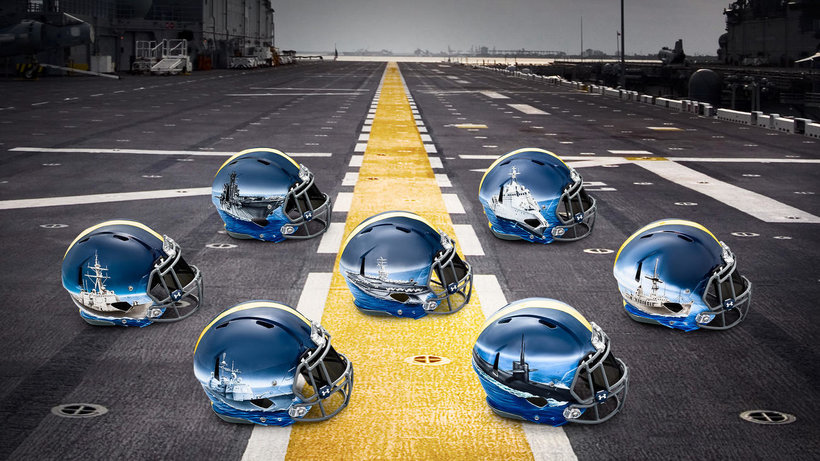
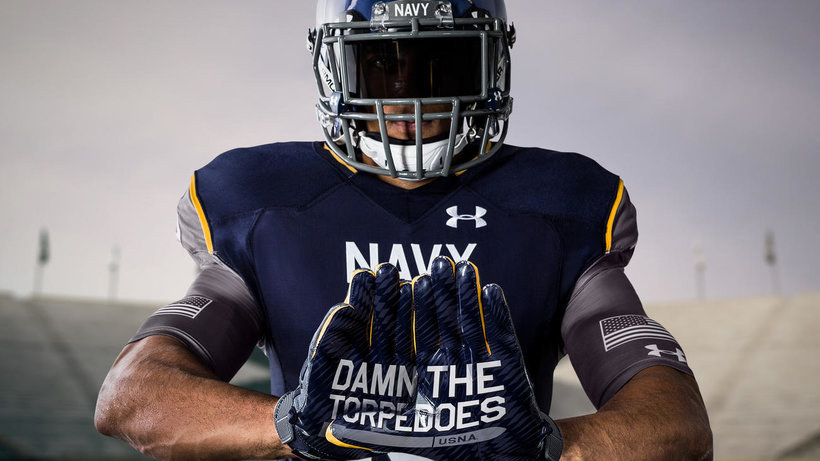
The Navy football team will wear Under Armour-designed “Navy Fleet” uniforms and hand-painted helmets for the Army-Navy Game this year. The beautiful designs are garnering rave reviews, but Alabamians have a little extra to be excited about.
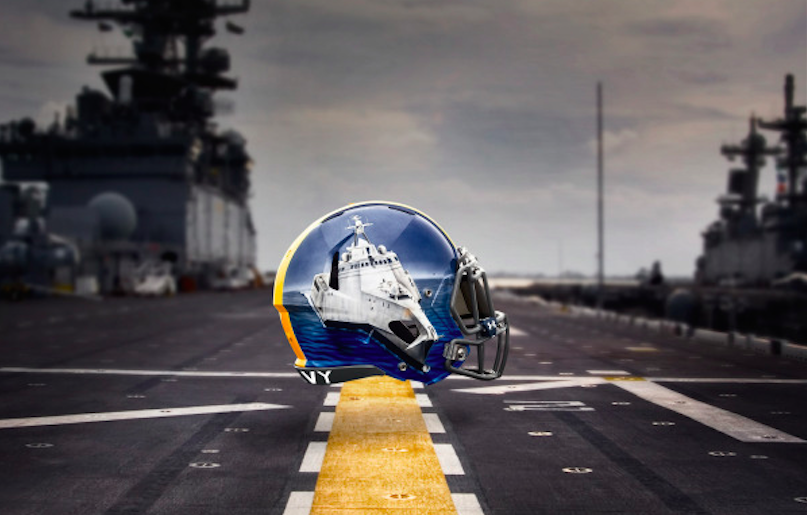
The uniform is inspired by and pays homage to seven of the historic ships that make up the U.S. Naval Fleet. Each ship is detailed on one of seven hand-painted helmets that each player will wear, assigned by position (more on that below). The Littoral Combat Ship, which is built by Austal USA in Mobile, Ala., will appear on the helmets of Navy running backs.
“Like running backs, these fast and nimble ships can navigate through both crowded shallow and deep waters,” Navy explains.
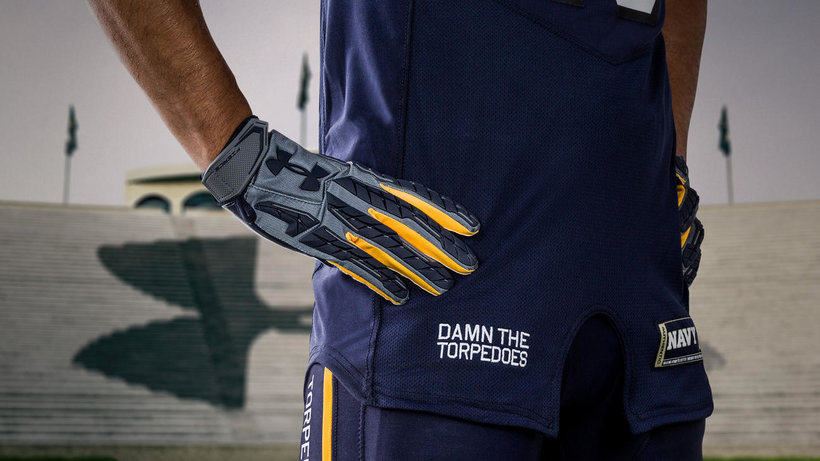
Additionally, the rally cry “damn the torpedoes!” is featured on the uniform as a nod to Admiral David Farragut’s historic Naval victory at the Battle of Mobile Bay in 1864.
Farragut is a legendary naval figure in American military history. he was the U.S. Navy’s first rear admiral, vice admiral and admiral. He is one of only six naval officers to serve on active duty for life and a statue of him still stands at the center of Farragut Square in Washington, D.C.
During the Civil War, a Farragut-led Union fleet attacked Confederate ships protecting the Port of Mobile, which at the time was the last Gulf of Mexico port controlled by the South. In spite of a minefield standing between the Union fleet and the Confederates, Farragut famously yelled, “Damn the torpedoes! Four bells. Captain Drayton, go ahead! Jouett, full speed!” The phrase has since then been shortened to “Damn the torpedoes, full speed ahead!” And it appears in numerous places on the new Navy uniform design.

Each helmet design corresponds with a position on the field. Here’s how Navy explains it:
• Linebacker: Cruiser- Provides anti-air defense and packs the biggest punch of Naval surface ships representative of the linebackers on the Navy football team
• Defensive Back: Destroyer- Known for significant fire power, speed, and anti-missile defense as are Navy’s defensive backs
• Wide Receiver: Submarine- Predominantly utilized as blockers, wide receivers play a key role in driving the Navy rush attack, taking on a stealth-like persona as they blend into the rhythm of the offense but bring significant fire power when called upon, just like a Naval submarine
• Lineman: Amphibious Assault Ships- Just as a lineman’s job is the create a hole for a running back or linebacker, these ships are utilized to establish the “beach head” that enables the invading force to gain access and ultimately accomplish their objective
• Quarterback: Aircraft Carrier- The QB of the Naval Fleet, the aircraft carrier is the ultimate decision maker; the “quick strike” weapon of the Naval fleet
• Running Back: Littoral Combat Ship- Like running backs, these fast and nimble ships can navigate through both crowded shallow and deep waters
• Kicker/Special Teams: Minesweeper- Much like the specific task of the Navy special teams, this small ship has a unique mission of identifying and eliminating mines
Army and Navy square off at Lincoln Financial Field in Philadelphia on Saturday, December 12, at 2:00 PM on CBS.
WASHINGTON — Late last week, the U.S. Senate Appropriations Committee approved a Department of Defense funding bill that will support several Alabama projects, including ships being built for the U.S. Navy in Mobile Bay and missiles assembled in Troy.
The bill will send $1.3 billion to south Alabama to build three Littoral Combat Ships and a Joint High Speed Vessel (JHSV), both built in Austal USA’s Mobile Bay shipyard.
“The LCS is extremely important to our Navy’s ability to respond to current and future threats,” said Senator Shelby (R-AL), a senior member of the Senate Appropriations Committee. “It is critical to ensure that the capabilities of our naval fleet are the very best and that our armed forces receive the equipment they need in executing future operations. The funding secured in this bill is positive news for national security, the warfighter, and south Alabama.”
“It is clear that support for the Austal-built Littoral Combat Ship and Joint High Speed Vessel is continuing to build on Capitol Hill,” Congressman Bradley Byrne, a Republican who represents South Alabama told Yellowhammer Friday morning. “These ships are vital to the success of our Navy around the globe, and more and more Members of Congress are starting to realize why the Navy is so supportive of these programs. I will continue to work with Senators Shelby and Sessions to ensure funding continues for the LCS and JHSV programs.”
Though there is wide GOP support for the Defense spending bill, Democrats have threatened to block the appropriations unless Republicans concede to increase spending on the Environmental Protection Agency, the IRS, and other Democratic priorities.
“It is reprehensible for Senate Democrats to threaten to block vital funding for our nation’s military men and women just because they want agencies like the EPA and IRS to have more money,” said Byrne. “Our nation faces a wider range of threats right now than we ever have before, and it would be horribly irresponsible for us to put the safety and security of Americans at risk because some want more federal spending on things completely unrelated to defense.”
Also included in the appropriations bill is an additional $50 million for procuring Javelin Missiles, built in Troy, Alabama, by Lockheed Martin.
According to Shelby, the Army requested funding for the shoulder-fired anti-tank missiles, calling them an important asset for national security.
“It is imperative that Congress provide our military with proper funding for the programs and resources necessary to protect our nation,” said Senator Shelby. “I am pleased that this year’s Department of Defense Appropriations bill supports our top defense priorities, including several of Alabama’s national defense capabilities that will allow our state to continue to play a leading role in serving our armed forces.”
Like my recipes? Let me know on Twitter! #BirminghamBloggers #FoodBlogger
— Elizabeth BeShears (@LizEBeesh) May 5, 2015
c/o Austal USA
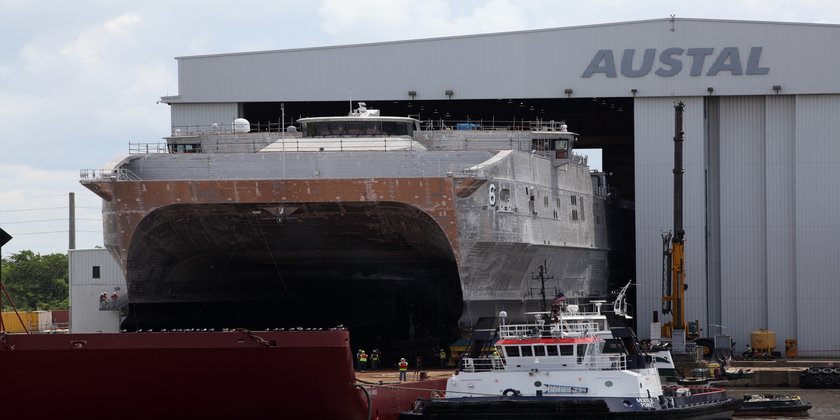
MOBILE, Ala. — Austal USA’s Mobile, Alabama, shipyard on Tuesday launched its second U.S. Navy ship in three months. The launch comes as the company continues to fulfill its $1.6 billion, 10-ship block buy contract with the United States government.
The 338-foot USNS Brunswick entered the water for the first time and will undergo final outfitting and testing before sea trials and delivery to the U.S. Navy. The recently launched ship is classified as Joint High Speed Vessel (JHSV) 6 and has an average speed of 35 knots. Like other JHSVs, it can support rapid deployment of personnel, equipment, and supplies, as well as a helicopter-capable flight deck.
“The successful launch of JHSV 6 further supports the level of maturity this program has reached,” said Austal USA President Craig Perciavalle.
Perciavalle described the launch as a “major milestone” and gave credit to “Austal’s team of talented shipbuilders.”
Austal is a global defense contractor, designer, and manufacturer of defense and commercial ships. The company chose Mobile to host its sole production facility in the U.S, employing more than 4,000 people.
Austal’s state-of-the-art Mobile facility currently has three JHSVs and seven Littoral Combat Ships (LCS) under construction.
Congressman Bradley Byrne (R-AL1), a member of the House Armed Forces Committee, was instrumental in the House passing the National Defense Authorization Act (NDAA) which secured funding for three of the LCS ships.
“I am very proud of our efforts to secure authorization for three more Littoral Combat Ships,” Byrne said after the House vote. “My colleagues in Congress are continuing to realize what our Navy leaders have said all along: the LCS is a critical piece of our naval fleet. I will continue to work tirelessly to support our nation’s Navy and the hardworking men and women at the Austal shipyard in Mobile.”
The USNS Trenton, a JHSV 5, launched last September and headed to Pensacola Naval Air Station this year. The USS Jackson, a Littoral Combat Ship, launched at the end of 2013 and is preparing for sea acceptance trials that will take place later on this summer.
MOBILE, Ala. — The U.S. Navy announced Wednesday that it will continue fully funding the program to build two Littoral Combat Ships (LCS) at contractor Austal USA in the Port of Mobile.
“I applaud the Navy’s decision to allocate funding for two Littoral Combat Ships to Austal in Mobile,” said Congressman Bradley Byrne (R-AL1) in a press release. “The hardworking men and women at the shipyard continue to demonstrate an ability to produce first-class ships in a reasonable time frame. I appreciate their continued work on behalf of our nation’s military.”
Byrne, who is a member of the Armed Services Committee, said the appropriations are made possible by the 2015 National Defense Authorization Act (NDAA) passed in December, but he will continue to be the “strongest advocate possible for our nation’s Navy and the over 4,000 workers at the Austal shipyard in Mobile,” as Congress begins to craft the 2016 NDAA.
Each LCS costs approximately $320 million to build, which are some of the most efficient and least expensive vessels in the Navy.
In December, former Department of Defense Secretary Chuck Hagel released a report detailing the need for more, improved LCS.
The LCS updates “will offer improvements in ship lethality and survivability, delivering enhanced naval combat performance at an affordable price,” Hagel said. “The more lethal and survivable SSC will meet a broader set of missions across the range of military operations, and addresses the Navy’s top war-fighting priorities.”
Like this article? Hate it? Follow me and let me know how you feel on Twitter!
— Elizabeth BeShears (@LizEBeesh) January 21, 2015
Reddit users were asked “What’s the laziest thing you’ve ever done?” And one former sailor’s response is so incredible we had to share it.
We usually only write about Alabama-related things, so let’s just assume this took place aboard one of the Alabama-built Littoral Combat Ships.
I was once on a US military ship, having breakfast in the wardroom (officers lounge) when the Operations Officer (OPS) walks in. This guy was the definition of NOT a morning person; he’s still half asleep, bleary eyed… basically a zombie with a bagel. He sits down across from me to eat his bagel and is just barely conscious. My back is to the outboard side of the ship, and the morning sun is blazing in one of the portholes putting a big bright-a** circle of light right on his barely conscious face. He’s squinting and chewing and basically just remembering how to be alive for today. It’s painful to watch.
But then zombie-OPS stops chewing, slowly picks up the phone, and dials the bridge. In his well-known I’m-still-totally-asleep voice, he says ‘heeeey. It’s OPS. Could you… shift our barpat… yeah, one six five. Thanks.’ And puts the phone down. And then he just sits there. Squinting. Waiting.
And then, ever so slowly, I realize that that big blazing spot of sun has begun to slide off the zombie’s face and onto the wall behind him. After a moment it clears his face and he blinks slowly a few times and the brilliant beauty of what I’ve just witnessed begins to overwhelm me. By ordering the bridge to adjust the ship’s back-and-forth patrol by about 15 degrees, he’s changed our course just enough to reposition the sun off of his face. He’s literally just redirected thousands of tons of steel and hundreds of people so that he could get the sun out of his eyes while he eats his bagel. I am in awe.
He slowly picks up his bagel and for a moment I’m terrified at the thought that his own genius may escape him, that he may never appreciate the epic brilliance of his laziness (since he’s not going to wake up for another hour). But between his next bites he pauses, looks at me, and gives me the faintest, sly grin, before returning to gnaw slowly on his zombie bagel.
Like this article? Follow me on Twitter and let me know what you think.
— Cliff Sims (@Cliff_Sims) December 3, 2014

When I was elected to Congress last December, I vowed to hit the ground running from day one to make Southwest Alabama a better place to live, work and raise a family. In honor of the New Year, I wanted to take this opportunity to look back at some of the highlights from my first year in Congress.
My first legislative action was to cosponsor H.R. 3121, the American Health Care Reform Act, which repeals ObamaCare and replaces it with common-sense, market based reforms. Throughout the past year, I have repeatedly supported legislation designed to repeal and reform ObamaCare and actually make health care more affordable and accessible for middle class families.
I received positions on two committees vitally important to our area: the Armed Services Committee and the Natural Resources Committee. These assignments were a victory for South Alabama jobs. After speaking with friends and neighbors in our community, we concluded that these were the two avenues where we could do the most good for our home.
In March, I voted in support of H.R. 3370, the Homeowner Flood Insurance Affordability Act. This bill slowed down the pace of rate hikes for coastal Alabama residents, allowing time to ensure that sound science is being used to create federal flood maps.
A few weeks later, I accepted a position on the House Committee on Education and the Workforce. Education is an issue that is a passion of mine, and I have seen firsthand how the federal government’s intrusions can hamper student success. The Committee also put me on a strong position to promote job training programs and fight back against the activist National Labor Relations Board.
In April, after it was announced the Red Snapper season in federal waters would only last nine days, I introduced my first standalone piece of legislation: the SNAPR Act. The legislation would repeal Section 407(d) of the Magnuson-Stevens Fishery Conservation and Management Act, which mandates inflexible quotas on recreational and commercial fishermen in the Gulf of Mexico.
In May, following the heartbreaking scandal at VA medical facilities around the country, I joined many of my colleagues in calling on VA Secretary Eric Shinseki to resign. Weeks later, Secretary Shinseki resigned and was replaced by Robert McDonald. Around the same time, Congress passed the Veterans’ Access to Care through Choice, Accountability, and Transparency Act. Most importantly, the bill included reforms to increase veteran access to private care, but more work is certainly needed.
In June, I held my 25th town hall meeting in Lillian. Since then, we have held even more town hall meetings brining to the total number to over 30. In addition to holding the in-person town hall meetings, I also held telephone town halls and answered questions from constituents during a Facebook town hall.
In response to many outrageous executive overreaches by President Obama and his administration, I supported a lawsuit against the President in July. Everywhere I go, I hear the same thing over and over again: This President will not stay within the bounds of the Constitution of the United States or the laws passed by this body and the Senate. I wish a lawsuit wasn’t necessary, but I believed it was one of the best ways to rein in the out-of-control executive.
Also in July, the Federal Highway Administration finally released the draft Environmental Impact Statement on the I-10 Mobile River bridge project. This step was almost ten years in the making, and it represented a significant breakthrough in the process of getting a bridge built. I will continue pushing for this project which is critically important to our entire region.
In August, in response to a dangerous influx of illegal immigrants crossing our southern border, I voted for legislation that would boost border security and end one of President Obama’s amnesty programs. President Obama’s continued threat of executive action has only exacerbated the problem of illegal immigration, and I look forward to a serious debate early next year on the immigration issue.
This fall, I traveled to the Middle East to meet with United States military personnel and visit with foreign leaders. During the trip, I made stops in Israel, Jordan, Egypt, and Morocco. One common theme I picked up on during the trip was the lack of United States leadership and a clear strategy in the region. Whether it is ISIS in Iraq, Hamas in Gaza, the Muslim Brotherhood in Egypt, Boko Haram in Africa, or al-Qaeda throughout the Middle East, Islamic extremists are on the rise.
Most recently, we were able to secure funding for the construction of four new Littoral Combat Ships, which are built in part by Austal in Mobile. The same week, Secretary of Defense Chuck Hagel announced that the current LCS variants will be modified instead of creating a new ship design. This means the Navy will continue building ships in Mobile for a long time.
There is no doubt many challenges remain, but I am proud of the many accomplishments from my first year in Congress. As we head into the New Year, I will continue advocating for our shared conservative values and fighting for Alabama jobs. It is an honor to represent you in Congress.
Bradley Byrne represents Alabama’s 1st Congressional District in the U.S. House of Representatives.

RELATED: Everything you need to know about the Alabama House delegation’s ‘cromnibus’ votes
WASHINGTON — The $1.1 trillion “CRomnibus” passed the U.S. Senate Saturday night, concluding an usually active day of of political maneuvering by dissenting senators on both ends of the political spectrum. The bill, which got its name because it combined an omnibus of 11 appropriations bills to fund the government through next September with a continuing resolution (CR) funding the Department of Homeland Security through Feb. 27, passed on a final vote of 56-40.
Both of Alabama’s senators voted against the bill, citing its funding of the president’s executive action on immigration as the primary reason.
“While I support funding the government, as well as several conservative priorities and provisions important to Alabama in the omnibus, I opposed the overall bill,” said Sen. Richard Shelby (R-Ala.). “The omnibus fails to properly address President Obama’s action to grant amnesty to millions of illegal immigrants through executive fiat. I remain firmly opposed to providing amnesty to those who have broken our laws and I stand ready to fight against the President’s executive overreach when Republicans control both the House and the Senate next Congress.”
Shelby was, however, one of the architects of the appropriations portion of the CRomnibus, and noted that while he did not support the full bill, he was pleased to see several items of particular importance to Alabama’s economy included in the legislation.
In addition to the three Alabama-built Littoral Combat Ships that were previously included in President Obama’s budget, the CRomnibus included an additional $80 million, which Shelby said will allow for “long-lead procurement in order to maintain shipyard capacity and cost savings.” The bill also contained $200 million over and above the President’s Budget Request for an additional Alabama-built Joint High Speed Vessel. Both ships are made at the Port of Mobile by Austal USA.
“This bill funds defense-related programs that play a vital role in providing our nation’s military with the resources that they need to strengthen our national security,” said Shelby. “I am pleased that this bill includes funding to enhance Alabama’s national defense capabilities and continue our state’s commitment to serving our armed forces.”
Sessions spent most of the day demanding a vote on language to block funds for the implementation of the President’s “illegal and unconstitutional amnesty.” Although his efforts ultimately fell short on Saturday, his consistent and articulate arguments against the President’s executive actions will continue to impact the debate going into the next sessions of Congress when Republicans will control both the House and Senate.
“Who is looking out for American workers?” an exasperated Sessions rhetorically asked on the Senate floor. “Who is looking out for their interests, fighting to help them get better jobs and pay, working to help their communities climb out of poverty? The immigration debate in our nation’s capital is always centered on the needs of illegal immigrants, foreign workers, or large employers. Isn’t it time, after decades of open immigration, to focus on how we can help Americans?”
Like this article? Follow me on Twitter and let me know what you think.
— Cliff Sims (@Cliff_Sims) December 3, 2014

WASHINGTON — House Republican leadership, with the help of a chunk of Democrats, pushed through a $1.1 trillion spending bill on Thursday that will fund the government through next September. The final vote was 219 – 206, as 57 Democrats joined with 162 Republicans to push the bill over the finish line.
According to The Hill, “The so-called ‘cromnibus’ included an omnibus of 11 appropriations bills funding most of the government through September, and a continuing resolution funding the Department of Homeland Security through Feb. 27.”
House Speaker John Boehner said passage of the cromnibus avoided a government shutdown, and also gives Republicans an opportunity to readdress DHS funding in February — a move he says will help them push back against President Obama’s executive actions on immigration.
“(B)y the House’s action, we are setting up a direct challenge to the president’s unilateral actions on immigration next month, when there will be new Republican majorities in both chambers,” he said. “The Senate should act on this bipartisan legislation in short order.”
Alabama’s House delegation, which often splits down Party lines (6 Republicans and 1 Democrat), was split 5-2 on the Cromnibus, with Democrat Terri Sewell joining Republicans Bradley Byrne, Martha Roby, Robert Aderholt and Spencer Bachus in voting in favor of the bill. Republicans Mike Rogers and Mo Brooks voted no.
Yea on #CRomnibus: @RepByrne, @RepMarthaRoby, @Robert_Aderholt, @BachusAL06, @RepTerriSewell. No: @RepMikeRogersAL, @RepMoBrooks #alpolitics
— Cliff Sims (@Cliff_Sims) December 12, 2014
Byrne said he supported the bill because it contained a number of provisions of particular importance to Southwest Alabama, including fully funding three new Littoral Combat Ships and one additional Joint High Speed Vessel, which are built in Mobile.
“From fully funding three Littoral Combat Ships to easing a burdensome regulation on our local farmers, there are many positive reforms included in this bill,” he said. “Additionally, the bill includes no new funding for ObamaCare, slashes the budgets of the EPA and IRS and includes strong 2nd Amendment and pro-life policies.”
Roby said she supported the bill because it funds critical government operations, including appropriating funding for Lakota Helicopters to enhance the aviation training mission at Fort Rucker in the Wiregrass area of Roby’s district. She also said that, in her view, the legislation gives Congress the best opportunity to reverse President Obama’s unilateral immigration actions when Republicans have dual House and Senate majorities in January.
“I support the Appropriations plan for many reasons, including this important one: this plan puts us in the best position possible to address President Obama’s plans for executive amnesty. There is no question about who is for amnesty and who is against it. The question is what is the best strategy for actually reversing the president’s action? This plan wisely allows us to focus on defunding executive amnesty in four weeks when Republicans have a Senate majority and even more votes in the House.”
Brooks, however, vehemently opposed the cromnibus, saying that it “undermines the proper functioning of a Republic.”
Brooks listed several reasons he opposed the bill, including its $1 trillion price tag; the fact that it was 1,600 pages long and did not give members time to fully review it; and that he believes it represents “tacit surrender to the President’s unilateral action (on immigration) and a missed opportunity to stop it.”
.@RepMoBrooks just told me, "Imagine a coach instructing his team to punt on 1st down. That's what House leadership has done" on #CRomnibus.
— Cliff Sims (@Cliff_Sims) December 11, 2014
But it was Sen. Jeff Sessions who was the most vocal in the aftermath of the cromnibus’ passage. Sessions leads a bloc of Senate and House conservatives who believe that failing to block the President’s immigration executive order now will give the Administration the opportunity to begin implementing its plan, making it difficult — or even impossible — for Republicans to roll it back next year.
“For the sake of the Constitution and our constituents, Congress should fund the government but not fund the President’s unlawful amnesty,” Sessions said after the vote. “Unfortunately, not only has Congress so far not attempted any effective action to block the President’s amnesty, but the legislation that passed tonight funds through September of next year many policies that the House itself rejected only a few months ago. In effect, the omnibus provides the Administration with billions of dollars to carry out President Obama’s resettlement plan for illegal immigrants in U.S. communities. The legislation also continues to allow the recipients of the President’s amnesty to receive billions of dollars in government checks in the form of tax credits and to participate in programs through myriad government agencies such as Social Security and Medicare.”
According to Politico, in an effort to secure passage of the cromnibus, lawmakers involved in the negotiations searched for votes by including some of their colleagues’ priorities in the bill.
“The result is a behemoth measure that touches everything from union pensions to defense procurement, resulting in one of the most consequential bills to come before Congress this year,” wrote Politico’s Brian Faler.
He also described Alabama’s senior senator, Richard Shelby, as one of the architects of the plan. Shelby defended the size and scope of the legislation, saying it was not abnormal for an appropriations bill to include funding for a wide variety of programs and departments.
“I don’t think it’s a Christmas tree,” he said. “Appropriations bills always have a lot of things in them because there’s a trillion dollars — how to spend it, how not to spend it.”
Like this article? Follow me on Twitter and let me know what you think.
— Cliff Sims (@Cliff_Sims) December 3, 2014
WASHINGTON — Secretary of Defense Chuck Hagel on Thursday released the Navy’s long anticipated “Small Surface Combatant (SSC) Task Force” report, and it contained good news for Alabama.
While full details of the report likely won’t be made available to the public for national security reasons, Secretary Hagel left no doubt that the Navy’s need for the Alabama-built Littoral Combat Ship (LCS) remains strong.
Hagel indicated he agrees with the Navy’s decision to update the current versions of the LCS, rather than designing a new ship, using a foreign design or repurposing another ship currently available in the fleet. He made it abundantly clear that the Navy’s requirement for 52 Small Surface Combatants has not changed.
The LCS updates “will offer improvements in ship lethality and survivability, delivering enhanced naval combat performance at an affordable price,” Hagel said. “The more lethal and survivable SSC will meet a broader set of missions across the range of military operations, and addresses the Navy’s top war-fighting priorities.”
Upgrades to the LCS will include an over-the-horizon surface missile, upgraded air defense radar, electronic warfare capability, air defense counter measures, twin 25mm cannons to supplement the 57mm gun on the bow, anti-submarine capability (including a towed listening device and torpedo countermeasures), unmanned aircraft capabilities and additional armor protection, among other upgrades recommended in the SSC Task Force report.
Alabama’s congressional delegation applauded the report’s findings and Secretary Hagel’s comments.
“The Littoral Combat Ship program is extremely important to the Navy’s ability to respond to current and future threats,” Sen. Richard Shelby told Yellowhammer. “I am pleased to hear that Secretary Hagel reaffirmed the need for this critical capability. Today’s report affirms the critical mission that the LCS program fulfills and is good news for national security, the warfighter, and south Alabama.”
Sen. Jeff Sessions specifically touted the work being down on the LCS in South Alabama. The Independence-class LCS is built in the Port of Mobile by Austal USA, and provides 4,000 direct jobs.
“The Task Force’s findings are consistent with our long-standing assertion that the LCS is a cutting edge and versatile ship, with wide-ranging capabilities that has been supported by the last six Chiefs of Naval Operations,” Sessions said in a statement. “I commend the Task Force for their efforts and continue to recognize the outstanding work done at Austal in Mobile.”
Rep. Bradley Byrne, who represents Alabama’s 1st District, where Austal is located, hailed the LCS as the future of the U.S. Navy.
“Secretary Hagel’s decision confirms what I have known all along: the Littoral Combat Ship represents the future of the Naval fleet,” said Byrne. “My staff and I have worked hard from day one to build broad support for this important military program, and this report is a very positive development.
“I remain steadfastly committed to supporting the Navy in fighting for the LCS and the hard working men and women at the Austal shipyard in Mobile. At a time when we have such a wide range of threats, we need to make sure our military has all the tools in its arsenal to appropriately respond. The Littoral Combat Ship is a key piece to the puzzle.”
Like this article? Follow me on Twitter and let me know what you think.
— Cliff Sims (@Cliff_Sims) December 3, 2014
President Theodore Roosevelt once said, “a good Navy is not a provocation to war. It is the surest guaranty of peace.” I firmly agree with President Roosevelt’s assertion, and I am growing increasingly concerned about the weakening of our nation’s naval fleet at a time when we face many foreign policy challenges abroad.
I recently accepted an offer from the United States Navy to participate in a four day education program they call Navy 101 in order to better understand the challenges our sailors face on a daily basis. This involved flying to San Diego, with its major Navy base, and then back to Pensacola to learn more about Navy aviation training and the Pensacola Naval Air Station.
The Navy traces its origin to a handful of ships George Washington commissioned for the Continental Navy. Though it was disbanded after the Revolutionary War, the Congress realized the need for a naval force to protect American sea commerce and created a Navy in 1794. The US has had a permanent Navy ever since.
The Navy has aircraft carriers, aircraft, amphibious vessels, surface combatants, and submarines. The total fleet is 290 ships at present, below the preferred operational level. While they are focused on projecting American power at sea and protecting sea lanes, they also engage in special operations, intelligence, and disaster response.
In San Diego, I first paid a visit to the USS Albuquerque, a Los Angeles class, nuclear-powered, fast attack submarine, which was over a football field long with a crew of 140 people. While there are presently 72 submarines in the Navy, many of them have stretched beyond their original life span and are showing their age. Under current plans, in ten years the US submarine fleet will fall below the level recommended by the Navy. That is especially concerning as countries like China, North Korea, Russia, and Iran are all expanding their submarine fleets.
Next, we visited the USS Ronald Reagan, an aircraft carrier which has been in service for a little over ten years. A carrier is like a small city with around 5,000 total people on board and more than 60 aircraft launching and landing on the carrier. Naval leaders I spoke to expressed concern about the reduction of the carrier fleet by two “strike groups,” which include a carrier, its air wing, and several accompanying ships. Although current law requires the Navy to maintain 11 carrier strike groups, the Navy really only has ten strike groups now, at least until the USS Gerald R. Ford joins the fleet in 2016. This illustrates just how much defense budget cuts have put our sailors in a bad spot.
Finally, we met with Rear Admiral Chris Paul, the Deputy Commander of the Naval Surface Force. We spent most our time talking about the Littoral Combat Ship (LCS), which is built locally in Mobile. While some have expressed concerns about the ship’s future, Admiral Paul made clear that the Navy views the LCS as an integral part of the future fleet.
One of the biggest concerns with the LCS has centered on its lack of weaponry and lethality. A few days before I arrived in San Diego, the Navy tested launching a new missile from the LCS. At a range of a hundred miles, the missile struck its target, a point on an abandoned container on a barge in the ocean. The Navy was elated with these results as they feel they have found an affordable, stand-off missile for the LCS.
It was very special to see both the USS Independence and the USS Coronado, both of which were built in Mobile, being used by the Navy in an active duty role. The LCS is the perfect vessel to fulfill multiple missions including surface warfare, mine counter-measure warfare, and anti-submarine warfare. I will continue to be a strong supporter of the LCS, not just because it is built in Alabama, but because I truly believe it represents the future of the Navy.
Whether it was touring a nuclear submarine or seeing a LCS under Navy control, visiting San Diego really opened my eyes to the great work our sailors do every day. More importantly, the trip also made me keenly aware of the significant budgetary challenges facing our Navy.
I strongly believe there are smarter places to cut in the federal budget than our national defense. We must right the ship when it comes to our defense spending woes, especially the Navy’s budget, if we hope to maintain our prominence on the world’s stage. Peace through strength is more than a slogan. It is a foundation for securing our own freedom and prosperity.
Bradley Byrne represents Alabama’s First Congressional District in the United States House of Representatives.
WASHINGTON, D.C. – U.S. Sen. Richard Shelby (R-Ala.), Vice Chairman of the Senate Appropriations Committee, today announced full committee passage of the Fiscal Year 2015 Department of Defense Appropriations bill, which contains funding for ships being built by Austal USA at its Alabama manufacturing facility.
The bill will now go to the full Senate for consideration.
“The Department of Defense Appropriations bill funds defense-related programs that play a vital role in providing our nation’s military with the resources that they need to strengthen our national security,” said Shelby. “I am pleased that this bill includes funding to enhance Alabama’s national defense capabilities and continue our state’s commitment to serving our armed forces.”
The bill fully funds three Littoral Combat Ships (LCS), with an additional $80 million over and above the President’s budget request for advanced funding for a fourth ship.
“LCS is extremely important to our Navy’s ability to maneuver in shallow waters and to combat the threats of surface craft, submarines, and mines,” said Shelby. “In addition to the three LCS provided in the President’s budget, the $80 million in additional funding allows for long-lead procurement in order to maintain shipyard capacity and cost savings. Adequate funding for LCS capabilities is essential to ensuring that our naval fleet is the best in the world and that our armed forces receive the equipment they need in order to execute future operations.”
The bill also appropriates $200 million above the president’s budget request for an eleventh Joint High Speed Vessel (JHSV). Both the Independence-class LCS and JHSV are built at Austal USA in the port of Mobile.
“JHSV is an incredibly flexible vessel that can rapidly and simultaneously transport troops, equipment, and supplies,” said Shelby. “The funding approved by the Committee today provides an additional JHSV, which will support efforts to decrease land-based choke points and maintain unit integrity.”
Sen. Jeff Sessions added that he believes the appropriation is “a strong affirmation of the program in a time of tight budgets.”
“I am very pleased with the work of Senator Shelby and the Senate Appropriations Committee in providing funding for the Littoral Combat Ship,” he said. “This is a great ship and a key part of the Navy’s future. I have advocated for it for many years. We must keep it on-track.”
The Austal plant is located in Alabama’s 1st Congressional District, which is represented by Republican Rep. Bradley Byrne. On Thursday, Byrne applauded the actions of the Senate Appropriations committee and his Alabama colleagues Sen. Shelby.
“Today’s action in the Senate represents one more step in the appropriations process, and a positive development for the LCS program. I appreciate Senator Shelby and the Senate Appropriations Committee for recognizing the value the LCS adds to our Navy’s capabilities.
Byrne previously worked to include language in the National Defense Authorization Act, which passed the House in May, that authorizes construction of four Littoral Combat Ships. The House Defense Appropriations Act only appropriated funding for two ships. The House and Senate will work out the differences in a joint Conference Committee later this year.”
A final Defense Appropriations Act, along with the other eleven appropriation bills, must be passed by the end of the current fiscal year on September 30.
Austal USA currently employs over 4,000 Alabamians. For more on Austal’s Alabama operation, check out Yellowhammer’s Exchange interview with Austal USA President Craig Perciavalle.
Follow Cliff on Twitter @Cliff_Sims

Rep. Bradley Byrne, R-AL01, will host the third-ranking House Republican in Mobile, Ala. next week for a tour of Austal USA.
House Majority Whip Kevin McCarthy will visit the shipyard, which is currently building the Littoral Combat Ship for the U.S. Navy.
“As the House Majority Whip, Congressman McCarthy has broad influence within the Republican Conference, entrusted with the responsibility to inform Members on how to build a conservative voting record,” Byrne explained. “By hosting Congressman McCarthy at the Austal USA shipyard in Mobile, we can demonstrate the importance of the Littoral Combat Ship to the future of the U.S. Navy, and the jobs that are hosted here in Southwest Alabama, to this important decision maker. We have a great story to tell, and I am excited to showcase this important part of our community to Congressman McCarthy.”
McCarthy is a key member of the House leadership structure, ranking just below Speaker of the House John Boehner and House Majority Leader Eric Cantor.
McCarthy’s role is one made famous in popular culture by Kevin Spacey’s portrayal of Congressman Frank Underwood in the Netflix original series “House of Cards.” Underwood was the House Majority Whip in Season 1 of the series.
Underwood’s line, “Vote your district. Vote your conscience. Just don’t surprise me,” is widely believed to have been directly lifted from McCarthy, who Spacey spent some time with preparing for the role.

The importance of having a key House leader like McCarthy on board with Austal’s mission in Mobile cannot be overstated. The Littoral Combat Ship program has been clouded by some uncertainty, due in part to deep defense cuts implemented by the Obama Administration.
Austal USA President Craig Perciavalle told Yellowhammer several weeks ago that Alabama’s congressional delegation has been instrumental in protecting the LCS program, and the 4,000 jobs it currently supports in South Alabama.
“I’ve been in this position for a little over a year now and the appreciation that I have for what they do has just gone beyond my imagination,” Perciavalle said of Alabama’s congressmen and senators. “They provide a tremendous amount of support for us — both with state support with supporting the operations, as well as support on the Hill.”
To see Yellowhammer’s full interview with Perciavalle, check out “The Exchange.”
Follow Cliff on Twitter @Cliff_Sims