The Republican Party is coming off a beating in 2020 nationally. The party lost the U.S. House (narrowly), lost the U.S. Senate (embarrassingly) and lost the presidency (shenanigans in some states aside).
So what should the GOP do?
Accentuate the positive? Highlight their younger, female, veteran or minority candidates and officeholders? Tout the positive records of state parties and look to the future?
No — they’re apparently set on looking to the flaws within the party and highlighting them for all to see. (more…)
7. Remington Arms will lose $3 million in incentives from the state after failing to meet hiring goals
— Remington is obligated to hire 1,868 workers in Huntsville by 2023, but there has now been a bankruptcy, and it has been reported that Remington is planning layoffs at three locations, including Huntsville. The company was to have 680 employees in Huntsville by the end of 2017, but they only had 500 and by the end of 2018 they had around 450. Local governments are now recouping some of the $12.5 million in incentives that were used to bring Remington to north Alabama while Alabama has announced it is canceling a $3 million cash incentive.
6. Catch-and-release is back at the border with Mexico (more…)
7. Colin Kaepernick can’t get a job in the NFL, but Nike will hire him to be a spokesman because he has the right politics
— Nike is using the left’s favorite kneeler to sell shoes by branding his protest as a heroic principled stand. The marketing reads, “Believe in something. Even if it means sacrificing everything.”
— Obviously, this is a silly thing to do for Nike and Kaepernick. It helps neither of them because even after tons of free publicity, Americans still think his protest is silly.
6. The confirmation hearings for Supreme Court justice nominee Brett Kavanaugh will finally begin (more…)
7. Sorry, Alabama’s federal employees, but no pay raise
— President Donald Trump is wanting to kill an across the board 2.1 percent pay raise for federal employees, saying, “We must maintain efforts to put our Nation on a fiscally sustainable course, and Federal agency budgets cannot sustain such increases”.
— Alabama has 53,000+ federal government employees. They also didn’t receive a pay raise in 2011, 2012 and 2013.
6. California’s Democratic Party Chairman is targeting a fast food chain for boycotts over daring to support Republicans (more…)
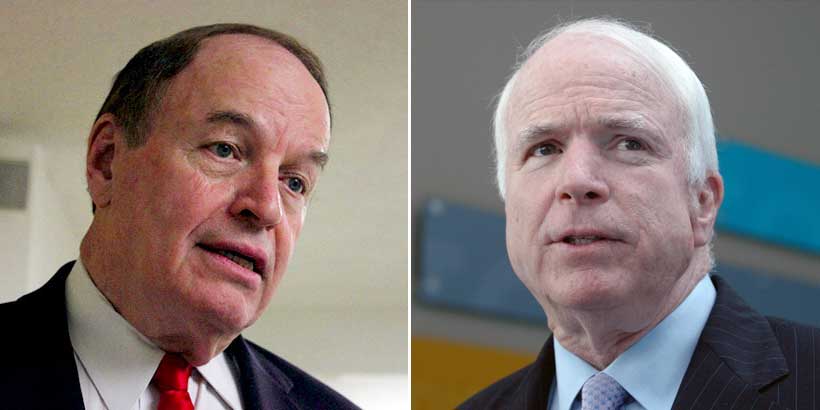
Sen. Richard Shelby (R-Tuscaloosa) slammed the brakes on calls to rename the Russell Senate Office Building in Washington, D.C., after the late Sen. John McCain, instead wanting to take time to find a fitting tribute.
The building is currently named after the late Sen. Richard B. Russell, a powerful Georgia Democrat who served from 1933 to 1971. Ideas about changing the name have emerged recently due to Russell’s opposition to the Civil Rights Act of 1964 and his integral role in slowing the legislation’s eventual passage.
Senate Minority Leader Charles “Chuck” Schumer (D-NY) is now leading an effort, along with Sen. Jeff Flake (R-AZ), to rename the Senate’s oldest office building for McCain. Shelby, the powerful chairman of the Appropriations Committee, is not throwing his support behind this knee-jerk effort, instead wanting to bring people together to find a fitting way to honor McCain. (more…)
7. There are Bushes, Clintons and Kennedys — If some get their wish, there may be a new political dynasty in the making
— Cindy McCain and Meghan McCain are being bantered about as front-runners for an appointment to John McCain’s Senate seat
— Whoever is chosen must be a Republican, but will not be appointed until Sen. McCain is laid to rest.
6. Maybe Democrats don’t want to #AbolishICE, but multiple Senators do (more…)
Alabama Governor Kay Ivey on Monday directed all state agencies to immediately lower flags to half-staff in memory of the late Sen. John McCain.
Ivey’s order came at the request of President Donald Trump.
The state’s flags are to remain at half-staff until McCain’s internment on Saturday at the U.S. Naval Academy in Annapolis, MD.
Ivey expressed her respect for McCain and her sympathy for his family during their time of grieving.
“Sen. McCain should be remembered as an honored war veteran & someone truly dedicated to serving his country,” Ivey tweeted. “His family remains in my deepest thoughts & prayers.”
Read how Alabama leaders mourned McCain’s passing and shared memories of his Alabama connections here.
Sean Ross is a staff writer for Yellowhammer News. You can follow him on Twitter @sean_yhn
From the announcement of Sen. John McCain’s terminal illness, the media realized that his willingness to “reach across the aisle” would be a weapon they could wield against President Donald Trump and other Republicans.
McCain was one who called out “fellow Republicans” for their more outlandish speech.
You may have seen the following clip recently on numerous news stations:
During the 2008 election, McCain defended the honor of Barack Obama. That race would see the media accuse McCain of being a corrupt, racist, philanderer whose lust for power was only eclipsed by his lust for Iraqi blood.
The media finally deems McCain a good and decent man, while treating the current Republican Party as a conglomeration of racists and monsters led by Donald Trump, who they believe is unworthy of leading the party of McCain.
We should all reach out to “our better angels.”
This might mean more if the current media was not pounding the current occupant of the Oval Office as a “Russian asset,” or at least a conspirator in Russian meddling that stole the election. Rarely, if ever, do you see these media personalities push back against liberal guests who make these assertions without evidence. Instead, they treat them as facts that have not been proven yet.
“What would John McCain do in those situations?” is a question that they never ask themselves.
Another clip we are seeing is McCain’s farewell speech to the Senate, where he basically singles out talk radio as a divisive force in this nation.
He does not mention the CNN and MSNBC hosts, and they surely don’t think he is talking about them. There are no calls to reign in the commentary on those channels.
This is all about Donald Trump and how they can point out how uncouth he is, which they aren’t wrong, but they really should stop pretending like they thought McCain was an acceptable Republican, because when he was a threat to Barack Obama, the liberal media did as it always does with Republicans — they tried to destroy him.
It’s easy to lionize a man when he is dead. To see what these people truly thought about McCain, look at their coverage of him when he was a threat to their worldview.
@TheDaleJackson is a contributing writer to Yellowhammer News and hosts a conservative talk show from 7-11 am weekdays on WVNN
7. Local elections are around the corner. A particularly bruising attack is out in a Huntsville School Board race
— Local school board races rarely see the kind of attack ads we see in larger partisan races, but a race in Huntsville has accusations from Huntsville City School Board member Walker McGinnis leveling some pretty substantial allegations.
— The attacks, which have been confirmed, accused candidate Ryan Renaud of drug possession, irresponsible financial behavior and failure to fill out campaign disclosure forms.
6. “Fact-checkers” continue to try and help Sen. Bill Nelson cover for his lying. They aren’t helping him enough (more…)
After a lifetime of service to his nation, Sen. John McCain (R-AZ) passed away on Saturday “surrounded by the people he loved, in the the place he loved best.”
His office released the following statement:
“Senator John Sidney McCain III died at 4:28pm on August 25, 2018. With the Senator when he passed were his wife Cindy and their family. At his death, he had served the United States of America faithfully for sixty years.”
Alabama leaders joined the nation in mourning the loss of the former presidential candidate, sharing moving memories of his relationship with the Yellowhammer State. (more…)
Remember the days of high school and the social hierarchy of the lunchroom that was a part of everyday life? It was a pecking order that could vary depending on the school, but at the top of this social construct was what is known as the “cool kids table.”
Modern-day Washington, D.C. is a lot like the high school cafeteria. Everyone is jockeying to be one of these so-called cool kids. Instead of lunchroom table placement, some people in our nation’s capital strive to get invited to the right parties, be seen on TV, make print headlines and be associated with the certain “cool kids.”
As the saying goes, “It isn’t what you know, but who you know.”
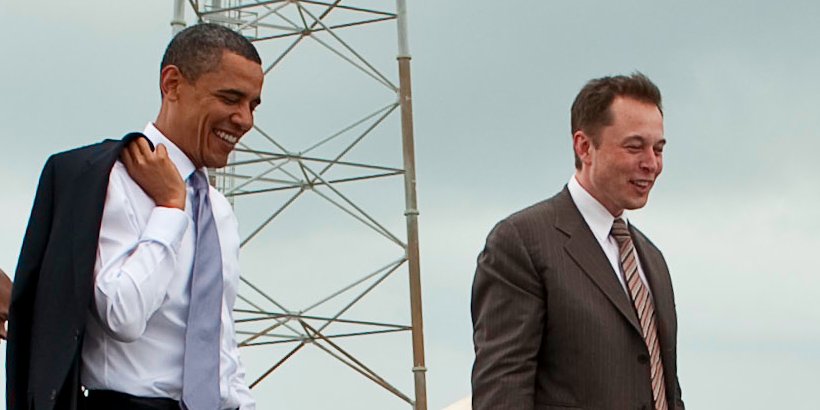
The “who” in this equation isn’t of Washington, D.C., but of Los Angeles’ chic Bel Air neighborhood. SpaceX’s Elon Musk is that guy.
(more…)
During an interview on Wednesday, White House press secretary Sarah Huckabee Sanders said leakers “should be fired.” Sanders’ comments come amid the ongoing controversy of an aide’s joke that was made within the White House about Sen. John McCain’s (R-Ariz.) ailing health. (more…)

NEW YORK — Republican presidential nominee Donald J. Trump on Wednesday released specifics on his oft-mentioned plan to buildup the U.S. military, and it includes major news for Alabama’s Navy shipbuilding operation.
Roughly 4,000 Alabamians in Austal USA’s Mobile facility are involved in building the Littoral Combat Ship (LCS), a class of vessels used in operations close to shore (the littoral zone). They have been compared to corvettes, built to swiftly move in fights with other vessels, as well as to hunt and destroy enemy submarines and mines.
During a hearing held by the Senate Armed Services Committee in March, Secretary of the Navy Ray Mabus testified that the his branch of the armed services still requires 52 littoral combat ships, a number determined by an assessment performed in 2014.
But the Obama administration and Senate Armed Service Committee Chairman John McCain (R-Ariz.) have frequently pushed to to scale back the program.
Senator McCain has decried the LCS program as “shameful” on the Senate floor and has constantly fought for the Pentagon to cut it, in spite of Navy leadership insisting they need it. McCain was pleased late last year when the Obama administration’s efforts to shrink the military hit the LCS program.
RELATED:
1. John McCain really hates Alabama, but his attempts to screw the state keep failing
2. Alabama-built warship subject of ‘open war’ breaking out inside the Pentagon
Secretary of Defense Ash Carter directed the US Navy to slash its previous order of ships by twelve and reduce its annual orders by tho-thirds. The Navy had previously planned to annually purchase three LCS over the next four years, and ultimately purchase 52 ships total, the number that Secretary Mabus testified that the Navy still needs.
The Navy’s stated goal for years has been to build up its capacity to 308 ships. There are currently 272 ships in the fleet, and Navy advocates on Capitol Hill and in the Pentagon argue that cutting the LCS procurement would make the Navy’s capacity goal impossible to achieve.
In a campaign announcement released Wednesday, Mr. Trump signaled that the LCS program — and other shipbuilding operations — would be significantly bolstered if he is elected president.
“Mr. Trump will build a Navy approaching 350 surface ships and submarines, as recommended by the bipartisan National Defense Panel,” the campaign said in a statement providing the first specific details on his promise to “rebuild” the U.S. military.
That is big news for Austal, its 4,000 employees, and Alabama’s economy as a whole.
The rest of Mr. Trump’s “military readiness plan” can be found below.
• Immediately after taking office, Mr. Trump will ask the generals to present a plan within 30 days to defeat and destroy ISIS.
• Mr. Trump will ask Congress to fully eliminate the defense sequester and will submit a new budget to rebuild our military as soon as he assumes office.
• Mr. Trump will build an active Army of around 540,000, as the Army’s chief of staff has said he needs.
• Mr. Trump will build a Marine Corps based on 36 battalions, which the Heritage Foundation notes is the minimum needed to deal with major contingencies.
• Mr. Trump will build a Navy approaching 350 surface ships and submarines, as recommended by the bipartisan National Defense Panel.
• Mr. Trump will build an Air Force of at least 1,200 fighter aircraft, which the Heritage Foundation has shown to be needed to execute current missions.
• Mr. Trump will seek to develop a state of the art missile defense system.
• Mr. Trump will modernize our nation’s naval cruisers to provide Ballistic Missile Defense capabilities.
• Mr. Trump will enforce all classification rules, and enforce all laws relating to the handling of classified information.
• One of Mr. Trump’s first commands after taking office will be asking the Joint Chiefs of Staff, and all relevant federal departments, to conduct a thorough review of United States cyber defenses and identify all vulnerabilities – in our power grid, our communications systems, and all vital infrastructure.
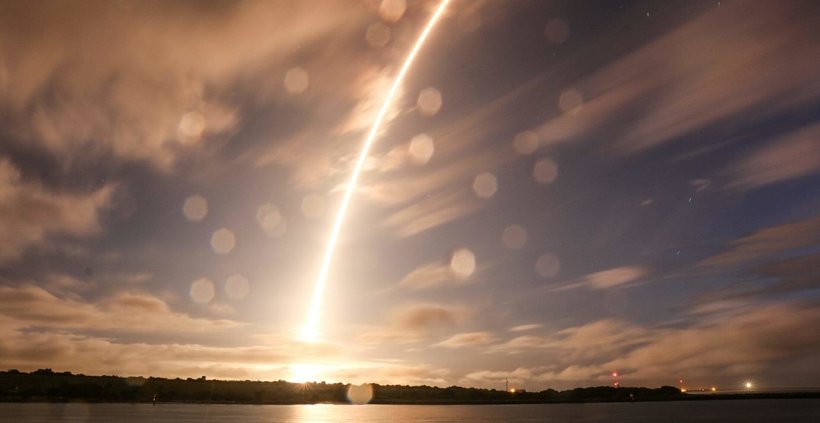
WASHINGTON, D.C. — The United States Senate on Tuesday approved an amendment to the Fiscal Year 2017 National Defense Authorization Act (NDAA) regarding the use of Russian-made RD-180 rocket engines for critical national security launches.
For over a decade now, the U.S. military has relied on RD-180s to launch its satellites into space. Last year, however, Congress moved to ban the military from using such engines as punishment for Russian President Vladimir Putin’s military incursion into Ukraine.
Last year’s NDAA, which precipitously banned the Russian rocket engines, said that Congress views both Russia and China as “a serious growing foreign threat” to U.S. national security space systems, and called on the Pentagon to develop “a next-generation” American rocket engine by 2019.
However, while there is near unanimity on the prudence of ending the United States’ reliance on Russian technology for its various space programs, U.S. military leaders warn that an immediate ban would create a years-long window in which the U.S. would not be fully equipped to launch some of the country’s most important defense assets into space.
On top of that, United Launch Alliance (ULA), an Alabama-based joint venture between aerospace giants Lockheed-Martin and Boeing, currently uses the Russian rockets to accomplish its work for the U.S. Air Force. ULA is developing its own satellite launch rocket system, but it is several years away from completion.
The company, which employs roughly 800 Alabamians at its state-of-the-art 1.6-million-square-foot facility in Decatur, has been one of the U.S. government’s most reliable partners since its founding in 2006, but the Russian rocket engine ban would have been a difficult blow for the company to withstand in the short term, placing hundreds of jobs in jeopardy.
Meanwhile, the ban would be a victory for Space X, the company founded by billionaire tech entrepreneur Elon Musk. Space X is developing its own rockets in California. The company has received significant press coverage for being a “private” space alternative to NASA, but in reality the company receives the overwhelming majority of its funding — billions of dollars — from the United States government. The L.A. Times called the arrangement “a public-private financing model underpinning long-shot start-ups.”
“Musk and his companies’ investors enjoy most of the financial upside of the government support, while taxpayers shoulder the cost,” explained the Times’ Jerry Hirsch. In total, his three companies — Space X, SolarCity and Tesla — have received more than $6 billion in subsidies during the Obama administration.
Musk’s lobbyists have also advocated terminating NASA’s Space Launch System (SLS) rocket which is being developed at Marshall Space Flight Center by thousands of Alabama employees.
Sen. John McCain (R-Arizona) has been one of Space X’s most vocal backers and is a personal friend of Musk, who supported the moderate senator’s comprehensive immigration reform efforts. At Musk’s behest, McCain has been the most prominent advocate of banning the Russian rockets, which would give his ally a competitive advantage. As the chairman of the Senate Armed Services Committee, McCain typically wields significant influence over what makes it into the annual NDAA.
Alabama Senator Richard Shelby (R-Ala), however, foiled McCain’s plan by championing an amendment to this year’s NDAA that will give U.S. rocket engine developers the time to develop an American alternative to replace the Russian RD-180.
“The inclusion of this amendment in the NDAA is a significant victory for national security and reflects what Congress has heard time and again from every senior official currently serving in the Air Force, Pentagon, and Intelligence Community,” said Shelby. “The NDAA now safeguards the U.S. Air Force’s authority to maintain competition for the most vital national security and intelligence launches. Not only is this authority critical to ensuring America’s assured access to space, but it is also positive news for American taxpayers.
“The assets we send into space on rockets powered by the RD-180 are essential to our military’s ability to understand what is happening around the world. While we can all agree that the U.S. should not be dependent upon any foreign power – especially in the national security arena – it would have been far too dangerous to hastily restrict the use of the RD-180 before an American-made rocket engine is developed. I will continue to advocate for common-sense policies that protect our men and women in uniform and ensure healthy competition for taxpayers.”
This is at least the second time Shelby has blocked McCain’s desired outcome with regard to the Russian Rockets.
“Why would I give a damn what he says?” The angry Arizona senator exclaimed earlier this year when asked about Shelby’s position.
McCain may not “give a damn,” but his colleagues apparently do, because they continue to support Shelby’s position.

After a national survey of 62,000 voters from all 50 states, approval ratings have been released for all Senators currently in Congress, including Alabama’s team of Richard Shelby and Jeff Sessions.
Senator Richard Shelby has an approval rating of 59%, according to Morning Consult. 28 percent of Alabamians disapprove of Shelby while 13% don’t have an opinion.
Senator Jeff Sessions’s approval rating is slightly lower, at 54%, with 25% disapproving his work and 21% not having an opinion. Sessions’s lower approval rating may be linked to his close relationship with Republican presidential frontrunner Donald Trump, whom he publicly endorsed in February.
Nationally, Senator Bernie Sanders of Vermont, who is currently battling Hillary Clinton for the Democratic presidential nomination, has the highest approval rating, with an 80% favorable opinion from Vermont voters. The top ten Senators have approval ratings of 63% or higher. Of the top ten, three Senators are Republicans, two are Independents, and the remaining five are Democrats. Check out the full top ten below:
1. Bernie Sanders (I-VT) – 80%
2. Susan Collins (R-ME) – 79%
3. John Hoeven (R-ND) – 74%
4. Angus King (I-ME) – 74%
5. Patrick Leahy (D-VT) – 73%
6. Thomas Carper (D-DE) – 69%
7. Amy Klobuchar (D-MN) – 68%
8. John Barrasso (R-WY) – 65%
9. Al Franken (D-MN) – 63%
10. Chris Coons (D-DE) – 63%
Interestingly, both Senators from Maine, Minnesota, Delaware, and Vermont all made the top ten list.
On the other hand, the Senator with the highest disapproval rate is Senate Majority Leader Mitch McConnell (R-KY), with a 49% unfavorable opinion. Also at the bottom of the list is 2012 Republican presidential candidate John McCain (R-AZ), 2016 Republican hopeful Marco Rubio (R-FL), and Senate Minority Leader Harry Reid (D-NV). Although these ten Senators have the highest disapproval rates, only McConnell and Senator Pat Roberts (R-KS) have a higher disapproval rate than approval rate. The bottom ten consists of four Democrats and six Republicans, and the full list is as follows:
1. Mitch McConnell (R-KY) – 49%
2. Pat Roberts (R-KS) – 42%
3. John McCain (R-AZ) – 42%
4. Orrin Hatch (R-UT) – 41%
5. Harry Reid (D-NV) – 41%
6. Marco Rubio (R-FL) – 41%
7. David Vitter (R-LA) – 40%
8. Jon Tester (D-MT) – 40%
9. Claire McCaskill (D-MO) – 38%
10. Tammy Baldwin (D-WI) – 37%
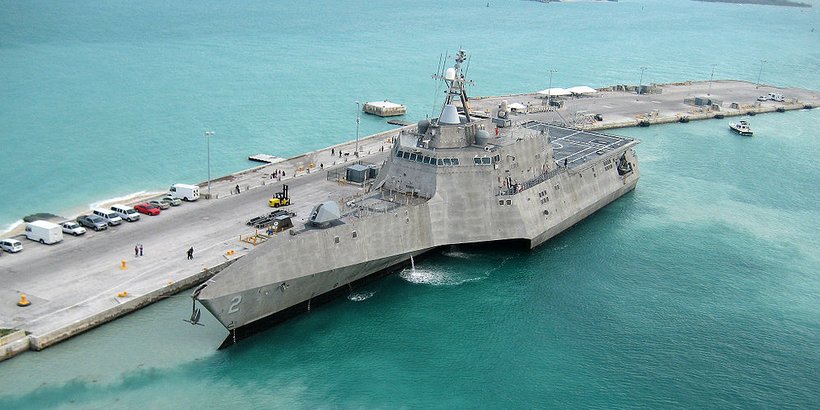
WASHINGTON, D.C. — The years-long battle over Alabama-built littoral combat ships continues to wage, but new insight from the Secretary of the Navy might lead to a breakthrough.
During a hearing held by the Senate Armed Services Committee this week, Senator Jeff Sessions (R-AL), inquired Secretary of the Navy Ray Mabus about the needs of his branch. Secretary Mabus testified that the Navy still requires 52 littoral combat ships, a number determined by an assessment performed in 2014.
The Littoral Combat Ship (LCS) is a class of vessels used in operations close to shore (the littoral zone). They have been compared to corvettes, built to swiftly move in fights with other vessels, as well as to hunt and destroy enemy submarines and mines.
Many of them are being built by 4,000 Alabamians at Austal USA in Mobile.
Alabama’s U.S. senators have frequently defended the ship-building program from attempts by Senate Armed Services Committee Chairman John McCain to scale it back.
Senator McCain has decried the LCS program as “shameful” on the Senate floor and has constantly fought for the Pentagon to cut it, in spite of Navy leadership insisting they need it. McCain was pleased late last year when the Obama administration’s efforts to shrink the military hit the LCS program.
RELATED:
1. John McCain really hates Alabama, but his attempts to screw the state keep failing
2. Alabama-built warship subject of ‘open war’ breaking out inside the Pentagon
Secretary of Defense Ash Carter directed the US Navy to slash its previous order of ships by twelve and reduce its annual orders by tho-thirds. The Navy had previously planned to annually purchase three LCS over the next four years, and ultimately purchase 52 ships total, the number that Secretary Mabus testified that the Navy still needs.
The Navy’s stated goal for years has been to build up its capacity to 308 ships. There are currently 272 ships in the fleet, and Navy advocates on Capitol Hill and in the Pentagon argue that cutting the LCS procurement would make the Navy’s capacity goal impossible to achieve.
The LCS’s saving grace may be that Obama — and by default, Secretary Carter — is term limited and will be leaving office early next year.
Sessions noted this week that the production cost of the LCS is down and the production speed has gone up. However, the senator fears that decreased production will increase the cost per ship. Mabus confirmed his fear and stated that decreased production would almost certainly lead to a higher unit price.
The entirety of the Senate exchange can be seen here:
https://www.youtube.com/watch?v=u2owDBw5hec&feature=youtu.be

WASHINGTON — While the presidential race and other elections dominated the headlines, the ongoing feud between Senators John McCain (R-Ariz.) and Richard Shelby (R-Ala.) reached a new level.
In an attempt to stick it to Shelby, McCain held up a bill to honor veterans of the Office of Strategic Services (OSS), the precursor to the modern CIA, with a Congressional Gold Medal. Among those whose service was slated to be honored was post-World War II spy Stephanie Rader. But Rader unfortunately passed away before McCain relented and allowed the bill honoring her service to pass.
Just after WWII, Rader obtained firsthand information on the Soviets in areas of Poland where literally no other American asset had access.
Here’s how The Daily Beast described one of her most famous missions in a lengthy profile piece published late last year:
The chief of mission in Berlin had classified documents he needed hand-delivered at once to the embassy in Warsaw. It wasn’t Rader’s job to know what was in the documents. But she knew that if the Soviets stopped her and found she was carrying classified U.S. government intelligence, they would immediately conclude she was a spy. Rader had already gotten word that the Soviets might have penetrated her cover. She’d been so cautious about her spy work that she refused to tell even her friends in Warsaw what she really did, fearful someone she trusted might be working for Moscow.
It had been like this for months in Poland: Rader, the only person for the essential job at hand, had to go where others couldn’t. Of the two OSS operatives in the country, she was the only one who spoke the language. Probably most of what U.S. intelligence knew about Soviet movements in Poland at the time came from Czech’s eyewitness reports and her network of sources. No wonder Berlin station thought she could handle this courier task.
But as she approached the checkpoint, and saw the Soviet security agents, Czech knew this could be her last mission.
She couldn’t run. They’d chase her. She couldn’t keep the documents hidden under her clothes. They’d find them. And when they did, Czech was certain she’d be bound for the gulag.
Czech kept walking toward the border crossing, her eyes on the Soviets agents. She calmly took out the papers, and turned to the man walking next to her, someone she was confident would alert no suspicion. “Take these,” she said, handing him the documents bound for Warsaw. She gave a name to whom they should be delivered.
As Rader feared, she was detained. But when the Soviets found no incriminating evidence, they had no grounds to keep her. She walked free, and as far as she knew, the secret papers that had nearly sealed her fate her were safely en route to the embassy.
For almost 70 years, Czech, now Rader, seems to have kept that story a secret. Along with this epilogue: Her senior OSS officers were so impressed with what one described as Czech’s “unusual coolness and clear thinking” that they recommended the War Department give her the Legion of Merit, a high honor that recognizes “exceptionally meritorious” work.
Rader never received that honor, and until her personnel file was declassified in 2008, very few people even knew of her clandestine exploits. Some of her family members and friends worked tirelessly to obtain for her the recognition she had deserved all those years. Senators Roy Blunt (R-Mo.) and Mark Warner (D-Va.) took up the cause and introduced a bill recognizing Rader and others whose service in the OSS had gone unrecognized for far too long.
But the bill was introduced in a committee chaired by Senator Shelby, apparently giving Senator McCain’s staff the impression it was his bill and offering them an opportunity to stick it to him.
McCain and Shelby have been feuding for years over everything from Russian rockets and Littoral Combat Ships to public park renovations and a study of flight patterns over Phoenix.
RELATED: John McCain really hates Alabama, but his attempts to screw the state keep failing
“McCain makes a lot of noise,” Shelby told Politico recently.
McCain at first denied putting a hold on the bill to honor OSS veterans, but then said the following day it was his office holding it up. “But I told my staff, lift the hold,” he said. “I don’t play those kind of games.”
Unfortunately “those kind of games” went on long enough that Rader passed away at the age of 100 without receiving the honor she has been due since she bravely conducted counterintelligence operations and evaded Soviet detection on the Polish countryside in the 1940s.
National security and potentially thousands of Alabama jobs have found themselves entangled in a web of crony capitalism surrounding the debate over the United States’ use of Russian rocket engines.
For over a decade now, the U.S. military has relied on Russian-made RD-180 rocket engines to launch its satellites into space. Last year, however, Congress moved to ban the military from using such engines as punishment for Russian President Vladimir Putin’s military incursion into Ukraine.
The National Defense Authorization Act, which banned the Russian rocket engines, said that Congress views both Russia and China as “a serious growing foreign threat” to U.S. national security space systems, and called on the Pentagon to develop “a next-generation” American rocket engine by 2019.
But while there is near unanimity on the prudence of ending the United States’ reliance on Russian technology for its various space programs, an immediate ban would create a years-long window in which the U.S. would not be fully equipped to launch some of the country’s most important defense assets into space.
ULA AND SPACE X COLLIDE
United Launch Alliance (ULA), an Alabama-based joint venture between aerospace giants Lockheed-Martin and Boeing, currently uses the Russian rockets to accomplish its work for the U.S. Air Force. ULA is developing its own satellite launch rocket system, but it is several years away from completion.
The company, which employs roughly 800 Alabamians at its state-of-the-art 1.6-million-square-foot facility in Decatur, has been one of the U.S. government’s most reliable partners since its founding in 2006, but the Russian rocket engine ban would be a difficult blow for the company to withstand in the short term, placing hundreds of jobs in jeopardy.
Meanwhile, the ban would be a victory for Space X, the company founded by billionaire tech entrepreneur Elon Musk. Space X is developing its own rockets in California. The company has received significant press coverage for being a “private” space alternative to NASA, but in reality the company receives the overwhelming majority of its funding — billions of dollars — from the United States government. The L.A. Times called the arrangement “a public-private financing model underpinning long-shot start-ups.”
“Musk and his companies’ investors enjoy most of the financial upside of the government support, while taxpayers shoulder the cost,” explained the Times’ Jerry Hirsch. In total, his three companies — Space X, SolarCity and Tesla — have received more than $6 billion in subsidies during the Obama administration.
Musk’s lobbyists are also advocating terminating NASA’s Space Launch System (SLS) rocket which is being developed at Marshall Space Flight Center by thousands of Alabama employees.
MCCAIN ATTEMPTS TO PICK WINNERS AND LOSERS
Good to visit with @elonmusk again today pic.twitter.com/3VxXMMl0np
— John McCain (@SenJohnMcCain) March 5, 2014
Sen. John McCain (R-Arizona) has been one of Space X’s most vocal backers and is a personal friend of Musk, who supported the moderate senator’s comprehensive immigration reform efforts. At Musk’s behest, McCain played a prominent role in getting the Russian rocket ban language put in place, which would give his ally a competitive advantage.
Alabama Senator Richard Shelby (R-Ala), however, delayed the ban by inserting a paragraph into a spending bill that will give U.S. rocket engine developers the time to develop an American alternative to replace the Russian RD-180.
Shelby pointed to a letter from Air Force officials stating that as many as 18 RD-180s will be needed between now and 2022 as evidence that the U.S. needs more time to develop a replacement engine.
Shelby’s move sent McCain into a tirade.
“Why would I give a damn what he says,” the Arizona senator exclaimed when asked about Shelby’s change to the rocket ban.
“I can assure you there will not be a gap,” McCain added this week, arguing that banning the Russian rockets would not jeopardize national security.
The Secretary of Defense, Director of National Intelligence, and Assistant Secretary of the Air Force, among others, all disagree. Each of them have written letters to McCain or testified before the U.S. Senate that an immediate ban on the Russian rockets would, in the words of the Assistant Secretary of Defense for Acquisition, “create a multiyear gap” in which the United States would not be able to launch certain national security assets into space.
Among those national security assets would be military satellites for GPS, missile warning, presidential secure communications, and weather, along with classified payloads used by the Intelligence community.
MCCAIN AND SHELBY BATTLE
Senator McCain’s PR machine has revved up in Washington this week, leveraging his prominent post as Armed Services Committee Chairman to garner headlines for what on the surface appears to be an anti-Putin agenda. He railed against the Russian rockets on the Senate floor and held a committee hearing to discuss them.
In response to the attacks, Senator Shelby’s office noted how disingenuous Senator McCain has been in declaring that allowing the use of Russian rocket engines in the short term benefits “Putin’s friends.”
In 2013, the United States imported $27 billion in goods from Russia. Of that $27 billion, approximately $88 million or 0.325% was spent on Russian rocket engines.
Together, mineral fuels (oils), iron and steel, other metals, and enriched uranium accounted for more than 85% of U.S. imports from Russia in 2013. Other major U.S. imports from Russia included: fertilizers ($796 million); fish and crustaceans ($326 million), especially frozen, in-shell crab ($233 million); plastics and rubber ($238 million), especially certain types of synthetic rubber ($181 million); nuclear reactors, boilers, machinery, and mechanical appliances ($158 million) ; arms and ammunition ($151 million); wood ($143 million), and organic chemicals ($117 million). (Source: Congressional Research Service Memorandum; January 30, 2015.)
If proponents of banning the use of the RD-180 for military launches are truly genuine in their concerns about the United States sending money to Russia, one would assume that they would also push for a ban on the aforementioned imports as well as fight to ban the use of the RD-180 for NASA and commercial spaces launches – not just military.
Furthermore, policy makers seeking to cut off funds to Putin and his cronies would at least include “arms and ammunition” ($151 million), not to mention some or all of the more than $20 billion in oil and petroleum products.
The bottom line is this:
The ongoing game of Russian Rocket Roulette is designed to benefit the government-subsidized companies of a billionaire at the expense of national security and thousands of Alabama jobs.
WASHINGTON — A brawl has broken out inside the Pentagon between Secretary of Defense Ash Carter and the heads of the Army and Navy over the Obama administration’s military spending priorities, and the Alabama-built Littoral Combat Ship is at the center of it all.
The Obama administration is pushing for a significant reduction in ship and troop levels for the two branches and, according to a Politico report, pushing for the military to invest instead in “next-generation fighters and submarines, and high-demand skills such as cyber warfare.”
The internal sparring has spilled over into the public in an unusual way and resulted in what defense budget expert Mackenzie Eaglen describes as “a semi-open war” between SecDef Carter and Secretary of the Navy Ray Mabus.
Politico explains:
Mabus and other Navy leaders used an annual military symposium this month to offer a forceful defense of the littoral combat ship, the same warship that Carter wants to pare back to allow more spending on destroyers, munitions, submarine upgrades, and the F-35 and F-18 fighter jets.
Mabus was also unabashed about his emphasis on building up the overall number of ships — in sharp contrast to Carter, who has admonished the Navy secretary for making “quantity” a higher priority than “lethality.”
The Navy’s director of surface warfare, Rear Adm. Peter Fanta, even employed a mocking tone toward the littoral combat ship’s critics, while pleading for an audience full of industry executives to help him defend the program.
“Yes, there are still naysayers,” Fanta said at the symposium. “You know what a lot of those naysayers’ problems are? ‘You didn’t write the stack of reports that was required to build this ship.’ Aww.”
The Littoral Combat Ship (LCS) is a class of vessels used in operations close to shore (the littoral zone). They have been compared to corvettes, built to swiftly move in fights with other vessels, as well as to hunt and destroy enemy submarines and mines.
Many of them are being built by 4,000 Alabamians at Austal USA in Mobile.
Alabama’s U.S. senators have frequently defended the ship-building program from attempts by Senate Armed Services Committee Chairman John McCain to scale it back.
RELATED: John McCain really hates Alabama, but his attempts to screw the state keep failing
Senator McCain has decried the LCS program as “shameful” on the Senate floor and has constantly fought for the Pentagon to cut it, in spite of Navy leadership insisting they need it.
McCain was pleased late last year when the Obama administration’s efforts to shrink the military hit the LCS program. Secretary Carter directed the Navy to slash its previous order of ships by twelve and reduce its annual orders by tho-thirds.
The Navy’s stated goal for years has been to build up its capacity to 308 ships. There are currently 272 ships in the fleet, and Navy advocates on Capitol Hill and in the Pentagon argue that cutting the LCS procurement will make the Navy’s capacity goal impossible to achieve.
Alabama senators have repeatedly fought off McCain’s attempts to cut the LCS before, and they’re vowing to do it again this year.
They have an ally in the Secretary of the Navy, but a foe in the Pentagon’s top job. The LCS’s saving grace may be that Obama — and by default, Secretary Carter — is term limited and will be leaving office early next year.
“It will be very easy for the [military] services and Congress to just push these things off for a year and wait for a new team to be in place,” Todd Harrison from the Center for Strategic and International Studies told Politico.

John McCain really, really hates the state of Alabama — despises the Yellowhammer State with every fiber of his being.
It’s hard to say where this deep-seeded loathing, this burning desire to inflict carnage on an entire state some 1,600 miles from his Arizona home came from, or when it started.
One might think it began when Alabama voters chose Mike Huckabee over him in the 2008 Republican presidential primary. But that just couldn’t be the case. After all, in 2001 McCain went ballistic over that year’s Interior Appropriations Bill setting aside funds to give Birmingham’s famed Vulcan Statue a facelift.
“My amendment is simple, yet vividly highlights an appropriations process gone mad,” he said at the time. “It would prohibit the use of funds for any purpose relating to the Vulcan Monument in Alabama.”
But McCain’s anti-spending rhetoric is often at odds with his own votes. This is a senator who, for instance, voted in favor of the $850 billion bank bailout in 2008 and co-sponsored the Gang of Eight’s comprehensive immigration reform package, which by some estimates would have cost trillions of dollars to implement. Just over a month ago he also voted in favor of the massive spending deal former House Speaker John Boehner pushed through on his way out the door.
But in recent years McCain’s attacks on the state of Alabama seem to have become increasingly personal and intense.
McCain is currently engaged in an all-out assault on no fewer than three Alabama-based defense initiatives that, if McCain were to get his way, would not only kill upwards of 5,000 Alabama jobs, but would also endanger U.S. national security.
1. Faux outrage over Russian rockets
America has long relied on Russian-made RD-180 rocket engines to launch its satellites into space. Everyone from NASA to private companies to the U.S. military has utilized the rocket engines to get satellites and other payloads into the Earth’s orbit. Last year, however, McCain championed a move to ban the military’s use of Russian rocket engines as punishment for President Vladimir Putin’s incursion into Ukraine.
Seems reasonable, right? But there is a lot more to the story.
While there is near unanimity on the prudence of ending the United States’ reliance on Russian technology for our various space programs, an immediate ban would have created a years-long window in which the U.S. would not be fully equipped to launch some of the country’s most important defense assets into space.
United Launch Alliance (ULA), which employs roughly 800 Alabamians at its 1.6-million-square-foot facility in Decatur, currently uses the Russian rocket engines to accomplish its work for the U.S. Air Force. ULA is developing its own satellite launch rocket system, but it is years away from completion.
In the mean time, Alabama Senator Richard Shelby inserted a paragraph into the latest spending bill making its way through Congress that would keep the ban from going into effect, therefore protecting the United States’ national security capabilities, along with hundreds — potentially thousands — of Alabama jobs.
McCain came unglued.
“Why would I give a damn what he says,” the Arizona senator exclaimed when asked about Shelby’s change to the rocket ban.
A little further digging reveals that McCain’s stated reason for the ban — to punish Russia — may not have been entirely forthcoming.
McCain’s ban would have only impacted the military, meaning other parts of the U.S. government, along with private companies, could have continued to use the Russian rocket engines unabated.
So why just target the military, if the real goal is to stick it to Russia? Why not ban Russian-made rocket engines altogether?
The fact of the matter is that ULA’s loss in Alabama would have been SpaceX’s gain in California, and a major boon for John McCain’s friend and immigration-reform-backing billionaire Elon Musk.
SpaceX is developing its own rockets and views ULA as its primary competition. The company has also received significant press coverage for being a “private” space alternative to NASA, but the facts show the company has received the overwhelming majority of its funding — billions of dollars — from the United States government.
“Musk and his companies’ investors enjoy most of the financial upside of the government support, while taxpayers shoulder the cost,” explained the LA Times’ Jerry Hirsch.
McCain has been one SpaceX’s most vocal backers, even in the wake of several very public failures of the company’s rocket systems.
“I am confident that this minor setback will in no way impede the future success of SpaceX and its ability to support U.S. national security space missions,” he said earlier this year after a SpaceX Falcon 9 rocket exploded just two minutes after launch.
Apparently he’s more than happy to throw Alabama and America’s national security under the bus to make that a reality.
2. Anti-Littoral Combat Ship Crusade
The Littoral Combat Ship is a class of vessels used in operations close to shore (the littoral zone). They have been compared to corvettes, built to swiftly move in fights with other vessels, as well as to hunt and destroy enemy submarines and mines.
John McCain hates them, and many of them are being built by 4,000 Alabamians at Austal USA in Mobile, which probably makes him hate them even more.
McCain has decried the LCS program as “shameful” on the Senate floor and has constantly fought for the Pentagon to cut it, in spite of the US Navy insisting they need it.
McCain was pleased this week when the Obama administration’s efforts to slash the military hit the LCS program. Secretary of Defense Ash Carter directed the US Navy to slash its previous order of ships by twelve and reduce its annual orders by tho-thirds.
The Navy’s stated goal for years has been to build up its capacity to 308 ships. There are currently 272 ships in the fleet, and Navy advocates on Capitol Hill and in the Pentagon argue that cutting the LCS procurement will make the Navy’s capacity goal impossible to achieve.
Alabama senators have repeatedly fought off McCain’s attempts to cut the LCS before. They’re vowing to do it again next year.
3. Joint High Speed Vessel
On Thursday, as Sen. McCain was in a full-on tirade on the Senate floor, Politico defense reporter Jeremy Herb noted that after the Arizona senator went after the Russian rockets and the LCS, he added yet another Alabama project to his hate list: the Joint High Speed Vessel (JHSV).
Now @SenJohnMcCain is going after funding for the Joint High Speed Vessel, which he notes repeatedly, is made in Alabama cc:@SenShelby
— Jeremy Herb (@jeremyherb) December 17, 2015
The JHSV can reach speeds of around 45 knots (52 mph) and maneuver into waters close to the shore (under 15 feet), making it the ideal transport platform for Army and Marine Corp units and their vehicles.
“This is the worst one of all, my friends, and it will not surprise anyone that it is manufactured in Alabama,” McCain said of the JHSV. “There is $225 million for the addition of a joint high-speed vessel, which is, of course, manufactured in Alabama. This will be the 12th ship of this class.”
McCain said he believed there was no need for any more Joint High Speed Vessels, and therefore, the senator who voted to spend trillions on bank bailouts and immigration handouts deemed the expenditure a waste of taxpayer resources.
There’s no way to know Senator McCain’s real reason for despising the state of Alabama, but the only speculation we can really offer is that it may have something to do with the fact that Alabama’s delegation keeps beating him.
The statue is standing tall at Vulcan Park. United Launch Alliance is still providing launch capabilities for national security assets. And the Littoral Combat Ship and Joint High Speed Vessel are still under construction.
It appears Senator McCain is a lot more hateful than he is effective. In some bizarre way, Alabama should be thankful for that.

Alabama Republicans hold every statewide office, supermajorities in both houses of the Legislature, and are continuing to make significant inroads in the few remaining traditionally Democratic areas of the state. With the exception of the Alabama’s Black Belt region and a few urban pockets, if you don’t have an “R” beside your name, you’re not getting elected.
Of course, we know it hasn’t always been like this. Generations of Alabamians grew up voting for Democrats. From George S. Houston in the 1870s to George Wallace’s final term in the 1980s, Democrats occupied the Alabama governor’s mansion for over 100 years, and it took another quarter century for Republicans to finally assume control of the Legislature.
So given Alabama’s history of making changes slowly, and the enormous margins Republicans continue to run up at ballot boxes around the state, is the GOP destined to control the The Yellowhammer State for decades to come?
Conventional wisdom says probably so, but The Fix blog at the Washington Post believes control of Alabama and other Southern states may be much shorter lived for Republicans that it was for their Democratic predecessors.
The Fix’s reasoning is simple:
The demographic problems the Republican party is facing in the country at large will likely be felt even more acutely in the South — turning an area that was/is considered off limits to Democrats into a genuinely competitive region over the next two decades.
From 2000 to 2010, the Hispanic population doubled (or more) in nine states. Eight of them — Alabama, Arkansas, Kentucky, Maryland, Mississippi, North Carolina, South Carolina and Tennessee — were in the South. In South Carolina, the Hispanic population surged almost 150 percent in the last decade, the fastest growth rate in the country. In Alabama, the Hispanic population grew by 145 percent — the second fastest in the country.
The map below shows the Hispanic population as a percentage of each county in the United States. The Southewest has been and will continue to be the area of the country with the highest density of Hispanics, but with the aforementioned Hispanic population boom being experienced in the South, that part of the map will undoubtedly get more purple in the coming years.

But does that mean the South will inevitably get more Democratic?
Recent elections do indicate that Republicans are having a tough time winning the Hispanic vote. George W. Bush got 40 percent of the Hispanic vote in 2004. McCain won 31 percent in 2008. And in 2012, Romney slipped all the way down to 27 percent. That’s not exactly an encouraging trend for Republicans.
In the Southwest, states like New Mexico, which Bush won in 2004, are now solidly Democratic. Arizona, once a Republican stronghold, will probably be a swing state in 2016. And the biggest nightmare for Republicans in presidential elections, Texas looks like it is just a couple of election cycles away from being a swing state if the demographics continue on their current trajectory.
But Yellowhammer disagrees with The Fix’s basic premise that Republicans have a demographic problem. We believe the Party has a perception problem that is a direct result of decades of poor communication.
The overwhelming majority of Hispanics hold what could probably be described as “Republican values” — faith, family, self-reliance, and other core beliefs that align more closely with the GOP than they do with the Democrats.
So why don’t they vote Republican?
Some would say that the GOP is losing Hispanics because of their tougher stance on immigration, especially here in Alabama where Republicans passed a law so tough that it was largely dismantled in court. But those who would rush to grant amnesty should remember that Hispanics did not flock to the GOP after then-President Ronald Reagan amnestied 3 million illegal aliens in 1986, a move that The Gipper called the “biggest mistake” of his presidency.
In reality, it’s complicated. But part of the problem is simply that Republicans have done a terrible job communicating their message to minority voters in general, including Hispanics.
After getting trounced in 2012, the Republican National Committee commissioned an in-depth critique of the Party’s operations and published their findings in a report dubbed “The Growth and Opportunity Project.”
“For too long our demographic inclusion efforts have been separate from our on-the-ground political activities,” RNC Chairman Reince Priebus said when he announced the report’s findings. “That’s coming to an end. We’re launching a new national field program designed to engage minority groups and communities at the local level… We’ve never been this dedicated at the community level to win minority votes household to household.”
In Alabama, the State Republican Party has tried to bolster its minority outreach efforts in recent years, but they still have a long way to go. Fortunately for them, the Alabama Democratic Party is all but defunct, leaving very little competition to stand in the way of the GOP and decades of dominance.
So should the above map scare Alabama Republicans? Maybe. But it also shows a massive opportunity for growth.
WHAT DO YOU THINK? Can Republicans make inroads with Hispanics and other minority communities in the South, or will demographics return the region to Democrats’ hands over time? Let us know in the comment section below or by tweeting @YHPolitics.
Follow Cliff on Twitter @Cliff_Sims
(Above: Yellowhammer News CEO Cliff Sims interviews Austal USA President Craig Perciavalle)
Craig Perciavalle kicked off 2013 by becoming President of Austal USA, America’s largest aluminum shipbuilding company, with roughly 4,000 employees in Mobile, Ala. A little over a year later, he’s leading the company through a period of unprecedented growth and cranking out the most advanced ships the U.S. Navy has ever had in its fleet. Austal is currently building Joint High-Speed Vessels (JHSV) and Littoral Combat Ships (LCS), both of which are so fast that their top speed is classified.
Mr. Perciavalle sat down with Yellowhammer CEO Cliff Sims this week for The Exchange, a regular feature in which Yellowhammer discusses current events and other topics with a state or national business leader or political figure, or notable Alabamian.
RELATED: The Exchange ft. Special Guest Steve Forbes
Is there someone you would like to see featured in The Exchange? Send us an email HERE with “Exchange Guest” in the title.
Did you know Sen. John McCain, R-Ariz., tried to kill the Littoral Combat Ship, but Sen. Richard Shelby, R-Ala., saved it? Did you know the most advanced ships in the Navy are being run on Microsoft Windows? Find out about that and so much more — including what’s making Alabama so attractive to companies around the world — by watching the video above.
Here are some of the top quotes from this week’s sit-down with Austal USA President Craig Perciavalle.
On what it’s like to operate the Navy’s most advanced ships:
The command infrastructure on the ship is Windows based. It basically looks like you’re looking at your desktop in your office. It’s got all the permissions and all the security features that are necessary to be in a military environment. But at the end of the day, it enables us to upgrade the systems on the ship, or ‘plug-and-play’ other weapons or other mission packages on the ship much more easily than a traditional Navy ship has been able to do in the past.
On working with Alabama’s Congressional delegation:
It’s phenomenal… I’ve been in this position for a little over a year now and the appreciation that I have for what they do has just gone beyond my imagination… They provide a tremendous amount of support for us — both with state support with supporting the operations, as well as support on the Hill.
On an Alabama-built ship making it into a Disney movie that made a half-billion dollars at the box office:
It’s the LCS Independence. It’s Tony Trihull in the Cars 2 Movie. We didn’t know it was going to happen. We had some employees that were sitting in the movie theater and they were like, ‘Holy cow, that’s our ship!’

On what’s making Alabama so attractive to companies right now:
First and foremost is the support the state gives industry here. They realize they need to provide support for companies to have them move to the area and grow the economics of the state. That’s been tremendous for us with AIDT training. We get a lot of support with that. We’ve had some support in the facility growth that we’ve had — both from the county, the City of Mobile and the State of Alabama. That partnership between the State of Alabama and industry is really second to none from what I’ve seen… That’s the main reason why people are attracted to come into the state… That’s just going to make the state of Alabama grow into an incredible economic powerhouse going forward.
On Austal employees rejecting unionization 3 times and Alabama’s status as a right-to-work state:
That’s probably the second leading attractive part of being in the State of Alabama — a right to work state… We focus on treating our employees right and creating a very good work environment for them.
Want to make sure more episodes of The Exchange are possible? SHARE this one with your Facebook, Twitter & Email friends using the buttons below.

Sens. Richard Shelby, R-Tuscaloosa, and Jeff Sessions, R-Mobile, will emphatically vote “no” on the Ryan-Murray budget deal that skated through the U.S. House Thursday by a vote of 332-94.
Sessions, the top Republican on the Budget Committee, went a step further and said he and his Senate GOP colleagues will filibuster the deal.
Democrats concede they need Republican votes to get the deal through the senate. Not a single Senate Republican to this point has indicated they will vote in favor of the measure, not even the usual suspects like Sens. John McCain, R-Arizona, and Lindsey Graham, R-South Carolina.
With 55 Democratic members of the Senate, Majority Leader Harry Reid will need to persuade at least 5 Republicans to break ranks and vote with him to get the deal passed through the upper chamber.
“We need Republican votes to pass the budget agreement. Period. We need at least five,” said Sen. Dick Durbin, D-Illinois, the Senate’s second ranking Democrat. “There are not five Republicans who have announced they’re for it.”
The filibuster Republicans are planning will not be a “talking” filibuster like the ones Sens. Ted Cruz and Rand Paul led earlier this year. Rather, it is a procedural maneuver that will simply require the bill to get 60 votes to proceed to final passage.
“They’ll need 60 votes on cloture and 60 votes on the budget point of order,” Sessions told The Hill.
Many Senate Republicans cited the fact that the budget deal exceeds the Budget Control Act of 2011 as grounds for opposing it. The Budget Control Act capped 2014 discretionary spending at $967 billion.
Alabama’s House delegation voted in favor of the Ryan-Murray plan 5-1. Rep. Mo Brooks, R-Huntsville, was the only Alabama representative to vote no.
Follow Cliff on Twitter @Cliff_Sims

Texas Sen. Ted Cruz heaped effusive praise on South Carolina Tuesday night during a conference call with college Republicans, promising to return to the early presidential primary state soon.
Cruz spoke for just under 20 minutes and answered a final question about his future political aspirations by pointing to his experience in the Palmetto State during the 2000 presidential campaign.
Here’s how he fielded the query:
“You will not be surprised to know I’m a huge fan of South Carolina, and in fact, I think back to the 2000 Bush campaign, when I was working on the campaign, on the policy team. I spent the entire week of that South Carolina campaign on the road with George W. Bush traveling the state. And if you’ll remember, in that particular race, Bush had won Iowa and then John McCain had won New Hampshire and won it by 19 points, kicked the Bush team in and the campaign was shellshocked. And I’ll tell you, South Carolina was do or die. If George W. Bush would’ve lost South Carolina, he would not have been elected president. I was on the bus with him in South Carolina all week going from event to event to event and one of the things that struck me then and has struck me since then is how similar South Carolinians are to Texans. I think that our states are blessed to share very similar values. South Carolinians and Texans are both friendly, are good people, they’re God-fearing, we believe in the 2nd amendment, we believe in individual liberty and we’ve got a strong patriotic passion for America. And George W. Bush won South Carolina and went on to win the election. That was truly inspirational.”
“I’m a big believer in the old adage that good policy is good politics, that if you stand up and do the right thing, if you do the principled thing, then the political benefits flow from it. But if you don’t worry about the politics, you just focus on doing the right thing and empowering the people, then that’s how you actually turn this country around . . . I expect and hope to be back in South Carolina soon.”
Earlier in the call, in answering a question about how college Republicans could do more to convince other student to join the GOP cause, Cruz tipped his cap to the father of potential 2016 rival Sen. Rand Paul.
“The two Republican politicians in the last 50 years who most inspired young people, I think they were hands down, Ronald Reagan and Ron Paul. And what’s quite striking about that is both of them were septuagenarians, both of them were in their seventies when they did that, they were not young James Dean characters. But what did Ronald Reagan, what did Ron Paul do? They stood for principle and they fought passionately for those principles in a way that inspired.”
South Carolina College GOP chairman Taylor Mason, who organized the call, called Cruz “a vital part of the grassroots movement that is taking the fight to Washington.” His group dispatched 250 students to volunteer on political races in 2013.
Follow Dave’s blog at TheRun2016.com