MONTGOMERY — Former longtime State Sen. Gerald Dial (R-Lineville) says he cannot tell you who is funding the dark-money, so-called “Poarch Creek Accountability Now” group that he is running. However, he did admit on Tuesday that the shadow backing behind the effort is at least partially coming from out-of-state.
Dial, who lost his 2018 bid to become Alabama’s Secretary of Agriculture and Industries, spoke to reporters Tuesday at a press conference unveiling legislation by State Sen. Jim McClendon (R-Springville) that claims to try and ban all contributions from gambling entities to legislators and select statewide elected officials. This came on the opening day of the Alabama legislature’s 2020 regular session.
“Let there be no doubt about my intent in advocating for the passage of this bill,” McClendon stressed before Dial spoke. “I am emphatically state the purpose of the bill is to limit the gambling industry’s influence in the political process in Alabama.”
McClendon subsequently decried an “invasion of gambling dollars with such a high propensity of corruption.” (more…)
A new interest group, Poarch Creek Accountability Now, is up running ads on radio and online in Alabama.
The group has an odd strategy for addressing gambling concerns in the state of Alabama: Refuse to be transparent about who is funding them and be shocked when the Indians don’t support plans to disrupt their business.
Former State Senator Gerald Dial (R-Lineville) is the executive director for Poarch Creek Accountability Now. In an interview Wednesday on WVNN, Dial refused to acknowledge who was funding the group. (more…)
BIRMINGHAM — After a harmonious slate of officer elections Saturday, the Alabama Republican Party’s annual winter state executive committee meeting got heated.
The festivities came to a head when a resolution authored by Morgan County’s Tom Fredricks was brought to the floor. The resolution, aimed at the upcoming state legislative session that begins March 5, concluded that the party “reject[s] any increase to the current state fuel tax.”
However, that is not the conclusion Fredricks wanted people to reach. In fact, he told Yellowhammer News Friday night that he supports Alabama Policy Institute’s position on the gas tax, which explicitly says, “It is possible to be a conservative and still debate an increase in taxes.”
When it comes to his own resolution, Fredricks said, “The intent is to hold the level of cumulative taxation [at 8.7 percent].”
(more…)
For years, discussion over the public display of the Ten Commandments has animated Alabama’s political landscape.
The issue is so energizing, it seems, that many politicians frame their own races through the lens of this battle––that support for their candidacy is a vote for the Ten Commandments.
Even so, Alabamians have never actually gotten a chance to vote directly on the issue.
This November, however, a constitutional amendment sponsored by Senator Gerald Dial provides that opportunity. (more…)
Lowndesboro Mayor Rick Pate on Tuesday survived late-campaign attack ads dredging up a three-decade-old divorce to claim the Republican nomination for Alabama commissioner of agriculture and industries.
Pate defeated state Sen. Gerald Dial (R-Lineville) with about 57 percent of the vote. With no Democrat on the ballot in November, Pate is all but assured of succeeding Republican incumbent John McMillan, who is term-limited.
“We thought we would win,” Pate told AL.com. “We had the right message. I am a farmer and a businessman. I thought that is what people would want.”
A major pharmaceutical company is donating 1,744 devices that contain an overdose-reversing drug to Alabama’s volunteer rescue squads to combat the opioid crisis.
Kaleo Inc. announced the donation of 872 boxes, which include two devices, to the state’s rescue vehicles at a press conference at the Alabama State Capitol Wednesday. The Evzio device auto-injects the life-saving drug naloxone and contains a recording that talks a non-medical professional through administering it.
(more…)
Alabama voters will face the choices of whether to declare the state pro-life and allow the Ten Commandments to be displayed on state property under ballot proposals for the November election.
Alabama Secretary of State John Merrill threw his support behind both proposed constitutional amendments passed this year at a bill signing at the Alabama State Capitol Friday.
The first amendment by Republican Senator Gerald Dial would authorize the display of the Ten Commandments on state property such as schools.
(more…)
Alabama voters will face the choice of whether to allow the Ten Commandments to be displayed on state property such as at schools under a ballot proposal for the November election.
The Alabama House of Representatives passed a constitutional amendment ballot provision 66-19 on Thursday. The proposal has already been approved by the Senate and does not need to be signed by the governor.
A proposal to strip the powers of Alabama’s lieutenant governor was delayed Thursday in the state Senate.
The proposed constitutional amendment would remove the lieutenant governor as Senate president and make the primary responsibility of the position to succeed the governor if he or she resigns, is impeached or dies. It would also require the lieutenant governor to run on the governor’s ticket.
The Senate voted to carry over the bill, meaning it could come up for debate again on Tuesday.
(more…)
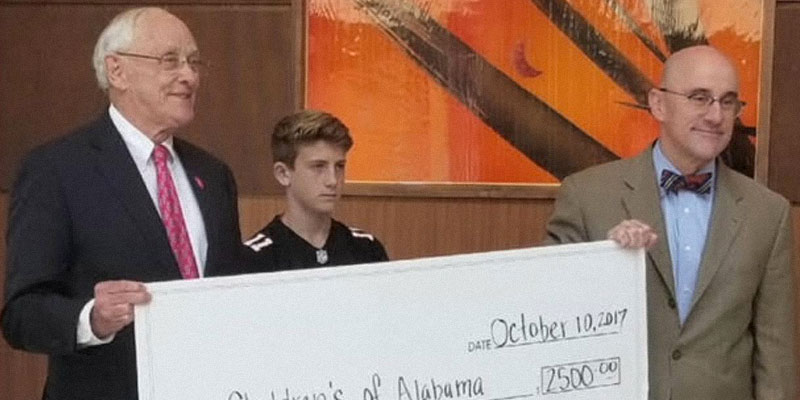
State Senator Gerald Dial (R-Lineville), Republican candidate for Commissioner of the Alabama Department of Agriculture and Industries, this week announced his intention to give 10 percent of all campaign contributions received to Children’s Hospital in Birmingham. He challenged all candidates in Alabama to do the same, which would generate hundreds of thousands of dollars for the important healthcare facility.
“Every voter in Alabama is sick of the constant campaigns and incessant political advertising,” Dial said. “The least us candidates could do is give a small portion of what we raise to help out an outstanding institution like Children’s Hospital.”
In 2014, the last state legislative and constitutional office election cycle, candidates for statewide office and the state legislature raised $57,479,285. Instead of spending all that money on flyers, TV ads, and phone calls, Children’s Hospital would have received nearly $6,000,000 in additional funding to care for ill and injured children.
“I’m proud to support Children’s Hospital in their mission to provide the finest pediatric health services to all children,” added Senator Gerald Dial. “If that means less money for my campaign, I trust the voters to realize my campaign funds are better spent improving our state instead of solely promoting myself.”
More information about Gerald Dial and his campaign issues is available at this link.
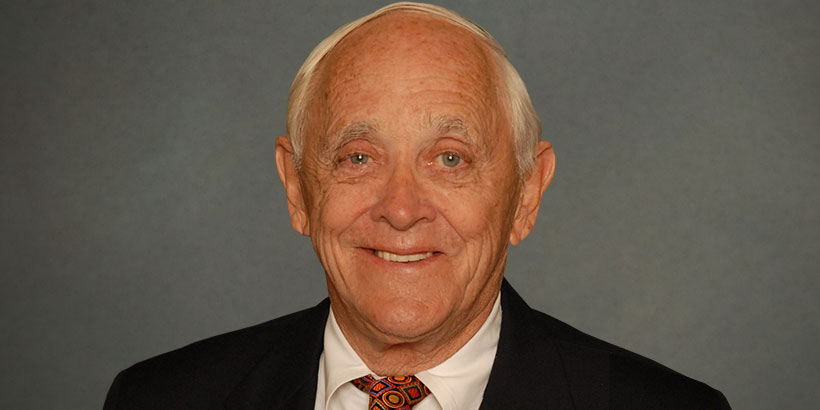
State Senator Gerald Dial (R-Lineville) announced today that he plans to seek the Republican nomination for Commissioner of the Department of Agriculture and Industries for the state of Alabama. His campaign is focused on “creating jobs in the state – whether it be agriculture, professional services, or anything in between. Current Commissioner John McMillan is term-limited.”
A retired general in the National Guard, Dial’s press release said he’s a “get-it-done conservative who said he is ready to serve the people of Alabama.”
“I have a reputation of rocking the boat, stepping on the status quo,” Dial said. “We need someone to carry on Commissioner McMillan’s legacy, who will stand up for Alabama farmers and continue to bring more jobs to our great state.”
Agriculture, forestry, and related industries have an annual economic impact of more than $70 billion and account for 580,000 jobs in the state of Alabama. As a third-generation Alabamian, Dial knows the importance of agriculture. He wants to continue to grow agriculture and industry in the state by putting Alabama jobs first. This includes promoting Alabama’s agricultural exports with Cuba and South America, developing a statewide irrigation program, and creating an agricultural cabinet that would share best practices and feedback from farmers.
As a third-generation Alabamian, Dial believes the agriculture industry is vital to Alabama’s economy, and he says he wants it to grow by putting Alabama jobs first. His plan to do so includes promoting Alabama’s agricultural exports with Cuba and South America, developing a statewide irrigation program, and creating an agricultural cabinet that would share best practices and feedback from farmers.
“I want to grow all of Alabama by creating jobs and better opportunities for the people of our state,” Dial said. ”We have to increase agricultural exports, protect our farmland and food sources, and work with our agricultural research universities to ensure the future of farming in Alabama.”
Gerald Dial’s short announcement video announcement can be viewed at www.itsdialtime.com.

(NEWS RELEASE)
MONTGOMERY, AL – Legal challenges to Alabama’s legislative districts reached a milestone yesterday when the federal three-judge court presiding over the case unanimously dismissed all remaining objections to the districts. The new districts were first drawn in 2014 and were revised earlier this year in response to guidance from the United States Supreme Court. In 2018 the state will use the new districts to elect members of the 2018-2022 Legislature.
“We went through an exhaustive process to ensure that the new districts were drawn fairly, and I am glad the courts agreed that the legislative districts map for 2018 is clearly constitutional,” said Senator Gerald Dial (R-Lineville), chairman of the Joint Legislative Committee on Reapportionment. “More counties are made whole in the new maps and we adhered to a strict one-percent population variance between districts.”
In the 2017 session earlier this spring, the Republican-led Legislature made slight adjustments to the districts originally drawn in 2014, under guidance from the U.S. Supreme Court. All of the majority-black districts in both the State Senate and House of Representatives were redrawn, which by necessity required changing the lines of many adjacent and nearby districts.
“It has been an interesting and educational process, but one that I’m glad to have finished. Our ultimate goal was to draw a good map and to honor the wishes of the court,” remarked Senator Jim McClendon (R-Springville), a member of the Joint Committee on Reapportionment. “I believe we did that and that we have guaranteed that the voters in Alabama will be accurately represented in the state legislature.”
“The U.S. Constitution gives state legislatures the authority to draw electoral districts and we have been faithful stewards of this responsibility,” McClendon concluded.
Primaries for the 2018 election cycle will be held on June 5, 2018.
It has been five months since Kay Ivey assumed the office of Governor of Alabama, leaving the state without a Lieutenant Governor. With that empty seat, some lawmakers are exploring the possibility of changing the Lt. Governor’s role.
According to the Decatur Daily, Senator Gerald Dial (R-Lineville), has said that he will sponsor a constitutional amendment that would require the Governor and Lieutenant Governor to be elected jointly. The Lieutenant Governor would then be relocated to the Capitol to serve more like a Vice President, except without presiding over the Senate as the Vice President does. The idea is that the Lieutenant Governor would help more with economic development and job recruitment. A similar bill was passed by the Alabama Senate last year but died in the House of Representatives.
Currently, one of the Lieutenant Governor’s main tasks is to oversee the proceedings of the Senate for the four months Alabama’s legislature is in session. With Kay Ivey now across the street in the Governor’s office, those duties have been transferred to Senate Pro Tem Del Marsh, who supports Dial’s bill. As he told Yellowhammer,
“This bill moves the Lt. Governor across the street to work hand-in-hand with the Governor to focus more on economic development, making the office a more effective position. By doing so, I believe we are better served with a Lt. Governor who’s hard at work everyday promoting Alabama economically,” Marsh said. “With 35 Members in the Senate, we shouldn’t ever need the tie-breaking vote of the Lt. Governor,” he added, “so my tendency is to support this bill.”
When asked about the budget of the Lt. Governor’s office and how it would be impacted by this move, Marsh said:
“I don’t know the exact figures but the budget for the Lt. Governor’s office is close to a million dollars a year. So I’d certainly think a portion of this could be folded into the Governor’s office budget, as I believe that budget could be more efficient,” Marsh stated.
Many of the Lt. Governor’s duties were stripped away by the Democrats in the 1990’s (the majority party at the time), who made the move to attenuate the powers of then-Lieutenant Governor Steve Windom, a Republican.
According to the National Lt. Governor’s Association, the Lt. Governor in Alabama now “has more than thirty statutory duties. These duties include serving as a member of more than 20 boards or entities and appointing 400 positions to approximately 167 boards and commissions. The state constitution says the lieutenant governor shall be president of the senate. The lieutenant governor has additional duties created by the state constitution, Governor’s executive order, legislative act, and the Rules of the Senate. For example, chairing the Alabama Job Creation & Military Stability Commission is a significant duty of the office, but that duty is established by legislative resolution rather than statute.”
Nevertheless, since the vacant Lt. Governor’s office will not be filled until at least next year, Dial is re-introducing this bill to shift the focus of the office to an economic development role, without powers in the Senate, while also ensuring that if a Governor were forced to step down, they would be replaced by a Lieutenant Governor of the same party.
Obviously, the 2018 candidates for Lieutenant Governor—State Rep. Will Ainsworth, Public Service Commission President Twinkle Cavanaugh, State Sen. Rusty Glover, and Alabama State Board of Education member Mary Scott Hunter—will be keeping an eye on this bill as it’s introduced to the legislature again this year.
When asked about the measure, Hunter told Yellowhammer:
I think it’s a good idea for the Governor to choose their running mate and for the Lt. Governor to have a more defined executive role. It makes the Governor and Lt. Governor a stronger team. It does make a lot of sense to have these two offices run and work as a team. I understand it wouldn’t take effect until 2022. So, I’m not sure it affects my race. I’m reading through it, asking questions, and look forward to learning more about it.
RELATED: Candidates Making Waves in Alabama’s Lt. Governor’s Race
A state senator is pushing to renew Alabama’s call for a Convention of States to amend the U.S. Constitution.
Sen. Gerald Allen (R-Tuscaloosa) has pre-filed a bill for the 2016 Legislative Session that would compel Alabama to join the “Compact for a Balanced Budget,” a group of states “uniting to fix the debt” through a federal Balanced Budget Amendment
The idea of a Convention of States gained steam in 2013 after conservative talk show host Mark Levin advocated for a states-led convention in his book The Liberty Amendments: Restoring the American Republic.
Article V of the U.S. Constitution says that a convention of the states can be convened if two-thirds of the state legislatures (34) approve an application for the convention to occur.
By design, that’s a high bar to clear. And the bar gets even higher when it comes to actually passing a constitutional amendment.
Each state would then choose delegates to represent them at the convention, but each state would only get one vote on proposed amendments. It takes an affirmative vote from three-fourths (38) of the states to actually amend the constitution.
In short, the convention of the states is widely viewed as a last-ditch effort to push back against an overreaching federal government. 27 states have so far passed resolutions calling for a convention to pass a federal balanced budget amendment.
The Alabama Legislature passed a resolution earlier this year strictly limiting the purpose of a proposed convention to three areas:
1) Imposing fiscal restraints on the federal government through a balanced budget amendment;
2) limiting the power and jurisdiction of the federal government; and
3) implementing term limits on federal elected officials.
Members of the Alabama House and Senate who supported the effort say it was necessary because “the federal government has created a crushing national debt” and “invaded the legitimate roles of the states through the manipulative power of federal mandates.”
The resolution Sen. Allen is now proposing is even more narrowly defined. It would limit the convention to only addressing the question of a balanced budget amendment.
“Even if we don’t get enough states behind it, we’ll send a clear message to Congress,” Allen told the Anniston Star. “Get your house in order.”
The possibility of a “runaway convention” is the most often cited concern with convening such a meeting of the states.
“In the course of our work advising state and federal lawmakers and conservative allies across the country, we have been giving this issue close attention and study,” said Dr. Matthew Spalding of the Heritage Foundation, a conservative think tank. “The lack of precedent, extensive unknowns, and considerable risks of an Article V amendments convention should bring sober pause to advocates of legitimate constitutional reform contemplating this avenue.”
But Rep. Ken Johnson (R-Moulton), who has sponsored a resolution calling for a Convention of States during the last couple of legislative sessions, said those concerns are overblown.
“Because we’ve never done it, the idea that there could be a ‘runaway convention’ is always brought up as a concern,” Johnson told Yellowhammer earlier this year. “The convention would be limited to a small set of issues. But on top of that, the safeguard is that it only takes 13 states to kill any runaway convention. If there aren’t 13 conservatives states left, we’re in trouble, period. And Washington is a runaway train right now anyway. How much more damage could be done?”
Alabama’s two Senate Budget Chairmen have also been actively involved in the rule-making process for a possible convention. Sen. Trip Pittman (R-Montrose) and Sen. Arthur Orr (R-Decatur) traveled to Mt. Vernon, Virginia to discuss the ground rules of a potential convention.
“We discussed the reality that the biggest threat to America is an irresponsible Federal Government,” said Pittman. “Checks that need to be put on the Federal Government have not been accomplished and based on current activity appear not to be likely… 32 (states) participated in the Mount Vernon Assembly, to prepare rules and form committees within a strict framework… to discuss and build support for a possible amendment convention of the States.”
Sen. Allen’s latest bill calls for a 24-hour, one-issue convention to convene in Dallas, Texas, the Wednesday after Congress receives the petition from the required number of states.
RELATED:
1. Two Alabama senators discuss potential constitutional convention at Mt. Vernon Assembly
2. Two top Ala. Senators propose bills laying out guidelines for Convention of States
3. Alabama officially applies to Congress for Convention of States
By Alabama Senator Gerald Dial
Over the years, to bear the weight of lacking and reduced Education Trust Fund dollars, educators and support personnel have had to cover higher healthcare costs out of their own wallets, weather changes in retirement, withstand cuts to their classrooms, transportation, and other foundational program needs, and forego much needed salary increases.
Like our state employees, every time the executive branch and lawmakers have gone to them, they have given more.
Not only has education given more, but while going without they have also repaid debt and set aside dollars in savings.
I have always been a staunch supporter of public education and have done whatever I can to protect funding for the Education Trust Fund.
It is no secret that we have issues with both of our budgets. However, the real issue is how we fund those budgets.
Both need help, but the General Fund needs more.
Make no mistake: combining two budgets into one whether by percentage or outright does nothing to address our state’s funding issues.
We’ve been there, done that and we don’t need to do so again.
In simple terms…we have a revenue problem, not a budget problem.
As a long-serving state legislator, I have been committed to doing whatever I could to support revenue measures that would aid both budgets even if it meant that my handling of some of those revenue measures would be met with resistance.
When the second special session convened with still no operating budget in place, a $200 million hole needing to be plugged in the General Fund, and a majority of the Alabama Legislature opposed to the idea of imposing any taxes, my agreement to be the Senate sponsor of a cigarette tax on behalf of the Governor was not an easy decision.
But it was the right decision.
Hits came from inside as well as outside the State House – from all directions – from those within the GOP and from those who are not.
Despite also having taken some punches, education advocates came to the table and pitched in to help the struggling General Fund.
With promises by the Governor and the Legislature of back-fill dollars, the Education Trust Fund gave up $80 Million in use tax and a reduction in its take-in percentage – 47 percent – going forward.
However, within 24-hours after adjourning the Governor said he believes that next year the remaining $125 million left in the use tax belonging to the Education Trust Fund needs to be transferred over to the General Fund.
He also doesn’t think the ETF dollars taken from the use tax need to be backfilled.
To add fuel to the fire, the Governor, who is also the president of the State Board of Education, said that education did not lift a hand to help.
I am not sure what State House Governor Bentley visited during the special session.
I, along with ETF Budget committee chairs Senator Pittman and Representative Poole and other legislators, worked hand-in-hand with education leaders to make a very difficult budget work.
No one needs to support the concept that the education community was not willing to help.
We also cannot support the unrealistic notion of sitting on the sidelines and continuing to rob education funds in order to fix problems with prisons, state troopers, and others.
I will stand firm on my word that no more education dollars need to be taken for the General Fund – enough is enough.
Senator Gerald Dial represents District 13 in the Alabama Senate, which includes all or parts of Randolph, Lee, Cleburne, Clay, Cherokee, and Chambers counties. He is a retired brigadier general in the Alabama National Guard.
MONTGOMERY, Ala. — Outdoor enthusiasts are breathing a sigh of relief knowing that Alabama’s state parks will not close now that a General Fund budget is passed.
A looming financial shortfall may have been averted during the special legislative session this September, but three state lawmakers are not planning a relaxing picnic in the park just yet… At least not until there is a proposal to deal with the $3 million dollar transfer made from the Alabama Department of Conservation and Natural Resources to the General Fund.
Sen. Gerald Dial (R-Lineville), Sen. Clay Scofield (R-Arab), and Rep. Maggie Wilcox (R-Mobile) are introducing a plan to develop specialty boat tags to help recover that loss to the state parks’ budget.
“One of the greatest things we have in Alabama is our state parks,” said Sen. Dial. “The recent General Fund budget again reduces funding for parks, so I have been looking for innovative ways to find additional funding to keep all of our state parks open. This plan doesn’t raise taxes, it’s just an opportunity for boat owners to purchase specialized tags, and a portion of the proceeds will go to state parks.”
The tags would cost around $50 dollars, and would included an insignia of choice by the purchaser. That insignia could be of universities, non-profit organizations, and special interest groups—the same idea behind specialty vehicle tags. The total price of the tag would be split between the state park and whichever entity chosen.
The bill’s authors estimate that if 13 percent of the 280,000 boat owners in the state, the same proportion as car drivers, purchase a specialty tag it would raise $5 million for the parks each year.
“Alabama’s state parks are a treasure, and I think this idea holds great potential to give an additional source of funds to the parks, without raising taxes,” Senator Scofield explained. “Tough economic times have meant many state agencies have had to make cuts, but I think this is an innovative way to restore some badly-needed resources to the operation and upkeep of our parks. I look forward to moving this proposal through the Senate in 2016.”
Dial and Wilcox both chair the legislative oversight committee that regulates boat tags, and came up with the idea as a way to offset the constant challenges to the state parks’ budget, which as Dial noted, had been cut for the fifth year in a row. He says the concerns expressed by his constituents are not so much about education or prison reform, but whether the parks are going to stay open.
“As a resident of Mobile County, I can tell you many boat owners would be excited to purchase specialty tags, if they were available, so I think this can generate a good bit of money for our parks,” said Rep. Wilcox Wednesday.
Dial and Wilcox are presenting the idea now to garner feedback from other members of the tag oversight committee at the next meeting scheduled for October 13th, 2015.
If the idea moves through regular session in Montgomery in February 2016, the boat tags would be available for purchase in the coming Spring.
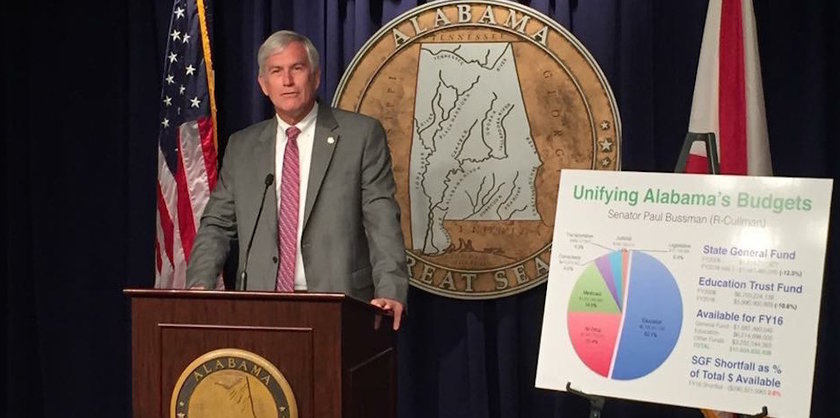
MONTGOMERY, Ala. — Following the brief first day of the special session of the Alabama Legislature, Senator Paul Bussman (R-Cullman) held a press conference where he called for sweeping changes to the way the state budgets and spends $11 billion in state revenue annually, proposing combining Alabama’s two budgets, un-earmarking all revenue, and placing spending caps on Medicaid and Corrections, the two largest items in the General Fund budget.
For decades, Alabama has constructed two separate budgets, the larger education budget which funds schools and other educational endeavors, and the general fund budget which funds Medicaid, corrections, the Department of Human Resources (DHR), and public safety.
Within each of those budgets are hundreds of earmarks which require certain revenue streams to go toward particular programs. With the vast majority of Alabama’s tax revenues already earmarked, it is difficult for the state to prioritize spending in years where there are shortfalls.
For Fiscal Year 2016, Alabama faces a $250+ million shortfall in the general fund, while the education fund has a surplus of approximately the same amount.
“It’s time to rip off the Band-Aid and stop budgeting from crisis-to-crisis,” said Sen. Bussman in the press conference. “We are looking at a $290 million shortfall in the General Fund, which is a paltry 2.6% of total state revenue. Having separate budgets and around 85% of revenue earmarked is holding us back from permanently fixing the problem.”
Alabama is one of only three states that maintains separate budgets. It also has the highest percentage in the country of earmarked revenue, with only approximately 15% of total state revenue available to be budgeted at the discretion of the legislature. Part of Bussman’s plan involves restructuring the Education Trust Fund’s Rolling Reserve Act to ensure the law’s stabilization fund is not overfunded at the expense of immediate educational needs.
Bussman’s proposed spending caps on programs currently funded through the General Fund would limit Medicaid to 15% of all available revenue and Corrections to 4.5%. They currently are at 14.9% and 4.3% respectively. Additionally, the proposal will establish ten legislative subcommittees with specific agencies and budget areas for regular review. Each subcommittee would be tasked with detailed study to better identify budget priorities, which would be reported back to the respective General Fund committees in each chamber.
“The money is there. Now it’s our job to get rid of the shell games, make the tough decisions, and institute real budget reform,” concluded Sen. Bussman.
A bill similar to Bussman’s plan introduced by Gerald Dial (R-Lineville) in May was a proposed constitutional amendment and would have removed all earmarks, unified the two budgets, and given lawmakers more leeway in constructing a budget that would fulfill all of the government’s duties without the need to raise taxes. With Alabama’s regular session ending without a budget at all, the proposal was indefinitely postponed.
MONTGOMERY, Ala. — The Alabama Legislature, including a majority of Republicans, on Thursday gave final passage to a bill that will allow state agencies to increase their own fees without a vote of the legislature. The Senate concurred with House changes first thing Thursday morning, and the bill will now head to the Governor’s desk.
Alabama House Minority Leader Craig Ford (D-Gadsden) issued a statement after the House vote Wednesday lashing out at Republicans for their tactics.
“It’s amazing that Republicans are trying to pass the buck and hide behind a bill that will raise your fees!” Ford wrote. “A fee is just another word for tax, and Senate Bill 216 would allow for unlimited fee increases. Instead of doing the job they were elected to do, the Republicans are trying to shirk their responsibilities by shifting the burden, and avoid raising taxes by making government agencies raise fees. That’s not just bad policy; it’s plain gutless and cowardly!”
The bill allows agencies to increase their own fees by as much as 2 percent a year, but can be retroactive for the last 10 years. In other words, if the consumer price index shows a 2 percent per year increase over the last decade, agencies can immediately bump up their fees by 20 percent.
Everything from driving and hunting licenses, to marriage licenses and anything else the state charges a fee to use will be eligible for these fee increases.
Like this article? Hate it? Follow me and let me know how you feel on Twitter!
— Elizabeth BeShears (@LizEBeesh) January 21, 2015

MONTGOMERY, Ala. — Alabama House Speaker Mike Hubbard (R-Auburn) announced Monday the formation of the Commission on Earmarking and Budget Reform.
“Prior to Republicans taking control of the budget process in 2011, proration had been declared six times in 10 years, but since passage of the Proration Prevention Act, also known as the Rolling Reserve, it hasn’t occurred once,” Speaker Hubbard said in a press release. “It’s my hope that this commission will recommend similar commonsense solutions to Alabama’s budget challenges so we can avoid the need for new taxes and ensure that funding for schools and state services is stable, secure, and completely transparent.”
The Commission, consisting of 7 members (5 Republicans and 2 Democrats), is tasked with studying Alabama’s budget-making process, how it stacks up to other states, and how it can be improved.
The Commission will meet multiple times over the next several months, compiling their recommendations to be delivered to the Speaker. The report is expected to inspire legislation simplifying and bringing accountability to the budgeting process to be introduced next session.
Hubbard said he believes the commission’s efforts will provide much needed flexibility in the budgeting process and build upon already successful Republican government reforms that were implemented during the last quadrennium.
The members of the Commission on Earmarking and Budget Reform are:
· Rep. Will Ainsworth (R-Guntersville)
· Rep. Elaine Beech (D-Chatom)
· Rep. Terri Collins (R-Decatur)
· Rep. Steve Clouse (R-Ozark)
· Rep. Allen Farley (R- McCalla)
· Rep. Bill Poole (R- Tuscaloosa)
· Rep. Rod Scott (D- Fairfield)
For decades, Alabama has constructed two separate budgets, the larger education budget which funds schools and other “educational” endeavors, and the general fund budget which funds Medicaid, corrections, the Department of Human Resources (DHR), and public safety. Only two other states—Michigan and Utah—have separate budgets. The majority of “growth” streams of revenue, those that increase as the economy improves, are relegated to the education budget, while the general fund subsists on flatter fees and taxes.
Within each of those budgets are hundreds of earmarks which require certain revenue streams to go toward particular programs. With 91 percent of Alabama’s tax revenues already earmarked, it is difficult for the state to prioritize spending in years where there are shortfalls.
This isn’t the first time Alabama leaders have suggested combining the two budgets. In early 2012 Governor Robert Bentley (R) made such a proposal, highlighting the growth problem facing the general fund.
“When you have two checkbooks, and you don’t have enough money in one and you do in the other one, what are you going to do at home? Well, you’re either going to move some money or you’re going to combine them,” Bentley said in January, 2012.
His proposal did not gain any traction at the time.
More recently, Senator Gerald Dial (R-Lineville) introduced a proposed Constitutional Amendment that would combine the two budgets and rid them of all earmarks, an effort he believes will not pass this year.
For Fiscal Year 2016, Alabama faces a $250+ million shortfall in the general fund, while the education fund has a surplus of approximately the same amount.
A number of proposals have been introduced during the 2015 regular legislative session to address the general fund’s shortfall, ranging from the governor’s proposed tax increases to instituting a lottery, though none have passed both houses of the legislature.
Thus far, only the House has passed a general fund budget, one which Governor Robert Bentley called “unworkable” and has threatened to veto which makes cuts to every program it funds, including Medicaid and corrections.
Like this article? Hate it? Follow me and let me know how you feel on Twitter!
— Elizabeth BeShears (@LizEBeesh) January 21, 2015
MONTGOMERY, Ala. — A three-page bill filed Friday in the Alabama Senate could have huge ramifications for the way the state budgets are constructed in future years.
For decades, Alabama has constructed two separate budgets, the larger education budget which funds schools and other “educational” endeavors, and the general fund budget which funds Medicaid, corrections, the Department of Human Resources (DHR), and public safety. Only two other states have separate budgets.
Within each of those budgets are hundreds of earmarks which require certain revenue streams to go toward particular programs. With 91 percent of Alabama’s tax revenues already earmarked, it is difficult for the state to prioritize spending in years where there are shortfalls.
For Fiscal Year 2016, Alabama faces a $250+ million shortfall in the general fund, while the education fund has a surplus of approximately the same amount.
The bill, a proposed constitutional amendment (CA), would remove all earmarks, unify the two budgets, and give lawmakers more leeway in constructing a budget that would fulfill all of the government’s duties without the need to raise taxes.
The bill’s sponsor, Gerald Dial (R-Lineville), said he introduced the bill because he continually hears from his constituents that they feel they already send enough money to Montgomery, but because the money is earmarked the legislature can’t move it around the address budget issues.
Dial told Yellowhammer News Friday that despite what he’s hearing from people in his district he’s not sure that the people have enough trust in the state legislature to pass the amendment.
“There’s a time when you have to be responsible and quit worrying about reelection and do what needs to be done for this state,” Sen. Dial said, “and I think we’re at that point.”
The bill has 8 co-sponsors in addition to sponsor Senator Dial, including Senate President Pro Tem Del Marsh (R-Anniston).
Just a few years ago such a proposal would have been unthinkable; the then-powerful Alabama Education Association (AEA) would have quashed any hint of budget unification in a heartbeat. But as the AEA has steadily lost power and Republicans have gained control of the legislature the idea has gained traction.
The road to passage will not be easy, as there is expected to be opposition even from within the Republican party, and time is running out for the session.
President Pro Tem Marsh told Yellowhammer News Friday that, while passage of the bill may be difficult this session, it is a step in the right direction.
“I believe if you unify the budgets you incentivize everyone to come to the table,” Marsh said. “Right now with the problems being in the general fund, the education fund has no incentive to worry.”
Education budget chairman Trip Pittman (R-Montrose) reportedly asked one reporter if the bill’s co-sponsors had “lost their friggen minds.”
While the proposed CA, should it pass out of both houses and be approved by a majority of Alabama voters, would not affect the problem for FY 2016, it could go a long way in giving legislators the wiggle room to resolve future budget issues without drastic measures.
That also means, however, that lawmakers are still on the hook for coming to a compromise for the upcoming fiscal year, which begins October 1st.
Thus far, only the House has passed a general fund budget, one which Governor Robert Bentley called “unworkable” and has threatened to veto which makes cuts to every program it funds, including Medicaid and corrections.
The bill, SB502, will be heard in the general fund budget committee next week.
Like this article? Hate it? Follow me and let me know how you feel on Twitter!
— Elizabeth BeShears (@LizEBeesh) January 21, 2015

MONTGOMERY, Ala. — The Alabama Senate on Tuesday unanimously passed major reforms to the state’s Medicaid program that are estimated to save the state $1.5 billion over the next 10 years.
The savings, calculated by a national actuarial consulting company, assume a 3 percent growth every year in the program, and will come from new Integrated Care Networks (ICNs) contracting with Medicaid to provide long-term care under a capitated system.
Capitation means the providers will be given a set dollar amount to treat each patient in their care.
The bill would also allow the nursing home-care to home-based care ratio to increase from 75/25 to 50/50. The ICNs must be in place by October 1st, 2018.
“Our state has an obligation to provide crucial long-term care services for the elderly eligible for Medicaid coverage, while at the same time finding ways to protect taxpayers from cost increases,” said the bill’s sponsor Senator Greg Reed. “My bill will help us better care for patients and cut spending.”
This is Senator Reed’s second major Medicaid reform in the last several years. In 2012 a bill he sponsored to establish Regional Care Organizations across the state operating under a similar premise to the ICNs.
Savings in long-term care services such as nursing homes and in-home assistance will become particularly important as baby boomers begin to retire and require more healthcare—the number of people aged 75 and older is expected to double by 2028.
“This is projected to add 9,000 more seniors to the Medicaid long-term care roles,” said Senator Gerald Dial, who chairs the Senate Health & Human Services committee. “I am proud to support Senator Reed’s bill to save more than a billion dollars and allow for more home-based care.”
While these savings won’t be realized immediately and don’t solve the current budget crisis, they could go a long way toward making the federally-mandated program more sustainable in the long term.
The bill will now be considered by the House where it is being sponsored by Rep. April Weaver. It is not expected to meet significant resistance.
Like this article? Hate it? Follow me and let me know how you feel on Twitter!
— Elizabeth BeShears (@LizEBeesh) January 21, 2015
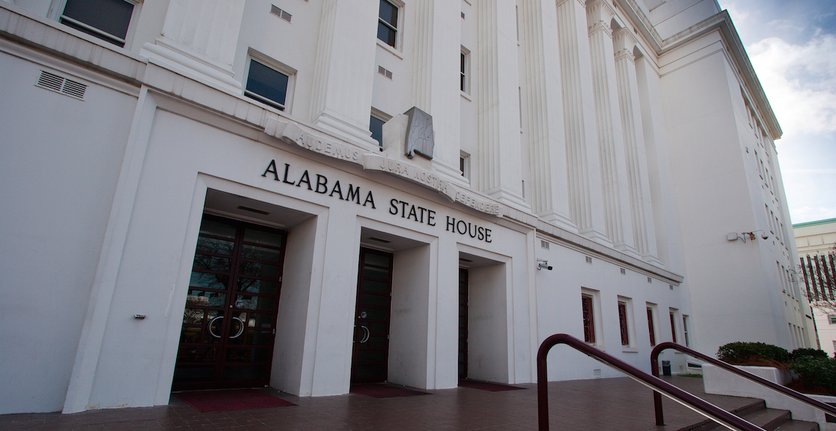
MONTGOMERY, Ala. — Another influential Alabama Senate Republican has thrown his support behind expanding gambling as a solution to the state’s general fund budget woes, while slamming the House’s proposition to give casino exclusivity to the Poarch Band of Creek Indians.
“The only plan I have seen that makes any sense is Senator Marsh’s proposal to create an ongoing stream of revenue, produce 11,000 jobs, and generate a $1 billion annual economic impact,” said Sen. Gerald Dial (R-Lineville). “Above all else, the Marsh plan allows the people to make the final decision on this issue. It’s time to let the people vote and define their own future for the state.”
Sen. Dial said the deal proposed by the House to grant the Poarch Creek Indians exclusive gaming rights in exchange for a one-time $250 million check sounded “like a bribe.”
“I believe this proposal is illegal and that the state would be prohibited from taking the money even if it wanted to,” Sen. Dial remarked.
To help incentivize members to pass a budget during the regular session, and keep costs of a potential special session down, Dial also sponsored a resolution stating that lawmakers would forgo compensation during any special sessions this year.
“We got elected to come do a job, and that job is to pass a budget,” he said. “We have yet to do that this session and if we have to come back in a special session, it should be on us – not the taxpayers.”
Neither the Senate nor House have voted on any of the proposals to balance the general fund budget. There remain only 9 legislative days left before the end of the 2015 regular session.
Like this article? Hate it? Follow me and let me know how you feel on Twitter!
— Elizabeth BeShears (@LizEBeesh) January 21, 2015
There’s very little drama at the top of the ticket this year in Alabama, but that doesn’t mean there isn’t a storyline worth watching.
That storyline is math, simple math. And no, believe it or not, it has nothing to do with Common Core.
Here are a few reasons why math is the storyline worth following when it comes to Alabama’s 2014 General Elections.
1. The Makeup of the Legislature

There’s no doubt there will be Republican supermajorities in both chambers of the Alabama legislature once all the votes are totaled Tuesday night. However, you can bet your bottom dollar Republican leaders are keeping a close watch on the final tally, and not just because they want to run up the score for bragging rights.
Although the Republican primaries held earlier this year were an unmitigated disaster for The Alabama Education Association (AEA) — the state’s de facto Democratic Party — they did manage to get a handful of their choice candidates elected. In fact, some of them have already been meeting separately from the full GOP caucus.
If Democrats manage to peel off a couple more Republican candidates in the General Election, the AEA could be positioned to block some of the “heavier lifts” Republicans try to make by combining the AEA-aligned Republicans with their Democratic allies to erode the GOP’s filibuster-proof majority.
A few races to watch where Democrats are hoping to take out a Republican incumbent include House District 7 (Ken Johnson), HD 8 (Terri Collins), HD 89 (Alan Boothe), Senate District 10 (Phil Williams) and Senate District 13 (Gerald Dial).
The open seats the two parties are battling over are HD24 (Republican Nathaniel Ledbetter vs. Democrat David Beddingfield) and HD37 (Republican Bob Fincher vs. Democrat Josh Burns).
The AEA has also spent well over a million dollars against each of the GOP’s top legislative leaders, House Speaker Mike Hubbard (HD79) and Senate President Pro Tem Del Marsh (SD12). They should be able to hold off their challengers, but they’ve had to fight, and it’s worth watching any time a group spends that much money in a state legislative race.
But while a lot of the attention is being paid to whether Republicans can hold on, there are a few Democrats who are fighting for their political lives, as well, most notably state representatives Daniel Boman (HD16) and Greg Burdine (HD1).
2. Can $1.5 million+ make a Democrat viable in Alabama?

The electoral math is heavily stacked against any Democrat runnings statewide in Alabama, but is $1.5 million spent on a scorched earth campaign enough to make a Democrat viable? Probably not, but the Poarch Band of Creek Indians has donated that stunning sum to Democrat Joe Hubbard, basically single-handedly funding his effort to unseat Republican Attorney General Luther Strange.
The Cook Partisan Voting Index rates Alabama as a “R+14” state, meaning a generic Republican running statewide starts with a 14-point lead against a generic Democrat. The deluge of negative ads might make this one closer than it should be, but it’s still hard to imagine Hubbard pulling off the upset.
3. Can $20 million buy you, well, anything?

Since we’re already having so much fun with math, how about a word problem?
Combine the $10+ million of teachers’ dues AEA has spent directly with the $4 million in loans they’ve taken out from Regions Bank and the untold millions they are widely believed to have funneled into so called “dark money” groups not required to disclose their donors, and what do you get?
That’s the question the AEA’s board will get an answer to on Tuesday night. Their total expenditures on this election cycle are so obscene that one would expect them to regain their stranglehold on the state. Yet, even in the AEA’s best case scenario, they only stand a chance at picking up a handful of legislative seats.
We’ll have more on this in our election postmortem, but a lot of folks in Montgomery are watching this one closely.
4. Bentley’s pursuit of 57.45%

The perceived rift between Gov. Bentley and the so called “Riley” faction of the Alabama Republican Party has been overblown a lot over the last few years, especially when it comes to the governor’s relationship with GOP legislative leadership. However, don’t think for a second that Bentley’s camp isn’t trying to eclipse former Gov. Bob Riley’s performance in his 2006 re-election bid.
Riley bested Democrat Lucy Baxley with 57.45% of the vote that year, which was a disastrous cyle for Republicans around the country. The electoral dynamics are reversed this year, which looks like it might be a banner year for the GOP.
Most projections suggest Bentley will outperform Riley in his bid for a second term. With the results of the gubernatorial race a forgone conclusion, this is the closest thing Alabama’s got to drama at the top of the ticket in 2014.
RELATED:
Everything you need to know about voting in Alabama
9 quotes that will inspire you to go vote today
Follow Cliff on Twitter @Cliff_Sims
The months leading up to last night’s Alabama Republican primary elections were engulfed by a tsunami of negative advertising. The ads, which were delivered to voters via television, direct mail, radio, the Internet and over the phone, were designed to drown Republican incumbents with wave after wave of attacks. Many of them were paid for directly by the Alabama Education Association (AEA), others were funded by a couple of groups widely believed to be fronts for the AEA created to hide their involvement from voters.
In all, the AEA spent roughly $7 million this primary season. $7 million worth of teachers’ dues was spent with the sole purpose of eroding the current Republican supermajority.
So what did $7 million buy them?
Zero statewide races. Zero state senate races. And only a handful of state house races.
AEA successfully took down incumbent Republican House members Richard Baughn (HD14), Wayne Johnson (HD22), Charles Newton (HD90), Bill Roberts (HD13) and Kurt Wallace (HD42).
But those AEA wins were in many ways offset by defeats in races they thought they had in the bag going into election day, but ultimately couldn’t push over the finish line.
For instance, AEA consultants were confident that incumbent Sen. Tom Whatley (R-Auburn) was going down, but he ended up winning comfortably by 6 points.
They also thought they were in good shape in east Alabama where long-time Democrat-turned-Republican senator Gerald Dial was struggling to beat back challenger Tim Sprayberry. The race was so close that many outlets, including Yellowhammer, believed at one point during the night that Dial had lost. But when all the votes were counted he had won by about 400 votes.
RELATED: ALGOP Chairman: AEA is ‘invading’ Republican primaries
Up in north Alabama, AEA believed they had a sure-fire victory with Republican state representative Todd Greeson, an AEA ally, stepping up to run for the open senate seat in District 8. They pumped hundreds of thousands of dollars into Greeson’s campaign, only to see him fall to conservative businessman Steve Livingston by 12 points.
In the Wiregrass, the AEA was 0 for 2. They sent hundreds of thousands of dollars down to challenger Garreth Moore, only to watch him lose by 16 points to incumbent senator Jimmy Holley. And they spent a half-million dollars to drag state representative Barry Moore through the mud, but didn’t even come close to beating him at the ballot box.
In statewide races, they supported Stan Cooke’s ill-fated challenge of Lt. Gov. Kay Ivey, and Jim Perdue’s third-place finish in the race for secretary of state.
The list could go on and on.
But the highest profile races of the primary were the AEA’s challenges to Republican House and Senate leaders Mike Hubbard and Del Marsh. They spent an unprecedented amount of money to take down the GOP’s top two legislators, but lost both races by 20 points. In Hubbard’s race, the AEA spent somewhere in the neighborhood of a whopping $500 per vote.
So, again, what did $7 million in teachers’ hard-earned money buy the AEA’s political operation?
Not much.
Tonight has been a complete and utter disaster for AEA. No other way to spin it. #alpolitics
— Cliff Sims (@Cliff_Sims) June 4, 2014