Baylor Frazier is a digital and radio sales specialist for YHN Media Group. For advertising opportunities through our portfolio of publications, you can contact him directly at baylor@yellowhammernews.com.
A fan-favorite flavor from Tuscaloosa has officially made its way to downtown Birmingham. B’Ham Chicken at the Pizitz Food Hall is now exclusively serving the legendary Irish Gold sauce from Innisfree Irish Pub, bringing one of Alabama’s most recognizable bar sauces to a new audience.
For years, the Irish Gold sauce has been a staple at Innisfree Irish Pub in Tuscaloosa, where it has built a loyal following among The University of Alabama students, alumni, and visitors.
Known for its bold, tangy flavor with just the right amount of heat, the sauce has become synonymous with late-night wings, game days, and Tuscaloosa nightlife.
Now, through a new partnership, B’Ham Chicken is the only place in Birmingham where guests can enjoy the iconic Irish Gold sauce.
The collaboration connects two places that represent different but equally vibrant parts of Alabama’s food scene. Innisfree has long been known as a gathering spot in Tuscaloosa, where the Irish Gold sauce first gained popularity as the perfect complement to wings.
Its signature balance of sweetness, tanginess, and spice helped the sauce develop a reputation that extends far beyond the city.
At the same time, B’Ham Chicken has become a go-to stop inside Birmingham’s historic Pizitz Food Hall, serving crispy fried chicken, sandwiches, and comfort-food classics to locals and visitors exploring downtown.
Bringing Irish Gold into the B’Ham Chicken kitchen allows customers in Birmingham to experience a flavor that has been part of Tuscaloosa traditions for years.
Visitors to the Pizitz Food Hall can now experience the Irish Gold flavor firsthand at B’Ham Chicken. The sauce is available exclusively at the stand, offering a limited but exciting opportunity to enjoy one of Tuscaloosa’s most talked-about sauces without leaving Birmingham.
For anyone who has ever had Irish Gold wings in Tuscaloosa — or anyone curious about what makes the sauce so popular — B’Ham Chicken’s new offering delivers a taste of that tradition right in the heart of downtown.
Many Alabama towns boast at least one dedicated burger joint, and plenty of other restaurants — even those devoted to other culinary categories like barbecue — feature a hamburger on their menus. Every day, thousands of Alabamians file into these eateries and fill their bellies with burgers, evidence of the state’s affection for the staple sandwich.
But out of all the available options — grilled, griddled, thick, thin, layered with fancy toppings or basic lettuce, tomato, and American cheese — which burger is the best? That’s a difficult question to answer, so we’re not trying to. Without the resources to sample all the burgers on offer, we can’t come to any kind of scientific conclusion. Plus, it’s not science. What puts a burger at the top of one person’s “love” list might turn another person off. Instead, we’re highlighting just a handful of the favorite burgers and burger spots based on reader feedback, online reviews, and a little taste-testing research.
That these places make good burgers is a given, but most boast more than a well-seasoned, correctly cooked ground beef patty between their buns. They stuff a passion for pleasing people’s palates in every bite, too. On this National Cheeseburger Day, it’s a good time to visit one of these places.
Alabama Grill
109 West Commerce St., Greenville
The tall stack of a burger at Alabama Grill is best tackled with a fork and knife, unless you enjoy savory meat juices mingled with condiments running down your arms in full view of other diners. And there are many other diners. Today, the shotgun space of this downtown restaurant stays packed, the crowds reminiscent of its heyday years ago.
First opened in 1947 by Greek immigrant Mack Liveakos, it thrived for more than a decade before selling and finally sitting empty from 2000 to 2019. That’s when current owners Resa Bates and Allan Bloodworth brought the spot back. A Greenville native, Bates—of the famed Bates Turkey clan—had been teaching for years in Montgomery, but when she saw the empty building in her hometown, she longed to see life in it again. “I’d look in the windows and imagine it full of people,” she says.
She and Bloodworth relied on their personal hospitality experience (both worked for restaurants in Montgomery) and her family’s restaurant know-how to renovate the building and come up with a menu. “We gutted the interior but kept what we could, like the original bar and its stools and the mirrors on the walls,” Bates says. “And we wanted to honor our state and use as many Alabama products as possible.” Local seasonal produce finds its way into multiple selections, and Bates Turkey fills out the classic wedge salad. Cammie’s Old Dutch Ice Cream from Mobile ends meals on a sweet note. And about those big ol’ burgers: Fat quarter-pound patties of 80/20, never-frozen ground beef are seasoned simply (salt and pepper only) and crisped on a flattop before sliding into a fluffy brioche bun. Wickles Pickles spice up every burger, and optional toppings include fried eggs, bacon, and different cheeses.
“Lots of customers tell us ours is the best burger they’ve ever had,” Bates says. And those customers get creative. “We’ve had people add pineapple and Conecuh sausage. Or a runny fried egg and jalapeños.” Sauteed mushrooms and onions are another popular embellishment. Bates has her own go-to. “We’ve got lots of cheese options, but I do blue cheese.”
Pirate’s Cove
6664 Baldwin County Road 95, Elberta
On a thin ribbon of sand rising a few feet out of shallow Arnica Bay in Josephine, Pirate’s Cove Yacht Club beckons hungry folks on the coast with its cheeseburger, a meal that might have inspired the classic Jimmy Buffett song “Cheeseburger in Paradise.” (Some claim the South Alabama native wrote the song after enjoying the Cove specialty.) Those who answer the burger call snag a picnic table on one of the decks surrounding a small, tin-topped shack and wait for their order. People-, dog- and boat-watching provides a way to pass the time, as a diverse barefoot- and flip-flop-clad cross section of society — college students, families with kids, grizzled old salts, leather-clad bikers, locals and tourists — waits, too.
After each thick, third-pound beef patty (a mix of ground short rib, brisket, and chuck) is cooked to order, blanketed in cheese, lettuce, tomato, a mustardy “special sauce” and grilled onions, wrapped in wax paper and delivered on a red plastic tray, diners dive in. Juicy meat and ripe tomatoes result in a messy masterpiece that’s good enough to make the Jimmy Buffett story ring true.
And as the song says, it’s apropos to enjoy your Cove cheeseburger with “French-fried potatoes” and a “cold draft beer.” Or opt for another Pirate’s Cove staple, a bushwacker, an “adult” milkshake of vanilla ice cream blended with coffee liqueur and dark rum.
Back Forty Brewing
200 North Sixth St., Gadsden
Back Forty is best known for its award-winning craft beers; it is a brewery, after all. Founded by Gadsden native Jason Wilson in 2009 and brewing in downtown Gadsden since 2011, it was one of the first brewery businesses in the state. But those in the know visit the taproom and onsite restaurant in search of more than frosty mugs full of suds; the Back Forty cheeseburger rivals the beer.
It’s two all-beef patties come dressed with an avalanche of additions: choice of cheese, tangy garlic mayo, lettuce, tomato, and sliced red onions. Diners enjoy their meal on the covered deck or wide lawn, and on weekends, their munching and chewing often keep time to the beat of live music.
Kids and teetotalers can wash bites down with sweet tea or soda, but the perfect pairing is an ice-cold Back Forty beer. It makes multiple selections, but two of its oldies but goodies — Naked Pig Pale Ale and Truck Stop Honey Ale — are always on tap and sure bets. According to online reviews, the burgers at Back Forty’s brewpub locations in Birmingham and Huntsville are equally delicious.
Staggs Grocery
1424 Huntsville Road, Florence
In 1938, Staggs Grocery opened to sell food staples and then cold-cut sandwiches to the workers at area textile mills. Today, it’s a diner, one beloved by locals and sought out by visitors savvy enough to ask locals to share their top spots. It looks much as it did at its founding; a long history is obvious in the old metal awning out front and the no-frills interior.
The centerpiece is the flattop griddle, which you can see behind the counter where you order. On its scorching surface, burger magic happens. Five or nine ounces of freshly ground beef, which has been seasoned with a secret blend, cooks to crisp yet tender perfection. The rest is up to you. Standard condiments, pickles, onions, and tomatoes come with it, but you can add bacon and American cheese, too.
It sounds simple enough, but the end result is so satisfying. Staggs goes through approximately 300 pounds of beef every week. The burger is one of its most-ordered items, but no matter what guests choose, owner Donna Hill is just happy to feed them. “I love my customers like family,” she says. “We have first-time visitors, but a lot of regulars, too. I just want to share good food with them, and our burgers are good.”
Sheila C’s Burger Barn
622 Shug Jordan Parkway, Auburn
The hamburgers at Sheila C’s Burger Barn are shrouded in secrecy. Owner Albert Ledbetter won’t divulge the seasoning blend that makes the meat so mouth-watering. And his wife, the lady behind the burgers and the eatery’s name, is also keeping a mystery. “The ‘C’ stands for her middle name, but she won’t tell folks outside of family what that is either,” Ledbetter laughs.
Sheila first started turning out burgers when she worked for another restaurant in Tallassee. They proved so popular that she stepped out on her own more than two decades ago. She and Albert moved their burger show to Wetumpka for a few years before settling in Auburn in 2015. Ever since, Sheila’s version has taken top marks in the college town, winning the local newspaper’s “Reader’s Choice” award for best burger eight years in a row.
The space is nothing fancy, but nobody cares about that. Students, visitors, and residents routinely gobble up the joint’s “all the way” cheeseburger — a six-ounce patty made fresh daily and smothered in American cheese, mayo, mustard, ketchup, pickles, chopped onions, shredded lettuce and tomato. “I like all the things on there. To me, if you don’t need at least five napkins, you’re not eating a real hamburger,” Ledbetter says. “But you can have it any way you want.” Those feeding a hearty appetite often opt for a double patty, and sometimes even that’s not enough. One hungry customer ordered a six-patty burger. “It took him about an hour, but he finished it,” Ledbetter says.
While recent back troubles keep Sheila from running the kitchen full time, she’s still around overseeing her operation. “She’s known as the burger lady, so she keeps her eye on things,” Ledbetter says. She and her husband want everyone to be full and smiling when they leave, and he notes that’s usually the case. “Most people leave ready for a nice, long nap,” he says.
Bill E’s
9992 Alabama Highway 181, Fairhope
On any given day around lunch and dinner time, diners pack the large deck at Bill E’s, many digging into one of eight available burgers under the shade of massive live oaks. Owner Bill E. Stitt recently changed the name of the restaurant, once known as Old 27 Gril,l to tie it into his other food venture, Bill E’s Bacon, which is made onsite.
The bacon business has gone hog wild; 3,000-plus pounds of slow-curing and slow-smoking pork belly continually permeate the area’s air with their savory porcine perfume before being sold all over Alabama and shipped around the United States, from Washington, D.C., to Los Angeles. Yet Stitt still considers Bill E’s a “burger joint.” “We just happen to make our own bacon for the bacon burger,” he says.
The thick-grilled patty crisscrossed with several bacon slices and crowned with caramelized onion is a best-seller, but not Stitt’s pick. “I love the chili cheeseburger,” he says. “It’s got raw onion, a lot of chili, comeback sauce, American cheese, and dill pickles. It’s really the dream burger.” For the true bacon lovers, Stitt recommends the Blended Burger, a mix of 85% high-quality beef and 15% end pieces from Bill E’s bacon. “It’s got a pretty intense smoky bite, but we put a soft fried egg on top to mellow it,” he says. “I mean, what’s better than bacon and eggs?”
Ask any Alabama resident where to find the best burger, and you’ll likely get a different answer from each one. We asked Alabama Electric Cooperative communicators for their best recommendations, and here’s some of what we got.
Campbell’s BBQ
505 Battle St. East, Talladega
“A juicy burger with good seasoning. The bacon is cooked to perfection: crisp, smoky, and a perfect complement to the simplicity of the burger and the eatery itself.” – Jeremy Wise
Boaz Café
10830 Alabama Highway 168, Boaz
“Boaz Café runs a really close race with Grumpy’s. We need to have a cook-off!” – Kelli Whorton
Grumpy’s
425 South McClesky, Suite 544, Boaz
“All our linemen vote for this one.” – Kelli Whorton
Midas Burger
221 North Brindlee Mountain Parkway, Arab
“Midas Burger not only has great hamburgers that are juicy and perfectly made; they are well known for their flavorful chicken and special chicken sauce.” – Stacey White
Cardinal Drive-In
15240 Court St., Moulton
“Cardinal hamburgers are great old-fashioned-style burgers served fast and fresh every time. The classic drive-in style makes it easy to stop in and eat a good meal in a hurry.” – Michael Cornelison
Brindley Mountain BBQ
7472 Alabama Highway 69 North, Cullman
“There’s nothing fancy about their burgers, but doing all the simple things right is what makes it so good. It has everything you want in a great burger, and it’s done just the way I would do it if I were grilling out at home.” – Brian Lacy
Ketchem’s Restaurant & Catering
115 East Main St., Hartford
“The burgers at Ketchem’s are just great old-fashioned homemade burgers. You definitely do not leave hungry after eating a Ketchem’s burger.” – Jennifer Ward
Ole Gin Steakhouse
5900 Jackson County Road 38, Section
“Great atmosphere, amazing service, and an unforgettable meal.” – Starr Mitchell
The Greasy Spoon
13956 Gallant Road, Gallant
“A semifinalist in the 2023 Alabama Cattlemen’s Association Best Beef Contest, this is my all-time favorite hamburger. It’s our go-to for dining out with guests.” – Mark Stephenson
Our Place Diner
2751 South U.S. Highway 231, Ozark
“Our Place offers one of the best burgers – freshly made, juicy burgers with quality ingredients – just like your mom would have made at home.”– Laura Thornton
Want even more burger places to choose from? Check out this list.
This story originally appeared in Alabama Living magazine.
If you build it, turns out, people will come.
It happened in Opp when local resident Merrill Culverhouse decided his hometown needed a nice place to eat. So, he teamed up with chef Jon Gibson (a friend since childhood) and together, they built Wheelhouse. Today, the restaurant is thriving and, just as importantly, providing jobs and making the community a better place.
Culverhouse had been dreaming of owning a restaurant since college. He had moved back to Opp and was immersed in his career as a pharmacist when he went to a town hall meeting of residents looking to improve Opp. Culverhouse left that meeting thinking a restaurant would be just the thing to not only serve the community but also bring other people in, making Opp a dining destination. That was back in 2017.
“I grew tired of having to go out of town to eat something besides fast food,” he says. “In Opp, like in most small towns, there’s a lot of fried foods. Maybe not-so-healthy things. And we just got tired of that. We would go out of town, and we would see people from Opp everywhere.” Culverhouse wanted that kind of business to stay in Opp. He says he wanted to open a restaurant to “bring people to Opp instead of people leaving the town to go somewhere else.”
Culverhouse’s wife said she would support this dream, but only if Gibson was involved.
Today, Wheelhouse is a regionally popular restaurant specializing in coastal comfort food that ranges from great steaks to Gulf-fresh seafood, from burgers to pizzas, all complemented by seasonal, fresh, local produce and fun, craft cocktails.
Culverhouse says Wheelhouse is “flip-flop casual or not. You can come dressed in your finest clothes, or you can come very casual.”
Customers include some people traveling to and from the Gulf coast, but mostly the restaurant draws from a 40-mile radius that includes Crenshaw, Covington, and Coffee counties.
“I’ve had customers tell us that they didn’t feel like they were in Opp anymore when they came in here,” Culverhouse says. “They felt like it belonged in New Orleans.” Aside from creating a distinctive space, Culverhouse says he wants his customers, “when they come in, to feel welcomed and at home. I want them to have a good experience.”
This happens in a thoughtfully renovated space that honors the past.
Wheelhouse is on “the Donaldson Block,” which was owned by leading Opp businessman M.E. Donaldson. On Nov. 8, 1923, Donaldson started building the Donaldson Hotel, where the restaurant currently resides. Wheelhouse features several dining spaces within the beautiful, old brick walls, including rooms that can offer privacy for business lunches or meetings and a light-filled patio room that invites a lively party and has seen lots of bridal luncheons and birthday celebrations. They can seat 99 people inside and about 50 on the patio.
The local art on the walls is for sale, and exhibiting is free. When a piece in The Gallery sells, they call the artist to come get their money. There’s also a handsome bar in the back. This full-service restaurant with a full bar was “something new for Opp,” Culverhouse says.
The dishes here reflect a global approach to food, a respect for homegrown favorites, and a commitment to fresh ingredients from local purveyors.
Gibson brings an eclectic style to his dishes, mixing traditional Southern cuisine with flavors and techniques from California, the Pacific Rim, the American Southwest, and even Europe. He’s a classically trained and award-winning chef, entrepreneur, TV personality, and World Food Championship competitor. He has worked – and fished – on the East, West, and Gulf coasts and brings a lifetime of culinary experience to the table.
His kitchen turns out “Coastal Southern cuisine” and “new American” style dishes, Culverhouse says.
The menu changes every six months to take advantage of what’s fresh and in season. But you can always look for great steaks, fresh Gulf seafood, a solidly good burger, and delicious pizza based on a recipe Gibson brought back from Sicily. The pizza, in particular, Merrill says, has been a big hit.
The Wheelhouse Burger, a grilled Angus patty with your choice of cheese, a smoky-sweet mesquite flavor, and a sourdough bun, is a bestseller, too. So is the Southern Burger with bacon, pimento cheese, and a fried green tomato.
The Tri-Tip Apple Salad with hickory-smoked beef tips, crisp Granny Smith apples, feta, pickled onions, and candied Alabama pecans tossed in a white balsamic vinaigrette and served with grilled flatbread is one of Culverhouse’s personal favorite dishes. “We have really good tacos – birria tacos and fish tacos,” he says. There’s baked feta, French onion soup, and a classic Caesar salad. You’ll find a smoked brisket grilled cheese on Texas toast at lunch and NOLA shrimp and grits with blackened, wild-caught shrimp, smoked Gouda, and a New Orleans-style barbecue sauce at dinner.
“The desserts are really good, too,” Culverhouse says. “We’ve got a really good white chocolate bread pudding and Key lime pie using a recipe Jon brought from the Florida Keys.”
Culverhouse, a pharmacist who owns Crenshaw Drugs in nearby Luverne, says opening a restaurant was an eye-opening experience.
“It’s a different kind of chaos. I’m used to chaos in pharmacy,” Culverhouse says. “I’m not used to this kind of chaos. It’s fast-paced at times. And me, not being familiar with the restaurant business, it’s totally out of my element. I remember the night we opened. I just stood back there, almost in shock at the chaos, but Jon, the chef, said, ‘Don’t worry. This is normal.’ I said, ‘OK. I’ll trust you.’”
Culverhouse’s role at the restaurant is more behind-the-scenes, and he’s fine with that. But he enjoys the customers.
“I like to talk to people,” he says. “I like to go table-to-table and talk. My dad was a big talker. I’m a big talker.” He knows a lot of the customers, but not all. “There’s a lot of people I’ve never met. … If you look in the parking lot, there are tags from all over, usually.”
Culverhouse says deciding upon a name for the restaurant was one of the hardest parts of creating Wheelhouse.
One reason they decided upon it goes back to simply wanting to make their community a better place. The railroad played a huge part in the founding of Opp, and “wheelhouse,” in railroad terms, is a device that allows train cars to turn around or switch tracks. It’s the same thing both Culverhouse and Gibson were trying to accomplish with their restaurant – giving their community a new direction, making it a better place to work, live, play, and raise a family.
Culverhouse says Wheelhouse has always been about more than just a restaurant.
“The main goal is to help our city and to provide some jobs.” Many of the people who work at Wheelhouse have been there from the beginning, through COVID, and out the other side.
“I didn’t want to put it anywhere else because I’m from Opp,” he says. “Opp desperately needed some jobs, and I’m providing about … 14 jobs, and the people make a living wage.”
He says he’s most proud of creating a place for his community to enjoy.
“We’re providing a service for our customers. We host Rotary Club every Wednesday. We’ve had live music on the patio. So, it’s a little bit of an entertainment venue. Not that often, but it’s a good place for people to come. We have people from out of town that meet here for business all the time. It serves the community.”
Wheelhouse in Opp
105 East Hart Ave.
Opp, Alabama 36467
https://www.wheelhouseopp.com/
Hours:
Tuesday through Thursday, 11 a.m. to 8 p.m.
Friday and Saturday, 11 a.m. to 9 p.m.
Closed Sunday and Monday
Susan Swagler has written about food and restaurants for four decades, much of that time as a trusted restaurant critic. She shares food, books, travel, and more at www.savor.blog. Susan is a founding member and past president of the Birmingham chapter of Les Dames d’Escoffier International, a philanthropic organization of women leaders in food, wine, and hospitality whose members are among Alabama’s top women in food.

The Iron City’s versatile food scene enjoys a nice bit of spicing up with the Cajun-inspired flavors of The Rougaroux restaurant in downtown Birmingham. Opened in 2017, the original location in Forest Park has become one of the city’s most iconic Cajun restaurants. When you first see the restaurant itself, you might find yourself a bit confused—it appears as if you’re looking at a house someone might live in.
The classic pink building itself, which previously hosted the Pink House Cafe, was built sometime in the late 19th century. On the inside, you’ll find the most New Orleans-appropriate decorations you can think of with pink, yellow, and green lights hung above the outdoor seating area, Saints propaganda, jam band paraphernalia, you name it. Their menu includes classic New Orleans fare; house-made boudin, gumbo, po-boys, and a plethora of other items.
Hot off the trails of a trip to New Orleans, I was absolutely sure that the New Orleans food was the best in the country and that I wouldn’t find anything close to it anywhere else. I believe I sat down and ordered gumbo nearly every single time we went out to eat in the French Quarter.

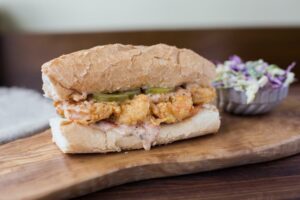
It was almost confusing to me how The Rougaroux’s gumbo was just as good—it was like I’d never left New Orleans at all. A good, traditional boudin was another thing I had my eye on upon my first visit, and I was certainly not disappointed. Their boudin was as good as I’d ever had it anywhere, but their authentic po-boy sandwiches are often heralded as the true stars of the show.
Excitingly, The Rougaroux has expanded and opened a location at the old Sneaky Pete’s location in Mountain Brook Village. The location’s logo is a simple blue sign, similar to what an old-school restaurant would have had to use. This classic blue sign, strikingly similar to the one that is on the front of the Forest Park location, now sits atop the beloved Mountain Brook restaurant.
The Rougaroux does authentic Cajun food right, and if you’re a fan of Cajun food and good vibes, be sure to give it a try. The restaurant cleverly and tastefully replicates one of the most important American foodways. For a “fleur-de-lycious” experience that will transport you directly to Bourbon Street, The Rougaroux is the place for you.
This story originally appeared on Soulgrown.
It’s a new day at Homewood Gourmet, which has moved to a new home in the heart of Homewood after 26 years wedged into a narrow storefront at a nearby shopping plaza.
The move to 2703 Mamie L. Foster (18th Place South) gives co-owners Chris and Laura Zapalowski extra kitchen and refrigerated storage space, allowing the eatery to expand dine-in service and grab-and-go offerings. With the new location a block from Homewood’s downtown business district on 18th Street South (it’s behind Rodney Scott’s and Little Donkey), the Zapalowskis are seeing new walk-up traffic from shoppers and area workers.
Homewood Gourmet old-timers also will find the parking has improved considerably.
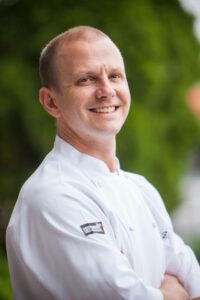
“That is a huge change,” Chris says. “People have told me they stopped going to the old place because they could not find a parking space.”
Although its official grand opening was May 8, Homewood Gourmet quietly started serving customers in late March. It is open Monday-Friday from 10:30 a.m.-6 p.m., and Saturday from 10:30 a.m.-2 p.m. It is closed on Sundays.
The restaurant menu combines upscale deli sandwiches and salads with classics from New Orleans, where Chris grew up and worked in the flagship restaurant of celebrity chef Emeril Lagasse.
Zapalowski, who also cooked several years at legendary Birmingham chef Chris Hastings’ Hot and Hot Fish Club, makes his restaurant’s Cajun-style tasso (spicy pork shoulder) and sausages including pork-and-rice boudin. He sells boudin links in 1.5-pound packages, and sausage plates are among the brunch offerings at Homewood Gourmet’s weekly stand at Pepper Place’s Saturday farmers market.
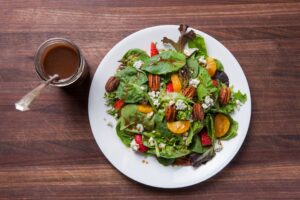
Other customer menu favorites include the signature baby blue salad, Carlene’s Plate (baby blue salad with grilled salmon and fresh-baked foccacia), house-made pimento cheese, po-boy sandwiches, and gumbo with chicken and house-made andouille sausage.
Grab-and-go coolers stock both frozen and chilled Homewood Gourmet menu items, and frozen Gulf seafood from Bayou Gourmet. Catering mainly revolves around sandwiches and box lunches for corporate and group events. Homewood Gourmet also goes off-site for private dinner parties.
Chris and Laura lived in New Orleans until 2005, when Hurricane Katrina flooded 80 percent of the city. The couple escaped to the Birmingham area, where Laura was raised. Before long, their planned temporary stay became a permanent relocation.
In 2010, the couple bought Homewood Gourmet from Laura’s former boss, Franklin Biggs, the chef who founded the eatery in 1997. The Zapalowskis retained some of Biggs’ creations and added their own NOLA-inspired touches.
Although seating capacity is roughly the same as before—but on a single level at the new site—having a larger kitchen and walk-in coolers are boons, Chris says.
“Everybody has their work space,” he says. “I’ve got lots of space to do prep. I’ve got space to keep food cold. I couldn’t do certain catering jobs because I didn’t have the right equipment to keep the food cold and safe.”
Zapalowski says he does not plan to change the main menu, at least while the restaurant settles into its new home. One possibility is simplifying by trimming it to top customer draws like fried shrimp, meatloaf, boudin, fried green tomato, baby blue salad, and Carlene’s plate.
“But that might throw people off,” the restaurateur says. “We’ll see how it goes.”
Zapalowski says the move is re-invigorating. It’s a joy to once again fully feel the energy that the daily lunch rush creates.
“It’s been refreshing,” he says. “Having that fast pace has been so much fun. It doesn’t feel like the same old drag.”
(Courtesy of SoulGrown, an subsidiary of Yellowhammer Multimedia)
Take a trip around the world at The Anvil Pub, where the oft-changing menu travels to Great Britain, India, the Caribbean, Asia, the Middle East, and beyond—but still speaks with a Southern accent.
The Anvil’s European-inspired paella risotto made with saffron, sofrito, and English peas might be served with shrimp from the Gulf of Mexico. Barbecue-smoked chicken wings recently were tossed in Trinidadian green curry, a nod to culinary director Sedesh Boodram Wilkerson’s home country, Trinidad and Tobago.
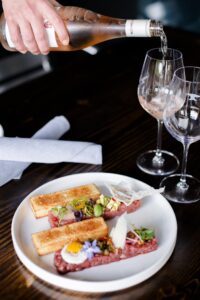
Boudin, a Louisiana-style liver-and-pork sausage, stars in The Anvil’s take on the British snack Scotch Egg. It’s the dish Wilkerson prepared in the recently televised Food Network cooking competition, “Beat Bobby Flay.”
“You can get a Scotch Egg anywhere you go in England, but ours is unique because it has a Southern taste,” says Wilkerson, who opened The Anvil in 2020. “I want to make sure that the product you get here you can’t get anywhere else.”
Located on U.S. 280, The Anvil offers the comfort and conviviality of a pub, with the creative cooking and quality of service worthy of fine dining. Both Wilkerson and chef de cuisine Trenton Tisdale are alumni of Birmingham’s lauded Hot and Hot Fish Club restaurant (Wilkerson was part of the Hot and Hot team that bested Flay in a 2012 battle on the Food Network’s “Iron Chef America”). Wilkerson’s resume also includes working for legendary chef Thomas Keller at Per Se restaurant in New York City after graduating as valedictorian from the French Culinary Institute.
But when the chef and parent started planning his own restaurant, Wilkerson intentionally moved away from the classic fine dining model. He wanted a place where family members with decidedly different tastes could find something on the menu they would enjoy, from familiar to fancy.
“I wanted it to be where you can come dressed up or come dressed down,” he says. “You can have that fine dining experience because there are elements on the menu that have that. If you want to come in for a quick dinner on a Tuesday night you can have that as well.”
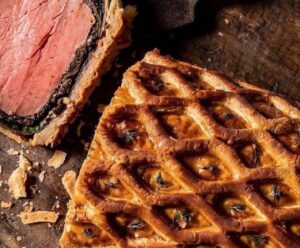
The Anvil is the kind of place where fish and chips and hamburgers are the best-sellers, but the most coveted reservation is for its monthly Wellington Wednesday when the restaurant serves its version of the intricately-made beef entrée. The two-day process starts with searing large beef tenderloins, slicing prosciutto ham, and making the minced mushroom preparation, duxelles.
The kitchen assembles the dish by rubbing the beef in mustard, encasing it in the duxelles, wrapping it with prosciutto, covering it with puff pastry, and decorating with a pastry lattice. Once baked and sliced, each layer adds a new dimension of decadence to the flavor.
“We do it the last Wednesday of the month,” Wilkerson says. “The guests are always excited. When people see it, we get a lot of oohs and ahs.”
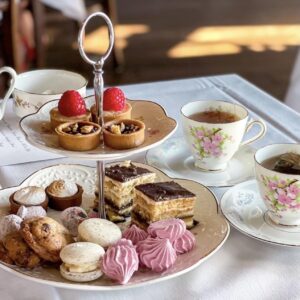
The Anvil also holds High Tea every month. Served with finger sandwiches, canapes, and sweets, High Tea is much more elaborate than what most people associate with afternoon tea in England. The dates vary, but High Tea is always on a Saturday. Announcements are made on the restaurant’s social media accounts, and reservations fill quickly. The special High Tea planned in conjunction with King Charles’ coronation on May 6 sold out in minutes.
Wilkerson thinks his participation in “Iron Chef America” put him on the radar for “Beat Bobby Flay.” He chose to make The Anvil’s take on Scotch Egg, which traditionally is a whole boiled egg encased in breakfast sausage then breaded and fried. His twist of using freshly-made boudin as well as homemade remoulade sauce was well-received by the judges, but he narrowly lost after a preparation mishap during the fast-paced competition.
Appearing on “Beat Bobby Flay” was good exposure for the restaurant, Wilkerson says. It almost didn’t happen. When the producers first tried to contact him, Wilkerson ignored the email. But after the restaurant’s general manager, several employees—even Wilkerson’s teenaged daughter—told him how much they like the show, he relented. He’s glad they talked him into it. He enjoyed the experience, and it’s been good exposure for The Anvil Pub.
“That was one of the major reasons I did it, advertising,” he says. “I just wanted to let people know who we are and where we are. We’re not downtown. We’re out here.”
It’s no secret: Birmingham takes food very seriously. Fancy or simple, it must be great to pass muster in the Magic City.
Several food festivals this spring reflect the metro area’s longstanding cultural and religious diversity. Two events in April are held by a local Maronite Catholic congregation that dates back more than a century, and the Levite Jewish Community center (Birmingham’s earliest synagogues date to 1889, 1903, and 1907).
The Birmingham Taco Fest honors what is arguably one of Birmingham’s favorite casual foods. Mexican-style taquerias, Tex-Mex restaurants, and even suburban adaptations have proliferated with the growth of the Mexican-American population across Alabama in recent decades.
Sample the best of Birmingham’s restaurants, or chow down on chili for a cause. Work your way down this list in April, and May and gain a greater appreciation for the melting pot that feeds metro Birmingham.
St. Elias Food and Cultural Festival (St. Elias Maronite Catholic Church)
April 21-22
Celebrating its 25th year, the festival is a fundraiser, mostly for the church with 25 percent of proceeds also going to local charities. Founded in 1910 to serve Lebanese immigrants living in Birmingham, St. Elias’ current church was built on Eighth Street South in 1950 and expanded over the years. Food includes Middle Eastern savory and sweet dishes, including Djaj Mishwi (grilled lemon chicken), and the Lebanese fried doughnuts, zlaybah. The festival, set for 10 a.m.–9 p.m., also features music, dance, traditional dress, a silent auction, fun run, and church tours.
Corks and Chefs (Sloss Furnaces National Historic Landmark)
April 29-30
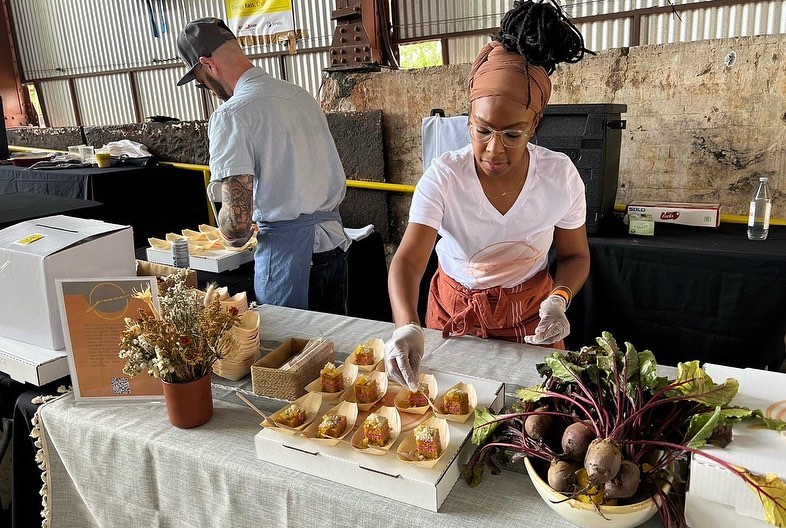
One of the area’s premier “Taste of …” gatherings, Corks and Chefs provides the chance to explore a variety of cuisines from Birmingham’s best restaurants, Corks and Chefs is part of the 40th Magic City Art Connection festival at Sloss Furnaces in Birmingham. Tickets for the 26th edition of Corks and Chefs, which go on sale in April, included a coupon for samples at each restaurant booth, and unlimited beer and wine tastes. Details will be announced on the website and social media in March.
Jewish Food and Culture Fest (Levite Jewish Community Center)
April 30
The popular annual festival invites the community to “nosh with us.” Volunteers spend weeks preparing foods like brisket, falafel, corned beef, matzah ball soup, and mondel brot (twice-baked almond cookies) for fest day. The event is timed coincide with Yom Ha’atzmaut, Israel’s Independence Day. To honor the 75th anniversary of Yom Ha’atzmaut, this year’s festival features a replica of a shuk, an Israeli open-air market. Admission is free to the festival, set for 11 a.m.–3 p.m., but come hungry; food sales benefit the center’s programs.
Birmingham Taco Fest (Sloss Furnaces National Historic Landmark)
May 7
Birmingham’s favorite taqueros (taco vendors) will compete for the popular vote to win “Best Taco,” and individual honors for chicken, pork, steak, and specialty tacos. There’s also balloting for “Best Margarita” in classic and specialty categories. Music, art vendors, and a children’s area round out the gathering. More than two dozen food booths and trucks participated in the 2022 fest. This year’s event is set for noon to 5 p.m.
(This story originally appeared on SoulGrown, an affiliate of Yellowhammer Multimedia)
Hiking deep into the Alabama woods, the foragers spot orange trumpet-shape mushrooms growing from the damp forest floor near several trees.
After confirming the fungi are not a toxic or poisonous look-alike, they start gathering the gourmet goods, which can fetch $30 or more per pound from chefs at high-end restaurants or at nearby farmers markets.
But the bounty the foragers gather that day is destined for their own dinner table. Served with other wild edibles picked during the hike, the mushrooms take center stage in the ultimate eat-local meal.
“Chanterelles are one of my favorites and the spark that got me started,” says Tim Pfitzer, an avid forager who lives in Irondale and co-owns a side gig that cultivates gourmet fungi, Magic City Mushrooms. “I love collecting. Even if you find nothing, a day spent foraging is a beautiful day with nature.”
Foraged foods are seasonal by nature. Central Alabama is ending the period when wild watercress plants proliferate in cold springs and morel mushrooms grow in forests.
Early spring brings edible curls of fiddlehead fern and wild onions known as ramps. Chanterelle, oyster, and puffy white lion’s mane mushrooms pop up in May. Sumac and nettle appear next, along with summertime greens that can be found in residential areas like sorrel and bittercress. Juniper berries are a winter harvest.
But for many, wild chanterelles are the grand prize, the blue ribbons at the free food fair. They grow prolifically in Alabama as the temperatures get hot, and just enough rain falls to feed the mushroom’s mycelium base that grows underground in a symbiotic relationship with hardwood trees like oak and hickory.
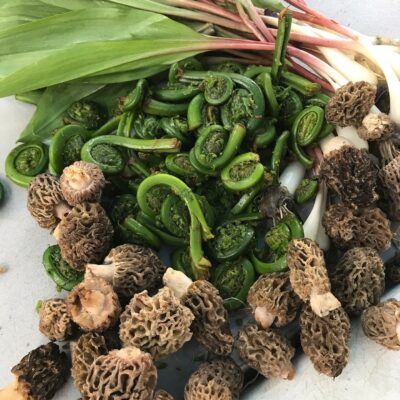
A haul of ramps, fiddlehead ferns, and morel mushrooms (Tim Pfitzer/Facebook)
“When I look at rainfall, I don’t just look at the last couple of days,” Pfitzer says. “Chanterelle mushrooms are 2–4 weeks old typically when they are harvest size.”
Pfitzer says he likes the signs he’s seen in this spring’s rains. “Last season was a particularly wet year,” he says. “We handled just over 3,000 pounds of chanterelles.”
The first pins—emerging mushroom fruits—should sprout around mid-May in central Alabama. The season starts a bit later in north Alabama. Chanterelles can be found year-round in the southern part of the state.
Pfitzer’s passion for foraging started while working in the kitchen at Frank Stitt’s Birmingham bistro, Chez Fonfon. When chanterelles appeared as a late-spring special, the avid outdoorsman recognized them as the same orange mushrooms he’d noticed on earlier hikes in the woods.
On a cook’s pay, Pfitzer couldn’t afford the seasonal delicacies he prepared at the restaurant. “But when I realized those mushrooms were out in the woods,” he says, “I could afford to go collect them.”
Pfitzer, whose current day job is in sales with a seafood distributor, is certified to sell his foraged mushrooms to the public. When available, they’ll pop up on the Magic City Mushrooms stand at the Pepper Place Saturday market, along with the locally cultivated gourmet mushrooms that partner Ken Moore grows for MCM.
Both foraged and farmed products also are available via the company’s Facebook and Instagram pages.
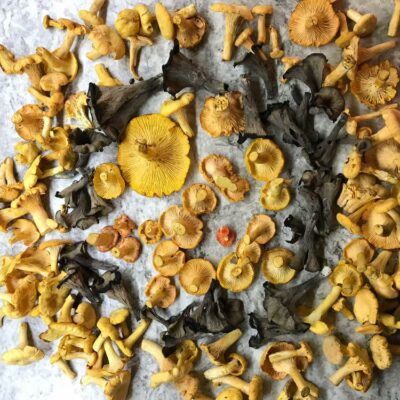
Seven species of chanterelles found in Lower Alabama (Tim Pfitzer/Facebook)
When hunting wild mushrooms, knowing what you’re doing is crucial. Edible fungi can be mistaken for similar-looking ones that will at least make you sick, if not deal death.
Learn to safely distinguish between the two by taking classes with groups like the Alabama Mushroom Society. With sufficient photos, AMS members can also help confirm the identity of a mushroom for foragers in the field.
There are other dos and don’ts: When you go out, get off the beaten path for best results. Stay off private property without permission and avoid public preserves altogether. Selectively harvest; don’t grab everything in sight.
Trained foragers also offer classes in finding and identifying wild plants and other foods. Pfitzer recently led his annual morel mushroom hunt on behalf of the Alabama Mushroom Society.
But while experienced foragers love sharing knowledge, they don’t readily spill all their secrets, especially when it comes to “honey holes.”
“That’s a place you never take anybody else,” Pfitzer says. “The B-grade spots are where we take the mushroom clubs and do our foraging classes. They’re fine. But the A-plus spots, where you can literally collect 100 pounds in a day, those are your trophy spots that you prize and keep private.”
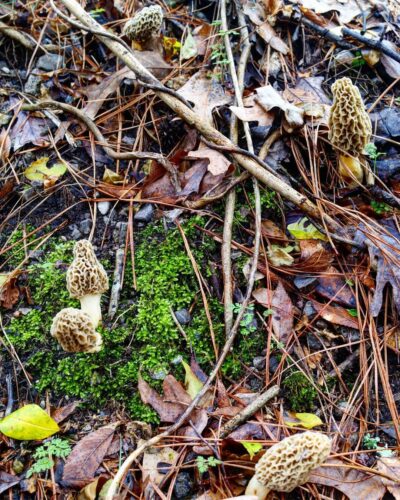
Wild morels (Tim Pfitzer/Facebook)
For more on foraging check out:
Meets monthly for field trips; its Facebook page is focused on identification of and uses for wild plants and mushrooms in the northern part of the state.
Considered the go-to resource for learning about wild mushrooms in Alabama. The AMS website includes detailed information. Its private Facebook group has nearly 9,000 members.
(Courtesy of SoulGrown)
Bob Sykes Bar-B-Q is much more than a beloved family business. It’s a restaurant that honors a storied Southern culinary tradition of food and fire.
Bob Sykes Bar-B-Q also is a fixture in the greater Birmingham area and even beyond – bringing diverse crowds of diners from the metro area, and all over the country, to Bessemer every day of the week except Sunday for award-winning barbecue; employing scores of folks in the community (some for 30, 40 or even 50 years); and making a difference with the annual Bob Sykes BBQ & Blues Festival, which benefits a different community-focused nonprofit each year.
That festival – in its 11th year – is set for Saturday, April 30 from noon to 8 p.m. in Bessemer’s DeBardeleben Park. It will feature Grammy-winning blues legend Bobby Rush as well as Tullie Brae, Robert Kimbrough Sr. Blues Connection, Hurricane Elaine & Force of Nature and more. This year, Caring Men & Caring Women Inc. will benefit from the proceeds. This grassroots organization mentors junior high and high school students. Past charities have included Red Mountain Grace, Children’s of Alabama, Bessemer Education Enhancement Foundation and Ady’s Army.
Bob Sykes Bar-B-Q is serving up legendary ‘que in Alabama from Alabama NewsCenter on Vimeo.
But to fully appreciate Bob Sykes – the ‘que, the business, the outreach, the very idea – it helps to know a little bit about it.
Van Sykes is a second-generation pit master and the owner of Bob Sykes Bar-B-Q, founded by his parents and known for its smoky pork cooked over an open flame. His family has been serving this ‘que since 1957, and Sykes’ description of what he does is straightforward: “God gives us everything we need to barbecue,” he says. “We don’t need any help with anything else. We have wood. We have a pig. We have smoke. We have ash. We have earth. A brick pit is refractory, it’s earth because the original pit was a pit in the ground. So, all those things are just God-given things. Really, we just have to stay out of the way of it and let it happen.”
If you choose to forgo the drive-through line that often stretches all the way around the building, you can watch it happen at one of the restaurant’s pits right there in the dining room. This is not smoked meat except for the brisket and wings (more about that in a moment). Bob Sykes has specials and chicken and ribs, but don’t ask for pulled pork; they slice it here. The barbecue pork sandwich, the restaurant’s bestselling signature item, was chosen as one of the 100 Dishes to Eat in Alabama.
They sell an average of 1,500 pounds of barbecue each day. On holidays, they sometimes sell 2,000 pounds. And they serve everything with scratch-made sides (don’t miss the impossibly light, crispy onion rings) and a variety of homemade cakes and pies.

Sykes learned his trade from his father, Bob, who, after returning home from World War II, opened his first restaurant in the 1950s with his wife, Maxine. Bob, in turn, had learned the nuances of barbecue from an African American man named Buck Hampton, a pit master who, in the 1920s, traveled from farm to farm in Tennessee barbecuing pork.
This history is shared in a new book “From the Pit to the Plate: The Story of Bob Sykes Bar-B-Q” by Birmingham author Niki Sepsas.
While Sykes has ordered his hickory from the same source for a quarter century, lots of things have changed in more than six decades of business. For instance, there’s a difference in the very product Sykes serves today compared with what his father put on the pit. “Hogs today,” he says, “are larger and leaner. Much of the lard has been bred out of them.” That means he and his crew have to cook them differently. And, of course, open-pit cooking can be fickle due to the surrounding atmosphere. The pit, Sykes says, is different every day.
Sykes, who is a founding member of the Southern Foodways Alliance and an inductee to the Alabama Barbecue Hall of Fame, regularly shares what he knows during monthly barbecue classes.
“It’s limited to about 15 people because I pull bleachers in front of the barbecue pit, and you sit above and look down where I can explain the entire grill and everything to you,” Sykes says. Participants learn entertaining barbecue tips as well as some barbecue history. There are delicious bites straight from the pit and a swag bag of goodies at the end. “You’ll have a good time, and you’ll leave well-fed,” he says.
Anyone who goes to Bob Sykes or even drives by the place will notice the large retro sign topped with a pig. It reads, “Bob Sykes Bar-B-Q and Maxine too.” That’s meaningful way beyond marketing, which Maxine was very good at doing.
When Bob suffered a debilitating stroke in 1970, Maxine took over the business and took care of Bob. She did this for the next 25 years succeeding in a man’s world, Sykes says. “Talk about the odds stacked against you,” he adds. “She signed her checks ‘Mrs. Bob Sykes’ not ‘Maxine.’”

But long before that, Maxine was alongside Bob at every step – from their first food venture, a short-order café called the Ice Spot, to a place in Five Points West that was simply called Bob’s and served burgers, steaks, fish and Eunice Porter’s scratch-made pies that Maxine carried to the restaurant fresh each day in the trunk of her car. When fast-food restaurants started coming to Birmingham, Bob and Maxine decided to specialize in barbecue to set themselves apart. And Bob Sykes Bar-B-Q was born.
Maxine brought baby Van on her hip to the family’s restaurant. He grew up there, he says, with two mamas: Maxine and Dot Brown, who worked in the kitchen and helped create the restaurant’s signature slaw and more.
Sykes was 12 when he was tasked with running the pit overnight for a Fourth of July celebration the next day. He discovered quickly that it’s long, hot and tiring work. “You learn to barbecue about four o’clock in the morning,” he says. “When you’re wore out, you look like a coal miner. … There’s nothing you can do to make it cook faster, and you’re so tired. And you’re so sleepy. And you realize at that point, barbecue is going to cook the way it cooks. If you go over there and intervene with it, you’re going to burn it or it’s going to be raw in the middle. There’s no temperature knob. There’s no dial to set.”
Sykes was 15 when his father had the stroke. “Mama said, ‘Here’s what we’re going to do. I’ll work the day shift while you’re at school, then you work the night shift.’” Sykes had to grow up quickly. “I’m driving Daddy’s car,” he remembers, “and she said, ‘You get pulled over, you tell them to call me.’” (There’s a funny story about this in the book.)
Sykes, who can usually be seen and heard calling order numbers and catching up with customers, says, “Our highest calling is in serving the right food in the right way to each and every customer who enters our restaurant.” But another reason the restaurant has lasted for 65 years, he says, is this: “You have to change but not change.”
“It’s like one year, they drastically changed the Cadillac, and all of a sudden people hated it because … they changed it so much and it didn’t look like a Cadillac. Well, I learned from that. So, what I decided to do was have different specials that I can throw in there. Just like today is Taco Tuesday, and we have hand-pressed tortillas. And the barbecue pork is wonderful with that pico de gallo. … That’s a winner. And then, of course, we can do nachos because … we’re frying our chips back there.”
When people wanted brisket, Sykes decided to get a Little Red Smokehouse. “I actually worked with J&R (Manufacturing) as a consultant. … They hired me to teach them to make a Southern barbecue pit. Now, my daddy would tell you, ‘Congratulations. You’ve just turned your pit into an oven.’” But the constant temperature of the smoker makes cooking the brisket easier. Same with the popular wings that Sykes serves on Thursday, Friday and Saturday. He offers a barbecue Caesar salad for the low-carb crowd. There are big family meals and the “working mom special” to feed a family of four.


He occasionally runs a special “que”ban sandwich modeled on the beloved Tampa tradition. “I put sliced barbecue pork, ham, pickle, that (barbecue) sauce-mustard combination. And I order my bread from La Segunda Bakery in Tampa, Florida. It’s handmade. They stick a palm leaf in the top of every loaf. Once I got that bread, I said, ‘Well, we can make a killer sandwich.’ So, I did that.
“I change it every two weeks. The basic stuff is all still up there, but I’ve been feeding generations of people. I needed to change but not change. So, I kept everything in the constitution of smoke and barbecue except Catfish Monday. And I only did that because there’s nobody selling catfish. And I love catfish. You can have the snapper and all that; I love catfish. … Of course, the first week, they all think it’s smoked or something. I said, ‘No, it’s actually just good old fried catfish.’ You change, but you don’t change,” Sykes says. “You stay within your boundaries.”
In addition to the open pits, the signature sauce – the Bob Sykes BBQ Famous Grilling and Dipping Sauce – is one of the things that sets the restaurant apart. It’s Bob’s own recipe based on the time-honored peppery vinegar “mother sauce” that has enhanced barbecued pork for, well, forever. “That sauce is designed to complement all this hard work,” Sykes says, adding that his father told him, ‘The last thing I’m going to do is cover all that work with something sweet.’

“So, it’s the cooking method, and it’s the sauce, I think, that gives us our uniqueness and the fact that … we just love people,” Sykes says.
He’s talking about the customers and the people who work to feed them.
“There are three people in the building today that have been here 35 years. I pay them very, very fairly, and I set them up with incentives to reach. Like Sharon (Mayes) has been making those desserts for 35 years. Rather than … a raise every two years, I said, ‘You know what? Why don’t I just give you a percentage of the dessert sales plus your pay?’ We’ve never run out of any cake. … That’s how you do it. You give them the power over their own decisions. We’re about to launch the red velvet cake into outdoor festivals. I don’t need to do it; I’m doing it for her. She wants to make more money.”
There’s a third generation now at Bob Sykes; Bob and Maxine’s grandson, Jason Jewell, works with Sykes. “He’s worked here since he was a kid,” Sykes says. “He’s more intellectual than I am. He graduated from Birmingham-Southern. He’s got a degree in finance. Our skills are complementary. I like the people. I hate the office. He would just as soon be in the office … because he likes doing the books. And let me tell you, I couldn’t open tomorrow without him.”


When asked what he is most proud of, Sykes doesn’t reflect on the business, exactly. Instead, he talks about what the restaurant has meant for others – especially the single mothers who have worked at Bob Sykes.
“I have seen a dozen or so women come through this door, work here, raise their kids. They had college educations; they had paid-for houses. And they did it on their own, with their own work. As one used to tell me, ‘Without a sorry man.’ But that’s when I realized, ‘Well, hey, this is my ministry. This is my mission.’ Because I loved my daddy more than anything, but strong women made me what I am.”
He says he’s proud to have been able to watch and help these women, “through their own hard work … buy houses and put kids through college and have savings funds.”


That said, running a successful family business for generations is a big responsibility. “I want my daddy to be proud that I have adhered to what he was teaching me,” Sykes says.
“My ultimate goal,” Sykes writes in his book, “is for Bob Sykes Bar-B-Q to be remembered as one of those ‘great’ businesses. I can’t think of any better way to honor my parents than for the business they worked so hard to establish will remain an important part of the business landscape of Bessemer. If it is, then I feel that I will have contributed in some way to their legacy.”
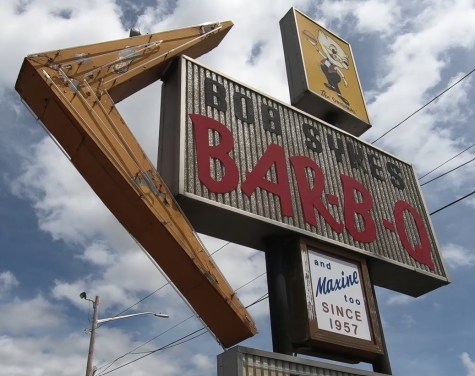 Bob Sykes Bar-B-Q
1724 9th Ave. North
Bessemer, Alabama 35020
Hours:
Monday through Thursday: 10:30 a.m. to 7 p.m.
Friday and Saturday: 10:30 a.m. to 8 p.m.
“Closed each and every wonderful Sunday.”
(Courtesy of Alabama NewsCenter)
After five years in the heart of downtown Birmingham, Pizitz Food Hall has become a mainstay among the weekday lunch crowd, as well as weekenders enjoying a day of activity in the Magic City.
The bustling building hosts an array of businesses, ranging from the state’s only Warby Parker outpost to a full bar and an independent movie theater.
With 12 food stalls, a full-service restaurant, and another on the way, there’s always something different to taste at Pizitz. Here’s what’s new and coming soon to one of Birmingham’s favorite gathering spots.

(The Spun Cow/Facebook)
The Spun Cow
The departure of founding Pizitz foodstall Lichita’s left an ice cream-sized hole in the heart of dessert loving Birminghamians. But earlier this month, Nashville-based dessert shop The Spun Cow filled that by opening their first Alabama location in the Pizitz. The stall specializes in artisan ice cream, hand-blended old-fashioned milkshakes, floats, and the big kicker—seasonally changing fresh-spun cotton candy. Choose from 15 flavors of ice cream including classics like mint chocolate chip, milk chocolate, and strawberry, plus more unusual options like mango, cheesecake, banana pudding, and, fittingly, cotton candy.
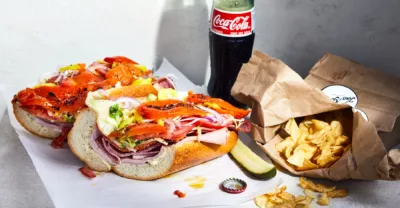
(Courtesy of Tina’s and Gina’s)
Tina & Gina’s
The food hall’s newest resident brings a taste of the Big Apple to Birmingham by way of local Christina Harrison. In mid-April, Harrison opened New York style deli I Love Tina & Gina’s in the former Mo:Mo space. The restaurant honors her mother Gina and grandmother Tina, both of whom were raised in Long Island, New York. Authentic sandwich specials include the Boogie Down Bronx Chopped Cheese featuring ground chuck, caramelized onions, American cheese, and garlic aioli on a King’s Hawaiian roll, as well as the Tommy Pastrami packed full of top-round pastrami, melted Swiss cheese, housemade slaw, and creamy Russian dressing on rye bread. All sandwiches feature Boar’s Head meat and cheeses.
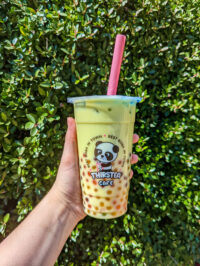
(ThirsTea Cafe/Facebook)
ThirsTea Café
For years, Birmingham bubble tea lovers have been making the trek down Highway 280 for their fill of the highly popular Taiwanese drink. At the beginning of this year, ThirsTea owners Hugo and Delanie Anguiano answered the longtime request of many locals by opening a second location in Pizitz. Now bubble tea enthusiasts can get their delicious milk teas, fruit teas, smoothies, and slushes in the heart of downtown Birmingham. Since February, the second location has been serving up favorites like the taro smoothie with classic boba, as well as creative monthly specials like April’s strawberry lemon mint fruit tea, roasted oolong milk tea, and cucumber lemon mint fruit tea.
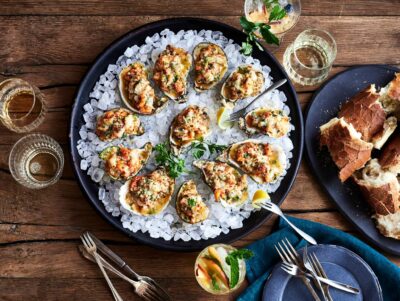
(SOCU Southern Kitchen + Oyster Bar/Facebook)
Coming Soon: SOCU Southern Kitchen & Oyster Bar
In addition to its 12 food stalls, Pizitz is also home to two full-service restaurant spaces. One is occupied by local favorite café Ashely Mac’s, and the other will soon be upscale Southern restaurant SOCU Southern Kitchen & Oyster Bar location. Helmed International Culinary Center graduate Erica Barrett, the talented chef has taken her food concepts to the national stage with appearances on Shark Tank and The Profit and has even published a cookbook of her Southern favorite dishes. Now Barrett is bringing her talents to the Magic City with a second SOCU location that features her elevated versions of Southern classic dishes like Chicken and Waffles, Shrimp and Grits, and Braised Beef Oxtails. For a full potluck experience, order a few Southern sides like Braised Collards, Bourbon Fired Candied Yams, Dirty Rice, and Charred Jalapeño Creamed Corn for the table. The new restaurant is set to open later this year.
Kelsey Barnard Clark is a small-town girl at heart, but she’s also a big-city chef who has made a national name for herself. After winning “Top Chef” in 2019 and a subsequent splashy feature in Food & Wine magazine, people now come from all over the country to eat at her KBC restaurant in historic downtown Dothan.
There, they find modern takes on Southern foods inspired by family recipes and a Gulf Coast upbringing and prepared with classic, French techniques.
That translates into steak frites (ribeye with chimichurri and truffle fries); wild-caught salmon with butterbean Hoppin’ John and cilantro lime vinaigrette; chicken fried with Frank’s hot sauce; wild mushroom flatbread; a burger with garlic aioli, blue and smoked gouda cheeses, mushrooms, caramelized and crispy onions and arugula; chicken and dumplings made with gnocchi; Creole shrimp and grits; homemade biscuits; and smoked crispy wings with Alabama white sauce.
KBC restaurant is drawing diners to Dothan, Alabama from Alabama NewsCenter on Vimeo.
The sandwiches – a pork belly BLT with homemade remoulade, the Bama with house pimento cheese and applewood-smoked bacon on panini, a traditional Cuban, a shrimp po boy and more – bring in a busy lunch crowd.
Barbecue has a place at lunch, brunch and supper.
“We’re really known for our brisket,” Clark says. “In fact, our barbecue program is part of the biggest thing that we’re doing with the expansion of the kitchen – to have a huge smoker and do more barbecue. I’m really proud of our brisket and our barbecue in general. Especially if you could see what we’re working with here, how we make it. It’s a tiny smoker that we’re working off of right now. And it’s truly the best brisket I’ve ever had. And I can say that confidently. It really is the best.” Diners can enjoy this brisket in a traditional ‘que sandwich with vinegar slaw or in the Burnt Ends Melt. You can get it in a bowl with roasted veggies and quinoa or as part of a meat and two (or three) Sunday Supper (available at each day’s lunch).
The food is important, of course, but the place matters, too.
Clark’s KBC enterprise – a restaurant, a bakery and a catering company – occupies three side-by-side downtown storefronts. When she first moved in, there wasn’t much else around. And, in fact, the roofs had collapsed on two of her three buildings on North Foster Street. Today, two lovely, intimate, brick-walled courtyards bookend a bustling restaurant space that features a bright, airy front room with a pastry case; an expansive, cozy dining room with framed family photos on textured walls and a handsome bar serving classic and modern craft cocktails; and an elegant private room for events. It’s a local party place, and most Friday and Saturday nights see large, festive gatherings in addition to individual diners. “Brunch is always slammed,” Clark says.
“It’s meant to be incredibly comfortable,” she says. “We’ve actually had people say, ‘This is not like the fancy food you cooked on ‘Top Chef.’’ That was the goal for me when I was designing this restaurant. I’d worked in fine dining only, and while I love that, and we do that with catering a lot, that is not the restaurant culture I wanted.”
What she envisioned was a place where “number one, people without training could work here and we could train them. And then, number two, anyone could eat here.
“So, you come on a date, and there’s a place in the restaurant where it seems nice and festive and all those things. You can come for a family function. You can come with your children. That really was meant to be the goal here … inclusive in every way, shape and form.”
People come from all over to experience this.
“We have hundreds of people coming through here every day. … We don’t know most of them these days,” Clark says. “I think the coolest thing about TV and just, you know, me getting out there more has been the people.
“One thing that’s neat about Dothan is that so many people pass through here to get to the beach. So, we get … tons of people from Atlanta, tons from the Carolinas, Virginia … I’m telling you, it’s crazy when we have people tell us where they’re coming from. We definitely have locals, which we love and we need – that’s our bread and butter – but we have a lot from all over the place now.”
And how these people feel when they dine here is perhaps the most important thing of all.
“I think the biggest compliment I ever hear is – I get this compliment a lot – it’s two things. It’s never about the food. … I’m telling you, this place is less about the food with me. We want the food to be good, don’t get me wrong; that’s expected though. It’s everything else. So, for me, it’s when people leave and say, ‘Your staff was so lovely. They seem so happy here.’ That’s a big one. And then we have people frequently say, ‘I just felt like I was in a different place when I got here. I didn’t want to leave.’” That’s what Clark loves to hear. “It’s like, it’s an escape for you. You can come here and relax and enjoy and not want to leave because … the environment is happy.
The food has to be good,” she adds. “It’s not about the food. … you’d never come to my restaurant and expect bad food. The food we’ve had down pat for a while. … Honestly, the food is the easiest part of the restaurant. It’s all the other things that we’re day-to-day working very hard at. It’s relationships, it’s communication, it’s counseling, sometimes therapy. That’s the real work with a restaurant, with owning one. It’s just constantly trying to make it better than it was yesterday. Food and everything, but just constantly evolving and making people feel at home.”
Clark’s food career actually started in middle school when she discovered a love for decorative cakes. She had her first solo catering gig – a wedding – at age 15.
“I had been selling cakes in middle school and high school for years, since I was about 13 years old,” she says. “And then someone who had bought my cake said, ‘Hey, look, I’m having a wedding.’ It was her second wedding … and they did not want a big fuss of a wedding, and she was like, ‘Would you do some food for us at a reception at the church?’ And I said, ‘Yeah, sure.’ And that’s kind of how it all started.
“I had to check out of school and had to be driven around to get everything, but I think that started my journey in the saying-yes-to-scary-things department.”
That journey included formal training at the Culinary Institute of America in New York. After that, she worked savory as well as pastry in several Michelin-star restaurants in New York City, including Café Boulud under Gavin Kaysen and Dovetail under John Fraser.
In 2012, Clark moved back home to open her catering company, Kelsey Barnard Catering. KBC – the restaurant – came a year later. The name is meaningful. When she was in high school, Clark worked for a high-end caterer named Larry Paul Williams; he was her mentor. She named her business in honor of his, which was Larry Paul’s Catering.
“The real, honest-to-God answer is: I came back because I was burnt out from New York,” she says. “I needed to come home. I needed to just take a breather.” She figured she would do some catering (in the style of Larry Paul, who had passed away while she was off at school), get a little money in her pocket and perhaps head to New Orleans.
With Larry Paul Williams, she had helped with in-home dining experiences that felt “as if you’re at a Michelin-star restaurant in New York,” she says. “I could do that in my sleep. … Number one, I have more catering experience than anything, and number two, I know how to do fine dining. … So, even before I moved home, I had a calendar booked for months with catering.
“For me, there was just this moment of, ‘Why do I keep telling myself I don’t want to live here when this place is so supportive and eager for me to be here?’ And I think the other thing was: Where can I leave the biggest footprint and change? Where can I make the biggest difference? New York? No. I’m just another person there doing this. New Orleans? Pretty much the same thing. But in a small town like this with a dead downtown that was literally just falling apart and truly no restaurant scene. So, I just decided, okay, maybe I need to invest here financially and personally, which is sort of where I landed.”
Since then, she’s been actively involved in the revitalization of downtown Dothan.
“I would say that my biggest contribution is my commitment to staying here, because there have been a lot of days where I’m like, ‘Forget this. Let’s just move into a new building. Let’s just start over.’ But for me, it’s more important … I’m a big lover of old things. I think that’s pretty clear at this point. And I really believe in making things better than the way you got them, rather than starting over sometimes. And I think that that’s very true to form here. We’ve put in a lot – a lot – onto this street and into these buildings. And I think that we’ve had a lot of (other) businesses open because we’ve stayed open and across the street has stayed open.”
These days, Clark employs around 75 people – more during the spring wedding season and during the summer.
“I’m very proud of our staff, I think overall, more than anything,” she says “If you go into KBC, you’ll see all different ages, all different backgrounds, which is what I’m proud of. … We are not perfect – that does not exist. But I like walking in and seeing culture in the restaurant – whether it’s from the customers or the employees – which I think is really cool. You see people from all different backgrounds eating here and working here. I love to see that everyone feels welcome. Because that’s my goal.”
Clark was the fifth woman and the first Southerner to win the title of Top Chef; she did so with a four-course, Southern-inspired meal that incorporated classic cooking techniques and Macanese ingredients. Clark also was voted Fan Favorite following her win in Season 16. That experience is still working in her favor.
She published a cookbook, “Southern Grit: 100+ Down-Home Recipes for the Modern Cook” in 2021. She’s working on a follow-up book that focuses on entertaining. She teaches virtual cooking classes (they helped keep her business afloat during the worst of the pandemic), and she frequently takes her chef talents on the road to cooking events all over the country. She’s currently working on a new television program, and she and her husband have two small children.
But making her corner of the world better is still a priority.
Her KBC business, she says, has been a “big leap of faith. … When we first did this, I really felt strongly that this is where I was supposed to be. From, honestly, the moment I moved (back) to Dothan, I felt like downtown was where I should be.
“I think, specifically, in this world we’re in today and especially with this instant culture that we have of everything happening immediately and everything not taking time, I think it’s really important to do things like this. I think that if we just start over constantly and throw things away constantly and want instant results constantly, then we’re always going to get instant results, right?” Those don’t tend to last as long, she points out. “For me, the reward has been so much greater because I know how long it took to get here. And I know the blood, sweat, tears – the money – that it takes to do this. And so, for me, I think that that makes everyone work harder. It makes me work harder. There’s a sense of responsibility because I don’t own this. Someone here before me worked harder than me. So, I think, any time you can pay it back, that is the goal.”
KBC
151 North Foster Street
Dothan, Alabama 36303
334-446-0885
Follow her on Instagram @kelseybarnardclark
Hours
Lunch: Monday through Friday 11 a.m. to 2:30 p.m.
Supper: Tuesday through Saturday 5:30 p.m. to 9 p.m. (Friday and Saturday by reservations only)
Brunch: Saturday 10 a.m. ‘til they run out.
(Courtesy of Alabama NewsCenter)
Ask Southern food lovers to name an Alabama-made smoked sausage, and most will mention the Conecuh brand.
It’s sold in most major groceries in Alabama and is regularly name-checked by chefs and home cooks alike on menus and in published recipes. Conecuh Sausage even has a Facebook fan club.
But a few other meat houses in the southern part of the state produce sausages that more than hold their own with their better-known counterpart.
These links come from an 80-mile stretch that we’ll call the Lower Alabama Smoked Sausage Trail. Start in the town of Beatrice at Monroe Sausage, cut south to U.S. 84 and head east toward Conecuh in Evergreen, Snowden’s in Andalusia, and finally Kelley’s just off the highway in Elba.
The other brands are not as widely available as Conecuh but can be found in local markets that specialize in state-made products. To research this story, I bought packages of all four at my local Piggly Wiggly.
For a list of stores where you can buy them—as well as recipe ideas—check out the manufacturers’ websites.
Grilling is, hands-down, the most popular way to prepare these sausages, making them perfect for tailgates and cookouts. But they also can star in gumbos, rice dishes, and pots of beans. Smaller-sized rope sausages make great smoky substitutes for hot dogs and pigs in a blanket.
Join me as we travel the Lower Alabama Smoked Sausage Trail, swapping their stories and sampling their main products.
Monroe Sausage
Originally known as Monroe Meat and Storage, the company was purchased in 1952 by Jimmy McMillan and Bill Causey. They started tinkering with a hickory smoked sausage recipe, perfecting it for commercial sale in 1959. As the salesman, McMillan was so connected to the product that customers just called it “Jimmy’s sausage.”
An employee, Jeff Kircharr, bought the company when McMillan and Causey retired in the 1980s. But the plant was destroyed by Hurricane Ivan in 2004, forcing the company to shut down. David Steele and investors revived the brand in 2007 in a new facility in Beatrice.
Original link sausage: Ground coarse enough to show different cuts of meat, the dense sausage is flavor-packed with noticeable smoke and a spice mixture dominated by garlic. The black pepper flavor builds with each bite. The hog casing is a bit chewy.
Other sausages: Original Rope, Scott Hot
Location: Alabama Highway 21, Beatrice
Conecuh Sausage
Owned and operated by generations of the Sessions family, Conecuh started in 1947 as a meat locker, providing storage for local hunters and farmers. The family soon started making hickory-smoked sausage and other cured meats like bacon and hams. Its huge retail store and gift shop off Interstate 65 (Exit 96) sells all of Conecuh’s meats, plus branded swag and even seasoning for seafood boils. Conecuh products are distributed throughout the southeast and Texas, and in parts of Michigan, Ohio, and New York.
Original smoked link sausage: Deep-smoked, the flavor is slightly sweet with an undercurrent of black pepper. The grind is very meaty, and the sheep casing is pleasantly chewy.
Other sausages: Original Hickory Smoked, Spicy and Hot, Cajun, Cracked Black Pepper, All Natural (no MSG)
Location: Industrial Park Road, Evergreen
Snowden’s Sausage
The Snowden family has made this distinctive smoked sausage in the Andalusia area since the 1930s. Randy Snowden, the current president and co-owner since 2008, still follows his grandparents’ original recipe. No water is added, just pork and spices. It’s also distributed in parts of Mississippi, Georgia, and Florida.
Malena Brand mild link sausage: Loosely packed and coarsely ground, it has a softer texture than the other sausages made along the trail. Snowden’s is uniquely spiced and has a distinct funkiness reminiscent of air-dried cured meat.
Other sausages: Granny Malena’s Baby Link, Malena Brand Hot, Snowden’s Cajun, Snowden’s Smoked Chicken
Location: U.S. 84, Andalusia
Kelley Foods Sausage
Founded in 1957, Kelley Foods was family-operated for nearly six decades until its purchase in 2016 by a Texas company. Its products, still made in Elba, also are distributed in Florida, Georgia, Mississippi, and Louisiana.
Baby Link sausage: “Hardwood smoked,” the label says, mysteriously assuring “No poultry added.” It is, indeed, the smokiest link on this sausage trail. The grind is meaty, with just the right ratio of pork fat to meat. In addition to water, the sausage is moistened and flavored with pork stock. The thin sheep casing has a nice chew.
Other sausages: Smoked link, Jalapeño Pepper, Rope, Baby Rope, Hot
Location: Lower Curtis Road, Elba
(Courtesy of SoulGrown)
There’s a cool, sweet spot on the global culinary crossroads that is the Green Springs Highway, which ties together portions of Birmingham and Homewood. But there’s much more than homemade ice cream and other frozen sweet treats at La Nueva Michoacana.
There’s ice cream, of course. Lots of it – scooped into cups, waffle cones, waffle cups and packed in larger containers to go. There’s a rainbow of homemade popsicles, too. But you’ll also find fresh fruit in a cup, spicy snacks in a bag, elote (Mexican street corn) on a stick as well as ice-cold juices, fresh chicharrones and homemade potato chips.
And the flavors! Sweet, spicy, salty, sour, savory. Sometimes even all in a single treat! And, if you want more heat, there are bottles of Valentina hot sauce on the tables.
Juan Sanchez, the owner of La Nueva Michoacana and the person who makes the ice creams, popsicles and just about everything else here, says this combination of ice cream and snacks is typical of what you would find in a similar shop in Michoacán, a state in west-central Mexico where his family is from originally.
With Ady Lopez translating, Sanchez tells us that this kind of ice cream shop is very popular in Mexico but, of course, it’s not what you’d usually find in Alabama, so that makes his place different from other ice cream shops here. Also, he enjoys providing variety for his customers.
It should be noted, and Sanchez says, there are thousands of Michoacanas all over Mexico and throughout the United States. (It has become a generic term, although there are lawsuits pending about this.) Like the hot dog stands owned by the first Greeks who came to Birmingham, a “Michoacana” can be a path to economic mobility, a foothold in a local food community, a way to build an independent (usually family-owned) business without a lot of capital.
La Nueva Michoacana brings a sweet taste of Mexico to Green Springs from Alabama NewsCenter on Vimeo.
With a 4.5 rating on Google reviews and a line out the door on the weekends, the bright, colorful La Nueva Michoacana in Homewood, with its shiny silver tables, family-friendly booths and Mexican music, enjoys a loyal following. Sanchez, who has been in business for five years this month, says his “customers are a variety of people. Every culture. The main audience is Hispanics, but we have a variety.”
They seem to enjoy everything, but a quick glance at a Sunday afternoon crowd shows ice cream is the main draw – especially for families.
There are 28 flavors of ice cream right now, but Sanchez says he’s planning to add 14 more in the next month or so. These flavors range from creamy white coconut with fresh coconut flakes to a vibrantly blue “cookie monster” ice cream filled with broken bits of cookies. There’s much more including mango, pistachio, chocolate and an amazing caramel ice cream with cajeta, a goat’s milk caramel imported from Mexico.
The treats are made in-house from natural ingredients (“es natural” is part of the store’s logo). Most of the recipes, Sanchez says, are family recipes. He learned some from his sister, and he also has friends in Mexico in the food industry who have shared their recipes with him.
Gallons of icy fruit juices (aguas frescas) include mango, coconut, mixed fruit, cantaloupe, hibiscus and more. The lime-and-cucumber version is especially refreshing.
A colorful variety of paletas (popsicles) offers familiar and exotic options. Some are made with cream; others are fruit based. There are a few versions of strawberries and cream; there are straight-up fruit paletas made with mango, coconut, lemon, avocado, strawberries and more. Many of the popsicles are loaded with big pieces of ripe fruit – as pretty as they are tasty.
Sanchez says, “How they look brings the attention of the audience, and then the audience wants to buy the product.” He adds that when he makes them, he puts “a lot of thought and effort into it. It takes a lot of patience to do the small details.”
You’ll find popsicles here you’ll not find elsewhere. There’s a creamy fruit-studded, not-too-sweet paleta reminiscent of a traditional Mexican fruit salad. We loved the delightfully sweet-fiery mango-and-chamoy combination that is a popsicle version of “fruit in a cup.”
Then there’s actual fruit in a cup – big chunks of fresh, mixed tropical fruits topped with chamoy sauce and chile powder. The mangonada is one of the most popular items here. Another fruit concoction is called gazpacho and features mixed fruit with cheese (and onions if you want). Also in a cup but savory: Mexican street corn salad (esquites) topped with chile powder and lime.
A large rack holds dozens of flavors of chips offering countless options for easy, to-go snacks in colorful bags. You see Doritos, Cheetos, Tostitos and Fritos in flavors you might not have seen before. There are bags of Sabritas, Rancheritos, Crujitos and more. Pick a bag, and they will fill it with toppings like melted cheese, jalapenos, salsa and corn sticks or cucumber, jicama, peanuts and chamoy or corn, mayonnaise, jalapenos and chile powder. Or any combination you’d like.
La Nueva Michoacana is only one of many Green Springs businesses offering global flavors. Sabor Latino serves up Peruvian dishes just steps away. There’s a small tienda (with imported Hispanic goods) in this shopping center, too. And the popular La Perla Nayarita Mexican Seafood & Grill is in an outparcel here. All along Green Springs, you’ll find a world of diverse dishes – Ethiopian, Korean, more Mexican, Salvadorian, Middle Eastern, Chinese and more – in restaurants and in a number of food trucks that come and go.
Just down the street, Mi Pueblo Supermarket draws regional customers with its bounty of fresh produce and dried chiles; homemade tortillas and scores of pastries; meats and seafoods; Mexican soft drinks, snacks, and candies; and specialty housewares. There’s a daily buffet in the back, a snack station up front and mariachi music storewide. Mediterranean Food Market, known for its helpful, friendly service, is a popular place for halal meats, Middle Eastern foods and specialty cheeses, breads, candies and spices. The new Halal Supermarket International is a short drive away. Hometown Supermarket is one of the state’s largest Asian markets, and it also has impressive African, Indian and South American sections. Really, the place is huge, and Mr. Chen’s Authentic Chinese Restaurant is inside the store.
Green Springs Highway is one of the busiest business roadways in Homewood, and the city of Homewood sees it as an important gateway between Lakeshore Boulevard and Oxmoor Road. Also recognizing the increasing regional draw of the diverse businesses there – and Birmingham’s growing appetite for global flavors – the city is making access to these stores and restaurants easier with a $2.25 million revitalization project that includes beautiful green medians with trees. New infrastructure will make Green Springs more bike and pedestrian friendly while better regulating traffic. Eventually a bike lane will travel all the way to UAB on Birmingham’s Southside.
It’s an investment in the city, its residents, its businesses, its many visitors and in good taste. From a food standpoint, there is no other place quite like this in the area.
The changes will most certainly draw even more new customers to the businesses here, and places like La Nueva Michoacana will welcome them.
Sanchez says he feels proud of what he’s built here in Alabama; he’s proud to own La Nueva Michoacana. “We’re bringing a part of Mexico here,” he says.
La Nueva Michoacana
104 Green Springs Highway
Homewood, Alabama 35209
205-703-4604
Connect with @LaNuevaMichoacanaBhm
https://www.facebook.com/LaNuevaMichoacanaBhm/
Hours
11 a.m. to 8 p.m. Monday through Sunday.
(Courtesy of Alabama NewsCenter)
For Chinese New Year, which is February 12, families gather from near and far to sweep out the old and ring in the new. The date is set by a lunar calendar, with each year represented by an animal. Today starts the Year of the Ox.
In Chinese culture, the new-year celebration continues for more than two weeks, ending with the Lantern Festival on the first full moon of the first month in the Chinese lunar calendar. It’s like Thanksgiving and Mardi Gras rolled into one.
Like family reunions worldwide, food plays a central role at Chinese New Year. Certain dishes symbolize luck and portend prosperity, especially when served on New Year’s Day itself (think of it as the Chinese equivalent of the Southern new-year ritual of serving black-eyed peas, greens, and ham).
Many of these symbolic foods are familiar here in Alabama.
What to eat on Chinese New Year:
Treat your sweetheart to the best our state has to offer with one of these unique date ideas for Valentine’s Day.
Go for a hike
Today (February 9) is National Pizza Day. If you plan to celebrate the cheesy and delicious holiday, here’s our list of the best pizza restaurants in Alabama.
Post Office Pies (Birmingham)
Buc-ee’s in Leeds is now open, which means it’s time to make a visit to this Texas-sized travel center. Originally opened in Lake Jackson, Texas in 1982, Buc-ee’s has since expanded to include locations throughout Texas, Georgia, and two in Alabama (the other is in Robertsdale). In addition to being a convenient roadside stop due to its excessive number of gas pumps (more than 100 at the Leeds location) and notoriously clean bathrooms, Buc-ee’s is known for its food and snack offerings. Here are five foods you absolutely must try on a visit to Buc-ee’s.
Beaver Nuggets
Drexell & Honeybee’s, a donation-based restaurant in Brewton, is holding a fundraiser to be able to continue providing meals to those in need. Musician Maxamiliano Nelson wrote a song called “I Was Hungry (and You Fed Me)” for Drexell & Honeybee’s, and is giving 100% of the proceeds of his song downloads to the restaurant.
The soul-food restaurant has always been a “pay-what-you-can” place, which means customers choose how much they want to pay for the meal, whether it’s a generous donation, a few coins, a handwritten note, or just simply a thank you. There are no prices listed anywhere on the menu or in the restaurant, so customers don’t feel pressure. Owners Lisa Thomas-McMillan and Freddie McMillan have created a safe haven where everyone knows they can come get a hot meal when they need it. To them, food is about the joy of serving others and that doesn’t come with a price tag.
However, Drexell & Honeybee’s has been hit especially hard by the COVID-19 pandemic, which is why they’re hosting a fundraiser. (more…)
A new Italian deli has opened in Birmingham — and it’s located inside Ore Mercantile, a micro-retailer offering men’s and women’s clothing, home accessories, and locally sourced items. The large store in Avondale expanded its space late last year and added Ore Deli & Bodega, offering deli sandwiches, fresh-made sides, and takeaway goods like meats, cheeses, snacks, drinks (they’ll be adding beer and wine in February), and a limited number of grocery items. Walk through racks of clothing and tables displaying local goods to the back of the store, where you’ll see a deli counter, shelves stocked with dry goods, and drink coolers lining the wall. (more…)
The inaugural Black Restaurant Week is debuting in Alabama December 11. The 10-day event is designed to celebrate the flavors of African-American, African, and Caribbean cuisine nationwide. Patrons are encouraged to support Black-owned restaurants in their area by dining out or ordering food to go.
Founded in 2016, Black Restaurant Week aims to introduce businesses and professionals to the community through events, culinary initiatives, and promotional campaigns. There are 11 states/areas/regions participating in the national celebration. This year is Alabama’s first year participating. Each area has a different week, with the first event kicking off in June in Houston. Alabama’s event concludes the year, running December 11–20.
Participating Alabama restaurants include Eugene’s Hot Chicken, Bitty’s Living Kitchen, Nawlins Style Po’Boys, Kuntri Kitchen, and Good Health To Be Hail. In addition to restaurants, the event will also spotlight food trucks, bakeries, caterers, and other culinary professionals. (more…)
‘Tis the season for gift giving. This year, consider shopping local for all your holiday gifts. It’s especially important to support small businesses who may have been impacted by the COVID-19 pandemic. Our state is home to many talented artists, makers, and clothing designers from whom you can purchase local, Alabama-made gifts. From home decor to gourmet food to trendy accessories, here is your essential Alabama-made gift guide.
Alabama-made Gift Guide
Thanksgiving might look a little different for people this year due to the COVID-19 pandemic. Whether you’re spending Thanksgiving at home instead of with relatives or having a virtual Thanksgiving, why not take the stress of cooking off your plate? Here are 20 restaurants that are offering Thanksgiving takeout in Alabama. You might not even miss cooking it yourself!
Thanksgiving Takeout in Alabama
2020 has been a difficult year for restaurants, but that hasn’t stopped several new ones from opening up in the Magic City. Here are 10 new restaurants and eateries to try that have opened in Birmingham this year, from fine dining to casual burger joints to global cuisine. Most are offering takeout, curbside delivery, and in-person socially distant dining.
10 New Restaurants in Birmingham
MONTGOMERY — The Alabama Senate on Tuesday unanimously passed SB 228, the bill sponsored by State Sen. Arthur Orr (R-Decatur) to close the loophole that currently allows county sheriffs to personally pocket surplus funds for feeding prisoners in their custody.
“This has been a problem, especially over the last year, and I’m glad the Senate has stepped forward with a solution. I appreciate the sheriffs working with us to update the law and end this archaic system where county sheriffs are held personally liable for the money to feed prisoners,” Orr said in a statement. “As we have seen over the last year, that creates all sorts of perverse incentives. The vast majority of sheriffs in Alabama have acted honorably, but there have been some bad actors who have taken advantage of the system.”
The bill would also increase the amount of state funds appropriated for prisoner food to $2.25 per prisoner daily. This amount will increase two percent annually to account for inflation. (more…)