
BIRMINGHAM, Ala. — Yellowhammer Multimedia Chief Executive Officer Cliff Sims is taking a temporary leave of absence from the company he founded to join Donald J. Trump’s presidential campaign as a Communications Advisor.
Sims will be based in Trump campaign headquarters in Manhattan and will return to his duties at Yellowhammer after Election Day. No interim replacement will be made.
In his absence, day-to-day company operations will be helmed by Chief Business Development Officer Brian J. Ellis and the daily Yellowhammer Radio program will be hosted by former state senator Scott Beason.
“Cliff is a world-class communicator and the Yellowhammer family is confident he will be an asset to the Trump campaign,” said Ellis. “Our team will continue producing the top-notch news and commentary that have made Yellowhammer Alabama’s most trusted media brand. We look forward to Cliff’s return after the election.”
Initially launched as Sims’ personal blog, the Yellowhammer brand has expanded to include YellowhammerNews.com, which attracts millions of monthly visitors; Yellowhammer Radio, a daily two-hour terrestrial radio program airing across central and north Alabama on its flagship station, Superstation 101 WYDE; and the Yellowhammer News Radio Network, which provides top and bottom of the hour news on both talk and music stations all over the state.
In addition to the Yellowhammer platforms, Sims’ articles and opinions have been featured in national publications including The Washington Post, Fox News, Politico, The Huffington Post, The Daily Caller and TheBlaze. He has appeared on cable news as a political commentator and guest-hosted the nationally syndicated Laura Ingraham Show.
Sims previously founded Yellowhammer Strategies, a communications and digital media consulting firm.
All campaign-related inquiries should be directed to the Trump campaign.

DOTHAN, Ala. – CAE USA, a company specializing in aviation training, plans to begin offering flight training to U.S. Army aviators at a training facility opening in Dothan next year as part of the company’s $75 million investment in the state.
Tampa-based CAE USA also announced it has taken delivery of the first three Grob G120TP aircraft that will be used in the U.S. Army Fixed-Wing Flight Training program at the Alabama center. The company said it has begun preparing its initial cadre of instructor pilots for the program.
“Our new Dothan Training Center will provide the Army with a modern, flexible and cost-effective training solution specifically designed for the Army’s fixed-wing aviators,” said Ray Duquette, president and general manager of CAE USA.
“The state of Alabama, Department of Commerce and all the local government organizations in the Wiregrass area have been incredibly supportive and instrumental in the creation of what will be a truly world-class training facility,” he added.

Beginning next spring, the company’s new 79,000-square-foot center will provide comprehensive training for more than 450 U.S. Army fixed-wing aviators each year, as well as Air Force crews flying C-12 twin turboprop aircraft.
CAE’s new Dothan Training Center stands a little more than 20 miles from Fort Rucker and the U.S. Army’s Aviation Center of Excellence, the headquarters of Army Aviation and primary location for Army helicopter flight training for more than five decades.
“Alabama has more 100 years in aerospace history, and I am proud to see CAE make progress on the construction of the new Dothan Training Center located at the Dothan Regional Airport,” Governor Robert Bentley said. “This world-class training facility will train Army and Air Force pilots to keep our nation safe.”
INTEGRATED INSTRUCTION
Construction is under way at CAE’s Dothan Training Center, and the facility should be operational in early 2017. CAE said the center at Dothan Regional will offer military aviators integrated classroom instruction, simulator training, and live-flight training all in one location.
To support the program, the company is manufacturing a suite of next-generation training devices, including C-12 King Air full-flight simulators. CAE is also developing what it calls “motherships,” which are simulators with an innovative “roll on/roll off” cockpit design that enables cockpits of various aircraft types to be used in the simulators for training.
The company will design and manufacture two Grob G120TP integrated procedures trainers, as well as desktop trainers and courseware. The G120TP is a two-seat turboprop training aircraft built by Germany-based Grob.
“CAE is a global leader in aviation training, and the new, state-of-the-art training center in Dothan shows its confidence in Alabama,” said Greg Canfield, secretary of the Alabama Department of Commerce. “In addition, this project highlights the state’s critical role in preparing military pilots for the important work they do.”
TEAM EFFORT
Planning for this project dates back to 2015, when CAE was awarded the U.S. Army contract to provide comprehensive fixed-wing training services. CAE is constructing the Dothan facility as part of the original agreement, which was awarded by the Army as a base contract with six one-year options through March 2024.
The total value of the contract over eight years is expected to be approximately $200 million.
The Army Fixed-Wing Flight Training program prepares experienced Army rotary-wing aviators to fly the branch’s fleet of more than 350 fixed-wing aircraft. The Army and CAE are also implementing a new training program so that entry-level Army students can begin their career track to fixed-wing aircraft sooner.
The program serves as the formal training unit for Army C-12/RC-12 King Air recurrent training, as well as providing annual training to Air Force C-12 King Air pilots.
AIDT, the state’s job-training agency, and the Alabama Department of Transportation joined the Governor’s Office and Commerce on the project.

Local organizations involved in the project are the Dothan/Houston County Airport Authority, the Dale and Houston county commissions, the City of Dothan, the Dothan Area Chamber of Commerce, the Ozark-Dale County Economic Development Corp., and the Wiregrass Foundation.
CAE USA is also subcontracting work to a range of Alabama-based companies, including Engineered Systems Inc., Navigator Development Group Inc., System Dynamics International, Right Direct, and Aero-One.
“We are extremely excited to see a world-wide leader in aviation training locate in the Wiregrass region,” Dothan Mayor Mike Schmitz said. “Through the team led by Governor Robert Bentley including our local, state, and federal officials and partners, this project was made possible to bring new technology, innovation, and high-paying jobs to the area.”
By Anna Catherine Roberson
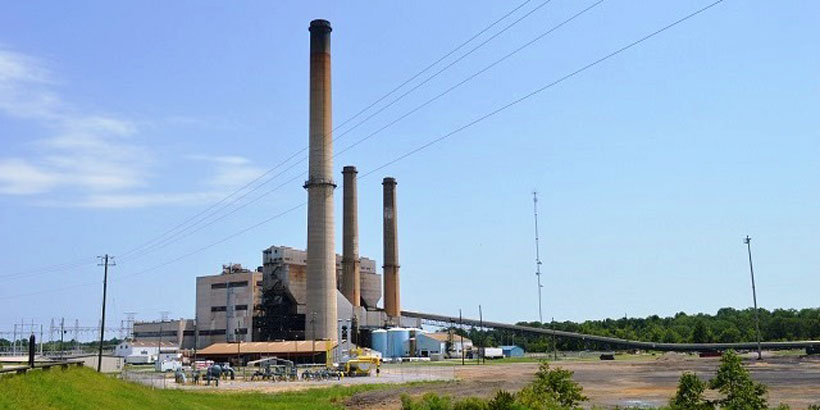
It has been two years of transition for Alabama Power’s Plant Greene County, which reached a historic milestone this month.
Last year the plant celebrated 50 years of serving west Alabama and Alabama Power customers. In January, the plant received its last shipment of coal and burned coal for the last time in March as it moved toward ending the use of its historic fuel source.
This summer, the two-year transition is complete, and Greene County is now operating on natural gas.
The process included significant design, engineering and construction challenges, with specific deadlines, as the plant focused on its goal of complying with federal environmental regulations.
“Environmental mandates were part of the constraints and challenges we faced with this project,” said Riley Wells, plant manager. “But I am proud of the dedication and hard work people put in.”
Jennifer Cassity, compliance manager at the plant, credits that hard work with the successful conversion.
During the project, a large portion of the plant was taken out of service for five months, with up to 500 contract employees working on-site. That compares to a typical scheduled outage that lasts 30 days with fewer than 100 contractors at the plant.
“We pulled this project off with an accelerated time frame, on time, on budget, and safely,” said Cassity. “Typically, when you accelerate a project like this, one of those is going to suffer. It is a true testament to the people that work here.”
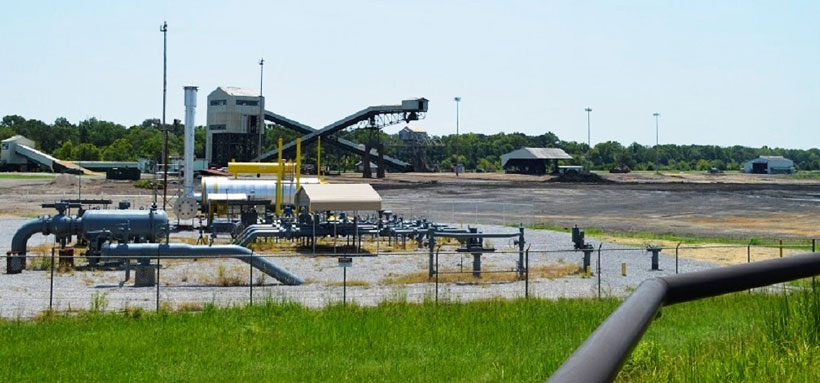


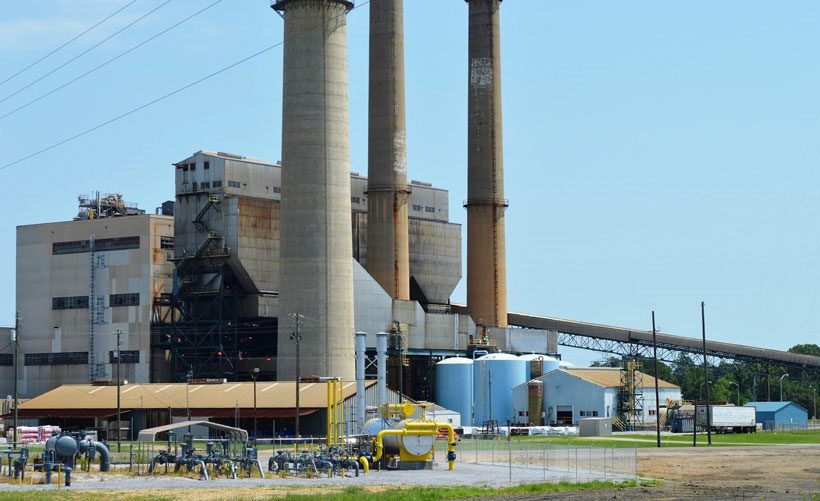

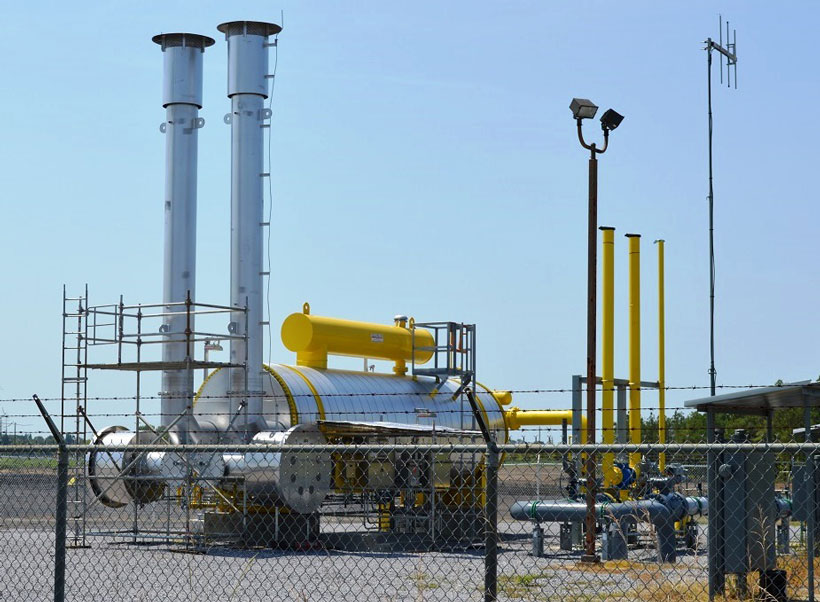
The two-year process to convert from coal to gas represents a $45 million reinvestment in the plant, and in the west Alabama community that relies on the Greene County facility for energy and as an economic driver, Wells said.
With the conversion complete, the plant is seeing changes in how it operates. Historically, coal-fired plants tend to run continuously for months, but as a natural gas plant, Greene County will run on a different schedule, depending on need. The plant’s maintenance schedule will also change with natural gas instead of coal.
In order to ensure a smooth transition for operators, Wells said the plant purchased a high-fidelity simulator.
“It mirrors and models the real unit,” Wells explained. “This was important because it gave the operators an opportunity to learn to run the new unit before the gas units were available. It was definitely one of the keys to our success.”
The plant has seen its workforce reduced over the past two years as it moved to an all-gas operation, with the number of employees dropping from 126 in August 2014 to 92 today. The long-term target for staffing is about 65. The reduction of employees was accomplished through attrition and transfers, with no layoffs.
The loss of positions will have some impact on the community, Wells said, but the company is committed to supporting west Alabama and being a part of the community for years to come.
“Greene County is in a good place right now,” Wells said. “Going to natural gas for our steam units, instead of focusing on coal-related environmental regulations, ensures a longer lifespan for the plant and a continued commitment to the west Alabama community.”
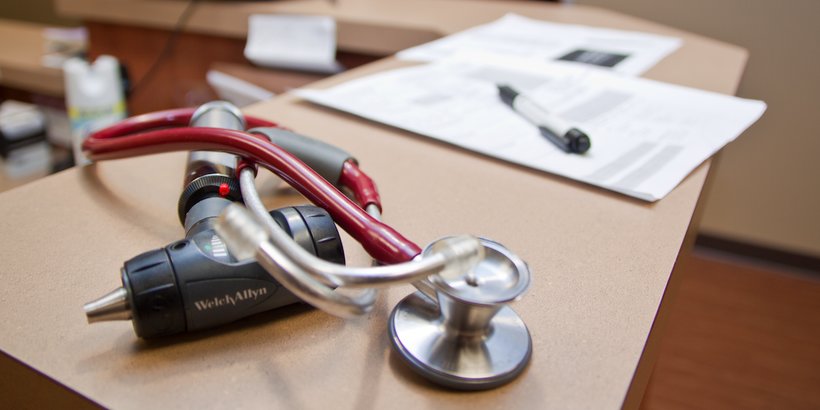
Medical students push through a seemingly never-ending wave of classes in anatomy, biology, immunology, biochemistry and more, in hopes of graduating and having an opportunity to help people. But according to a new report, if medical school was more like the actual job of being a physician, students would be taking classes like “Advanced Form-filling,” “Intro to Government Mandates,” and “Patience 101,” in hopes of being able to endure the daily grind that includes very little time with patients.
A recent study in the Annals of Internal Medicine found that “for every hour physicians were seeing patients, they were spending nearly two additional hours on paperwork.” The same study in 2005 found that paperwork only consumed one-third of a physician’s time. So, in short, the amount of time it takes for doctors to complete all of their required paperwork has basically doubled in the time President Obama has been in office.
Forbes compared it to “telling LeBron James to spend the majority of his time manning the Cleveland Cavaliers ticket windows and phone lines.”
So where is all of this paperwork coming from?
First of all, according to Forbes, “administrators, lawyers, insurance companies, etc.,” are all asking for an increasing amount of paperwork to meet their own more stringent requirements–most of which come from the government. Secondly, “doctors are not designing much of the paperwork. Therefore, whoever is designing and requiring the paperwork has little clue on how to make doctors’ lives easier.” And third, “many doctors are not getting any help to do the paperwork. Hospitals and clinics do not seem to be investing in clerical and administrative support for doctors.”
Dr. Beverly Jordan, a family doctor based in Enterprise, Alabama, told Yellowhammer that increased filing requirements mandated by The Family and Medical Leave Act of 1993 (FMLA), Health Information Technology for Economic and Clinical Health (HITECH) Act of 2009, and the Patient Protection and Affordable Care Act (a.k.a. ObamaCare) of 2010 are crushing doctors under an avalanche of paperwork.
“These government regulations create tons of paperwork for minimal purpose, when a quick note would provide the same info,” she explained. “The regulations were not written to make sure Electronic Medical Records would ‘talk to each other,’ so tons of time is spent searching for data that should be easy to find, which is the single most clinically useful part of having Electronic Medical Records to begin with.
“As a younger physician, I don’t remember the days when a quick one-line note would suffice, but I do remember when a half page was just fine,” she continued. “Now my average daily note on a patient is five pages, and I am no exception to the rule.”
The increasing paperwork burden on physicians is have a significant impact on their business.
“Anybody with a drop of business sense would be appalled at the redundancy and chaos of the paperwork physicians deal with,” said Dr. Jordan. “I have three staff members who do nothing but fill out forms, but most of it is mandated for the physician to complete, eliminating any chance for help. So I still spend easily two-thirds of my day completing paperwork.”
Even worse, evidence suggests that some physicians are becoming so disillusioned with the reporting requirements — particularly the Electronic Medical Records mandates — that they are leaving the field all together. A column in the Washington Post last year titled “Why doctors quit” accused the reporting mandates of “degrading medicine,” not so much because of the financial hit doctors have taken, but because the job itself has become that of a glorified clerical secretary.
“At this point there is way too much meaningless government regulation in healthcare that does nothing but get in between me and my patient,” Dr. Jordan said. “It does not provide for safer care, more cost effective care, or more efficient care. It does exactly the opposite.
“All of this paperwork takes time away from my patients and family,” she concluded.
Dr. Jordan probably could have gone into even more detail, but she needed to get some rest before getting up at 5 a.m. the following morning for — surprise, surprise — a training session on “the latest method of completing a certain paperwork in my office.”
“Then I’ll start seeing patients after that.”

For many Americans, the mention of “family dinner” evokes fond memories of decades past, when parents and kids — and oftentimes extended family members and friends — would huddle around the dinner table nightly.
Unfortunately the next generation of Americans may not remember family dinner time quite as fondly because, well, it just doesn’t really happen as often as it used to.
A Gallup survey reveals that “having dinner together in the evening is difficult for today’s families.”
“Slightly more than a quarter (28%) of adults with children under the age of 18 report that their families eat dinner together at home seven nights a week — down from 37% in 1997,” Gallup found. “Almost half (47%) of parents say their families eat together between four and six times a week. Another quarter (24%) say they eat together three or fewer nights a week.”
This is unfortunate, and not just because of the lost opportunity to make memories. A Columbia University study suggests “family dinners can have some concrete benefits for teenagers.”
As Gallup explains, “the study found that teens who have dinner with their families two nights a week or less are twice as likely to take drugs, more likely to be ‘high stress,’ more likely to say they are often bored, and less likely to perform well in school than teens who eat with their families 5 to 7 times a week.”
With all of this in mind, an Alabama company is on a mission to get families back around the dinner table together each night, and they’re doing it by addressing the most common reason families aren’t eating together as much: time.
Nourish Foods, based in Birmingham, Alabama, has found a way to completely eliminate the time it takes to plan for, shop for, and prepare family meals.
Here’s how it works:
Nourish customers all over the country log in to NourishMeals.com, choose the meals they’d like — or a subscription plan — and delicious meals start showing up at their door. Then, when it’s meal time, all they have to do is open the refrigerator, grab the meals, and pop them in the microwave or oven. And just like that the whole family is around the table eating fully-cooked, hand-crafted, healthy meals that look like this:

Courtney Estes and her husband, Jeremy, have seen the amount of quality time they’re able to spend with their family explode after discovering Nourish.
“Working full time, being a mom of a busy 16-month-old and having a husband that often travels for work, we have juggled time, healthy meal choices and just quality family time,” said Courtney. “The last thing I want to do is spend my night in the kitchen after getting home. Nourish has been a game-changer for us. We absolutely love everything that Nourish has to offer. Each meal is completely prepped with fresh, wholesome ingredients, and even delivered right to our door! All I have to do is pop in the oven, no prep and no mess!”
Mary Beyer Lell and her husband, Paul, also found that “attempting to cook a home-cooked, healthy meal became a struggle” for their family because of work and their kids’ after-school activities.
“Most can relate to the feeling when you get home, stare at your groceries and think ‘not tonight.'” Mary laughed. “This resulted in large amounts of expensive groceries ending up in the trash at the end of a week. Nourish has been the answer for our family to have home-cooked, healthy and convenient meals. It has enabled us to spend time as a family, it has decreased stress for me and my husband, and the food is delicious! You tend to get into a rut with your go-to dinner meals; Nourish provides meals that I do not cook and the constant change in the menu definitely makes dinner much more enjoyable.”
For Shannon Holt and her husband, Ted, Nourish made it possible for them to improve their diet while still eating food they really enjoy.
“About a year or so ago, I made a commitment to try to eat cleaner — for my family and for myself,” Shannon said. “I was sick of feeling tired and bloated all the time, no matter how much I exercised. Nourish has helped me accomplish my goal and made it much easier to do so for a busy working mom of four. The food is absolutely delicious (even to the pickiest eaters!) and the variety keeps everyone happy. I especially like the portion size and the ease of ordering.”
Shannon now uses Nourish in multiple ways.
“Number one, for my own personal meals; number two, for family dinners; and, third, for catering large parties at my home,” she explained. “I love having meals in the fridge that I can grab or take with me to work for lunch. I know whatever I eat from Nourish will taste amazing, be great for me, give me the energy I need to get through the hectic afternoon, and even improve my mood! Then, on those nights where I don’t have time to cook dinner for the family, everyone can choose what they want and I don’t have to worry about the quality of the food or clean any dishes!
“Last spring, Nourish catered a large dinner my husband and I hosted at our house,” Shannon continued. “Of course the food was amazing, but the service was what made the dinner stand out. The Nourish team attended to every detail and allowed me to actually enjoy my own party! They made sure every guest was taken care of and even left my kitchen cleaner than they found it.”
For more information on how Nourish can get your family back around the table together, visit NourishMeals.com.
Subscribe to the Yellowhammer Radio Podcast on iTunes. Learn more about Jeff Roberts’ private wealth advisory practice at JeffRobertsAndAssociates.com.
Billionaire Hillary Clinton supporter Mark Cuban predicted Wednesday that “the market [will] tank” if Donald J. Trump is elected president, and while he did not offer any evidence to support his prediction, Mr. Cuban revived a long-running debate over which Party is better for investments.
Birmingham, Alabama-based financial guru Jeff Roberts, who was recently named to Barron’s® 2016 “Top 1,200 Advisors: State-by-State Ranking,” came on Yellowhammer Radio Tuesday to break down the historical data.
“The single most common question I have heard in the last month or two when clients come in is ‘how will the presidential election impact markets?” Roberts told host Cliff Sims. “There are a couple things investors need to remember. First, the president doesn’t really determine those market returns. Markets are highly complex — they have a lot of moving parts — so just a presidential election or a Party probably does not have a huge impact. The policies seem to matter more than the presidential Party itself, and policies are tied more heavily to the composition of Congress, probably more so that the presidency.”
Data Mr. Roberts gathered from the Wells Fargo Investment Institute shows how little the Party holding the presidency seems to change the trajectory of financial markets. In fact, the historical data is so inconclusive, it is actually different depending on whether we start measuring on Election Day, or wait until Inauguration Day.
If we argue that a president-elect’s impact on the market begins on Election Day, with the markets anticipating what he will do once in office, historical data says Democrats average a 9.22% return in their first year, while Republicans only average an 8.11% return. However, if we argue that a president’s impact on the market doesn’t really begin until the day he takes office, Republicans outperform Democrats 8.59% to 8.33%. Those numbers are based off of market returns from 1856 to 2014, a 158-year period.
Mr. Roberts then went a step further and gathered data on how the markets perform under different scenarios of presidential and congressional control.
“For example, back when Democrat Bill Clinton was president and Republicans, led by Newt Gingrich, controlled the House,” he explained, “they balanced the budget and paid down debt and we had a technology boom, and the markets performed tremendously well.”
The two scenarios that produce the highest returns historically are when a Democrat is president and Congress is under split control, and when Republicans have full control of the presidency and both chambers of Congress.
Here are the average annual inflation-adjusted total returns for the S&P 500 Index, depending on the Party composition of the executive and legislative branches:
Presidency / Congress / Market Performance
Democratic / Democratic / 8.35%
Democratic / Split / 11.26%
Democratic / Republican / 9.99%
Republican / Democratic / 7.92%
Republican / Split / 2.25%
Republican / Republican / 10.75%
In one final calculation, Mr. Roberts researched how the markets perform, depending on which Party is transitioning out of controlling the presidency, and which Party is transitioning in.
Here’s what he found:
| Presidential transitions | Average annual real total return | Number of times since 1856 |
| Democratic to Republican | 6.6% | 9 |
| Republican to Democratic | -1.5% | 8 |
| Democratic to Democratic | NA | 0 |
| Democratic re-election | 10.5% | 8 |
| Republican re-election | 11.7% | 9 |
In summary, Mr. Roberts said the data is fascinating to look at, but probably does not provide any actionable insight.
“The S&P index returns during Democrat and Republican administrations is of no value to investment making decisions,” he concluded. “In our opinion there’s just nothing about it that tells you buy or sell. There is no clear forecast for investors to use when benchmarking history. There’s interesting data, it’s fun to look at, but I don’t think it causes anyone to adjust their portfolio… Vote, but don’t let your politics affect your portfolio.”
Check out Jeff Roberts’ full interview on Yellowhammer Radio in the video above. For more information on his private wealthy advisory practice, visit JeffRobertsAndAssociates.com.
RELATED: Alabama financial pro gives fascinating insight into what presidential race means for investments

More than 12,000 overtime hours worked by Alabama Power’s 12th Street line crews add up to a lot of missed time with their kids on summer vacation.
But two of members of Foreman Greg Herbinger’s crew take a philosophical view.
“I’ve missed several Little League baseball games as well as family birthday parties due to working extra,” says Lineman David Laminack. “I’ve also missed out watching my baby girl grow and do new things like roll over and sit up.”
Laminack worked 10 of his 29 off days since Memorial Day for a total of 242 overtime hours.
Lineman Jason Quick worked 300 extra hours since Memorial Day; in some cases 90 overtime hours in one week. But his story is a little different.
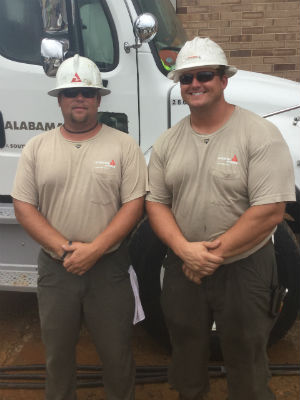
“I’ve been very blessed. I haven’t missed any major events due to being at work this summer,” Quick said. “But there have been other summers I have.”
Quick still suffers from what most linemen do in the summer.
“What I miss the most are the evenings when I have worked a lot of long and hot hours, or my days and nights get mixed up due to pulling all-nighters,” he said. “I find myself so tired and exhausted I can barely hold my eyes open once I get home. So I miss the evening and night activities such as dinner with the family, enjoying the long days of sunshine, baseball practice or just hanging out with the kids before bedtime.”



Summer requires more overtime work to restore power, as soil softened by daily thunderstorms makes it easy for trees heavy with leaves to topple. Wires, poles and transformers all must be replaced. Excessive heat adds more adversity to what is already a difficult job.
But both linemen have ready answers for their families.
“I remind my kids when someone’s power goes out, it’s my job to get their power back on so they can enjoy their family time,” Laminack said. “I explain when I work overtime, I see that as a way to help people get back to their normal lives. I also assure them I will make up the time I missed with them.”
Quick said his children seeing him work long hours “shows them getting up early or leaving in the middle of the night is what you have to do sometimes to provide for the family and be able to give them the things they need and want.
“I tell them this is the profession I chose and it requires me to help others at any time. My children know what I do, that I love what I do and I have worked hard to learn this job.
“Not everybody is cut out to do this job,” Quick continued, “so when others need you and you have the knowledge and training to help, that’s what my job calls me to do.”

NEW YORK — Republican presidential nominee Donald J. Trump on Wednesday released specifics on his oft-mentioned plan to buildup the U.S. military, and it includes major news for Alabama’s Navy shipbuilding operation.
Roughly 4,000 Alabamians in Austal USA’s Mobile facility are involved in building the Littoral Combat Ship (LCS), a class of vessels used in operations close to shore (the littoral zone). They have been compared to corvettes, built to swiftly move in fights with other vessels, as well as to hunt and destroy enemy submarines and mines.
During a hearing held by the Senate Armed Services Committee in March, Secretary of the Navy Ray Mabus testified that the his branch of the armed services still requires 52 littoral combat ships, a number determined by an assessment performed in 2014.
But the Obama administration and Senate Armed Service Committee Chairman John McCain (R-Ariz.) have frequently pushed to to scale back the program.
Senator McCain has decried the LCS program as “shameful” on the Senate floor and has constantly fought for the Pentagon to cut it, in spite of Navy leadership insisting they need it. McCain was pleased late last year when the Obama administration’s efforts to shrink the military hit the LCS program.
RELATED:
1. John McCain really hates Alabama, but his attempts to screw the state keep failing
2. Alabama-built warship subject of ‘open war’ breaking out inside the Pentagon
Secretary of Defense Ash Carter directed the US Navy to slash its previous order of ships by twelve and reduce its annual orders by tho-thirds. The Navy had previously planned to annually purchase three LCS over the next four years, and ultimately purchase 52 ships total, the number that Secretary Mabus testified that the Navy still needs.
The Navy’s stated goal for years has been to build up its capacity to 308 ships. There are currently 272 ships in the fleet, and Navy advocates on Capitol Hill and in the Pentagon argue that cutting the LCS procurement would make the Navy’s capacity goal impossible to achieve.
In a campaign announcement released Wednesday, Mr. Trump signaled that the LCS program — and other shipbuilding operations — would be significantly bolstered if he is elected president.
“Mr. Trump will build a Navy approaching 350 surface ships and submarines, as recommended by the bipartisan National Defense Panel,” the campaign said in a statement providing the first specific details on his promise to “rebuild” the U.S. military.
That is big news for Austal, its 4,000 employees, and Alabama’s economy as a whole.
The rest of Mr. Trump’s “military readiness plan” can be found below.
• Immediately after taking office, Mr. Trump will ask the generals to present a plan within 30 days to defeat and destroy ISIS.
• Mr. Trump will ask Congress to fully eliminate the defense sequester and will submit a new budget to rebuild our military as soon as he assumes office.
• Mr. Trump will build an active Army of around 540,000, as the Army’s chief of staff has said he needs.
• Mr. Trump will build a Marine Corps based on 36 battalions, which the Heritage Foundation notes is the minimum needed to deal with major contingencies.
• Mr. Trump will build a Navy approaching 350 surface ships and submarines, as recommended by the bipartisan National Defense Panel.
• Mr. Trump will build an Air Force of at least 1,200 fighter aircraft, which the Heritage Foundation has shown to be needed to execute current missions.
• Mr. Trump will seek to develop a state of the art missile defense system.
• Mr. Trump will modernize our nation’s naval cruisers to provide Ballistic Missile Defense capabilities.
• Mr. Trump will enforce all classification rules, and enforce all laws relating to the handling of classified information.
• One of Mr. Trump’s first commands after taking office will be asking the Joint Chiefs of Staff, and all relevant federal departments, to conduct a thorough review of United States cyber defenses and identify all vulnerabilities – in our power grid, our communications systems, and all vital infrastructure.
(Video above: Cliff Sims interviews Jeff Roberts)
The financial markets don’t like uncertainty, and few things create more uncertainty than an open presidential election.
With that in mind, Yellowhammer Radio host Cliff Sims on Wednesday interviewed Jeff Roberts, who he called “the most knowledgeable and exceptional financial professional I know,” to get his take on what the presidential election means for investments.
A lightly edited transcript of their conversation can be found below. The full interview can be heard in the video above.
Subscribe to the Yellowhammer Radio Podcast on iTunes. Learn more about Jeff Roberts at JeffRobertsAndAssociates.com.
Cliff Sims
What does the U.S. presidential election mean for market volatility? Is there any data on the performance of the stock market during election years that we can look back on?
Jeff Roberts
There is. Our good friends over at the Wells Fargo Investment Institute did a report back in February of this year and it gives some insights about the S&P 500 index and election years dating back from 1933 until 2014.
(…)
If you look at the years when there is an open election, verses a re-election, the performance was dramatically different.
An open election is what we have right now — the election is going to result in a new president being named, period, not matter what. The previous president is not running; it’s new candidates altogether.
A re-election is what we had four years ago; a sitting president running for re-election.
If you look at the re-election years, the performance of the stock market, not including the reinvested dividends, is 9.7% on average. But when you look at the open election years the rate of return is 1.2% on average. There is a dramatic difference between those two.
Cliff Sims
What is it that causes that much of a deviation between open and re-election years?
Jeff Roberts
It’s anybody’s guess.
Generally speaking, the markets don’t like uncertainty. When you’re looking at an open election year, obviously there’s a lot more uncertainty… That’s reflected in the markets performing worse during open elections than in the re-election years.
Cliff Sims
For folks who have their retirement accounts or other investments and are finding out now that, historically, we can expect a low rate of return during an open election year and that there may be a lot of market volatility, what should they do with this information?
Jeff Roberts
Keep in mind the classic statement you hear people like me say: “past performance is no indication of future results.” But it does provide very important information. Information is what we use to help people make good decisions.
So with this information, broadly speaking, you can’t give advice and say “oh investors need to do this or do that,” but consider the time frame of the investment horizon you’re looking at.
If you’re looking at a long-term retirement portfolio, then you’re likely not going to be worried about the short term volatility of the election this year.
But if you are looking at an amount of money that you might have sitting in cash and you’re thinking about entering the market, then this could be helpful.
The study plots out every year since 1933, and the historical trend shows the markets typically peak around July and August in open election years, then start to decline in September and October.
That doesn’t mean people need to run out of the markets, but if you are sitting on cash, it’s information that you can use to determine what to do. It depends upon each persons unique situation. But again, this is information. Use it wisely.
Cliff Sims
Everybody listening can tell how knowledgable Jeff is on this stuff. If you’re interested in talking to Jeff a little bit more about he and his team can help you out, you can go to JeffRobertsAndAssociates.com.

By Dawn Azok
Alabama’s auto industry continues to power new investment and jobs across the state.
Over the past year, auto suppliers have announced new facilities and expansions worth at least $924 million and more than 2,500 new jobs in activities ranging from precision machining to engineering.
Among the companies growing in Alabama is Lear Operations Corp., which this summer announced a $27.7 million, 535-job expansion of its Tuscaloosa County plant.
The project will boost production to supply seating systems to the Mercedes-Benz factory in Vance. Lear currently makes seats for the Alabama-made C-Class, and now it is adding seats for the plant’s SUVs.

Other recent announcements include Gerhardi Kuntstofftechnik, which picked Montgomery for its first North American manufacturing facility. The German company – producer of radiator grilles, handles, chrome trims and other parts – will invest nearly $38 million and create 235 jobs.
Another German supplier, Berghoff Group, is setting up its first U.S. plant in Auburn. The $30 million, 100-job facility is a precision-machining operation.
“Alabama’s auto industry continues to be a source of prosperity for communities throughout the state,” said Greg Canfield, secretary of the Alabama Department of Commerce. “What Mercedes started more than 20 years ago with the decision to build its first U.S. factory here has grown into a mature industry with hundreds of supplier and support operations.”
BUMPER CROP
The past year’s crop of supplier announcements have stretched from Jasper, home of Yorozu Corp.’s $100 million, 300-job advanced metal stamping facility, to Opelika, where Mando Corp. is expanding its brake component, suspension module and steering system operation by investing $19 million and adding 32 jobs.
The news has come in big cities and small. In Birmingham, Kamtek announced a $530 million, 350-job expansion, including the opening of a new aluminum casting facility to meet automaker demand for lighter parts.
Meanwhile, in the Macon County town of Shorter, Korean logistics company LogisAll opened a $4 million operation that is expected to employ up to 60 people in its first year.
In July, U.S. sales of new cars and light trucks rose slightly to top 1.5 million. Although there is concern that the market is leveling out after six years of growth, including a 17.5 million record peak in 2015, the numbers are expected to stay high thanks to attractive interest rates, a host of new offerings and low gas prices.
NEW MILESTONES

Last year, Alabama’s three automakers combined to produce more than 1 million vehicles, a record level for the state industry.
This year, they’re still busy.
At Honda’s Talladega County plant, workers launched production of the redesigned 2017 Ridgeline pickup. And in Montgomery, the Santa Fe SUV returned to Hyundai’s assembly lines.
The Toyota engine plant in Huntsville expects to produce its 5 millionth engine early next year.
And Mercedes is implementing a $1.3 billion, 300-job expansion announced last year. The work is setting the stage for the next generation of luxury SUVs the company will produce in Vance and includes a new body shop and an addition to the SUV assembly shop, as well as other upgrades. A number of the positions being created by the expansion are in engineering.
Business Facilities magazine rated Alabama among the top states for workforce training programs, auto manufacturing strength, and foreign direct investment in its 2016 rankings.
In addition, the economic development-focused publication rated Huntsville No. 1 among U.S. cities for STEM job growth, and No. 3 for economic growth potential. The Rocket City was No. 5 for cost of living.
“This recognition underscores Alabama’s growing competitiveness on a global stage and shows that our strategic efforts to advance the state’s economy are paying off,” said Greg Canfield, secretary of the Alabama Department of Commerce.
“Going forward, our team will continue to pursue significant projects that bring new investment from around the world to Alabama, creating well-paying jobs that lift families and communities,” he added.
Late last year, Business Facilities named Alabama its “State of the Year” for 2015, citing a series of dynamic economic development projects from companies including Google and Polaris Industries.
AIDT IMPACT
In its 2016 rankings, Business Facilities ranked Alabama No. 3 for its workforce development programs, led by AIDT, a part of the Alabama Department of Commerce. The magazine citied an innovative training center AIDT opened in Birmingham.
“The new 56,000-square-foot facility, located in Birmingham, the state’s largest metro area, will allow for manufacturers, contractors and other industries to link up with AIDT along with public education and the two-year and even four-year colleges to equip students with specific skills needed to fill jobs,” it noted.
Business Facilities ranked Alabama No. 4 for automotive manufacturing strength, the third consecutive year for a high ranking. In 2015, Alabama’s auto assembly plants produced more than 1 million vehicles in a year for the first time.
The publication also ranked Alabama No. 9 among leading states for foreign direct investment, or FDI. Read a report on 2015 FDI in Alabama.
‘LOCATION OF CHOICE’
Huntsville Mayor Tommy Battle said the high rankings represent a strong endorsement of his city and the state.
“We take a ranking from Business Facilities as a great honor. This is a prime publication for site selection and it is a great resource for businesses and industries bringing new jobs and growth to our region,” Mayor Battle said.
“It is evidence of what we have been promoting in Huntsville and Alabama. We are the location of choice.”
Since 2014, Huntsville has landed major manufacturing projects from Remington, Polaris and GE Aviation, while its vibrant aerospace sector has seen advances.

Business Facilities is a national publication aimed at corporate site selectors and economic development professionals for more than four decades. It is owned by New Jersey-based Group C Media.
Also this month, global consulting firm Ernst & Young LLP issued a report ranking Alabama No. 5 among the states for new capital investment in 2015 and No. 4 for foreign investment spending.
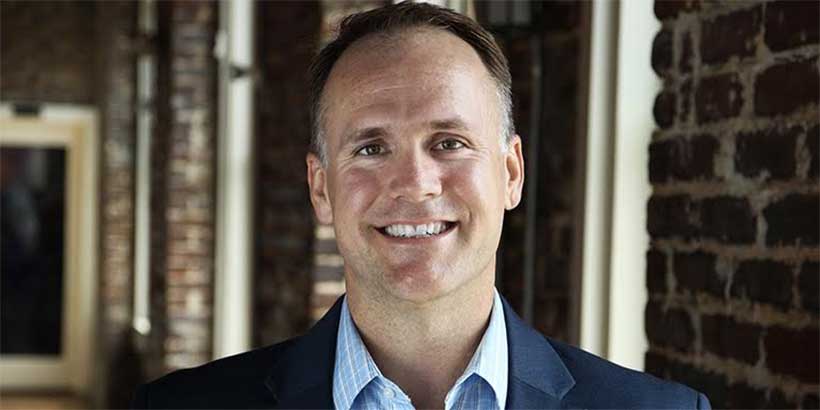
Cord Sachs is a Birmingham-based leadership expert and the CEO of FireSeeds, a company that helps companies find and grow great leaders and “the company behind many of Alabama’s fastest growing companies.”
Yellowhammer sat down with Mr. Sachs as part of our ongoing leadership series, and he discussed how helping employees to reach their personal goals can directly motivate them to hit the company goals.
A lightly edited transcript of our conversation can be found below. (For more information on FireSeeds and their leadership development platform, Wildsparq, click here.)
Yellowhammer:
Today we are going to talk about the “Cylinder of Congruence.” Cord, what is the “Cylinder of Congruence?”
Cord Sachs:
Before I answer that question, let me set it up by asking, “How do you maximize culture?” If you are the leader of any kind within the workplace, how do you create an intentional culture to maximize the output, productivity, team buy-in, and the loyalty of those who work with you? Our whole lens at FireSeeds through which we answer these questions is through “culture.” This is a popular buzzword and can be seen as soft and fuzzy but we want to answer, “How do you measure intentional culture and what does this look like?”
So here is what we mean by the “Cylinder of Congruence.” We want to engage the people we want to influence in an authentic way that fosters loyalty to the cause.
This concept came from Coach Brian Landry. He spent 23 years in the Air Force. He received a Ph.D. in leadership, and served as a military analyst and a professor of aerospace studies in the USAF. The team he was working with had to think through how to recruit young officers to commit many years of their life to something they knew would draw them away from their family for long periods of time. So they came up with the Cylinder of Congruence.
Picture a horizontal cylinder in front of you. On top of that cylinder are the big picture goals of what the USAF wants to accomplish. At the bottom of that cylinder is all the grassroots people and their own personal hopes, dreams, and goals. So what Landry and his team realized is for them to recruit the people they needed, they had to bring the overarching goals of the USAF and then bring the personal goals of the people into the cylinder so there can be a congruent understanding. If you come and work with us, we want you to know we are aware of your own personal goals and if you work with us, there will be a congruence in our goals for success as the USAF and your goals as an individual.
Now where do these individual goals play out? In the home and with families. For example, as you can imagine, many people want to be successful so they can send their kids to college and maybe give them a better opportunity than they had before. What many leaders find hard to understand is they do not make the connection between their people genuinely being excited about the value and productivity of their department and what will help them further their career and meet their individual goals for their families.
What the USAF realized early on in this process is they needed to engage these officers to find out what their personal goals were and what they wanted to accomplish. When they would talk with them about these personal goals, they were often about providing for and protecting their family. Then they could then weave in a picture of how when you go fight for this country, you are going to be able to better protect your family and provide for your family.
So when they had the goals in the cylinder and they were in congruence, not only did the recruits have more buy-in and loyalty to the cause, but their ability to recruit people went through the roof compared. All they did was consider the personal hopes, dreams, and goals of for potential recruits.
Yellowhammer:
Okay, I would like to hear some examples of this. Can you give us some examples of when the goals of a company and the goals of the people were congruent and it not only was good for the people but for the company also?
Cord Sachs:
One example is a company everyone is familiar with – Google.
They ran an experiment in which they asked their managers to start making a personal touch with their team members and they could not talk about anything related to their business. They had to ask them questions about their personal life outside of work. And they had to do this once a month.
When they compared the teams that were doing this once a month to the teams that were not doing this, they knew they were on to something. The productivity was so much higher with those teams whose managers pulled each team member aside at least once a month and talked to them about them, they launched this initiative company-wide so that it would become a part of how they do business.
That’s a big company we all know showing us the culture-talk is not soft and it affects the bottom line. It will also help with your retention rates which are directly tied to attraction rates.
Yellowhammer:
Can you give us an in-house example of this happening with FireSeeds?
Cord Sachs:
Absolutely! Part of the culture of our company is when someone new comes in, we let them to know we want to be a part of helping them be successful for the rest of their life. We are going to coach them and even though we won’t require for them to tell us all their hope, dreams, and goals, we do want them to have them. And when we do this they are eager to share their goals with us. Each quarter we spend about a half day and review their roles and goals.
Recently I talked with our Marketing Director, Will, and I asked him about his goals and he said he was trying to save up the funds needed to buy a ring for his girlfriend. And then a few weeks ago, he walks into my office with a huge smile and pulls out this box with the ring inside and goes through the story of how he is going to ask her to be his wife. And now they are engaged. This was something we celebrated in the office and we did so because we are intentional to help equip our people to think intentionally about their personal lives.
Yellowhammer:
I don’t want to say that’s a radical approach but I would say it’s not normal. I doubt that most companies have leaders that could name one personal goal of the people they lead. There are probably a number of people who will see this as touchy-feely and have the response, “I don’t want to get into people’s personal lives. They need to leave their personal lives at home.” How do you respond to that?
Cord Sachs:
There is definitely a line that should not be crossed over when it comes to people’s personal lives. But let’s put numbers to it. Your people will spend 80,000 hours at the workplace. That’s more than home, church and kid’s events combined. You spend the majority of your life there, and it has to be more than just about the transactional bottom line. Thankfully, companies are seeing this. And that is due really to Millennials expecting more of a holistic experience in the workplace culture – one that productively blends our hopes, dreams, and goals outside of work and in the workplace, to have a collaborative place with a high relational expectation. And I think most people are wise enough to know where the line is in people’s personal lives.
Yellowhammer:
If people say to themselves, “I want this in my company.” What are the best next steps for them?
Cord Sachs:
Some of you may be thinking I would just like to do this for myself. And we have a simple little worksheet that will ask you about the roles you have in your personal life right now. That includes your role with your family, your finances, and even your social network. If this is new to you, I would set a goal you know you could complete by the end of this quarter.
Download our free Personal Roles & Goals template.
For more information on how WildSparq can impact your company culture, visit wildsparq.com/yhn.
WildSparq is a web-based leadership development platform that has quickly become the go-to way for companies — from small businesses to large corporations — to invest in developing leaders. Developed by the recruiting and leadership development experts at FireSeeds in Birmingham, Alabama, Wildsparq is an indispensable tool for companies that are serious about building their culture. To get more information on how WildSparq can impact your company culture, visit wildsparq.com/yhn.

Alabama falls in the middle of the pack when it comes to state obesity rankings in the United States, according to a survey by Gallup and Healthways. 28.1% of Alabamians are obese, as computed by respondents’ self-reported height and weight.
“The consequences of obesity on health are obvious, but the impacts of the epidemic extend even into personal finance and work,” explains HowMuch.net, a cost information website. Researchers at HowMuch.net came to that conclusion after digging into a study by George Washington University that estimates obese individuals are losing thousands of dollars each year from additional health-related costs and lost income.
This chart lays out their findings.
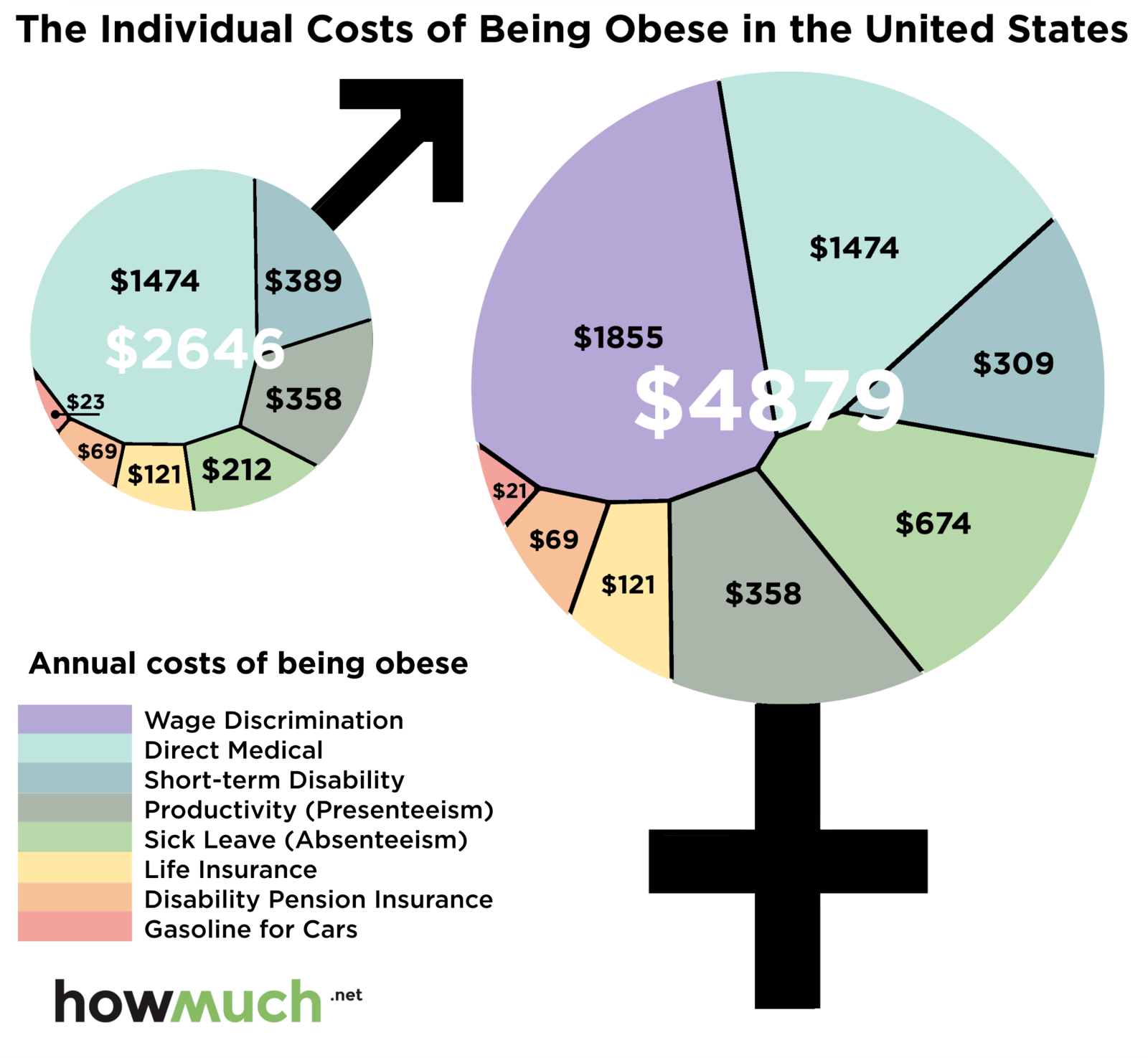
Additional medical expenses related to obesity appear to impact men and women equally, but the GW study says obese women also tend to make less money because of their weight.
“Obese female employees earn relatively less compared to normal-weight female employees,” explains HowMuch.net. “Male employees who are obese do not receive relatively lower wages, according to the research. The result is $1,855 in added costs for obese women.”
Obese individuals also lose income because they tend to miss more days of work.
“The researchers found that obese male employees miss an additional two days of work annually due to illness related to obesity. Obese female employees miss between an extra one and five work days per year.”
In spite of the health and financial concerns related to obesity, Americans don’t seem to be slimming down.
27.1% of the total US population is obese, according to Gallup, which is up from 26.2% in 2012 and 25.5% when Gallup first conducted the survey in 2008.
A medical journal study published in 2012 estimated that “while America holds about 5 percent of the world’s adult population, it accounts for about a third of the excess weight because of obesity.”
“While there are a variety of factors that are often correlated with rising obesity rates, such as an unhealthy food environment, poor eating habits, increasing portion sizes, and inactivity, experts agree that the health consequences of obesity are real,” Dr. James E. Pope, Senior Vice President and Chief Science Officer at Healthways said. “Research has shown that the average healthcare costs for an obese individual are over $1,300 more annually than someone who is not obese. Although slowing and even reversing this trend may seem daunting, even modest weight loss of 5% to 10% of initial body weight can lower the health risks associated with obesity.”

Global consulting firm Ernst & Young says companies from around the world poured more than $5 billion into capital projects in Alabama last year, earning the state a place near the top of its investment rankings.
Ernst & Young’s closely watched “US Investment Monitor” ranked Alabama No.5 among the states for mobile capital investment last year, with a total of $5.3 billion. The firm also ranked Alabama among the top states for foreign investment spending.
The London-based firm describes its Investment Monitor as a “leading indicator showing where new investment spending and jobs can be expected to occur over the next several years.” It defines mobile capital investment as spending for facilities such as office buildings, call centers, factories and distribution centers. These projects are called “mobile” because companies can build them anywhere, regardless of their headquarters locations.

“There’s no question that 2015 was a significant year for Alabama’s economic development team, with a record level of capital investment and high-impact projects from major international companies,” said Greg Canfield, secretary of the Alabama Department of Commerce.
“But we’re not standing still. We’re pursuing a pipeline of important projects across the state and developing new initiatives that will help us create more knowledge-based jobs in fields such as R&D and engineering,” he said.
Under the direction of Gov. Robert Bentley, Alabama’s economic development team continues to attract concentrated capital investments in automotive manufacturing and aerospace, two sectors that received significant investments in 2015.

Location decisions
Alabama trailed only Texas, Louisiana, California and Kentucky in Ernst & Young’s 2015 mobile investment rankings. Ohio, Tennessee, Michigan, New York and North Carolina rounded out the top 10.
Alabama ranked higher – No. 4 – when the 2015 investment figure is considered as a percentage of state GDP, according to the Ernst & Young analysis.
Ernst & Young noted that Alabama’s 2015 mobile investment figure was twice the state’s annual average for the 2010-2014 period, measured at $2.5 billion.
In addition, the firm’s Investment Monitor ranked Alabama No. 4 for foreign investment spending in 2015, trailing only Texas, Louisiana and New York.
Earlier this year, an analysis by the state commerce department showed that nearly half of the new capital investment announced in Alabama during 2015 originated from foreign companies. The commerce report counted 95 projects from 18 foreign countries.
Germany was the No. 1 source of foreign direct investment (FDI) in Alabama last year, led by Mercedes’ $1.3 billion expansion at its assembly plant near Tuscaloosa. Companies based in Canada, South Korea, France and Japan also announced substantial investments in Alabama during 2015.

Germany was the country with the most foreign direct investment in Alabama last year. (iStock)
Alabama’s strong FDI was also noted by the IBM Institute for Business Value, which produces an annual “Global Location Trends” report.
The IBM report ranked the Mercedes expansion as one the Top 20 FDI projects in the U.S. in 2015.
IBM’s Global Location Trends report also said Alabama and several of its Southern neighbors have seen solid growth in FDI linked to advanced manufacturing.
“These Southern states offer competitive operating costs and good logistics infrastructure, and they have benefitted substantially from companies seeking operations closer to the North American market,” the analysis says.
Pinpointing trends
Andrew Phillips, principal at Ernst & Young, said, “Many factors contribute to a company’s decision to invest in a particular location, and awareness of industry trends, workforce development levels and the availability of state and local tax incentives can help businesses choose where to locate their mobile capital investments.
“States should continue to find their competitive edge to attract a wide variety of investment types and maintain a healthy economy,” Phillips added.


The University of Alabama last week rolled out a “strategic plan” that will serve as a roadmap going forward for the fastest growing flagship university in America.
The strategic plan’s four stated goals focus on “providing a premier undergraduate and graduate education,” bolstering the university’s research and innovation capacity, enriching the work environment on the Tuscaloosa campus, and recruiting and retaining top-notch students, faculty and staff.
UA president Dr. Stuart Bell, who has been in Tuscaloosa for just over a year, told Yellowhammer the strategic plan’s completion is perhaps the UA community’s most important accomplishment since he took the helm.
“People may not realize how much effort went into it,” he said. “We sent out over 100,000 surveys and held 16 town hall meetings. I can’t even count the number of committee meetings we held over a ten-month period. As a campus, we’ve grown more united as we worked together to craft a plan that we can now use as a roadmap going forward.”
Dr. Bell is presiding over an economic powerhouse, which has a total annual impact on the State of Alabama of $2.5 billion. The most recent study, released in 2014, estimated the flagship campus creates over 12,000 jobs and $111.5 million in income and sales tax revenues, producing a 17 percent annual rate of return on the $144.2 million annual appropriation the school receives from the state. Home football games alone had a statewide impact of $177.9 million. Additionally, the 2013-2014 graduating class will pay additional state income and sales taxes of $885.3 million over their careers than they would have without their UA degrees.
Yellowhammer caught up with Dr. Bell by phone late last week. A lightly edited transcript of the conversation can be found below.
What is UA’s new strategic plan and why is it important?
If you want to end up in a different place than you are today, you are going to have to change a little of the direction and a little of the pace. As a university, we need to be thoughtful and strategic about where we are wanting to go. That is what this plan is all about.
One of the great things about the ten-month process of creating it is that we were able to become more united. We have had so many discussions with stakeholders and constituency groups, both internally and from outside the campus, and it has helped us identify what is important to this university.
From academics and service programs to athletics and grounds, all of the units and departments will now be able to plug in and be a part of this plan going forward. We’ll all be pulling in the same direction. That’s going to enable us to get where we’re ultimately wanting to go.
What are some examples of the changes in “direction” or “pace” that the UA community can expect?
We have experienced incredible growth in our undergraduate programs. That will continue. But we have not experienced that same type of growth at the graduate level. Expect that to change.
That won’t happen on its own, and we are continuing to have conversations about how that looks. Is it more academic program offerings? Is it bringing in more graduate students? If we want to grow in this way, we are going to have to be intentional about identifying the challenges. At the undergraduate level, we have recruiters going all over the country. The graduate model is a little different, but we need to be making some tweaks to how we attract graduate students.
The faculty senate did a survey that identified some other areas we plan to address as well.
The faculty want more activity in the discovery and research areas. We need to focus on what it means to be a national flagship university. Where are we strong and where can we improve? We are thinking a lot about that now.
UA was just named the fastest growing flagship university in America. Can we expect that kind of growth to continue?
You are either growing or you’re dying. Growth is healthy. I was at a recruiting event in Memphis recently and it was so packed with students and parents we couldn’t get anyone else in the room. We don’t necessarily have to be the fastest growing flagship every year, but we will continue to grow.
We will be strategic about our growth going forward. We will have more focus at the graduate level and on our discovery and research activities, but we will continue to grow undergraduate, too.
We are all about helping our students be more successful in their careers and in their lives.
For the first time, more than half of UA’s students are coming in from out of state. What is attracting these students to Tuscaloosa?
First and foremost, great students want to be around other great students. Just look at our numbers: We had 151 National Merit students last year, ranking us among the country’s top public universities. Thirty-six percent of our freshmen scored 30 or higher on the ACT. That places UA in the 95th percentile. These students are coming out of high schools all over the country at the top of their classes, and they see themselves coming to UA.
The cool thing about this is that it feeds on itself. When a great out-of-state student comes to UA, they are kind of a bell cow for all of their friends. The more great students you attract, the more great students they attract to come in behind them.
This is huge for the state of Alabama from an economic development standpoint. We are bringing in the best and brightest and a lot of them want to stay here. They are going to create jobs and invent products and companies that we don’t even have right now.
There was a time when Alabama brought in some rocket scientists to Huntsville. What was it like before that? It wasn’t known for rockets, but today it’s “The Rocket City.” Twenty years from now we will be saying, “Wow, what an impact these out-of-state students had on this state.”
What is the biggest challenge in the implementation of the new strategic plan?
It is going to be important for us to stay in communication with our campus and UA constituency groups. We are going to be aggressive with some of our initiatives and it is going to take a lot of energy and discipline to stay the course and make it happen. But that is the fun part. That is why we are here — to implement new ideas, assess how they are working, then repeat that process.
What accomplishments or challenges stand out from your first full academic year at UA?
It has been a great year. We had a record number of incoming freshmen. The graduation classes — wow, they were big. We graduated over 6,000 students. Our student-athletes had a great year, too. We won some SEC championships, and had a pretty good football game out in Glendale, Arizona. It was exciting to watch gymnastics finish third in the nation, and their team GPA was 3.748, including Lauren Beers’ 4.0!
I have really enjoyed getting around and meeting all of our alumni and supporters and feeling how much they love UA. I know we are going to be able to go where we need to because of how invested they are in helping us move forward.

The wait is over: Uber is coming to Tuscaloosa and Auburn, just in time for the fall semester and football season! Starting on Thursday, riders will be able to request an uberX in both cities.
Bringing Uber to these two college towns has been a priority for us, and we’re excited to be able to supply students with affordable, safe rides.
SIGN UP TO RIDE
We’ve seen again and again that when people have a reliable way to get home safely at the tap of a button—no matter the time or place—they make safer choices. Our study in partnership with Mothers Against Drunk Driving (MADD) found that 78% of people said that Uber makes their friends less likely to drive after drinking. While we still have a ways to go until that percentage is 100, it shows that riders are beginning to think of Uber as a solution for getting home instead of driving under the influence.
In addition to being a great alternative to getting behind the wheel after drinking, Uber comes in handy for those who:
• don’t have a car
• don’t feel like dealing with parking
• want their own personal chauffeur
Besides getting you safely to your destination, Uber also offers these student-friendly features:
Fare Split
In-app feature that lets you split your fare with other Uber riders riding with you.
A solution for when you’re sharing a ride with friends and they say they’ll buy you a drink to pay you back for the fare. They won’t.
Family Profiles
A profile feature that lets up to 10 riders share one payment method in-app.
Have your parents create a Family Profile and add you to it, so you can use your spending money for other things.
Spotify
In-app feature that partners with Spotify for ad-free listening.
Riders can play their own music through Spotify while on a ride, so you never have to listen to music you don’t like.
How to use the app
• Sign up to ride.
• Open the Uber app on your phone and log in.
• Enter your pickup location, then your destination.
• Tap Set Pickup Location.
• Tap Request uberX. That’s it! You’ll be able to track your driver’s location and ETA in-app.
To celebrate the Tuscaloosa and Auburn launches, we’re giving $15 off your first ride for new Uber users! Here are the codes:
Auburn: WAREAGLE01
Tuscaloosa: ROLLUBER
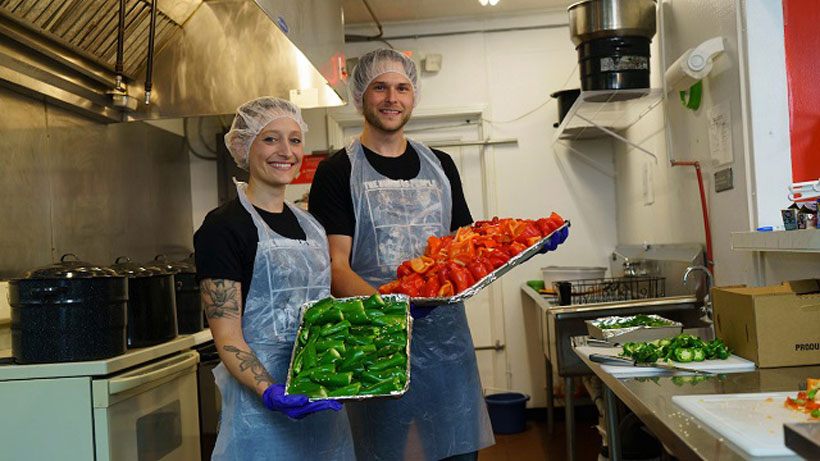
Allie Clark and Colin Woltmann, a.k.a. The Hummus People, hold some of the fresh ingredients they put into their increasingly popular products. (Mark Sandlin/Alabama NewsCenter)
The Hummus People, Athens
The Makers: Allie Clark and Colin Woltmann
Winter was coming and the tomatoes were almost gone.
Allie Clark and Colin Woltmann had grown up in Wisconsin, but they’d recently moved to Anderson, Alabama, to help Allie’s father raise heirloom tomatoes — and the growing season was drawing to a close.
“My family owned a dairy in Wisconsin, and Colin’s grandfather kept bees and had a Christmas tree farm,” Allie said. “So farming was in our blood. And Colin is also a musician, so he thought it would be great to be near Muscle Shoals and Nashville.”
The couple soon joined Allie’s father in cultivating tomatoes and selling them at farmers markets. But as winter neared, they looked for another source of income.
“We were literally down to our last $20,” Allie remembers. “Colin had always made hummus, so we took that money, bought some chickpeas, tahini, black beans and spice and started cooking.”
The hummus handlers filled about 40 plastic containers with their concoction, glued on handwritten labels and headed to a local farmers market. They sold out in less than an hour.
“For a year or so we sold tomatoes and hummus at farmers markets,” Allie said. “A lot of customers called us the ‘Hummus People,’ so we embraced that as a name. Then in 2014, we decided to make it a real business, and came up with the slogan, ‘Music to Your Mouth.’ We knew if we were going to make it a full-time job, we wanted it to represent everything we loved: good food, music and art.”
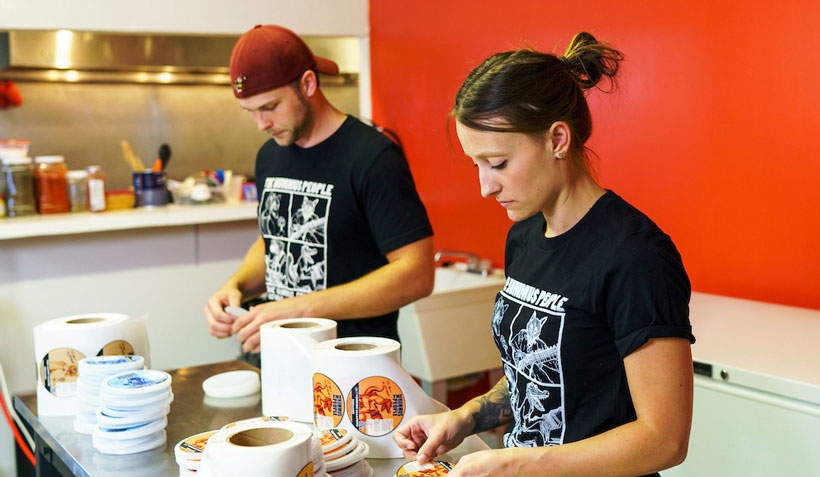

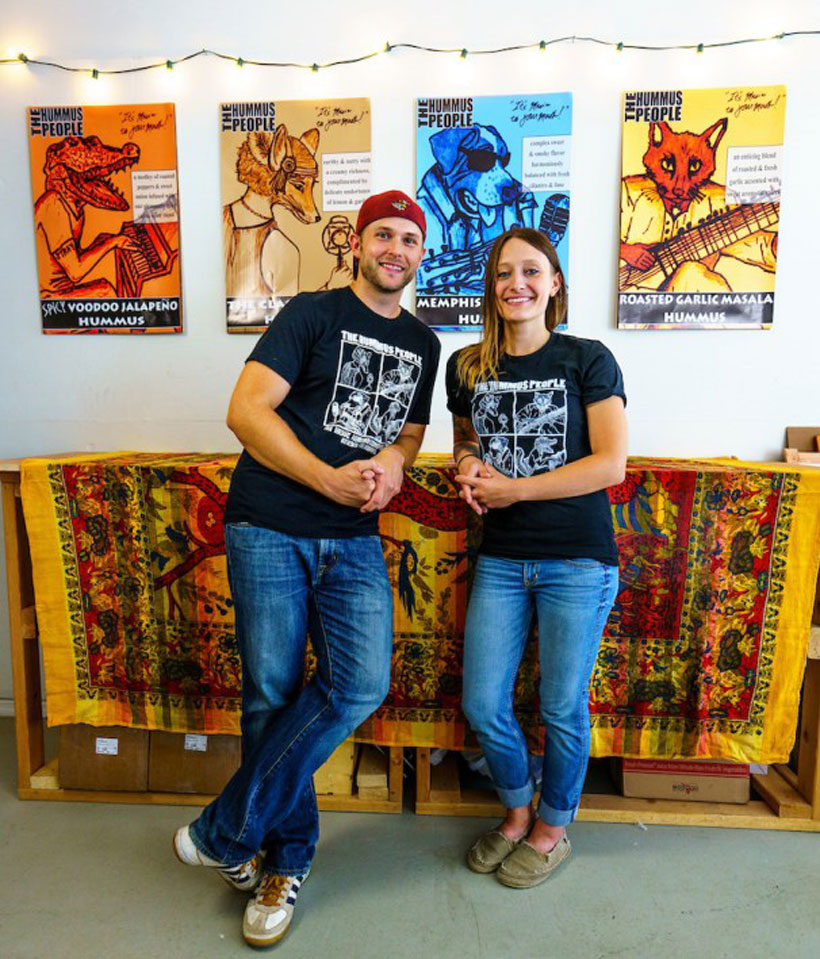
Three years after whipping up that first mouth-watering batch, Allie and Colin now produce four flavors of hummus that they sell at farmers markets around northern Alabama, and at Whole Foods Markets in Birmingham, Huntsville and Nashville.
They’ve moved from their tiny home kitchen to a renovated restaurant in downtown Athens, where Colin tries out new recipes on a 10-burner range. Using organic ingredients, the couple create all-natural, gluten-free products.
“The main difference between us and the other guys is our whole hummus line is oil-free,” Allie said. “Most commercial companies use less tahini, and add oil as a cheap filler. We use U.S.-made, organic tahini and fresh ingredients like garlic, red peppers and onions instead of powders. That makes ours tastier and has half the calories.”

Getting dip-and-chip loving Alabamians to try something new has been a mission for these hummus people.
“Many people we met at farmers markets had never tried hummus, so we had to convince them to sample some,” Allie said. “But once they tasted it, especially the Memphis Black Bean flavor, they were sold. And being in Whole Foods has helped spread the word tremendously.”
In fact, while they hope to introduce some new flavors this year, the couple stay busy “just trying to keep up,” Allie said.
Luckily, their success means the Hummus People can now afford all the ingredients they need … including plenty of tomatoes.
The Product: Homemade hummus in flavors including Classy Classic, Spicy Voodoo Jalapeño, Memphis Black Bean and Roasted Garlic Masala.
Take Home: A container of Memphis Black Bean Hummus ($5.99).
The Hummus People
305 W. Lee St., Athens, AL 35611
https://www.facebook.com/thehummuspeople/
715-383-6539

Three of Alabama largest cities, Huntsville, Montgomery and Mobile, are among the top 25 places in the nation with the lowest cost of living, according to the website Niche, with the Rocket City and state capital cracking the top 10.
Birmingham, the state’s biggest city by population, made it into the top 30.
Huntsville is ranked fourth in the “2016 Cities with the Lowest Cost of Living,” trailing Ft. Wayne, Ind., which tops the list; Evansville, Ind., at No. 2; and Odessa, Texas, which is third.

Montgomery comes in at seventh, Mobile is 22nd, while Birmingham came in at 29.
“The 2016 Cities with the Lowest Cost of Living ranking provides a comprehensive assessment of the affordability of an area at the city level,” Niche states about the methodology it used. “This grade takes into account key factors, including a location’s housing, food and fuel costs, as well as the median tax rates, in an attempt to measure the overall affordability and relative cost of living of an area.”

It uses categories from the U.S. Census and Bureau of Labor Statistics, including home value to income ratios, median effective property taxes and median rent figures.
In Huntsville, the average home is valued at 3.3 times the income of an average family. The median home value is $160,400 and the median rent is $723.
The average home of a Montgomery family is valued at 2.3 times income, while the median rent is $818. The median home value is $119,500.

Mobile came in at 22nd in the lowest cost of living in the nation. (iStock)
In Mobile, the median rent is $764 while the average value of a home is $123,600. The value of the average home in the Port City is 3.1 times what a family makes.
The median home value in Birmingham is $86,818 and the median rent is $728. The value of a home is 2.8 times income.
The three Alabama cities in the top 25 have median effective property tax rates ranging from 0.39 percent (Montgomery) to 0.62 percent (Mobile). Huntsville’s effective property tax is 0.45 percent.
Birmingham’s effective property tax is 0.75 percent.
The average monthly housing cost for families in Huntsville, Montgomery and Mobile is 0.2 times income, 0.3 in Birmingham.

BIRMINGHAM, Ala. — Birmingham-based Southern Research has received a 5-year sole source contract renewal from NASA in the amount of $9.95 million to continue to help with the Airborne Imaging and Recording System (AIRS system) used on WB-57 research aircraft for more than a decade.
The WB-57 is an American-built, twinjet tactical bomber and reconnaissance aircraft that entered service with the United States Air Force in 1953. In 1983, the USAF opted to retire it, but the remaining flightworthy WB-57s are assigned to the NASA Johnson Space Center, next to Ellington Field in Houston, as high-altitude scientific research aircraft.
Southern Research began working on the AIRS project in 2003 after the Columbia Space Shuttle incident. NASA wanted superior monitoring for the STS-114 (space shuttle) return to flight and thus, AIRS was born. The new technology attached cameras to the WB-57s and capture full motion HD video of rocket launches ascending into space at distances far exceeding 25 miles.
“We consider it an honor to be able to support NASA, in any mission,” said Johanna Lewis, director, Program Management Office, Southern Research Engineering Division. “After the success of our initial AIRS project, NASA began to develop new applications for the technology, and we have been pleased to play an expanded role supporting NASA’s high-altitude research team ever since.”
Since 2005, Southern Research’s technology has been used to capture incredible footage for NASA, the U.S. Department of Defense, and even commercial companies such as Space X. AIRS has bee used in a different capacity for atmospheric research missions, high-altitude mapping, remote sensing operations as well.
“When it comes to working on and around the issues of space flight, there is endless possibility but no room for error,” said Michael D. Johns, Ph.D., vice president of the Engineering Division at Southern Research. “In order to be successful throughout the years, our team has embraced each new challenge with a level of dedication and professional intrigue that has allowed us to advance the AIRS technology and add value as partners in the expansion of the WB-57 program. The fact that NASA has honored us with a second sole source contract to continue this work is a signal that we have yet to cross the final frontier.”
RELATED: How a ‘stealth organization’ in Alabama is quietly solving the world’s hardest problems
But just add Southern Research to a string of Alabama success stories in the industry.
Alabama’s aerospace industry is now growing at a rate that could position it to one day challenge agriculture, automotive manufacturing and tourism for the title of the state’s largest engine of economic activity.
RELATED: Alabama’s aerospace industry soars, becomes economic powerhouse for state
“Our second fastest growing industry sector in the state now is the aerospace sector,” Alabama Secretary of Commerce Greg Canfield told WKRG at the Economic Development Association of Alabama’s annual summer conference in Orange Beach.
Canfield specifically emphasized the importance of Airbus in the recent Alabama aerospace boom.
The Airbus facility at the Brookley Aeroplex in Mobile is used to assemble the industry-leading family of A319, A320, and A321 aircraft. The entire project represented a $600 million total investment and is expected to create up to 1,000 jobs within the production facility when it reaches full capacity. In addition, the construction phase of the project created nearly 3,200 construction-related jobs over a three-year period.
Airbus has also attracted a large number of aerospace industry suppliers to the state. The aerospace incubator Mobile Aeroplex is now completely packed with growing companies.
While the boom maybe relatively new for Alabama, with the contract renewal it is just business as usual for Southern Research. You can watch actual AIRS footage of a Space X Falcon launch in the clip below.

MONTGOMERY, Ala. — The Alabama Beverage Control Board (ABC) wants to know who is taking home beers from the state’s craft breweries. Under a potential new rule, the state’s alcohol regulators would have the power to demand the names, phone numbers, addresses, and ages for all customers buying beer for off-premise consumption from Alabama Brewers.
Customers are crying foul at the potential invasion of privacy by the ABC and industry leaders have described the potential government interference as a “logistical nightmare.” The Alabama Brewers Guild, composed of over two dozen breweries and pubs from around the state, said that collecting the data would be an administrative disaster and could lead to easy breaches in personal information. “I’m honestly not sure they thought it out very well,”Guild executive director Dan Roberts told the Associated Press.
While the ABC did not respond to the AP’s request for comment, or released any statement of their own, Roberts said that the regulatory agency would use the rule to enforce the state’s 288-ounce limit on the amount of brew anyone can purchase at one time.
But opponents of the proposal worry about potential unintended consequences. One of the prime concerns of the guild is that customers will feel hassled by the process and simply take their business somewhere else. “It’s a huge deal logistically. Also, there are purchasers who just won’t do it. They’d go to Publix instead of buying at a brewery,” Roberts said.
Alcohol deregulation group Free the Hops (FTH) has also aggressively opposed the rule, citing the potential for negative outcomes for consumers. “As nonsensical as it might seem, this rule would essentially empower the ABC Board to come to an individual’s house to confirm his or her purchase of a six pack of beer,” said a statement by Nick Hudson of FTH.
Before the consideration of this rule, the trend for craft beer in Alabama had been toward deregulation. The legislature, for example, has in recent years actively worked toward creating a pro-business climate for brewers.
Beer brewing was thriving in Alabama prior to 1909, when Prohibition laws banned the industry. As a result, for much of the 20th century, and until the law was changed in 2009, beer with an alcohol content greater than 6 percent was unlawful in the state.
The Brewery Modernization Act became law in 2011, reforming many former restrictions on breweries’ ability to provide a tap room and restrictive regulations regarding brewpubs. Until June 1 of this year, the state’s craft breweries were banned from selling six packs, large bottles and other containers of beer directly to consumers.
ABC’s proposed regulation, however, could reverse the recent trend and make Alabama the only state that collects such information on beer consumers.
The rule will be considered by the ABC Board on September 28.
U.S. News & World Report’s 2016-2017 Best Hospitals report ranks UAB Hospital No. 1 in Birmingham and Alabama, and nine UAB specialties are listed among the nation’s top 50, up from six specialties the previous year.
“We are proud to be one of the best hospitals in America, and located in Alabama,” said Health System CEO Will Ferniany. “UAB Medicine is something all people in Alabama should be proud of. We even have a bumper sticker that says ‘Our Nationally Ranked Team Wears Scrubs.’ While we are nationally ranked and internationally known, our faculty and staff never forget they are here to serve the people of Alabama with the best medical care possible.”
Rheumatology (11), Gynecology (16) and Nephrology (20) appeared in the nation’s top 20; Neurology and Neurosurgery (25), Pulmonology (29), and Ear, Nose and Throat (29) appeared in the top 30; and Cardiology and Heart Surgery (37) and Urology (47) rounded out UAB’s highest-ranked programs.
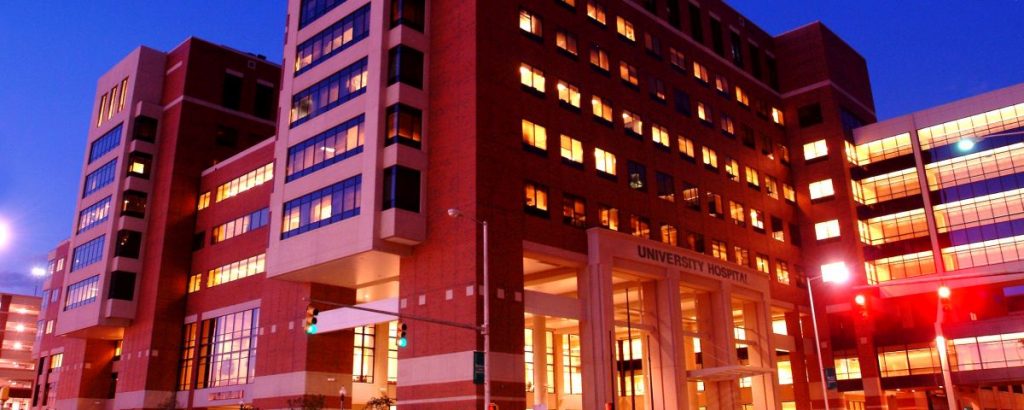
The biggest jumps in rankings came from Ear, Nose and Throat and Diabetes and Endocrinology, which were ranked as high-performing last year and both leapt to top-30 national rankings this year.
Cardiology and Heart Surgery went unranked last year and appeared at 37 this year. Rehabilitation, Orthopedics, Cancer and Geriatrics all earned the high-performing designation.
Rankings like U.S. News & World Report’s are just one tool available to patients as they make informed decisions about their health care, Ferniany says. UAB Medicine recently launched another when it became the first care provider in Alabama to empower patients to publicly rate and review its physicians — a reliable source of verified and up-to-date information from actual patients in UAB’s Find a Provider directory.
The rating and reviews feature gives patients an alternative to third-party rating sites that often exist with little if any oversight and feature outdated, inaccurate and in some cases libelous information. At its launch, more than 81 percent of eligible UAB physicians had a posted rating of at least four stars on the five-star scale.

There have been few darker moments on the Alabama Gulf Coast than when the Deepwater 2010 Horizon oil spill stained the brilliant white sand beaches and clouded the blue water.
Hurricane Frederic (1979) and Hurricane Ivan (2004) had taught coastal residents what it would take to rebuild from the most devastating storms. But they had never experienced an oil spill.
Even once the flow of oil spewing into the Gulf was halted and the visible effects were gone, another question lingered. How long would it take consumers to get that image out of their heads?
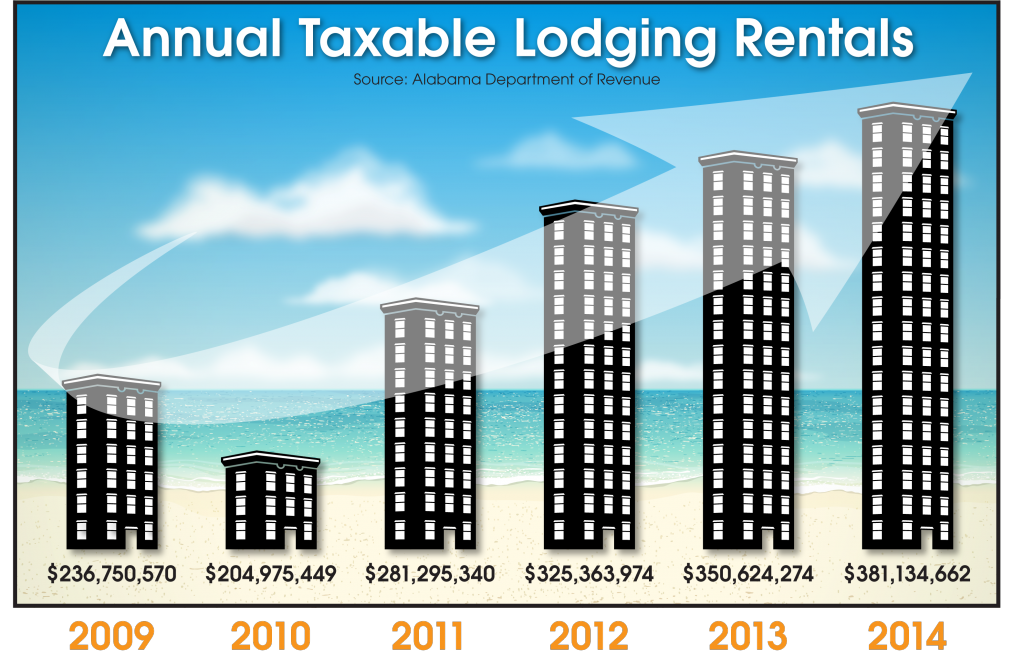

The answer has turned out to be a pleasant surprise, as a full-scale rebound began in 2011. Taxable lodging rentals, the bellwether statistic for tourism, indicate record-setting years for Baldwin County beaches have followed the disastrous 2010 season.
“Thank goodness we have a very loyal customer base,” Malone said. “We had a record year in 2011 and we’ve had record years back to back ever since.”
The recovery was a bit slower for Dauphin Island in Mobile County. But tourism there, too, has rebounded to surpass pre-spill levels.
“It was in 2014 that things really started going,” said Dauphin Island Mayor Jeff Collier. “2015 was better and 2016 is looking better than that.”
The commercial seafood industry has not reached its pre-spill high point. But other factors may be in play.
“It’s been a tussle for the last six years,” said Avery Bates, president of the Organized Seafood Association of Alabama.
Bates said the spill hit bottom-dwelling species, oysters, blue crabs and flounder, particularly hard. And many of the people who lost their livelihood due to the spill have yet to be compensated for it, he said.

But Bob Shipp, professor emeritus in the University of South Alabama Department of Marine Sciences, said there is no scientific evidence of any lingering effects from the spill.
When the Deepwater Horizon oil rig exploded on April 20, 2010, the Gulf Coast was coming out of two years of recession in pretty good shape. Rental bookings for the 2010 tourist season looked to be on an upward trend. But the spill caught tourist-dependent businesses at their most vulnerable moment.
“One of the worst things about the event for us was that it hit right at the beginning of the high season,” Malone said. “Not only did it knock the top off of the high season, it caught our businesses at the low point of their cash flow.”
While the Gulf Coast Community had experience with tropical storms, which basically shut down businesses during the storm and cleanup, they usually come at the end of the tourist season in August, September and October. By then, businesses have had time to build their cash reserves, the bulk of which for the entire year come during the spring and summer tourist season. The spill cut off the flow of money at the worst time.
Lodging and other tourist dollars aren’t like hard inventory that can be sold later. They are more like perishables that must be thrown out once their time has passed.
As the oil spill dominated daily headlines, lodging cancellations started rolling in. Collier estimates that 95 percent of the island’s vacation bookings were cancelled immediately following the spill. While the beaches weren’t actually closed, they might as well have been.
“Everything we had to offer as an island town was turned off,” Collier said. “Most of what people come to a beach community for is the beach and the water.”
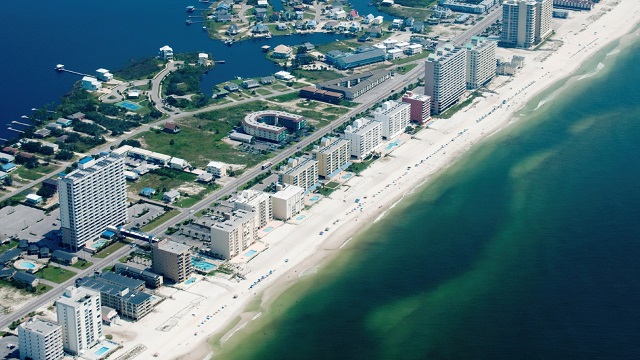
The oil flow eventually stopped and the beaches were cleaned but the damage had been done to the local economy. In Gulf Shores and Orange Beach, taxable rentals for the summer dropped 25 percent from $133 million in 2009 to $100 million in 2010. But that wasn’t as bad as Malone had feared.
For the year, Gulf Shores and Orange Beach dropped 13.4 percent from $236.7 million in 2009 to $204.9 million in taxable lodging rentals in 2010.
“We thought it might be down as much as 70 or 80 percent,” he said.
In Dauphin Island, the town’s lodging tax dipped from almost $338,000 in 2009 to about $248,000 in 2010. Losses were somewhat blunted by rentals by cleanup crews.
Commercial fishing was shut down for the duration of the oil spill. Commercial landings of all seafood dropped from 13,000 metric tons in 2009 to 6,300 metric tons in 2010.
“It hit us and threw us for a loop,” Bates said. “When you lose your customers, you lose your business.”
Bates said the Portersville Bay area once supported about 300 oystermen but the area hasn’t produced since the spill.
“It hit crabs tremendously,” Bates said. “They’re just coming back this year. The reproductive organs of some of these species were affected.”
In 2011, commercial seafood landings rose to 11,800 metric tons and have been fairly constant since then. Commercial landings totaled 11,900 metric tons in 2012, 10,600 in 2013 and 11,600 in 2014.
But Kevin Anson, biologist for the Department of Conservation’s Marine Resources Division, said landings are influenced by a number of factors such as the market price. Flounder, crab and oyster landings are off but they were in decline before the oil spill.
The state had shut down the oyster harvest in 2009, Anson said. Alabama oyster reefs had sustained considerable damage in Hurricane Ivan and Hurricane Katrina (2005) followed by drought years during which an oyster predator called a drill snail prospered.
While Anson says the oil spill certainly wouldn’t have been positive for crabs, oysters and flounders, there is no way to pin their decline strictly on it. There are too many factors.
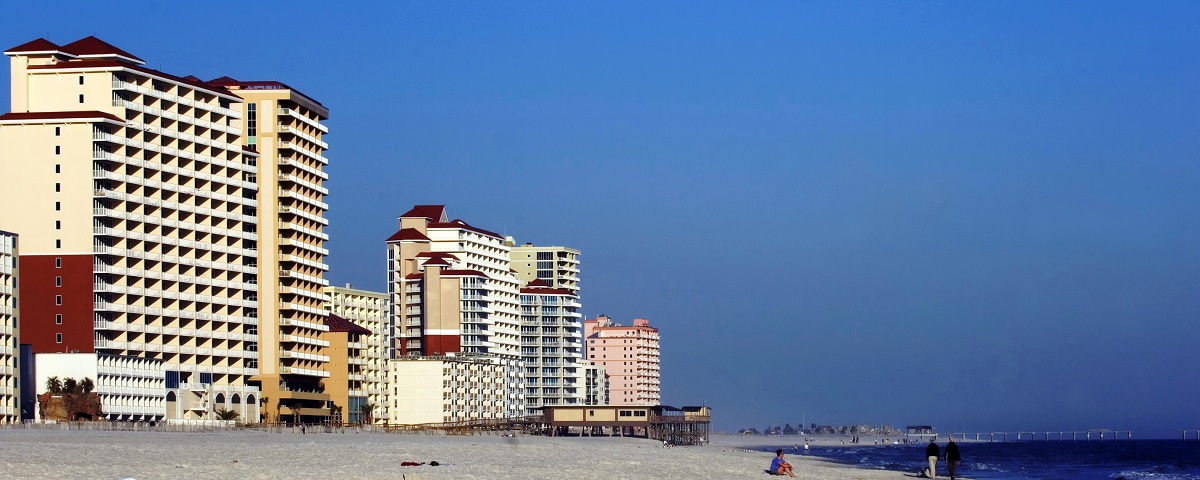
The Alabama blue crab harvest had dropped from 2,100 metric tons in 2000 to 661 metric tons in 2009. That dropped to 420 metric tons the year of the spill but rebounded to 733 metric tons in 2011. It declined since then to a low of just 464 metric tons in 2013.
The oyster harvest in Alabama reached a high of 472 metric tons in 2005 but had fallen off to 32.4 metric tons in 2008 and 10 metric tons in 2009. The harvest rose to 30 metric tons the year of the spill. It rose as high as 134 metric tons in 2011 but has declined since and was 26 metric tons in 2014.
Blue crabs and oysters suffer from loss of habitat, adverse weather and human impact, Anson said. Shipp has devoted his life to studying the Gulf’s sea life. He continues in research and says he sees little effect from the spill.
“The bottom line is that the oil spill’s impact is almost nonexistent,” Shipp said. “Things are back to normal.”
Tourism has fared better in the years since the spill. During the fall of 2010, taxable lodging rentals were down 3.5 percent from the previous year and ended up 13.7 percent less than the previous year
But in 2011, rentals soared to $281 million, 37 percent over the previous year and about a 20 percent increase over 2009. Malone tempered his enthusiasm and counseled others to do the same. The increase might have been due to pent-up demand and people who wanted to do their part to help the Gulf Coast.

“We were concerned that it was just a big rebound and, as we approached 2012, we were a little bit apprehensive,” Malone said. “We figured if we could just get back to what we had in 2011, that would be great. We ended up with about a 16 percent gain over that.”
Taxable lodging rentals rose to $325 million in 2012, a 15.7 percent gain over the previous year. Record-setting years have followed every year, reaching almost $433 million in 2015. This year is on pace for a 12 percent increase over 2015, Malone said.
“Once we get recovered and people start coming back, they seem to come back in numbers that are larger than ever,” Malone said. “We experienced that with Ivan and before that.”
Dauphin Island saw a more modest recovery at first. Its lodging tax revenues jumped to $445,000 the year following the spill, then fell back slightly two years in a row. But in 2014, lodging taxes rose to $506,000 and have been climbing ever since. In 2015, tax income reached $675,000.
Malone and Collier credit marketing campaigns funded by post-spill grants with helping to bring tourists back in record numbers. Malone said the Gulf Shores/Orange Beach campaign was to “come see for yourself” and focused on being honest with consumers. “When our beaches were slathered with oil, we showed them slathered with oil,” Malone said. “I think they appreciated that honesty.”
The Dauphin Island business community is mostly small mom and pop businesses. Collier said “two or three” failed as a result of the spill but most “hung in there.” If there’s any residual effect, it’s a nagging concern that some unknown impact may be lurking in the Gulf like a malevolent sea creature.
“With the economy, you can run the numbers,” Collier said. “You know what’s happening. With the environment, you don’t.”
In the end, officials learned from the oil spill experience and know better now how to react to such a disaster, Collier said
Malone believes that while the publicity from the spill was negative, it may have raised awareness of the Alabama Gulf Coast. Some people never knew Alabama had beaches before the spill.
He also learned something about people who come to spend their money every summer.
“All of us who live here have a very strong affinity for the Gulf and the beach,” Malone said. “I didn’t realize that our guests have that same affinity.”

Getting Alabama to come out on top of Google’s own search results for its high-tech data center took thousands of emails and texts, 20 visits from the company to north Alabama and the last-minute signature of a mayor named Bubba.
The key players in the recruitment of the $600 million Google data center to Jackson County gave a behind-the-scenes look at the twists and turns the project took before settling on 500 acres at a power plant that was shutting down. The recruitment was the subject of a panel discussion at last week’s Economic Development Association of Alabama summer conference.
It was a project shrouded in secrecy. At various times, it went by the codename of “Project Zebra” and “Project Spike.” Officials involved in the recruitment had to sign nondisclosure agreements even though they didn’t know the name of the company.
In April 2014, Tennessee Valley Authority project manager Spencer Sessions took the first call and began trying to find sites that matched the criteria.

Bob Smith, project manager with the Alabama Department of Commerce, was brought in a few weeks later. He said Alabama had won a fair number of data centers the previous four years – projects that were heavy with capital investment because of the technology infrastructure, but don’t have the same number of employees as large manufacturing plants.
Site Selection magazine, an economic development trade publication, had cited Alabama’s success in the data center arena. Smith said officials recognized that the state’s incentives were more geared toward manufacturing but needed to focus on data centers.
The state passed such incentives in 2012. Alabama now had a new tool in the toolbox and waited for an opportunity to use it.
Meanwhile, TVA had a site in Jackson County certified as ready for a data center.
“We had this certified data center site right next to the community college,” said Dus Rogers, president and CEO of the Jackson County Economic Development Authority.
The only problem is Project Zebra (or was it Project Spike by this time?) didn’t care for that site and wanted officials to think bigger and broader to come up with something unique or special.
“They kept wanting something big and outside of the box,” Sessions said. “They turned down multiple sites.”

Rogers and Jackson County really needed this project. TVA was in the final stages of shutting down the Widows Creek Power Plant, near Stevenson, that once employed 400 and was set to lose the last 90 jobs when the unit shut down in 2015.
This data center project had up to 100 good-paying jobs associated with it and a capital investment of $600 million that would mean more money for schools and county services.
Meanwhile, Google was looking at 44 sites in seven states trying to find where to invest that money and create those jobs.
Google sent representatives to Alabama more than 20 times for meetings, site searches and negotiations. Sessions said most of the meetings were in Huntsville but other communities were asked to host receptions and tell the company about life in their city or county.
As Sessions and the recruitment team were trying to “think outside of the box,” the focus turned to the Widows Creek Power Plant. It was in exploring that site that TVA noted they owned an adjoining 500 acres purchased for a coal ash pond that was never built.
After much thought and planning, that site emerged as a favorite and negotiations centered on making it work.
Rogers had to personally drive the project agreement to entities throughout the county to get them to sign something that still didn’t have the name “Google” on it.
The final signature came from Bridgeport Mayor David “Bubba” Hughes.

Smith and the Department of Commerce team were applying data center incentives for the first time while ironing out the state’s project agreement.
With the agreements done, everyone tried to keep the project out of the media until the formal announcement with Gov. Robert Bentley on the site several days later.
But Rogers couldn’t help but mark the occasion.
“I took my wife to Dairy Queen for a banana split to celebrate,” he said. “Google doesn’t come along every day in northeast Alabama.”
Since the governor joined other officials to announce the project more than a year ago, months have been spent preparing the site and construction has started on Google’s data center. Two boulders were kept in place on the property and will serve as part of an entrance into what will be called the Widows Creek Technology Park.
In other states, Google has grown beyond an initial data center to add operations in a technology park setting. Jackson County, TVA and Alabama officials are hopeful Google will do more on the Bridgeport property.
For now, they are glad that Google’s last search ended up with Alabama as the top result.

HGTV shows like “Fixer Upper,” “House Hunters,” and “Property Brothers” have become favorites in recent years, but Alabamians may not realize that there are talented folks right here in the Yellowhammer State who are doing work that would even impress Chip and Joanna.
One such company is Christopher Architecture and Interiors, led by Chris Reebals.
Here’s how the Birmingham-based company describes themselves on their website:
Every designed space has a story. With each of our projects, we seek a collaboration with the client to tell that story. Working with a palette of materials and colors appropriate to each space, we seek to balance the pragmatics of budget and lifestyle with a proportioned and elegant design.
You don’t have to just take their word for it, though. Their Instagram account, which shows a steady stream of their work, is attracting a lot of attention around the state.
Check out some of their best posts below.