The full governing board of the Business Council of Alabama voted today to confirm an Executive Committee proposal adopted on May 21, a proposal which sparked significant controversy among members. The transition plan furthers the group’s stated goal to replace President and CEO Billy Canary by the end of this year.
The move comes after several of the state’s largest companies quit the organization, with some openly questioning its leadership, direction and effectiveness. In a press release issued by BCA, the group has named the selection committee to identify and hire a new CEO. The committee is comprised of members of the executive committee.
(more…)
BlueCross BlueShield of Alabama has terminated its membership in the Business Council of Alabama, and longtime official, Fournier “Boots” Gale, a senior vice president and general counsel for Regions Bank, resigned as general counsel according to the Montgomery Advertiser.
BlueCross BlueShield is now the fourth major company this week to formally leave the BCA. Alabama Power led the procession out the door on Monday, while Regions Financial Corp. and PowerSouth announced their departures soon after. A lack of confidence in BCA’s leadership and direction drove each company to their respective exits.
Some key implications of these events stand out today.
No viable business organization in Alabama can exist without these companies.
In recent months, there have been ongoing and coordinated efforts to paint the Business Council of Alabama as an ineffective and financially troubled organization. These attacks are maliciously false.
Those attacking our organization for their own political purposes are resorting to extreme lengths to undermine our organization. They continue to sling one baseless attack after another and hope something sticks.
This tactic was seen in Thursday’s Yellowhammer News editorial that looked at the BCA’s 2016 IRS Form 990 and made the determination that the BCA’s financial health “could be in jeopardy.” Once again, this is a claim that is simply not true.
(more…)
At a time when the business community in Alabama should be enjoying a tremendous amount of influence with Republican supermajorities in the Legislature, strong economic development support from the governor, and the state’s lowest unemployment rate in history, its largest association, the Business Council of Alabama, is in the middle of a leadership crisis of epic proportions.
The sun is shining for business in Alabama and its leadership should be making hay, but they are not.
Instead, some of the largest employers in the state are working overtime to push out the longtime head of the BCA, Billy Canary. Why? Well, if you listen to legislators in the State House, they feel a strong disconnect from the business community and it is beginning to show.
Legislation that should be a “chip shot” for business in Alabama is running into roadblocks because of personality conflicts, ego and a desire to settle old scores. There are usually more than one thousand bills filed in any given legislative session, making education, communication and advocacy critical functions for any entity wishing to advance their policy initiatives. And, yet, a consistent criticism of the BCA has been its inability to carry out these critical functions as part of its participation in the policy-making process.
The BCA’s diminished effectiveness and influence seem to demonstrate that criticism in these areas is warranted. In many cases, what’s best for business is being overshadowed by petty power struggles and political whims, which isn’t good for the people who show up to work every day trying to make payroll.
Something has to give.
The growing frustration boils down to Canary and his leadership style. Canary is a native New Yorker who has taken a street fighter approach during his time at BCA. For years, this served him well. Canary’s brash style played a vital role when the Democrats ruled the state and the Alabama Education Association dominated the flow of legislation. He had a boogeyman to go to battle with every day and his members loved it.
(more…)

As I mentioned last week, we will have a plethora of political contests to follow next year, and the field is beginning to formulate
The governor’s race is always the marquee event. However, the most important races will be for the 35 State Senate and 105 House of Representatives seats. These legislative races will be where most of the special interest money will gravitate.
There will be an unprecedented number of state senators not running for reelection. However, the nucleus and bulk of the State Senate leadership is planning to return. Veteran leaders Jabo Waggoner, R-Vestavia, Del Marsh, R-Anniston, Greg Reed, R-Jasper, Jimmy Holley, R-Coffee, Arthur Orr, R- Decatur, Cam Ward, R-Shelby, and Jim McClendon, R-St. Clair, will all run for reelection. Along with rising stars, Steve Livingston, R-Scottsboro, Clay Schofield, R-Marshall, Clyde Chambliss, R-Autauga, Shay Shelnut, R-Trussville, Slade Blackwell, R-Jefferson, as well as Gerald Allen, R-Tuscaloosa and Tom Whatley, R-Auburn.
This cadre of Republican leadership returning portends that the State Senate will be where the power will be concentrated when the next quadrennium begins in Montgomery.
The same scenario will occur in the House. There will also be a good deal of turnover in the lower chamber. However, the nucleus of leadership will return and will more than likely all stay in their leadership positions. The top five leaders will remain intact. Mac McCutcheon, R-Huntsville, as Speaker, Victor Gaston, R-Mobile, as ProTem, Bill Poole, R-Tuscaloosa, will continue as Chairman of the Education Ways and Means Committee and Steve Clouse, R-Ozark, will be Chairman of Ways and Means General Fund Committee. Rep. Mike Jones, R-Andalusia, will steer the Rules Committee.
One center of special interest power that will diminish significantly is the once vaunted Business Council of Alabama unless they replace Bill Canary, their much-beleaguered CEO. It has been rumored for over a year that he will be replaced.
In the past few months, the omnipotent power in Alabama politics, Alabama Power, made it perfectly clear that either Canary goes or the Company would have to reconsider its participation. The company’s last minute withdrawal from the annual BCA Governmental Affairs Conference was a clear message. But just to make sure the message was received, Alabama Power President, Mark Crosswhite, met with Canary in a gentlemanly fashion. He summoned Canary to the company’s downtown Birmingham headquarters and politely explained to the New Yorker that BCA’s failures and lack of leadership are a major concern to the company. Crosswhite then met with some key members of BCA’s board to make Alabama Power’s position clear.
Canary is telling his BCA bosses that the meeting with Crosswhite was a great success and everything was just a misunderstanding. But the only one who misunderstands, it seems, is Canary. Alabama Power was the integral factor in organizing the Business Council several decades ago. Their financial contributions to the BCA comprise over 25 percent of the group’s income.
In addition to the Power Company’s disenchantment with Canary, our senior Senator, Richard Shelby, has made it clear to BCA members that Canary is so out of favor with him that he is no longer welcome in his office and furthermore should not bother to call his office for an appointment.
Folks, what that means is that the BCA with Billy Canary on board has absolutely no power in Washington. All seven of our Congressmen and whoever our new senator is pales in power to Shelby. Shelby is more powerful that all eight put together, and believe me none of them want to offend him. He not only trumps them, he trumps Trump.
Canary is not only a pariah in Washington, he is a joke in Montgomery. Most folks thought he would be indicted with Mike Hubbard. His credibility has continued to diminish since that time. His cavalier, sinister, overbearing, and boorish New York behavior has made him a caricature.
In private conversations with most Republican and Democratic legislators, they will snicker and say if the BCA board is stupid enough to allow Canary to stay we will take their money during the 2018 election cycle and then ignore him for four years just like Shelby.
The BCA with Canary is a dead-man walking. They are a powerless joke. If a business were smart, they would give their contributions directly to the candidates, rather than through a defunct organization led by a has been. You can bet your bottom dollar that is what ALFA and the Alabama Power Company will be doing.
Kay Ivey has made it official that she is a candidate for governor. She enters the race as the clear favorite.
See you next week.
 About the Author: Steve Flowers was born and raised in Troy, Alabama. He became a Page in the Alabama Legislature at age 12 and worked at the State Capitol throughout his high school years. Steve went to the University of Alabama where he graduated from the Capstone in 1974 with a degree in Political Science and History.
Steve entered politics and was elected State Representative from Pike County. He was overwhelmingly reelected four times. He left undefeated and uncontested, choosing not to seek reelection in 1998.
After leaving the Legislature, in 2002, Steve began writing a weekly column on Alabama politics. Overnight it became the leading and most widely read column on Alabama politics in the state.
Today, Steve Flowers is Alabama’s most watched and read political columnist and commentator. His weekly column on Alabama politics appears in over 60 Alabama newspapers with a circulation approaching 450,000.
As Alabama’s premier columnist and commentator, Steve has analyzed Alabama politics for national television audiences on CBS, PBS, ABC and the British Broadcasting Network.
Steve has been an up close participant and observer of the Alabama political scene for more than 50 years and is generally considered the ultimate authority on Alabama politics and Alabama political history.
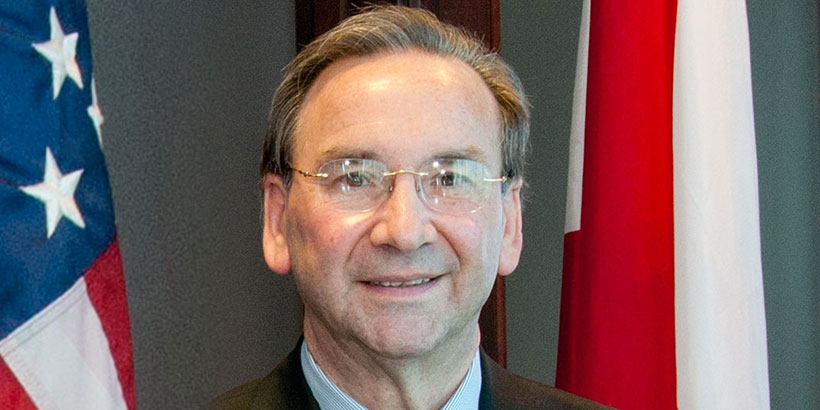
by William J. Canary
Congress returns to Washington facing enormous challenges. These include passing a domestic tax cut that is important for this and future generations.
President Trump has suggested a tax cut to reduce the unbelievable domestic income tax rate for corporations, including manufacturers, of 39 percent, to a competitive 15 percent.
In addition, Congress must lower the tax rate for the two-thirds of manufacturers that pay taxes at individual tax rates as pass-through entities. The pass-through rate on small business owners can be as high as 44 percent, according to the National Association of Manufacturers. These small businesses are the backbone of our economy and create the majority of jobs.
A 2015 NAM study concluded that a reform package like this could add more than $12 trillion in Gross Domestic Product over 10 years, deliver more than 6.5 million jobs to the U.S. economy, and increase investment by more than $3.3 trillion, NAM Chairman David Farr said in a recent speech to the Economic Club of New York. (Farr is chairman and CEO of Emerson, a global manufacturer.)
Combined with overarching regulations, the burdensome tax rate makes it harder for manufacturers to meet intense competition for business and jobs. A tax rate of 39 percent – higher when you throw in state and local taxes – is a crushing obstacle when competing against manufacturers in the top 35 industrialized nations who enjoy a tax rate, on average, half that of the United States.
A tax cut will create jobs for Alabama manufacturers that compete internationally against lower tax rates.
This nation’s bountiful resources, which include willing investors and hard-working men and women (a recent study showed that Americans are among the hardest-working in the world), can be stifled by a non-competitive tax code.
The timing for tax reform is right. As the market is proving, businesses and individuals have been investing in anticipation of a tax cut and its effect on manufacturers, jobs, and our families’ standards of living.
About the Author: William J. Canary is president and CEO of the Business Council of Alabama, the state’s exclusive representative of the National Association of Manufacturers and the U.S. Chamber of Commerce.
The Yellowhammer Power & Influence 50 is an annual list of the 50 most powerful and influential players in Alabama politics and business — the men and women who shape the state.
This year’s list is being released in three segments. Earlier this week we brought you the most influential people in the Alabama business community, the state’s most powerful politicians and government officials, and today we cover the state’s most powerful lobbyists. Names below are listed in alphabetical order.
Don’t miss Yellowhammer’s 3rd Annual Power of Service reception honoring the men and women on the Power & Influence 50 list who leverage their stature to make a positive impact on the state. The event is set to take place Thursday, September 14th at Ross Bridge Resort in Birmingham. Past events attracted a who’s who of Alabama politics and business, including the Governor, Lt. Governor, Speaker of the House, Pro Tem of the Senate, members of Congress, dozens of state legislators and many of the state’s top executives, lobbyists, opinion leaders and political activists. For more information on the event click here and to purchase tickets click here.
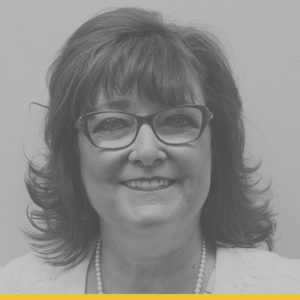 Ginger Avery-Buckner, Executive Director, Alabama Association for Justice
If you want a blueprint on how to adapt when the political winds shift dramatically, look no further than the Alabama Association for Justice and its executive director, Ginger Avery-Buckner. When the Republican majority blew into Montgomery following the 2010 elections, the association representing the plaintiffs’ bar had seemingly been left on the outside looking in.
The organization, under Avery’s leadership, has successfully rebranded and now enjoys an influential seat at the table on any issues that affect civil litigation in Alabama. Avery-Buckner is known as a tenacious lobbyist. She is married to decorated Special Forces veteran Jack Buckner, and yet we are not sure he is the toughest person in his own house.
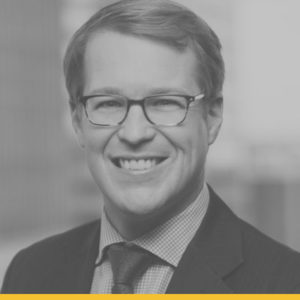 Josh Blades, Lobbyist, Bradley Arant Boult Cummings
Relatively young in the lobbying profession, Josh Blades has already built a resume that would be a career for many. Although, this should not surprise anyone given that Blades had already owned a successful small business by age fifteen and entered a race for city council by the time he was nineteen.
Having served as Deputy Chief of Staff during the Riley Administration and Chief of Staff to former Speaker Mike Hubbard, he has extensive experience in both the executive and legislative branches of state government. Blades now occupies a position in the private sector with the national law firm Bradley Arant Boult Cummings, where he is a key member of the firm’s lobbying team.
 Alexia Borden, Vice President for Governmental Affairs, Alabama Power Company
Alexia Borden oversees Alabama Power Company’s state governmental affairs section. That’s a daunting task when you actually consider the enormous number of bills, executive orders, agency initiatives, regulations, rules, committee reports, studies and proposals that affect the company’s delivery of reliable electricity service to its 1.4 million customers.
Unsurprisingly to anyone in Alabama politics, Borden has thrived in that role. She has demonstrated an innate ability to identify potential issues for her company before they become problems. Certainly this is, to some extent, a result of the perspective Borden brings as both as an engineer and a lawyer. A graduate in engineering from the Georgia Institute of Technology, Borden chose the law as her career path, having been a partner at the prestigious law firm Balch & Bingham prior to her current job.
Make no mistake, though, protecting your company’s interests in politics also involves seeing, hearing and knowing. Borden has built a roster of productive relationships envied by all other lobbyists. Whether in the statehouse or a state agency, “What does Alexia think?” are words often spoken. Tell-tale signs of a heightened level of power and influence are when you are known only by your first name, and they want to know your position before taking any action.
There will come a day when Borden transitions to a different section of this list. The question is simply when, not if.
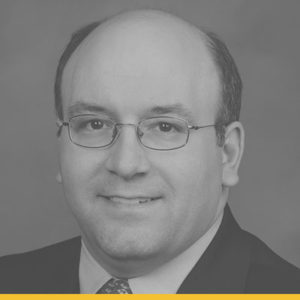 Greg Butrus, Partner, Balch & Bingham
Greg Butrus is at the top of the list when anyone searches for the most politically influential lawyer in Alabama. With so much specialization having taken over the legal profession, Butrus is uniquely positioned to provide counsel on a range of issues. From campaign finance laws to state and federal energy policy, and ethics law compliance to regulatory affairs, his areas of expertise run the gamut.
From his lofty perch in the downtown Birmingham offices of Balch & Bingham, Butrus is the definitive voice for many of the state’s power players seeking legal advice.
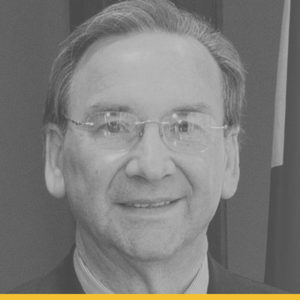 Billy Canary, President, Business Council of Alabama
Billy Canary has had quite a run. He has been in charge at the Business Council of Alabama (BCA) since 2003. Before that he headed up the American Trucking Association. And if anyone spends more than five minutes with Canary, he will regale them with stories of his time working in the White House for President George H. W. Bush.
It’s possible that no one in recent Alabama history has been more successful at political guerrilla warfare than Canary. He was a trusted ally of Governor Bob Riley for eight years. During Riley’s two terms in the governor’s office, he counted on Canary to lead the opposition against an out-of-touch Democratic legislature, a role naturally suited for Canary’s skill set. The third point of that triangle of Republican power in those days was Canary’s close friend, former Speaker Mike Hubbard. It was Canary’s infusion of guerrilla tactics into Hubbard’s campaign plans that was crucial to their successful storming of the statehouse.
And, yet, Canary currently finds himself situated as one of the most divisive figures in Alabama politics. So much so that numerous former BCA chairmen recently felt compelled to send out a letter announcing their support for Canary. Detractors contend that the letter wreaks of vulnerability. Whatever the case, all eyes are on BCA and Canary as they attempt to adapt to the new environment where their goal is now vision implementation, rather than stiff opposition.
To trace the source of Canary’s power and influence, and his existence on this list, simply follow the money. The BCA’s political action committee contains nearly $2 million. If Canary is the man handing out those types of campaign contributions during the 2018 election cycle, he will be positioned as a power player for years to come.
 Joe Fine, Partner, Fine Geddie & Associates
When they open the Alabama Lobbyist Hall of Fame, Joe Fine will be the first inductee. Those who have been around Alabama politics for a long time occasionally remark that they remember when the roster of lobbyists was only Joe Fine and five or six other people. The gentleman lobbyist, who never leaves the statehouse while the Senate is in session, has forgotten more about lobbying this week than all others learn in a lifetime.
Fine’s reputation outside of Alabama is just as impressive. Listen to a conversation about Alabama lobbying in D.C. or some other corporate hub, and Fine’s name will come up.
Fine continues to maintain a client list that is a who’s-who of not only Alabama business but also corporate America. It has been nearly fifty years since Fine entered Alabama politics, and he shows no signs of letting up.
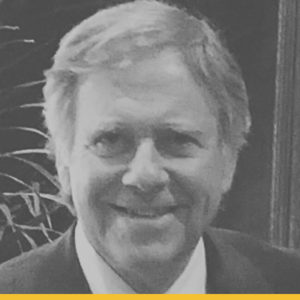 Bob Geddie, Partner, Fine Geddie & Associates
Bob Geddie is the State House of Representatives specialist for the Fine Geddie firm. He knows every member, every rule and every tactic necessary to pass legislation through the lower chamber. Geddie is most often seen quietly observing from a small hallway off the main lobby on the fifth floor. From there he can see everyone who comes and goes, and he has ready access to members as they walk to and from the House chamber.
Geddie is known for his persuasive lobbying skills. For years, a common refrain among legislators has been that it is hard to say no to Bob Geddie.
Others have tried to replicate his formula of institutional knowledge, skill and relationships, and none have come away with the power and influence enjoyed by Geddie.
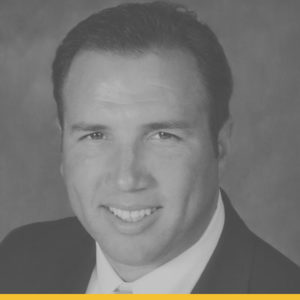 Robert McGhee, Vice Chairman, Poarch Band of Creek Indians
Robbie McGhee is the point man in politics for the burgeoning empire that is the Poarch Band of Creek Indians. Under the leadership of Tribal Chair and CEO Stephanie Bryan, the Poarch Creeks have built a structure of prosperity and corporate citizenship previously unseen in Alabama. McGhee has astutely utilized the accompanying tools and resources provided to him to turn the Poarch Creeks into an influential force.
McGhee’s political rise began in Washington, D.C. at the U.S. Department of Interior-Bureau of Indian Affairs, the U.S. Senate Committee on Indian Affairs, and Troutman Sanders LLP-Indian Law Practice Group. He engages on political and legislative issues affecting the Poarch Creeks with a razor-sharp focus. The results show why McGhee deserves a place squarely on this list.
 Steve Raby, Lobbyist and Political Consultant
Steve Raby is another member of the Power & Influence 50 who is relishing his second act in Alabama politics. Raby is a longtime Democrat activist and consultant, and he was the Democrat nominee for Congress against Mo Brooks in 2010. A decent first act for anyone.
Fast forward six years to when his friend Mac McCutcheon gets elected to serve as Speaker of the House. Suddenly Raby was back on the scene playing a key role as a close advisor to one of the most powerful elected officials in the state. All Speakers of the House have had a close advisor like Raby. These advisors provide counsel on how to handle members and staff and which issues to prioritize as part of the Speaker’s agenda. As much as anything, Raby is an extra set of eyes and he watches the Speaker’s back.
McCutcheon has also entrusted Raby with running the political operation for the House Republican Caucus. It’s a shrewd move on Raby’s part because this means that each House member turns to Raby for help in fundraising and campaign management. Few better ways exist for a lobbyist to enhance their relationships than directing a member’s successful election.
For most governmental affairs professionals, the type of work Raby does with the Speaker of the House would be plenty. However, he has not stopped there. Raby is also running the campaign operation for gubernatorial candidate Tommy Battle. Battle has posted impressive fundraising numbers over the summer. If Battle were to get elected to Alabama’s highest office, Raby would travel right with him to the very top of this list.
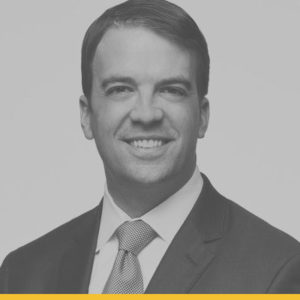 Clay Ryan, Vice Chancellor for Government Affairs, University of Alabama System
There are very few jobs that could attract a young partner on the management fast-track at a power firm like Maynard Cooper & Gale. However, donning the political might of the University of Alabama System is too alluring for just about anyone to pass up. Imagine entering a negotiation with the weight of the largest employer in the state, a stacked board of trustees, and even the nation’s most successful football program in your corner. When he shows up, Clay Ryan is generally holding all the cards.
That level of political power would be intoxicating for most, but Ryan’s wit and charm give him a comfortability that puts his audience at ease. He became active in politics at a young age cultivating relationships that span the business community, as well as generations of politicians. His rolodex rivals anyone’s in the state and there is likely no one in Alabama who wouldn’t take a call from Ryan.
Whether as a partner at a powerful law firm, or spearheading the governmental affairs operation at a university system with a $6 billion budget, power and influence follows Clay Ryan.
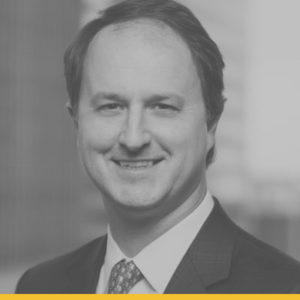 Dave Stewart, Senior Advisor for Government Affairs and Economic Development, Bradley Arant Boult Cummings
Dave Stewart has an impressive history of maximizing opportunities. After a notable performance as policy director for then Governor Bob Riley, he was called up to serve as the administration’s Chief of Staff. Stewart then parlayed that position to secure a Government Affairs post at the prominent law firm of Bradley Arant Boult Cummings.
Stewart’s influence in Montgomery is born from two traits: his vast knowledge of policy and his lasting relationships within the legislature and each state agency. Agency heads come and go, but Stewart has spent over a decade building a network of bureaucrats in every nook and cranny of state government. He has an elite ability to blend policy arguments and political messaging to build the best strategic approach possible for his clients. More importantly, he has the juice to execute his plans.
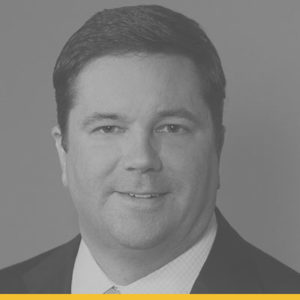 Dax Swatek, Partner, Swatek Howe & Ross
Wise corporate officers place their governmental affairs strategies in the hands of Dax Swatek. No one is better at providing the road map for passing legislation and achieving public policy goals than Swatek.
Swatek honed these skills early in his career as a campaign consultant. He has run the full spectrum of races for Republican candidates, from State House and State Senate to congressional, gubernatorial and even a presidential primary campaign. The lessons learned in those settings have served him well advocating for his corporate clients. The only person in Alabama more committed to the “process” than Swatek is Nick Saban.
Swatek has also spent years building relationships with elected officials at the highest level. Combine an exceptional strategic mind with strong relationships and you get a powerful and influential lobbyist.
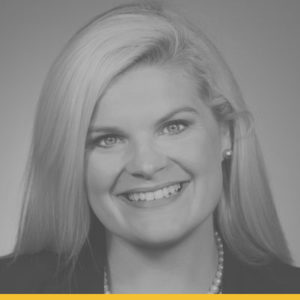 Sommer Vaughn, Partner, Swatek Howe & Ross
There used to be an old adage that you could pass communism through the Alabama House of Representatives. This was a nod to a long line of former Speakers who imposed their will on the membership by forcing bills through the chamber, regardless of substance. Times have changed. The will of the body means something now. And this fact has made Sommer Vaughn one of the most powerful and influential lobbyists in Alabama.
No one is better able to build a member by member vote count in the House than Vaughn. The strength and breadth of her relationships on both sides of the aisle are why her impressive list of clients put their issues in her hands. Prior to entering the private sector, she worked in the executive and the legislative branches. That experience has translated into a thorough understanding of the inner workings of state government.
A member of our “Who’s Next?” list only a year ago, Vaughn is poised to hold her post on many more editions of this list.
 R.B. Walker, Director of Governmental Relations, University of Alabama System
Also a member of last year’s “Who’s Next?” list, R.B. Walker has climbed the ladder of power and influence with tremendous speed. For anyone who knows him though, that’s no surprise.
A former SGA President at the University of Alabama, he has already worked for two of the state’s most powerful institutions: Alabama Power Company and the University of Alabama System. In his current job at his beloved university, Walker is a tireless advocate on any matter affecting the UA System. With no shortage of personality and the intellect to grasp the nuances of any issue, it is really Walker’s work ethic that separates him from the pack. No one works harder to foster relationships and communicate with the key players in state government.
Walker is the consummate operator; he is never not working. And his ascent is only beginning.
 Steve Windom, Partner, Windom Galliher & Associates
The fact that being the first Republican Lt. Governor elected since Reconstruction is a mere postscript to Steve Windom’s career is a testament to his success as a lobbyist. There is not a craftier operator in Alabama politics than Windom. All of the clichés used to describe people of power and influence can be applied to Windom.
“Steve Windom knows where all the bodies are buried.”
“Steve Windom carries a big stick.”
“Steve Windom talks the talk and walks the walk.”
Pick your cliché. Also pick Windom when you want to win on your issue. He has taken the time to cultivate relationships in every corner of state government. He knows everyone from the maintenance man at an obscure state agency to the Governor of Alabama – and each person in between. Add in the fact that he is able to draw on decades of experience, during which he has witnessed just about every occurrence in state government, and you have a lobbyist who is primed for sustained success.
Steve Windom is a first ballot power and influence hall of famer.
Several news stories emerged today calling light to the fact that certain legislators weren’t invited to the annual summer conference sponsored by the Business Council of Alabama, headed by Billy Canary. These stories noted the fact that these same legislators who were not invited opposed the BCA on last year’s autism bill, and some of the articles suggested that’s the reason the legislators didn’t receive invites.
In reply, BCA’s Senior Vice President for Communications, Nancy Hewston, said, “The implication that our guest list was developed solely on one issue is false, and anyone who writes that is promoting fake news. 133 out of 137 lawmakers voted for this particular issue, and the vast majority of them will be attending this year’s conference. Let me be clear – no one was uninvited from this event. This year will mark the 30th year of this summer conference, and we are proud that this annual event has such widespread interest and appeal.”
Among of the 133 Senators who voted for the autism bill was its Senate sponsor, Republican Tom Whatley, and he was invited to the event.
Yellowhammer caught up with four of the legislators who were not invited. We asked each of them if they were first invited and later uninvited, as some stories reported. All four said they were never invited in the first place, corroborating Mrs. Hewston’s statement that “no one was uninvited.”
We also asked each of them if they spoke to the BCA about the lack of an invitation. Senators Mclendon and Holtzclaw did not. Senator Ward did, and Representative Patterson’s campaign manager did. Yellowhammer also asked Ward and Patterson if the autism vote was mentioned in these conversations and only Senator Ward said it was. The comments of all four are below.
Senator Jim McClendon: “Last year, I sponsored a bill regarding non-covered medical services for insurance companies. The bill basically said that if an insurance company doesn’t cover a procedure, they can’t turn around and tell the provider what to charge the patient. Blue Cross doesn’t do that, but other insurance companies do. Anyway, BCA opposed my bill. To my knowledge, I’d received an invitation every year I’ve been in the legislature since 2002, but after they opposed my bill in 2016, I didn’t receive one. They didn’t say anything about that, but I just assumed that’s why I wasn’t invited. But, no one from the BCA spoke to me about that. So, when I didn’t get an invitation for the 2017 conference, after supporting the autism bill, that was not a surprise. I told [Senator] Brewbaker, welcome aboard.”
Senator Bill Holtzclaw: “I’m not upset about it. I know where the beach is. If I want to go, I’ll go. The bottom line is, I’m entering my 8th year of office. I don’t know how many times I’ve been invited and how many times I haven’t been invited. I went once, back in 2015, and to be honest; it wasn’t my thing. Sure, if you look at it, there’s a common denominator there, but no one from BCA ever spoke with me about it, and I honestly didn’t think about the connection till others pointed it out because I certainly don’t build my summer around the BCA conference in Point Clear.”
Representative Jim Patterson: “When my campaign manager called the BCA and asked why I hadn’t received an invitation, they just said I wasn’t invited, so to be fair to them, I can’t speculate as to why. What I can say is that I’ve been invited every year since I was elected in 2010. I love the event, and as a legislator and small business owner, it’s important to me. They have great speakers. It’s a chance to meet with business leaders from Huntsville, it’s very educational, and a great time to network. So I was disappointed that I wasn’t invited this year. Again, I can only speculate as to why. All I do know is that they were pretty upset with me about the scholarship bill and the autism bill. Billy Canary came up to me after the public hearing [on the autism bill] and more or less chewed me out. He essentially asked why I was introducing the bill without talking to him first, and it got a little more contentious from there. But let me be quick to say, I respect the BCA and as far as I’m concerned, I don’t burn bridges. I consider Billy a friend, and if he came to me today and needed my help on something we agreed on that I believed in, I’d be glad to help him.”
Senator Cam Ward: “I have been invited for 20 straight years, even before I was elected. I was confused by this decision because I heard it might have to do with my advocacy for autism insurance, so I sat down and visited with BCA staff regarding this decision. I had a chance to meet with two staff members in Clanton one day on my way home from Montgomery in June. I was told that I was the face of the autism insurance bill even though I was not the sponsor. Despite being named a “Business Champion” by BCA in March of this year, several members of the board were uncomfortable with me being at their events. They said to me during this conversation that it was best for me and the membership of the BCA if I were not at this conference. It was a cordial conversation. I mentioned that I had a very strong business voting record over my career and still consider myself pro-business despite this decision. I also mentioned that I did not mind the message being sent to me, but I did find it unusual to be given a public award for my work with them, and only two months later being told I am no longer welcome to associate with them. They said that the business community had a bad year in the legislature. In regards to me specifically, it was just said that regardless if I was the sponsor or not I was still the face of the autism insurance bill, and a lot of folks needed some time to get past that.”
Former Gov. Bob Riley arrives for Day8 of #HubbardTrial, greets Speaker Mike Hubbard at the door. #alpolitics pic.twitter.com/WvoLp26flD
— Lauren Walsh (@LaurenWalshTV) June 3, 2016
When then-President Bill Clinton was confronted about the truthfulness of his Grand Jury testimony that “there is nothing going on between” him and Monica Lewinsky, Clinton famously replied, “It depends upon what the meaning of the word ‘is’ is.”
Two decades later, the fate of Alabama House Speaker Mike Hubbard could also come down to the definition of one particular word: “friend.”
Mr. Hubbard is currently facing the possibility of spending decades in prison if he is convicted of, among other things, soliciting things of value from lobbyists and the businessmen who employ them (i.e. principals). In particular, the speaker, who has in recent years been perhaps the most powerful politician in the state, solicited hundreds of thousands of dollars in investments to help save his deeply indebted printing company. He is also accused of asking lobbyists to help him get a job.
Hubbard was a leading proponent of the GOP’s successful effort to strengthen Alabama’s ethics laws after taking over the legislature in 2009. But while soliciting or accepting “things of value” from lobbyists and principals is now strictly prohibited, the law carves out exceptions for friends.
As the Montgomery Advertiser notes, former Alabama Ethics Commission director Jim Sumner testified the exceptions were created to address some of innocent conflicts that could arise in a citizen legislature.
“It was designed to allow people who’ve known each other all their lives, or lived down the street, before someone was elected to public office,” he explained. “It allowed them to go on vacation, or share a place at the beach and not be concerned about who paid for what during that trip.”
This is the core of Mr. Hubbard’s defense against these particular charges — that he was asking favors of his friends, just like anyone else would if they were in a jam.
Most of the lobbyists and principals who have testified seem to agree with Mr. Hubbard’s defense.
“I invested in (his business) because Mike Hubbard was a friend, and it had nothing to do with being the Speaker of the House,” testified Rob Burton, CEO of Hoar Construction, who is classified as a principal under Alabama ethics law. “And if he hadn’t been a Speaker of the House, I still would have made that investment because I like him and I trust him.”
Great Southern Wood CEO Jimmy Rane expressed a similar sentiment when asked about his investment, saying he had known Mr. Hubbard for roughly thirty years, going back to his time at Auburn University where Hubbard helmed the Heisman campaign for Bo Jackson.
Minda Riley Campbell, a registered lobbyist and the daughter of former Gov. Bob Riley, said it was entirely appropriate for Mr. Hubbard to seek help from her because she has known him for decades and loves him “like a brother.”
Gov. Riley was a registered lobbyist at the time when Mr. Hubbard asked his firm for a job, but he said those “were personal conversations between me and Mike about what do you do going forward. It was something to try to give him some stability he was searching for in his life.”
Similarly, Business Council of Alabama CEO Billy Canary, a registered lobbyist, has a decades-long relationship with Mr. Hubbard.
“We were exploring options for him that would allow him to be a citizen legislator, very similar to what others had done, the former speaker and others, subject to the ethics commission,” he said.
But not every friend of Mr. Hubbard’s was dismissive of the ethics concerns.
According to testimony from lobbyist Dax Swatek, his response to Mr. Hubbard’s investment overtures was “not just no, but hell no.”
The prosecution contends the “friend exception” in the ethics law should not apply to many of the individuals mentioned above because their relationships with Mr. Hubbard began in the mid-1990s when he entered the political arena for the first time.
The defense has argued that the timing is inconsequential — friends are friends.
If convicted, Hubbard faces a maximum penalty of two to twenty years imprisonment and fines of up to $30,000.00 for each count, all of which are Class B Felonies. So years of Mr. Hubbard’s life while quite simply come down to where the jurors place the line between friend and political ally.
MORE ON THE HUBBARD TRIAL:
1. Bentley testifies Hubbard lobbied him on projects that would benefit his business clients
2. Winners and losers from the first week of the Hubbard corruption trial
3. Alabama House Speaker’s former top aide delivers explosive, emotional testimony
4. Prosecution: Hubbard used office to make $2.3M. Defense: None of this is illegal

MONTGOMERY, Ala. — The Alabama Legislature on Thursday gave final passage to a bill to add “right-to-work” language to the state’s constitution, if voters approve the measure at the ballot box in November.
Right-to-work laws prohibit forcing employees to join a union and pay dues as a condition of employment. They do not, however, ban unions, as is sometimes alleged.
“The provisions of the amendment are simple,” explained William Canary, CEO of the Business Council of Alabama, which supports the amendment. “It further establishes Alabama as a right-to-work state with constitutional protections that prevent labor organizations from forcing employees to join. At the same time, the amendment prevents employers from denying union membership to workers who wish to join.”
The United Auto Workers union has long targeted Alabama’s booming auto industry for unionization. A vote to unionize the Mercedes plant in Vance was narrowly defeated in 2014.
If unionization of the Mercedes plant had been successful all workers would, by requirement of contract, be represented by the UAW, not just those who are union members. Right-to-work advocates say this caveat strips the rights of workers who wish not to be a member of a union, and silences their voices.
Unions were once widely viewed as a positive voice for workers who did not have the ability to stand up for themselves. But as workplaces became safer and wages more fair, unions started shifting from workplace representation to heavy political involvement to accomplish their goals. At only 7% of the private workforce, unions are now a shadow of their former selves, although they remain a powerful bloc in the Democratic Party.
Between the Mercedes, Honda, and Hyundai plants, Alabama has become a strong player in automotive manufacturing and the state’s right-to-work laws are often credited with having played a major part in that. As president and founder of Union Conservatives, Terry Bowman, stressed during a visit to Birmingham last year that UAW representation for Alabama’s auto manufacturers would not only be a blow to current jobs, but also to the state’s ability to attract new companies.
Several companies have cited Alabama’s status as a right-to-work state as a key reason they relocated to the state, particularly Airbus and Remington.
“Although Alabama and many other southeastern states are firm right-to-work states, labor unions have stepped up their efforts to organize industrial facilities across the region after experiencing recent successes that include Volkswagen in Tennessee and Golden Dragon in Wilcox County,” the Alabama House GOP Caucus said in a release. “Alabama passed one of the nation’s first right-to-work laws roughly 60 years ago, but House Republicans believe it is time to enshrine that employment protection in our state constitution.”
RELATED:
1. Right-to-Work amendment would protect Alabama jobs from union coercion (Opinion)
2. Alabama plant unionizes in spite of Bentley’s warnings that it could kill jobs

TRUSSVILLE, AL- SPOC Automation, a company located in a quiet Birmingham suburb of about 20,000 people, is the largest artificial lift control manufacturer in all of North America. “Artificial lift” is the process used to increase the flow of liquids coming out of a well, or, as SPOC Automation describes it, “technology that allows users to get more product out of the ground.”
Bobby Mason founded SPOC Automation in Trussville in 2001 when the price of a barrel of oil was near an all-time low. Mason and a handful of industry veterans were working with motor controls in the coal bed methane industry on a job site near Tuscaloosa when they discovered a way to engineer sensorless pump off control software (SPOC). Their discovery drastically reduced energy consumption — and costs — for its users. So while many people were getting out of the oil and gas industry, Mason recognized it was an ideal time to release his team’s product to improve oilfield production. Some 15 years the company is a global leader in the oil and gas industry.
“Our livelihood for the past fifteen years has been dedicated to both the domestic and international oil and gas industry,” said Mason. “However, our roots actually run deep in the nonconventional gas fields of the Black Warrior Basin of West Alabama.”
Due to product demand, the company’s staff has recently doubled in size, with more than 70 jobs created over a three-year period, and their team of designers and engineers continues to innovate.
Most recently, they created a cloud-based software called ‘Well Optix,’ which allows customers 24/7 access to well conditions, production information and the ability to make updates to artificial lift controls.
While the recent decline in oil prices has affected the oil and gas industry, SPOC has been able to capitalize on the fact that their Alabama-made products save oil-producing companies large sums of money on their electrical bills. By automating the process with SPOC products, they can not only drop electrical costs but also increase production by many barrels of oil per day.
“Many people ask me if I have trouble sleeping at night due to the unforeseen future of the oil and gas industry,” said Mason. “Truly nothing keeps me up at night because I know who is ultimately in control, God. He has me leading SPOC, with an incredible, hard-working team right here in Trussville, and I consult with Him regularly. Therefore I have no reason to worry.”
Under Mason’s steady leadership, the accolades for SPOC have rolled in. The company was named to Inc.’s annual list of the fastest-growing companies in North America in both 2014 and 2015. SPOC has also been a two-time finalist for Alabama’s Manufacturer of the Year Awards, which are presented by the Alabama Technology Network and the Business Council of Alabama (BCA).
“SPOC Automation is a leading manufacturer both in Alabama and in North America,” said BCA President and CEO William Canary. “SPOC Automation has a proven record of superior performance and operational excellence, and we are proud they are members of the Business Council of Alabama.”
A former executive of Lufkin Industries, a manufacturing company based in Texas that joined GE Oil & Gas in 2013, recently called SPOC Automation the “best kept secret in the oil and gas industry.”
If the company continues to grow, they won’t be much of a secret anymore.
“The oil and gas industry is sure to change in the future,” said SPOC Automation Vice President Ted Wilke. “When it does, SPOC will be adapting to ensure that our applications fit our customer’s needs, not only domestically- but also internationally.”

For 16 years the Business Council of Alabama (BCA) and the Alabama Technology Network (ATN) have recognized Alabama’s top manufacturers with Manufacturer of the Year Awards.
Past Manufacturer of the Year Award recipients include steel companies, engineering firms, automobile manufacturers, a shipbuilder, aerospace firms, and even a beer maker — a diverse group that BCA President and CEO William J. Canary believes shows the strength and variation of Alabama’s manufacturing community.
“Manufacturers are the heart and soul of Alabama’s diverse business mix, representing traditional and high-tech products with worldwide markets and applications,” he said.
The 2016 awards will be announced on April 12, 2016, in Montgomery, but the deadline to nominate a company is coming up next week (Dec. 18).
The ATN and BCA will announce the winners at the 17th annual MOTY Awards ceremony at the Alabama Activity Center.
“Alabamians know how to make things and make them well,” Canary said. “It’s in our blood and our award recognizes and celebrates that manufacturing excellence.”
The MOTY Awards honor individuals and companies that bring uncompromising excellence to Alabama manufacturing. Since its inception, the MOTY Awards program has grown into a prestigious annual celebration that is attended by Alabama dignitaries and business leaders.
The MOTY Awards recognize accomplishments of the state’s top manufacturers. By applying for the award, manufacturers convey their story of financial growth, manufacturing leadership, market leadership, leadership development, and workforce enhancement.
Awards are presented to manufacturers of between one and 99 employees in the small manufacturer category, 100 to 399 employees in the medium manufacturer category, and 400 or more employees in the large manufacturer category.
The 2015 winners were a diverse group, included Watring Technologies Inc. of Huntsville in the small manufacturing category, Raytheon Redstone Missile Integration Facility in Huntsville in the medium category, North American Lighting of Muscle Shoals in the large category.
The 48 winners have included automobile manufacturers Mercedes-Benz U.S. International, Hyundai Motor Manufacturing Alabama LLC, Honda Manufacturing of Alabama, and suppliers – Goodyear Tire and Rubber Co., and Michelin-Dothan Inc.
Winners include aerospace stalwarts Boeing and Airbus and family operations such as Prystup Packaging Products in Livingston. High technology firms such as GATR Technologies in Huntsville and basic homebuilding suppliers such as Jenkins Brick Co. in Montgomery have been selected.
In the transportation industry, Progress Rail of Albertville was a winner.
Canary said this is the opportunity to compete to be recognized for hard work and dedication of employees, to promote significant accomplishments, highlight corporate citizenship, join the ranks of other notable manufacturers, receive well-deserved news coverage, and help increase public awareness about the strength and economic significance of Alabama’s manufacturing community.
Applications can be made on the Manufacturer of the Year website.
The Business Council of Alabama has expanded its “Small Business Game Changer” contest to include two tickets for Saturday’s SEC Championship Game in Atlanta.
One small business entrant that completes all requirements for the 2016 BCA Small Business Game Changer promotion, including a paid BCA small business membership by 12 p.m. CST Thursday, December 3, 2015, will be selected to receive two tickets to the SEC Championship game.
A first-of-its-kind opportunity, the BCA is awarding a complimentary 2016 football sponsorship package for both the University of Alabama and Auburn University. While season football sponsorships offer enormous exposure, they are not in the budget for most small businesses.
“This contest is truly unprecedented and will be a game changer,” said BCA President and CEO William J. Canary.
Corporate sponsor benefits will include hospitality, game tickets, in-stadium logo exposure, radio time and more.
University of Alabama Corporate Sponsorship Benefits:
— One 15-second pre-game and one 15-second post-game radio commercial on the Crimson Tide Sports Radio Network for the 2016 regular season (24 total commercials)
— LED recognition in Bryant-Denny Stadium for all seven home football games
— 300,000 impressions on RollTide.com during the regular 2016 schedule
— One half-page program ad
— Two season tickets, two corporate hospitality passes and one parking pass
Auburn University Corporate Sponsorship Benefits:
— One 2016 half-page color advertisement in Auburn Football Illustrated
— One Auburn Football Pre-Game Show radio spot before each 2016 regular season game
— 300,000 banner advertisement impressions on AuburnTigers.com during the 2016 football regular season
— Pro-Ad LED Ribbon board exposure inside Jordan-Hare Stadium during 2016 football regular season home games
— Two (2) football season tickets and two (2) IMG Pre-Game hospitality passes for the 2016 regular season
Small businesses can apply online by going to bcatoday.org/football and sharing in 150 words or less why a 2016 Alabama or Auburn football sponsorship would be a game changer for their small business.
The two SEC Championship tickets will be awarded to the best eligible Game Changer contest entry received by 12 p.m. CST on Thursday, December 3, 2015. Eligibility and essay criteria are laid out in the official contest rules and include a paid membership with BCA, for SEC Championship tickets purposes, by 12 p.m. CST on 12/03/2015. The winner of the two SEC Championship tickets will be notified by phone on Thursday, December 3, 2015.
“Small Business Game Changer” is open only to small businesses located in the state of Alabama that are BCA members in good standing. For complete contest rules, visit bcatoday.org/football.
Alabama small businesses get chance to win tickets to SEC Championship game https://t.co/3MBmRseATd @BCAToday pic.twitter.com/X8lp3Oqu8i
— Yellowhammer (@yhn) December 3, 2015

WASHINGTON — Six-to-one votes are not uncommon among Alabama’s congressional delegation. With six Republicans and only one Democrat, many votes fall along partisan lines. But a six-to-one vote this week was a bit more unusual. While Rep. Terri Sewell (D-AL7) joined five Alabama Republicans in supporting the reauthorization of the controversial Export-Import Bank, Rep. Gary Palmer (R-AL6) broke with his GOP colleagues to vote against what many conservatives have called “corporate welfare.”
The Ex-Im Bank, as it is known, was originally chartered by progressive icon Franklin D. Roosevelt in the 1930s. It was a “federal government corporation” that provides taxpayer-backed loans to foreign entities who want to buy American-made goods, but cannot secure credit in the private sector because of the risks. The bank’s charter mandates at least 20 percent its outlays benefit small businesses, but that rule has been frequently violated over the years.
In 2013 76 percent of the bank’s spending went to its top ten beneficiaries. That year Boeing, the largest beneficiary of the bank for several years, received $8.3 billion in aid from the guaranteed loans taken out by the purchasers of their exports.
The Ex-Im Bank has received vocal support from many business groups, including the U.S. Chamber of Commerce.
“The Ex-Im Bank plays a significant role in Alabama’s job creation efforts,” said William J. Canary, the CEO of the Business Council of Alabama. “More than 80 Alabama-based exporters in various industries including forest products, chemicals, transportation and fabricated metal products have used the agency when private-sector banks could not help.”
But in spite of an intense lobbying effort by business groups, President Barack Obama and Republican congressional Leadership, the bank’s charter expired after Congress did not renew it by the June 30, 2015 deadline.
Conservative organizations waged an intense campaign against reauthorizing the bank, but the most crushing blow may have been delivered by powerful Senate Banking Committee chairman Richard Shelby (R-Ala.).
“After years of efforts to reform the Ex-Im Bank, it has become clear to me that its problems are beyond repair and that the Bank’s expiration is in the best interest of American taxpayers,” Sen. Shelby told Yellowhammer at the time. “Nearly 99% of all American exports are financed without the Ex-Im Bank, which demonstrates that subsidies are more about corporate welfare than advancing our economy.”
However, 127 Republicans and 186 Democrats voted this week to bring the bank back to life. This time only one House Democrat voted against it, but 117 Republicans, including newly-elected House Speaker Paul Ryan (R-Wis.), opposed it.
Congressman Palmer’s office said his vote against reauthorization speaks for itself and declined to comment further.
The bank’s future is now uncertain. Many congressmen and senators on both sides of the aisle are conflicted because, in spite of their philosophical opposition to “corporate welfare,” the bank has benefited exporters in their states.
Senate Democrats were blocked from reauthorizing it on Thursday when Senate Majority Leader Mitch McConnell would not allow a standalone bill to come up for a vote. The next move may be to attach Ex-Im reauthorization to a larger funding bill.
Palmer breaks with Alabama delegation, votes against Ex-Im Bank’s ‘corporate welfare’ https://t.co/hNaZnEXJf3
— Cliff Sims (@Cliff_Sims) October 30, 2015

Friday marked the final day of National Small Business Week, a week dedicated to recognizing the important and critical contributions to America’s success by small business owners and entrepreneurs.
More than half of Americans either own or work for a small business, which create about two of every three new jobs in the U.S. each year.
Whether it’s a young couple that started a house painting-lawn service-spray wash business and now has grown enough to hire two employees, to a locally owned pizza parlor that for decades has provided full or part-time jobs for 15 or more people, to the local paint store or auto parts store, small businesses are the institutional backbone of communities, and state and national economies.
Who at one time has not worked for a small business, maybe in the summer, when attending high school or college, and then as an adult in the work force either as an employee or ultimately an owner?
Every year since 1963, the president of the Untied States has issued a proclamation announcing National Small Business Week.
“Our small businesses represent what is best about our Nation – the idea that with determination and responsibility, anyone can build a better life for themselves and their loved ones,” states the proclamation. “This week, we recognize the role small businesses play as pillars of our communities and engines of our growing economy, and we rededicate ourselves to fostering the entrepreneurial spirit that has forged the strongest economy the world has ever known.”
According to the U.S. Small Business Administration, Alabama in 2012 had 386,661 small businesses that employed 764,207 men and women, or about half of the state’s private workforce. Virtually all firms with employees are small, making up 96.8 percent of all employers in the state. In Alabama, small businesses created 24,890 net new jobs in 2012.
“Small businesses provide the majority of jobs for Alabamians, and protecting their entrepreneurial efforts sustains job growth and is essential to Alabama’s continued economic development,” said Business Council of Alabama President and CEO William J. Canary. “Small businesses from Waterloo to the Wiregrass and from Bridgeport to Bayou La Batre are the backbone of our economy.”
During National Small Business Week, the SBA has highlighted the impact of outstanding entrepreneurs, small business owners, and others from all 50 states and U.S. territories, to grow small businesses, create 21st century jobs, drive innovation, and increase America’s global competitiveness, the SBA said.
SBA Administrator Maria Contreras-Sweet has hosted events in Los Angeles, San Antonio, New York City, and Washington, D.C. The event concluded Friday with the recognition of national award winners and the selection of the national Small Business Person of the Year.
[tps_header][/tps_header]

MONTGOMERY, Ala. – The Alabama Legislature on Tuesday gave final passage to legislation that overturns the Alabama Supreme Court’s adoption of a novel legal theory that many considered to be a looming disaster for Alabama businesses and the state’s overall business climate.
In 2013, the Alabama Supreme Court in the Weeks v. Wyeth case — and then again on rehearing the same case in 2014 — held that a brand-name manufacturer can be held liable for physical injuries caused by a generic product made and sold by a different company.
The Business Council of Alabama filed a brief in the case along with the U.S. Chamber of Commerce urging the Supreme Court to reverse itself and warning that adoption of the “innovator-liability” theory would once again make Alabama a magnet for frivolous lawsuits.
After the Supreme Court refused to reconsider its initial ruling in the 2014 rehearing, Sen. Cam Ward, R-Alabaster, sponsored SB 80, which garnered wide bipartisan legislative support and is headed to the governor for consideration.
The House on Tuesday voting 86-14 passed SB 80. The Senate previously passed SB80 by a bi-partisan 32-0 vote.
Rep. Jack Williams (R-Vestavia Hills), introduced the House companion bill, HB110, and handled Ward’s SB80 during Tuesday’s House floor debate. The House previously passed HB 110 by a vote of 88-7.
“People are being sued for products they did not make,” Williams said. “That was a departure from case-product law in Alabama. Basically what we are doing is restating what the law is prior to that and clarifying to the courts what the intention is.
“We’re not offering immunity, we’re just saying you can’t be sued if you didn’t make it,” Williams said. “There is a fear out there this could be expanded.”
Rep. David Faulkner, R-Birmingham, praised the bill. “We passed it overwhelmingly before, it’s a tremendous bill,” Faulkner said. “A lot of lawyers looked at this bill, business interest and plaintiff’s lawyers, the defense side. The language is needed.”
BCA President and CEO William J. Canary thanked the Alabama Legislature for righting a wrong.
“By passing this important legislation, the Alabama Legislature has stood with Alabama’s businesses by reversing the Alabama Supreme Court’s adoption of a novel tort theory, which could have had chilling effects on Alabama’s business climate,” Canary told Yellowhammer. “Had this not been corrected swiftly by the Legislature, Alabama would have been at a great disadvantage in attracting new business investment, which is key to bringing economic growth and jobs to our state.”
Preventing potential damage from the innovator-liability rulings was a priority in the BCA’s 2015 State Legislative Agenda.
Despite the Alabama Supreme Court’s attempt to limit the “innovator liability” theory to the pharmaceutical industry, the Wall Street Journal and legal scholars have observed that “[p]harmaceuticals aren’t the only industry that would feel the pain if [Weeks] stands,” because the innovator liability theory could apply “in any market served by brand-name companies that actively promote their wares but face competition from largely identical but lower-priced store brands.”
“Alabama manufacturers are fortunate that this legislation will now be law,” said Tommy Lee, President and CEO of Vulcan, Inc., a manufacturer in Foley. “To think that a company could be held liable for injuries allegedly caused by a product it neither manufactured nor distributed is alarming.”
Before the Alabama Supreme Court’s decision, courts nationwide, now 100 in all, applying the law of 30 different states, and including all seven U.S. Courts of Appeals to consider the question, had soundly rejected the “innovator liability” theory.
Only three other courts nationwide have adopted innovator liability under other states’ laws, an intermediate appellate court in California, and federal trial courts in Illinois and Vermont.
Like this article? Hate it? Follow me and let me know how you feel on Twitter!
— Elizabeth BeShears (@LizEBeesh) January 21, 2015

MONTGOMERY, Ala. — The Senate Education and Youth Affairs Committee voted Wednesday to send a bill repealing the embattled Common Core Standards, known as the College and Career-Ready Standards in Alabama, to the full Senate.
The battle over Common Core has pitted conservative groups against each other, with many business organizations, including the Business Council of Alabama (BCA), disagreeing with TEA Party groups over the necessity of the standards.
“This issue was politically litigated during the 2014 election cycle and the verdict came back to leave our standards alone,” said BCA President and CEO Billy Canary. “The standards are benchmarks of proficiency in mathematics and English language arts that will better prepare Alabama students for success after graduation. When it comes to education, the BCA has a long history of supporting policies that put students first and will prepare them to enter college or the workforce. That’s why Alabama’s College and Career-Ready Standards are of paramount importance.”
This is the third year there has been an effort to repeal the standards since they were first instituted by the State Board of Education in 2011.
“We are thankful that SB101 passed out of the Senate Education Committee,” Ann Eubank of the Birmingham-based Rainy Day Patriots told Yellowhammer Wednesday. “However, we are aware that this is only the first step in a complicated process.”
It now moves to the Senate Rules Committee, where it will need 9 votes to be placed on the calendar for consideration by the whole Senate body. Eubank called the additional layer to get to a vote an “additional burden on the bill sponsors in hopes that it is a mountain we can’t climb.”
This year the state’s GOP Executive Committee approved a resolution calling for the repeal of the standards, but as Eubank mentioned, Senate leadership has been hesitant to join states who have dropped the standards.
“I’m not hearing a groundswell of support, from my caucus, for this to be on the calendar,” said Senate President Pro Tempore Del Marsh (R-Anniston).
“We have been fighting this battle for 3 years now and we are certainly not giving up now,” said Eubank. “We are not going away.”
The bill will only be voted on by the full Senate if it is placed on the calendar by the Rules Committee, of which the repeal bill’s sponsor Rusty Glover (R-Semmes) is a member.
Like this article? Hate it? Follow me and let me know how you feel on Twitter!
— Elizabeth BeShears (@LizEBeesh) January 21, 2015

Hollow victory: a victory with such a devastating cost that it is tantamount to defeat.
Exactly one week ago today, an indictment was signed, paving the way for Alabama House Speaker Mike Hubbard to be arrested on 23 felony counts of public corruption this past Monday.
On Tuesday, Hubbard orchestrated one of the most extraordinary press conferences in recent memory — an event that could at varying points be described as an impressive show of strength, compelling political theater, and a bizarre circus led by part-time ringmaster, full-time defense attorney Mark White.
The center piece of the press conference was the Hubbard camp’s repeated accusation that various individuals in the Alabama attorney general’s office are in the process of executing a “political witch hunt.”
“This is politics at its worst and it’s past time for this state to stop using its criminal justice system to advance a political candidate, or political agenda,” White declared as the half-hour spectacle got underway.
However, these claims were not just being trumpeted by Hubbard’s undoubtedly well paid defense team, but also by a sitting U.S. Congressman, Mike Rogers, who left no doubt about to whom White was alluding by ripping off one of the most straightforward verbal assaults that you will ever hear a member of a political Party direct at another member of the same Party:
What’s happening in this county is political. It started two years ago, but if you had any doubt, the fact that it was dropped two weeks before the election should answer that question. Now, you’ll say, “Mike, you say this is political but the Democrats aren’t doing this,” and you’re right. Think about this, who’d like to be governor in four years that would love to get Mike Hubbard out of the picture, or at least skin him up real good so maybe he’s not as viable a candidate? That’s where you’re going to find your answer. It is not rocket science, but I’ll tell you what it is: it’s Chicago-style gutter politics and it’s got no place in Lee County or the State of Alabama.
It didn’t take long for Attorney General Luther Strange to respond, in part, with this:
I made the decision to recuse myself from the matter involving Speaker Hubbard several months ago. I did so based on the recommendations of our career prosecutors and to completely remove any appearance of politics being involved in the matter.
So if Luther Strange has recused himself from all of this, how is it political?
Well, not to get overly philosophical here, but Aristotle concluded way back in the 3rd century BC that “man is a political animal.” Everything we do is influenced by politics. There are politics in the workplace; politics in the church; politics in your group of friends as you debate over where to go eat this weekend; and yes (gasp!), politics in the Alabama justice system.
Huntsville conservative talk radio host Dale Jackson said it best on his blog earlier this week: “Of course the indictment of Speaker Hubbard is political. Keep in mind, this doesn’t mean that it is not legit.” Jackson listed several reasons for making that comment, but the most obvious was the simple timing of it all. After working on this for 20-plus months, it just so happens that an indictment comes down mere days before the election? Not likely. But if they had decided to wait until after the elections to indict, that would have been a political decision, too. It doesn’t mean there was any impropriety, but come on, there shouldn’t actually be a debate over whether politics are playing a role.
So what are the political ramifications?
It’s pretty simple for Mike Hubbard. If he’s convicted, he’s done. Toast. Sayonara. He’ll be remembered as a kind of political supernova, shining brighter than anything else in the galaxy of Alabama politics for a brief period of time before disappearing out of the sky in the wake of a catastrophic explosion. If he’s found innocent, he’ll be the sun around which the whole galaxy turns.
In the event of a complete acquittal, the only real question for Hubbard is whether he gets dinged up so bad throughout this process that he is no longer a viable statewide candidate in 2018.
But for Luther Strange, the politics of all of this really could not be any more complex.
First, there are the short-term campaign politics.
He’s running against a well-funded candidate whose sole talking point is that Strange is an “absent attorney general” who has allowed crime and corruption to flourish on his watch. Strange would surely like nothing more than to use the Speaker’s indictment to say “Hey, look, I’m even going after people in my own Party!” He would really love to own it. But he can’t because he recused himself from the investigation early on.
As a result, Strange is just fortunate that he’s got an “R” behind his name in a state Romney carried by a 22 percent margin in 2012.
Then there are the intra-office politics.
Strange’s name’s on the office, so whatever happens is a reflection on him. But since he’s recused himself, he’s left in the unenviable position of bearing all of the public responsibility for what has been going on in Lee County without having the requisite authority. So when two of Strange’s subordinates recently squared off — one alleging the other interfered with the ongoing public corruption investigation and the other making claims of “harassment, threats of physical violence, and prosecutorial misconduct” — Strange was limited in his ability to run his own office. And if at any point he felt uncomfortable with the direction the investigation was going, that was too bad. He made the decision to take himself out of the game and had to live with it.
And finally there are the long-term campaign politics.
By recusing himself from what was sure to be a bloody intra-Party spat, Strange probably assumed — or at least hoped — that he would be able to float above the chaos. And if a potential future rival got taken out as a result of whatever the investigation uncovered, well that wouldn’t be the worst thing that could happen either.
This is where Strange may have underestimated the ramifications of what was about to take place.
When the Hubbard indictment finally came down on Monday, conspicuously listed inside the various counts were the names of a who’s who of Alabama’s business elite. These were the type of individuals who helped Strange gain a reputation for being a fundraising machine, propelling him into the state’s highest law enforcement office, which was to be little more than a pit stop on his way to the governor’s mansion or the U.S. Senate.
But the content of the indictment completed a months-long erosion of Strange’s support at the highest levels of the state’ business community. There had been a growing belief among many key leaders that Strange had long since lost control of his operation. As a result, his political trajectory has been altered in a profound way.
And nowhere is that more evident than in the public statements of the business community’s official representative, Billy Canary, President and CEO of the Business Council of Alabama, the U.S. Chamber of Commerce’s official Alabama partner.
“I have been privileged to call Mike Hubbard a friend for nearly seventeen years, and during that time, I have never had any reason to question his honor, integrity, or dedication to the people of Alabama,” Canary said this week. “Whether as a public servant, friend, or devoted family man, I have always admired Mike’s ability to meet every challenge with good humor, faith, optimism, and kindness. I know this is a difficult time for Mike and his family, and I want Susan, Clayte and Riley to know that they have our family’s full support and remain in our prayers.”
That doesn’t leave any doubt who’s side of this Canary and his backers have come down on.
So in an attempt to (over)simplify all of this, I’d say Strange is winning the battle, but losing the war, and perhaps losing it in spectacular fashion.
In the short term battle, he’s running as a Republican in a deep red state, against a Democrat who just so happens to share a last name with the guy who just got indicted. And the reality is, not that many people are paying attention to any of this, much less the nuances of recusals and Party politics.
But in the long term war, Strange has gone from being the heir apparent to whatever office he wanted to take a crack at next, to a pariah among the rank and file lawmakers in his own Party and a disappointment to the moneyed men who wield vast influence over who rises up the political ladder and who has the rungs chopped out below them.
Of the two men at the center of this clash, only one of them has his very freedom on the line, and it will be decided by a jury of his peers. But meanwhile, the other’s future has perhaps already been decided for him as he sat on the sideline and watched.
Follow Cliff on Twitter @Cliff_Sims

Pro-Common Core television ads funded by a coalition of business groups including the US Chamber of Commerce and Business Roundtable hit the airwaves nationally on Sunday, signaling Big Business’s increasing determination to fight back against Tea Party groups who have made the repeal of Common Core their top priority in recent months.
POLITICO has the story:
The campaign — a major ad buy that could last months — aims to undercut dire tea party warnings that the standards amount to a federal power grab, akin to Obamacare. The TV spots and online ads will project a positive tone, featuring teachers praising the Common Core.
In a parallel effort unfolding mostly in deep red states, thousands of small-business owners and corporate executives have been bombarding state lawmakers with emails, calls and personal visits to press the point that better standards will mean a better workforce and ultimately, a better economy. They’ve been joined in some states by military officers who argue that not just the economy, but national security is at stake.
The strategy: Give conservatives reasons to support the Common Core — and make clear they will reap dividends if they do.

That exact strategy has been played out in Alabama in recent weeks.
The Business Council of Alabama (BCA), the official partner of the US Chamber of Commerce here in the state, has been the most vocal proponent of Common Core during the last two legislative sessions. BCA President & CEO Billy Canary and his lobbying team have fought tooth and nail to defeat several pieces of legislation that would either repeal or limit Common Core in Alabama.
“SB443 amounts to a significant usurpation of power by the Legislature,” Canary said of a recent anti-Common Core bill. “It is simply wrong. This is a political application at the expense of students and our future workforce. As we have said before, continued attempts by the Legislature to assume control of this issue, relegated by law to the State Board of Education, is the very definition of government overreach.”
RELATED: Common Core compromise is dead, so what went wrong?
POLITICO gives us a peak behind-the-scenes into the BCA’s operation:
Billy Canary, president of the Business Council of Alabama, got four dozen influential executives on a conference call with the state senate leadership the other day to talk up the standards. He has also nudged hundreds of less prominent business leaders to reach out to their representatives in a campaign he calls “No lawmaker goes uncontacted.” If he senses a politician wavering on Common Core, he texts his pinstriped army. They spring at once into action.
Canary’s talking points might not win over parents who think of their children as precious individuals rather than workforce widgets, but they’re carefully calibrated to appeal to lawmakers concerned about economic development.
“The business community is by far the biggest consumer of the product created by our education system,” Canary tells them — and that system needs to produce better product if businesses are to compete in the global economy. “That’s why,” he said, “we’re all fighting in this direction.”
8 retired generals on the The Tennessee Valley Base Realignment and Closure (BRAC) Committee also recently sent a letter to the Alabama Legislature urging them to keep Common Core.
“The Department of Defense Education Activity and the Military Child Education Coalition have both endorsed the Common Core State Standards because of the consistency and the rigor they provide to students who move from state to state,” the letter said. “Tennessee Valley BRAC has repeatedly voiced its support for the Alabama College and Career Ready Standards, based on but independent of the Common Core State Standards.”
And as POLITICO points out, in spite of the Tea Party’s grassroots capabilities, they cannot compete with the financial resources of business groups and their members. But that doesn’t mean they’re backing down.
More from POLITICO:
Tea party activists are not intimidated.
On the contrary, they’re convinced the business community’s tactics will backfire by stoking populist outrage against the Common Core and its raft of powerful, establishment supporters. “Frankly, they can rant and rave as much as they want. They’re not going to affect me, and I don’t think they’re going to affect any others,” Arizona state Sen. Al Melvin said. “I’m a businessman. But sometimes, these chambers of commerce get it wrong.”
With both sides of the Common Core debate calling the issue their “top priority,” expect the battle to rage on well into Alabama’s 2014 election cycle and beyond.
Follow Cliff on Twitter @Cliff_Sims

The effort to completely repeal Common Core State Standards in Alabama has been met with fierce resistance over the last couple of legislative sessions, but it appears that a compromise bill may now have a chance to advance in the legislature for the first time.
Senate Bill 443 is sponsored by Sen. Scott Beason and co-sponsored by 12 other senators, including Sen President Pro Tem Del Marsh who had previously said a Common Core repeal bill would not make it to the floor for a vote this year. The bill would allow local school boards to opt out of Common Core and would establish a moratorium on the expansion of Common Core into subject matters beyond math and english, which the state opted into in 2010.
RELATED: Details emerge on Common Core ‘moratorium’ and ‘local option’
Although it is not the full repeal that many grassroots conservatives were seeking, the so-called “Local Option” appears to have garnered the support of Tea Party leaders who see it as a step in the right direction.
But business groups and some state education leaders are continuing to push back.
“SB443 amounts to a significant usurpation of power by the Legislature. It is simply wrong,” said Business Council of Alabama President and CEO Billy Canary. “This is a political application at the expense of students and our future workforce. As we have said before, continued attempts by the Legislature to assume control of this issue, relegated by law to the State Board of Education, is the very definition of government overreach.”
State Superintendent of Education Tommy Bice also released a strongly-worded statement against the bill, saying “it contains absolutely nothing to support current efforts to ensure students today graduate prepared for college, work, and adulthood in the 21st century.”
Both sides will have an opportunity to voice their opinions Tuesday during a public hearing on the bill scheduled for 10 a.m. in room 304 of the Alabama State House.
Tea Party groups are also planning an organized lobbying effort for Wednesday. Several grassroots organizations are planning to meet Sen. Scott Beason on the steps of the State House at 11 a.m. Wednesday morning before splitting into smaller groups to encourage legislators to support his bill.
Follow Cliff on Twitter @Cliff_Sims

The Alabama Taxpayer Bill of Rights passed out of the Alabama Senate Thursday after a prolonged debate and over the objections of Senate Democrats.
The bill seeks to remove the Alabama Dept. of Revenue from the tax assessment appeals process because they essentially have a vested interest in siding with the state in such appeals.
TBOR would abolish the Alabama Dept. of Revenue’s Administrative Law Division and create a new state commission called the Alabama Tax Appeal Commission, which would serve as an independent Tax Tribunal. Unsurprisingly, because the bill makes changes to a government bureaucracy that has been in place since 1983, the Revenue Dept. has balked at relinquishing their power to decide appeals. They have even argued that the bill creates a new bureaucracy. In reality, The bill simply moves the Administrative Law Division out of the Dept. of Revenue, including its budget, to a new independent entity, the Alabama Tax Appeals Commission. There is no additional cost. It simply creates independence for the first time.
Alabama is currently among the minority of states that lack an independent tax appeals tribunal. As a result, the state recently received a “D” on the new State Tax Due Process Scorecard issued by the Council On State Taxation.
TBOR brought together conservative grassroots groups and the Business Council of Alabama (BCA), both of which pushed hard for the bill’s passage.
“Alabama taxpayers finally can claim victory with today’s passage of TBOR,” said BCA President and CEO Billy Canary. “For years, the Business Council of Alabama has been working on behalf of Alabama taxpayers to pass this commonsense legislation that levels the playing field in the tax appeals process by separating the tax adjudicator from the tax collector. Since the beginning, the singular goal of this legislation has been fairness, and the BCA commends the Alabama Legislature for updating the current TBOR.”
TBOR has been a BCA priority for several years, as a majority of states have adopted some form of the independent tax appeals model. Others in the Alabama business community have joined forces with the BCA in support of the legislation under the banner of the Business Associations’ Tax Coalition (BATC), which includes 27-member business and trade associations. Attempts to pass this legislation stretch back to the late 1990s.
The bill now heads to the House, which passed a similar version of the bill earlier in the session.
Follow Cliff on Twitter @Cliff_Sims
(Above: Rep. Alvin Holmes, D-Montgomery, discusses his reasoning for wanting to repeal one of Alabama’s new gun laws)
The so-called Omnibus Gun Bill was one of the most hotly contested pieces of legislation passed during the 2013 session.
The final bill, which was ultimately signed into law bill Gov. Bentley, was the product of a compromise between the National Rifle Association, The Alabama Sheriffs’ Association and the Alabama District Attorneys Association.
But some groups, like the Business Council of Alabama, remained unsupportive to the end because the law requires businesses to allow employees to keep a gun in their car at work. BCA President and CEO Billy Canary cited the Fifth Amendment and said the bill “erodes the constitutional property rights of businesses.”
Today, Rep. Alvin Holms, D-Montgomery, took his opposition a step further and pre-filed a bill ahead of the 2014 legislative session that would repeal the state’s new gun law.
His main opposition to the law seems to center on the provision stating that carrying a holstered weapon does not automatically constitute disorderly conduct.
“Well this bill here will authorize people to do [what they did] back in the old wild, wild west — to be able to carry a .45 or .38 on their side [and] walk into Wal Mart, to walk in a restaurant, to walk down the street,” Holmes explained.
Holmes said he is a supporter of the Second Amendment, but does not believe individuals should be able to “open carry.”
House Speaker Mike Hubbard said he and his colleagues are proud of the bill and believe Alabamians support their efforts to protect the rights of gun owners.
“Thanks to the Republican legislature, Alabamians’ Second Amendment rights are more secure than ever,” he said. “We will continue to prioritize and protect those rights whenever and wherever possible.
The full scope of Alabama’s new gun law is outlined below.
- Allows those who possess a valid Alabama pistol permit to keep firearms stored in their vehicle while at work, as well as allowing those who possess a valid Alabama hunting license to store an unloaded rifle or shotgun in their vehicle while at work.
- Allows transportation of a handgun in a vehicle without an Alabama pistol permit as long as the handgun is unloaded, locked in a container and out of reach of the driver or passenger.
- Shifts the current “May Issue” concealed carry permit system to a “Shall Issue” permit system and requires that a sheriff must issue or deny the carry permit within thirty days. Should someone be denied a permit, a written denial must be provided and that applicant would have an opportunity to appeal the denial.
- A permit to carry a concealed pistol shall be good for one to five years (to be decided by the applicant seeking the carry permit).
- Requires sheriffs to use the National Instant Criminal Background Check System (NICS) to conduct a background check on concealed pistol permit applicants.
- Allows for all other valid state-issued permits to carry a concealed firearm to be recognized in Alabama.
- Strengthens Alabama’s firearms preemption statute by reserving for the state legislature complete control over regulation and policy relating to firearms, ammunition and firearm accessories in order to ensure that such regulation is applied uniformly throughout the state.
- Extends the current Castle Doctrine to include places of business to ensure the right of self-defense does not end when you enter your business.
Follow Cliff on Twitter @Cliff_Sims
 Governor Robert Bentley today signed the Omnibus Gun Bill into law, giving Alabama what proponents of the bill call “the strongest Second Amendment protections in the country.”
“With Governor Bentley’s signature today, Alabamians’ second amendment rights are more secure than ever,” House Speaker Mike Hubbard said in a statement. “Despite President Obama and the Democratic Party’s determination to limit the rights of gun owners across the U.S., Alabama has proven once again that our constitutional right to bear arms will continue to be prioritized and protected in our great state.”
The bill was one of the most contentious of the 2013 legislative session.
Mediators were brought into to help lawmakers craft a bill that took into account the varying concerns of the National Rifle Association, the Alabama Sheriff’s Association, the Alabama District Attorney’s Association, and the Business Council of Alabama.
Legislators were able to get each of the above groups on board with the final bill, with the exception of the BCA, which represents the state’s business community.
BCA President and CEO Bill Canary said repeatedly throughout the process that he felt the bill violates the property rights of business owners by requiring them to allow individuals individuals to leave a pistol locked in their car at work.
Other provisions of the final bill include:
- Allows transportation of a handgun in a vehicle without an Alabama pistol permit as long as the handgun is unloaded, locked in a container and out of reach of the driver or passenger.
- Shifts the current “May Issue” concealed carry permit system to a “Shall Issue” permit system and requires that a sheriff must issue or deny the carry permit within thirty days. Should someone be denied a permit, a written denial must be provided and that applicant would have an opportunity to appeal the denial.
- A permit to carry a concealed pistol shall be good for one to five years (to be decided by the applicant seeking the carry permit).
- Requires sheriffs to use the National Instant Criminal Background Check System (NICS) to conduct a background check on concealed pistol permit applicants.
- Allows for all other valid state-issued permits to carry a concealed firearm to be recognized in Alabama.
- Strengthens Alabama’s firearms preemption statute by reserving for the state legislature complete control over regulation and policy relating to firearms, ammunition and firearm accessories in order to ensure that such regulation is applied uniformly throughout the state.
- Extends the current Castle Doctrine to include places of business to ensure the right of self-defense does not end when you enter your business.
What else is going on?
1. Cap-and-Trade by Other Means
2. Leftwing Washington Post Writer finds Sessions-Bashing Friend in AL.com
3. Apple CEO (& Auburn Grad) Tim Cook Bashes U.S. Tax System
4. EXCLUSIVE: Shelby Discusses His Economic Development Vision for Alabama
5. Legislature Rejects Bentley Amendment, Pushes Forward With Accountability Act