Andrew Zimmern knows about eating. And at this moment in America, he says Birmingham’s the place to do it.
“I think if you’re not eating in Birmingham these days, you’re missing out on something really unique and special,” the noted chef and TV food personality said in an exclusive interview with Alabama NewsCenter. “I think Birmingham has solidified itself as the hottest small food city in America right now.” Zimmern spoke to Alabama NewsCenter after strolling the food and vegetable stalls at Pepper Place with local chef Frank Stitt, whose Highlands Bar & Grill was named the outstanding restaurant in America last month by the James Beard Foundation. Not only that – the same night, the Beard Foundation named Highlands’ Dolester Miles the nation’s outstanding pastry chef. Last week, Miles was featured in a full-page spread in The New York Times. Another of this year’s Beard winners – South Carolina barbecue pitmaster Rodney Scott, best chef Southeast – has announced plans to open a restaurant in downtown Birmingham.
Humans have a primal fascination with sharks. From box office smash-hit movies to Discovery Channel’s popular “Shark Week,” people just cannot seem to get enough of the ancient underwater beast.
If you’re reading this from somewhere in Alabama, there is a solid chance that a shark swam not far from where you are sitting many geological eras ago. Believe it or not, Alabama has spent most of its geologic history beneath a shallow ocean ruled by creatures of the deep. Due to its aquatic past, the Yellowhammer State is actually one of the best places in the United States to find fossilized shark teeth.
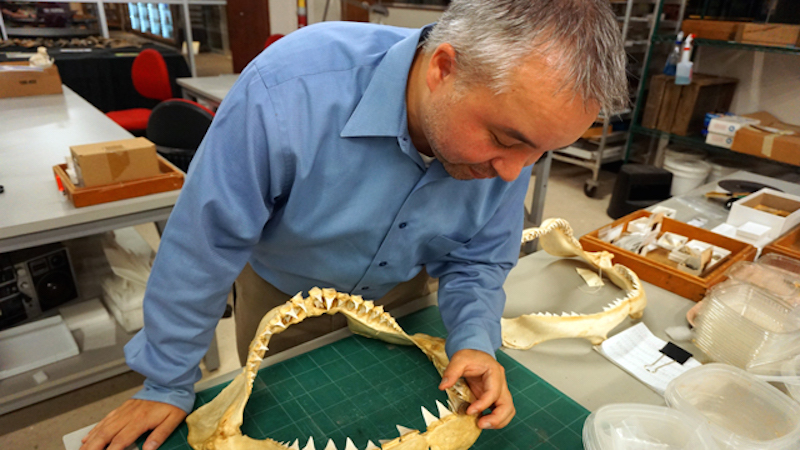
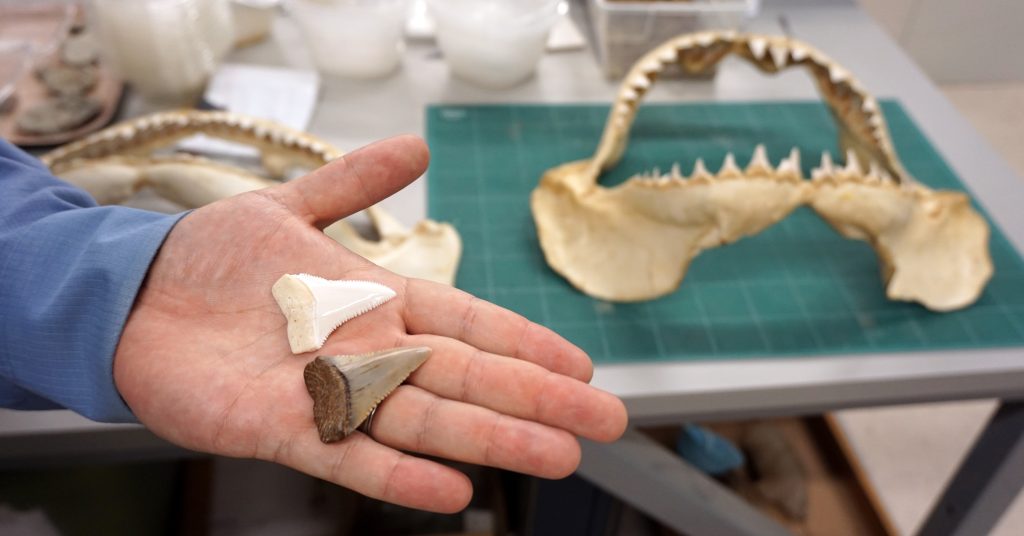
According to a recent report published by researchers from Birmingham’s McWane Science Center, the Geological Survey of Alabama in Tuscaloosa, and South Carolina’s State Museum, scientists have discovered and identified the first early Ice Age shark teeth found in Alabama. The scientists have determined the teeth are somewhere in the ballpark of 2 to 2.6 million years old.
Jun Ebersole, paleontologist and Director of Collections at McWane Science Center, heard anecdotal evidence about fossilized shark teeth discoveries on Alabama’s Dauphin Island for a while. He eventually contacted Richard Dixon, director of the Dauphin Island Sea Lab, who had collected almost 100 teeth over the years.
With the help of his research colleagues, Ebersole identified 12 different species of shark’s teeth from Dauphin Island samples, including two species that have since gone extinct. “Most of these species have modern representatives that still live in the Gulf of Mexico today,” Ebersole told the Alabama NewsCenter. “But we were also able to identify two shark species that had gone extinct during the Ice Age.”
c/o Alabama NewsCenter
The research team returned the teeth to the Dauphin Island Sea Lab, where they can be revisited for future research and educational purposes. Ebersole hopes the non-professional discoverers of such artifacts will follow his example.
“It is my hope that beachgoers find many more and donate them to their local museums,” he said. “That way they can be studied by paleontologists and these remarkable fossils can be shared with the world.”
Southern Research will use a $60,202 grant from the Appalachian Regional Commission (ARC) to develop a strategic plan to foster job creation and entrepreneurial activity in 19 Alabama counties hurt by the decline of the coal industry.
This downturn has struck a blow to portions of northwest and central Alabama, wiping out thousands of jobs and creating economic hardships, said Corey Tyree, Ph.D., Southern Research’s director of Energy & Environment – Alabama, who is leading the project.
Tyree said employment in Alabama coal fields decreased 43 percent between 1990 and 2014 as the number of mines fell by half. Over this time frame, more than 21,000 coal-related jobs disappeared in these 19 counties, costing their economies more than $1.8 billion in lost wages.
“Looking at the coal mining industry from a long-term perspective, with production at a low point and no clear economic drivers to reverse the negative trends, it’s difficult to see how coal will be a source of job creation in this region of Alabama,” Tyree said.
Identifying resources
Southern Research’s strategic plan will examine ways the Alabama coal region can create jobs that help spur an economic revival.
On the project, Southern Research will team with the University of Alabama at Birmingham to identify business sectors ripe for new entrepreneurial activity, given a higher level of investment. The organizations are frequent collaborators and have forged partnerships for drug discovery and medical device development.
Alabama has lost more than 21,000 coal-related jobs. Southern Research is working on a plan for boosting the economies of the most-affected counties. (Southern Research)
Tyree’s project team will also study how similar revitalization projects in the nation achieved successful outcomes and assess how the two organizations’ long-standing research-and-development experience can support programs that stimulate startup activity. The goal will be to capitalize on the strengths and capabilities of the existing workforce and put people back to work in new industries fueled by creativity and innovation.
As part of the 12-week project, the team will engage with educators, economic development professionals, investors and others in the coal region to build a broad coalition of advocates for a renewal effort.
“Areas that lose their historical economic base must recognize future opportunities for industrial development and growth, and they must put assets in place that fuel job creation and enhance competitiveness,” Tyree said.
Fueling innovation
Included in the study are Alabama’s three top coal-producing counties – Walker, Jefferson and Tuscaloosa. The other counties are Lauderdale, Franklin, Marion, Lawrence, Winston, Colbert, Lamar, Fayette, Pickens, Greene, Bibb, Hale, Shelby, Chilton, St. Clair and Blount.
Bulldozer tracks cross a coal pile. A steep decline in the number of coal-industry jobs has affected 19 Alabama counties. Southern Research has been awarded a grant to develop a plan to spur the region’s economies using the abilities of the available workforce. (File)
While some of the counties don’t have significant coal-mining activity, they may house a coal-fired power plant that has closed or undergone a conversion to natural gas, or they may simply be part of a regional economy that historically included jobs in the coal supply chain. All the counties are in economic development regions drawn by the Alabama Legislature in 2015 to encourage collaboration in job-creation initiatives.
Though Alabama and the coal region have taken steps to put resources in place for entrepreneurs, actual startup activity remains low, with Alabama ranking No. 49 in new business creation in a 2015 study by the Ewing Marion Kauffman Foundation.
To attack challenges, Tyree said the team will focus on ways to introduce new levels of innovation into the region’s business environment.
“Productivity is the fundamental driver of prosperity, and innovation is the driver of productivity,” he said. “The focus of economic development must be on supporting all forms of innovation, as that will fuel the growth of new business in the region by fostering new ideas, technologies and jobs.”
Southern Research’s ARC grant was among $38.8 million in awards announced recently by the Obama Administration for programs to assist communities hurt by the downturn in the U.S. coal industry and changes in the power section.
The ARC is a regional development agency that represents a partnership between federal, state and local government.
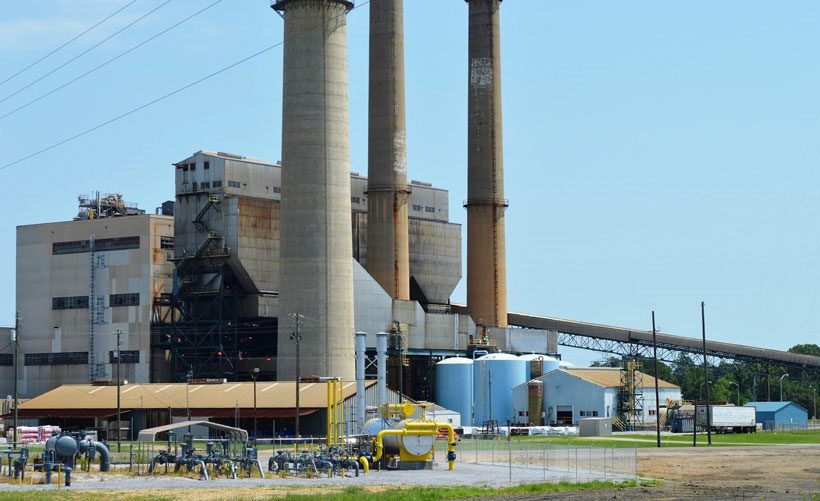
Alabama Power’s Plant Greene County has completed its two-year transition from coal to natural gas. (Anna Catherine Roberson/Alabama NewsCenter)
By Anna Catherine Roberson
It has been two years of transition for Alabama Power’s Plant Greene County, which reached a historic milestone this month.
This summer, the two-year transition is complete, and Greene County is now operating on natural gas.
The process included significant design, engineering and construction challenges, with specific deadlines, as the plant focused on its goal of complying with federal environmental regulations.
“Environmental mandates were part of the constraints and challenges we faced with this project,” said Riley Wells, plant manager. “But I am proud of the dedication and hard work people put in.”
Jennifer Cassity, compliance manager at the plant, credits that hard work with the successful conversion.
During the project, a large portion of the plant was taken out of service for five months, with up to 500 contract employees working on-site. That compares to a typical scheduled outage that lasts 30 days with fewer than 100 contractors at the plant.
“We pulled this project off with an accelerated time frame, on time, on budget, and safely,” said Cassity. “Typically, when you accelerate a project like this, one of those is going to suffer. It is a true testament to the people that work here.”
The two-year process to convert from coal to gas represents a $45 million reinvestment in the plant, and in the west Alabama community that relies on the Greene County facility for energy and as an economic driver, Wells said.
With the conversion complete, the plant is seeing changes in how it operates. Historically, coal-fired plants tend to run continuously for months, but as a natural gas plant, Greene County will run on a different schedule, depending on need. The plant’s maintenance schedule will also change with natural gas instead of coal.
In order to ensure a smooth transition for operators, Wells said the plant purchased a high-fidelity simulator.
“It mirrors and models the real unit,” Wells explained. “This was important because it gave the operators an opportunity to learn to run the new unit before the gas units were available. It was definitely one of the keys to our success.”
The plant has seen its workforce reduced over the past two years as it moved to an all-gas operation, with the number of employees dropping from 126 in August 2014 to 92 today. The long-term target for staffing is about 65. The reduction of employees was accomplished through attrition and transfers, with no layoffs.
The loss of positions will have some impact on the community, Wells said, but the company is committed to supporting west Alabama and being a part of the community for years to come.
“Greene County is in a good place right now,” Wells said. “Going to natural gas for our steam units, instead of focusing on coal-related environmental regulations, ensures a longer lifespan for the plant and a continued commitment to the west Alabama community.”
Drought conditions are causing Alabama Power to limit water releases from its dams. (Winter Byrd / Alabama NewsCenter)
The drought affecting portions of Alabama continues to reduce flows in rivers and streams that feed Alabama Power’s lakes. The conditions have resulted in lower levels at Alabama Power reservoirs.
Scattered summer showers in July and early August helped slow the drop in lake levels. Since then, however, dry conditions have returned. Water levels at Weiss, Neely Henry, and Logan Martin lakes on the Coosa River, Harris and Martin lakes on the Tallapoosa River, and Smith Lake on the Black Warrior River are dropping and are expected to continue their decline.
In response to the dry conditions, Alabama Power has minimized water releases from its hydroelectric dams and suspended recreational releases from Jordan Dam on the Coosa River. The company is working with government agencies, municipalities, businesses and industry, and community groups to communicate about the efforts to conserve water.
The National Weather Service is forecasting lower-than-normal rainfall for the coming three months. Based on the forecast and current conditions, a potential fall extension of summer water levels at Lake Martin has not been implemented and is unlikely to take place during September. Updates on the likelihood of issuing a fall extension at Martin will be posted on the APC Shorelines website every Tuesday through Sept. 30.
The ongoing Alabama drought is causing limited releases, including recreational ones, from Alabama Power dams. (Winter Byrd / Alabama NewsCenter)
Alabama Power will continue to closely monitor conditions on the lakes and manage the limited water resources carefully. Individuals with boats and other water-related equipment and facilities should always be alert to changing conditions on Alabama Power reservoirs and be prepared to take the necessary steps to protect their property.
For details about Alabama Power lakes, visit Shorelines or add the free Alabama Power Shorelines app to your mobile device. To view specific lake advisories, click on the lake name and then click the circular information icon. Individuals can also call Alabama Power’s automated Reservoir Information Line at 1-800-LAKES11 (1-800-525-3711).
The Blazer spirit is on display in the “Together We Are Greater Birmingham” campaign by Burton Advertising. (contributed)
By Michael Tomberlin
UAB unveiled a new video today, kicking off a campaign for the 2016-17 season a year before football returns to the school.
The “Together We Are Greater Birmingham” video and promotion taps into the revived interest in football and other sports at the school after the football program was eliminated in December 2014. The return was announced six months later after a public outcry.
Burton Advertising produced the inaugural video for the campaign, which can be viewed below.
The green and gold colors of the school are sprinkled throughout the video along with images of Magic City icons like Vulcan, Railroad Park, Legion Field, Alabama Theatre and the UAB campus itself.
“The entire Birmingham community has rallied around UAB and this campaign is a way to show our appreciation for what the city has worked so hard to accomplish,” UAB Athletics Director Mark Ingram said. “UAB is a world-class institution located in a world-class city, and together we can achieve unprecedented levels of success. We are living proof of that.”
“The support has been unwavering,” football coach Bill Clark said. “We have put shovels in the ground for our new Football Operations Center and it wouldn’t have been possible without Birmingham believing in UAB and our vision of becoming a championship caliber program.”
Although the returning football program is a point of emphasis, the new campaign will connect to all 18 Blazer sports programs. Fans are being asked to use the #TogetherWeAre hashtag on social media this season.
An image from the “Together We Are Greater Birmingham” video. (Burton Advertising)
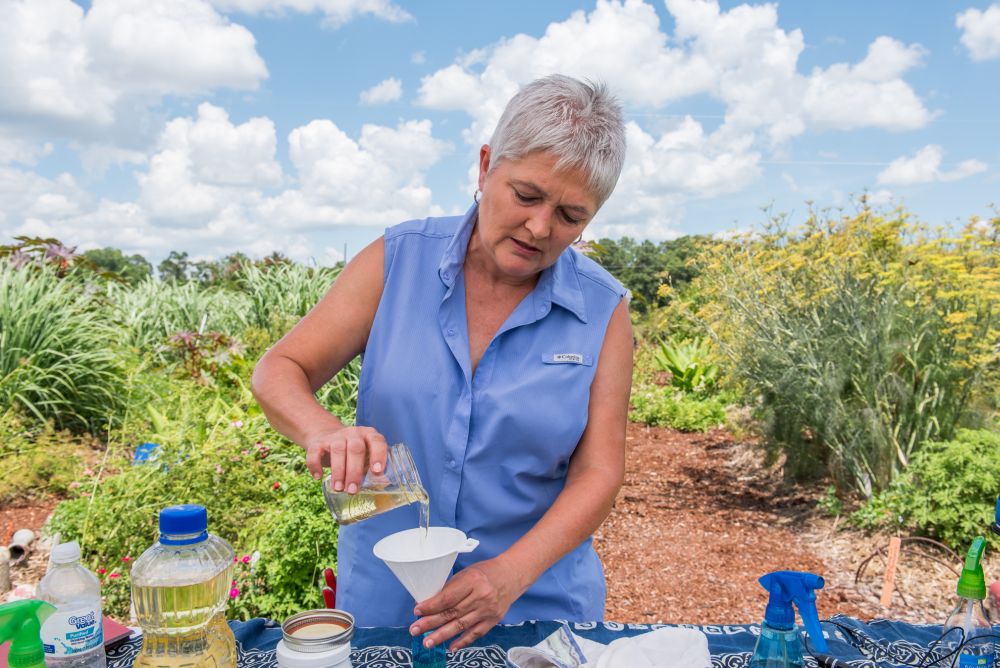
Using the right ingredients — natural, skin-loving oils that repel biting mosquitoes — with soybean oil as a base, everyone can make their own safe, “happy smelling” mosquito repellant, said Auburn University Horticulturist Tia Gonzales, shown at the university’s Medicinal Plant Garden. (Photo by Nik Layman – Alabama NewsCenter)
Crush and rub.
This little-known remedy for keeping mosquitoes at bay – by simply rubbing your skin with the leaves of mosquito-repellant plants – sounds too easy, but the tried-and-true method repels the pesky insects, said Tia Gonzales.
With nearly 30 years of experience as a horticulturist, Gonzales, Agricultural Program assistant at Auburn University, knows the hidden properties of many commonly known plants.
For example, Gonzales said that rose-scented geraniums, citronella, lavender, basil and garlic, rosemary, wax myrtle, lemon balm, lemon grass, lemon thyme and lemon verbena are certain to send the flying vermin to the other side of the yard.
“Using these plants turns you into a walking mosquito arsenal,” said Gonzales, who earned her horticulture degree at Auburn University and is responsible for its 1-acre medicinal plant garden. “The key is to bruise and abrade the leaves, releasing the oils. Crushing releases the plant’s chemical properties and scent.”
Gonzales recommends grabbing several leaves or a cutting from mosquito-repelling plants such as basil or lemon balm and crushing the plant in your hands. Then rub the plant leaves across your bare skin, releasing the plants’ oils and scent that is a natural bug repellant.
“If I want to sit out on my deck at night, I crush the leaves of rose-scented geraniums and then rub them on my arms and legs, making sure to release the plant oils and scent,” she said.
It’s a trick that Gonzales hit on many years ago, when she used to track timber for the state. When Gonzales ventured into dense forests and encountered swarms of mosquitoes, she was armed with a secret weapon: crushed garlic in her pockets. She placed crushed garlic under her hat, where her body heat would steam the oil and release the scent.
“I call it the hat trick,” Gonzales said, with a laugh. “Of course, you don’t want to use garlic when you’re sitting outside with friends and family. There are so many nice-smelling plants to choose from that work as effectively as garlic.”
Taking a midday stroll through the university’s Medicinal Plant Garden, Gonzales pointed to rose-scented geraniums.
“I like having plants that do something,” she said. “Every plant needs to have a job. The rose-scented geranium is a great plant that grows in full sun, and it’s very drought-resistant. They will die in the winter, but they come back. We bring cuttings in and root them.”
She noted the rose-scented geraniums – common at specialty nurseries but less available at “big box” stores – are sold on-site to the public.
Make your own mosquito repellant
While Gonzales said it doesn’t hurt to light a citronella candle outside, she makes her own natural mosquito repellant. She uses soybean oil as a base, then adds up to 20 drops of natural oils such as lavender, neem oil and catnip oil in a small spray container. Those oils are extremely efficient; catnip oil is proven more effective than DEET in repelling mosquitoes, she noted.
“Neem oil smells a little garlicky,” Gonzales said, “but the other smells on top can take away that smell.” If placed in a cool, dark place, the mixture will stay fresh for up to two years. Best of all, the mixture is nontoxic.
Spraying a bit of one of her concoctions, Gonzales said, with a smile, “I feel so refreshed – happy and mosquito-free.”
The public is invited for a free visit to Auburn University’s Medicinal Plant Garden 365 days a year. Visitors will find lists with traditional uses for each plant for reference during self-guided tours. Staff members give tours of the garden every third Thursday through October.
Birmingham’s Lakeshore Foundation is helping Apple develop software for the Apple Watch to help keep the disabled active. (courtesy of Apple)
Apple CEO Tim Cook is from Alabama, but it’s still a pretty big deal when a Birmingham institution gets a shout-out when the world is watching the tech giant’s Worldwide Development Conference.
Lakeshore Foundation was on the receiving end of such a shout out at the WWDC today. But even more significant is why Cook acknowledged the institution that is known for its work with those with disabilities.
Apple is working with Lakeshore Foundation and San Diego’s Challenged Athletes Foundation to improve functionality on the Apple Watch. Just like the smartwatch can alert able-bodied people to do something active during the day after they’ve been resting too long, Apple wants to do the same for wheelchair users or otherwise disabled people.
The problem is that while there is plenty of baseline material for the able-bodied on what constitutes active and inactive periods, the same doesn’t exist for the disabled.
Enter Lakeshore Foundation and Challenged Athletes Foundation, which worked with Apple to recruit about 300 people in wheelchairs for more than 3,000 hours of activity research. The data will help the Apple Watch software gauge the fitness and activity of those in a wheelchair who need to spin around, wheel for a distance or do some other activity.
“Encouraging people with physical disability to exercise is vital to addressing the issue of health disparity,” Jeff Underwood, president and CEO of Lakeshore Foundation, said. “Helping to ensure that the Apple Watch is accessible to as many people as possible could have a profound impact for the health and wellbeing of persons who are wheelchair users.”
For Apple, the goal was to make the Apple Watch useful for everyone.
“We want to make products that serve every walk of life,” Jeff Williams, Apple chief operating officer, told the Associated Press. “We realize that while it was great for messages on the wrist, we wanted to offer this group of people the same opportunity to get healthier using Apple Watch.”
Underwood said he hopes other companies will follow Apple’s lead.
“Perhaps just as important as the technological advancement is the societal impact this type of commitment to inclusion from Apple demonstrates,” Underwood told Alabama NewsCenter. “Creating opportunities for healthy, active lifestyles are at the forefront of Lakeshore Foundation’s work and this project is a significant milestone for the millions of people within our mission.”
(Photo: William Warby)
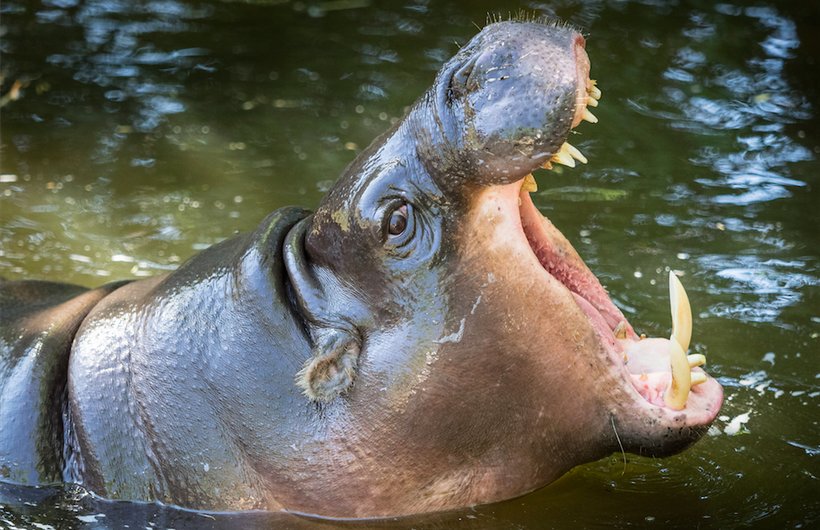
2,086 hippos-worth of trash has been removed from Alabama lakes and rivers since 2000, thanks to over 56,000 volunteers who have participated in an initiative spearheaded by Alabama Power.
The 10.4 million pounds of trash is the equivalent of 17 Boeing 747 jets or 3,478 Volkswagens, according Shorelines, a website and mobile app Alabama Power provides free of charge to individuals needing to keep track of water levels and other information related to Alabama’s lakes and rivers. Alabama Power manages 11 reservoirs and 14 hydroelectric dams on the Coosa, Tallapoosa and Black Warrior rivers.
“This is a valuable tool for the people who live on or visit our lakes,” said Matt Bowden, the company’s vice president of Environmental Affairs. “The mobile-friendly site and app provide instant access to lake information for people on the lake or those thinking about driving down for the weekend. This is a big leap forward in providing information people want in today’s on-the-go world.”
In addition to the convenience of being able to check lake levels and related information for recreational purposes, Shorelines also proved to be an invaluable resource during Alabama’s recent severe weather, which included tornados and flooding.
Multiple “lake condition alerts” went out to warn residents of flooding and inform them that spillway gates around the state were operating to help manage rising lake levels.
The weather events also showed that while Alabama Power’s hydroelectric dams help provide the power Alabamians demand, when heavy rains come, these structures, and the storage reservoirs behind them, can also help to soften the blow.
According to Alabama NewsCenter, “Alabama Power’s Smith Dam on the Black Warrior; Weiss and Logan Martin dams on the Coosa; and Harris and Martin dams on the Tallapoosa are specifically designed to help manage flows downstream during times of potential flooding.
“When heavy rains come, the reservoirs behind these dams can store water at levels well above their normal, summer capacity – which is exactly what they’ve been doing during recent days. The company releases the stored water behind the dams in a controlled manner, through its turbines and through dam spillgates, in coordination with the Corps, to help reduce downstream flooding.”
Some areas of the state were still hard-hit by flooding, but without the dams and communications efforts, the loss of life and property could have been much worse.
(Video Above: Researchers at the University of Alabama at Birmingham appear to have found a better way to grow shrimp that is also less expensive)
Researchers at the University of Alabama at Birmingham appear to have found a better way to grow shrimp that is also less expensive, and the new process could hold the key to unlocking future breakthroughs in environmental science, business and medicine.
Using sea urchins and shrimp as models, UAB scientists discovered that one species could feed another from its waste, without needing to use traditional food at all.
Researchers at the University of Alabama at Birmingham appear to have found a better way to grow shrimp that is also less expensive, and the new process could hold the key to unlocking future breakthroughs in environmental science, business and medicine.
Using sea urchins and shrimp as models, UAB scientists discovered that one species could feed another from its waste, without needing to use traditional food at all.
“Over the years, we’ve found that a number of the animals we’ve worked with are excellent models for studying aspects of medicine,” Watts said. “Many of them are great biomedical examples, and we can study a variety of diseases and issues related to human health, so our research is really twofold. We study the animals for aquaculture and biomedical research.”
In his previous work with sea urchins, Watts began to understand that the animals could potentially support another species, sparking his interest in further pursuing that possibility.
“In some cases, we had our shrimp together with our sea urchins, and they did very well, and we noticed that the shrimp had a tendency to congregate by the sea urchins and consume the waste pellets from the urchins,” Watts said. “It looked like there might be some kind of synergy there.”
In Watts’ lab, researchers grow sea urchins and put them into a polyculture system, in which one animal supports the other. In this instance, the sea urchins support the shrimp through dropping their waste pellets through to the shrimp that live beneath the urchins, allowing them to consume the pellets and grow without the need for traditional food.
The sea urchin pellets are full of nutrients and healthy bacteria and, according to Watts’ research, help shrimp grow faster and larger than they did when consuming shrimp feed alone.
This finding has the potential to bear positive impacts in several fields.
“Fundamentally, it’s a breakthrough in polyculture science; but the positive effects could also be seen in industries that raise aquatic species and by those that buy them for restaurants,” Watts said. “Cost savings seen from reducing or eliminating the need for traditional food could be substantial.”
Farm-raised shrimp are an important part of aquaculture and to the restaurant industry. Worldwide, much of the shrimp that is cultivated for culinary interests is done so in ponds, rather than out in the ocean. In order to raise these shrimp to be harvested for market, farmers must usually buy expensive feed.
Watts’ system eliminates that cost factor.
“When you have urchins present, you won’t need the shrimp feed,” Watts said. “What we’ve found is that the shrimp do very well when just consuming the urchin pellets alone — they grow large fast and stay healthy. In many cases, they exceeded the growth rate of shrimp fed the expensive feed.”
Furthermore, chefs like Birmingham’s Chris Hastings, chef and owner of world-renowned Hot and Hot Fish Club and the newly opened Ovenbird, could stand to gain from this new system.
Watts and his research team brought their shrimp to Hastings’ Hot and Hot Fish Club for a taste test.
“If you did a side-by-side with any shrimp grown in a pond in the world that’s not done sustainably in a closed loop with organic food as its source in a clean environment, and you taste it next to this shrimp — the flavor, the texture, everything about your shrimp is world-class compared to that,” Hastings said.
“And do you know what it means for me as a chef? It means I know I have a hope and a chance of achieving what I dream in cooking,” Hastings said. “You can’t achieve those dreams with less than a perfect product.”
Watts and his team echo Hastings’ desire to create an environmentally sustainable system for the culture of many species.
“With the number of individuals in this world increasing, and the need for protein, aquaculture is going to be the only mechanism by which we are going to be able to enhance fish protein production,” Watts said. “It’s all we have.”
“Aquaculture gives us a new way of bringing in protein that we haven’t fully utilized yet,” said Karen Jensen, a master’s student in Watts’ lab. “These animals use a lot less energy than, say, a cow or a chicken to raise to full adult, and they still give us great nutrition.”
With this system’s many benefits in mind, Watts and his team will continue research on this polyculture relationship and others, aiming to bring more aquaculture to market.
(Video Above: Making monsters in Montgomery with Jonathan Thornton from Alabama NewsCenter on Vimeo.)
In a modest East Montgomery neighborhood, a single-level home holds secrets no one passing by could ever imagine.
Random human body parts are displayed as if they were library books on shelves. Heads without bodies, hands, feet and plastic storage boxes of hair, eyes and teeth with gory labels announcing their contents.
There are other things here, too. Strange creatures and zombies not from this world. Bright yellow aliens and green monsters.
One thing is for certain. Everything here is lifeless. Except for the figure moving around this small shop, a powerfully built bald man who slightly resembles a goateed Uncle Fester from “The Addams Family” television show from the 1960s.
This man is not a monster, though. He’s Jonathan Thornton, a special makeup effects artist who created the scary stiffs and remains strewn about the shop that was once a two-car garage, including the headless torso that stands outside the small exterior door leading into his laboratory.
“I work in both the movie industry, the television industry, commercial industry, I’ve worked on plays, the Alabama Shakespeare Festival when they did Dracula, I had to create a silicone mask for the evil version of Dracula and I also work in the haunt industry,” he says “making masks like my gut muncher guy here and props and creatures and all kinds of goodies, mainly for Netherworld Haunted Attraction in Atlanta.” Netherworld is a walk-through, dark, haunted house filled with terrifying live actors, special effects and monsters.
“I’ve been fascinated with monsters since I can remember. When I was little kid, I was always reading the ‘Famous Monsters of Filmland’ magazines,” Thornton says. “Even monsters that scared the Boogens out of me. I then later would be excited about finding out how to make that. I used to love Halloween and still do.” (“The Boogens,” for the uninitiated, is a 1981 horror flick featuring scaly monsters.)
The furniture store manager turned monster maker recalls his first venture creating most of the special effects for a movie called “Blood Feast 2” that was released in 2002.
“That was the first movie I ever worked on. I was as green as can be. The movie effects were horrible. … That got a lot of notoriety. … My career just built and built,” he says.
Thornton started going to conventions and meeting other effects artists. He eventually met Bill “Splat” Johnson, whose many film credits include working on Mel Gibson’s “The Patriot.” Johnson became Thornton’s mentor and helped him pursue his dream of creating special effects for films.
Thornton has worked on low-budget films as well as one project that carried a $30 million budget. He recently worked on a Western that starred Woody Harrelson. Other actors he has worked with include Dee Wallace, Lance Henriksen and Kevin Sorbo.
But one of his proudest accomplishments came from working on a film that more people have heard of.
“I was very privileged to have made some bodies for the movie ‘Lincoln.’ Yes, the movie ‘Lincoln.’ Steven Spielberg,” Thornton says. “I’m still pinching myself. Didn’t meet him. Didn’t go to set. I just made stuff that’s in his movie and I’m very proud of the fact that I did that.”
Though monsters and dismembered bodies are what Thornton does, they are not who he is. His voice softens as he speaks of his 5-year-old daughter, Bella, who he sings to sleep every night. He says she sometimes comes to his shop and carves into clay with him, the first step before making a mold and eventually an effect for a project.
“Halloween is every day for me,” he says in a booming voice. And in another voice several octaves higher, he impersonates the David Hedison fly character in the horror film “The Fly” by saying, “Help me, help me.”
The lights go out as he makes his way past the carnage he has created over the years. As he closes the door to his shop, he looks around at some unfinished props and smiles at the headless torso and leaves the land of make believe.
(Video Above: Dr. Kirby Bland talks about the improvements in breast cancer survival)
“You have breast cancer,” is the heart-dropping statement many women dread hearing, and rightly so: One in eight women will be diagnosed with this disease during her lifetime.
Thanks to new treatments and continuing research, the medical field continues to provide women increased hope in defeating breast cancer, said Dr. Kirby Bland, a leading cancer specialist at UAB’s Kirklin Clinic, Birmingham.
He served 16 years as UAB Hospital’s surgeon-in-chief and chair of the Department of Surgery for the UABSchool of Medicine. Bland left those posts on Oct. 1 to devote time to caring for patients, completing research and to lending his expertise to training and educating future surgeons.
This summer, Bland was among Newsweek’s listing of “Top Cancer Doctors 2015.”
Bland advises women to get their first mammogram by 40.
“Approximately two-thirds of breast cancers occur after menopause,” he said. Women with a family history of breast cancer should receive more frequent mammograms, Bland said. However, the disease does not always discriminate by women’s age: Though breast cancer is rare in children and adolescents, Bland has performed life-saving surgery for breast cancer on a girl who was 9 years old.
Breast cancer is about 100 times less common for men than women. During his lengthy career, Bland has treated just a handful of men.
With today’s improved diagnostics and therapies, he said, the prognosis for breast cancer has increased exponentially. Even in the 1700s, Bland noted, Italian physician Bernardino Ramazzini knew that women were dying of breast cancer, but there was no real method of treating the disease.
“With the advent of radiation therapy and, particularly, the improvement in the types of chemotherapy and types of directed therapies, women have a huge probability that we can impact, very positively, the outcomes of breast cancer,” said Bland, who has treated tens of thousands of breast-cancer patients during his 40-plus-year medical career. “The earlier the stage at which you diagnose the cancer and the more favorable stage it happens to be in, the greater the chance that we will have a major quality impact on the outcome. This accounts for the reasons, since 1980, that we have improved the five-year survival rate from 70 percent to well over 95 percent today.”
A new line of treatment
Bland, working with a UAB team including Dr. Helen Krontarias, biophysical chemistry professor Donald Muccio and Clint Grubbs, associate director for UAB’s Department of Surgery, was instrumental in developing a new chemotherapeutic retinoid drug – UAB-30 – to treat breast cancer. The researchers are moving UAB-30 to clinical trials as a chemopreventive agent for breast cancer.
“This drug development progress is in the pre-clinical phases of testing drug efficacy, and will move to National Cancer Institute oversight for phase II and III trials over the next few years,” Bland said. “We are hopeful to see UAB-30 come to market in the United States in 10 years.”
Bland’s desire to improve the health outcomes of breast cancer patients doesn’t surprise his secretary, Tricia Green.
“I had worked here for less than a year when I was diagnosed with stage zero breast cancer,” Green said. “Because of that, I didn’t have much sick time or the health coverage I needed for the surgery. Dr. Bland donated his time for my surgery.”
“That’s the kind of person he is,” Green said. “He goes beyond caring.”
Children get hands on learning at the new NaturePlex (photo c/o Alabama NewsCenter)
There is a new way to learn about the birds and the bees in Alabama.
From “An Original DUCKumentary” showing in its theater to a giant beehive among its many hands-on exhibits, the NaturePlex is creating plenty of buzz after its recent grand opening.
“This is a dream that we have been working on for many, many years,” said Angus Cooper III, president of the Alabama Wildlife Federation (AWF) board of directors.
The dream became a reality on Oct. 9. A crowd gathered at the AWF headquarters in Millbrook to officially open the doors to the 23,000-square-foot NaturePlex that will be used for conservation education for children and adults across the state.
”It is a tremendous day,” said Tim Gothard, AWF executive director. “What excites me are all the young people that we have with us today. You are why we do this.”
The impressive facility boasts a 120-seat theater, along with a “Discovery Hall” with 2,500 square feet of displays and interactive features. There are also classrooms, a 100-seat community room with audio/visual technology and a 150-seat “Lunch Cove.”
The Alabama Power Foundation contributed to the $6 million project.
“We were excited to support the construction of this great facility,” said Matt Bowden, vice president of Environmental Affairs at Alabama Power. “It is very important to teach our youths to be good stewards of the environment. The Alabama Wildlife Federation continues to do a great job of reaching children across our state.”
Admission to the NaturePlex is $5 per person. Children under 3 get in free, and the maximum admission cost is $20 per family.
The NaturePlex will be open Monday through Saturday from 9 a.m. to 5 p.m. It is available to rent for meeting and events.
(Video Above: Superhero window washers at Children’s of Alabama from Alabama NewsCenter on Vimeo.)
The sway of the ropes outside the 15-story building was a clue.
Patients, family and staff at Children’s of Alabama were anticipating the appearance of superheroes they heard were just outside.
The ropes tapped the glass, some legs appeared and then there they were: Spiderman, Batman, Superman and Captain America on the other side of the glass.
Selfies, smiles and squeals of joy followed.
It’s the third year in a row Children’s has hosted the window-washers turned heroes.
“Within every child lies the courage of a superhero,” said Jennifer Deneke, director of family services at Children’s. “The kids were so excited. They had their superhero capes on. Their faces were pressed against the glass waiting for their favorite superheroes.”
In their alter egos, the heroes work for Hoar Construction washing windows on the building. After making it down the side of the Benjamin Russell Building, the heroes met with patients and posed for photos.
“It’s so great to be a part of something like this,” said “Captain America.”
“Batman” agreed.
“It means the world to me to be here,” he said. “It was very much an honor.”
The patients thought it was pretty special, too.
“The kids have been counting down to meeting the superheroes,” Deneke said.
She said more events are scheduled this month as part of Books-A-Million Superhero Month at the hospital.
“We had an event last week, Capes and Crowns, we have our superheroes this week, we have some Ninja Turtles next week and then some other fun things planned for the month.”
Photographer Nik Layman with Alabama Newscenter
BIRMINGHAM, Ala. — Alabama’s celebrated hometown boxer, Deontay Wilder, won another impressive fight Saturday night improving his record to 35-0, 34 KOs. “The Bronze Bomber” battled it out with frenchman Johann Duhaupas, (32-3, 20 KOs), in the ring at Legacy Arena, in Birmingham.
WBC Heavyweight titleholder Wilder delivered a massive beating to Duhaupas going into the 11th round, where in Wilder fashion, the frenchman was driven to the ropes landing a dozen unanswered punches forcing the fight to be called with 55 seconds left in the round.
During the fight, 6-foot-7, 229-pound Wilder unleashed barrage after barrage on 6-foot-5, 236-pound Duhaupas with both earning applause from those in attendance. After the fight had been called, Wilder put his arm around the respected opponent and the two walked the ring together embracing the crowd’s cheers.
8,471 roaring fans were in attendance rooting on Tuscaloosa native Wilder as he took it to Duhaupas round after round. By the end of the match Duhaupas’ face was black-and-blue from taking the Bronze Bomber’s arsenal of punches from Wilder’s jabbing left and powerful right.
As the fight was called, Wilder was seen moving with excitement as he addressed the crowd with flair in that unique Bronze Bomber style. During the sixth round, Wilder entertained fans by dancing and shuffling across the ring in the final seconds.
“It’s tough fighting at home because you want to entertain the crowd. The people come out and they paid their hard-earned money, so they definitely want to see a show, and didn’t you all get a show tonight? Oh, my God,” ESPN.com reports Wilder addressing the crowd from the ring after the fight.
Although Wilder is attributed with the KO, Duhaupas was given nothing but respect by the heavyweight title holder. “He [Duhaupas] got a hell of chin. When [you’re] fighting for a world title it brings a different kind of beast, a bit different animal out of fighters,” Wilder explained. “They come to get it all whether they home or on the road. You got to give him credit. He definitely has my respect. He was very strong and I see why he’s never been stopped before. I was prepared to go all 12 rounds.”
Wilder didn’t escape the Frenchman unscathed, however, earning the first swollen eye of his career, which he says he’ll wear with pride.
The Premier Boxing Champions main event was the first heavyweight title fight on NBC in prime time in 30 years. The Alabama NewsCenter reports that the Greater Birmingham Convention & Visitors Bureau put a $1.5 million initial estimate on the economic impact the fight had on the metro area.
Wilder first defended his title in June, knocking out Texan Eric Molina in the 9th round. Wilder is due to have a mandatory defense against Russian-born Alexander Povetkin (29-1, 21 KOs) which many expect to be Wilder’s next fight.
Thanks for reading! Let me know what you think about this story on Twitter.
The recent first day of the new school year at Horizons School in Birmingham was much like what you would find at any preparatory school or even small college.
Students were moving into their rooms, parents of first-year students were more nervous than the students themselves, while returning students were all abuzz as they reunited with classmates.
But the young adults who attend Horizons School are what make it special.
The students at Horizons have learning and other disabilities and this is the first time most of them will live outside the protective havens of their parents’ homes.
In the three years they are at Horizons, the students will learn everything from hygiene to balancing a checkbook, from keeping up a home to holding down a job.
“If you think of the things that make an adult independent in this society, it’s someone who can maintain their own residence, somebody who can cook and clean, plan meals, keep with a daily schedule,” said Brian Geiger, executive director of Horizons School. “Those are all the types of things we teach here at Horizons.”
Horizons owns Terrace Court apartments in Five Points South, a couple of blocks away from the school itself. Students live in the apartments the first two years where they are learning everything from safety to laundry under the watchful eye of residential assistants who also live there.
During their time at Horizons, the students will learn how to buy groceries at the Western Supermarket up the street, take the bus to the movie theater, hold a job at Chick-fil-A, Steel City Pops or any number of participating companies that work with Horizons students to first give them an internship to learn and often end up giving them a permanent job after they graduate.
Kelly (Horizons doesn’t release last names of students), a student from Florida who is starting her second year at Horizons, is “learning new life skills, job skills, learning just new things. It’s always good and, to me, fun to learn new things.”
She said she is glad to be back at the school and looks forward to decorating her apartment with her Beatles posters.
“I like it here,” she said. “It’s friendly people.”
Kelly’s mother, Connie, said she is proud of her daughter’s accomplishments in just one year at Horizons.
“I feel wonderful about it,” she said. “I see my daughter becoming more and more independent. The change and the growth in her is phenomenal. I’m so proud of her.”
Geiger said while it can be hard to parents to let go and become less protective of their child, the pride that comes with their independence is more than enough to replace that apprehension.
“Their parents’ goal is for the students to attain a significant level of independence so they don’t have to return home as young adults and live under mom or dad’s roof. And that’s our goal, too,” Geiger said. “We want everybody to maximize their potential. So, when they achieve their own bank account and they’re able to manage those funds correctly and when they can establish utility service in their own name, those are some of the hallmarks of independence in our society.”
A measure of independence
Alabama Power customer service representatives were at the school on opening day helping students put the power bill in their own names. It might seem like a small thing to others, but Geiger said it’s a big deal for the students.
Jessica is also a second-year student and is more than happy to list what she’s learning at Horizons.
“I learned to shop, how to budget for food, how to cook and how to clean,” she said.
Geiger said donors help with everything from movie night to providing scholarships for students in need. Volunteers work to organize fundraisers or even help around the school.
The students become fixtures in the Southside neighborhood. Though the students come from all over the U.S., many decide to live in the neighborhood after they graduate because they are familiar and comfortable there.
Until then, Horizons School is there to guide them to that level of independence.
“It’s exciting,” Kelly said. “I’m moving forward and, just, moving up and keep on going and learning new things. I’m real excited about that.”
More details emerge on the expansion of the Mercedes-Benz plant Tuscaloosa. 300 new jobs will be created as production increases.
“In the next years we invest $1.3 billion into the expansion of our SUV production and turn the Mercedes-Benz plant Tuscaloosa into a high-tech location,” says Markus Schäfer, Member of the Divisional Board Mercedes-Benz Cars, Manufacturing and Supply Chain Management.
“In this way we can produce the next SUV generations even more flexibly, efficiently and in proven top quality.”
The Mercedes-Benz plant Tuscaloosa will also assemble the next SUV generations including the hybrid versions. The plant expansion in this context includes a new Body Shop, major enhancements to the SUV Assembly Shop as well as upgraded logistics and IT systems. State-of-the-art technologies and an end-to-end digitization of production processes enable a highly flexible production.
As part of the global production network, Tuscaloosa is connected to all Mercedes-Benz Cars locations around the world, allowing a location-independent access to data and process management. Every single installation and every robot, for example, can be controlled and updated to new software programmes. Big Data applications will be used for intelligent analyses and for an improvement of the production processes.
“With this expansion and modernization of our plant, we will create 300 new jobs and continue the success story of Mercedes-Benz in Tuscaloosa,” said Jason Hoff, President and CEO of MBUSI. “Our entire team is proud to reinforce the State of Alabama’s growing reputation as a leader in high-quality automotive manufacturing.”
The new 1.3-million square foot (125,000 square meters) Body Shop will use the latest lightweight technologies with innovative joining processes and employ a modular approach to manufacturing.
MBUSI’s current SUV Assembly Shop will be expanded by 139,930 square feet (13,000 square meters) and receive a larger, more flexible “marriage” station, where the body is merged with the powertrain, allowing for production of a wider range of vehicles.
The U.S. Army played taps to Fort McClellan years ago, but the property may be on the verge of a new type of reveille.
Located in the foothills of the Appalachian Mountains, Fort McClellan is known mostly for its long run as an Army training camp, producing soldiers and officers of the Chemical Corps, Military Police and other ranks. For more than 81 years, thousands of American troops spent time at the Anniston base.
These days the soldiers are gone, families have relocated and the once booming community is searching to regain its glory.
After the 1980s, with shrinking defense budgets and ever-increasing costs, the U.S. military was forced to look for opportunities to decrease expenses. Officials on the Base Realignment and Closure Commission (BRAC) concluded the fort should be closed in the early 90s.
After unsuccessful votes in 1991 and 1993, this year marks the 20th anniversary of the BRAC decision to permanently close the fort in 1995. The official closing ceremony was held on Fort McClellan on May 20, 1999.
In response to decaying former military bases in the state, then-Gov. Bob Riley signed a new law in 2009 authorizing development authorities to oversee development of property on military installations that were closed as the result of BRAC actions.
The McClellan Development Authority was created and charged with overseeing the economic development and growth of McClellan. In spring 2010, the MDA became a non-profit public corporation charged with the future economic development of the former fort.
Since the MDA began overseeing the redevelopment of McClellan, more than 3,100 acres of property are back in use, 3,000 are currently available for sale, and a little more than 3,000 acres are set to go up for sale in the next three to five years, according to Robin Scott, MDA executive director.
Phil Webb, owner of Webb Concrete and Building Materials, an Anniston based company with locations across East Alabama, serves as the chairman of the MDA.
“To me it is all about job creation and the redevelopment of McClellan,” Webb said. “The process takes time but there are a lot of accomplishments to be proud of.”
Since the creation of the MDA:
– 125 dilapidated structures been demolished,
– 197 acres of new industrial and commercial parcels,
– more than $6.3 million in property has been sold, and
– more than 400 new jobs have been created.
Additionally, last year marked the end of a successful 11-year ordnance cleanup project, which opened nearly 2,800 additional acres of land for development; all completed with zero safety incidents.
With the MDA leading the charge on the restoration and growth of McClellan, officials say the potential is immeasurable.
There is confidence that soon McClellan can soon write a new chapter and the bugle can blow on a renewed lively, booming community.
(Video Above: Airbus’ U.S. A320 Family final assembly line in three dimensions) By Kelli M. Dugan
With a new on-site chief and grand opening ceremonies set, Airbus’ U.S. Manufacturing Facility in Mobile is ready for takeoff, concluding three years of planning, construction and community buy-in.
Airbus Americas spokeswoman Kristi Tucker confirmed two A321 aircraft are already in production “as we build up to inaugural ceremonies” for the Toulouse, France-based planemaker’s first final assembly line on U.S. soil on Sept. 14.
The first of the Mobile-assembled, narrow-body planes is slated for delivery to Jet Blue in the second quarter of 2016, while American Airlines will accept delivery of the second A321 at a later date, Tucker said.
Mike Lanier, president of Birmingham-based Hoar Program Management overseeing the manufacturing facility’s construction, said work has been seamless on the project since Airbus accepted June 21 delivery of the first major component assemblies, including wings; horizontal and vertical stabilizers; the rear fuselage, including the tail cone; and the forward fuselage, including the cockpit.
“Most of the buildings have been turned over from our construction partners to the Airbus facilities team. We continue to work with outsourced providers of services such as jigs and tools for the final assembly line,” Lanier said. “We’re working with Airbus to ensure each building meets or exceeds final inspection criteria in order for Airbus employees to work in the safest environment as soon as possible.”
To date, that employment figure totals more than 225, more than half of which hail from Mobile and Baldwin counties. Another 30 percent was recruited from other parts of Alabama, Florida and Mississippi. Tucker also said an estimated 30 percent of the new hires are U.S. military veterans.
The newest Airbus final assembly line joins global operations in Toulouse; Hamburg, Germany; and Tianjin, China and is expected to employ about 1,000 people at peak production of 40 to 50 aircraft by 2018.
Despite chatter of boosting monthly production goals to meet increasing demand for the popular single-aisle A320 family of aircraft (and ample available space at Mobile Aeroplex at Brookley to more than double the soon-to-debut Alabama facility), Airbus officials said there are no plans to grow in Mobile.
“There are no plans for expansion at this time,” Tucker said.
On Aug. 25, Airbus announced industry veteran Daryl Taylor will succeed Ulrich Weber as vice president and general manager of the Mobile facility now that construction and commissioning of the final assembly line is complete.
“(Taylor) brings a wealth of knowledge and experience in aircraft manufacturing and facility operations which will ensure the A320 family manufacturing facility in Mobile is successful, an industry leader and provides a great product to our customers,” Airbus Americas President Barry Eccleston said.
Since 2013, Taylor has served as vice president and general manager for both GKN Aerospace’s Precision Machining Inc. in Wellington, Kan., and its Burbank, Calif.-based Bandy Aerospace Inc. Prior to joining GKN, Taylor was general manager of the Q400 Program at Bombardier Aerospace in Toronto, Canada, and held various positions at Wichita, Kan.-based Hawker Beechcraft Corp.
With a host of public and private grand opening celebrations slated to begin in Mobile Sept. 12, HPM’s Lanier said his company is entering the final stages of its involvement with the high-profile project.
“As our local contractors and subcontractors complete their projects on the site and begin to pack up and leave, Alabama workers are arriving trained and ready to start assembling airplanes. By the end of the year, all construction will be complete,” Lanier said, calling it a truly “cooperative effort” between Airbus, HPM, Hatch Mott MacDonald and “the dozens of firms and companies working together to ensure this legacy project shines brightly for Alabama to the rest of the world.”
Grand opening celebrations include a Sept. 12 community celebration on the Mobile Aeroplex Green Space (located on Broad Street between 5th and 6th streets) immediately following the Airbus 5K on the Runway post-race celebration. Festivities are tentatively slated to begin around 7:30 p.m., complete with family-friendly activities, live music, fireworks and food and drinks for purchase.
“The Mobile community has been with us through thick and through thin, and we wanted to involve everyone in this celebration because it’s as much their project as it is ours,” Michelle Hurdle, Airbus’ director of economic and community development, said.
Aside from the general public support and interest the Mobile and surrounding communities have shown, Hurdle said 83 percent of the contractors used since the project broke ground in April 2013, are Alabama based, and 62 percent of those firms are based in either Mobile or Baldwin counties.
“It’s their blood, sweat and tears in this project, and we’re celebrating with them,” Hurdle said.
Meanwhile, a formal invitation-only inauguration ceremony is slated at the plant Monday, Sept. 14.
Airbus U.S. Manufacturing facility at a glance
– 116-acre site on which nearly $1 million of work was installed per day during peak construction
– 294,000 linear feet of concrete piles, or nine times the height of Mount Everest
– 3,650 tons of structural steel in the final assembly line hangar, alone, placed in only four months
– More than 10,000 cubic yards of poured concrete, equaling 38 miles of four-foot sidewalks
– 5 million square feet of paving, equal to roughly 20 full-sized soccer fields
– 15,000 linear feet of total storm drains, equal in length to 10 Empire State Buildings
– Fire water tanks that hold 875,000 gallons of water, or the equivalent of nine million cans of soda
– Central utility plant equipped with 4,200 tons of cooling capacity, roughly the amount needed enough to condition more than 1,500 residential homes
(Video Above: Lisa Harris shares how the lemonade stand has grown to something much bigger)
If this were any other afternoon, her joy would have been immense. But today, joy was way in the back of her mind and heart. Lisa had just attended her husband’s funeral. And when others who knew him walked out of the funeral home and noticed the rainbow, someone said, “Scott is still painting.”
A little joy came back.
Scott Harris was an art director at o2ideas advertising agency. In 2011, he had a seizure at home in Cahaba Heights. A CT scan found a tumor in his brain and, after surgery, doctors found it was stage-four cancer. The family was told such cancer patients have an average lifespan of 11 months.
After radiation and chemotherapy, Scott did well and life returned to some normalcy.
“We took it day by day,” Lisa said. “My dad died of a brain tumor, so I was familiar with the seriousness of the disease. The tumor grew back after a year, and Scott went on a clinical trial at UAB. He was frustrated and worried about the girls.”
Their two girls, Lucy and Ruby, were 6 and 4. The parents tried to keep their spirits up, but soon Scott was moved to hospice care.
At 5 a.m. on Nov. 12, 2013, Lisa knew her husband was nearing the end. She woke the girls, and they held each other.
“It was tough that day,” Lisa recalled. “I tried to bring up good memories and it worked. The girls cried and laughed at the same time.”
Lisa said the date of 11-12-13 was appropriate for Scott’s personality.
“He was an artist who was quirky, eclectic and hilarious – it figures!”
Before Scott’s death, Ruby suggested a fundraiser for UAB Hospital. May is Brain Tumor Awareness Month, so the girls set up a lemonade stand, and Publix donated lemonade and cookies. The family raised $3,000.
The next year, Lisa, who also works at o2ideas, enlisted the help of her co-workers and they treated Ruby and Lucy as clients. They came up with a plan that included a food truck, live music, an art auction and T-shirt sale in addition to the lemonade and cookies.
They called it “The Lucy and Ruby Brainy Day.” That day they raised $13,000.
Money from the event helps Wheeling for Hope, a nonprofit started by Scott’s clinical trial nurse, whose husband passed away from brain cancer. Wheeling for Hope helps Children’s of Alabama hospital, UAB’s Neuro-Oncology division, brain tumor research and patient support services.
Lisa and the girls dream of it getting bigger.
“We want it to be huge, and we want it to make an impact,” Lisa said. “We would love to see the event go beyond our little story and affect many lives.”
And the biggest reward?
It wasn’t the money raised, or the number of people who contributed; it was the relationships made with people from all over the city who shared a similar story.
“Something very interesting happened,” Lisa said. “People were giving us money, and we were giving it to others. The girls and I feel so blessed that we are able to help people going through tough times.”
Lucy and Ruby are now 10 and 8. They shyly said they are glad their “Brainy Day” is helping others.
And in their eyes, Daddy is still painting rainbows. Even without the rain.
Alabama Bright Lights captures the stories, through words, pictures and video, of some of our state’s brightest lights who are working to make Alabama an even better place to live, work and play. Award-winning photojournalist Karim Shamsi-Basha tells their inspiring stories. Email him comments, as well as suggestions on people to profile, at karimshamsibasha@gmail.com.
(Video Above: Hand in Paw 2015 from Alabama NewsCenter)
If you had a loved one, gravely ill in a hospital, how much would it mean to you to see him or her smile?
Liz Wilson has seen just that many times, witnessing a hospital stay brighten because a door opened and in walked — not a doctor — but a comforting visitor with four legs.
That’s the business of Hand In Paw, a Birmingham-based animal-assisted therapy organization that provides such visits free of charge in hospitals and other medical facilities, said Wilson, associate director for the organization. But the animals and their handlers go far beyond medical settings, bringing the value of interactions with trained, friendly pets into settings as diverse as schools and homeless shelters.
HIP got started in 1996 through founder Beth Franklin’s interactions with the court system. At the time, Franklin was the executive director of the Birmingham Humane Society, Wilson said.
“While she was there, she became increasingly interested in the power of the human-animal bond and one thing she was doing was partnering with local judges,” Wilson said. “She was utilizing court-ordered juvenile volunteers who were serving out hours. At first they had been doing sort of menial tasks but then she started letting them do more with the animals, such as socializing the dogs, teaching the dogs obedience, making them more adoptable.”
That was “a win-win,” Wilson said.
“But in the process, she just noticed how empowering it was for the teens and how their behavior changed. And that was really the genesis for Hand In Paw.”
Franklin went all-in — cashed in her retirement, sold her home and, making her own dog Jessica the first therapy dog, started a new nonprofit. Today, Hand in Paw (HIP) boasts about 150 teams of handlers (some as young as 10) and pets. “They go out to 90 different sites throughout four counties,” Wilson said.
“Last year we made 97,000 interactions — visits with individuals. And that was about a 25 percent increase over the previous year, so things grew very rapidly these past few years,” she said.
Community demand has forced the growth. “In the beginning she [Franklin] was knocking on doors and asking to be allowed into medical settings, for example. And there was hesitation. Now we have the complete opposite challenge. We have a long, long waiting list of places that would like our services.”
People see the handlers and pets — most are dogs, although there is one cat, a guinea pig and two pygmy goats — around town. They’re recognizable because the animals are wearing yellow kerchiefs and the humans are in yellow shirts. HIP, by the way, has also had rabbits and currently has a llama in training.
Good dog, good science
By now, many people are aware of the scientific evidence behind the success of HIP’s efforts. “At the core, the animals calm people down and lower stress and anxiety and that can then clear the way for anything, whether it’s physical rehabilitation or learning,” Wilson said. She added, “And also, they’re motivators.”
A patient who may not want to walk down the hall to get the exercise therapy he needs may change his mind when given the chance to walk with a friendly golden retriever, Wilson said. “They’re much more likely to say ‘Yes.’ In fact, there’s a study that says they’re twice as likely to say ‘yes’ and that they also walk twice as far as they walk without a pet,” Wilson said.
Besides hospitals, HIP brings animals into a variety of schools and human services agencies, including shelters for the homeless and victims of domestic violence, group homes and facilities that cater to people with differing physical, emotional or psychological needs, including the YWCA. “You name it we probably have a program there,” she said. People across the spectrum of agencies bond with the animals.
HIP teams visit some sites several times a week. The radiation oncology center at UAB actually gets daily visits — different animals each time. In some cases, the teams from HIP work with occupational or physical therapists. “In those settings, it’s critical that we are working with the repeat patients so that they build rapport with the human-animal team, so that they relax and get really motivated about them coming, and they’ll work harder with them in therapy,” Wilson said.
The same idea applies to schools. “We visit a lot of self-contained classrooms that serve children with autism or what schools call the multiple-disabilities classrooms,” Wilson said. In one case, the same handler and a dog named Dylan had been visiting the same multiple-disabilities classroom for many years. “They worked with the same group of about eight children every Wednesday so that many children had been seeing that same handler-animal [team] from kindergarten through about fifth grade,” Wilson said “It was a big part of their life.”
Training
Each HIP team goes through “pretty intense” training, Wilson said. “A lot of it actually focuses more on the handler and training the handler to be appropriate and prepared.”
Before a team can work with HIP, the animal has to be at least a year old and has to have lived with the owner for at six months. Dogs have to have completed a basic obedience course and up front, all animals are tested for their temperament, to make sure they can interact in a good way with the people they will come into contact with.
Training involves exposing the animals to wheelchairs, walkers and other items that mimic a medical setting, Wilson said. Handlers are given training as well to take their animals through revolving doors and onto elevators and other real-world situations.
“Much of the training is about the handler, for example, learning to recognize signs of stress in their pet — things that just your average pet owner wouldn’t necessarily notice. And then, ways to prepare for the visit from an infection control standpoint. … A lot of things to minimize risk.”
Pets are limited typically to just one visit a day.
All of Hand In Paw’s services are free, paid for by donors and grantors, Wilson said. “They are giving the gift of animal therapy to the Birmingham community.” HIP also has fundraisers throughout the year that help cover costs and keep the programs free.
Standards and practices
Although HIP is a Birmingham-based organization, it follows the standards of an older national group called Pet Partners.
“We use their training materials, and their testing materials, and register our teams through Pet Partners,” Wilson explained. “We have a lot of additional standards and training added on to Pet Partners, things that are more specific to our programs and our community partners in Birmingham. But those national standards give those community partners a degree of comfort.” HIP also is affiliated with IAHAIO, the International Association of Human Animal Interaction Organizations.
The runaway success of HIP means that there is a need for even more volunteers, Wilson said. “I mentioned there are 90 sites that we currently serve — we have 100 waiting. One hundred more, waiting. Very daunting. And the only way for us to get to them is to train many more human-animal teams.”
If you and your pet are interested in volunteering, Wilson said, the first step is to look at www.handinpaw.org to better understand the prerequisites. The website also has an online application.
More animal-assisted therapy options
HIP is one of several organizations in the state using animal-human interactions to help people dealing with a variety of conditions. Here are a few others, as found at www.therapypets.com:
Special Equestrian Therapeutic Horseback Riding
900 Woodward Drive, Indian Springs, AL 35124
Pets and People: Companions in Therapy and Service
P. O. Box 40143, Mobile, AL 36640
Navy petty officer Quintin Pridgen (r) is joined by Logan Rafter By Bob Blalock
About this time last year, Quintin Pridgen, of Norfolk, Virginia, met Logan Rafter in Birmingham. It was no chance encounter.
A year earlier, the Navy petty officer first class had donated the bone marrow that would save Logan’s life. Logan, a Children’s of Alabama patient, had battled a rare form of leukemia for years.
“Her only chance was to get a transplant,” said Dr. Fred Goldman, director of the Lowder Pediatric Blood and Marrow Transplantation Program and professor of Pediatrics at the University of Alabama at Birmingham.
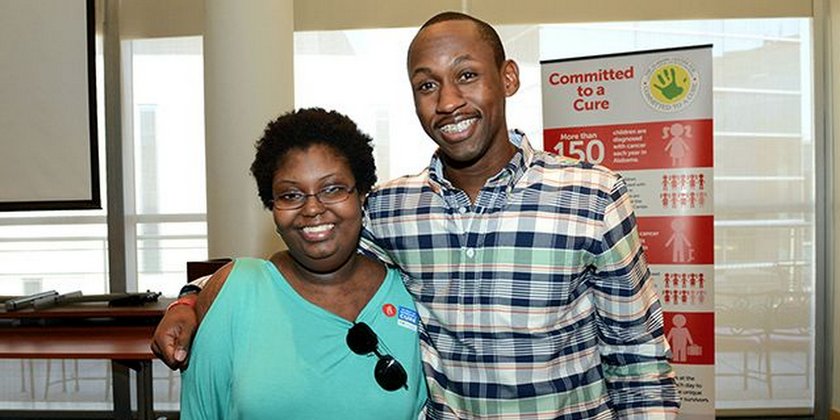
A year after Logan’s transplant, Children’s brought the strangers together to meet at the 2014 Committed to a Cure Bone Marrow Registry Drive. “There were a lot of tears, a lot of joy,” said Goldman, who treated Logan. “They had a lot of laughs and shared a lot of hugs.”
On Tuesday, Sept. 1, the first day of the two-day 2015 Committed to a Cure Bone Marrow Registry Drive at Children’s, another patient with leukemia will meet her hero.
“Every year, one of the heroes gets to come meet the patient they saved,” Goldman said. “We make a big deal out of it because it is a big deal…. A complete stranger donating their own bone marrow to someone in need. That qualifies as hero status.”
The Alabama Center for Childhood Cancer and Blood Disorders at Children’s is partnering with Be the Match bone marrow registry in a regional effort to add names to the national registry. Children’s of Alabama hospital in Birmingham hopes the kindness of strangers – and the lure of football – will encourage donations.
Those who take part are encouraged to show their commitment to the cure by wearing team colors. The registry is seeking potential donors between the ages of 18 and 44 who are in good health, Goldman said. Children’s will host the drive in the hospital’s Performance Area from noon until 5 p.m. on Sept. 1. On Sept. 2, the drive will take place from 7 a.m. to 5 p.m. Free parking will be available at Children’s Fifth Avenue parking deck.
Bone marrow transplants can save the lives of people with deadly cancers and blood disorders, including leukemia, lymphoma and sickle cell disease. Every year, 25 to 30 patients at Children’s need this life-saving procedure. Unfortunately, for many children who require a bone marrow transplant, perfect matches are not able to be found. That’s especially true for patients of diverse racial and ethnic heritage, according to Goldman.
The Committed to a Cure Bone Marrow Registry Drive aims to enlarge the donor pool worldwide to increase the odds of finding a strong match for more patients.
“When a patient does not have a sibling who is a suitable match for transplant, we must turn to the registry to find a donor,” said Children’s Transplant Coordinator Melissa Wallace in a news release. “We rely on the generosity of total strangers, who have at some point decided to join the registry, to be donors.
“Matches among people of the same race and/or ethnicity are more likely, so we need as many people as possible to join the registry to increase the pool of suitable donors for the patients needing this life-saving procedure,” Wallace said. “I am sure it is hard enough to hear that you have a life-threatening illness, but the next worst thing would be that there is a possible cure and there is not a donor match to work with.”
That can change if enough people join the registry. It’s quick, easy and painless, Goldman emphasizes. All that is required of prospective donors is to complete a health questionnaire and have their cheek swabbed to collect DNA for tissue typing. The person’s name is added to the registry as a potential donor for a patient anywhere in the world.
“It’s a rare opportunity to save a person’s life that only you can do,” Goldman said. “It’s like winning the lottery if you get called on to donate.”
And, potentially a huge win for a child.
For more information about the tissue registry, click here.
(Video above: Sidewalk Film Festival preview from Alabama NewsCenter)
With 250 films from 26 countries, it’s a good bet that Sidewalk Film Festival will have something for everyone in this, its 17th year. But with the largest slate of Alabama-produced feature films and shorts the Birmingham festival has ever had, this year’s event promises plenty of local flavor as well.
The festival begins with live music today at 5 p.m. with the first film, “Raiders! The Story of the Greatest Fan Film Ever Made,” screening at 8 p.m. in the Alabama Theatre.
“Raiders!” is the story of two guys from Ocean Springs, Miss., whose love for “Raiders of the Lost Ark” inspired them to remake the movie frame by frame. The making of the film took on a life of its own and became the story of the feature screening tonight.
That will begin a weekend full of shorts lasting from 90 seconds to features lasting 30 minutes that will air in nine different venues at six locations within a few downtown blocks of each other. Alabama Power is the title sponsor of the festival.
The festival is much larger than when it began. The Greater Birmingham Convention & Visitors Bureau estimates the event has an economic impact of between $1 million and $1.5 million. It has been recognized by USA Today, Time and MovieMaker magazine as one of the nation’s best film festivals and its reputation and size continues to climb.
“I don’t know that when the three founders sat down and tossed this idea around 17 years ago if they were sure it would hang in for as long as we have, but I’m sure glad we’re still here for year 17,” said Chloe Collins, executive director of Sidewalk Film Festival. “It’s really been sort of fun and interesting to watch our reputation grow at the national and international level.”
Around 3,000 attendees are expected over the three days, she said, with 70 percent coming from the Birmingham metro area. Collins said the festival sells out its block of hotel rooms every year, with many of them going to Birmingham metro attendees who want to stay close to the festival all weekend rather than returning home.
The other 30 percent of attendees come from across the country or around the world, she said.
More and more of the films are coming in from far and wide as the festival draws more national and international attention. The festival has also inspired more Alabama filmmakers, Collins said.
“I think this year we actually have the most Alabama features that we’ve ever had in the history of the festival,” she said. “We have at least four short (film) blocks. Those are roughly 90 minutes that are all Alabama short films – documentaries as well as narratives.”
Collins said the festival has become the go-to organization for those seeking information on the film industry in Birmingham.
“Several years ago, the Birmingham-Jefferson Film Office closed. In the time since then, we have received in our office a great number of phone calls and emails from people who are just looking for more information about how to shoot a film here in Birmingham,” she said. “Just the increase in volume of calls that we’ve received is an indication to me that more work is happening here and more people are aware of our incentives package from out of state.”
Collins said they answer those questions they can and refer callers to the state film office for questions they can’t answer.
“On a grassroots level, organizations like Sidewalk really help to not only provide some educational opportunities for filmmakers and – in the case of the festival, a platform for their work – but to also provide some networking opportunities,” Collins said.
Collins has seen filmmakers, producers, financiers and other professionals make key connections through the festival and at Sidewalk’s monthly networking and educational events.
Single tickets, day passes, weekend passes and VIP passes can be purchased on the festival’s website or by calling 205-332-3715.
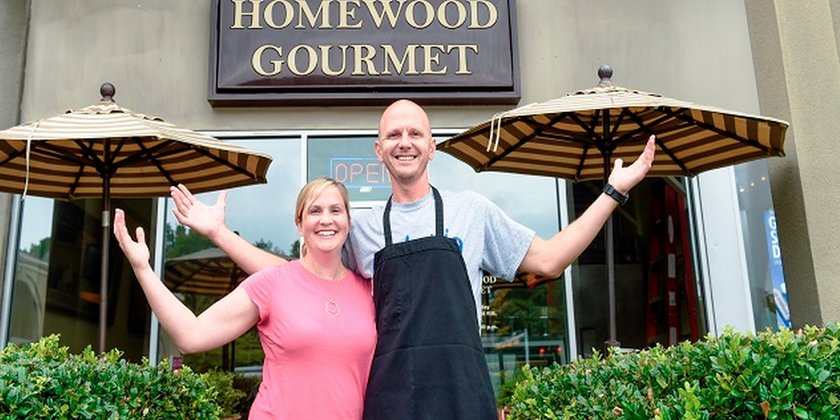
Chris and Laura Zapalowski, chefs and owners of Homewood Gourmet By Carla Davis
For thousands of people living in New Orleans and along the Gulf Coast, life changed forever 10 years ago when Hurricane Katrina swept ashore, flooding homes and businesses and washing away nearly everything in its path.
Chris and Laura Zapalowski, chefs and owners of Homewood Gourmet, were among the hordes of people who evacuated New Orleans on Aug. 28, 2005 before Katrina made landfall. They returned weeks later to sift through the few belongings that escaped the damaging floodwaters.
Shelter from the storm
When the mandatory evacuation was issued, Chris, along with his then-fiancé, Laura, left the city to ride out the storm with his family in Baton Rouge.
“In the past, we would evacuate and then come right back in two days, so we only brought two days’ worth of clothes,” said Chris, who was raised in New Orleans. “We had 15 people and three dogs in a three-bedroom condo. I slept on an air mattress that deflated every night. But we had power and games, and didn’t have to go to work. It was like a party.”
Laura said so many people were buying food at the local Wal-Mart that the shelves had to be replenished every day.
“Chris always jokes that it was a great time of life for him because it was so laid back,” she said. “He could enjoy being with his family, and there was no stress. It was harder for me because I’m a planner.”
The couple soon traveled to Birmingham, Laura’s hometown, to stay with her parents.
When New Orleans citizens were allowed to re-enter the city about six weeks after the storm, Chris found that his home near one of the levees had been flooded with about 8 feet of water, causing him to lose everything. But certain small items almost seemed untouched, such as Chris’ watch, which was still ticking even though it had been underwater for days.
Meanwhile, although water only rose as high as the wooden floor of Laura’s home on a ridge above St. John’s Bayou, it was uninhabitable because of mold that covered her furniture and other belongings.
A new start
Chris and Laura returned to Birmingham and in less than a month were offered jobs at Hot and Hot Fish Club. It was a natural move for the couple, who were working at Emeril Lagasse’s signature restaurant in New Orleans when the hurricane interrupted their lives.
At Hot and Hot, Chris began as a line cook and later rose to become chef de cuisine and restaurant manager. Laura moved through several roles. Along with working as a cook, hostess and wait staff assistant, she helped develop and test recipes for a Hot and Hot cookbook.
In the spring of 2006, the couple married, which they said was a welcome celebration in the midst of the upheaval caused by the storm.
“A lot of Chris’ family had been displaced and were staying with friends,” Laura said. “The wedding was a fun party for them and gave them a break from all the stress.”
A leap of faith
After more than four years at Hot and Hot, Chris and Laura said they were ready for the next step.
“We used to drive past Homewood Gourmet every day on our way to work and think ‘I’d like to own a place like that – something small, casual and fun,’” Chris said. “One day, we decided to ask Franklin Biggs (the previous owner) if he would like to sell it. He said ‘Yes’ that day.”
In 2010, the Zapalowskis took over Homewood Gourmet, which was a fixture in the heart of the community.
As owners, Chris said they “wear many hats.” Although they sometimes step in to help prepare dishes or serve customers, their main job is managing day-to-day operations such as promoting the business and dealing with paperwork. Chris conducts in-home cooking demonstrations for parties and facilitates corporate teambuilding cooking events.
“We didn’t make many changes at first,” said Chris. “We wanted to get to know the customers and to make sure the customers got to know us.”
Over the years, the Zapalowskis have put their mark on the café. Chris has added many New Orleans favorites to the menu, including red beans and rice, muffulettas, shrimp and fish po’boys and his specialty, gumbo.
Laura, who has a degree from Samford University in nutrition and dietetics, has focused on creating healthy dishes made from locally grown products. The couple have also added take-home meals to the menu and expanded the catering side of the business.
“You find your strengths and use them,” Chris said. “We cook good simple food and keep it from being pretentious.”
Restaurant roots
A graduate of St. Mary’s University in San Antonio, Chris discovered his talent for preparing succulent dishes while cooking for friends and working at restaurants during college.
After graduating from Samford, Laura went on to attend the Institute of Culinary Education in New York in 2000, where she got the opportunity to work at the Food Network as a “prep” cook for TV chefs.
The couple said working at Emeril’s was their “big break” in the restaurant business.
“Emeril would fly in food from all over the world,” Laura said. “You got to cook with ingredients you never would have gotten to work with anywhere else.”
Although Katrina caused their life to take a 180-degree turn, Laura and Chris have no regrets. They keep busy managing the business and caring for their children, Ellis, 6, and Liza, 2.
“Katrina taught us what’s important in life, and stuff is not important,” said Laura. “We had our family, and that’s what mattered.”
Chris added, “We are glad to be in Birmingham. We have two beautiful kids. I have a great life and a great wife. I think it all happens for a reason.”