Grayson Everett is the editor in chief of Yellowhammer News. You can follow him on X @Grayson270.
The Alabama Senate unanimously passed legislation on Thursday that would ensure youth athletic coaches understand how to quickly and effectively tend to a concussed player or one suffering from other serious head injuries.
SB140, the Coach Safely Act, sponsored by State Sen. Jabo Waggoner (R-Vestavia), specifies that coaches of children ages 14 and under must complete specialized training on concussions, head trauma, and other serious injuries common in high-risk sports.
“Just like a solid defense wins games on the field, strong protections for our young athletes allow them to grow up to live happy, healthy lives,” said Waggoner. “In Alabama, sports are a way of life, and Senate Republicans are working to protect our kids on and off the field.”
Under SB140, the Department of Public Health will notify youth athletic associations that do not meet the established training requirements. Should non-compliance persist for two years, the department will be authorized to levy fines. Any association that remains non-compliant for four consecutive years will be barred from administering or conducting youth athletic activities on state property.
This legislation continues Waggoner’s commitment to youth athletic safety. In 2018, he made legislative history when the Alabama Legislature passed The Coach Safely Act (AL Code 2018-496), making Alabama the first state in the nation to require youth coaches to complete annual training in injury recognition and prevention for athletes ages 14 and under.
Tennessee, Arkansas, Georgia, and Texas have followed Alabama’s lead, adopting similar laws and protections for young athletes.
The bill will now go to the House of Representatives for consideration.
Austen Shipley is the News Director for Yellowhammer News. You can follow him on X @ShipleyAusten.
Rob Green, a trusted advisor to many lawmakers and officials across state government, is returning to the private sector with Jeff Rabren’s quiet, yet viciously-effective firm, Red Level Strategies.
Rabren announced an expansion of the firm’s practice with the addition of Green as Director of External and Public Affairs.
“Red Level is pleased to welcome Rob to the team, adding valuable experience and expertise on behalf of our clients. Rob’s relationships at the Statehouse and with media at the state and national level will offer clients a comprehensive, robust slate of strategic government affairs and communications counsel,” said Jeff Rabren, President and CEO of Red Level Strategies.
“The addition of Rob to the Red Level team enhances our ability to provide the full spectrum of services necessary to protect and promote our clients’ interests.”
Green, a native of Jasper and former senior staffer to two Alabama House Speakers, Nathaniel Ledbetter (R-Rainsville) and former Speaker Mac McCutcheon, will begin his role February 1, right on time for the commencement of the 2025 state legislative session on February 4.
RELATED: 2024 Power & Influence: Who’s Next?
During the 2024 session, Green worked as the Director of Legislative and External Affairs for the Alabama Department of Public Health, where he oversaw the department’s state and federal legislative portfolio and budgetary objectives. He played an integral role in mediating consequential legislation initially intended to restructure the State Health Officer position and the continuity of the State Committee of Public Health.
Green’s political campaign background from the 2018 and 2022 midterm election cycles with the Alabama House Republican Caucus will also add value to the deep bench of clients at Red Level after maintaining key seats among the body’s 77-member supermajority.
Founded in 2021 by Jeff Rabren, Red Level Strategies represents some of the country’s largest corporations, as well as companies and non-profits based in Alabama. The firm’s clients span industries such as energy, education, healthcare, venture capital, sports, entertainment, and economic development.
According to the firm, with Green’s addition, Red Level Strategies will offer a full range of strategic public affairs services, in addition to state and federal advocacy and economic development consulting.
In recent weeks, a growing number of Alabamians have been diagnosed with influenza with many reporting to the emergency room for treatment. According to the Alabama Department of Public Health’s respiratory illness dashboard, patients with the flu made up over 6% of visits to the hospital statewide last week. Officials believe the number of cases will continue to grow as Alabama hits peak flu season.
“We’ve seen emergency department percentages go from less than 1% up to around 6-7% just in the last few weeks. Historically, flu always peaks around the first of the year,” Dr. Wes Stubblefield, a medical officer with the state health department told al.com. “If you’ve had the vaccine, it’s less likely you to get the flu, but it’s also much less likely to have severe flu. And severe flu is what we worry about. That’s the kind of flu that puts you in the hospital and makes you severely ill.”
The Centers for Disease Control and Prevention has Alabama’s flu numbers currently listed as “very high.” The Yellowhammer State’s neighbor, Tennessee, has also been placed in the agency’s highest classification.
Alabama had a large-scale outbreak last year with the flu and related sicknesses accounting for 6.5% of visits to the emergency room.
This year, the flu has already resulted in an estimated 3.1 million illnesses and 1,500 deaths nationwide.
Austen Shipley is a staff writer for Yellowhammer News. You can follow him on X @ShipleyAusten
Dr. Scott Harris, Alabama’s State Health Officer, has been named president of the Association of State and Territorial Health Officials (ASTHO), the group announced Wednesday. Harris will serve as the 82nd president of the national nonprofit, which represents public health agencies across the United States.
ASTHO, which advocates for public health policies and supports the more than 100,000 professionals working in these agencies, said Harris’ leadership comes at a crucial time.
“Dr. Harris has consistently demonstrated an unwavering commitment to public health and has been a strong advocate for community health initiatives,” says ASTHO CEO Dr. Joseph Kanter.
“His broad expertise in infectious diseases, substance use, and maternal health will serve ASTHO well in the coming year. As the demands on public health continue to evolve, I am heartened knowing our organization will continue to thrive under such a capable, steady, and experienced leader. I am eager to work alongside Dr. Harris as we chart new territory.”
RELATED: New initiative to offer free genetic testing, expanded access to precision medicine across Alabama
In 2015, Dr. Harris left private practice to join the Alabama Department of Public Health as Area Health Officer for seven North Alabama counties. He was appointed Acting State Health Officer in September 2017 and formally designated as Alabama’s 12th State Health Officer in February 2018.
As SHO, Dr. Harris has worked to improve statewide public health through numerous health policy initiatives and community health improvement campaigns including those focused on infant mortality, opioid mitigation, and emergency preparedness. “I am honored to take on the role of ASTHO president at this critical juncture for public health,” Harris said.
“Our country continues to face many public health challenges, including opioid misuse, the re-emergence of certain vaccine-preventable diseases, and infant and maternal mortality. Now more than ever, state and territorial health departments must work together to achieve our aims of improving health, safety and wellness. Most importantly, we must do so in a way that fosters trust among the populations we serve.”
Grayson Everett is the state and political editor for Yellowhammer News. You can follow him on X @Grayson270
When a stroke hits, time is of the essence. The longer the time to treatment, the longer brain cells are deprived of oxygen and the higher the risk for poor outcomes, including disability and death.
The University of Alabama at Birmingham and Alabama Department of Public Health have launched a new system aimed at improving Alabama’s stroke response. Leveraging the existing Alabama Trauma and Statewide Stroke systems, they created a model for a more integrated and effective system of emergency stroke care. The implementation of the new model in all six of the emergency medical services regions in the state was completed in October 2024.
“When people with severe stroke are taken to hospitals or centers that do not have the proper resources, we lose valuable time,” said Toby Gropen, M.D., the James H. Halsey Jr., M.D. Endowed Professor in the Department of Neurology, director of the UAB Comprehensive Neurovascular and Stroke Center, and principal investigator of the project.
The response model comes from the “Trauma Communications Center Coordinated Severity-Based Stroke Triage” project. The National Institute of Neurological Disorders and Stroke, one of the National Institutes of Health, awarded UAB $2.5 million in 2020 to begin the five-year stroke response quality improvement initiative, also known as StrokeSTAT. In addition to UAB researchers, the StrokeSTAT team includes the Alabama Department of Public Health, the Alabama Trauma Communications Center, the Birmingham Regional Emergency Medical Services System, and hospitals and EMS providers across the state.
 In the first three years, the team focused on training all EMS providers to identify large vessel occlusion strokes and designating more hospitals that could provide thrombectomy for LVOs. Stroke symposiums were held across the state to increase overall stroke education among physicians, nurses and EMS providers.
“Due to the time sensitivity of a stroke, the ability to identify LVOs helps determine the appropriate level of care without over- or under-triaging,” said Jamie Gray, state EMS director, ADPH. “This knowledge paired with the implementation of the new model will prevent delays in treatment and increase patients’ chances of survival.”
The team then leveraged the current Alabama Trauma and Statewide Stroke systems infrastructure to develop a new coordination plan for acute stroke care. When an EMS provider suspects an LVO, they connect with the ATCC, who help with evaluation, monitor status of hospitals and route patients to the most appropriate facilities.
“The implementation of this model is a culmination of years of collaboration across state entities,” Gropen said. “Hopefully, the experience and data we learn from this model will not only save numerous lives in Alabama but will serve as a successful model for other states as well.”
Courtesy of the University of Alabama at Birmingham.
A student at Bob Jones High School in Madison, Alabama has tested positive for tuberculosis. Officials have said that school will continue as normal and that any potential contact received a letter Friday providing testing instructions.
Madison City Schools learned of the case from the Madison County Health Department late last week.
“Madison City Schools was recently informed by the Madison County Health Department of a Tuberculosis case involving a student of Bob Jones High School,” said John Peck, a system representative. “Immediately upon learning of this, conversations began with the Alabama Department of Public Health, BJHS administrators, and Central Office admins on a response that ensures the health and well-being of students and staff. The students and staff are no longer at risk of exposure to the identified case.”
“The Department of Public Health has strict guidelines to safeguard the public’s health in circumstances such as this.”
Based upon those guidelines, Peck said that the following actions will be taken:
Students at Bob Jones High School who have been identified as potential contacts must be screened for tuberculosis — and any potential contact will receive a letter today providing testing instructions.
In a statement, the Alabama Department of Public Health noted that only those who were in close contact with the student should be tested and also emphasized that the risk of the spread of tuberculosis in such a setting as a high school is very low.
“On October 11th, Alabama Department of Public Health (ADPH) officials notified Bob Jones High School of plans to investigate a case of pulmonary tuberculosis (TB) identified in a student. ADPH and Bob Jones High School are working closely to ensure that any students and/or staff in close contact with the case will be screened quickly. A close contact is defined generally as spending an extended amount of time with the subject in a physically close environment.”
“TB is a treatable and preventable disease. Persons who were in close contact with the suspect case will be rapidly assessed and appropriate preventive measures taken. The Health Department recommends that only those who were in close contact with the student need to be tested. Due to privacy concerns, ADPH will not be releasing any further information about the case at this time.”
Austen Shipley is a staff writer for Yellowhammer News. You can follow him on X @ShipleyAusten
Forbes released its annual “Best-In-State Employers” for each state, in partnership with market research firm Statista for the year 2024.
According to Forbes, more than 160,000 employees working for companies with at least 500 people within the United States were surveyed. Participants were asked how likely they were to recommend their employer on a scale of zero to ten. Responses were incorporated into a scoring system, along with survey data from the past three years.
Companies that received the highest scores in each state made their list. The list, which includes public and private institutions, showcases Alabama’s top 45 places to work:
1. Northrop Grumman
2. Home Instead Senior Care
3. Alabama Department of Public Health
4. NASA
5. Publix Super Markets
6. The Home Depot
7. Southern Company
8. AIRBUS
9. Infirmary Health
10. RTX
11. Polaris Inc.
12. Honda Motor
13. University of Alabama at Birmingham
14. Nucor
15. Baptist Health (Alabama)
16. WestRock
17. United States Department of Defense
18. Hoover City School District
19. Blue Cross Blue Shield of Alabama
20. Hyundai
21. University of Alabama
22. USA Health
23. Regions Financial
24. Huntsville Hospital Health System
25. PNC Financial Services
26. FedEx
27. TJX Companies
28. Verizon Communications
29. JBS USA
30. U.S. Social Security Administration
31. Austal USA
32. Auburn University
33. State of Alabama
34. U.S. Department of Veterans Affairs
35. Amazon
36. Southeast Health
37. Chick-fil-A
38. Tractor Supply
39. Inspire Brands
40. Hibbett Sports
41. Wells Fargo
42. University of South Alabama
43. Shelby County School District
44. Southeastern Grocers
45. AT&T
Grayson Everett is the state and political editor for Yellowhammer News. You can follow him on X @Grayson270
According to the Alabama Department of Public Health (ADPH), an Atmore woman was recently bitten by a rabid fox while unloading groceries from her car. The animal was eventually captured and brought to the Alabama Department of Public Health Bureau of Clinical Laboratories, where it tested positive for the dangerous disease.
The victim received proper medical attention and post-exposure prophylaxis to treat the bite.
“Although rabies is primarily found in wild animals since widespread vaccination of domestic animals began over 70 years ago, it continues to be a public health threat,” said Dr. Dee W. Jones, a public health veterinarian for the state of Alabama. “Although attacks such as this by rabid wildlife are rather uncommon, it highlights the risk rabies continues poses and hopefully reminds people to be aware of the risks and continue to vaccinate their pets.”
Contact between rabid wild animals and domestic pets is common, states the ADPH. Citizens should make sure that their pets are current on rabies vaccinations, take precautions with wildlife, and report animal bites or other exposures to their medical provider and the ADPH.
Area residents are also advised to take the following precautions to avoid possible exposures to rabies:
- Do not allow pets to run loose; confine within a fenced-in area or with a leash.
- Do not leave uneaten pet food or scraps near your residence.
- Do not illegally feed or keep wildlife as pets.
- Do not go near wildlife or domestic animals that are acting in a strange or unusual manner.
- Caution children not to go near any stray or wild animal, regardless of its behavior.
For more information, visit the ADPH website.
Austen Shipley is a staff writer for Yellowhammer News. You can follow him on X @ShipleyAusten
Blue Cross and Blue Shield of Alabama announced it will be expanding its medical scholarship program in an effort to better address health disparities, particularly in rural areas of Alabama.
“Blue Cross is working to emphasize improvement in areas that are currently underrepresented,” said Dr. Darrel Weaver, Vice President of Provider Engagement, Blue Cross and Blue Shield of Alabama. “It is often the cost of medical school and education which prevents people from choosing careers in the medical industry. Scholarships enable more people to choose a career in medicine, and this is good news for rural Alabama and other under served areas.”
Weaver said while there has been progress as a result of the scholarships, BCBS of Alabama will remain focused on prioritizing primary care needs.
“It’s good to know we have professionals practicing today in parts of Alabama who really needed the additional care. Those successes are a result of these scholarships. We’ll continue our focus on primary care, but we’ll also place extra emphasis on maternal and behavioral health as well as addressing shortages in dentistry and nursing.”
In addition to renewing and expanding existing scholarships, Blue Cross is using the scholarships to fight several ongoing crises across the state including:
Behavioral Health Crisis
According to the Alabama Department of Public Health (ADPH), mental illness rates have been rising for the last 20 years. This crisis disproportionately affects veterans, people who suffered trauma as children, or those who came from abusive homes. In Alabama, roughly 41% of the population requires mental health or substance abuse services according to the Substance Abuse and Mental Health Services Administration (SAMHSA).
Nursing Shortage
According to a survey from The Alabama Board of Nursing, roughly 39,000 nurses are expected to leave the profession in the next five years. Based on that information, the current nurse deficit of 5,000 is expected to balloon upward to an overwhelming 14,000 by 2027.
Dentistry Shortage
Rural areas often struggle to attract dentists, and the number of dentists in rural Alabama is shrinking. There is at least one county in the state without a single dentist.
Maternal Health Disparities
According to the Alabama Department of Public Health (ADPH), infant and maternal mortality rates in Alabama are a huge problem. Infant and mortality rates in Alabama are well above the national average. Blue Cross is now providing scholarships to Certified Nurse Midwives and Family Medicine Obstetrics to support a larger Blue Cross and Blue Shield Association goal of reducing maternal health disparities by 50% within five years. These scholarships will support nurses working towards their degrees as Registered Nurses (RNs).
For 2024, scholarships will go to students at the following Alabama schools:
• Alabama College of Osteopathic Medicine in Dothan
• Edward Via College of Osteopathic Medicine at Auburn University
• University of Alabama at Birmingham School of Medicine
• University of South Alabama College of Medicine in Mobile
• Jefferson State Community College
• Calhoun Community College
• West Alabama Community College
• Coastal Alabama Community College
Since the company first began the program in 2016, 145 students have been awarded Blue Cross scholarships and 29 have graduated and are now practicing in rural areas across Alabama. In addition to renewing the $11 million in scholarship funding provided since 2016, Blue Cross has committed an additional $13 million towards medical scholarships.
Austen Shipley is a staff writer for Yellowhammer News. You can follow him on X @ShipleyAusten
As a prelude to this year’s Yellowhammer News Power & Influence Top 50 list, launching next week in its twelfth annual installment, we are proud to revive a tradition that asks an important question in the political landscape of Alabama: Who’s Next?
Year after year, Power & Influence offers the most candid insight into the top 50 influential leaders moving the needle in Montgomery across business, politics and public service — leveraging their influence to the benefit of Alabama.
Today, we’re directing that insight into the next generation of Alabama leaders. The nine individuals below are described in a quote from leaders speaking to their impact, effectiveness, and upward trajectory. They are each well on their way to running the state.
 Preston Roberts
Alabama Farmers Federation
“Preston Roberts from Alfa has distinguished himself as a leader in agriculture and public policy through passionate advocacy for Alabama Farmers Federation members and unshakable integrity. He has excelled professionally while simultaneously earning a juris doctor and being a loving, engaged husband and father. Preston is guided by deep faith and driven by a commitment to give his best in every endeavor. We are proud Yellowhammer has recognized Preston’s servant leadership and are confident he will continue using his influence to benefit Federation members, his colleagues, and the state of Alabama.”
– Paul Pinyan, Executive Director of the Alabama Farmers Federation

 Catherine Gayle Fuller
Office of the Lieutenant Governor of Alabama
“With a resume that includes service in the Governor’s Office, the Alabama Department of Revenue, and now the Lieutenant Governor’s Office, Catherine Gayle has earned her reputation as an expert on analyzing, understanding, and solving complex public policy issues. She is recognized by everyone on my staff as the ‘brains’ in the office, which is obvious as she works on her doctorate after already earning Masters and undergraduate degrees in political science. I am confident Catherine Gayle will help shape state policy in Alabama for many years to come, and we are fortunate she is devoting her God-given talents and abilities to our initiatives.”
– Will Ainsworth, Lieutenant Governor of Alabama
 Gina Maiola
Office of the Governor of Alabama
“Part of the Ivey Administration since my first day as governor, Gina Maiola has proven herself as an invaluable asset, enhancing our engagement through responsible communication with both the media and Alabamians alike. Her dedication and exceptional skillset were evident from her earliest days and now have been mastered in her senior staff role as my communications director. With strategic acumen and a commitment to transparency, she has not only supported my administration’s promises and goals but has significantly contributed to the betterment of Alabama. I have every bit of confidence that her influence will continue to grow, bringing fresh ideas and strong leadership that will greatly impact our state’s progress.”
– Kay Ivey, Governor of Alabama
 Rob Green
Alabama Department of Public Health
“There’s not a brighter, young star in Alabama politics than Rob Green. A lot of people work hard. He works harder. He works smarter. He doesn’t draw attention to himself, but people are figuring out in a hurry that he’s extremely capable and has the ear and the confidence of people all over state government. What’s also certain about Rob Green is that he is marrying well.”
– Steve Windom, Founder of Windom, Galliher & Associates
 Harrison Proctor
Protective Life Corporation
“Since transitioning from Washington DC to our headquarters in Birmingham, Harrison has combined his advocacy, legal and business knowledge and experience to effectively represent Protective both in the legislature and in our trade groups. He has the right combination of substantive and strategic expertise for this role and we are confident in his abilities to advocate on behalf of our company, our employees and our policyholders.”
– Mary Pat Lawrence
 William Heartsill
Direct Communications
“William has a resume that an operative twice his age would dream of having. He has worked with some of the biggest names in politics, government, and business and is just getting started. While his relationships in Alabama are impressive to say the least, he maintains a cool and humble demeanor at all times—a feat that I’d guess is challenging when you’re as skilled as William. I’ve never seen him break a sweat. He operates at one consistent speed and consistently achieves outstanding results, gives great advice, and works very, very hard.”
– R.B. Walker, Alabama Power Company
 Jack Chambers
Maynard Nexsen
“From the moment he walked in the door, I could tell Jack had the tools to be successful in this business: natural political instincts and, more importantly, a killer work ethic. Jack effortlessly connects with clients and clearly sees the political landscape. At his young age, he has already become a great asset. My firm and I are proud that Yellowhammer has recognized Jack, and we know that we will see him on lists like this for years to come.”
– Raymond Bell, Maynard Nexsen Government Solutions Practice Shareholder
 Caroline Franklin
Business Council of Alabama
“Caroline Franklin, above all, is wonderful. She has proven herself effective at every turn, from the halls of power at the State House in Montgomery to the U.S. Capitol in Washington. As Executive Director of BCA’s ProgressPAC, Caroline will leverage her influence and discernment to the victory and gain of pro-business candidates in every corner of Alabama in the 2026 election cycle and beyond. Her winning personality, along with her unmatched drive and commitment to the people who make our collective voice stronger than ever, is second to none. Caroline Franklin will be fun to watch.”
– Helena Duncan, Business Council of Alabama President & CEO
 Luke Kiszla
Office of the Alabama House Minority Leader
“Luke Kiszla has been extraordinarily effective and successful in his role as Chief of Staff for the Alabama House Office of the Minority Leader. His keen and thorough knowledge of the law and the legislative process has been instrumental in our ability to pass meaningful legislation to improve the lives of our constituents. Most importantly, Luke understands the importance of building and maintaining professional partnerships. Whether it’s working with subject matter experts on a complex issue or crafting an amendment for a bill, Luke brings a rare combination of expertise, creativity, and positive energy to his work. ”
– Anthony Daniels, Minority Leader of the Alabama House of Representatives
The Alabama House of Representatives passed bipartisan legislation Thursday approving a Newborn Screening Panel to check for genetic conditions in newborn babies.
State Rep. Phillip Rigsby sponsored the bill after meeting a boy who has a rare genetic condition. The bill passed 98-0 and goes to the Senate.
“This bill has the namesake for a young man I met last year at a breakfast – Zack Thomas,” Rigsby (R-Huntsville) said. “He has MPS1.”
The state screens for only 33 of the 37 genetic conditions that the federal government recommends. The bill (HB77) adds those four remaining tests — MPS1, Pompey, MPS2 and JM2 – and requires the Alabama Department of Public Health provide a timeline for adding them.
“House Bill 77 is a bill that was agreed on by the Alabama Department of Public Health and the Alabama rare group which services the rare disease community here in Alabama,” said Rigsby. “The Newborn Screening Panel of the Department of Health and Human Service. At the federal level recommends that we test for 37 unless a parent objects to that.
“Currently we only screen for 33 of the 37 diseases. The four disease panels that we do not test for are MPS1, Pompey, MPS2, and JM2.”
Rigsby said Zach and his two siblings are among families where all three of the children were born with this disorder.
“With these diseases early treatment is the key for these families,” said Rigsby. “A lot of times they get no answers if they are not screened for these diseases. They go through a diagnostic journey trying to figure out what is happening to my newborn; and so this will help screen these newborns.”
Rigsby said identifying the condition early will allow healthcare professionals to act to “increase their quality of life” as early as possible.
“The Alabama Department of Public Health will take on those tests and add those tests in a timely manner with the exception of if there is any funding or any workforce issues in which case they would publicly have to let us know,” he said.
Zach and his mother were on hand in the gallery to watch the House pass the bill and they were given a round of applause.
To connect with the author of this story, or to comment, email brandonmreporter@gmail.com
A bill filed by State Rep. Phillip Rigsby aims to help doctors in Alabama find and treat rare diseases in babies as soon as they’re born.
Named after Zachary Thomas, a young boy born with a rare disease that couldn’t be treated right away because his condition wasn’t found early, the Zachary Thomas Newborn Screening Act will enhance Alabama’s ability to offer early intervention to families affected by rare diseases.
Developed from a multi-year partnership between Alabama Rare and the Alabama Department of Public Health’s newborn screening program, the legislation is backed up by data that lawmakers are gearing up to change the course on.
Research by the EveryLife Foundation indicates that lack of newborn screening can lead to an average wait of 6.3 years for a rare disease diagnosis, accruing a minimum of $220,000 in avoidable costs.
For the estimated 1 in 10 Alabamians who have a rare disease, failure to receive a proper diagnosis is a daily reality. Half of those living with rare diseases in America re children and 1 in 3 of them will not live to see their fifth birthday.
Rep. Phillip Rigsby (R-Huntsville) says it’s an honor to carry the bill.
“I am honored to sponsor the HB 77, the Zachary Thomas Newborn Screening Act during the 2024 Legislative Session. This legislation will provide expanded screening for more rare diseases and help provide early recognition and treatment for families whose little ones are affected,” Rigsby said.
“This has been a great collaboration between the Alabama Department of Public Health and Alabama Rare to foster a better testing environment for those affected by rare genetic diseases. I look forward to working to get this bill passed and signed into law.”
As time passes without an accurate diagnosis, diseases can become significantly more severe. The damage is often irreversible and means lower physical function and quality of life. For Brooke Thomas, Chief Programs Officer of Alabama Rare, and parent of three children with MPS I, improving early diagnostics in the state is a personal mission.
“Without treatment, children with MPS I typically stop developing between the ages of two and three and soon pass away. While the transplant carries a 30 percent mortality rate, it ultimately extends our children’s life expectancy to approximately thirty years” Thomas says.
Grayson Everett is the state and political editor for Yellowhammer News. You can follow him on Twitter @Grayson270
On Wednesday, the Alabama Department of Public Health (ADPH) confirmed that a young kitten in Autauga County developed rabies and subsequently died.
Dr. Dee W. Jones is the State Public Health Veterinarian.
“This is another reminder to get your pets vaccinated against rabies regardless of where you live,” Dr. Jones said. “We have found rabies positives in both domestic animals and wildlife very close to populated locations.”
The kitten tested positive for rabies on December 22. The kitten was from a residence in south central Autauga County on County Road 46 near the general area between the communities of Booth and Independence.
The kitten was among a litter of very young kittens were taken by the property owner approximately one month ago. The kitten was exhibiting neurological signs and was taken for veterinary care where he/she was tested for rabies. More testing is being done to confirm the rabies strain. The remaining two kittens have been vaccinated and are being quarantined for rabies.
ADPH has identified all the persons at the residence as well as the veterinary clinic who were exposed to the kitten. At this time, all those persons exposed are being advised to seek medical care for prevention.
State state law requires that dogs, cats and ferrets 12 weeks of age and older be current with rabies vaccination. The first rabies vaccination is only good for one year, regardless of which vaccine a pet receives. Vaccinating animals reduces the risk of rabies infection if the animal is exposed to rabies. Vaccinations help protect animals, as well as their owners and caretakers.
There are two major strains of rabies: a raccoon strain and a bat strain. Both are endemic in the state of Alabama.
Wild animals, especially raccoons, pose a risk of rabies to other animals and humans. The best protection is to keep your pets current on rabies vaccines.
“Vaccinating your animals against rabies is the best way to keep your pets protected from the deadly virus.” Dr. Jones said. “Animal vaccinations also help protect people. People are often exposed when the animal first becomes sick and before rabies can be confirmed.”
This was not the first case of rabies this year:
- A raccoon in Clay County tested positive for rabies in September.
- A fox in Clay County tested positive for rabies earlier in September.
- Fifteen people in Russell and Lee County, as well as pets, were exposed to rabies by a rabid cat this summer.
- A fox in Houston County tested positive for rabies in April.
- A raccoon in Houston County tested positive for rabies in February.
The best way to combat rabies is prevention:
- Taking precautions with wildlife.
- Make sure their pets are current on rabies vaccinations.
- Always report any animal bite or other exposures to their medical provider and the ADPH.
- Do not let pets run loose. Keep them in the house or in a pen or enclosure.
- Do not leave uneaten pet food or scraps near your residence.
- Do not illegally feed or keep wildlife as pets.
- Do not go near wildlife or domestic animals that are acting in a strange or unusual manner.
- Caution children not to go near any stray or wild animal, regardless of its behavior.
For more information about rabies and prevention, please contact ADPH at (334) 206-5969 or visit https://www.alabamapublichealth.gov/infectiousdiseases/rabies.html
To connect with the author of this story or to comment, email brandonmreporter@gmail.com
The Alabama Department of Public Health (ADPH) and the State Committee of Public Health adopted an administrative rule change to the State Health Officer’s emergency powers on Thursday.
The change, while straightforward, addresses concerns expressed by state legislators in the wake of the COVID-19 pandemic and subsequent prevention measures implemented across the country by local, state and federal governments.
In a unanimous vote, the committee moved to prevent the State Health Officer from issuing or authorizing any emergency powers during a pandemic without the governor’s direct consent, approval, and signature.
Dr. Scott Harris, State Health Officer since 2018, served as the top public health official during the pandemic.
“Today, the State Committee of Public Health ensured the Legislature’s concerns were heard, questions were answered, and that we keep our word when we commit to offering solutions,” Harris said. “After speaking with many legislators and the Governor’s office, the State Committee of Public Health and I wanted to address this issue directly.
“This rule proposal offers added layers of transparency and accountability for the public and provides the Governor and the legislature with additional checks and balances.”
RELATED: Givhan seeks to limit power of public health chief
Previous drafts of the change would have subjected every emergency order to legislative oversight through the Legislative Council. Given the separation of the executive and legislative powers, that would’ve required lawmakers and the governor to sign off on each and every health order issued by the State Health Officer.
Due to those concerns, ADPH’s legal division said they returned to an original draft that requires the governor’s signature and approval of any statewide emergency orders.
Dr. Gregory Ayers, the committee’s chairman, said the change is a reflection of heightened awareness and engagement on public health issues since the pandemic – and that state health officials are, “here to work with legislators, listen to their concerns, and land on common-sense solutions to ongoing issues.”
“Dr. Harris and his team have worked diligently with our elected officials to ensure we can resolve this ongoing issue internally,” Ayers said. “We’re here to offer you factual and transparent information for you and your families, and with Dr. Harris as our State Health Officer, the health and wellbeing of Alabamians is in the best care it can be.”
During the 2023 legislative session, Sen. Sam Givhan (R-Huntsville) raised concerns about the state health committee’s composition and appointing authority of the State Health Officer.
Officials say, even if unsatisfactory to lawmakers like Givhan’s intent to strip the appointing powers away from the State Committee of Public Health, the rule change adopted on Thursday provides a new playing field going into the 2024 legislative session.
“There’s no question that navigating through the pandemic was very challenging, and the measures that ADPH recommended to protect public health were understandably difficult for the public as well,” Harris said. “Still, we’re committed to maintaining the integrity of public health without intrusion and keeping Alabama open for business at all costs.
“Although COVID-19 is something we will have to live with from now on, it’s time we move on from that narrative and return to business as usual,” while also recognizing the immense loss of life and permanent impact the pandemic left on Alabamians.
Grayson Everett is the state and political editor for Yellowhammer News. You can follow him on Twitter @Grayson270
Gov. Kay Ivey awarded $3.5 million in grant funding last week to the University of Alabama, Auburn University, and the Alabama Department of Public Health. The new funding, according to Ivey, will go toward making the state’s highways safer.
“Too often a drive to work, to a vacation destination or just to shop across town ends in tragedy because of someone’s careless disregard for our traffic safety laws,” she said. “I commend the work of these two universities and the Department of Public Health for combining resources to help prevent automobile crashes. I urge motorists to obey traffic laws and drive defensively.”
ADECA Director Kenneth Boswell said the funding has two goals in particular.
“These grants and programs all come together with one purpose in mind and that is to reduce crashes and promote highway safety,” said Boswell. “ADECA is pleased to join with Gov. Ivey and these programs in this worthwhile effort to prevent traffic related deaths and injuries.”
The funding going to each of the entities is as follows:
- The University of Alabama – $2.23 million to provide traffic data through the Alabama Center for Advanced Public Safety and the Alabama Transportation Institute. The data will be used to determine areas with a high number of traffic crashes and driving infractions. That information will in turn be used by by police and state troopers to increase patrols and monitoring in those areas.
- Auburn University – $1.2 million to produce multi-media campaigns, involving radio, television, digital, billboard and print publications, to coincide with national highway safety campaigns aimed at increasing seat belt use and reducing impaired driving and speeding. The media campaigns will be geared toward demographics and areas provided by the Alabama Center for Advanced Public Safety.
- Alabama Department of Public Health – $60,000 to contract with a firm that maintains software that tracks injuries and deaths in traffic crashes throughout the state. The information helps complete Alabama Center for Advanced Safety reports.
ADECA is responsible for administering the grants that are provided by the U.S. Department of Transportation’s National Highway Traffic Safety Administration.
Austen Shipley is a staff writer for Yellowhammer News.
The University of Alabama partnered with several state agencies to launch a digital platform and on-demand learning program that offers essential education and training to physicians and health care professionals.
VitAL On-Demand signifies a milestone in standardizing content delivery and promoting professional development for health care professionals across Alabama.
“Through our partnership with the state of Alabama and other key agencies in developing VitAL On-Demand, providers will be equipped with the knowledge they need to excel in their practice and improve healthcare outcomes across Alabama,” said Dr. David L. Albright, UA Distinguished Research Professor and VitAL principal investigator.
This collaboration between VitAL and the state of Alabama reflects their shared vision of enhancing services, policies and community conditions for individuals facing mental health, substance use and trauma-related challenges. With VitAL’s reach extending to all 67 counties in Alabama, the impact of this partnership will be felt statewide.
VitAL On-Demand offers an extensive course catalog tailored to address the unique requirements of health care providers. These courses cover a wide range of topics in the health care industry, including alcohol use disorder treatment, substance use stigma and motivational interviewing techniques.
Successful completion of each one-hour course grants participants one Continuing Medical Education Credit or Continuing Education Credit, further supporting their professional development. Additional courses will be added to the course catalog over time.
The partnership between VitAL and key state agencies, including the Alabama Department of Mental Health, Alabama Department of Public Health and Alabama Medicaid agency, demonstrates a commitment to implementing evidence-informed practices and promoting education and community engagement throughout the state. Initial course offerings and descriptions can be viewed at vitalalabama.com/training-events.
The University of Alabama will increase its efforts to respond to what it calls rural health inequities which, according to it, are occurring in throughout the state, the university said Monday.
According to the university, these inequities are affecting millions of Alabamians everyday through financial suffering, lack of educational assistance, delayed treatment for health issues, and limited access to mental health services. The push to address the issue was made even more urgent after the COVID pandemic exposed the disparity of services offered from community to community.
In order to further the effort, The Equitable Neighborhoods Initiative, led by the University of Alabama’s Center for Economic Development, is adding five communities to its group of 15 communities receiving funding. The Initiative receives its funds from the Centers for Disease Control and Prevention. The addition of the communities to the program comes after a one-year, $3.7 million extension of the original grant was established.
“The Equitable Neighborhoods Initiative has already made significant strides in addressing health disparities exacerbated by COVID-19 in participating communities,” said Dr. Arturo Menefee, the project leader and interim executive director of the center. “This extension will allow us to equip more Alabama communities to leverage their assets to improve health equity and build capacity for a healthier future.”
The new communities in the initiative are Fayette, Guin, Sulligent, Prichard and Haleyville.
They join Bayou La Batre, Blountsville, Camp Hill, Coden, Collinsville, Crossville, Dadeville, Hobson City, Goodwater, Kilpatrick, LaFayette, Ma-Chis Lower Creek Indian Tribe of Alabama, Midway, MOWA Choctaw Indians, and Pittsview.
The communities in the first grant have developed health resource directories and hosted mental health first aid workshops. Many of the communities have hosted health fairs, clinics, and/or workshops centered around their community’s specific health concerns.
Austen Shipley is a staff writer for Yellowhammer News.
Alabama’s top health officer is facing pushback for his comments in a recent speech calling laws on transgender issues “appalling.”
Dr. Scott Harris, who heads the Alabama Department of Public Health, criticized the laws restricting “gender-affirming care” during his keynote speech at the University of Alabama at Birmingham during a “Substance Use and Social Justice Symposium.”
State Sen. Sam Givhan (R-Huntsville) thinks Harris’ comments have given his bill changing how the State Health Officer is appointed a better chance in the Legislature.
Givhan discussed the issue Thursday on WVNN’s “The Dale Jackson Show.”
“Well, we certainly have no control over him at this point in time,” Givhan said, “or anybody in his department, because it’s all controlled by a small group of doctors that appoints the state health officer with no accountability to the state of Alabama, although we pump millions of dollars into the Department of Public Health for them to manage.”
Givhan’s bill would make the position appointed by the governor and work at the pleasure of the governor’s office.
“Well I got in a ditch with that,” he said, “and got down to the substitute that’s out there now, is limited to the governor signing off on health emergencies.”
Now the senator believes his bill has new life because of Harris’ comments.
“Dr. Harris was kind enough over the past few days to back up a massive four-wheel drive with a couple set of chains and hook up to my bill and drag it out of the ditch,” Givhan said. “So I think we’re going to have a different approach, maybe even today, as we go forward and see what happens in that arena.”
He admitted, though, that his legislation still has a ways to go before it could become law.
“We got to get through the floor of the Senate, then we got to get through committee, and then the floor of the House, and then you have the governor sign it,” he said. “So we’re only at step one with me filing the bill. Step two is getting it through committee. Step three is getting it on the floor, and I think if I can get it on the floor, I believe it passes.”
Yaffee is a contributing writer to Yellowhammer News and hosts “The Yaffee Program” weekdays 9-11 a.m. on WVNN. You can follow him on Twitter @Yaffee
Alabama has experienced more than its fair share of disasters.
In the past 20 years, the state has spent at least half a billion dollars to match FEMA funds while Alabamians themselves have spent tens of billions on property damages and losses.
Today, with an executive order creating the Alabama Resilience Council, Gov. Kay Ivey is establishing permanent partnerships to withstand the test of future disasters.
The Council will work with local, state, federal, and private sector partners to make communities stronger, safer, and able to recover quicker.
“Alabama is growing like never before, and it’s imperative we take necessary steps today to preserve our historic progress for tomorrow,” Ivey said. “Protecting the well-being of our people, both physically and financially, should be a top priority shared by leaders at all levels of government.”
Alabama Emergency Management Agency Director Jeff Smitherman and Alabama Department of Insurance Commissioner Mark Fowler will serve as co-chairs.
“This council presents a great opportunity to bring stakeholders together to explore partnerships and create synergy in our efforts in our state,” said Smitherman. “It creates a platform to include key players that can significantly increase the strength and resilience of Alabama at all levels.”
The council includes:
- The Alabama Department of Agriculture and Industries
- The Alabama Department of Commerce
- The Alabama Department of Conservation and Natural Resources
- The Alabama Department of Economic and Community Affairs
- The Alabama Department of Environmental Management
- The Alabama Department of Public Health
- The Alabama Department of Transportation
- The Alabama Forestry Commission
- The Alabama Geological Survey
- The Alabama Law Enforcement Agency
- The Alabama National Guard
- The Alabama Office of Information Technology
Other partners to appoint a representative include:
- The Alabama Association of Regional Councils
- The Alabama Indian Affairs Commission
- The Alabama League of Municipalities
- The Alabama Soil and Water Conservation Committee
- The Association of County Commissions of Alabama
- The Business Council of Alabama
- The Economic Development Administration
- The Energy Institute of Alabama
- The Federal Emergency Management Agency
- Manufacture Alabama
- The National Federation of Independent Business
- The Small Business Administration
- The United States Army Corps of Engineers
- The United States Forest Service
- The University of Alabama Center for Risk and Insurance Research
- The National Weather Service
Grayson Everett is a staff writer for Yellowhammer News. You can follow him on Twitter @Grayson270 for coverage of the 2023 legislative session.
Alabama is sick.
The state is number six in the nation for COVID-19 cases and number 10 in the nation for cases involving the flu.
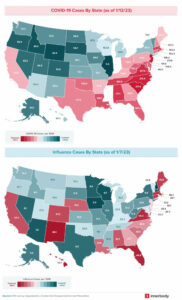
A team from Innerbody Research, a company that provides science-based information on health and health tips, conducted a study that involved the flu and COVID-19.
Alabama currently has the sixth most COVID-19 cases per 100,000 residents and the 10th highest rate of influenza cases.
Virginia and Massachusetts join the Yellowhammer State with high cases of COVID-19 and the flu. Virginia has the fourth-highest number of both illnesses and Massachusetts is eighth in COVID-19 cases and fifth in flu cases.
“Both COVID-19 and Influenza are respiratory diseases that are often vaccine preventable,” said Ryan Easterling of the Alabama Department of Public Health. “Although COVID-19 severity has changed over the course of the pandemic due to many factors, some people with COVID-19 and/or Influenza will become severely ill, be hospitalized, or even die.
“The risk factors for severe disease are well-known for both conditions and the public should consider vaccination as part of a strategy of protection.”
The study also sought to allow the researchers a better understanding about how concerned Americans are about contracting this year’s flu versus contracting COVID-19.
The study analyzed state data from the Center for Disease Control and conducted a poll of almost 1,000 people on their opinion of the subject. It found work is the No. 1 place where 2 in 3 people are worried about catching COVID-19 or the flu.
The polling also revealed that two times as many people are worried about getting COVID-19, in comparison to the flu. The data specifically said 41.4% were more concerned with catching COVID-19, while 19.9% were more fearful of catching the flu.
Some generations are more concerned about catching COVID than others, according to the study.
Generation Z, according to the study, appears to be the most concerned about catching the virus registering at 50%. Millennials came in next at 40.2%. Generation X was polled at 39.9%.
Austen Shipley is a staff writer for Yellowhammer News.
The Alabama Department of Public Health and three major health care organizations have launched a public awareness effort to combat the flu.
The Alabama Hospital Association, Alabama Medical Association and Blue Cross and Blue Shield of Alabama have partnered with ADPH to encourage people to get a flu shot with the No Time for Flu campaign.
For information, visit the campaign’s webpage at www.alabamapublichealth.gov/flu/campaign.html.
The Centers for Disease Control and Prevention recommends everyone six months and older get a flu vaccination as early as possible, preferably in October. The vaccine helps reduce the risk of flu and associated hospitalizations and deaths, according to ADPH.
Flu facts as provided by the CDC:
- One person with the flu can infect others one day before any symptoms develop, and up to seven days after a person becomes sick.
- The virus can spread up to six feet away, mainly when people cough, sneeze or talk.
- The flu causes employees to miss approximately 17 million workdays at an estimated $7 billion a year in sick days and lost productivity.
- The latest information available from the CDC regarding the effectiveness of the flu is from 2019-2020 when the vaccine was estimated to have prevented approximately 6,300 deaths.
The statewide organizations also advise that simple hygiene efforts, such as washing hands, covering mouth and nose when coughing or sneezing, as well as staying home when sick can also help protect against the flu.
Along with visiting the No Time for Flu campaign’s webpage, people should speak with their physicians.
Dylan Smith is the editor of Yellowhammer News. You can follow him on Twitter @DylanSmithAL
The first identified case of monkeypox virus infection has been confirmed in Alabama, according to county and state public health officials.
The Alabama Department of Public Health (ADPH) and Mobile County Health Department (MCHD) confirmed the initial case Friday.
A press release advised that both public health entities remain on alert for additional cases.
The patient’s specimen was tested by the ADPH Bureau of Clinical Laboratories (BCL), a facet of the Laboratory Response Network (LRN) that responds to public health emergencies.
Approximately 1,470 cases of monkeypox have been confirmed in 44 states, with more expected to be identified.
In announcing Alabama’s first infection, the ADPH detailed how the virus may spread during person-to-person contact.
“Monkeypox does not spread easily from person to person,” the department’s release stated. “But close, intimate, skin-to-skin contact appears to be the primary mode of transmission in the current global outbreak. It is possible that contact with materials used by infected persons, such as clothing and linens, can be a way to contract the virus. The virus typically enters the body through broken skin, respiratory droplets, or mucous membranes (eyes, nose, or mouth).”
“Symptoms in this most current outbreak have not been as typical as in previous cases of monkeypox,” the ADPH added. “Instead, persons will have a rash that starts out as flat spots, followed by raised spots, then vesicles that are deep-seated, have a tiny spot in the middle of the vesicle, and may be itchy or painful.”
“The rash may only be on one part of the body,” advised the department. “Some people may only have the rash and not develop other symptoms such as fever, flu-like illness, headache, muscle aches, or fatigue.”
Regarding exposure-to-illness time, the ADPH noted that symptoms could begin anywhere between seven to 21 days.
“The time between exposure to the virus and when the illness begins is about 7-14 days but can be as long as 21 days,” the department said. “Some people who have had monkeypox have been men who have sex with men, but any person exposed to a person with monkeypox and close skin-to-skin contact can be infected.”
The ADPH offered the following guidance to prevent the spread of monkeypox:
- Avoid close, skin-to-skin contact with a person who has monkeypox.
- Do not handle or touch the bedding, clothing, or towels of a person who has monkeypox.
- Have persons with monkeypox isolate away from others.
- Wash hands often with soap and water or use an alcohol-based hand sanitizer, especially after contact with ill people who have monkeypox.
- Avoid contact with animals that could have the virus (such as animals that are sick or that have been found dead).
- Do not hesitate to get in touch with your healthcare provider if you believe you may have monkeypox or have had close intimate contact with someone with a monkeypox rash.
According to the department, testing for monkeypox can be done at the ADPH BCL and some commercial laboratories.
The ADPH noted that an effective vaccine against monkeypox exists, but there is no recommendation for vaccination for those with no known exposure to confirmed cases. Antiviral treatment can be considered for individuals who have certain high-risk conditions, such as immunosuppression.
Dylan Smith is a staff writer for Yellowhammer News. You can follow him on Twitter @DylanSmithAL