7. Remember, teachers do not bring sexually inappropriate content into the classroom, especially not this teacher from Oregon who asked the students to write a sexual story using three items (candles, massage oil, feathers, flavored syrup) to tell the story. Fear not though, she added, “This story is a sexual fantasy that will have NO penetration of any kind or oral sex (no way of passing an STI).”
6. Alabama basketball’s Brandon Miller, who was linked to a murder in Tuscaloosa but not charged, has now been assigned an armed guard because of “threats.” As usual, the “threats” are vague and no charges will ever be filed but head coach Nate Oats said, “The entire situation, as you know, is just heartbreaking on all accounts.” But … is it really for Miller?
5. The U.S. House continues looking at the finances of President Joe Biden and his family, including his crackhead son, Hunter. Providing a preview of this hearing were Fox News talking heads on Twitter, Geraldo Rivera suggested that this has been looked at for 5 years and no crimes have been found, Dan Bongino responded, “(o)utside of a potential illicit foreign influence operation, possible public corruption, FARA and tax violations – you’re correct, nothing to see here.”
4. Sen. Tommy Tuberville (R-Auburn) says the border needs to be secured in order to actually stop the fentanyl scourge and the surge of illegal immigrants crossing the border. He has proposed legislation that would require border crossers to “be held in a U.S. detention facility or wait in Mexico for their asylum claims to be heard.”
3. More details have emerged about a plan to cut the grocery tax over four years by State Sen. Arthur Orr (R-Decatur). Orr’s bill would cut 1-cent per year, given the Education Trust Fund grows at 2% each year and will pause the cut if it does not, it would also bar local governments from raising the tax on the local level.
2. A less talked-about bill being discussed in the special session happening right now in Montgomery has passed both the House and Senate. The bill finalizes the repayment of the Alabama Trust Fund – $437 million was borrowed from the fund in 2012 to run the government, it has now all been paid back.
1. American Rescue Plan Act money passed a Senate committee but not before it is slightly tweaked. State Sen. Sam Givhan (R-Huntsville), who abstained from voting in committee, indicated the change was for spreading the money to address sewer issues around the state.
LISTEN HERE:
Dale Jackson is a contributing writer to Yellowhammer News and hosts a talk show from 5-9 a.m. weekdays on WVNN and on Talk 99.5 from 10 a.m. to noon.
For more than two years, those of us who believe in the rule of law have been sounding the alarm about the disastrous impacts of President Biden’s open border. And for more than two years, these warnings have been ignored by the president and Department of Homeland Security (DHS) Secretary Alejandro Mayorkas.
President Biden did a drive-by visit to the border earlier this year after saying he had “more
important things” to do, but he still has yet to witness the real impact of his failures or take any real action. The courts continue to keep the COVID-era border laws alive and strike down Biden’s attempts to worsen the crisis. This administration refuses to address the disaster at the border.
Unfortunately, the situation is only getting worse.
Hardworking American taxpayers are paying $182 billion annually for services and benefits to illegal immigrants, while simultaneously struggling to afford those same services for themselves. And that doesn’t include the $100 million in border materials that American taxpayers already paid for. The Biden administration is clearly not prioritizing Americans’ safety or financial security.
President Biden’s open borders have also flooded local communities across the country with more crime and deadly drugs — even in Alabama. In a 2023 Alabama Drug Threat Assessment conducted by the Gulf Coast High Intensity Drug Trafficking Area, 47 different police departments ranked fentanyl as the No. 1 drug threat to their communities. And their fears are justified — data from the Centers for Disease Control and Prevention (CDC) shows there has been a 271% increase in fentanyl-related deaths over the last two years in Alabama.
Late last year, officers in Mobile County seized enough fentanyl on Interstate-10 to kill 1.5 million people. More recently, officers from the Montgomery Police Department stopped 436 grams of fentanyl from entering the streets of Alabama’s capital city.
Sadly, fentanyl continues to slip through the cracks and wreak havoc on our local communities. Jefferson County alone has already reached 100 suspected overdose deaths
this year, after losing more than 300 residents to fentanyl in 2022.
Nationally, CDC data cites fentanyl overdose as the leading cause of death for adults age 18-45. President Biden and Secretary Mayorkas can tiptoe around it all they want, but the facts don’t lie. The loss of American lives to fentanyl is a direct result of the administration’s failure to secure the border. Americans are tired of feeling unsafe in their communities and losing loved ones to drug overdoses.
It is for these reasons that I recently introduced the Border Safety and Security Act to secure the southern border and stop the flow of fentanyl into our country by directly addressing incentives that fuel the border crisis.
My legislation would stop DHS from giving illegal immigrants a fast pass into our country, and instead require them to either be held in a U.S. detention facility or wait in Mexico for their asylum claims to be heard, as was done through Migrant Protection Protocols. This would end the catch-and-release policies of the Biden administration that have been a magnet for illegal immigrants who see our border as wide open.
In addition to putting more responsibility on DHS, this legislation also gives authority to state attorneys general in holding presidential administrations accountable for failure to secure America’s borders. Our local leaders are shouldering the burden of this crisis and deserve the ability to demand more accountability from their federal leaders.
We cannot continue leaving the door open for cartels and other foreign adversaries to ruin our communities. I intend to keep fighting for our national security by closing our southern border and hope the Biden administration will wake up and do the same.
After HB1’s expeditious passage in the house Tuesday, an amendment was added Wednesday by the Senate Finance and Taxation General Fund Committee.
Brought by Sen. Chris Elliot (R-Daphne) and agreed upon by the committee, it dictates a further specification of water and sewer allocations to include stormwater projects.
The amendment stipulates that up to $200 million of the $400 million total allocation for water and sewer be used for stormwater projects. Of that amount, $100 million will be reserved for projects where local governments can match 35% of the cost.
Sen. Sam Givhan (R-Huntsville) was among one of three senators to abstain from the committee vote, but said the amendment is a step in the right direction.
“Stormwater drainage gives us another outlet to use those funds legitimately within the confines established by Congress and the (U.S.) Treasury,” he said. “So that was a big concern.”
The 35% match stipulation was agreed upon by senators who said they’d like to see ARPA water and sewer money benefit regions who can share in the cost of major infrastructure projects.
“If you look at where the money has gone so far, it’s been systems that couldn’t contribute to anything,” Givhan said. “It was the idea of trying to get this around the state, let different systems be able to compete on it, and a focus on growing communities.”
Wednesday’s committee approval moves the package forward to the floor of the Senate for an expected vote today. Elliot’s amendment might not be the last. A number of senators have entertained the idea of making further amendments, including Sen. Larry Stutts (R-Tuscumbia) and Sen. Arthur Orr (R-Decatur).
If the Senate approves an amended form of the bill, it will return to the House for final approval. The regular session is expected to resume next Tuesday.
Grayson Everett is a staff writer for Yellowhammer News. Follow him on Twitter @Grayson270 for coverage of the 2023 Legislative Session.
Over the last week, the Alabama Legislature has been deliberating the appropriation of the last $1 billion in federal COVID-19 relief from the American Rescue Plan Act (ARPA). Our priorities are investing in sewer and water infrastructure, broadband internet expansion, and supporting hospitals, nursing homes, and other health care providers across the state.
Our state’s infrastructure, for broadband, water and sewer, is where we are looking to allocate the largest sum of ARPA Funds — $660 million. This specific focus on critical infrastructure improvements will impact the livelihood of Alabamians in rural and metropolitan areas alike for decades to come. Our goal is to use these one-time funds as an investment for the people of Alabama by supporting areas that will see a tangible difference in the future.
Improving Alabamians’ access to clean water and sewer systems is a huge focus for legislators. Through grants and other programs, high-need projects will be identified by the Department of Environmental Management with priority given to counties that did not have funding approved in 2022.
In our 21st century world, it is also essential that we provide our citizens with expanded broadband connectivity. This funding can be used to facilitate telemedicine delivery systems to increase and improve access to healthcare.
We’re also allocating $339 million to support the people and programs that were financially affected by the coronavirus pandemic. Hospitals, nursing homes, veterans’ hospitals, and mental health services continue to face substantial negative economic impact, and these funds can be used to help respond to and offset these challenges.
Other programs eligible for $55 million in funding include those that service food banks, child-welfare, long-term housing, victims of domestic violence, mental health disorders and senior citizens.
Our responsibility as state legislators is to advocate for and represent our communities to the best of our ability. While funding conversations can become controversial as leaders disagree over where and to whom monies go, I am confident that we all share a vision of making Alabama a better place for all. During this special session dedicated to allocating ARPA funds, we’ve had the opportunity to discuss, listen, and work together toward this common goal.
Greg Reed is the Alabama Senate President Pro Tem and represents Senate District 5, which is comprised of all or parts of Walker, Winston, Fayette, Tuscaloosa, and Jefferson counties.
In the wake of the collapse of two large California-based banks, Sen. Tommy Tuberville said Alabama residents should not worry about the state’s banks.
Last week, the collapse of Silicon Valley Bank and Signature bank fueled concern throughout the nation and the state of Alabama.
In his weekly teleconference Wednesday, Tuberville (R-Auburn) discussed the banks’ failures.
“Executives of (Silicon Valley Bank) didn’t adjust to the rising interest rates. We all knew they were coming and they should have too,” said Tuberville. “The bank didn’t have a chief risk officer for almost a year. They were understaffed.
“Just before they collapsed, executives sold stock and paid out huge bonuses. The federal reserve in the state of California – they failed, they failed to see the clear warning signs and act upon it.”
“They dropped the ball. This wasn’t a regulation problem, this was an enforcement problem.”
Tuberville, however, said Alabamians have no reason to be concerned about the current banking situation.
“We checked with the people in Alabama, the banks in Alabama, they’re very strong,” he said. “They are regulated and they go by their regulators advice and so I don’t think there’s any problem we’re going to have in the state of Alabama with our banks.”
Austen Shipley is a staff writer for Yellowhammer News.
Lt. Gov. Will Ainsworth joins Yellowhammer News to discuss the school choice and tax reform issue in Alabama.
Dale Jackson is a contributing writer to Yellowhammer News and hosts a talk show from 5-9 a.m. weekdays on WVNN and on Talk 99.5 from 10 a.m. to noon.
During her State of the State speech last week, Gov. Kay Ivey put forward what she’s calling “The Game Plan,” which, she said, is Alabama’s “playbook for economic success.”
The plan includes renewing and expanding the Alabama Jobs Act and the Growing Alabama Act. It also adds incentives to “spur innovation by stimulating the creation of high-tech jobs, sparking growth in rural areas and supporting entrepreneurs and small businesses,” she said.
Other bills Ivey wants passed as a part of the plan include the Advancing Alabama Economic Progress Act, the Seeds Act, Innovation and Small Business Act, and the Enhancing Transparency Act.
Wednesday on WVNN’s “The Yaffee Program,” State Rep. Matt Woods (R-Jasper) said he fully supports Ivey’s plan to grow the economy of the Yellowhammer State.
“Gov. Ivey has come out with a plan that she is calling ‘The Game Plan,’ and I think that’s going to be a fantastic thing for the state of Alabama,” Woods said. “We all already know that Alabama is one of the best states to live and work. But we’re in an aggressive competition against other neighboring states for high-paying jobs and game-changing investments that will help our families and communities; and I believe that our game plan that Gov. Ivey is putting forward will do that.”
The lawmaker said the Alabama Jobs Act has already secured many benefits for the state and he wants to see that continue.
“The impact to date has been massive with those incentives bringing in over $22 billion in new capital investment, and creating 40,000 new jobs commitments for the state.” he said. “It will serve our state’s rural areas, which is very important to me.”
While touting the success of the state’s economic incentive packages, Woods admitted more work needs to be done.
“Alabama’s current lack of large industrial sites is a real challenge,” he said. “And to keep Alabama competitive among our neighboring states, we need to reinvest in industrial site development and attract those new potential high-paying jobs to this area.”
Woods also discussed his support for legislation he believes will help grow small businesses across Alabama.
“The Innovation and Small Business Act enables us to expand entrepreneurship, drive economic growth, and transform our state into a hub of technology and innovation,” he said. “That piece of legislation will strengthen the state’s innovation economy.”
The legislator said the bills have a good chance of passing this session.
“I believe so,” he said. “Initial conversations have been positive that I’ve had. The state of Alabama represents folks from all different walks of life with different needs in their communities, and all of us can agree that we want better jobs, high paying jobs, better diversity of those jobs across the state, and I’m no different on that.
“So far, the conversations have been positive.”
Yaffee is a contributing writer to Yellowhammer News and hosts “The Yaffee Program” weekdays 9-11 a.m. on WVNN. You can follow him on Twitter @Yaffee
State Sen. Arthur Orr (R-Decatur) has drafted legislation that would gradually eliminate the grocery tax on food. The proposed bill would take one cent off the grocery tax every year on certain foods covered by the Women Infants and Children (WIC) federal program.
The current grocery tax is 4%.
Orr, who is the chairman of Alabama’s Senate education budget committee, discussed his plan on WVNN’s “The Yaffee Program,” Wednesday.
“Well it’s fairly simple,” Orr said. “The bill would eliminate the sales taxes over time on what we know as the WIC definition … It focuses on the healthy foods, which of course means the cost to the education budget, or to our educational systems, is lesser by choosing a narrower definition.”
The senator said his bill does include some “stop-gap” measures if the tax cut results in too much revenue loss to the education budget.
“The bill does have some stop-gap measures that if the state revenues don’t grow over a certain percentage that we will hit a pause button and that would stop the further reduction of taking a penny off a year,” he said, “but if we grow by leaps and bounds over four years, you would see it gone over four years on those food items.”
Orr said the bill also would prevent local governments from using it as an opportunity to raise their own taxes.
“There’s been a real concern that if we take the tax off groceries in Alabama that the local governments will come in and replace it with local taxes,” he said. “This would freeze out any such action at the local level where they could not backfill and come in and raise taxes on the items in the WIC definition of food.”
The lawmaker admitted he’s not sure if the bill stands a good chance of passing, but he’s going to make the effort to get it through.
“I have not talked to that many colleagues,” he said, “but as the budget chair … any such proposal will come through my committee so I want to make sure that for me, not that I’m any more special than any other legislator, but I also have got to watch the budgets in the long term revenue to support our educational systems.”
Orr said his idea is the best compromise between those who want to cut the grocery tax and those who are worried about depleting the budget.
“As far as the grocery tax, this is the top line, this is about as far as we can go today,” he said. “If someone came in and said ‘let’s just cut all the grocery taxes in the next few months in perpetuity forever,’ that’s something that would cause great difficulty and harm to our budgets.”
Yaffee is a contributing writer to Yellowhammer News and hosts “The Yaffee Program” weekdays 9-11 a.m. on WVNN. You can follow him on Twitter @Yaffee
Craig Smith has been on an incredible journey throughout his life.
Once a member of a rock band, he transitioned into worship music after a heart change. Winning awards for his Christian music, he later moved on to be a pastor. Now, he is the founder of a nonprofit organization called Village to Village, and he has written a book to advance that mission.
“Awake in the Dawn” is his new book that offers daily encouragement, based on the Lord’s Prayer, to help people face each day.
People need encouragement, now more than ever. Craig realizes this, and he has made this his focus with this new offering.
He said 100% of the proceeds from the book go to Village to Village, to support people in Uganda, Thailand, El Salvador, and Arkansas.
Craig is living a life of purpose, and I believe this will encourage you to the same.
Podcast (livinglifeonpurpose): Play in new window | Download
Subscribe: Spotify | TuneIn | RSS
A Birmingham teacher of almost three decades received an unexpected shout out at the 95th Academy Awards.
Kay Dummier knew that her former student Daniel Scheinert had been nominated for his new film, “Everything Everywhere All at Once.”
However, she got a big surprise when he took the stage to receive one of his three Oscars. Scheinert, during one of his acceptance speeches, made sure that he expressed his gratitude for some of his former teachers, including his fourth-grade teacher Dummier.
“I had a fantasy as a kid of winning an award and going up and telling off all the teachers that gave my brother and I detention so here goes,” Scheinert said. “I’m just kidding, these are teachers that changed my life, mostly public school teachers … Ms. Dummier, Mr. Toole, Mr. Hudson, Mr. Chambers, Madame George …
“You guys educated me, you inspired me, you taught me to be less of a butthead.”
Dummier said that she was shocked hearing her name mentioned
“When he said my name I nearly flipped. Wow,” said Dummier “I was watching it live.
“I remember him, but I don’t remember doing anything special with him that I don’t do for all kids, so I don’t really know the impression I made. I treated him like all my other neat little kids.”
She was also pleased that he thanked his parents, as well.
“I’m really impressed with him that he thanked public school teachers, because where do they think they get their start?” she said. “And the next time he got (an award), he thanked his parents first, so I thought, you know, this guy has got his head on straight.”
Scheinert expressed his gratitude for some of his other teachers at Oak Mountain Elementary, Shades Valley High School, and the Jefferson County International Baccalaureate.
Austen Shipley is a staff writer for Yellowhammer News.
Sen. Katie Britt, a member of the Senate Committee on Appropriations, has joined a group of 22 other senators in introducing and co-sponsoring a balanced budget amendment.
The constitutional amendment seeks to create requirements for the submission and approval of yearly balanced budgets. This includes guidelines that deal with spending caps and raising taxes, she said.
“Our ballooning national debt is already an economic and security crisis,” said Britt (R-Montgomery). “… President Biden proposed an unserious budget that would continue to recklessly pile this burden on the backs of our children and our children’s children. Alabama families balance their household budgets every day, and we must expect the federal government to do the same.
“It is past time to hold Washington accountable for runaway, wasteful spending that is fueling inflation and endangering our nation’s future.”
The proposed legislation would make the following changes to the Constitution:
- Require the President to submit a balanced budget and Congress to pass a balanced budget
- Restrict federal spending to 18% of the Gross Domestic Product
- Require two-thirds majority votes in the House and Senate to raise taxes
- Require a three-fifths majority vote in both houses of Congress to raise the debt limit
The amendment comes in response to Biden releasing the outline of his Fiscal Year 2024 budget proposal. The proposal would raise taxes by $4.7 trillion and raise the national debt to $50.7 trillion by 2033, Britt said.
Austen Shipley is a staff writer for Yellowhammer News.
A veteran attorney has been appointed to the Alabama Board of Pardons and Paroles by Gov. Kay Ivey.
Kim Davidson was announced as the new member on Tuesday in a press release from the Board.
“It is an honor to become part of this team, and I am looking forward to working with fellow Board members,” said Davidson. “I am genuinely committed to leaving a positive impact on people I serve by making careful and informed decisions focusing on public safety, offender accountability and victims’ rights.”
Davidson has a long career practicing law and graduated with a Juris Doctor from the Birmingham School of Law and became a member of the Alabama State Bar in 1996. Since then she has led the Law Office of Kim Davidson located in Vestavia Hills.
Board Director Cam Ward said Davidson is well suited for the job.
“Kim will be a great addition to the Board of Pardons and Paroles,” he said. “Her legal background in family law and mediation makes her well suited for this position. I look forward to working with her in this new role.”
Davidson will be replacing Dwayne Spurlock who had served since 2018.
Austen Shipley is a staff writer for Yellowhammer News.
7. The Poarch Band of Creek Indians is looking to grow gambling in the state, again, with their “Win for Alabama” taking their message to the airwaves with claims of $700 million in revenue on the table for roads, education, and the like. But it seems unlikely, with legislative leaders reluctant to bring it up for consideration this year.
6. A pair of interesting polls show that Americans’ political ideologies are far more reasonable than the media portrays. When asked if they think “[c]limate change has become a religion,” 60% of all voters agree. When asked about what ideologies make them more likely to vote for a candidate, “moderate” led with 52% with “independent” (48%), “conservative” (48%) following, and “liberal” only getting 34%.
5. Hawkish Republicans, Democrats and the entire Ukraine flag-wearing media complex slammed Florida Gov. Ron DeSantis’ position on Ukraine. Former UN Ambassador Nikki Haley strangely hit him for “copying” from Trump. Lots of war drum beating going on right now, even on Fox News.
4. Russian jet and an American drone’s collision interaction over the Black Sea could increase tensions between the two countries. The U.S. European Command says the drone and two Russian jets were flying in international waters when the drone was cut off and had fuel dumped on it before the jet hit the drone and forced it down.
3. Alabama-based Regions Bank says the issues affecting Silicon Valley Bank and Signature Bank will not affect it. Regions released a statement saying it is not in the same business as those banks: “Regions has constructed a balance sheet that is resilient, sustainable and will perform consistently over time. Regions is sound and stable, and we stand ready to support our customers in a wide array of economic conditions and cycles.”
2. State Sen. Arthur Orr (R-Decatur) is ready to phase out the grocery tax. Orr’s proposal would take 1 cent off the 4-cent sale tax every year. The items that would be covered are staples such as infant formula, canned tuna, milk, eggs, cheese, fruits, vegetables, and whole grain bread – all items covered by the Women Infants and Children federal program.
1. The Alabama House of Representatives passed the plan to spend $1.06 billion of American Rescue Plan Act money easily with only 3 “no” votes and now heads to the Alabama State Senate. The Senate starts discussing it today and could vote for it Thursday. It is expected to pass but may not pass that soon.
LISTEN HERE:
Dale Jackson is a contributing writer to Yellowhammer News and hosts a talk show from 5-9 a.m. weekdays on WVNN and on Talk 99.5 from 10 a.m. to noon.
The Alabama House passed HB1 Tuesday, appropriating the final $1 billion of federal funds distributed to Alabama from the American Rescue Act Plan (ARPA). The special session called by the governor is on track for the bill to land in the Senate on Thursday.
The largest portion of the spending measure will benefit hospitals, nursing homes, water and sewer projects, as well as broadband expansion.
During Tuesday’s session, Rex Reynolds (R-Huntsville), chairman of the House Ways & Means General Fund Committee, reflected on the process and took questions from fellow lawmakers.
Minority Leader Rep. Anthony Daniels (D-Huntsville) thanked Reynolds and the extensive collaboration to reach a floor vote. However, Rep. Juanavann Givan (D-Birmingham) questioned why her district hasn’t seen any money from last year’s appropriation.
The allocations are:
Public Health ($339.1 million)
- $100 million to reimburse hospitals for eligible COVID-19 expenses
- $100 million to reimburse nursing homes for eligible COVID-19 expenses
- Up to $5 million to reimburse veterans’ hospitals for eligible COVID-19 expenses
- Up to $40 million to reimburse the State Employees’ Insurance Board
- Up to $40 million for the Public Education Employees’ Health Insurance Board
- Up to $25 million to support mental health programs and services
- Up to $9 million to facilitate the expansion and use of telemedicine
- Up to $20 million for healthcare research and access to personalized medicine
Infrastructure ($660 million)
- $400 million for water and sewer infrastructure projects
- $260 million for broadband expansion
Grayson Everett is a staff writer for Yellowhammer News. Follow him on Twitter @Grayson270 for coverage of the 2023 Legislative Session.
Fulfilling a resolute commitment made to taxpayers, the Alabama Senate passed Senate Bill 1 (33-0) Tuesday, which transfers $59.9 million from the State’s General Fund budget to the Alabama Trust Fund.
The Alabama Trust Fund (ATF) was created as a “rainy day” account to be used only in times of fiscal crisis and is funded by royalty payments that are received monthly from oil and gas companies. In 2012, the ATF transferred $437 million to the State’s General Fund to help with proration and the financial crisis that the Alabama Legislature found itself in.
“During those years, amid a national recession, we had a significant shortfall in funds. It was the Legislature’s responsibility to fill the gap of the General Fund and keep Alabama operational,” said Sen. Greg Albritton (R-Atmore). “To overcome these critical shortfalls, the Legislature went to the Alabama taxpayers to seek their approval through a constitutional amendment to authorize the use of monies from the Alabama Trust Fund.”
In 2013, the Legislature took action to repay the debts with The People’s Trust Act which implemented a schedule of repayments of the amounts transferred from the ATF. With the assistance of the Deepwater Horizon BP Settlement Funds and the state of Alabama’s annual disbursements, the total amount repaid to the ATF to date is $377.3 million.
“This final payment to the Alabama Trust will make us ‘debt-free’ and fulfills our obligation to the citizens we represent,” Albritton said. “When this money was initially borrowed, we made a promise and commitment to pay it back. I am glad to say that due to our fiscal conservative nature, repayment is final and complete.”
Senate President Pro Tempore Greg Reed said it was the Legislature’s responsibility to “pay off our bills.”
“In the early years of my Senate tenure, Alabama was in a critical place. We borrowed nearly half a billion dollars just to sustain government function,” he said. “It was then up to the Legislature to execute hard-working and conservative fiscal measures to dig ourselves out of this hole.
“Now that we have the available funds in our budget surplus, it is our responsibility and duty to pay off our bills and I want to thank my legislative colleagues for their effort in accomplishing this task.”
This $59 million from the State’s General Fund is separate from the $1.05 billion in American Rescue Plan Act (ARPA) funds also being appropriated during this special session. Senate Bill 1 will advance to the House of Representatives for its first reading today.
Elba will be the home to a $5 million electrical transformer facility that will specifically repair and recycle the transformers.
“On behalf of the citizens of Elba we are thrilled to have a new corporate citizen in Sunbelt Solomon,” Mayor Tom Maddox said. “The investment and jobs that will be provided bring a great deal of energy and excitement to our community. I also want to thank the Wiregrass Economic Development Corp. for short-term use of the business incubator while the Elba location is renovated.”
Gov. Kay Ivey said Sunbelt Solomon Services, a global, large scale producer of commercial and industrial electric equipment, is planning to hire 50 employees and is expecting the number of employees to grow as operations do.
“Sunbelt Solomon is a welcome addition to Alabama’s dynamic business community,” said Ivey. “The company has made a great choice by locating this new operation in Coffee County, and I know the hard-working people of Elba will help make it a long-lasting success.”
Sunbelt Solomon Services CEO Gus Cedeño discussed the new facility.
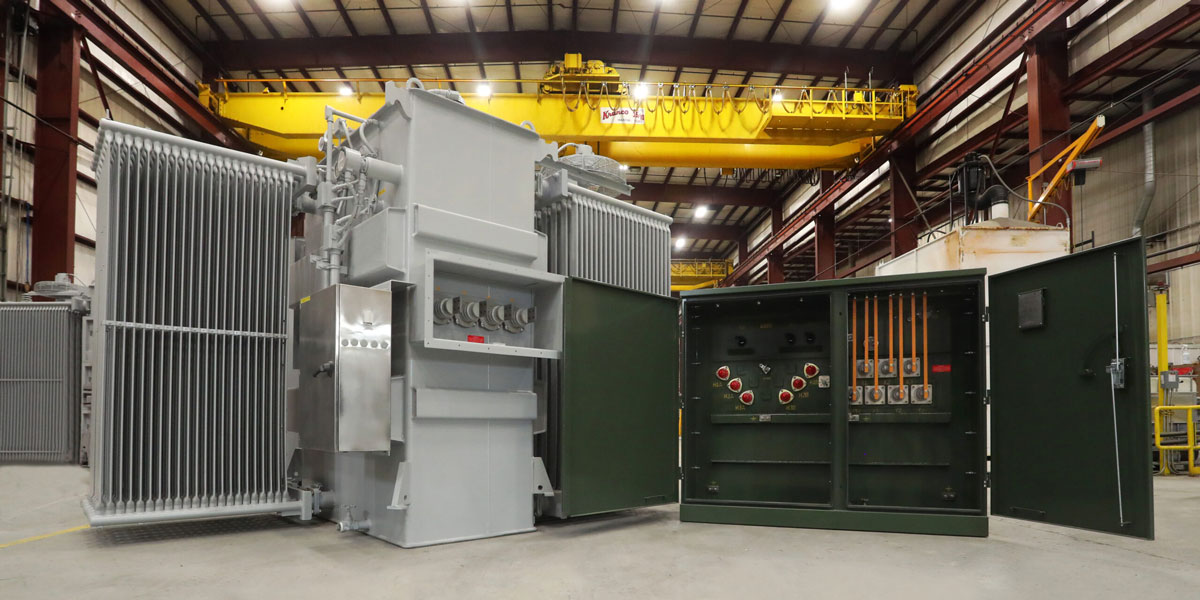
“Elba is the first greenfield facility we’ve built in several years, reaffirming our strategy of getting closer to our customer base while developing the human capital wherever we operate,” he said. “Sunbelt Solomon is excited to provide new, well-paying jobs and career paths to the Elba community while continuing the growth and expansion of our business.
“We are committed to an excellent customer experience and expanding our footprint in Alabama brings us closer to many of our valuable customers, increasing our ability to provide fast and dependable services.”
Jesse Quillen, executive director of the Wiregrass Economic Development Corp., discussed the impact that Sunbelt Solomon’s investment project will have on Coffee County.
“The new jobs, new capital investment and new energy provided by Sunbelt Solomon are all incredibly important and attractive for Elba citizens But, I believe the most important and welcome attribute that Sunbelt Solomon brings to Elba is its tremendous corporate culture, as exhibited throughout this process,” said Quillen. “Sunbelt Solomon’s corporate culture will be a perfect fit in Elba.”
Greg Canfield, Secretary of the Alabama Department of Commerce, was pleased that Sunbelt Solomon recognized the potential Alabama has to offer businesses.
“Growing companies like Sunbelt Solomon are discovering that Alabama offers abundant opportunities that will help them expand the scope of their operations,” Canfield said. “I look forward to seeing Sunbelt Solomon put down roots in Elba and watching this operation thrive.”
In addition to opening the Elba facility, Sunbelt Solomon bought Holland Industrial Services in Bay Minette.
Cedeño said the company’s recent moves in Alabama are part of its push to expand into the Southeast.
“We’re doubling down in the state of Alabama right now,” said Cedeño. “These two substantial investments in Alabama we trust are clear signs to our customer service commitment in the Southeast for our utility, renewable, oil and gas, commercial, and industrial customers.”
The new branch, which is scheduled to open in June, will offer positions that can earn wages from $18 an hour to $37 an hour. The average wage at the new facility will be 45% higher than the annual salary for manufacturing roles in Coffee County according to the Alabama Department of Labor.
Sunbelt Solomon was founded in 2019 after a merger between Solomon Corp. and Sunbelt Transformer.
Austen Shipley is a staff writer for Yellowhammer News.
The Legislature is convening in special session through Thursday, with both chambers looking to answer a $1 billion question.
The House meets at 1 p.m. today to vote on the $1.1 billion American Rescue Act Plan (ARPA) appropriations package (HB1), after receiving approval from committee last week.
The Senate will gavel in at 3:30 to vote on a final repayment to the Alabama Trust Fund (SB1) – a longtime promise of state leaders.
Leaders in both houses are looking to make these bills a done-deal by the end of the week. Upon approval from the House, HB1 will head to the Senate; and, after Senate approval, SB1 will go to the House.
“I don’t think we’ll see a lot of changes,” said Speaker Nathaniel Ledbetter. “The (memorandum of agreement) involved inside the bill itself will take care of some of the questions that’ve been asked.”
He praised the collaborative effort between agencies as well as the onboarding process to bring new members to the table.
“I think that’s a good thing. I think doing the MOA like they’ve done, having oversight committees in the House and Senate — I don’t know how you get much more transparent than that,” Ledbetter (R-Rainsville) said.
During the special session — which exists outside of the regular legislative calendar — no bills can be considered other than the scope of the governor’s order unless it receives a two-thirds approval from either body.
The regular session is slated to resume March 21. Therefore, it’s likely HB1 & SB1 will be the only items taken up by the committee of the whole this week.
Grayson Everett is a staff writer for Yellowhammer News. Follow him on Twitter @Grayson270 for coverage of the 2023 Legislative Session.
Ten years ago, our oldest daughter, Katie, was preparing for her high school graduation, applying to colleges and shopping for her prom dress. The thought of disordered eating behaviors and eating disorders were nowhere on the radar.
Like most teenage girls, she was involved in school activities and clubs. She started playing
soccer and was involved in “pee wee” cheerleading in the third grade. She shared her love of soccer with her twin sisters. Many hours were spent with all three of our daughters on soccer fields; they never missed each other’s games or tournaments. Katie continued elite competition cheer through her sophomore year of college after winning back-to-back National Titles.
During the fall semester of her senior year at the University of West Georgia, Katie began a paid internship that served as a springboard to the beginning of her career in human resources at Southwire. She was growing into an independent, self-supporting woman. She referred to it as “adulting.”
On the surface, it appeared as though Katie was a typical young woman navigating life from high school through college to the start of her career. However, Katie had an illness.
Like many illnesses, no one knows exactly when it began. Initially, she didn’t have any visible symptoms. She didn’t miss any school, she wasn’t restricted to participate in any physical activities, the illness did not require her to take any medication or to have frequent visits with her doctor. As a matter of fact, no one had any idea she was sick. She wasn’t the first, nor would she be the last person to live with this illness.
Just as people don’t choose to have cancer or diabetes, Katie didn’t choose to have an eating disorder. Eating disorders are NOT a choice. They are serious biologically-influenced mental and addictive illnesses that can be life threatening. They come in all shapes and sizes; they do not discriminate between age, gender, race, class, sexual orientation or ethnic groups.
You cannot tell if someone is struggling on the basis of their appearance. People with eating
disorders can be near death from malnourishment or binging or purging without any damage or alarming blood/medical tests.
Having a family member with an eating disorder is a scary, isolating, unfamiliar and devastating experience for the entire family and the fact that she was 18 years old when her disordered eating became apparent made the process of getting her help that much more challenging.
Couple that with the fact that many primary care physicians have a difficult time helping patients with eating disorders because they are not trained in eating disorders.
On Jan. 8, 2019, as I was leaving the house to go teach a Pilates class, I received a phone
call from northwest Atlanta. I declined the call thinking it was a telemarketer. Within seconds my phone rang again. It was a coworker of Katie’s and I knew at that moment that something was wrong. Katie’s boss explained that an ambulance was en route to take her to the hospital because she collapsed and lost consciousness at work.
Arriving at the hospital, we were directed to a critical care unit nurse who escorted us back to see Katie. Nothing could have prepared me for what I was about to witness. Our
precious 24-year-old daughter lay in a hospital bed surrounded by a countless number of drip bags and medical monitoring equipment. In that instant, all I could envision was her as a healthy, happy, innocent little girl. It just didn’t seem real.
Reality soon set in, however, when we met with the cardiologist who shared with us the findings from tests they had run. In medical terms, Katie collapsed due to cardiac arrest, malnutrition and electrolyte imbalance. In layman’s terms, she collapsed due to an eating disorder. We explained that as a family, we were aware of Katie’s disordered eating behaviors and getting a diagnosis for someone over the age of 18 was more of a challenge then we ever imagined.
I asked the cardiologist, “How many young girls Katie’s age (and in her condition) do you treat each year?”
She placed her hand on mine and said, “Hundreds. However, it is not just girls in their early to mid-20. It is young men, 16-22 years old, and girls as young as 8 and 9 years old.”
We all have to face food every day. It is on TV and billboards, in magazines and other forms of media. We can choose to abstain from alcohol and drugs because we do not need them to survive. The same is not true with food, which makes the recovery from ED one of the most difficult to navigate.
Katie was an organ donor. She gave the gift of life so others could live theirs to the fullest. This decision to become a donor was one our daughter made on her own while renewing her driver’s license just seven months prior to her donation. It was a courageous, selfless and loving act, which describes the kind of young woman she was.
As a family, we have all struggled with the loss of Katie. She was a part of a very large
extended family of a grandmother, aunts, uncles and cousins. She left behind a legacy of a
“love for life.” Her sisters often tell people that she ”took advantage of all that life offered.” She had a smile that was as big as her heart and her laughter was absolutely contagious!
Now it is our turn to be courageous, selfless and loving. We choose to be the voice of Katie and all those living with an eating disorder. We have to work to help other families and individuals avoid the most challenging, heartbreaking and exhausting journey of watching a loved one suffer in shame, anxiety and isolation while trying to find someone who can help them. We choose to be the voice of primary care providers who are able to screen for breast cancer, colon cancer, diabetes and a multitude of other illnesses and diseases, but are void of any means to screen for eating disorders.
As a family, we desire to be a conduit between parents/caregivers of those struggling with an eating disorder and the resources necessary to help the person and their parent/caregiver to have the best chance at receiving appropriate care for recovery. We also want to be involved in conversations, groups and committees working to develop some type of screening process for eating disorders beginning at the Pediatric level as well as driving change to the diagnosis protocol.
The following resources are available if you or someone you know is living with an eating
disorder. Eating disorder recovery is possible and seeking professional help for early detection is strongly encouraged and visiting the organizations listed below would be a good and highly- recommended start.
The National Eating Disorders Association is the largest nonprofit organization
dedicated to supporting individuals and families affected by eating disorders. Their toll free
phone number is 1-800-931-2237 and they can also be contacted at
nationaleatingdisorders.org.
F.E.A.S.T. (Families Empowered And Supporting Treatment for Eating Disorders) is a
global community offering support, education and empowerment to families affected with eating disorders. Their slogan reads, “We are here because we have been there.” They can be contacted online at feast-ed.org.
I would like to thank Patrick Lawler for his unconditional willingness to support National Eating Disorder Awareness Week 2023 (NEDA 2023) by illuminating the (Guntersville) City Harbor with the signature blue and green colors of NEDA. NEDA occurs every year during the third week of February, which will always overlap with Katie’s birthday Feb. 27.
Sen. Katie Britt hit the lack of regulators’ oversight leading to the recent failures of the Silicon Valley Bank and Signature Bank.
A member of the Senate Committee on Banking, Housing, and Urban Affairs, Britt (R-Montgomery) said Monday she has not been satisfied with the federal government’s response to the situation.
“My office and I have been in contact with federal financial regulators since Friday, and we continue to closely monitor the situation,” said Britt. “The public deserves full transparency and accountability without regard to partisanship, and it is unacceptable that this administration excluded Senate Republicans, including those on the Senate Banking Committee, from Sunday night’s bicameral member briefing.”
Britt said there are many questions that still need to be answered regarding the collapse of the two banks.
“Right now, we have more questions than answers” she said. “Why did regulators not see this coming? Did Silicon Valley’s focus on ESG distract from their fiduciary responsibilities, in turn contributing to its collapse? How much extra money will local community banks in rural Alabama have to fork up to fund the Administration’s plans.”
“Unfortunately, we did not get any clarity on these pressing items on today’s member briefing call, which the Federal Reserve did not make time to attend.”
According to Britt, taxpayers should not have to provide financial aid for the failed banks.
“Ultimately, American taxpayers should not have to foot the bill for bank executives’ mismanagement and regulators’ failure,” she said.
Britt said she intends to continue to advocate for everyday Americans by strengthening the American financial system.
“I will continue to support the strength of our financial system, which is crucial to hardworking families, small businesses, retirees, and communities in every corner of our nation,” she said.
Austen Shipley is a staff writer for Yellowhammer News.
7. Former President Donald Trump gave a wide-ranging interview to the Daily Caller on his way to Iowa for a campaign event where he made the most straight-up attacks on Florida Gov. Ron DeSantis yet. Trump explained the “DeSanctimonius” nickname, his thoughts on loyalty, and other subjects.
6. The ALGOP Winter Dinner broke fundraising records last week when they brought in $700,000. ALGOP Chairman John Wahl thanked Florida Gov. Ron DeSantis for headlining the event, “I am thankful to have had so many wonderful guests join us. I think this was the perfect opportunity for Gov. DeSantis to get to know Alabama a little better.”
5. Still maturing Huntsville City Councilman Devyn Keith pleaded not guilty to four misdemeanor charges for shoplifting. Adorable, however, Keith is also allegedly on tape committing multiple other shoplifting crimes.
4. Alabama’s unemployment rate continues to hold steady in January at 2.6% while the state added 54,100 jobs last year. Gov. Kay Ivey reacted to the good news by noting, “We have been enjoying a period of low unemployment, high wages and high jobs count for some time now, and I believe that more is yet to come.”
3. When people talk about letting criminals out of jail and being lenient, State Rep. Matt Simpson (R-Daphne) disagrees. Simpson told APTV’s “Capitol Journal,” “Some people need to be put out of the streets so they can’t hurt anybody else.”
2. The oddly named program, “Odds Are Alabama,” is an awareness campaign aiming to warn people that all it takes is one exposure to fentanyl to kill you. Dr. Bobby Lewis, an emergency room physician at University of Alabama at Birmingham Hospital, spoke about how UAB sees multiple fentanyl fatalities weekly and overdoses every day.
1. The markets and the banks are reacting to two major bank failures as fear of rippling impacts are still yet to be felt in the form of more bank failures. Alabama U.S. Sen. Katie Britt (R-Montgomery) is not happy with how the Biden administration is handling this and took to Twitter to say so, “it is unacceptable that this Administration excluded Senate Republicans, including those on the Senate Banking Committee, from Sunday night’s bicameral Member briefing.”
LISTEN HERE:
Dale Jackson is a contributing writer to Yellowhammer News and hosts a talk show from 5-9 a.m. weekdays on WVNN and on Talk 99.5 from 10 a.m. to noon.
In each Congress, the majority party’s highest priority legislation is labeled as House Resolution 1 (H.R. 1), declaring it the most important issue facing America.
Last Congress, Democrats controlled the House, and their H.R. 1 was called For the People Act. It really should have been named For the Politicians Act because it was an attempt to radically transform our elections by taking election decisions away from the voters and giving more power to bureaucrats in Washington.
This bill, which thankfully never passed the Senate, would use taxpayer dollars to fund campaigns, legalize ballot harvesting, weaponize the IRS for political gain, and mandate felons be allowed to vote. It also would expand mail-in voting, mandate same-day registration, ban state voter ID laws, and fundamentally overhaul states’ authority to mandate elections.
It was a horrible piece of legislation, and I’m so thankful it never made it past the Senate and to the president’s desk for signature.
On the other hand, House Republicans have just introduced our H.R. 1 – the Lower Energy Costs Act. This bill, which is being led by my friend, Majority Leader Steve Scalise (R-La.), has two main priorities: (1) increasing American energy production and (2) stripping away rules and regulations making it harder to build American infrastructure and grow the economy, plus it includes legislation I have worked on to mandate domestic oil and gas lease sales.
Our priorities could not be more different than the Democrats’, and I’m sure proud of that.
It’s no secret the Biden administration has waged war on American energy production and has delayed critical projects like the Keystone XL pipeline. As a result, all Americans are paying more for energy, and our nation is less safe as a result because we are now relying on dirtier energy from Russia and China.
House Republicans have a detailed plan to lower energy costs for all Americans, grow our economy, and get the federal government out of the way. The Lower Energy Costs Act will boost American energy production and fast-track permitting reforms that are needed to speed up construction to meet our infrastructure needs. It will also ensure we are not relying on China to meet our critical mineral needs.
Voters made their voices heard last November when they sent Republicans to Congress to put an end to Democrats’ anti-American energy agenda. Americans are paying about 40% more for their gas since President Biden took office, and House Democrats did nothing but add fuel to the fire.
The Lower Energy Costs Act will end the war on American energy, make us energy-independent again, and lower the costs of fuel for families who are struggling to make ends meet.
I look forward to this bill being on the House floor later this month.
U.S. Rep. Jerry Carl represents Alabama’s First Congressional District. He lives in Mobile with his wife Tina.
Lt. Gov. Will Ainsworth said Gov. Kay Ivey didn’t go far enough in support for school choice during her recent State of the State speech.
“It’s important we continue to have meaningful discussions on school choice,” Ivey said. “That must begin with improving the school choice we already have: Our charter school options and the Alabama Accountability Act. I am proposing we provide startup funds for Charter Schools and make needed reforms to the governance of the Charter School Commission in order to create better accountability.”
Recently on WVNN’s “The Yaffee Program,” Ainsworth reacted to Ivey’s comments.
“I thought the governor gave a good message, talking about how well the state’s doing,” Ainsworth said. “Also talked about different challenges that we’ve got to continue to tackle. Obviously, school choice is part of that and I think some of the things she talked about, I think, are good.
“I’d like to see us go further on that and actually have educational savings accounts in our state, but I think certainly that’s a good first step in moving us in the right direction, but I think if we’re going to do school choice, we need to go all in.”
Ainsworth discussed the need for Alabama to model other conservative states when it comes to school choice options for parents and students.
“I want to commend the governor for wanting to do more with charter schools,” he said. “I think that’s for sure we need to do. That’s a public school option that I think works in other states. I think Florida, you could look at, has 600 or 700 charter schools and we have a dozen right around there. So we need more charter school options.”
Ainsworth said real school choice must also include options, such as private schools.
“I also think adding true choice … for any child and their parents to decide where they want to go to school, which public school they want to go to, if they want to go to private school, if they want to home school, and for them to have real choice, whether you call it vouchers, ESA’s, whatever you want to call it, that is what I support,” he said. “That is what I mean by full school choice, where a parent decides what’s best for the child, not a zip code, not what schools are zoned for, but they can actually decide what’s best for their individual child. That’s what I mean by that.
“A lot of the measures she talked about achieve that, but I think we need to go further.”
Ainsworth has not said whether he supports the PRICE Act, which would give families money in an education savings account that would be available for school choice options.
Yaffee is a contributing writer to Yellowhammer News and hosts “The Yaffee Program” weekdays 9-11 a.m. on WVNN. You can follow him on Twitter @Yaffee
State Rep. Matt Simpson got some support from Gov. Kay Ivey recently for his fentanyl mandatory minimum sentence bill.
“Tonight, I am also urging you, our legislators, to pass House Bill One so I can sign it into law as soon as possible,” Ivey said during her State of the State speech last week. “By doing this, we will put any traffickers of this deadly drug behind bars – and keep them there.”
Simpson (R-Daphne) has pre-filed House Bill 1, which adds a mandatory minimum sentence of three years imprisonment and a minimum fine of $50,000 for anyone found guilty of trafficking one to two grams of fentanyl.
During a recent appearance on Alabama Public Television’s “Capitol Journal,” Simpson discussed why it’s important to put fentanyl traffickers behind bars.
“That’s what we’re trying to get to, to make sure the message is out there that if you traffic fentanyl, if you’re brining fentanyl into our state, we’re going to come after you and you’re going to spend a lengthy amount of time in jail,” Simpson said. “I understand the argument about ‘hey, everybody should get rehab.’ I disagree. Some people need prison. Some people need to be put out of the streets so they can’t hurt anybody else.”
The lawmakers said there is an urgent need to address this crisis as soon as possible because the number of overdose deaths in Alabama and across the country continues to grow.
“The deaths in Alabama went from 150 to 417 deaths from fentanyl in 2021…This drug has become an epidemic on our communities and it’s killing so many people left and right,” Simpson said. “A lot of people don’t know that fentanyl is in with what they’re taking. Unfortunately this isn’t an issue where if you’re addicted it will kill you over time.
“Fentanyl is a pill where one pill will kill you.”
Simpson said his bill is specifically designed to go after those dealing and trafficking the drug, not those who are caught just using it.
“Trafficking is anyone who sells, manufactures, delivers, or is in possession of a certain weight of the drug,” he said. “So this isn’t just your one pill person. This isn’t just your addict or your user. These are the people that are brining it into the community and people that are distributing and bringing that drug into our communities that we have.
“We wanted to make sure that we went after the distributors.”
He also said as a former prosecutor, he decided to use his experience to be tough on criminals. Which is why he ran for the office in the first place.
“I’m focused on criminal justice bills because that’s what I know,” he said. “I ran because there wasn’t somebody with my voice…you don’t have a lot of prosecutors in here. You have some law enforcement, you have some other lawyers in here, but you generally don’t have that prosecutor understanding of the day to day operations of how a bill can change and a law can change what goes on in the courtroom in everyday…
“I wanted to run as part of that and that was a part of my campaign platform, and I’m happy to continue that fight.”
Yaffee is a contributing writer to Yellowhammer News and hosts “The Yaffee Program” weekdays 9-11 a.m. on WVNN. You can follow him on Twitter @Yaffee
The Alabama Republican Party has set a fundraising record.
With Florida Gov. Ron DeSantis as the headliner, the annual Alabama GOP Winter Dinner raised nearly $700,000 for the party.
More than 1,700 people gathered last Thursday for the annual event at the Finley Center in Hoover.
At the record-breaking event, DeSantis discussed what he called his “Florida Blueprint”, with guests. The topics he touched on included school choice, the founding principles of the US, and “common sense conservative values.”
Republican Party Chairman John Wahl said he was pleased with the event and grateful for DeSantis attending.
“The 2023 Winter Dinner was an exciting event, both for the Republican Party and the state of Alabama,” he said. “I am thankful to have had so many wonderful guests join us. I think this was the perfect opportunity for Gov. DeSantis to get to know Alabama a little better, and also for our state to meet one of America’s strongest conservative leaders, and someone that I think is going to be a central figure within the Republican Party for years to come.

“I cannot express how much I appreciate Governor DeSantis and his team for taking the time out of their hectic schedules to visit with our Republican voters. I like to see our state front and center, and I am proud to have Alabama be one of Gov. DeSantis’ first major visits after his re-election last November.”
Wahl, who was just elected RNC vice chairman of the Southern Region, also said he is looking forward to the 2024 election cycle.
“I am excited about getting the 2024 election cycle started with such a successful event,” he said. “It’s important for the party to have the resources and organization we need to challenge leftist candidates and policies both here in Alabama and in swing district across the country.
The Alabama Republican Party is ready to stand strong as we defend our rights and freedoms, and protect the values that made this nation great.”
Demand to see DeSantis was so high that the ALGOP moved the event from the Birmingham Sheraton to the more-accommodating Finley Center.
Austen Shipley is a staff writer for Yellowhammer News.