
Baylor Frazier is a digital and radio sales specialist for YHN Media Group. For advertising opportunities through our portfolio of publications, you can contact him directly at baylor@yellowhammernews.com.
As Alabama enters the final stretch of 2025, the state’s housing market stands at an important crossroads.
After several years of post-pandemic fluctuations, ranging from rapid price growth to strained inventory, conditions have begun to level out.
Buyers who spent the last few years competing in tight markets are finding more options, while sellers who built significant equity during the boom remain well-positioned heading into the new year.
Economic indicators are stabilizing, and industry experts are closely watching consumer trends as Alabama looks toward 2026.
With more balanced conditions on the horizon, moderate price appreciation expected, and continued affordability compared to other states, here’s what buyers and sellers can look forward to in the year ahead.
Current Momentum and Price Trends
Throughout 2025, home values across regions like Birmingham, Huntsville, and Mobile continued to rise at a healthy pace, supported by Alabama’s expanding economic footprint in aerospace, manufacturing, and technology.
This momentum is expected to carry into 2026, with many markets projected to see moderate appreciation between 4-7%. For buyers, this keeps Alabama one of the most affordable states in the nation; for sellers, it preserves the opportunity for meaningful returns without the runaway price spikes of the recent past.
Economist Dr. Evan Moore says that improving inventory is a major factor shaping expectations for the coming year.
“The housing market will be more balanced in 2026, as supply is increasing and there will likely be 5-6 months of supply available for much of the year,” Moore notes. He cautions that while sellers can still anticipate price gains, “sellers should expect moderate price appreciation, but nothing like the price increases seen in 2021 and 2022.”
Challenges persist on the new-construction side.
“The supply of new homes will continue to face hurdles, such as higher material costs due to tariffs, potential labor scarcity stemming from immigration policy, and first-time buyers having difficulty with down payments,” Moore explains.
These pressures may not halt growth, but they could influence how quickly new supply reaches the market.
Affordability and Buyer Opportunity
Affordability remains one of Alabama’s most significant advantages, a dynamic that economist David Hughes believes will continue to shape the state’s trajectory in 2026.
“If current trends in pricing and inventory hold, buyers should feel encouraged about their ability to afford a home in Alabama,” he says.
“Sellers should be encouraged by the prospect to profit nicely off of a home sale with regard to enhanced equity.”
Hughes points out that inventory has returned to levels not seen since the pre-pandemic years in Alabama, a shift that gives buyers more negotiating power while still supporting seller confidence. With purchasing a home in Alabama significantly more affordable compared to many other states, the state continues to attract new residents.
“There is little evidence to suggest that homes in the state will become significantly less affordable in the coming year,” he notes.
Still, Hughes notes several potential headwinds. Economic pressures, including higher foreclosure rates, increased delinquency on car loans, and rising credit card defaults, signal growing strain on household budgets.
“Many student loan borrowers are feeling the renewed burden of monthly payments, and inflation on everyday necessities only serve to put the average consumer, particularly younger ones, in a precarious financial position,” he says.
Hughes cautions that these types of financial stressors, combined with the uncertainty they create, could “be sufficient to take the wind out of the sails of the current state housing market” even as long-term fundamentals remain strong.
Outlook for 2026
Looking ahead, Alabama’s housing market in 2026 is expected to reflect a blend of opportunity, stability, and measured growth.
Rising inventory will continue to restore balance, moderate price appreciation will keep affordability in reach, and the state’s expanding economy will provide a solid foundation for continued demand.
While national financial pressures and consumer challenges deserve close attention, Alabama remains better positioned than many states to navigate the shifting economic landscape.
For both buyers and sellers, the year ahead offers a market defined not by uncertainty, but by renewed equilibrium and steady confidence.
Think your holiday shopping list is the only thing growing this season? Think again.
Scammers are working overtime, turning the rush for gifts and deliveries into a goldmine of fraud. From fake shipping alerts to too-good-to-be-true deals, criminals are using the chaos of the season to steal your money and personal information.
Fraudsters use the chaos of package deliveries as a ruse to steal your information and money. We call that a non-delivery scam. It’s big business for criminals.
According to the FBI’s Internet Crime Complaint Center, non-delivery related scams cost American consumers $785 million last year. Credit card fraud accounts for nearly $200 million more in losses.
“From fake websites and ‘too good to be true’ offers to porch pirates, fraud and theft during the holiday season will peak over the next few weeks,” said Jeff Taylor, head of Commercial Fraud Forensics at Regions Bank. “Fraudsters will continue to use these tactics, so it pays for everyone to be fraud aware.”
According to the FBI, non-delivery scams use the confusion of the season to take advantage. Some examples to look out for:
- Unsolicited messages – you might receive texts, emails, or social media messages about a problem with a delivery or an account. Don’t remember the order? That’s the point.
- Urgency – to resolve this, you must act immediately.
- Suspicious links – fraudsters may send links in texts or emails that lead to bogus websites. The intention is to get you to provide personal information.
- Prices too good to be true – the perfect Christmas gift is available for a price you never imagined!
- Funky websites – they’ll send you somewhere, then your radar goes off immediately due to bad spelling, grammar, or typos. Trust your gut.
7 FBI tips to protect you from non-delivery scams
- Don’t click any suspicious links or attachments in emails, on websites or on social media.
- Be wary if a company asks you to update your password or account information.
- Check each website’s URL to make sure it’s legitimate and secure. Web addresses should begin with “https://” and include a locked padlock icon.
- Inspect gift cards before purchasing. Check for signs of tampering.
- Be wary of any online transactions that use wire transfers, virtual currency, gift cards, or cash as payment options.
- Be wary if something asks for payment with pre-paid gift cards. Never wire money directly to a seller.
- Always get tracking numbers for items you buy online.
“Stay alert!” said Kimberly Reece, Financial Crimes Customer Advocacy Manager for Regions. “Protecting yourself from non-delivery scams starts with skepticism and smart checks. Don’t click on unverified links and remember that if a deal seems too good to be true, it probably is.”
If you think you are a victim of a non-delivery scam, report it immediately to the FBI’s Internet Crime Complaint Center (ic3.gov).
As Alabama enters the final stretch of 2025, the state’s housing market stands at an important crossroads.
After several years of post-pandemic fluctuations, ranging from rapid price growth to strained inventory, conditions have begun to level out.
Buyers who spent the last few years competing in tight markets are finding more options, while sellers who built significant equity during the boom remain well-positioned heading into the new year.
Economic indicators are stabilizing, and industry experts are closely watching consumer trends as Alabama looks toward 2026.
With more balanced conditions on the horizon, moderate price appreciation expected, and continued affordability compared to other states, here’s what buyers and sellers can look forward to in the year ahead.
Current Momentum and Price Trends
Throughout 2025, home values across regions like Birmingham, Huntsville, and Mobile continued to rise at a healthy pace, supported by Alabama’s expanding economic footprint in aerospace, manufacturing, and technology.
This momentum is expected to carry into 2026, with many markets projected to see moderate appreciation between 4-7%. For buyers, this keeps Alabama one of the most affordable states in the nation; for sellers, it preserves the opportunity for meaningful returns without the runaway price spikes of the recent past.
Economist Dr. Evan Moore says that improving inventory is a major factor shaping expectations for the coming year.
“The housing market will be more balanced in 2026, as supply is increasing and there will likely be 5-6 months of supply available for much of the year,” Moore notes. He cautions that while sellers can still anticipate price gains, “sellers should expect moderate price appreciation, but nothing like the price increases seen in 2021 and 2022.”
Challenges persist on the new-construction side.
“The supply of new homes will continue to face hurdles, such as higher material costs due to tariffs, potential labor scarcity stemming from immigration policy, and first-time buyers having difficulty with down payments,” Moore explains.
These pressures may not halt growth, but they could influence how quickly new supply reaches the market.
Affordability and Buyer Opportunity
Affordability remains one of Alabama’s most significant advantages, a dynamic that economist David Hughes believes will continue to shape the state’s trajectory in 2026.
“If current trends in pricing and inventory hold, buyers should feel encouraged about their ability to afford a home in Alabama,” he says.
“Sellers should be encouraged by the prospect to profit nicely off of a home sale with regard to enhanced equity.”
Hughes points out that inventory has returned to levels not seen since the pre-pandemic years in Alabama, a shift that gives buyers more negotiating power while still supporting seller confidence. With purchasing a home in Alabama significantly more affordable compared to many other states, the state continues to attract new residents.
“There is little evidence to suggest that homes in the state will become significantly less affordable in the coming year,” he notes.
Still, Hughes notes several potential headwinds. Economic pressures, including higher foreclosure rates, increased delinquency on car loans, and rising credit card defaults, signal growing strain on household budgets.
“Many student loan borrowers are feeling the renewed burden of monthly payments, and inflation on everyday necessities only serve to put the average consumer, particularly younger ones, in a precarious financial position,” he says.
Hughes cautions that these types of financial stressors, combined with the uncertainty they create, could “be sufficient to take the wind out of the sails of the current state housing market” even as long-term fundamentals remain strong.
Outlook for 2026
Looking ahead, Alabama’s housing market in 2026 is expected to reflect a blend of opportunity, stability, and measured growth.
Rising inventory will continue to restore balance, moderate price appreciation will keep affordability in reach, and the state’s expanding economy will provide a solid foundation for continued demand.
While national financial pressures and consumer challenges deserve close attention, Alabama remains better positioned than many states to navigate the shifting economic landscape.
For both buyers and sellers, the year ahead offers a market defined not by uncertainty, but by renewed equilibrium and steady confidence.
At the Alabama School of Cyber Technology and Engineering (ASCTE), the future isn’t something to fear. It’s something to shape.
As the nation’s only high school fully dedicated to integrating cyber technology and engineering into every academic discipline, ASCTE is leading the way in preparing students for a rapidly evolving world, including the new era of artificial intelligence.
Through hands-on learning, mandatory internships, and instruction from certified teachers and industry experts, ASCTE students don’t just learn about technology; they learn how to think critically, solve problems, and navigate real-world challenges.
Now, that expertise is reaching the rest of the state: the first AI curriculum from the Alabama State Department of Education will be implemented statewide in public high schools, offering a model for how students can work alongside AI instead of being replaced by it.
A curriculum built for a moving target
Developed in collaboration with the Alabama State Department of Education, the school’s AI curriculum introduces students to AI concepts, data science, historical context, current applications, and the ethics surrounding these topics.
It aligns with Alabama’s Digital Literacy and Computer Science standards and incorporates leadership, workplace readiness, and digital literacy through Career and Technical Education (CTE) standards.
“We’re taking the approach that AI is here, and we’ve got to get students ready for it,” said Mary Clair Wright, cybersecurity instructor and instructional design expert at ASCTE.
The curriculum is designed to evolve alongside the technology. “We’re building a curriculum for teachers who have to train on the fly,” Wright explained. “It has to be a living document because this technology is changing every day.”
To support educators, the course includes “node checks,” which are structured points to assess understanding and adjust instruction in real-time. “We tried to anticipate the questions teachers and students would struggle with, because we struggled with them too,” Wright said.
Teaching students to think critically
ASCTE emphasizes critical thinking and ethical decision-making alongside technical skills.
“We get into the ethical considerations,” Wright said. “We need everyone thinking critically about what AI can do, what it shouldn’t do, and where to use it responsibly.”
Students experience AI firsthand while learning to question it. One of the earliest assignments asks students to research an AI pioneer using AI itself, discovering that the technology can produce inaccurate or incomplete information.
“One of the first assignments is researching an AI pioneer using AI, but also learning that it will hallucinate,” Wright said. “I want students asking: Why is this person important? Why isn’t this other person included? That’s the critical thinking piece.”
“If we can teach students the concerns and limitations of AI, maybe they won’t turn to it for everything,” she added.
Preparing students and teachers for the unknown
ASCTE recognizes that both students and teachers are navigating uncharted territory in the era of AI. Professional development is a cornerstone of the curriculum’s statewide rollout, and Wright begins each session with candid conversations about fears and challenges.
“We start with honesty. In my professional development sessions I ask: tell me what you hate about AI and what you’re afraid of,” she said. “Teachers deserve space to express their concerns. This is a big change, and we need to navigate it together.”
For students, the focus is on preparing for careers that may not yet exist, equipping them with the skills and mindset to adapt as the workforce evolves.
“I can’t predict what students’ jobs will look like in five years,” Wright said. “What I can do is teach them about the technology that will shape those jobs so they’re ready for the change. AI is here to stay. Some of the changes will be positive, some won’t, but our responsibility is to prepare students for all of it.”
Preparing Alabama students for the AI era
The creation of Alabama’s first AI curriculum for public high schools is the result of a close partnership between ASCTE and the Alabama State Department of Education. Mary Clair Wright has served as the architect of the curriculum, translating state standards into actionable learning experiences that prepare students for real-world challenges.
“We sat down with the state standards and turned them into essential learning targets,” Wright explained. “We asked ourselves: If I was going to teach this, how would I teach it? The result is a 155-day course designed to be flexible, accessible on a Chromebook, and adaptable to the rapidly evolving AI landscape.”
The curriculum emphasizes problem-solving, critical thinking, and ethical judgment, while connecting students to projects tied to Alabama’s needs and opportunities. Lessons like the AI Pioneers project teach students to use AI as a research tool while verifying information and considering its broader implications.
“This is a real concern,” Wright noted. “Graduating students are struggling to find jobs, and AI is as big a disruptor as the assembly line or the internet. It’s going to change both white-collar and blue-collar jobs, and it will affect the Alabama economy. If our job is to prepare Alabama students to be good citizens, gainfully employed, and adaptable, here we are at the apex of it.”
Teacher support remains central to the initiative. Wright and her team identified potential stumbling blocks for educators and students, built in checkpoints to gauge comprehension, and created resources to enable teachers to implement the curriculum confidently, even as AI continues to evolve.
“Our goal was to do as much of the heavy lifting and research for teachers as we could,” Wright said. “This technology is here to stay. Some changes will be positive, some won’t—but if we can prepare students to think critically, communicate effectively, and problem-solve, they can succeed anywhere.”
With ASCTE leading the way and partnering with the state, Alabama’s AI curriculum is more than an educational program—it’s a blueprint for economic adaptability, ethical engagement with technology, and proactive education that could inspire schools across the nation.
ASCTE is unleashing potential, expanding horizons, and building futures–and with Alabama’s new AI curriculum, that mission is reaching every corner of the state.
Learn more about ASCTE and explore opportunities for students, educators, and partners at www.ascte.org.
Regions Bank is committed to educating their customers and the public about the latest in fraud prevention.
They also want to make sure you know what steps to take if you’ve already been affected by a scam – because recovery matters just as much as prevention.
“No one is immune to fraud – even the smartest people can be deceived in the right moment,” said Kimberly Reece, Financial Crimes Customer Advocacy Manager for Regions Bank.
“What matters most is acting quickly once you realize it’s happened. Every minute counts in protecting your money, your identity and your peace of mind.”
The bank’s team of Fraud Fighters has some simple tips on what to do after you become a victim.
Remember, the more information you can provide, the better chance law enforcement has of solving the crime and stopping the criminals going forward. Write down details immediately, from date of transaction to any email addresses that might have been used.
4 Steps to Take After the Scam
- Secure your finances – Contact your bank or credit card company immediately. Identify the fraud and ask them to help you.
- Freeze your credit – Notify the major credit care bureaus Equifax, Experian and TransUnion) that something may be amiss and you need a free security freeze.
- Change your account passwords immediately – Start with your bank account and credit card login. Then, change your email password because most often your email address will be tied to those finances.
- Report the incident to law enforcement –You may think it will be resolved regardless but reporting it to authorities helps them track the crime, potentially solve things and, most important of all, help the next unsuspecting victim. Consider contacting the following:
Local law enforcement
Help your community by allowing locals to pursue criminals.
Federal Trade Commission
Call 1-877-FTC-HELP or go online to the Online Complaint Assistant.
Internet Crime Complaint Center
This is the central hub for reporting cyber-enabled crime and is run by the FBI.
Better Business Bureau
Reporting to the BBB Scam Tracker helps the organization alert others about shady enterprises.
Identitytheft.gov
If you think someone is using your identity to open new accounts or grab your tax refund, report it immediately. The federal government will help you create a report and a recovery plan.
Regions Bank wants you to know that you’re not alone if fraud happens, and they’re ready to help you take the right steps right away.
For assistance, please call 1-800-REGIONS (1-800-734-4667) or stop by any Regions branch.
Regions Bank is committed to educating their customers and the public about the latest in fraud prevention.
They also want to make sure you know what steps to take if you’ve already been affected by a scam – because recovery matters just as much as prevention.
“No one is immune to fraud – even the smartest people can be deceived in the right moment,” said Kimberly Reece, Financial Crimes Customer Advocacy Manager for Regions Bank.
“What matters most is acting quickly once you realize it’s happened. Every minute counts in protecting your money, your identity and your peace of mind.”
The bank’s team of Fraud Fighters has some simple tips on what to do after you become a victim.
Remember, the more information you can provide, the better chance law enforcement has of solving the crime and stopping the criminals going forward. Write down details immediately, from date of transaction to any email addresses that might have been used.
4 Steps to Take After the Scam
- Secure your finances – Contact your bank or credit card company immediately. Identify the fraud and ask them to help you.
- Freeze your credit – Notify the major credit care bureaus Equifax, Experian and TransUnion) that something may be amiss and you need a free security freeze.
- Change your account passwords immediately – Start with your bank account and credit card login. Then, change your email password because most often your email address will be tied to those finances.
- Report the incident to law enforcement –You may think it will be resolved regardless but reporting it to authorities helps them track the crime, potentially solve things and, most important of all, help the next unsuspecting victim. Consider contacting the following:
Local law enforcement
Help your community by allowing locals to pursue criminals.
Federal Trade Commission
Call 1-877-FTC-HELP or go online to the Online Complaint Assistant.
Internet Crime Complaint Center
This is the central hub for reporting cyber-enabled crime and is run by the FBI.
Better Business Bureau
Reporting to the BBB Scam Tracker helps the organization alert others about shady enterprises.
Identitytheft.gov
If you think someone is using your identity to open new accounts or grab your tax refund, report it immediately. The federal government will help you create a report and a recovery plan.
Regions Bank wants you to know that you’re not alone if fraud happens, and they’re ready to help you take the right steps right away.
For assistance, please call 1-800-REGIONS (1-800-734-4667) or stop by any Regions branch.
Regions Bank is committed to educating their customers and the public about the latest in fraud prevention.
They also want to make sure you know what steps to take if you’ve already been affected by a scam – because recovery matters just as much as prevention.
“No one is immune to fraud – even the smartest people can be deceived in the right moment,” said Kimberly Reece, Financial Crimes Customer Advocacy Manager for Regions Bank.
“What matters most is acting quickly once you realize it’s happened. Every minute counts in protecting your money, your identity and your peace of mind.”
The bank’s team of Fraud Fighters has some simple tips on what to do after you become a victim.
Remember, the more information you can provide, the better chance law enforcement has of solving the crime and stopping the criminals going forward. Write down details immediately, from date of transaction to any email addresses that might have been used.
4 Steps to Take After the Scam
- Secure your finances – Contact your bank or credit card company immediately. Identify the fraud and ask them to help you.
- Freeze your credit – Notify the major credit care bureaus Equifax, Experian and TransUnion) that something may be amiss and you need a free security freeze.
- Change your account passwords immediately – Start with your bank account and credit card login. Then, change your email password because most often your email address will be tied to those finances.
- Report the incident to law enforcement –You may think it will be resolved regardless but reporting it to authorities helps them track the crime, potentially solve things and, most important of all, help the next unsuspecting victim. Consider contacting the following:
Local law enforcement
Help your community by allowing locals to pursue criminals.
Federal Trade Commission
Call 1-877-FTC-HELP or go online to the Online Complaint Assistant.
Internet Crime Complaint Center
This is the central hub for reporting cyber-enabled crime and is run by the FBI.
Better Business Bureau
Reporting to the BBB Scam Tracker helps the organization alert others about shady enterprises.
Identitytheft.gov
If you think someone is using your identity to open new accounts or grab your tax refund, report it immediately. The federal government will help you create a report and a recovery plan.
Regions Bank wants you to know that you’re not alone if fraud happens, and they’re ready to help you take the right steps right away.
For assistance, please call 1-800-REGIONS (1-800-734-4667) or stop by any Regions branch.
At the center of the Poarch Creek community, the effort to preserve and revive the Muscogee (spelled in traditional Creek as “Mvskoke”) language is a preservation of identity, memory, and connection and the survival of a living culture – not just words.
When we speak Muscogee, we are honoring our ancestors and affirming that our people endure.
Paul Bell, a leader in language and cultural education for Poarch Creek Indians, explains that the Muscogee language holds stories and meanings that simply can’t be translated into English. “Our language is endangered and will be lost if we don’t preserve it.
It is one of the things that define us as Creek people. It also helps our kids to realize that they are Poarch Creek,” said Bell. Without it, he says, a part of their identity and what sets them apart from other tribes would be lost.
Samantha Martin, who works closely with Poarch Creek Indian’s Language and Cultural Education programs, emphasizes the emotional dimensions of the language. “Our language holds so much of our identity,” she explains.
“When you can view the world through the lens of Muscogee, you see the world differently. You see the way our ancestors thought and lived. It’s beautiful to have that connection with those who are no longer with us. Our core beliefs and values are reflected in our language,” said Martin.
Education is key. The future of the language depends on the youngest members of our Tribe. Daily classes are offered in basic language, songs, colors, animals, and traditional stories.
These lessons are woven into broader cultural education efforts including traditional arts and dance to storytelling and history.

(Poarch Creek Indians/Contributed)
Our Tribe’s cultural education programs, including the Youth Hymn Class, Princess competitions, and Youth Council initiatives all incorporate Muscogee words and phrases. “We have an amazing staff at the Calvin McGhee Cultural Department,” says Martin.
“They actively teach and use the words that go along with their lessons.” Also, as part of cultural outreach, Poarch Creek educators introduce simple Muscogee words to local students in surrounding schools.
However, the path to revitalization has not been easy. The lingering effects of assimilation and fear silenced many fluent Muscogee speakers over the years. “Our elder generations were fearful of speaking the language,” Martin says.
“They feared their children would be taken to boarding schools or bullied for being different. To protect them, they tried to make them fit into colonial society. Because of that, our language elapsed over time.”
Despite these challenges, the language revival movement at Poarch is gaining momentum. Bell sees how learning even a few words can make Tribal Citizens feel more connected to their heritage. The excitement is especially strong among younger children.
“We get more excitement with younger preschool students, and we try to develop new techniques for older kids to get them more interested,” said Bell.

(Poarch Creek Indians/Contributed)
Martin agrees, describing the youth as “sponges” who quickly pick up new words.
“The Tribe is blessed to have fantastic employees that encourage our youth to use what they know,” Martin says. Staff members at the Boys and Girls Club and the Fred L. McGhee Early Learning Center are constantly looking for new words to incorporate into daily activities.
Still, time remains the biggest challenge. “The Muscogee language is critically endangered,” she says.
“There are only a few hundred first-language speakers left, and many are elderly. Our biggest obstacle is access to those elders so that we can learn all they know.”
Looking ahead, our shared goal is clear: to hear Muscogee spoken confidently in homes, workplaces and community events, not just by fluent speakers, but by families and friends speaking to one another naturally.
“Our ultimate goal is to have fluent speakers who will carry on the Muscogee language,” said Bell. Martin also envisions the same. “I would love to see our community members comfortably using the language,” she says.
“Our language is who we are.”
This Native American Heritage Month, we honor our ancestors not just by remembering them – but by speaking the words they carried forward to us.
“Este-cate opunvkv opunahoyemahaks” – Let’s keep our words alive.
The Poarch Creek Indians is the only federally recognized tribe in Alabama. From hospitality to aerospace, we continue to operate in a variety of industries across the world. Read more at poarchcreekindians.org.
Many people don’t realize how closely the work in the Poarch Creek Indians Tribal Historic Preservation Department (THPD) ties into who we are as Poarch Creek people.
Their mission goes beyond preserving artifacts or old buildings; it’s about protecting our identity, reinforcing our sovereignty, and ensuring our story continues to be told by us.
Did you know?
Under Title 39 of the Tribal Code, the THPD upholds and enforces the Tribe’s preservation laws. Their department identifies and protects cultural sites, oversees archaeological projects, cares for ancestral remains and historical items, and documents the stories of our elders through the Oral History Project.
They work with Tribal departments, federal agencies, and other Native nations to safeguard the physical, historical, and cultural landscape of our people. Every site, every artifact, and every story represents a piece of who we are, and they treat each with the respect it deserves.
Did you know?
This work isn’t the THPD alone. Protecting our heritage is a shared responsibility. They invite every Poarch Creek Tribal Citizen to help identify and preserve places, history, and items that need protection.
Their mission is clear: to preserve, protect, and promote our history and heritage for generations to come.
They are proud to stand as caretakers of our history—honoring our ancestors, protecting our lands, and ensuring that our story, the story of the Poarch Creek Indians, will always be ours to tell.

“We are committed, day in and day out, to honoring what our ancestors went through to get us where we are today,” says Billy Bailey, Tribal Historic Preservation Officer.
This November, as we recognize and celebrate Native American Heritage Month, we’re especially grateful for the dedication of the Poarch Creek Indians THPD. They play a crucial role in keeping us connected to our heritage and history as Native people.
The Poarch Creek Indians is the only federally recognized tribe in Alabama. From hospitality to aerospace, we continue to operate in a variety of industries across the world. Read more about our Tribe at poarchcreekindians.org.
Fraudsters never stop adapting their strategies—and neither does Regions Bank when it comes to informing and protecting customers. As scammers grow more sophisticated in their attempts to steal personal information, Regions is taking an always-on, year-round approach to helping people recognize common schemes and protect what matters most. One component of this ongoing effort is the #BanksNeverAskThat campaign from the American Bankers Association (ABA), which Regions is once again supporting this October as part of a national push to empower customers to stop fraudsters in their tracks. It’s a reminder that legitimate banks or credit card companies will not contact you out of the blue and ask for sensitive information.
Regions’ fraud-prevention experts, who work with clients across Alabama and beyond, are emphasizing that awareness is the first line of defense.
“You can stay ahead of the fraudsters and protect yourself by learning how to spot a scam,” said Kimberly Reece, Financial Crimes Customer Advocacy Manager for Regions Bank. “It’s also important to educate your loved ones about these common red flags, particularly when it comes to keeping teens or the elderly safe.”
The best way to do that is to act now to protect your hard-earned cash against phishing scams. The key is recognizing the telltale signs of a phishing scheme, which can come in numerous forms – including through emails, phone calls and text messages.
Phishing is big business, producing $16 billion in losses from Americans in 2024, a substantial increase over the year before, according to the ABA.
So, what’s your best response?
“At Regions, we are committed to financial education, and our efforts to keep our clients, associates and friends informed about fraud are foundational to that promise,” said Jeff Taylor, head of Commercial Fraud Forensics. “National efforts like #BanksNeverAskThat emphasize an effective and consistent message.”
Get scam smart by recognizing these signs from the ABA.
Email Scams
- Unusual Email Address – Slow it down. Does that look like an email address your bank would use? Be wary of unexpected emails from addresses that aren’t like the ones your bank typically employs.
- Misspelled Words – Spot check! If you see misspelled words or odd grammar, they are all clear signs of an impersonator. Real banks use spell check.
- Scare Tactics – Don’t panic. If an email uses scare tactics, such as urgent warnings of account closure or security breaches, you can safely assume it’s a scam.
- Suspicious URLs – Hold up! Banks will never ask you to log in via email. Phishing emails use deceptive URLs to take you to malicious websites. Never click links that you weren’t expecting.
- Unexpected Attachments – Something’s phishy, because real banks will never send an email attachment when you didn’t ask for it. Attachments can contain malware that can compromise your computer or personal information. Never click on attachments from emails supposedly from your bank.
Text Scams
- Strange Phone Numbers – Slow it down. Is that the number your bank usually uses to send text messages? Legit text message updates generally come from “short codes,” official 4-5 digit numbers used by your bank.
- Urgent Warnings or Requests – Take a breath. Phishing texts try to create a sense of panic, such as threatening to suspend your account or urging you to log in to verify. Real bank texts won’t.
- Odd Grammar or Spelling Mistakes – Spot check! If you see misspelled words or odd grammar, they are all clear signs of an impersonator. Real banks use spell check.
- Requests for Personal Information – If a text message requests personal or sensitive information, such as account numbers, PINs, passwords or Social Security numbers, you can assume it’s a scam.
- Suspicious Links – Banks rarely, if ever, send links via text. Don’t click them. Instead, verify the message by visiting your bank’s official website or calling the number on the back of your card.
Phone Scams
- Unusual Caller ID – While caller ID can be spoofed, legitimate calls from your bank are more likely to display an official phone number or a known identifier. If not, be very skeptical.
- Scare Tactics or Threats – Phishing calls rely on a sense of urgency. If the caller pressures you into immediate action or threatens negative consequences, just hang up and call the number on the back of your bank card. Keep in mind, Regions bankers often reach out to thank customers for their business and conduct a needs-based conversation. These calls are intended to answer questions, resolve problems, discover needs and build financial confidence. If a customer is uncomfortable, they can ask for the branch number and call the representative back directly.
Payment App Scams
- Unexpected Requests – Be cautious if you receive unexpected requests from strangers or organizations asking you to send money through a payment app. This is a scammer move.
- Sending Money to Yourself – If someone who claims to be your bank says you have to send money to yourself, or to move money to a “safe” account for protection, you can be 100 percent certain it’s a scam. Banks never ask that.
- Overpayment Claims – Be skeptical if a sender claims to have accidentally overpaid you through a pay app and requests a refund of the excess amount. Scammers use this tactic to trick you into sending them money.
- Suspicious Links – If you receive a payment app-related message that contains a link, never click it. Scammers often send links to fake login pages to steal your username and password.
- Pressure and Urgency – Scammers attempt to trick you by creating a sense of urgency. If they mention unforeseen emergencies, unverified transactions, account suspension, or unsolicited prize winnings, it’s a scam.
Join Regions and the ABA throughout the month of October and learn to spot the red flags of phishing. Print or bookmark these tips for reference the next time you think something’s phishy—and share them with friends, family and co-workers.
By sharing this education, we can help those we care about stay safe.
Never forget: #BanksNeverAskThat.
Think you can spot a scam? Put your knowledge to the test by taking the ABA’s #BanksNeverAskThat quiz at banksneveraskthat.com/scam-quiz. See how scam smart you really are—and challenge your friends and family to take it too.
“This is one of the biggest purchases people will ever make, and we want to give them a product they’re proud of,” Ainsworth said.
“When we hand over the keys, we want homeowners to feel confident they can enjoy life, whether that’s watching football, grilling, or spending time on the water, without worrying about their house.”
Founded and based in North Alabama, Ainsworth Homes builds roughly 30 homes a year across Marshall County and parts of Madison County.
The company specializes in custom homes and thoughtfully designed communities, guiding buyers through every step of the process.
Designed for luxury and lifestyle
Ainsworth homes are designed to blend elegance and comfort. Gourmet kitchens, custom closets, spacious walk-in showers, and large soaking tubs are just a few of the standout features.
“We build luxury spec homes and custom homes, so we can literally create any range of home a buyer dreams of,” said Rebecca Hinds, vice president of design and sales.
“Every detail, from the tall walk-in showers to the big soaker tubs, is carefully planned to make each house feel unique and personal.”
Custom homes: “You dream it. We build it.”

In addition to planned communities, Ainsworth Homes works with individual clients to bring custom designs to life. Buyers can bring their own blueprints or collaborate with the company’s design team to create a one-of-a-kind plan.
“The custom experience is everything for us,” said Will Ellrod, president of Ainsworth Homes. “We work hand-in-hand with clients on their plans and selections. Even if they think an idea might not be feasible, our engineering and construction team often finds a way to make it happen. We take pride in delivering a home that reflects their vision without compromising quality or budget.”
A hands-on, client-first approach
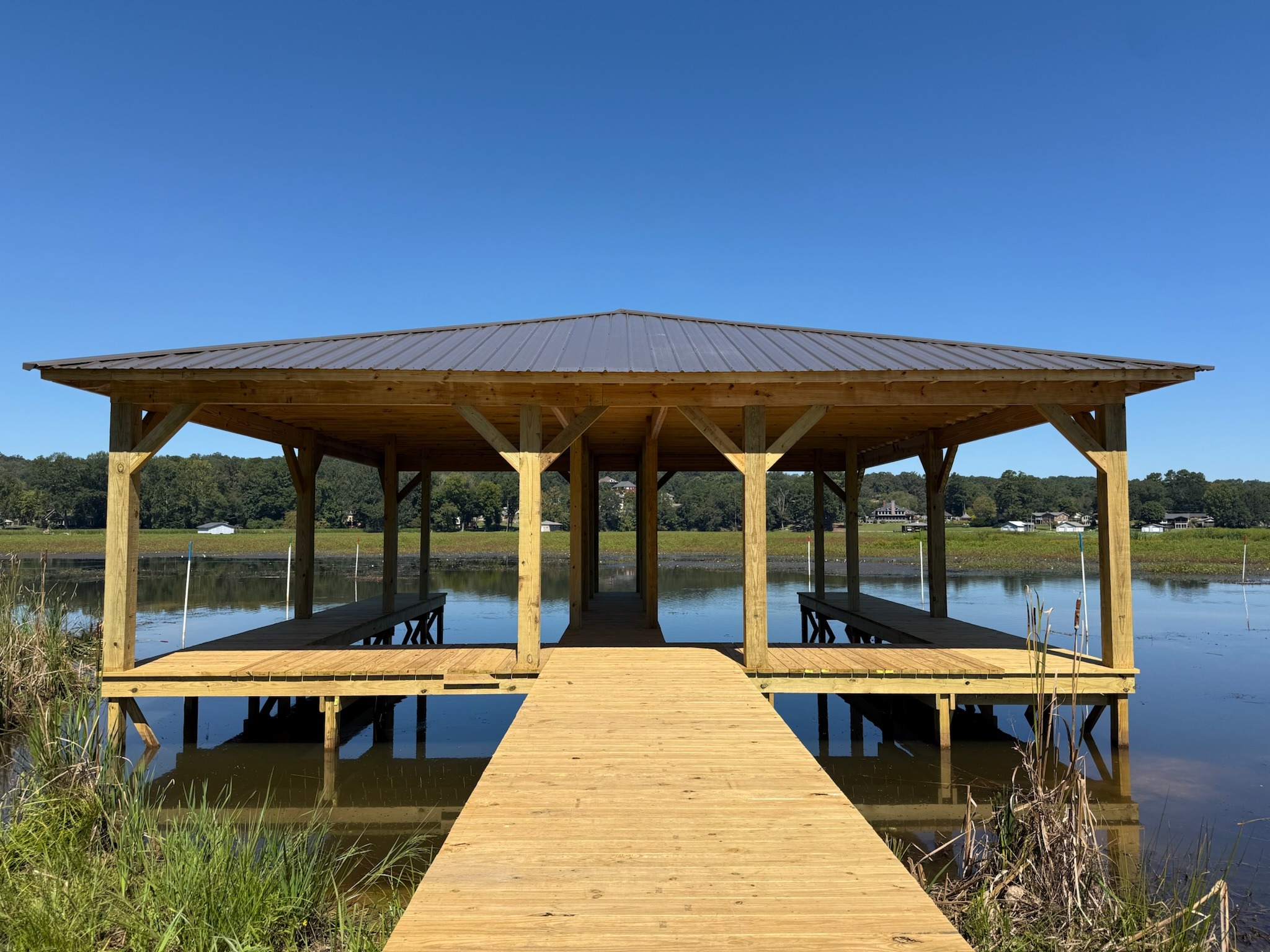
Whether building a waterfront retreat or a one-of-a-kind custom residence, Ainsworth Homes prides itself on a collaborative, transparent process. The team’s design studio gives clients access to expert guidance, curated finishes, and thoughtful advice at every stage.
“We’re open-eared and open-minded with every homeowner,” Ellrod said. “Our goal is to create a positive experience and a home you’ll love for years to come.”
Community spotlight: Spring Creek Pointe
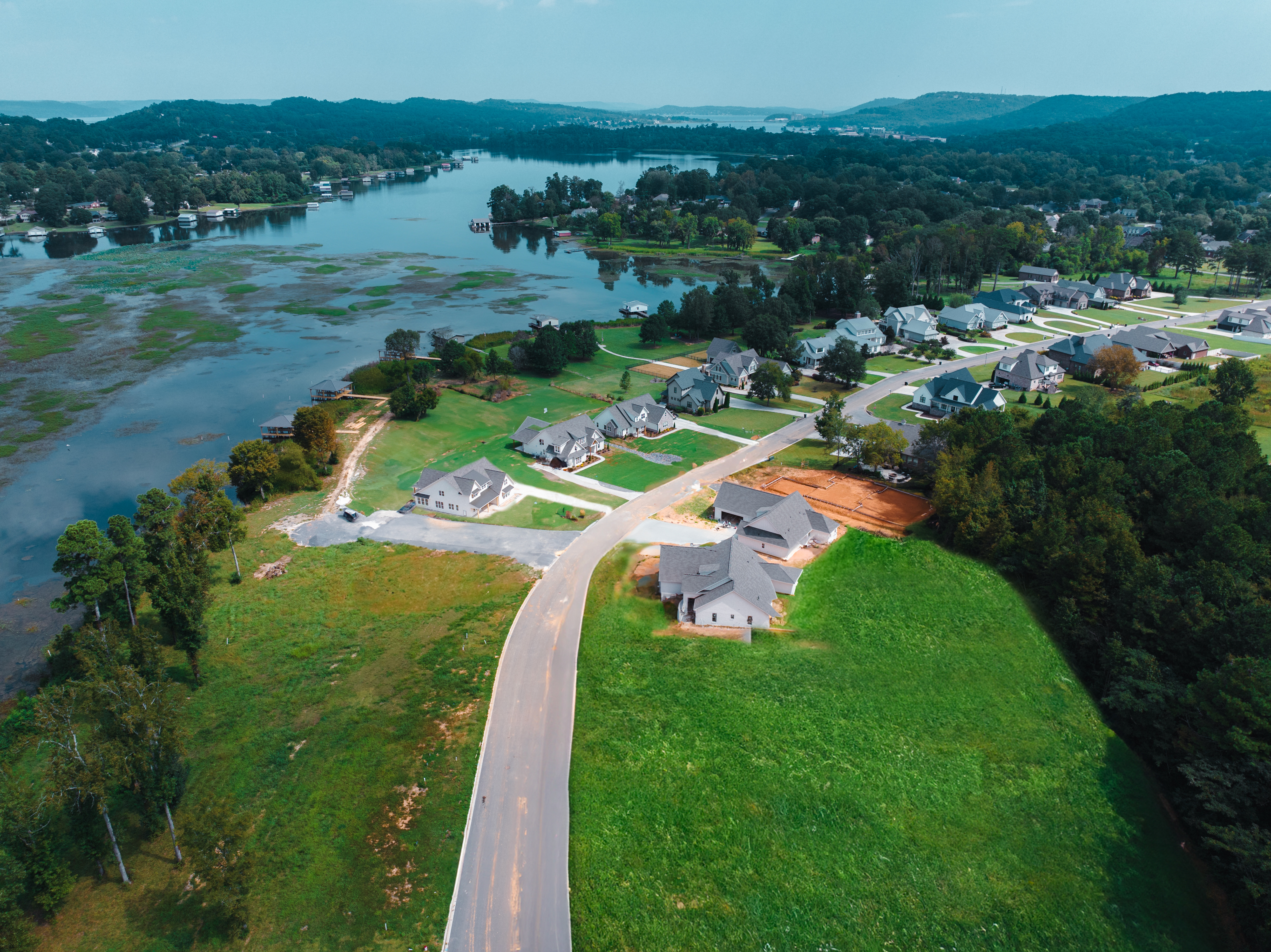
Ainsworth Homes is known for creating thoughtfully planned communities that combine quality construction with desirable locations.
From family-friendly neighborhoods in Marshall County to custom residences along Lake Guntersville, each development reflects the company’s commitment to craftsmanship and lifestyle.
The builder’s newest showcase community, Spring Creek Pointe, captures the very best of lakefront living.
Nestled on scenic Lake Guntersville, this premier development offers both lakefront and lake-access lots inside the Guntersville city limits, a rare combination that balances privacy with convenience.
“Spring Creek Pointe is Guntersville’s newest lakefront community,” said Hinds.
“What makes it special is that you have private neighborhood lake access and the choice of lakefront or lake-access lots. That simply doesn’t exist anywhere else in the area.”
The neighborhood features 23 buildable lots, released in phases of six. Homeowners will enjoy private amenities such as a two-slip boat dock, making it easy to spend a day on the water and return directly to their own backyard.
Spring Creek Pointe joins Ainsworth’s growing portfolio of communities across North Alabama, each designed to offer beautiful homes, convenient locations, and a lifestyle centered on quality and comfort. Whether buyers are seeking a custom dream home or a move-in-ready lake retreat, Ainsworth Homes continues to set the standard for exceptional living.
The Station at Crestline Heights-or simply “Station Crestline”-has quickly become one of the Magic City’s most desirable destinations for modern, luxury living. Since its debut, the community has paired contemporary design with the timeless charm of nearby Crestline and Crestline Park, offering residents unmatched amenities and an enviable location.
Leasing momentum and community growth
Just after its grand opening, The Station saw strong demand from Birmingham’s professionals, students, and downsizers alike. Today, that momentum continues. Leasing remains ahead of schedule, with medical staff, graduate students, and UAB faculty making up a large share of residents, thanks to the property’s simple, traffic-free commute to campus and downtown hospitals.
“The Station is perfectly situated for UAB students, graduate students, and Residents, as well as employees; less than a 10-minute drive, with no need for highways or dealing with traffic,” said Dr. Lana Makahleh, a current resident with UAB.
Since it’s completion, the community is buzzing with activity. What began as a luxury apartment project has rapidly transformed into a vibrant neighborhood of its own.
@stationcrestlineheights The scenery around the pool😍😍 Call today to see how you can enjoy this yourself!!📞 205-584-0389 #ApartmentGoals #CrestlineLiving #birmingham #stationcrestline #alabama
Amenities that set a new standard
The Station was designed to feel more like a resort than a traditional apartment community—and it shows. From soaring 20-foot ceilings in the clubhouse to a rooftop lounge with sweeping views, every detail emphasizes comfort and connection. Residents enjoy a saltwater pool with cabanas, chef-inspired outdoor kitchens, state-of-the-art fitness centers, co-working spaces, and even arcade-style hangout rooms. The Station at Crestline has brought even more perks to being a resident, as there are now live music concerts by the pool and a new exercise instructor is now offering both group classes and one-on-one sessions to support residents’ wellness goals.
Elegant apartment features
The Station’s 1-, 2-, and 3-bedroom residences are outfitted with European-style kitchens, quartz countertops, stainless steel appliances, and wood-finished floors. They also offer 1 bedroom units with built in office space. Smart-home conveniences like keyless entry and Honeywell thermostats come standard, while concierge-level units offer 10-foot ceilings, vent hoods, and additional luxury finishes. Private balconies and custom walk-in closets add the final touches to a lifestyle designed around convenience and elegance.
@stationcrestlineheights 🚪✨POV: You take a tour of our stunning 2-Bedroom Watkins Floor Plan! ✨🚪 Step inside this spacious and stylish home, designed for modern living with an open-concept layout, high-end finishes, and plenty of natural light. Whether you’re working from home, entertaining guests, or just relaxing, the Watkins has everything you need! 📍 The Station at Crestline 🏡 2 Bed | 2 Bath | Luxury Living 💰 Up to $3,000 Rent Credit when you move in by April 25! Ready to see it for yourself? Schedule a tour today! 📩 #LuxuryLiving #WatkinsFloorPlan #StationAtCrestline #birmingham #alabama #apartmenttour #apartment
Location that can’t be beat
Five minutes from downtown Birmingham, 10 minutes from the airport, and walking distance to Crestline Village, The Station gives residents the rare ability to enjoy the best of both city and suburban living. “Working at UAB/Children’s of Alabama has been so convenient while living at The Station,” said Dr. Virginia Quinlan, a pediatrician at UAB. “I virtually never run into traffic going to and from work, even during rush hour!”
The future of luxury living in Birmingham
With leasing momentum strong, amenities expanding, and its community atmosphere flourishing, The Station at Crestline Heights is already redefining what luxury apartment living means in Birmingham. For professionals, students, and anyone seeking an address that balances elegance, convenience, and community, Station Crestline is more than just an apartment—it’s a lifestyle.
Baylor Frazier is a digital and radio sales specialist for YHN Media Group. For advertising opportunities through our portfolio of publications, you can contact him directly at baylor@yellowhammernews.com.
When Chase Neblett was an undergraduate at the University of Alabama, he wasn’t planning to build a junk removal company.
A political science major with an entrepreneurial itch, Neblett began to notice something simple but telling on Tuesday nights: garbage bins would be emptied, but the piles of junk next to them stayed put.
That pile of unwanted stuff – and the unmet need behind it – was the spark.
“I just saw a massive need for it,” Neblett said. “People didn’t know how to get rid of those things or didn’t have the vehicles to haul it away. So I decided to figure it out.”
Today, nearly two years later, Alabama Junk Removal is a fast-growing operation covering the Birmingham metro area down to Tuscaloosa, with plans to expand in the future.
But if you ask Neblett, the company’s growth isn’t just about dumpsters and dump trucks. It’s about service.
“Customer service will always be at the forefront of our mentality,” Neblett said. “That’s what people love most.”
A hands-on approach
From the moment a customer books a job – either online or over the phone – Neblett’s team walks them through every step. The crew gives free quotes, removes items on-site, and then sweeps and inspects the space before leaving. Everything collected is sorted back at their warehouse, where recyclables and donations are separated from true landfill waste.
This isn’t just good practice; it’s a differentiator. “Our focus on customer experience and commitment to recycling and donating sets us apart,” Neblett said.
Volume, not guesswork
The company uses a straightforward, volume-based pricing model. One full truckload equals roughly eight to nine pickup truck loads. Customers can book everything from a single-item pickup to multiple truckloads. The transparency, Neblett believes, builds trust – and keeps people coming back.
And they do come back. “One of the biggest surprises has been the amount of repeat business,” he said. “People might clean out a garage once, but we’ve had folks call us multiple times in a month. That’s huge.”

Team culture that pays off
Junk removal is hard, physical work. For Neblett, the key to attracting and keeping good employees is culture. Workers are rewarded with bonuses for strong customer reviews, whether they’re posted online or relayed directly to Neblett.
“The junk removal is important,” he said. “But at the end of the day, it’s how we make people feel about the process.”
Safety is non-negotiable. In more hazardous cleanups, like those involving needles, Neblett brings in hazmat crews. “We can accommodate a lot,” he said. “But our team’s safety comes first.”
Adapting to the industry
As the industry evolves, Neblett sees two major trends shaping the future. First, expanding roll-off dumpster rentals – for DIYers who want to handle the sorting themselves. Second, optimizing routes and scheduling for faster turnaround and same-day service.
“People love the flexibility,” he said. “Sometimes they call the day before a house closing and need everything gone tomorrow. We make that happen.”
The road ahead
In just under two years, Alabama Junk Removal has added multiple trucks and expanded its services. Neblett plans to continue that growth, hopefully moving into other Alabama markets as time progresses. But he’s clear about what won’t change.
“We want to get bigger,” he said, “but not too big to lose that personal touch.”
For Neblett, this isn’t a side hustle or short-term flip. It’s a long-term vision. “It’s something I can see myself in 20 years from now,” he said. “Expanding locations, growing smart, but always staying focused on service.”
A simple lesson
There’s a temptation in business to make things more complicated than they are – to build tech before building trust. Neblett’s approach cuts through that.
“One thing I hope people take away,” he said, “is that great customer service is what matters most. That’s what makes this business work.”
In a world where companies automate everything, Alabama Junk Removal is betting on something far more old-fashioned: people.
Baylor Frazier is a digital and radio sales specialist for YHN Media Group. For advertising opportunities through our portfolio of publications, you can contact him directly at baylor@yellowhammernews.com.
Fraudsters never stop adapting their strategies—and neither does Regions Bank when it comes to informing and protecting customers.
As scammers grow more sophisticated in their attempts to steal personal information, Regions is taking an always-on, year-round approach to helping people recognize common schemes and protect what matters most.
One component of this ongoing effort is the #BanksNeverAskThat campaign from the American Bankers Association (ABA), which Regions is once again supporting this October as part of a national push to empower customers to stop fraudsters in their tracks.
It’s a reminder that legitimate banks or credit card companies will not contact you out of the blue and ask for sensitive information.
Regions’ fraud-prevention experts, who work with clients across Alabama and beyond, are emphasizing that awareness is the first line of defense.
“You can stay ahead of the fraudsters and protect yourself by learning how to spot a scam,” said Kimberly Reece, Financial Crimes Customer Advocacy Manager for Regions Bank. “It’s also important to educate your loved ones about these common red flags, particularly when it comes to keeping teens or the elderly safe.”
The best way to do that is to act now to protect your hard-earned cash against phishing scams. The key is recognizing the telltale signs of a phishing scheme, which can come in numerous forms – including through emails, phone calls and text messages.
Phishing is big business, producing $16 billion in losses from Americans in 2024, a substantial increase over the year before, according to the ABA.
So, what’s your best response?
“At Regions, we are committed to financial education, and our efforts to keep our clients, associates and friends informed about fraud are foundational to that promise,” said Jeff Taylor, head of Commercial Fraud Forensics. “National efforts like #BanksNeverAskThat emphasize an effective and consistent message.”
Get scam smart by recognizing these signs from the ABA.
Email Scams
- Unusual Email Address – Slow it down. Does that look like an email address your bank would use? Be wary of unexpected emails from addresses that aren’t like the ones your bank typically employs.
- Misspelled Words – Spot check! If you see misspelled words or odd grammar, they are all clear signs of an impersonator. Real banks use spell check.
- Scare Tactics – Don’t panic. If an email uses scare tactics, such as urgent warnings of account closure or security breaches, you can safely assume it’s a scam.
- Suspicious URLs – Hold up! Banks will never ask you to log in via email. Phishing emails use deceptive URLs to take you to malicious websites. Never click links that you weren’t expecting.
- Unexpected Attachments – Something’s phishy, because real banks will never send an email attachment when you didn’t ask for it. Attachments can contain malware that can compromise your computer or personal information. Never click on attachments from emails supposedly from your bank.
Text Scams
- Strange Phone Numbers – Slow it down. Is that the number your bank usually uses to send text messages? Legit text message updates generally come from “short codes,” official 4-5 digit numbers used by your bank.
- Urgent Warnings or Requests – Take a breath. Phishing texts try to create a sense of panic, such as threatening to suspend your account or urging you to log in to verify. Real bank texts won’t.
- Odd Grammar or Spelling Mistakes – Spot check! If you see misspelled words or odd grammar, they are all clear signs of an impersonator. Real banks use spell check.
- Requests for Personal Information – If a text message requests personal or sensitive information, such as account numbers, PINs, passwords or Social Security numbers, you can assume it’s a scam.
- Suspicious Links – Banks rarely, if ever, send links via text. Don’t click them. Instead, verify the message by visiting your bank’s official website or calling the number on the back of your card.
Phone Scams
- Unusual Caller ID – While caller ID can be spoofed, legitimate calls from your bank are more likely to display an official phone number or a known identifier. If not, be very skeptical.
- Scare Tactics or Threats – Phishing calls rely on a sense of urgency. If the caller pressures you into immediate action or threatens negative consequences, just hang up and call the number on the back of your bank card. Keep in mind, Regions bankers often reach out to thank customers for their business and conduct a needs-based conversation. These calls are intended to answer questions, resolve problems, discover needs and build financial confidence. If a customer is uncomfortable, they can ask for the branch number and call the representative back directly.
Payment App Scams
- Unexpected Requests – Be cautious if you receive unexpected requests from strangers or organizations asking you to send money through a payment app. This is a scammer move.
- Sending Money to Yourself – If someone who claims to be your bank says you have to send money to yourself, or to move money to a “safe” account for protection, you can be 100 percent certain it’s a scam. Banks never ask that.
- Overpayment Claims – Be skeptical if a sender claims to have accidentally overpaid you through a pay app and requests a refund of the excess amount. Scammers use this tactic to trick you into sending them money.
- Suspicious Links – If you receive a payment app-related message that contains a link, never click it. Scammers often send links to fake login pages to steal your username and password.
- Pressure and Urgency – Scammers attempt to trick you by creating a sense of urgency. If they mention unforeseen emergencies, unverified transactions, account suspension, or unsolicited prize winnings, it’s a scam.
Join Regions and the ABA throughout the month of October and learn to spot the red flags of phishing. Print or bookmark these tips for reference the next time you think something’s phishy—and share them with friends, family and co-workers.
By sharing this education, we can help those we care about stay safe.
Never forget: #BanksNeverAskThat.
Think you can spot a scam? Put your knowledge to the test by taking the ABA’s #BanksNeverAskThat quiz at banksneveraskthat.com/scam-quiz. See how scam smart you really are—and challenge your friends and family to take it too.
Alabamians have always known that our state is a great place to live, and now, the rest of the nation is taking notice.
With a median home price of about $220,000–well below the national average of more than $400,000–Alabama has officially earned the title of the most affordable housing market in the United States.
That affordability, combined with a strong job market, a growing housing supply, and Alabama’s unmatched quality of life, is fueling interest from both longtime residents and newcomers eager to call our state home.
Families looking to upgrade, retirees seeking value, and professionals relocating for work are all drawn to the combination of low home prices and a welcoming, community-centered lifestyle.
More Value for Alabama Families
For many Alabama families, the numbers tell a positive story, but they also highlight some of the challenges that come with ensuring that affordability reaches everyone.
While home prices have climbed nationwide, Alabama continues to offer opportunities that are out of reach in many other states.
“While we observe median home prices remaining at relatively affordable levels, the average, or mean, sales price continues to increase in the state,” explained economist Dr. David Hughes. “This tells us that for the wealthiest Alabamians, the housing market is still running fairly hot, but at the lower end, we see greater affordability for more typical households.”
Hughes also notes that, while the market remains generally accessible, some Alabamians still struggle to find homes within reach.
“Alabama typically has more affordable homes compared to the rest of the nation, but the median resident also has less income,” he said.
“This can mean that many people continue to face challenges finding options that fit their budgets.”
Despite these challenges, the outlook is encouraging. Rising inventory and moderate sales trends suggest that many families may still find the right opportunity in the months ahead, especially if interest rates ease as expected.
A Magnet for New Residents
The state’s affordability is also drawing attention from outside its borders. Alabama has seen positive population growth, and its rate of domestic migration–people moving here from other states–has outpaced the national average in recent years.
“Alabama had the 7th fastest domestic migration rate per 1,000 residents among U.S. states in 2024 and the 15th fastest rate in 2023,” said economist Dr. Evan Moore.
“This growth shows that people are recognizing the value Alabama offers, from its affordable housing to its strong communities and quality of life.”
Moore also points to the increase in available homes on the market.
“There are a lot of options for potential homebuyers as the number of active listings has increased over each of the last six months, and the number of listings is at a multiyear high in Alabama,” he said. That higher supply, combined with affordability, means buyers have more choice than in many other states, whether they are searching for a starter home, upgrading to a larger property, or investing in a second home.
Looking Ahead with Optimism
Economists agree that national factors like inflation, interest rates, and broader economic uncertainty will continue to influence Alabama’s housing market, but the fundamentals remain strong.
A growing population, more housing supply, and prices that remain affordable relative to local incomes create a stable environment for buyers and sellers alike.
“The job market remains fairly robust, and consumer spending would appear to be maintaining a fairly consistent course,” Hughes said.
“With the expectation that the Federal Reserve will lower interest rates at least once before the end of the year, we could see buyers come off the sidelines in an effort to get a deal. That could be especially important during what are typically some of the slower months of the year.”
Hughes also cautioned that some areas are seeing rising foreclosures and subprime credit growth, meaning that potential buyers will still need to be mindful of financing challenges—but overall, the market continues to favor those ready to act.
For Alabamians, this means opportunity. For newcomers, it is a chance to see what residents have always known: Alabama offers not just affordable housing, but a welcoming environment where families can put down roots, plan for the future, and enjoy the benefits of strong communities and a lower cost of living.
Why It Matters for Alabamians
Affordability is one of Alabama’s greatest strengths, and it has real consequences for families, communities, and the state’s long-term growth.
With a median home price nearly half the national average, Alabamians enjoy a level of purchasing power that is increasingly rare elsewhere. At the same time, the state is welcoming new residents at rates above the national average, injecting energy into local economies and strengthening neighborhoods.
With more homes available on the market than in recent years, buyers have increased choice and flexibility, whether they are entering the market for the first time or seeking to upgrade.
Even amid national economic uncertainty, Alabama’s combination of affordable housing, growing inventory, and stable job opportunities continues to create a bright outlook for families, investors, and communities alike.
It is this combination of value, opportunity, and quality of life that makes Alabama a place to not only live, but thrive.
By now, everyone has heard of deepfake scams. With the rise of AI, the ability of scammers to pose as a trusted partner, a legitimate business, or even a family member is a real concern.
Generative AI scams can create a fake phone call or even video to impersonate someone in immediate trouble. Other times, the fake call might not be from someone claiming to be in trouble – but it does use an AI-generated voice that sounds just like someone you know and trust, and they’re asking you to make a certain purchase or move some money around.
The way AI can capture someone’s voice, their speech patterns or even their mannerisms can be very convincing. Likewise, AI fraudsters can create deepfake emails so convincing you drop all defenses to respond to questions or a crisis and turn over all your information.
Regions Bank is working to raise awareness of these scams. The more people recognize the threat, the better they are prepared to keep their money safe.
“Deepfakes will continue to grow as criminals master the technology, but there is some good news,” explained Jeff Taylor, head of Commercial Fraud Forensics for Regions.
“The good news is the same rules of protecting your money still apply. That is, never give out sensitive information to an unsolicited caller. If someone is pretending to be your bank, your relative, or your friend and saying they suddenly need money because they’re in trouble or they need your password or other information, we recommend you stay silent. Contact them on your own at their verified phone number, not just some number you see on Caller ID or a search engine. And tell them what’s happening.”
But what if a scammer has managed to forward, say, a relative’s phone number to their own phone as part of their scheme?
Taylor added many families, aware of the rise in deepfakes, have a hard-to-guess “family password” known only among themselves. He pointed to a colleague whose high school-aged son came home one day talking about deepfakes and how, if the family could settle on a unique “password” (and certainly not a password any of them use on their accounts), they could spot a deepfake call.
“The idea was, if the mom got an AI call with a voice sounding like her son, and he claimed he was in trouble and needed cash, she could ask him what the family password is,” Taylor said. “Because the family had taken the time to discuss deepfakes – and come up with a very unique password no one would be likely to guess – they’d be more likely to spot a deepfake call.”
More Ways to Spot a Deepfake
“Deepfakes are becoming increasingly sophisticated and harder to detect,” said Sam Kunjukunju, vice president of consumer education for the American Bankers Association Foundation. “The FBI and the American Bankers Association provide practical tips to help consumers recognize red flags and protect themselves from these deceptive schemes.”
Look for inconsistencies that don’t quite add up. Ask yourself:
- Are any of the facial features blurry or distorted?
- Does the person blink too much or too little?
- Do the hair and teeth look real?
- Are the audio and video out of sync?
- Is the voice tone flat or unnatural?
- Do you see odd shadows or lighting that don’t match the setting?
Scams Are Surging
Imposter scams are exploding in the AI era. Since 2020, the FBI has received more than 4.2 million reports of fraud — representing $50.5 billion in losses.
Still, there are common red flags to watch for in a deepfake scam:
- Emotional manipulation involving fear or urgency
- Unexpected requests for money, passwords, personal information, or secrecy
- Messages or calls that sound “off” or uncharacteristic from someone you know
Tips to Stay Safe
- Stop and think. Is someone trying to scare or pressure you into sending money or personal information?
- Verify legitimacy. Use trusted numbers, official websites and online search tools before responding.
- Create codewords. Establish phrases with family or friends to confirm identity.
- Limit your digital footprint. Every photo, voice clip or video you post can be used to train deepfake models.
- Don’t repost blindly. Verify the source before sharing videos or images.
Reporting Scams
If you suspect you’ve been targeted, take the following steps:
- File a report with the FBI at IC3.gov
- Notify your bank immediately if you sent money
- Contact your local police
“Implementing the right controls can help protect you from becoming a victim,” added Regions’ Taylor. “One of the simplest but most effective safeguards is Regions Bank’s Stop, Call, Confirm method.
Pause before reacting; call a trusted number; ask the right questions, and confirm the request is real. Taking that extra step can make all the difference in stopping scammers in their tracks.”
The information presented is general in nature and should not be considered, legal, accounting or tax advice. Regions reminds its customers that they should be vigilant about fraud and security and that they are responsible for taking action to protect their computer systems. Fraud prevention requires a continuous review of your policies and practices, as the threat evolves daily. There is no guarantee that all fraudulent transactions will be prevented or that related financial losses will not occur. Visit regions.com/STOPFRAUD or speak with your banker for further information on how you can help prevent fraud.
Alabamians have always known that our state is a great place to live, and now, the rest of the nation is taking notice.
With a median home price of about $220,000–well below the national average of more than $400,000–Alabama has officially earned the title of the most affordable housing market in the United States.
That affordability, combined with a strong job market, a growing housing supply, and Alabama’s unmatched quality of life, is fueling interest from both longtime residents and newcomers eager to call our state home.
Families looking to upgrade, retirees seeking value, and professionals relocating for work are all drawn to the combination of low home prices and a welcoming, community-centered lifestyle.
More Value for Alabama Families
For many Alabama families, the numbers tell a positive story, but they also highlight some of the challenges that come with ensuring that affordability reaches everyone.
While home prices have climbed nationwide, Alabama continues to offer opportunities that are out of reach in many other states.
“While we observe median home prices remaining at relatively affordable levels, the average, or mean, sales price continues to increase in the state,” explained economist Dr. David Hughes. “This tells us that for the wealthiest Alabamians, the housing market is still running fairly hot, but at the lower end, we see greater affordability for more typical households.”
Hughes also notes that, while the market remains generally accessible, some Alabamians still struggle to find homes within reach.
“Alabama typically has more affordable homes compared to the rest of the nation, but the median resident also has less income,” he said.
“This can mean that many people continue to face challenges finding options that fit their budgets.”
Despite these challenges, the outlook is encouraging. Rising inventory and moderate sales trends suggest that many families may still find the right opportunity in the months ahead, especially if interest rates ease as expected.
A Magnet for New Residents
The state’s affordability is also drawing attention from outside its borders. Alabama has seen positive population growth, and its rate of domestic migration–people moving here from other states–has outpaced the national average in recent years.
“Alabama had the 7th fastest domestic migration rate per 1,000 residents among U.S. states in 2024 and the 15th fastest rate in 2023,” said economist Dr. Evan Moore.
“This growth shows that people are recognizing the value Alabama offers, from its affordable housing to its strong communities and quality of life.”
Moore also points to the increase in available homes on the market.
“There are a lot of options for potential homebuyers as the number of active listings has increased over each of the last six months, and the number of listings is at a multiyear high in Alabama,” he said. That higher supply, combined with affordability, means buyers have more choice than in many other states, whether they are searching for a starter home, upgrading to a larger property, or investing in a second home.
Looking Ahead with Optimism
Economists agree that national factors like inflation, interest rates, and broader economic uncertainty will continue to influence Alabama’s housing market, but the fundamentals remain strong.
A growing population, more housing supply, and prices that remain affordable relative to local incomes create a stable environment for buyers and sellers alike.
“The job market remains fairly robust, and consumer spending would appear to be maintaining a fairly consistent course,” Hughes said.
“With the expectation that the Federal Reserve will lower interest rates at least once before the end of the year, we could see buyers come off the sidelines in an effort to get a deal. That could be especially important during what are typically some of the slower months of the year.”
Hughes also cautioned that some areas are seeing rising foreclosures and subprime credit growth, meaning that potential buyers will still need to be mindful of financing challenges—but overall, the market continues to favor those ready to act.
For Alabamians, this means opportunity. For newcomers, it is a chance to see what residents have always known: Alabama offers not just affordable housing, but a welcoming environment where families can put down roots, plan for the future, and enjoy the benefits of strong communities and a lower cost of living.
Why It Matters for Alabamians
Affordability is one of Alabama’s greatest strengths, and it has real consequences for families, communities, and the state’s long-term growth.
With a median home price nearly half the national average, Alabamians enjoy a level of purchasing power that is increasingly rare elsewhere. At the same time, the state is welcoming new residents at rates above the national average, injecting energy into local economies and strengthening neighborhoods.
With more homes available on the market than in recent years, buyers have increased choice and flexibility, whether they are entering the market for the first time or seeking to upgrade.
Even amid national economic uncertainty, Alabama’s combination of affordable housing, growing inventory, and stable job opportunities continues to create a bright outlook for families, investors, and communities alike.
It is this combination of value, opportunity, and quality of life that makes Alabama a place to not only live, but thrive.
By now, everyone has heard of deepfake scams. With the rise of AI, the ability of scammers to pose as a trusted partner, a legitimate business, or even a family member is a real concern.
Generative AI scams can create a fake phone call or even video to impersonate someone in immediate trouble. Other times, the fake call might not be from someone claiming to be in trouble – but it does use an AI-generated voice that sounds just like someone you know and trust, and they’re asking you to make a certain purchase or move some money around.
The way AI can capture someone’s voice, their speech patterns or even their mannerisms can be very convincing. Likewise, AI fraudsters can create deepfake emails so convincing you drop all defenses to respond to questions or a crisis and turn over all your information.
Regions Bank is working to raise awareness of these scams. The more people recognize the threat, the better they are prepared to keep their money safe.
“Deepfakes will continue to grow as criminals master the technology, but there is some good news,” explained Jeff Taylor, head of Commercial Fraud Forensics for Regions.
“The good news is the same rules of protecting your money still apply. That is, never give out sensitive information to an unsolicited caller. If someone is pretending to be your bank, your relative, or your friend and saying they suddenly need money because they’re in trouble or they need your password or other information, we recommend you stay silent. Contact them on your own at their verified phone number, not just some number you see on Caller ID or a search engine. And tell them what’s happening.”
But what if a scammer has managed to forward, say, a relative’s phone number to their own phone as part of their scheme?
Taylor added many families, aware of the rise in deepfakes, have a hard-to-guess “family password” known only among themselves. He pointed to a colleague whose high school-aged son came home one day talking about deepfakes and how, if the family could settle on a unique “password” (and certainly not a password any of them use on their accounts), they could spot a deepfake call.
“The idea was, if the mom got an AI call with a voice sounding like her son, and he claimed he was in trouble and needed cash, she could ask him what the family password is,” Taylor said. “Because the family had taken the time to discuss deepfakes – and come up with a very unique password no one would be likely to guess – they’d be more likely to spot a deepfake call.”
More Ways to Spot a Deepfake
“Deepfakes are becoming increasingly sophisticated and harder to detect,” said Sam Kunjukunju, vice president of consumer education for the American Bankers Association Foundation. “The FBI and the American Bankers Association provide practical tips to help consumers recognize red flags and protect themselves from these deceptive schemes.”
Look for inconsistencies that don’t quite add up. Ask yourself:
- Are any of the facial features blurry or distorted?
- Does the person blink too much or too little?
- Do the hair and teeth look real?
- Are the audio and video out of sync?
- Is the voice tone flat or unnatural?
- Do you see odd shadows or lighting that don’t match the setting?
Scams Are Surging
Imposter scams are exploding in the AI era. Since 2020, the FBI has received more than 4.2 million reports of fraud — representing $50.5 billion in losses.
Still, there are common red flags to watch for in a deepfake scam:
- Emotional manipulation involving fear or urgency
- Unexpected requests for money, passwords, personal information, or secrecy
- Messages or calls that sound “off” or uncharacteristic from someone you know
Tips to Stay Safe
- Stop and think. Is someone trying to scare or pressure you into sending money or personal information?
- Verify legitimacy. Use trusted numbers, official websites and online search tools before responding.
- Create codewords. Establish phrases with family or friends to confirm identity.
- Limit your digital footprint. Every photo, voice clip or video you post can be used to train deepfake models.
- Don’t repost blindly. Verify the source before sharing videos or images.
Reporting Scams
If you suspect you’ve been targeted, take the following steps:
- File a report with the FBI at IC3.gov
- Notify your bank immediately if you sent money
- Contact your local police
“Implementing the right controls can help protect you from becoming a victim,” added Regions’ Taylor. “One of the simplest but most effective safeguards is Regions Bank’s Stop, Call, Confirm method.
Pause before reacting; call a trusted number; ask the right questions, and confirm the request is real. Taking that extra step can make all the difference in stopping scammers in their tracks.”
The information presented is general in nature and should not be considered, legal, accounting or tax advice. Regions reminds its customers that they should be vigilant about fraud and security and that they are responsible for taking action to protect their computer systems. Fraud prevention requires a continuous review of your policies and practices, as the threat evolves daily. There is no guarantee that all fraudulent transactions will be prevented or that related financial losses will not occur. Visit regions.com/STOPFRAUD or speak with your banker for further information on how you can help prevent fraud.
North Alabama’s Singing River Trail is more than just a network of greenways–it’s a vision for a connected, thriving region.
When complete, the Singing River Trail will be a 200+ mile greenway system that strengthens regional bonds and creates new opportunities in health and wellness, education, economic development, tourism, and entrepreneurship for the people and communities of North Alabama.
Over the past eight months, significant progress has been made in three key areas: fostering local entrepreneurship through Launch Tank, activating new trail segments, and launching the inaugural 220 Founders Club campaign.
Together, these milestones reflect a commitment to community, economic growth, and environmental stewardship.
Launch Tank: Sparking Innovation and Growth
In early 2025, the Singing River Trail hosted its most competitive Launch Tank yet at the Scottsboro Civic Center. Nine entrepreneurs from across North Alabama competed for $27,000 in non-dilutive funding to help grow their businesses.
The first-place prize of $10,000 was awarded to Relax and Release Shampoo & Sleep Spa from Madison County.
“This year’s competition was our biggest and most competitive yet,” said Misti Potter, Executive Director of Singing River Trail.
“The level of innovation we saw today proves that North Alabama is a rising hub for entrepreneurship. We’re so proud of every finalist and excited to see what’s next for the winners.”
Potter emphasizes the vital importance of small businesses–the engine for the region’s development and growth.
“I am a firm believer in small business; they are the backbone of our country. For us to be able to link them within our communities–that’s what our trails are doing, and it’s pretty amazing to be a part of.”

Fifty Miles of Trails for Future Generations
Thanks to tireless work across eight counties, more than 50 miles of trail will be fully activated by the end of 2025. These trails offer a variety of experiences—from scenic river paths and wooded nature trails to paved greenways perfect for biking and walking—making it easier and more enjoyable for residents and visitors to explore the region.
“Here at Singing River Trail, regionalism isn’t a buzzword—it’s a verb,” Potter said. “It’s the action of connecting communities across North Alabama through outdoor spaces that support economic development, offer alternative transportation routes, and create inclusive recreational opportunities.” This collaborative approach ensures that each county benefits while contributing to a stronger, unified region.
“Our work is so entwined in all eight counties we’re working in, and the impact it’s going to have at the end of completion is immeasurable,” Potter added. “Everything we’re building today isn’t for me—it’s for my grandchildren. It’s ensuring there are still green, safe trails for future generations and helping to bolster the economy.”
Leaving a Lasting Legacy: 220 Founders Club
To ensure this momentum continues, Singing River Trail has launched its inaugural annual fundraising campaign: the 220 Founders Club. Named for the 220-plus miles of interconnected trails they are working to complete, the campaign invites community members to join as Founders and support trail planning, development, and activation.
“Our annual campaign represents the 220-plus miles of trails we’re connecting,” Potter explained. “We’re inviting people to be named a founder and help us grow. As a member, your donation directly supports the planning, development, and activation of trails across North Alabama. More importantly, it ensures that this work continues, not just for today, but for generations to come.”

How to Get Involved
The Singing River Trail is more than a series of connected greenways; it embodies a bold vision for a healthier, more connected North Alabama. Through innovation, community engagement, and thoughtful stewardship, it is building a legacy that will enrich lives and economies for generations.
“This is your chance to invest in something enduring. Something that connects neighbors, builds healthier communities, and leaves a legacy of outdoor opportunities for everyone,” Potter urges.
To learn more about the Singing River Trail and how you can get involved, visit singingrivertrail.com. Whether you’re interested in supporting local entrepreneurs, exploring new trails, or becoming a founding member, there are countless meaningful ways to join the movement and help shape the future of North Alabama’s outdoor community.
Courtesy of SoulGrown Alabama.
Alabamians have always known that our state is a great place to live, and now, the rest of the nation is taking notice.
With a median home price of about $220,000–well below the national average of more than $400,000–Alabama has officially earned the title of the most affordable housing market in the United States.
That affordability, combined with a strong job market, a growing housing supply, and Alabama’s unmatched quality of life, is fueling interest from both longtime residents and newcomers eager to call our state home.
Families looking to upgrade, retirees seeking value, and professionals relocating for work are all drawn to the combination of low home prices and a welcoming, community-centered lifestyle.
More Value for Alabama Families
For many Alabama families, the numbers tell a positive story, but they also highlight some of the challenges that come with ensuring that affordability reaches everyone.
While home prices have climbed nationwide, Alabama continues to offer opportunities that are out of reach in many other states.
“While we observe median home prices remaining at relatively affordable levels, the average, or mean, sales price continues to increase in the state,” explained economist Dr. David Hughes. “This tells us that for the wealthiest Alabamians, the housing market is still running fairly hot, but at the lower end, we see greater affordability for more typical households.”
Hughes also notes that, while the market remains generally accessible, some Alabamians still struggle to find homes within reach.
“Alabama typically has more affordable homes compared to the rest of the nation, but the median resident also has less income,” he said.
“This can mean that many people continue to face challenges finding options that fit their budgets.”
Despite these challenges, the outlook is encouraging. Rising inventory and moderate sales trends suggest that many families may still find the right opportunity in the months ahead, especially if interest rates ease as expected.
A Magnet for New Residents
The state’s affordability is also drawing attention from outside its borders. Alabama has seen positive population growth, and its rate of domestic migration–people moving here from other states–has outpaced the national average in recent years.
“Alabama had the 7th fastest domestic migration rate per 1,000 residents among U.S. states in 2024 and the 15th fastest rate in 2023,” said economist Dr. Evan Moore.
“This growth shows that people are recognizing the value Alabama offers, from its affordable housing to its strong communities and quality of life.”
Moore also points to the increase in available homes on the market.
“There are a lot of options for potential homebuyers as the number of active listings has increased over each of the last six months, and the number of listings is at a multiyear high in Alabama,” he said. That higher supply, combined with affordability, means buyers have more choice than in many other states, whether they are searching for a starter home, upgrading to a larger property, or investing in a second home.
Looking Ahead with Optimism
Economists agree that national factors like inflation, interest rates, and broader economic uncertainty will continue to influence Alabama’s housing market, but the fundamentals remain strong.
A growing population, more housing supply, and prices that remain affordable relative to local incomes create a stable environment for buyers and sellers alike.
“The job market remains fairly robust, and consumer spending would appear to be maintaining a fairly consistent course,” Hughes said.
“With the expectation that the Federal Reserve will lower interest rates at least once before the end of the year, we could see buyers come off the sidelines in an effort to get a deal. That could be especially important during what are typically some of the slower months of the year.”
Hughes also cautioned that some areas are seeing rising foreclosures and subprime credit growth, meaning that potential buyers will still need to be mindful of financing challenges—but overall, the market continues to favor those ready to act.
For Alabamians, this means opportunity. For newcomers, it is a chance to see what residents have always known: Alabama offers not just affordable housing, but a welcoming environment where families can put down roots, plan for the future, and enjoy the benefits of strong communities and a lower cost of living.
Why It Matters for Alabamians
Affordability is one of Alabama’s greatest strengths, and it has real consequences for families, communities, and the state’s long-term growth.
With a median home price nearly half the national average, Alabamians enjoy a level of purchasing power that is increasingly rare elsewhere. At the same time, the state is welcoming new residents at rates above the national average, injecting energy into local economies and strengthening neighborhoods.
With more homes available on the market than in recent years, buyers have increased choice and flexibility, whether they are entering the market for the first time or seeking to upgrade.
Even amid national economic uncertainty, Alabama’s combination of affordable housing, growing inventory, and stable job opportunities continues to create a bright outlook for families, investors, and communities alike.
It is this combination of value, opportunity, and quality of life that makes Alabama a place to not only live, but thrive.
By now, everyone has heard of deepfake scams. With the rise of AI, the ability of scammers to pose as a trusted partner, a legitimate business, or even a family member is a real concern.
Generative AI scams can create a fake phone call or even video to impersonate someone in immediate trouble. Other times, the fake call might not be from someone claiming to be in trouble – but it does use an AI-generated voice that sounds just like someone you know and trust, and they’re asking you to make a certain purchase or move some money around.
The way AI can capture someone’s voice, their speech patterns or even their mannerisms can be very convincing. Likewise, AI fraudsters can create deepfake emails so convincing you drop all defenses to respond to questions or a crisis and turn over all your information.
Regions Bank is working to raise awareness of these scams. The more people recognize the threat, the better they are prepared to keep their money safe.
“Deepfakes will continue to grow as criminals master the technology, but there is some good news,” explained Jeff Taylor, head of Commercial Fraud Forensics for Regions.
“The good news is the same rules of protecting your money still apply. That is, never give out sensitive information to an unsolicited caller. If someone is pretending to be your bank, your relative, or your friend and saying they suddenly need money because they’re in trouble or they need your password or other information, we recommend you stay silent. Contact them on your own at their verified phone number, not just some number you see on Caller ID or a search engine. And tell them what’s happening.”
But what if a scammer has managed to forward, say, a relative’s phone number to their own phone as part of their scheme?
Taylor added many families, aware of the rise in deepfakes, have a hard-to-guess “family password” known only among themselves. He pointed to a colleague whose high school-aged son came home one day talking about deepfakes and how, if the family could settle on a unique “password” (and certainly not a password any of them use on their accounts), they could spot a deepfake call.
“The idea was, if the mom got an AI call with a voice sounding like her son, and he claimed he was in trouble and needed cash, she could ask him what the family password is,” Taylor said. “Because the family had taken the time to discuss deepfakes – and come up with a very unique password no one would be likely to guess – they’d be more likely to spot a deepfake call.”
More Ways to Spot a Deepfake
“Deepfakes are becoming increasingly sophisticated and harder to detect,” said Sam Kunjukunju, vice president of consumer education for the American Bankers Association Foundation. “The FBI and the American Bankers Association provide practical tips to help consumers recognize red flags and protect themselves from these deceptive schemes.”
Look for inconsistencies that don’t quite add up. Ask yourself:
- Are any of the facial features blurry or distorted?
- Does the person blink too much or too little?
- Do the hair and teeth look real?
- Are the audio and video out of sync?
- Is the voice tone flat or unnatural?
- Do you see odd shadows or lighting that don’t match the setting?
Scams Are Surging
Imposter scams are exploding in the AI era. Since 2020, the FBI has received more than 4.2 million reports of fraud — representing $50.5 billion in losses.
Still, there are common red flags to watch for in a deepfake scam:
- Emotional manipulation involving fear or urgency
- Unexpected requests for money, passwords, personal information, or secrecy
- Messages or calls that sound “off” or uncharacteristic from someone you know
Tips to Stay Safe
- Stop and think. Is someone trying to scare or pressure you into sending money or personal information?
- Verify legitimacy. Use trusted numbers, official websites and online search tools before responding.
- Create codewords. Establish phrases with family or friends to confirm identity.
- Limit your digital footprint. Every photo, voice clip or video you post can be used to train deepfake models.
- Don’t repost blindly. Verify the source before sharing videos or images.
Reporting Scams
If you suspect you’ve been targeted, take the following steps:
- File a report with the FBI at IC3.gov
- Notify your bank immediately if you sent money
- Contact your local police
“Implementing the right controls can help protect you from becoming a victim,” added Regions’ Taylor. “One of the simplest but most effective safeguards is Regions Bank’s Stop, Call, Confirm method.
Pause before reacting; call a trusted number; ask the right questions, and confirm the request is real. Taking that extra step can make all the difference in stopping scammers in their tracks.”
The information presented is general in nature and should not be considered, legal, accounting or tax advice. Regions reminds its customers that they should be vigilant about fraud and security and that they are responsible for taking action to protect their computer systems. Fraud prevention requires a continuous review of your policies and practices, as the threat evolves daily. There is no guarantee that all fraudulent transactions will be prevented or that related financial losses will not occur. Visit regions.com/STOPFRAUD or speak with your banker for further information on how you can help prevent fraud.
When Buddy Watson was in eighth grade in rural Slapout, Alabama, a coding instructor overheard him talking about his passion for engineering and mentioned something that would change his life: a new cyber and engineering school opening in Huntsville.
That school, the Alabama School of Cyber Technology and Engineering (ASCTE), is the nation’s first public high school devoted entirely to cyber technology and engineering, and Watson was part of its inaugural freshman class.
“I didn’t sleep for probably 72 hours—do I follow my dream and take a risk, or do I stay comfortable in what I know?” Watson recalled about his decision to attend the residential school during the uncertainty of COVID-19.
Three years later, Watson’s gamble appears to have paid off. Now an incoming sophomore at Mississippi State University studying mechanical engineering with a minor in Russian, he’s already working in an internship related to his field, a trajectory that mirrors many of his ASCTE classmates.
Breaking the Traditional Mold
 As a global leader in innovative education, ASCTE attracts more than 300 students from across Alabama to participate in a tuition-free educational experience that integrates cyber and engineering principles into every aspect of learning. History courses explore the evolution of technology rather than just dates and battles. Students tackle hands-on projects in robotics, coding, and systems design alongside traditional academics.
“History wasn’t just dates—it was the history of engineering, from ancient innovations to the revolutionary era,” Watson explained. “We studied how machines were made, how they were used, and the impact they had on society. Even in U.S. history, we studied the history of code, and how it’s been used for both the benefit and downfall of people.”
The school’s faculty includes industry subject matter experts who bring real-world expertise into classrooms, offering instruction in technical writing, social engineering, and even drone racing.
Expanding Statewide Impact
ASCTE’s influence extends beyond its Huntsville campus. Through its ACCEL program, the school delivers specialized STEM curriculum to school systems throughout Alabama, and it is leading the development of a statewide AI curriculum for the Alabama Department of Education.
The school has also pioneered what it calls a “whole child approach,” addressing academic, social, and emotional needs. The model has attracted statewide attention, with ASCTE’s counselor recently leading training sessions for peers across Alabama.
“When you fail, you collaborate with others who support you: a culture of helping,” Watson said. “Everyone here is here for a reason, and we want to help each other achieve what we came here for.”
Early Returns on Investment
ASCTE is not only preparing students academically—it’s also creating a pipeline of talent that is actively contributing to Alabama’s workforce, even while still in college. Many of these students have already returned to the state’s workforce through internships in engineering, cybersecurity, and related fields, gaining hands-on experience that complements their college studies.
Watson works in mechanical engineering during the school year, both remotely and in person. Another graduate who had planned to attend college on the West Coast chose to stay in Alabama after receiving a competitive position with a federal agency.
“The environment that ASCTE fosters allows students to explore, take on real responsibilities, and apply what they’ve learned in practical settings,” Watson said.
A Model for the Future?
As Alabama continues to attract major technology and manufacturing investments, from Facebook data centers to automotive plants, the state’s ability to produce skilled workers has become increasingly critical. ASCTE represents one approach to addressing those workforce needs by starting at the high school level.
The school’s success in its first few years suggests that this unique type of specialized education may offer a viable path for other states facing similar workforce challenges. But for now, Alabama appears to have a head start with the nation’s first school of its kind.
For Watson, who once wondered whether to take a risk on an untested school, the results speak for themselves.
“The environment at ASCTE allows you to explore, fail, and try again, and that freedom to experiment is what inspired me to fully commit to engineering,” he said.
To learn more, visit ascte.org.
Nestled along Birmingham’s scenic Lakeshore Parkway, just minutes from Red Mountain Park and a short drive to the city’s renowned Medical District and vibrant downtown, The Station at Lakeshore is redefining what it means to live well in the Magic City.
This thoughtfully planned 294-unit Class A+ community showcases Tynes Development’s signature approach to blending modern style, everyday convenience, and a true sense of community. Residents enjoy resort-inspired amenities in one of Birmingham’s fastest-growing corridors, positioning them at the center of both relaxation and opportunity.
Surrounded by other leading employers such as Hibbett’s Sports Corporate Headquarters, Amazon, Lowe’s, FedEx, and Carvana, companies that together are bringing more than 900 full-time jobs to the area. As well as jobs, education facilities such as UAB and Samford University are only 15 minutes from the property.
The Station at Lakeshore offers an unparalleled balance of accessibility and comfort. For professionals, students, families, and anyone seeking a lifestyle that combines connectivity with ease, this community is more than just a home, it’s a destination.
Prime location with unmatched access
Perfectly positioned just 15 minutes from both Birmingham’s renowned Medical District and the Central Business District, The Station at Lakeshore offers residents the rare advantage of working, playing, and relaxing without the burden of long commutes.
Everyday conveniences are just around the corner, with a full-size Publix a quarter mile away and a variety of dining options less than five minutes away.
For recreation, the community is only seven minutes from the celebrated Robert Trent Jones Golf Trail, making it easy to fit in a round before or after work. Designed with accessibility in mind, the community features two entry points and its primary entrance on Milan Court and a secondary entrance on Lakeshore Parkway, ensuring smooth arrivals and departures whether residents are heading to the office, enjoying a night out, or exploring Birmingham’s many parks and green spaces.
Resort-Style amenities for everyday living
The Station at Lakeshore is designed around a vibrant central hub, where a main clubhouse welcomes residents with an open, inviting space that houses a fitness center, mail room, and the leasing office. Step outside, and you’ll find a sparkling resort-style pool surrounded by cabanas, lush landscaping, and plenty of space to relax or entertain.
Apartments surrounding the pool will also come with an upper party deck over the pool area. These apartments will also have elevator access straight from the pool to your floor.
Residents will enjoy outdoor kitchens and grilling stations perfect for weekend cookouts, as well as electric car charging stations, covered parking, and a dog park for their four-legged friends.

Thoughtfully designed apartment homes
Every apartment at The Station at Lakeshore is crafted for both elegance and function. Thanks to the innovative Big House design, some units have its own private entrance—no shared corridors—which give residents the feel of a single-family home with the benefits of luxury apartment living.
They also offer units with and without attached garages. They also offer a mid-rise building that has shared corridors much like other projects Tynes Development has done in the past.
This mid-rise building has the sky lounge on the 3rd floor, co-working spaces on the first, and elevator access.
Inside, expect gourmet-inspired kitchens, quartz countertops, stainless steel appliances, walk-in closets, and smart home features for modern convenience.
Private balconies and patios provide fresh-air escapes, while large windows bring in plenty of natural light to complement the contemporary finishes. This community truly offers something for everyone, no matter their taste.

A legacy of quality by Tynes Development
With more than 35 years of experience in creating upscale communities across the Southeast, Tynes Development has established itself as a leader in thoughtful, high-quality residential development. Known for blending timeless design with modern amenities, the company has a proven track record of delivering properties that not only meet expectations but consistently exceed them.
Signature projects such as The Retreat at Greystone, The Station at Town Madison, and The Station at Crestline Heights have become benchmarks in the industry, showcasing the company’s commitment to craftsmanship, community, and lasting value.
Each development reflects Tynes Development’s vision of creating places where residents can truly feel at home while enjoying an elevated lifestyle.
The Alabama League of Municipalities proudly marks the first anniversary of Live Locally Alabama, a statewide, quality-of-life campaign launched to increase awareness of the critical role local governments play in our daily lives and to empower citizens of all ages to engage in building stronger, more vibrant communities.
Alabama is comprised of 466 cities and towns, each with their own strengths and challenges. Over the past year, Live Locally Alabama has served as a platform to highlight the range of services they offer, which depends on strong leadership, active community support and sustainable funding through local tax dollars, licenses and fees.
Common examples include: police and fire protection; water and wastewater services; street and sidewalk maintenance; economic development; schools; garbage and recycling collection; parks, recreation and youth programs; libraries; and senior centers not to mention community events and festivals.
“Most people do not realize just how many services their local government provides until those services are interrupted or are no longer available,” ALM Executive Director Greg Cochran said. “From the roads we drive on to the parks our children play in, municipalities are responsible for the services that make our communities safe, functional and enjoyable.”
Get Involved: Your Voice Matters
Following the August municipal elections, now is the perfect time for citizens to become more engaged with new and incumbent leaders alike as they prepare their visions for the next four years or more.
There are many ways citizens can get involved and support their cities and towns:
- Attend city council or town hall meetings to stay informed and speak up on local issues.
- Volunteer with community organizations, clean-up events or local boards and commissions.
- Support local businesses, farmers markets and civic fundraisers.
- Report issues such as potholes, code violations or safety concerns to your local government.
- Join neighborhood associations or start community improvement initiatives.
Be aware that several runoff elections are scheduled for Tuesday, September 23, 2025, offering another opportunity for citizens to shape their local leadership. To learn more about your local elections, visit alabamavotes.gov or contact your local municipality.
How to Support Live Locally Alabama
Live Locally Alabama is not just a campaign; it is a movement that welcomes participation from citizens of all ages.
Adults can:
- Serve on local advisory boards or task forces
- Mentor youth in civic leadership programs
- Share information about municipal services and the campaign with others
- Vote in every election
- Share Live Locally Alabama campaign graphics and videos on social media
Youth can:
- Join student government or local youth councils
- Participate in community service projects
- Learn about how local government works through school or library programs
- Help organize local drives or clean-up days with family and friends
“As I meet with mayors and councilmembers from around the state, I often hear about a lot of wide-ranging issues, but many express a similar story of not having much community involvement,” ALM President Sherry Sullivan, mayor of Fairhope, said. “We hope by educating people about the value of local government that they will be more likely to support and participate in their communities. We want our citizens to be engaged and to have input on how our cities and towns take shape and evolve.”
Celebrate and Commit
As Live Locally Alabama enters its second year, the Alabama League of Municipalities invites every Alabamian to celebrate by committing to take one new action in support of their city or town whether that is voting, attending a council meeting or simply thanking a public servant—every action counts.
For more information, engagement ideas and stories from communities across the state, visit almonline.org/LiveLocallyAlabama.