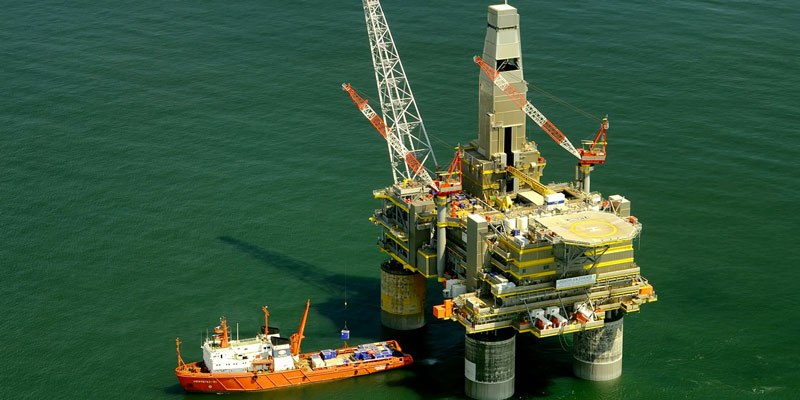
Alabama Republicans are leading a last-ditch, regional fight to secure some extra money from federal oil revenue from drilling off the coasts of Alabama, Mississippi, Louisiana and Texas. Their attempt is both reasonable and admirable.
The Gulf Coast House and Senate members want the major tax reform bill pending in Congress to include a provision to temporarily increase payments to the states via the Gulf of Mexico Energy Security Act (GOMESA). That was the 2006 law, a huge victory for Gulf states, that governs the oil-and-gas revenue-sharing arrangement between the states and the federal government.
GOMESA sets the payments in terms of a percentage of the energy revenues, but puts a “cap” of $500 million in combined payments to the states in any one year. The problem is that low oil prices combined with Obama-era restrictions on drilling have kept payments well below that $500 million level. New drilling promoted by the Trump administration is expected in future years to solve the states’ annual shortfall – but that still would leave the states $300 million short of expectations from these lean years.
To make up for the 2017-18 shortfalls, Alabama’s U.S. Sen. Luther Strange and Louisiana’s Sen. Bill Cassidy sponsored an amendment to the tax-reform bill that would allow the cap to rise from $500 million to $650 million for each of two future years when drilling revenues are heavier. This would be entirely fair, as the “caps” on revenues weren’t good policy in the first place, but merely a necessary compromise to pass GOMESA at all against opposition from non-Gulf states.
(For some reason, states where drilling occurs on federal lands always had received a larger percentage of the royalties than states where the drilling was offshore. GOMESA rightly corrected that imbalance after many years of unfairness to Gulf states, and there’s no good reason for the Gulf states to be shortchanged again just because a liberal administration hobbled offshore leasing programs.)
The Cassidy-Strange amendment – paid for by a tiny, later-year sale from the Strategic Petroleum Reserve – was included in the Senate version of tax reform, but not in the House’s bill. As the House-Senate Conference Committee entered its final deliberations (to produce a bill acceptable to both chambers) earlier this week, House members led by Mobile Republican Bradley Byrne sent a letter to House leadership asking that the House accept the Cassidy-Strange Amendment.
“This money is critically important to our coastal communities, which provide a significant share of the infrastructure and workforce for the oil and gas industry,” they wrote. “Our states also assume much of the risk that comes with the industry.”
That last sentence, of course, was proved true during the 2010 BP oil spill.
Republicans from Mississippi, Louisiana and Texas also signed the letter, which was spearheaded by Byrne.
U.S. Sen. Lisa Murkowski, Alaska Republican, who was part of the Conference Committee, was a champion of the Cassidy-Strange Amendment. No House conferees were especially known as major advocates of the amendment, but House Ways and Means Committee chairman Kevin Brady is from Texas and presumably supportive.
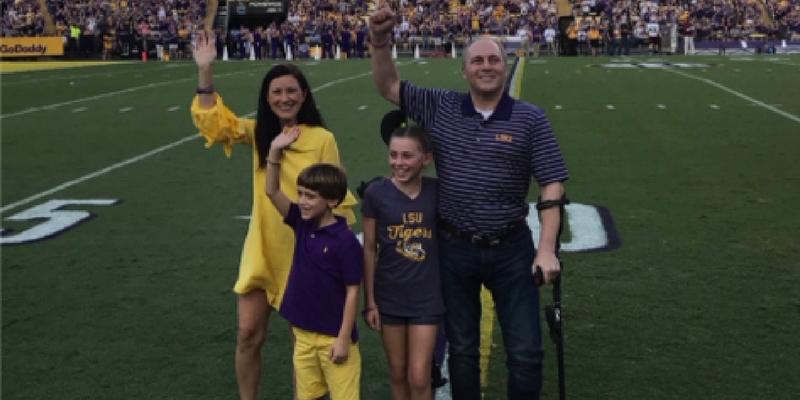
House Majority Whip Steve Scalise of Lousiana, not a part of the Conference Committee but obviously in good position to influence the final bill, also is known as a strong proponent of the amendment. He and Byrne are friends and close political allies.
Congressional leaders on Wednesday announced tentative agreement on a joint bill produced in conference, but it is not yet known if the Cassidy-Strange amendment made the cut. If so, Byrne’s late letter, along (of course) with Strange’s signal leadership in the Senate, might deserve some credit. Alabama state budgeteers a few years from now should then be quite grateful for the efforts of Strange and Byrne.
Again, the Cassidy-Strange provision isn’t some attempt at special treatment for Gulf states, but merely insistence on fair treatment well within the original spirit and intentions of GOMESA. And for a cash-strapped state like Alabama, it amounts to a big deal indeed.
We should know by sometime Thursday whether the provision made the final cut.
Yellowhammer Contributing Editor Quin Hillyer, of Mobile, also is a Contributing Editor for National Review Online, and is the author of Mad Jones, Heretic, a satirical literary novel published in the fall of 2017.