
Among the most pressing issues facing Congress as we reconvene is a resolution to reject President Obama’s proposed agreement over Iran’s nuclear capabilities. I’ve discussed my thoughts about the deal as I’ve travelled throughout Alabama’s 2nd Congressional District the last few weeks and I’ve listened to the concerns expressed by those I represent.
Many remain puzzled as to why are we negotiating in the first place with a regime that has a stated intent to destroy the United States and Israel. Remember that just days after this deal was reached, Iran’s Supreme Leader applauded and encouraged a large crowd gathered in Tehran as it chanted “Death to America!” and “Death to Israel!” Also puzzling is, even if we are going to negotiate, why be so unwilling to walk away when our stated objectives fall one after the other?
I share my constituents’ frustration at a flawed, weak deal that seems to serve Iran’s interests at the expense of our own.
How is that? First, inspections are not “anywhere, anytime” like negotiators originally said would be a deal-breaking must. In fact, at certain sites the Iranians could have up to 24 days’ notice before inspectors are allowed in. That’s a joke. And, even then, Americans are prohibited from making unilateral inspections.
Second, the “snap back” provisions the Administration points to as accountability mechanisms are weak by their own admission. Secretary Kerry and President Obama have repeatedly said that our unilateral economic sanctions don’t work and put the United States at a disadvantage. Yet, the threat of those very sanctions “snapping back” into place is supposed to be the way we make sure Iran lives up to the agreement. They can’t have it both ways. If our sanctions aren’t strong enough on their own now, why would we rely on them as a way to hold Iran accountable in the future?
Third, under this deal, at least $50 billion would flow into Iran’s coffers. Let’s not kid ourselves to think that the world’s foremost state sponsor of terrorism won’t turn around and fund those who want to harm Americans and our allies. So, not only will we have paved the way for Iran to obtain a nuclear weapon and potentially initiated a nuclear arms race in the Middle East, but we will have strengthened the hand of this adversarial state while weakening our own.
Reports say President Obama now has the votes in the Senate to sustain a veto of our resolution rejecting the deal. That won’t stop me from working with my colleagues to point out these weaknesses and make those Senators defending this deal explain why to their constituents.
One silver lining is, because this is an executive agreement and not a treaty, it is subject for review in the next administration. Let’s pray our next president doesn’t adhere to a foreign policy doctrine of “leading from behind.”
Martha Roby represents Alabama’s 2nd Congressional District. She is currently serving her third term.
This past week marked one year since the director of the Central Alabama Veterans Healthcare System (CAVHCS) was removed from his post when a pattern of gross mismanagement and systemic malfeasance was exposed. Weeks later he would become the first VA official in the country fired under our new VA accountability law.
Deputy VA Secretary Sloan Gibson visited CAVHCS at my request for an update on progress made over the past year to improve what have been some of the worst VA medical centers in the country. I wanted him to see that, while some strides have been made to fix this broken system, major issues still remain. We had a productive meeting, and I appreciate how responsive Mr. Gibson and Southeast Regional Director Tom Smith have been to my concerns.
One of the biggest contributors to the long wait times at CAVHCS has been the serious shortage of medical staff. There wasn’t a funding issue, but rather a management and human resources breakdown. Recently, steps have been taken to hire more doctors, nurses and medical support staff, which is certainly promising. But, as I told Mr. Gibson, we need that to start translating into better access to care.
The fact is we still have more than 4,000 veteran patients who have waited longer than 90 days without an appointment. That’s unacceptable, and I’m going to keep pushing VA leaders to improve until we make this right.
One issue we discussed at length was repairing CAVHCS’ relationships with local hospitals and other health providers. Why is that important? Well, the vast majority of that 4,000 number I mentioned comes from those who have been referred to outside physicians but are awaiting appointments.
I believe the future of veterans health care will rely less on actual VA facilities and more on partnerships with outside medical providers for services. We have amazing doctors, hospitals and other providers in Alabama that are eager to play a larger role in caring for vets, and the money is there to do it.
The problem is CAVHCS has had trouble in the past keeping up with payments on contracts, so many local providers are naturally hesitant. Mr. Gibson and Mr. Smith expressed great interest in working with me to bridge that gap and build a network within Alabama’s medical community that will improve access and enhance care for veterans.
Above all, we badly need a permanent director at the Central Alabama VA who is both empowered and driven to make the necessary changes. After a year, it looks like we are close to having that person. I will keep you updated on these developments as we move forward.
Martha Roby represents Alabama’s 2nd Congressional District. She is currently serving her third term.

I’m glad the Congressional calendar allows me time in the month of August to travel around the 2nd District and visit with constituents. Listening to the cares and concerns of those I represent is a critical part of my job because it allows me to be a better voice for you in Washington.
With all that is going on in the world, there is no shortage of issues to discuss. One important issue I don’t want Americans to lose sight of is the economic challenges that we still face. I’ve talked a lot about the “squeeze” that hits hardworking taxpayers when incomes remain stagnant while the costs of goods and services rise.
That’s why I’ve spent time over the last week meeting with those who are sometimes affected the most by economic uncertainty: those who operate or work at small businesses, including the construction industry. I’ve visited with the Alabama Associated General Contractors in Dothan and Montgomery, met the Greater Montgomery Area Homebuilders in Millbrook, and held roundtable discussions wth gatherings of small business operators in Headland and Prattville organized by the National Federation for Independent Businesses.
These groups each have unique issues. However, at every meeting and in each conversation, one common theme emerges: the burden unnecessary federal regulations place on their ability to operate, grow and create jobs.
Many times homebuilders are the “canaries in the coal mine” for economic conditions. General contractors and their employees face a great deal of uncertainty due to Washington’s inability to enact a comprehensive infrastructure plan. Small business owners bear the brunt of the “regulatory state,” with red tape from Washington tying them up at every turn.
I can’t tell you how valuable it is for me to listen directly to those who sign the front of the paycheck about how they are affected by federal policies. It allows me to bring real stories back to Washington and push for common sense solutions.
What are those solutions? For one, Congress has to aggressively push back on the “regulatory state” by exposing unnecessary regulations and limiting the Obama Administration’s ability to implement them. Also, it’s time to pass a comprehensive infrastructure plan that provides certainty for how our roads and bridges are going to be funded over the long term. And, we need to restore welfare-to-work policies that encourage citizens to join the workforce and then connect them with quality job training programs when they get there.
Homegrown Alabama businesses are the backbone of our economy. Sometimes it is an uphill battle, but I’m proud to advocate on behalf of those who operate or are employed at small businesses in Congress.
Congresswoman Martha Roby represents Alabama’s 2nd District.
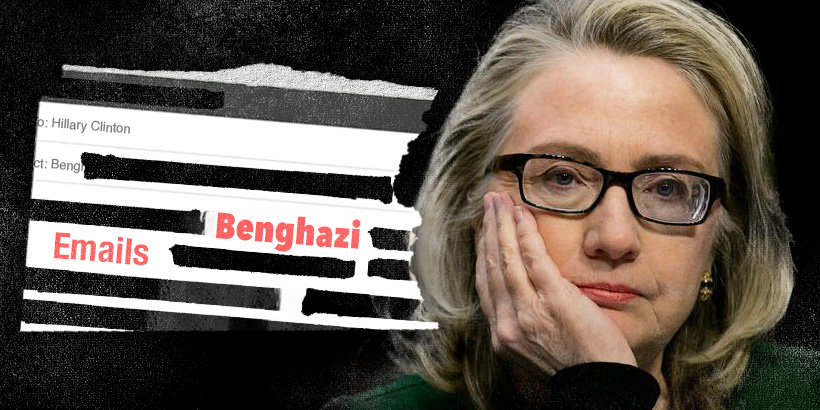
By now you’ve heard the news that the U.S. Department of Justice is taking possession of the personal, secret server former Secretary of State Hilary Clinton used to conduct official email correspondence. Clinton’s decision to finally surrender the server to authorities comes in the wake of revelations that classified, “Top Secret” materials were indeed contained in emails on her private account, counter to her previous claims.
But, what makes this development so significant? Why does it matter to the FBI whether Clinton used her own private system to conduct email correspondence?
First of all, federal law prohibits storing classified information in unauthorized places, with penalties ranging from a fine to one year in prison. We have stringent security protocols for those who deal with sensitive, classified information because that information could be used to threaten our national security and put those in military or clandestine service at risk. And, in a world with growing cyber security threats, the risk is even greater for digitally stored information.
For example, NBC News recently reported that Chinese hackers had penetrated the private email accounts of many top Executive Branch officials since 2010. The officials’ government accounts were not penetrated, though, because they have a much higher level of security. It is unclear whether Secretary Clinton was among those top officials to have their private emails hacked though an in-house email system like hers is believed to be particularly vulnerable to hackers.
The bottom line is Secretary Clinton deliberately flouted our nation’s protocols with her personal email arrangement and, in doing so, threatened the security of classified, Top Secret information. Her apparent obsession with retaining absolute control of her email came at the expense of national security, and that should concern all Americans.
Secretary Clinton says she already deleted more than 30,000 emails and “wiped” the server housing them, so it’s unclear just how much can be gleaned from what was turned over. But I am hopeful the FBI, Inspectors General and the Select Committee on Benghazi can get to the bottom of it.
It’s worth noting that none of this would have been brought to light without the formation of the Select Committee, the determination of our Chairman, Trey Gowdy, or the diligent work of our investigators.
My colleagues and I are preparing for Secretary Clinton’s appearance before the Select Committee in October. Given these revelations and her previous statements, she will certainly have some explaining to do.
Martha Roby represents Alabama’s 2nd Congressional District. She is currently serving her third term.
This week, President Obama announced his “Clean Power Plan” and with it a costly national energy tax that will negatively impact American families and jobs.
Of course, the Administration touts the plan as “the single most important step America has ever taken in the fight against global climate change.” But what you didn’t hear the president say is that despite the significant increase this will cause in energy bills for hardworking middle-class families, this plan actually does little to nothing to alter the impact of future climate change.
Under the plan, the Environmental Protection Agency (EPA) will implement stringent regulations limiting carbon dioxide emissions from power plants, hiking rates and shutting down energy plants, especially in the coal industry. And while I think we can all agree that achieving more affordable, reliable and safe energy is a priority, more regulations and burdensome expenses to American families are not solutions.
It’s no surprise that the EPA is once again going beyond its authority, pushing for overly burdensome regulations that have the potential to significantly affect our economy, discourage investment and stifle job creation. This agency is one of the most egregious offenders of “backdoor legislating” by frequently attempting to circumvent Congress to set policy.
But Congress is responsible for writing the laws of our nation on behalf of the priorities and interests of those we represent.
The House of Representatives has passed legislation to push back on the Administration’s environmental agenda and to rein in the EPA’s overreach. One such bill recently passed, the Ratepayer Protection Act, allows states to opt out of the EPA’s proposed rule capping carbon emission rates for existing power plants. If a state shows that energy prices would increase under the EPA’s plan, it is not required to participate.
Through the Appropriations process thus far, we have used the “power of the purse” to prevent the EPA from implementing harmful regulations like the “Waters of the U.S.” rule, which will cost Alabamians greatly. Also included in our Fiscal Year 2016 Interior and Environment Appropriations bill are provisions to prohibit implementation of the “Clean Power Plan,” to prohibit regulations on the lead content of ammo and fishing tackle and to prohibit a change in the definition of “fill material.”
It’s disappointing, but not surprising, to see the president is once again more focused on his “legacy” than he is on the priorities and needs of the American people. As your representative, I will not let up on the EPA and will continue to support legislation to protect Alabama’s interests.
Congresswoman Martha Roby represents Alabama’s 2nd district.

Last week, I traveled throughout the Middle East as part of a Congressional Delegation led by the Speaker of the House to evaluate the rising influence of ISIS and Iran, and to examine the potential impacts on U.S. interests at home and abroad. We couldn’t talk about the trip beforehand or during due to security protocols, so I want to take a moment now to tell you about our travels.
Over an eight day span, we travelled to Jordan, Iraq, Kuwait, Saudi Arabia and Israel. We had a packed agenda of meetings with key officials from these allied countries, as well as our American ambassadors and military personnel throughout the region. In particular, we met with Iraqi Prime Minister Haider al-Abadi in Baghdad, His Majesty King Abdullah II of Jordan in Amman, and Israeli Prime Minister Benjamin Netanyahu in Jerusalem.
As you know, this is a critical time in the Middle East; a real tipping point. Decisions made in the next months and years will determine what the future holds, not just for that region, but for the United States and the world. That’s why it is important for me as your Representative in Congress to see firsthand what it’s like on the ground and to hear directly from our allies, ambassadors and military personnel.
The biggest takeaway for me was reinforcing the need for strong American leadership to, 1) defeat and destroy ISIS once and for all, and 2) prevent Iran from developing a nuclear weapon at all costs.
It was also important to meet with face to face with Prime Minister Netanyahu and reassure him that the American people stand with Israel and that we will continue to work with its leaders to promote peace in the region.
As Congress reconvenes next week, these topics will be at the forefront of the agenda. Right now, legislation to require Congressional approval of President Obama’s deal with Iran is gaining bi-partisan support. Also, discussions about our military’s role in the fight against ISIS are ongoing. I look forward to engaging in these important deliberations in the weeks to come.
I’m grateful for the privilege of traveling throughout the Middle East during this seminal time, and I appreciate the willingness of each of these nations’ officials to meet with us. It is a great honor to represent our country abroad. I want to say a special thank you to the individuals who work on behalf of the United States around the world, from our ambassadors and the diplomatic security teams to our military personnel. The work they do so far from home is critical for protecting our nation’s interests at home and overseas.
Martha Roby represents Alabama’s 2nd Congressional District in the United States House of Representatives.

Enhancing Career and Technical Education (CTE) has been a primary focus of mine during my service in Congress. Why? Because it empowers young workers to find good-paying jobs, helps prepare youth for a smooth transition from school to career, and lifts up communities throughout Alabama – all at the same time.
Alabama is blessed with a strong network of community colleges, industries and facility partnerships that help provide hands-on training that prepare our students for in-demand jobs across the state and nation. Last week I visited Wallace Community College’s Sparks Campus in Eufaula to see the CTE programs they have to offer. I came away quite impressed by the students, faculty and administrators there. Like its sister campuses, Wallace in Eufaula is offering a broad course of study, with programs ranging from criminal justice to electrical technology and computer science. They are also connecting courses to students still in high school through dual enrollment, which saves money and puts those who take advantage a step ahead.
I was particularly impressed by how Wallace is leading the way in welding training with state-of-the-art equipment and facilities. It even serves as a primary American Welding Society certified testing center. Right now there is a huge demand for welders, and those with proper training and certification can earn a very good living.
It’s no secret that the job market is still difficult in this economy. However, careers are out there for those with the right training and skills. Thankfully, the idea that every student needs a degree from a four year university to be successful is becoming a thing of the past. Recent studies and interviews with employers have shown that many companies are more interested in a candidate’s knowledge and skill set than where they went to school or what their major was. That’s why more and more people are opting for CTE programs, like those offered through Wallace Community College.
Alabama can be proud of the CTE offerings in our state, and I appreciate Alabama Community College System Chancellor Mark Heinrich and our local campus presidents for their constant efforts to have our schools on the cutting edge. In my role on the House Appropriations Committee, and specifically the subcommittee overseeing spending on education, I will continue to do everything I can to enhance Alabama’s Career and Technical Education through proper funding and policy improvements.
Congresswoman Roby represents Alabama’s 2nd district

Did you know that continued cuts to our nation’s military could, within just a few years, reduce our Army force down to where it was before September 11, 2001?
One of the main reasons I voted against the “Budget Control Act of 2011” was that it threatened dangerous, disproportionate reductions to military funding through what’s known as sequestration. Since then, I have worked with others in Congress to mitigate the impact of those cuts by passing a law allowing inter-branch spending flexibility and by supporting subsequent budgets that restored some, but not all of the funding.
However, those “Band-Aid” fixes are set to expire, and the full impact of sequestration will be felt beginning in Fiscal Year 2016 if Congress doesn’t act. That’s why I’m working to build a bi-partisan coalition of lawmakers willing to fix sequestration and stop the devastating cuts that would be so harmful to our nation’s military.
Recently, Representative Tulsi Gabbard (D-HI) and I wrote a bi-partisan letter to every Representative and Senator about the dangers of continued military cuts. In it, we highlighted an important study by the U.S. Army demonstrating how sequestration would affect as many as 30 installations throughout the country, including Fort Rucker in Alabama.
No area of the federal budget is immune from “belt-tightening,” and that certainly includes the military. However, any changes to our Armed Forces should reflect national priorities, not budgetary or political circumstances. The United States must first decide what is required to protect this country and its interests, and then budget accordingly.
Consider the growth and alarming advance of ISIS, or the implications of an increasingly-aggressive Russia. Should we really allow such a dramatic reduction to the Army’s force strength or similar reductions to the capabilities of other service branches?
Some believe more taxes are the answer. I do not. Last year, the federal government took in more revenue than ever before in the history of the republic.
Revenue is not the problem; out-of-control spending in other areas of government is. The answer is to set better priorities and make more responsible, conservative choices with federal spending. Budget discussions are just now beginning, but I am wasting no time making it clear to House and Senate leaders how important it is to fix sequestration before it devastates our Armed Forces and further compromises military readiness.
Martha Roby represents Alabama’s 2nd Congressional District in the United States House of Representatives

The Super Bowl is well known as the largest single sporting event of the year, drawing more than 100 million television viewers. Even if you’re not an NFL fan, chances are you tuned in to see the highly-anticipated commercials or maybe just for the half-time show.
What you probably didn’t see on Sunday, and might not have known, is that each year the Super Bowl brings with it the largest underground human sex trafficking operation of the year. Human sex trafficking is forced prostitution of young girls and women in situations that amount to modern day slavery.
Of course, human trafficking isn’t limited to big sporting events. It is a constant, growing problem in our country and throughout the world.
The numbers are shocking: trafficking of children is a $9.8 billion industry in the United States, the third largest criminal enterprise in the world. What’s more, nearly 300,000 children are at risk of being prostituted here at home.
Frankly, this is a topic we really don’t like to talk about in everyday conversation. But, it is disgusting and despicable, and I believe it needs to become personal to every one of us. That’s why the U.S. House of Representatives recently voted on a series of bi-partisan bills to crack down on these atrocious crimes and to protect victims.
Our legislation seeks to fight the problem head on by enhancing tools for law enforcement at home and abroad, boost support for victims services and raise awareness of the sometimes-overlooked problem.
One bill, the “Human Trafficking Prevention, Intervention and Recovery Act,” directs enforcement resources to shut down these operations and improves an existing Department of Justice grant for victim recovery. Another bill, the “Stop Advertising Victims of Exploitation Act,” improves our ability to prosecute human traffickers who profit from advertising and exploiting victims of these sex crimes. Yet another, the “Enhancing Services for Runaway and Homeless Victims for Youth Trafficking Act,” aims to help at-risk runaway and homeless youth from becoming sex trafficking victims through improved and focused support programs.
It’s hard to understand the severity of an issue that often times goes unseen. The underground nature of this criminal operation makes it difficult for law enforcement to detect and prevent. We need to modernize our tools to better identify trafficking, crack down on criminals, and assist victims once they are discovered. I was proud to work with a bi-partisan group of my colleagues in Washington to do just that last week.
Martha Roby represents Alabama’s 2nd Congressional District in the United States House of Representatives.

The start of a new year is a great time for reflecting on the past and looking confidently toward the future.
Many like to make resolutions to give a “fresh start” to a goal. Whether it is exercising more, eating healthier, going after that dream job, or spending more time with family, many times resolutions have as much to do with what we haven’t done in the last year than what we want to do in the next. In other words, our “unfinished business” can often take the form of New Years resolutions.
That is certainly true of my hopes for Congress in the new year. There is plenty of “unfinished business” left to take care of, from jumpstarting job growth and getting families relief from burdensome healthcare policies to securing our border and reining in dangerous executive overreaches.
Partisan gridlock over the last several years has kept our country from making progress on these important issues, as well as many others. I am eager to change that in 2015, and I believe we can be successful.
One reason I am optimistic about this year is the changing landscape of Congress. After major victories on Election Day, this week Republicans will assume the majority the U.S. Senate and grow the majority in the U.S. House.
So, with measured optimism about the new year, here is a short list of issues and items I would like to take action on in the 114th Congress:
- • Continuing to reform the Central Alabama VA. While some progress has been made, major staffing and care efficiency problems persist.
- • Addressing President Obama’s immigration actions. In the coming months, Congress must work to reverse the President’s s ill-advised orders through the Appropriations process.
Providing proper funding for our military. “Sequestration” devastated our military and compromised readiness. We must reverse the trend of military cuts and restore proper funding.
- • Passing and enacting the Working Families Flexibility Act. My bill to offer working moms and dads more choices with their overtime passed the House last Congress, but was blocked in the Senate. I plan to try again this year.
- • Helping advance and pass other sensible legislation that has been held up in the Senate, such as the Keystone Pipeline, repealing the Obamacare employer mandate tax, incentivizing the hiring of veterans, and implementing reforms to help welfare recipients find jobs and lift their families out of poverty.
These are just some of the many issues awaiting Congress’ attention. In the coming months, I look forward to working to make progress on behalf of Alabama’s 2nd District.
Martha Roby represents Alabama’s 2nd Congressional District in the United States House of Representatives.
Remember the “Defund ObamaCare” strategy of Fall 2013? There were two basic reasons it didn’t work:
1. Democrats held the Majority in the Senate;
2. The threat of shutting down the entire government allowed the other side to distract attention away from the failures of ObamaCare.
This year, with a funding battle over immigration before us, Congress sought to remedy both problems by:
1. Delaying the fight just three weeks until Republicans control the Senate; and
2. Taking an entire government shutdown off the table to focus solely on the issue of executive amnesty.
So, this past week, Congress passed an Appropriations plan that funds 11 of the 12 government divisions through the remainder of Fiscal Year 2015. The exception is Homeland Security, which is where immigration enforcement funding is contained. The plan includes a temporary Continuing Resolution for Homeland Security, delaying the issue slightly so that Congress can utilize the “power of the purse” to rein in President Obama’s immigration actions in three weeks when Republicans take the Majority in the Senate.
The strategy of combining a Continuing Resolution with an Omnibus Appropriations bill was coined “CR-Omnibus.” It is the best approach to defeating executive amnesty.
Some have charged that the proposal somehow “funds” President Obama’s executive amnesty plans because it temporarily continues funding for Homeland Security at current levels. That is incorrect, as evidenced by the calls of some of the most outspoken amnesty opponents for a Continuing Resolution that temporarily funds ALL areas of government, including Homeland Security.
The CR-Omnibus we passed continued funding for immigration enforcement agencies the exact same way a full-government Continuing Resolution would have. So, if a Continuing Resolution for all of government does not “fund” amnesty, then how does a Continuing Resolution for only Homeland Security?
The answer is, of course, it doesn’t.
The truth is the Appropriations plan does not “fund” amnesty. It funds Homeland Security at the same levels as the alternative, full government Continuing Resolution would have. The only difference is we locked in full-year spending reforms in other aspects of the government and took the possibility of a government shutdown off the table for January.

Part of the problem here is the way we talk about legislation. Rhetoric can confuse the issue. For instance, look through all the appropriations bills and you won’t find money appropriated for “amnesty” like some are suggesting. There is no line item for “Obama’s Amnesty Program.” It’s just not there.
What “defunding amnesty” really means is attaching policy riders to an Appropriations bill that specifically prohibit particular actions, or adding a provision saying that under no circumstances can the administration find any little extra pot of money in the DHS budget to, for example, pay for licenses and permits needed to fulfill Obama’s order. Nearly every Republican I know wants those policy riders.
But, just like with ObamaCare in 2013, the reality is “defund” policy riders we want will not pass with a Democratic Senate. It is simply misleading for any politician to suggest they would.
No one really disputes that going down the “defund” path before we have a Senate Majority would result in little more than show votes of solidarity for Republicans and then a temporary Continuing Resolution funding the entire government at status quo levels. That would earn Republicans a “moral victory” in which we could pat each other on the back for fighting the good fight, but ultimately lose the battle – exactly what happened with the ObamaCare funding fight last October.
I don’t want a “moral victory” on defeating amnesty. I want a real victory, and the best way to get one is with a Republican Senate Majority.
So, in January, President Obama is going to face a choice: shut down just the Department of Homeland Security or accept a limit on his power. Given the way the American public feels about his reckless immigration policies and our ability to then focus their attention on this single issue, I like our chances. That is the best strategy for defeating executive amnesty.
Beyond immigration, there are many other good aspects of the Appropriations plan. Among them:
– Bringing the federal deficit to half what it was in 2010;
– Slashing funding for the IRS by $345 million;
– Bringing total IRS cuts to $1 billion since 2010;
– Slashing funding for the EPA, meaning a total reduction of 21 percent since 2010;
– Bringing EPA staffing down to its lowest level since the Reagan Era;
– Preventing federal authorities from regulating farm ponds and irrigation ditches under the Clean Water Act;
– Instilling transparency and accountability for OSHA enforcement activities;
– Providing critical military funding, including specific projects that are Alabama-based, including:
o new Lakota Helicopters to enhance the aviation training mission at Fort Rucker; and
o the Navy’s Mobile-built Littoral Combat Ship and Joint-High Speed Vessel.
Martha Roby represents Alabama’s 2nd Congressional District in the U.S. House of Representatives
Five years after its passage, the Affordable Care Act, better known as ObamaCare, is as unpopular as ever – only 37 percent of Americans view it favorably. Throughout Alabama and around the country, this ill-conceived mandate has led to cancelled insurance policies, dramatic spikes in premiums and copays, reduced work hours for wage earners and tax increases that affect middle class families.
Adding insult to injury this week was Jonathan Gruber, an MIT economist and one of the chief architects of the Obamacare law. Videos surfaced of Gruber acknowledging the lack of transparency and outright deceit it took to pass Obamacare through Congress five years ago. From one of the tapes:
If you had a law that said healthy people are going to pay in, that made it explicit that healthy people pay in and sick people get money, it would not have passed. Okay?
…Lack of transparency is a huge political advantage. And basically, call it the stupidity of the American voter or whatever, but basically that was really, really critical to getting the thing to pass.
You read that correctly: the crafters of Obamacare thought you were too stupid to understand why your taxes went up, hours at work got cut, health care policy got cancelled, or premiums skyrocketed. In fact, they were counting on it. Because, by Gruber’s own admission, even a Democratic Majority in Congress would not have passed a bill that truthfully explained what the effects of Obamacare would be.
I’m not surprised, really. Obamacare was built on a foundation of lies. Remember “if you like your health plan, you can keep your health plan”?
What this revelation lays bare is the Administration’s contempt and disrespect for the American voters. To be so willing to obfuscate, distract, and outright lie about a proposal that would negatively affect millions of Americans takes next-level hubris and callousness; an “Audacity of Hoax.”
Of course, Administration officials and Democratic leaders are trying to walk back Gruber’s statements. In fact, House Democratic Leader Nancy Pelosi– who repeatedly touted Gruber’s analysis when passing the law– has gone so far as to claim that she doesn’t know who Gruber is.
Facts are stubborn things, and the camera doesn’t lie. Not only did Obamcare’s designers craft intentionally deceptive legislation, they considered that deception and the gullibility of Americans central to their ability to pass it.
I believe most Americans see through such political games. My conservative colleagues and I remain committed to dismantling ObamaCare and replacing it with sensible health reforms that are patient-centered, competition-driven and actually work to reduce costs.
Martha Roby represents Alabama’s 2nd Congressional District in the United States House of Representatives.
“To everything there is a season,” Ecclesiastes reads. The end of the campaign season is a relief to those who tire of hearing all the political ads.
It also brings the beginning of a new, more important season: a season for governing. We have work to do getting this country back on track, and the time to start is now.
Over the past two years, my colleagues and I in the House of Representatives have worked to pass dozens of commonsense, bi-partisan bills. Among them:
– Restoring the 40-hour work week and repealing the Obamacare employer mandate tax;
– Incentivizing the hiring of veterans and improved programs to help those returning from war to find good-paying jobs;
– Providing new education tax credits and the making the existing child tax credit more efficient and workable for families;
– Implementing reforms to help welfare recipients find jobs and lift their families out of poverty;
– Improving America’s energy infrastructure to boost domestic production and create tens of thousands of jobs.
Unfortunately, these bills and hundreds more have gone on to die in the Senate. Why? Politics.
The Senate has been dominated by partisan politics, and Majority Leader Harry Reid has stopped popular, bi-partisan bills from even coming up for debate. I can understand ideological differences on policy, and allowing the civil discussion of those differences is part of what our deliberative legislative system is all about. But blocking the Senate from even debating bills that don’t fit your radical agenda is outrageous. The American people are tired of these kinds of political games, and it’s time for them to end.
It’s time for governing. As the political season ends, elected leaders must return to Washington ready to listen to the people, uphold the Constitution, and govern responsibly. As your representative in Congress, I will strive to do just that.
Martha Roby represents Alabama’s 2nd Congressional District. Follow her on Twitter @RepMarthaRoby.
For about four years now, the Professional Left in Washington has been engaged in a desperate campaign to convince the American people that conservatives are engaged in a “War on Women.” You’ve probably seen the political ads or heard the rhetoric from television commentators. Their goal is to label anyone who is pro-life and believes taxpayer money shouldn’t be spent funding abortions is “anti-woman.”
Well, I’m a pro-life conservative, and I’m a woman. But, I haven’t declared war on myself.
Honestly, I find this whole line of attack pretty insulting on a few levels. First, they assume that reproductive issues are the only ones that matter to women. That is obviously not true. I care about issues that all Americans – men and women – care about: our economy and job growth, affordable food and energy, health care policy that makes sense. Actually, as a mom who buys the groceries, puts gas in the car, and takes kids to the doctor, I see the real-life impact of these policies.
But, this tactic is also offensive because there really is a “War on Women” going on today, but it isn’t a political one. It is a real war raged in countries like Afghanistan and Pakistan and others where women and girls have been subjugated to brutal oppression for generations.
Amber Barno, who served as a combat helicopter pilot in Afghanistan and Iraq, makes this very point in a thoughtful piece published in The Federalist this week. She details the acute instances over the last several months of women being sexually exploited and even enslaved in Iraq and Syria by the unrelenting terrorist group, ISIS. Over the years, we’ve heard too many stories of women being persecuted for simply trying to attain an education, with the most recent being the Nigerian girls abducted by Boko Haram.
Just last week, 17-year-old Malala Yousafzai was awarded the Nobel Peace Prize. You may recall Malala was shot in the face by Taliban militants for promoting education rights for girls in Pakistan. She survived and has persevered in her pursuit of education rights for girls despite threats that she and other Pakistani women face daily.
I hope Malala winning the prestigious Nobel Peace Prize is a reminder to all of us about what the real “War on Women” is, and what it is not. Instead of playing political games with such loaded terms, we should find ways to help truly oppressed women and girls across the globe.
Martha Roby represents Alabama’s Second Congressional District in the United States House of Representatives.
On Wednesday, President Obama will deliver a speech on the Islamic State threat. Americans will be listening carefully, and so will the world. For this reason, I hope he will avoid putting conditions or limitations on our military options.
I understand how it might be politically tempting to put strict limits on our strike options. After all, nobody wants another war. However, such messages ultimately undermine our military and telegraph our strategy to the enemy. We can simply look to the results of the hastily orchestrated Iraq withdrawal for a lesson in what happens when the enemy has our playbook and knows our timetable.
There are three major points I will be listening for as President Obama discusses the ISIL threat:
1. Answering the Syria question.
It has been well over a year since the conflict in Syria boiled over. We know that much of the ISIL organizational command is headquartered in Syria. Although Russia’s relationship with the Syrian regime certainly complicates the situation at the UN, the United States must retain our ability to take on and defeat threats to our security wherever they exist. I hope President Obama can demonstrate our commitment to destroy ISIL command and control elements in Syria, and prevent Syria from becoming a launching point for further destabilization of the region and/or attacks against the United States.
2. Acknowledging the viral Islamist threat.
We cannot afford to downplay or dismiss the recent growth of radical Islamic terrorism. ISIL is a next-generation terrorist organization that is well-funded, well-organized and has demonstrated military-style capabilities and discipline. Even more disturbing, perhaps, is the fluid, mobile, and viral nature of its stop-at-nothing, radical Islamic ideology. We now know ISIL has recruited militants from Western nations and expressed aims to penetrate our homeland. With the anniversary of Sept. 11 approaching, I hope President Obama will reassure Americans that action is being taken to secure our borders and enhance the security of U.S. interests at home and around the world.
3. Projecting strength.
The most disappointing aspect of President Obama’s “we don’t have a strategy” comment was how it reinforced a pattern of inconsistent and incoherent foreign policy messages. We draw “red lines” and do nothing when they are crossed. We outsource tough foreign policy decisions to the woefully weak United Nations. We hollow out our military force with drastic cuts that compromise our readiness. We fail to secure our borders or enforce immigration laws. We negotiate with the Taliban and strike deals to release hardened terrorists. These actions project weakness and invite our enemies to test our resolve. The United States must reverse course and demonstrate the kind of strength and resolve that will be respected the world over.
Martha Roby represents Alabama’s 2nd Congressional District in the U.S. House of Representatives
Good news: More veterans will have access to quality care and problem VA employees will be more easily terminated under VA reform legislation passed by Congress and sent to the President this week.
I’m particularly pleased that my priorities – enhancing access to local, non-VA providers, and removing legal barriers to fire problem employees – were included in the final bill.
All this year I have been telling anyone who would listen why we need to expand Patient Centered Community Care (PC3) and other programs that allow veterans to access private care if they can’t get an appointment at a local VA facility, or if they live far away.
This bill requires the VA to authorize non-VA care – including PC3 – to any enrolled veteran who cannot secure an appointment within 30 days or who lives more than 40 miles away from their VA facility. For this final bill to include such strong provisions along with funding for PC3 and other non-VA care programs is a major victory for veterans.
Of course, you also know I have been advocating for true accountability in the Veterans Affairs system. Absence of accountability at the VA has been the underlying issue for years. With this bill, Congress is granting the Department of Veterans Affairs the authority to swiftly fire senior managers for poor performance or misconduct – and we expect them to use it.
Also this week, the Senate confirmed new Secretary of Veterans Affairs Robert McDonald. Senator Richard Shelby and I wasted no time calling Secretary McDonald’s attention to the many instances of mismanagement, negligence and cover-up at the Central Alabama Veterans Health Care System (CAVHCS). Immediately upon his confirmation, Senator Shelby and I asked Secretary McDonald to review these instances of mismanagement, visit CAVHCS with us, and develop a plan of action to reform the Central Alabama system.
And action is needed now more than ever. This week perhaps the strongest evidence yet has emerged that the rampant patient scheduling manipulation in Central Alabama wasn’t some misunderstanding at all, but rather a facility-led, standard operating procedure.
An audit showed that more than 57 percent of staff at the Central Alabama VA said they receive “instruction” to manipulate patient wait times. 57 percent. That’s off the charts. The national average is 12.7 percent, and the other systems nearby don’t come close.
I know that passing a bill will not transform the VA overnight. We face an uphill battle, but I’m hopeful this week marks the beginning of that fight.
I am encouraged by the tools and resources that are now at hand to ensure that we are providing efficient and quality health care services for our veterans. I look forward to working with Secretary McDonald on this endeavor and will keep you updated on the progress.
Martha Roby represents Alabama’s 2nd Congressional District in the United States House of Representatives

This week details have emerged about the plan to release five former Taliban commanders from U.S. custody in Guantanamo Bay, Cuba in exchange for Army Sergeant Bowe Bergdahl.
President Obama expressed surprise when the exchange was met with widespread, bi-partisan criticism, rather than the universal celebration the White House first tried to project. He called it a “whipped up” controversy based in politics.
Actually, there are good reasons why the way the White House went about this exchange has upset many Americans, including lawmakers from both parties, national security experts – some who have served in his Administration, and military families.
First, the decision to negotiate and cut a deal with the Taliban has endangered Americans. Military personnel serving in Afghanistan, diplomatic service members, and even American tourists travelling overseas are at greater risk today because of this exchange. Why? Because the prisoners we released are dangerous warfighters committed to jihad against America. Because our enemies now have every incentive to capture Americans and try to broker a deal to get their jihadist friends released.
Our people carry with them an important protection abroad: the well-known principle that the United States does not negotiate with terrorists. That protection has been compromised, no matter how much some might want to quibble over the semantic differences between a terrorist and a Taliban enemy combatant.
You don’t have to take my word for it. NBC News reported that at least one of the enemy combatants we released from Guantanamo Bay said he will return to fight American forces in Afghanistan. And Time Magazine reported that Taliban leaders are already planning to capture Americans in order to negotiate for more prisoner exchanges.

Second, many take serious issue with the way President Obama and his team have characterized this exchange. Over and over again we’ve heard the explanation that such a prisoner exchange is “what happens at the end of wars.” In fact, when talking about Afghanistan, President Obama has a bad habit of using the past tense as if the conflict is over.
Just a few weeks ago I was in Afghanistan visiting many of our fellow Alabamians stationed there. I can tell you Afghanistan isn’t in the past for them. Nor is it for their families back home.
Yes, prisoner exchanges happen at the end of wars. But, this war isn’t over, and our fighting men and women are still in harm’s way. Pretending otherwise to score rhetorical points is reckless and offensive.
Much is being made about Sgt. Bergdahl himself and the circumstances surrounding his imprisonment. The mounting allegations are indeed troubling. However, I will reserve judgment until the Army has fully investigated and adjudicated the matter.
The United States must always try to free Americans held prisoner in enemy territory, but negotiating with jihadist enemy combatants should never be an option. We don’t negotiate with terrorists because it invites more terrorism. I fear we have invited more danger upon our nation, and not less. And, like many Americans I find that deeply disturbing.
In the coming weeks, the House Armed Services Committee and other officials on Capitol Hill are going to be closely examining this exchange and the long-term ramifications it may have on our country and the war against terror. I will be following those inquiries closely.
Reaction to the Taliban prisoner negotiation isn’t a “whipped up” controversy. It is a genuine response from concerned Americans who don’t understand why the President would make such an ill-advised decision, much less attempt to celebrate it.
Martha Roby represents Alabama’s 2nd Congressional District in the United States House of Representatives.
House Speaker John Boehner recently asked me to serve on the Select Committee to Investigate the September 11, 2012, terrorist attack in Benghazi, Libya, a significant and solemn responsibility that I accepted.
This was not a decision I took lightly. The Benghazi attack was a terrible tragedy, and we still mourn the four Americans that were brutally murdered that day. Some have asked why further investigation is needed on Benghazi after multiple existing committee inquiries into the matter – including one I led.
One reason is that the Administration’s explanation for exactly what happened that day and why has been far from clear – both in the immediate aftermath and months later.
Recently we learned the White House withheld important Benghazi documents from Congressional investigators. These documents reveal a campaign-focused White House in spin control mode, and the failure to disclose them raises questions as to what else has been hidden from the public.
Such a lack of transparency is unacceptable. It is the duty of Congress to seek answers on the government’s activities on behalf of the American people, particularly when government officials attempt to obscure the truth.
Another reason this Select Committee is needed is that the multi-jurisdictional nature of the Benghazi issue makes it difficult to investigate across the existing committee structure. You may remember that during my time as chairman of the House Armed Services Subcommittee on Oversight and Investigations, I led the inquiry into military activities surrounding the Benghazi attack.
While we were thorough in our investigation, our jurisdiction was limited to the Department of Defense. There are many more layers to the Benghazi story, including our intelligence community, the State Department, and, of course, the White House. And, while other committees have made inquires in those areas, no group has had the authority to investigate all aspects of the Benghazi situation at the same time – until now. A select committee with broad jurisdiction will better connect all the dots and produce a clearer, more complete picture.
Lingering questions about the Benghazi attack combined with continued White House obstruction and the narrow scope of existing House committees compel us to form this Select Committee and continue the search for truth.
Speaker Boehner has tapped my friend and colleague, Rep. Trey Gowdy (R-SC) to chair the Select Committee. Trey is a perfect fit to lead this process. He’s a tough prosecutor, but also fair and judicious. I can tell you he understands how important it is to keep politics out of this investigation and dedicate all of its the energy toward searching for truth on behalf of the American people. I am committed to working with Chairman Gowdy and my colleagues on the Select Committee to conduct a thorough, judicious and unbiased pursuit of facts.
As can be the case in Washington, tension over the Benghazi attacks has at times become a political issue. That is true on both sides of the aisle. As Chairman Gowdy said, politics will have no place in this process. Facts aren’t Republican or Democratic. Facts are stubbornly impartial, and I’m committed to pursuing the facts wherever they lead.
It is important that you know that my involvement on this Select Committee will not affect my commitment to serving the people of Alabama’s Second Congressional District. Taking care of the needs of my constituents – particularly our active duty military and veterans – remains my highest priority.
I have heard from countless constituents pleading for Congress to get to the bottom of what happened in Benghazi. As a member of this Select Committee, I promise to leave no stone unturned in the search for truth.
Martha Roby represents Alabama’s 2nd Congressional District in the United States House of Representatives.
When Alabamians have trouble with the federal government, my job is to step in and try to help. That’s exactly what happened when a new Environmental Protection Agency (EPA) regulation imposed costly inspection and compliance requirements on Alabama farmers.
For years, EPA regulations for fuel storage on farms authorized under the Clean Water Act of 1972 applied only to very large fuel tanks, or those with a history of spills. Now, the EPA is applying the regulations to smaller tanks and farming operations with no history of accidents.
As you probably know, agriculture is the top industry in Alabama, employing more than 580,000 of our citizens. Like in many industries, aggressive agriculture regulations from Washington increase costs, stifle opportunities, and make life difficult for farmers.
Thomas Adams from Henry County was one such farmer who was impacted. The new EPA rules would force him to spend thousands of dollars for special equipment and services to certify that his fuel tanks were compliant. Learn more about Thomas’s story by watching his WTVY News interview in the clip above.
Americans are tired of the endless stream of heavy-handed regulations coming out of Washington. I worked with my colleague Representative Rick Crawford of Arkansas on the FUELS Act, which seeks to rein in EPA farm regulations to truly reflect risk. Specifically, the FUELS Act would exempt fuel tanks under 10,000 gallons from the regulation and allow larger tanks without a history of accidents to self-certify.
I am pleased to report that the House passed the FUELS Act on March 11 in an unanimous voice vote. I was proud to work on behalf of Thomas Adams and all Alabama farmers to find a solution to this problem and help provide some much-needed relief. Now, we are urging the Senate to pass this bi-partisan legislation without delay.
This is just one example of the harmful impact overreaching federal regulations can have on small businesses, farms, and individuals. If you know of an overly burdensome regulation that is hurting you or your business, please write to me or visit Roby.House.gov and let me know.
Combating Executive Overreach
One of the top questions I am asked is what Congress is doing to address the pattern of executive overreaches and disregard for the law by President Obama and his administration. Good, God-fearing Americans who work hard, pay their taxes, and obey the law are understandably frustrated by a president who acts as if he is above the law.
I believe in our Constitution, and I believe it’s worth fighting for. That’s why I was proud to support two bills passed this week by the House designed to rein in the Obama Administration and open the door to legal action to challenge particularly egregious abuses of power. While the separation of powers may not always be convenient for President Obama’s political goals, it is necessary to ensure government still derives its authority from the people, not the other way around.
Martha Roby represents Alabama’s 2nd Congressional District in the United States House of Representatives. To contact her, visit her website or call her Washington, D.C. office at (202)225-2901.
Last week, Secretary of Defense Chuck Hagel previewed some significant changes coming for our nation’s military. Though the details won’t be public until President Obama releases his proposed budget, we know the size and scope of our Armed Forces will be greatly reduced. In fact, under the President’s proposal, the Army would shrink to its pre-World War II size.
Every American should be concerned about how budget cuts are affecting our Armed Forces and what that means for our national priorities. No area of the budget is immune from belt tightening and that certainly includes the military. And, with the drawdown of forces in Iraq and Afghanistan, certain changes to the military are expected and, in many ways, necessary.
However, any changes to our Armed Forces should reflect national priorities, not budgetary or political circumstances. The United States must first decide what is required to protect this country and its interests, and then budget accordingly. I fear we are doing the opposite, letting limited funding dictate strategic decisions.
One of the reasons I opposed the Budget Control Act of 2011 was because of the way the bill cut a disproportional amount from defense relative to other areas of the budget. The sequestration cuts imposed by that law took 50 percent from the military when defense spending represents only 20 percent of the federal budget.
Now, the drastic military cuts most thought would be a one-time occurrence have become the new normal, and the problem is getting worse. Why? Because out-of-control spending elsewhere in the federal government continues to consume a greater and greater portion of our resources, and there’s only so much to go around.
A lot of politicians in Washington don’t like to talk about it, but the fact is unrestrained growth of “auto-pilot” social programs is threatening our ability to properly fund the military. A recent report from the non-partisan Congressional Budget Office outlined how, without changes to current law, mandatory spending on social programs and subsidized health care will grow at an extraordinary rate over the next 25 years, while non-mandatory spending, where military funding comes from, will shrink to dangerous levels. Mandatory spending is automatic in nature and does not change unless the law does, which is the reason behind its “auto-pilot” growth.

The CBO prediction would fulfill a decades-long trend. Mandatory spending has increased dramatically over the decades, going from about 20 percent of the budget in the 1960s to about 45 percent in the 1980s to more than 60 percent today. And, as mandatory spending has consumed a greater share of the budget, the military’s portion has decreased just as dramatically.
To put this in perspective, in ten years the United States could spend as much or more on our annual debt payments than we do on national defense if we continue down this path. What kind of message does that send to our enemies or those who seek to undermine our global influence?
Admiral Mike Mullen, former Chairman of the Joint Chiefs of Staff, recognized how failure to reform mandatory spending would lead to military cuts, stating in 2010 that “national debt is our biggest national security threat.”
The problem isn’t limited to the military. Funding for other American priorities like transportation infrastructure, education, agriculture, or other legitimate interests is also threatened by unrestrained growth of social welfare programs.
Unfortunately, our Commander-in-Chief has failed to show leadership on this issue. President Obama’s soon-to-be-released budget proposal reportedly contains no reforms to rein in mandatory spending, despite widespread agreement that reforms are desperately needed. Too often, President Obama and his party choose to believe the falsehood that the government can somehow tax its way out of every problem.
Congress took a small step in the right direction late last year by passing the Bipartisan Budget Act, which restored some military funding cut by sequestration and made modest reforms to mandatory spending. I hope we can use that step to build momentum for more long-term reforms that help get our fiscal house in order.
The Constitution calls on the United States Government to “promote the general welfare” as well as to “provide for the common defense.” We cannot allow one responsibility to continue to undermine the other.
Impact on Ft. Rucker

Changes to the Armed Forces will likely affect every major military installation in the country, and our Alabama bases and posts are no exception. A smaller Army will certainly have an impact at Fort Rucker, one that we’ve expected now for some time. However, the proposed changes also offer some good news for the post.
The Army plans to realign its aviation assets to reflect our current footing and improve efficiency. Part of the plan would call for modernizing the training aircraft at Fort Rucker’s Army Aviation Center of Excellence, which would enhance the training mission there.
I have been personally engaged in discussions surrounding the Army’s planned changes. As it stands, the aircraft realignment plan would have a positive impact on Fort Rucker and would not negatively impact the Alabama National Guard.
Martha Roby represents Alabama’s 2nd Congressional District in the United States House of Representatives. To contact her, visit her website or call her Washington, D.C. office at (202)225-2901.

As we begin the new year, I wanted to share with you five major items that you will want to follow in 2014.
1. ObamaCare Oversight
There is no doubt that the rollout of ObamaCare has been an utter failure. You knew it was bad when PolitiFact, a leading fact-checking blog, named President Obama’s “If you like your health plan, you can keep your health plan” as the 2013 “Lie of the Year.” Don’t forget that President Obama originally sold this law as a way to help middle class Americans get more affordable health insurance. But the exact opposite is happening, as many middle class families are being forced out of plans they liked into new ones with higher costs and fewer choices.
With more mandates and taxes coming down the pike, 2014 will be a crucial time to expose what a flawed and damaging law ObamaCare truly is. I am particularly concerned about the effect on small businesses and their employees, as provisions affecting them go into effect. In the House of Representatives, oversight of the Executive Branch’s actions in regard to ObamaCare will be a top priority.
Perhaps most importantly, 2014 will provide an opportunity to present alternatives to ObamaCare that can actually lower costs and improve access to quality healthcare. I look forward to working with my colleagues to develop and advance proposals that offer Americans a patient-centered healthcare system that isn’t run by the government.
2. How Washington Operates with a Budget
With a budget agreement in place, Congress will return to operating under set spending levels. This is really important, and let me tell you why: For the first time in three years, Congress will reclaim the true “power of the purse” and the check on the Executive Branch that comes with it. Because the government had been operating on temporary spending bills based on previous years allocations, Congress had surrendered its Constitutional authority to oversee executive agency spending. Now, by returning to regular order, we regain the authority to appropriate funds based on smart budgeting principles and exercise oversight of the whole range of federal spending.
In 2014, it will be important for the House majority to utilize this authority to bring unprecedented accountability to the Obama Administration. In my new role on the House Committee on Appropriations, I will be closely examining budget requests, past spending decisions, and agency activities to ensure the taxpayers’ money is spent wisely. I firmly believe we must reduce overall federal spending levels to finally get our debt under control. Getting domestic spending back down to Bush-era levels in this budget agreement is certainly a good start. But, it’s not enough just to reduce spending. I also believe we need to make sure government activities and expenses are truly justifiable.
3. Farm Bill
For three years we’ve been working on a new Farm Bill that would meet this country’s agricultural and economic needs, while enacting important reforms to farm and food stamp policy. I’m pleased that the process may finally come to a conclusion in 2014. This Farm Bill has been a top legislative priority for me because it is important to the people of Alabama’s Second Congressional District and the state of Alabama, where agriculture is the number one industry.
Alabamians also recognize that any new Farm Bill must to contain the kind of reforms that show Congress is serious about changing the culture of spending and government dependence. We need regional equity that allows the same opportunity and protections for all types of commodities, not just those in certain states. And it is time to consolidate duplicative programs administered by the USDA. As you know, I have long-advocated smart reforms to the food stamp program that help lift up those who have hit bottom, not keep them there. 2014 will be a make or break year for passing a new Farm Bill, and I hope that we can do right by our nation’s farmers and get it done.
4. Future of our Military
2014 will be a challenging year for our military. Abroad, our troops and commanders will face heightened threats as conflicts in Afghanistan and Iraq come to an end. At home, budget cuts are still having an effect on military readiness. We were able to restore some but not all the sequestration budget cuts to the military, more than $30 billion in total.
Going forward in 2014, I expect some important discussions to take place about the future of Army aviation, which will certainly affect Fort Rucker. My staff and I will also be closely monitoring the Military Compensation and Retirement Modernization Commission as they evaluate possible changes to military compensation and benefits. Despite my move to the Appropriations Committee, I will remain highly engaged on military issues and continue looking out for Maxwell-Gunter Air Force Base and Fort Rucker.
5. Dealing with our Nation’s Debt
It is expected that we will run up against the debt limit in early March, but that date may change. As I said back in October, the debt debate is the appropriate place to advocate for reforms to mandatory spending programs. Washington’s addiction to spending is a serious problem, and piling on more debt while ignoring the spending problem is exactly the wrong approach. I have pointed out for years the threat mandatory spending poses to our military and other national funding priorities like education, agriculture and transportation. I am optimistic that this year’s debt debate will offer a real chance to begin making reforms to mandatory spending programs and return fiscal sanity to Washington.
Martha Roby represents Alabama Second Congressional District in the United States House of Representatives. Her Washington, D.C. office can be reached at (202) 225-2901.

Our nation’s military is the most advanced and battle-hardened fighting force in history. The proficiency of the American men and women who serve in uniform is respected around the world. Their ability to get the job done is unmatched, and their sacrifice to our country is an inspiration to us all.
So it’s disheartening to think that the greatest threat to the future of our force is not some foreign foe, but rather the U.S. Congress.
Sequestration looms. Absent congressional action, automatic defense cuts will reduce the defense budget by $55 billion below the annual levels established in the Budget Control Act. That means an additional $500 billion in cuts will be imposed on top of the $487 billion already being implemented. In total, nearly $1 trillion will be cut over the next 10 years.
How did we get here? Unprecedented government spending and debt led to a Republican takeover of the House in 2011. Since then, we helped change the conversation from “How much can we spend?” to “How much can we cut?” In general, that medicine has been good for the country and should continue, even when it is tough to swallow.
But serious negotiations over the national debt limit led to the eventual passage of the Budget Control Act of 2011 (BCA), which was more of a political solution than a policy decision. The legislation imposed spending caps, raised the debt limit and created a bipartisan Select Joint Committee to find an additional $1.2 trillion in spending reductions. If the committee faltered, these cuts would be imposed automatically, half coming from defense accounts. (I opposed the plan for this reason.) Unfortunately, the committee ultimately failed, triggering about one-half trillion in defense cuts to start January 2013.
Cuts of that severity are unacceptable, and Defense Department leaders have voiced serious warnings over the devastating effects they will cause. Defense Secretary Leon Panetta recently said, “Facing such large reductions, we would have to reduce the size of the military sharply. Rough estimates suggest after 10 years of these cuts, we would have the smallest ground force since 1940, the smallest number of ships since 1915, and the smallest Air Force in its history.”
In a Senate Appropriations Defense subcommittee hearing this month, Chairman of the Joint Chiefs of Staff Gen. Martin Dempsey said “sequestration would risk hollowing out our force and reducing [its] military options available to the nation.”
Sequestration will affect every branch of the military and every state home to defense installations. The proposed reductions will separate tens of thousands of soldiers, sailors, Marines and airmen from service.
There is broad acknowledgment that sequestration will be devastating but little urgency to do anything about it. There is neither a plan to repeal the automatic cuts nor to enforce them. As Panetta reportedly said, you “can’t plan for something that was designed to be crazy.”
However, positive developments have recently occurred:
- In June, three House chairmen, including Armed Services Committee Chairman Buck McKeon (R-Calif.), wrote to President Obama “that a comprehensive review of the mechanics of sequestration and the impacts it will have to various programs would go a long way to informing a bipartisan solution to the problem.”
- In May, the House passed H.R. 5652, the Sequestration, Replacement and Reconciliation Act, to cancel the sequestration of defense spending currently scheduled for next year, replacing it with reductions to other discretionary programs and mandatory spending cuts offered by six congressional committees.
- And this month, Sen. John McCain (R-Ariz.) led a successful effort to require the Defense Department and the Office of Management and Budget to outline the national security consequences of the budget sequestration required by the BCA. His initiative instructs the Pentagon to detail the risks associated with such spending cuts in a report by Aug. 15.
Despite this, the path ahead is unclear. With only 32 legislative days remaining prior to the election, the situation is growing more alarming.
Conventional wisdom dictates that Washington will deal with sequestration in a lame-duck session, but Congress’s “to do” list for November is long: lawmakers must address the Bush tax cuts, the payroll tax holiday, a Medicare “doctors’ fix” and an omnibus spending bill. Even with each of these important issues on the table, sequestration is, arguably, the most pressing. The consequences set in motion by the committee’s failure are approaching at full speed as the January deadline nears. Failure to act will mean our robust military will not be able to operate in the future as it does today.
The generals have raised the red flag on sequestration, the troops on the ground are well aware of its long-term effects and our military families are looking for answers. It’s time the president and the Congress make it a priority to reverse these ill-conceived automatic cuts.

This week the Supreme Court will conclude oral arguments over President Obama’s health care reform law. The key legal question is whether the Constitution grants the federal government the power to force individuals to purchase health insurance. In my view, the answer is no.
But even if the Court upholds the law, serious problems will remain. In 2010, then-Speaker Nancy Pelosi urged Congress to quickly pass the health care bill “so that [we] can find out what is in it, away from the fog of controversy.” Two years later, consider what we’ve found:
• The non-partisan Congressional Budget Office now estimates that the law will cost $1.76 trillion. That is double the original price, which was based on budget gimmicks designed to hide the true cost.
• The CBO also reports that as many as 20 million Americans may lose their existing coverage because of the law, a finding that stands in stark contrast to President Obama’s repeated promise that, “if you like your health care plan, you can keep your health care plan.”
• Provisions tucked inside the law give the Administration unprecedented power, such as the authority to require religious institutions to provide contraceptives to their employees, even when doing so violates the employers’ beliefs.
• New estimates indicate that the law will cost 800,000 jobs, not create 400,000 jobs as Pelosi claimed. Many small business owners in Alabama have delayed hiring out of fear of the law’s burdensome regulations.
Budget gimmicks and broken promises undermine Americans’ trust in government, and public opposition to the 400,000-word health care law was a driving force behind the Republican takeover of the House in 2010. Since then, we have voted 26 times to repeal the law, block its individual provisions, or defund its programs.
For example, last week we voted to remove the Independent Payment Advisory Board. Under the president’s plan, the 15-member Board, unelected and handpicked by President Obama, will soon be authorized to ration Medicare services for seniors. Even our veterans are not immune because TRICARE reimbursement rates are tied directly to Medicare.
Doctors and hospital operators in our area tell me that the Board’s unprecedented control could have “disastrous affects” on patients in our area, and could “result in a loss of essential services” on which seniors rely. That must not happen.
We’ll have to wait until June for the Court’s historic decision. Until then, the House should continue to push for repeal of this massive, government-run health care scheme, while also making the case for market-based solutions that truly control cost, increase access, and improve the quality of medical care for Americans. I hope our colleagues in the Senate will join us in that effort.

Last week, I spent more time traveling through our district to participate in meetings and take questions about a number of important issues that affect our area. Regularly traveling around the district continues to provide me with a wonderful opportunity to listen to those that I represent so I can take their concerns directly to Washington. We have now participated in more than 300 meetings, events, and town halls since the start of the 112th Congress.
Without question, the number one issue that affects our nation and our state is the slow pace of job creation. I am especially aware of this fact after the discussions that I frequently have with small business owners and employers in our area. They often tell me of the many barriers that prevent job creation and about the costly and burdensome federal regulations that stand in the way of private sector growth.
Harsh government restrictions imposed by the health care law and strict requirements implemented by the Environment Protection Agency are a few examples of federal regulations that drive up operating costs and hinder job growth. A few good rules enacted to ensure public safety and to protect our environment are necessary. However, we must stop unreasonable and heavy-handed restrictions that hurt job growth in some of our nation’s most critical industries.
We should never forget: government does not create jobs; the private sector creates jobs. To spur economic growth, we need to eliminate the red tape that limits the private sector’s ability to get Americans back to work.
Targeting specific ways to deregulate businesses and energize job growth remains a top priority for me. Since entering Congress, my House colleagues and I have supported initiatives that encourage growth by deregulating businesses. Early last year, we introduced a jobs agenda (jobs.gop.gov), and, to-date, we have passed nearly 30 bipartisan pro-growth jobs-bills that ease federal constraints on employers. If enacted into law, these bills would significantly curtail the flow of new regulations, promote confidence in the market, and help create an atmosphere ripe for job creation.
To get the economy moving, we need to look for ways to help businesses succeed and grow. This means giving business owners the means to cut through unnecessary red tape. Visit my Web site at Roby.House.Gov to learn about numerous job-growth bills passed in the House, listed under “Voting Scorecard”.
Taking Questions at a “Meet with Martha”

My visits with individuals, groups, and business leaders throughout our area last week included a “Meet with Martha” in Elmore. I frequently hold these meetings to foster and encourage an open discussion with those in my district. I was pleased to listen to concerns and answer questions on numerous issues, including economic growth, the economy, health care, and the federal budget. These important issues are central to the future of our country, and I certainly benefited from hearing the views of those that attended.
Several participants shared concerns regarding the federal budget and our nation’s mountain of debt. Taking questions on this critical issue provided an excellent opportunity to discuss my recently introduced legislation, the Honest Budget Act. A companion to a bill introduced last year by Senator Jeff Sessions, my legislation would establish a more transparent and honest budgeting process by addressing the nine most common budget gimmicks used in Washington. The bill, which has received broad support in both the House and Senate, would stop Congress from exploiting gimmicks that politicians routinely use to hide the truth, confuse the public, and run up the national debt.
The American people have the right to expect an honest and accountable legislative process that is free from tricks and gimmicks. By addressing commonly used budget loopholes, the Honest Budget Act will create a more open and transparent process.
District Meetings:
Thanks to the many individuals, organizations, and groups who took time to meet with me last week while I traveled across the district. I participated in various events last week, including: visiting Daniel Pratt Gin; speaking with members of the Florala Chamber of Commerce; meeting with business leaders associated with the National Federation of Independent Business; visiting MFG Alabama manufactures; meeting with members of the Alabama Housing Finance Authority; meeting with the Montgomery Chamber of Commerce and speaking with Housing and Urban Development (HUD) officials; speaking with Associated Builders & Contractors members; meeting with and taking questions with theYoung at Heart group at First Baptist Church Dothan; and touring the Summerford Pallet Company.