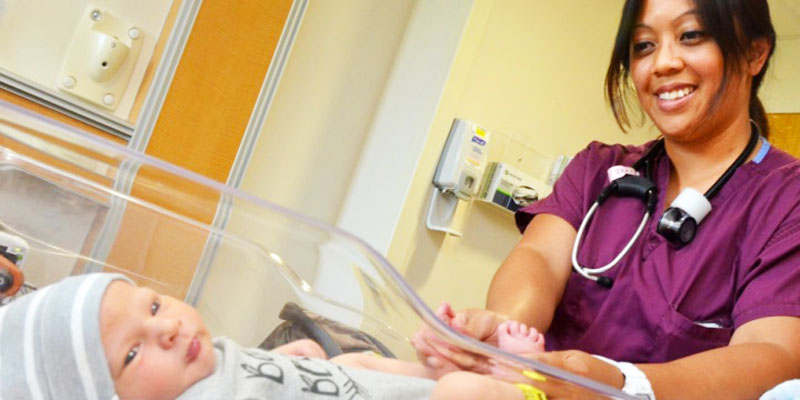
A bill filed by State Rep. Phillip Rigsby aims to help doctors in Alabama find and treat rare diseases in babies as soon as they’re born.
Named after Zachary Thomas, a young boy born with a rare disease that couldn’t be treated right away because his condition wasn’t found early, the Zachary Thomas Newborn Screening Act will enhance Alabama’s ability to offer early intervention to families affected by rare diseases.
Developed from a multi-year partnership between Alabama Rare and the Alabama Department of Public Health’s newborn screening program, the legislation is backed up by data that lawmakers are gearing up to change the course on.
Research by the EveryLife Foundation indicates that lack of newborn screening can lead to an average wait of 6.3 years for a rare disease diagnosis, accruing a minimum of $220,000 in avoidable costs.
For the estimated 1 in 10 Alabamians who have a rare disease, failure to receive a proper diagnosis is a daily reality. Half of those living with rare diseases in America re children and 1 in 3 of them will not live to see their fifth birthday.
Rep. Phillip Rigsby (R-Huntsville) says it’s an honor to carry the bill.
“I am honored to sponsor the HB 77, the Zachary Thomas Newborn Screening Act during the 2024 Legislative Session. This legislation will provide expanded screening for more rare diseases and help provide early recognition and treatment for families whose little ones are affected,” Rigsby said.
“This has been a great collaboration between the Alabama Department of Public Health and Alabama Rare to foster a better testing environment for those affected by rare genetic diseases. I look forward to working to get this bill passed and signed into law.”
As time passes without an accurate diagnosis, diseases can become significantly more severe. The damage is often irreversible and means lower physical function and quality of life. For Brooke Thomas, Chief Programs Officer of Alabama Rare, and parent of three children with MPS I, improving early diagnostics in the state is a personal mission.
“Without treatment, children with MPS I typically stop developing between the ages of two and three and soon pass away. While the transplant carries a 30 percent mortality rate, it ultimately extends our children’s life expectancy to approximately thirty years” Thomas says.
Grayson Everett is the state and political editor for Yellowhammer News. You can follow him on Twitter @Grayson270