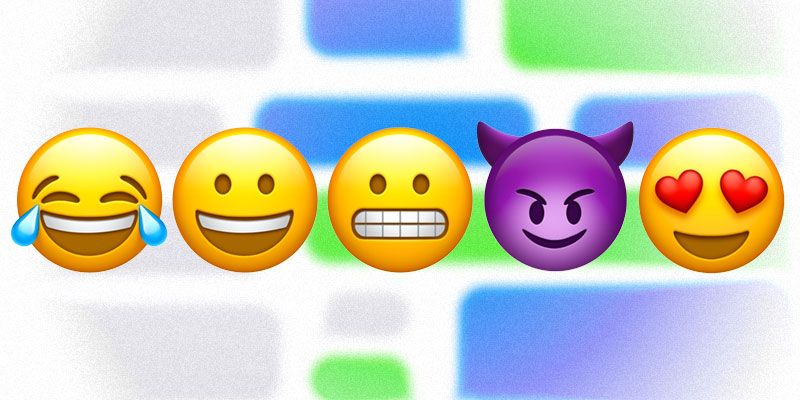
Anyone who texts with me knows I refuse to give up my emojis.
I’ve read that there is a “feminist case for not using” emojis and that it would be “empowering” not to have to do the texting equivalent of emotional labor. I admit they are a bit juvenile.
However, I love — nay, I NEED — those little perfectly nuanced pictures of smiling, happy, sometimes crying, round yellow things.
I like the speed of putting a thumbs up emoji instead of writing out “Got it, sounds good”.
I like that when a comment can be taken multiple ways, I can have peace of mind knowing it will be safely understood when accompanied by tears of joy.
I like the playful “show don’t tell” puzzle of picking a picture rather than a word.
Still, I imagine my emojis can get annoying.
I also recognize I’m the mother of five children, not a teenager.
And emojis do bring modern pitfalls, as I recently learned when I accidentally texted the eyes-as-hearts emoji to a male coworker right in the middle of the sexual harassment frenzy. I frantically searched for an emoji to convey someone slapping their forehead in mortification, only to realize mid-scroll it really was faster just to text something like: “Super sorry — Didn’t mean to send that!”
But as a communications geek who believes there are degrees of expression that only an emoji can digitally capture, I think I will keep right on using them.
Which is why I’m loving this AP News article that explains the emoji’s origins, its history and the serious approval process that icons-in-the-emoji-making must pass. Who knew there’s a non-profit “Unicode Consortium” of representatives from companies like Google, Apple and Facebook who meet to decide what makes the cut? The group also standardizes the icons across devices and operating systems so emojis look the same no matter who sends and receives them.
Some interesting details from Barbara Ortutay’s article:
— Emojis come from the Japanese words for picture “e” and letters “moji”. Rudimentary emojis first popped up in Japan in 1999 as cell phones became more popular.
— Emojis aren’t retired. We started with about 176, now there are more than a thousand, with new ones added every year.
— Anyone can submit an emoji idea to the consortium, but there are a bunch of rules for what can — and can’t — become an emoji (no swastikas, nothing that looks like a specific person, for example).
— One woman described what it took to get her dumpling emoji approved and it included two years of “research, many meetings and a written, illustrated proposal that reads a bit like an academic paper, complete with research on dumpling history and popularity.”
— We won’t know for a couple more months which new emojis will be added for 2018.
Here are my most used emojis:
???????????
What are yours? If you could create an emoji, what would it be?
Rachel Blackmon Bryars is managing editor of Yellowhammer News.