Alabama’s own space archeologist may have discovered a new Viking site in North America that would rewrite history.
Sarah Parcak, researcher and professor of archeology at the University of Alabama at Birmingham, recently worked with a team that discovered what could be the first new Norse site in North America in over fifty years.
The discovery came from using Parcak’s pioneering method of space archeology. By analyzing satellite images from tens of thousands of square kilometers in Newfoundland, the archeologists found what appeared to be manmade structures. Their preliminary excavations are awaiting further research to confirm their findings, but their discovery would prove that Vikings traveled 300 miles further south than previously thought.
The first Viking site in North America was uncovered in the 1960s. Archeologists have been looking for a second site for the past 50 years, but Parcak is the first to find preliminary proof.
Parcak has been called a “modern-day Indiana Jones,” a name that she happily accepts. “If people want to call me Indiana Jones, I say I’m more sites, less stubble,” she said.
As a space archeologist (which is officially the coolest job title in the world), Parcak uses infrared satellite images to uncover ancient sites, a process she likened to “Google Earth on speed.” With this method, she has already discovered 17 lost pyramids, over 1,000 tombs and more than 3,100 ancient settlements in Egypt.
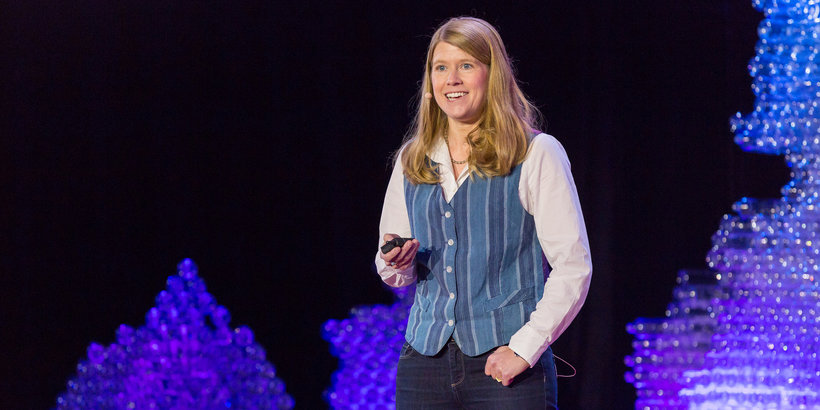
In 2015, the TED Foundation presented its annual $1 million TED Prize for her work uncovering lost history.
Parcak also focuses on the threats ancient sites face. She used part of her TED grant to find ways to protect and defend archeological sites in the Middle East from looting and destruction from ISIS and other terror groups.
But while ISIS and the Middle East may get the most media attention, looting is a worldwide threat. “You think looting is bad in Egypt, look at Peru,” she told the New York Times last year. “India, China. I’ve been told in China there are over a quarter-million archaeological sites, and most have been looted. This is a global problem of massive proportions and we don’t know the scale.”
Parcak will continue to uncover the past, protect it from those who do not respect it, and remind the world that archeology can be cool.
You can learn more about her Viking discovery on PBS, where it will be featured in a documentary special called “Vikings Unearthed” that airs this Wednesday at 8:00 pm.